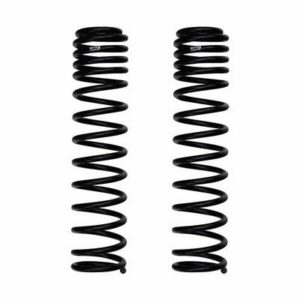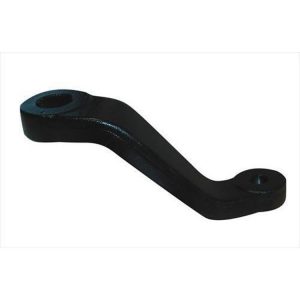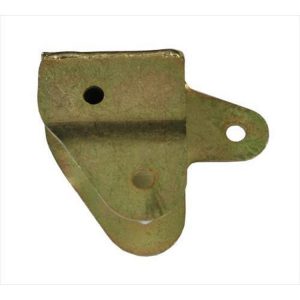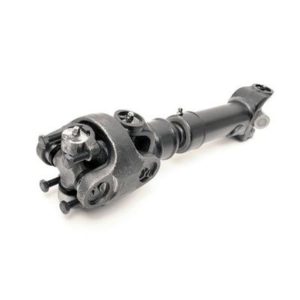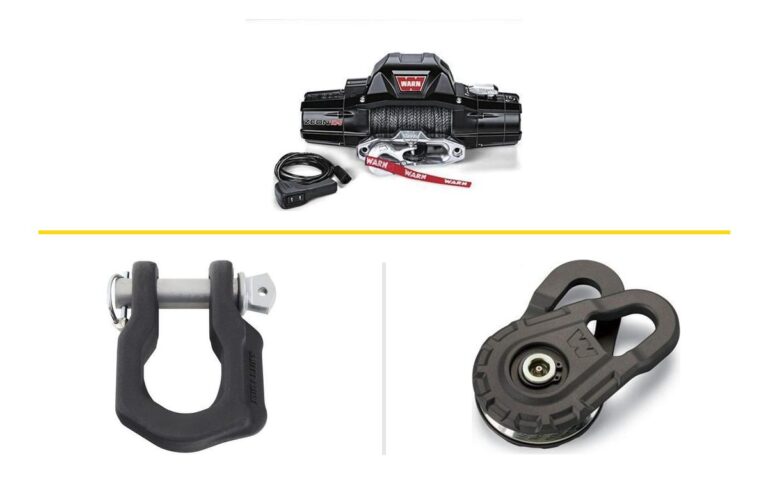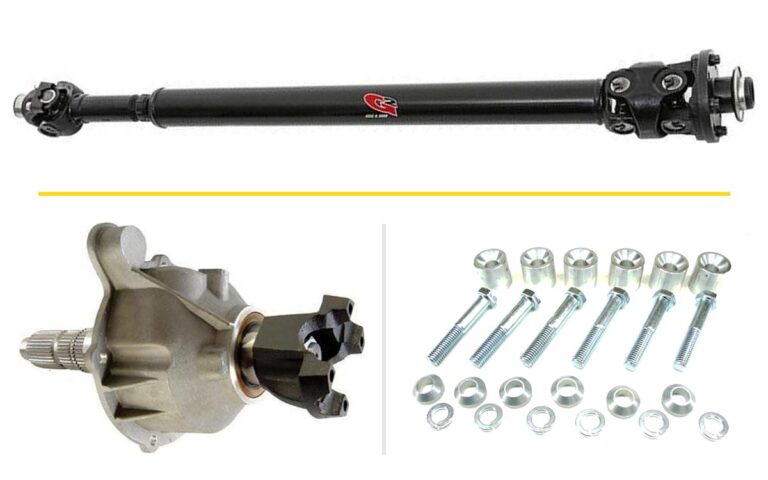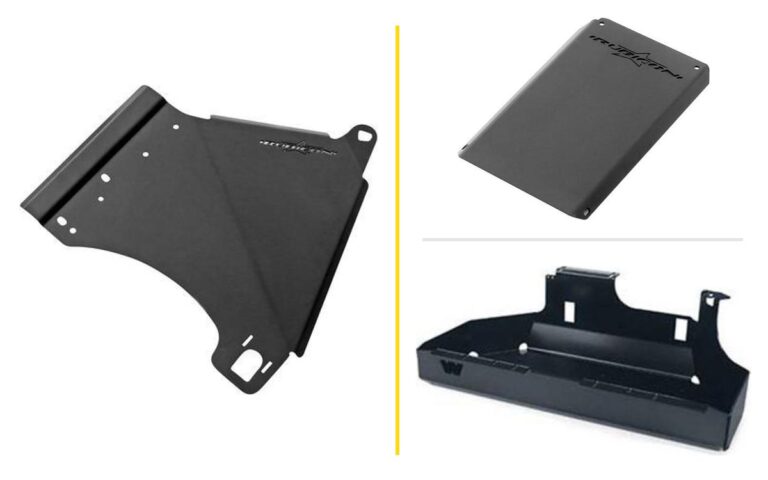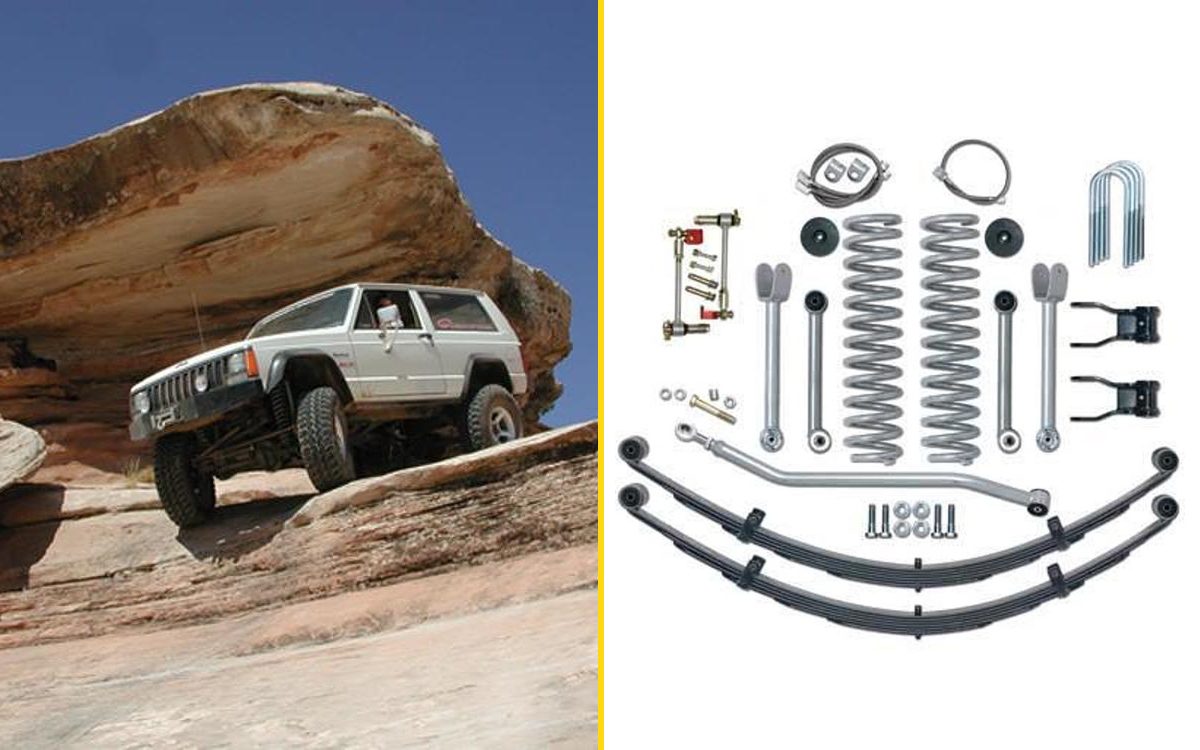
A complete XJ 4.5 lift for the 1984-2001 Jeep Cherokee needs taller front coil springs, new rear leaf springs or add-a-leafs, front control arms that restore caster, an adjustable track bar, extended sway bar links, longer shocks, longer brake lines, bump stop extensions and a fix for rear driveshaft angle.
Key takeaways
- The springs are the easy part: at 4.5 inches the geometry changes more than the height, so caster, axle centering, steering angle and driveline angle all need attention.
- The track bar has to change: a lift pulls the axle sideways, so at this height an adjustable bar is needed to re-center it. Check it against the drag link for bump steer.
- Rear options differ in kind: a full leaf pack replaces tired springs, while an add-a-leaf and block raise and stiffen the old pack. Blocks also add leverage for axle wrap.
- Tire size stops near 32 inches without cutting: 33-inch tires generally mean fender trimming and put the weak axles to work.
- Expect driveline work: vibration is common from 2 inches of lift up. A slip yoke eliminator and CV rear driveshaft cure it for good, and usually make a transfer case drop unnecessary.
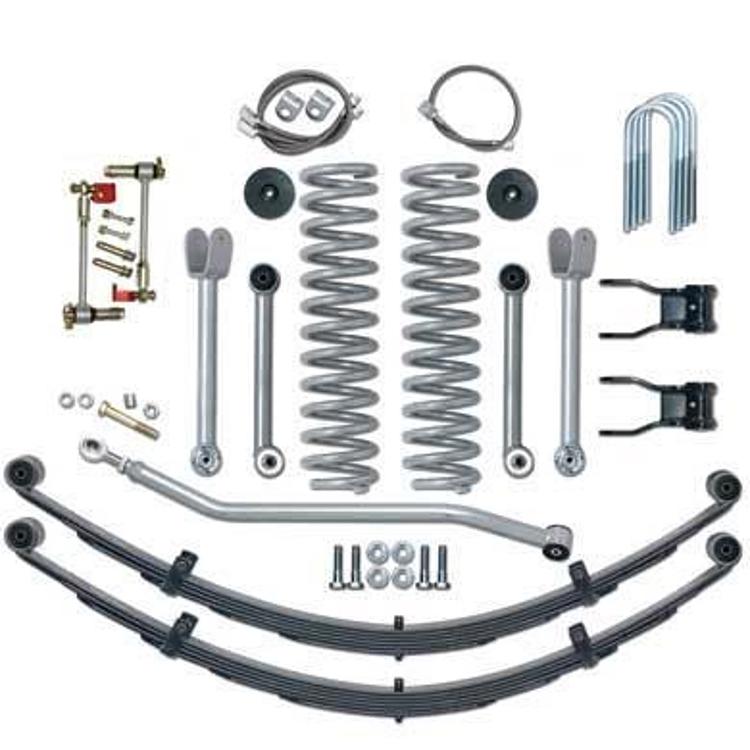
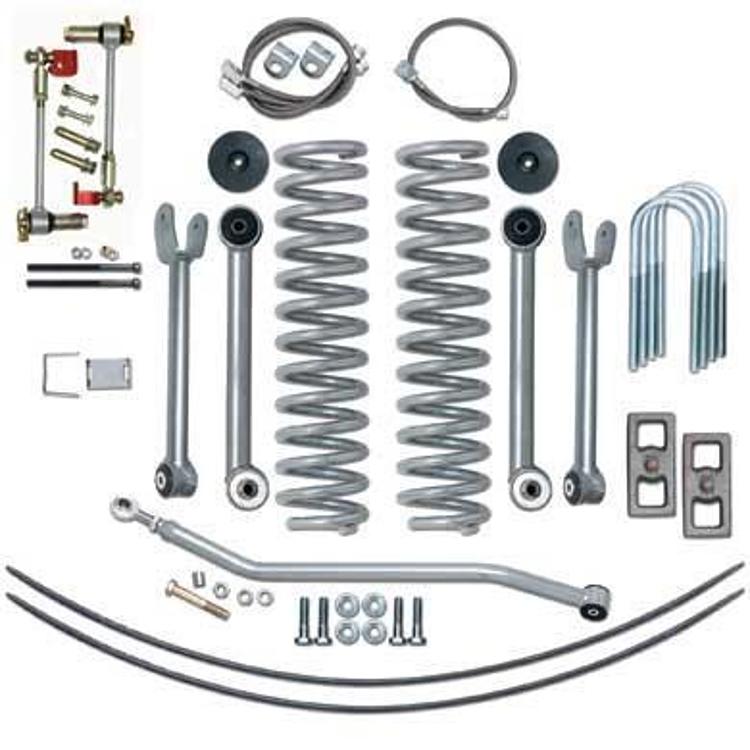
What does a complete XJ 4.5 lift include?
A complete XJ 4.5 lift replaces or corrects every part that the extra height moves out of position, not just the springs. The Jeep Cherokee XJ makes this list specific because of its layout: a unibody shell with coil springs up front and leaf springs out back. Jeep called the front design Quadra-Link: two upper and two lower control arms hold the axle fore and aft, and a track bar (a rod running across the vehicle from axle to body) holds it side to side. Each rear leaf pack came with four leaves, a fixed front eye and a compression shackle at the rear.
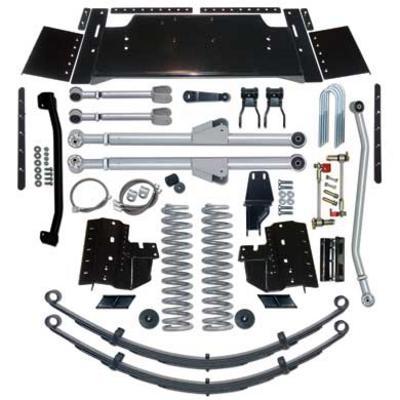
The Rubicon Express RE6130 4.5-inch Super-Flex short arm kit shows what a full system looks like. Its parts list reads:
- Front springs: the RE1310 4.5-inch coil spring set.
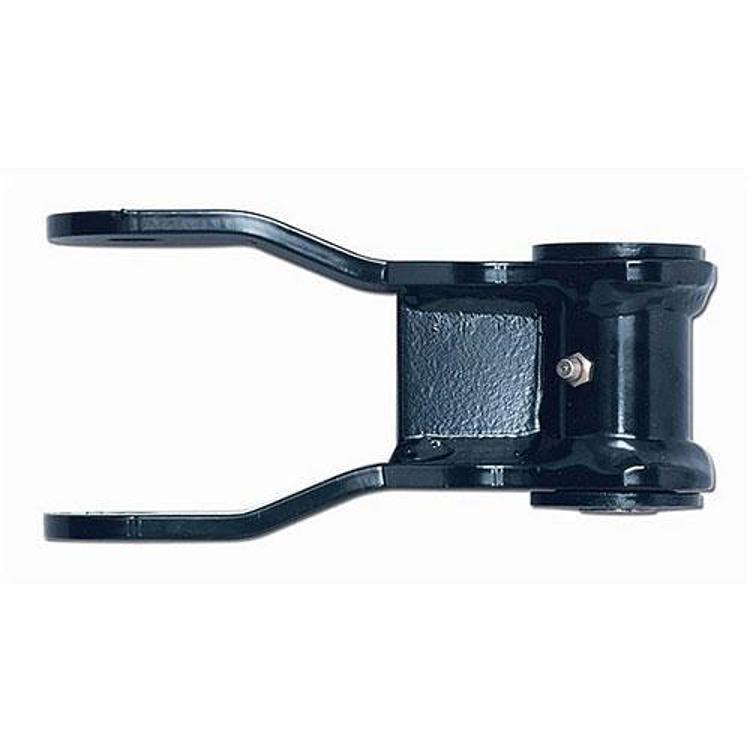
- Rear springs: two RE1463 3.5-inch Extreme-Duty leaf springs plus RE2700 5-inch rear shackles, rated at 1.25 inches of added height.
- Control arms: RE3700 fixed Super-Flex lower arms and adjustable upper arms.
- Axle location: the RE1600 adjustable front track bar.
- Sway bar: Gen II disconnects in place of the factory end links.
- Travel limits: RE1380 2-inch front bump stops that sit inside the coils.
- Brakes: the RE1550 22-inch front brake line set and RE1515 18-inch rear line.
- Driveline: the RE2120 transfer case lowering kit.
- Hardware: RE2421 U-bolts for the Dana 35 and Dana 44. A Chrysler 8.25 needs RE1225 U-bolts, ordered separately.
Shocks are the one thing RE6130 leaves out, and the RE6130M with monotube shocks and RE6130T with twin-tube shocks add them. Pay attention to the rear arithmetic: the 4.5-inch kit reaches its height with a 3.5-inch leaf spring and a 1.25-inch shackle, not a 4.5-inch spring. Skyjacker uses the same approach in its JC4258 4.5-inch XJ system, pairing a 2.5-inch rear leaf with a 1.5-inch lift shackle, and it adds a pitman arm and frame brackets for its lower links.
Rubicon Express 3.5 vs 4.5 lift on the XJ: what changes?
The extra inch brings adjustable upper arms, an adjustable track bar, rear shackles, front brake lines and a transfer case drop into the kit, because that is where the factory geometry runs out of range. The RE6030 3.5-inch Super-Flex kit replaces the lower arms and keeps the factory uppers, and the RE6030T version adds twin-tube shocks.
| Kit | Front control arms | Track bar | Rear lift | Best fit |
|---|---|---|---|---|
| RE6030 3.5-inch | New Super-Flex lowers, factory uppers | Factory bar, axle bracket re-drilled | RE1463 leaf springs | Smaller lift, mostly street |
| RE6130 4.5-inch | Fixed Super-Flex lowers, adjustable uppers | RE1600 adjustable | RE1463 leaf springs, RE2700 shackles | Street and trail, tires to about 32 inches |
| RE6111 4.5-inch | Fixed Super-Flex lowers, adjustable uppers | Adjustable | Add-a-leaf, block and U-bolts | Healthy factory leaf packs |
| RE6300 5.5-inch long arm | Extreme-Duty radius long arms | Heavy-duty bar | Leaf springs | 33-inch tires, frequent trail use |
Both leaf spring kits use the same RE1463 rear leaf. The extra rear height in the 4.5-inch kit comes from its RE2700 shackles, and the front height from a different coil set: RE1300 in the 3.5, RE1310 in the 4.5. RE6030 keeps the factory track bar by re-drilling the axle bracket 3/4 inch toward the driver side, center to center, with an adjustable bar as the option. It brings a rear stainless line only, keeps the factory front hoses and has no transfer case drop.
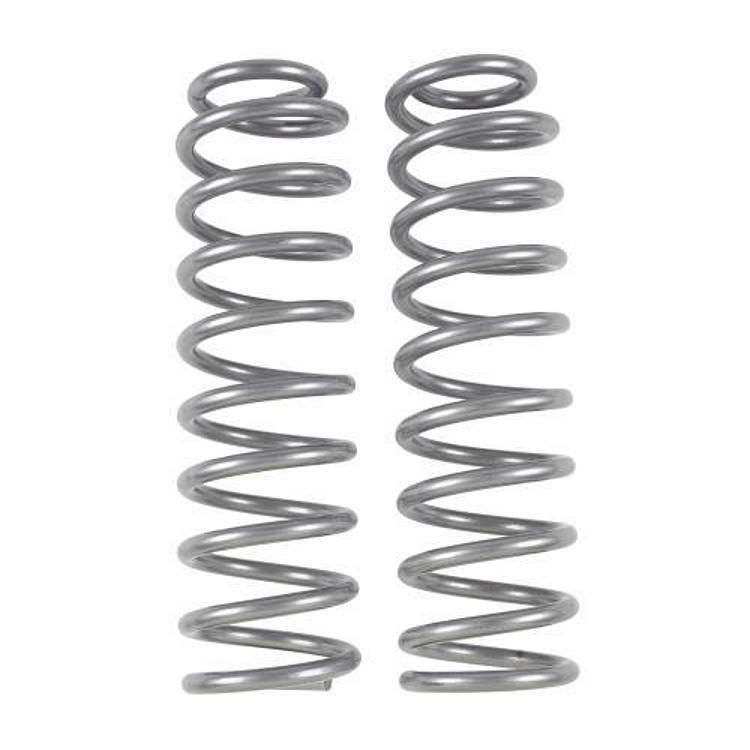
Which front coil springs does a 4.5-inch XJ need?
A 4.5-inch XJ needs a matched pair of taller coils, not spacers on tired factory springs. A coil spring sets ride height by its free length and rate, so the correct spring holds the height with the factory front weight on it. Skyjacker JC30FDR dual rate coils cover a 3 to 4.5-inch range and fit the 1984-2001 XJ and the Comanche.
Coils settle after installation, so measure both sides after a few hundred miles before judging the result. Lift height increased with coil spacers or taller coils may bring wobble that alignment cannot correct. Browse coil springs by lift height and match the rate to what the front of your XJ carries.
Short arm or long arm: which control arms suit a 4.5-inch XJ?
A short arm kit is the normal choice at 4.5 inches, because it keeps the factory mounts and bolts on. A long arm kit makes sense when you want more height, frequent rock use or better manners over large obstacles. Both have to deal with the same problem: a lift rotates the axle housing and reduces caster, the steering axis angle that helps the wheel self-center.
Short arm: factory mounts, adjustable length
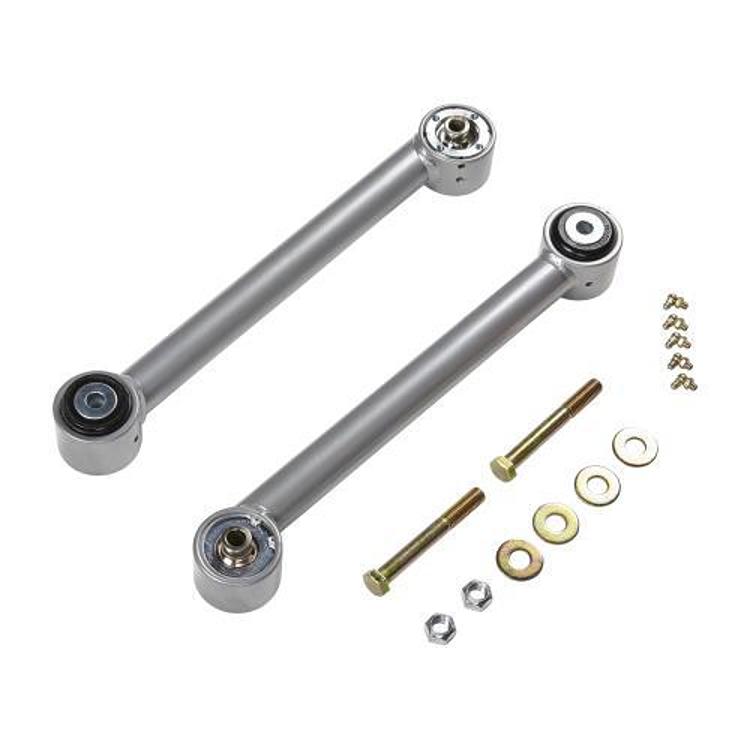
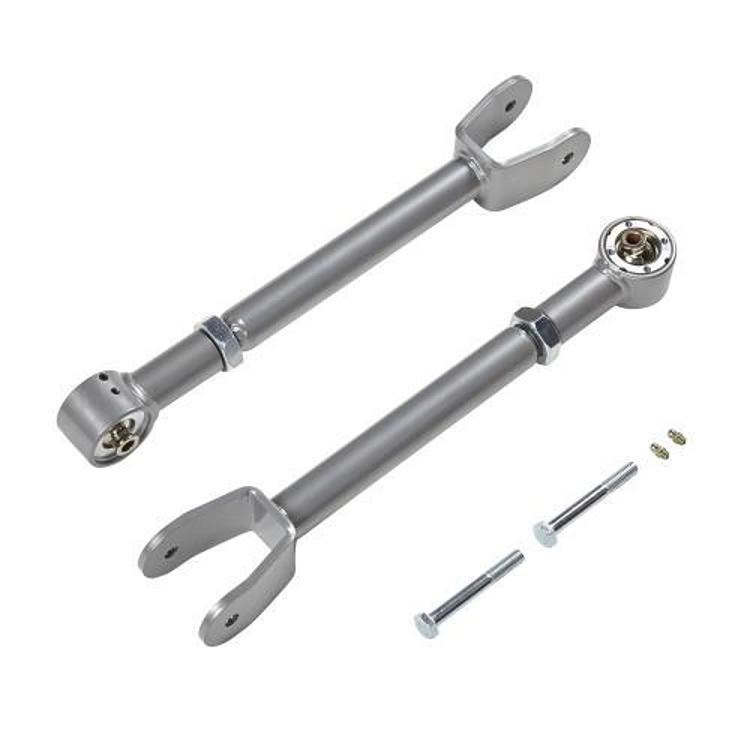
The RE3780 adjustable upper arm moves between 15.25 and 16 1/8 inches to set caster and pinion angle. Its Super-Flex joint is a greasable, rebuildable spherical bearing. The RE3700 fixed lower uses a 2.25-inch polymer race around a 1.75-inch hard plated steel bearing. Caster and front pinion angle share one housing, so every adjustment trades one against the other, and TeraFlex XJ short arms face the same trade-off: they balance the two.
- Adjustable lowers: the RE3715 Super-Flex lower, or Rough Country 11900 X-Flex arms for 0 to 6.5-inch lifts.
Long arm: flatter angles, more fabrication
A longer arm swings through a flatter arc, so the same lift rotates the axle less and travel changes caster less. The RE6300 5.5-inch Extreme-Duty long arm kit adds a three-piece crossmember that comes apart for transfer case and transmission access, radius long arms, a heavy-duty track bar and a bracket brace. Rubicon Express designed it to cut torque roll, axle steer and suspension jacking compared with its short arm kits.
The RE9920 front crossmember, the control arm mount used in the RE6300, requires welding. An owner with a Rubicon Express short arm kit can step up later with the RE6330 long arm upgrade, which holds the crossmember and all four front arms. See long arm upgrade parts if your plans run past 4.5 inches.
Do you need an XJ track bar bracket at 4.5 inches?
Not with every kit, but you need an adjustable track bar. A fixed bar swings through an arc as the body rises, which pulls the axle toward one side, so the bar has to be lengthened to center the axle again.
The RE6130 approach keeps the factory frame-side mount. Its RE1600 chromoly bar, with a replaceable rod end and a 3.5 to 4.5-inch lift range, installs with the heim end at the unibody after the tapered factory hole is drilled to 5/8 inch.
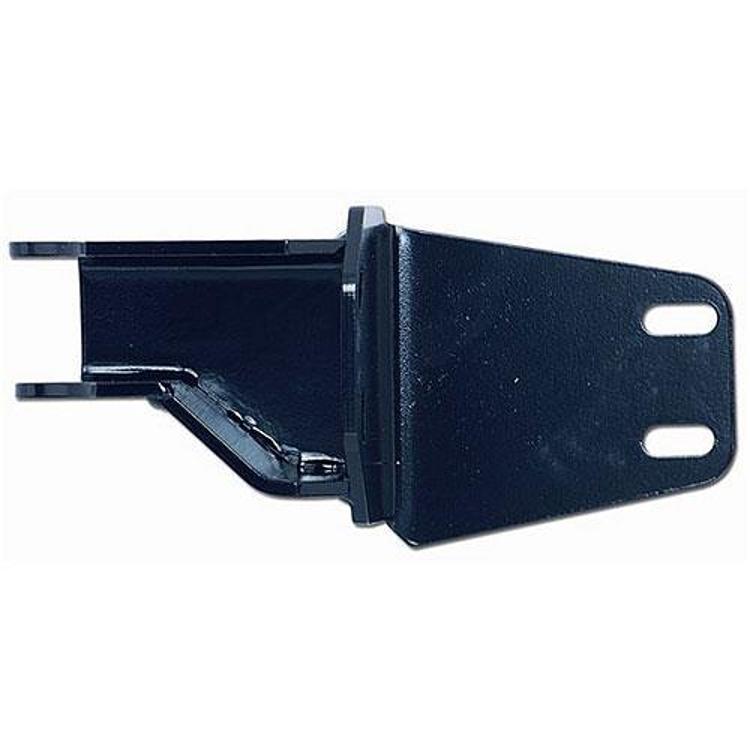
A drop bracket comes in when you go taller or need to bring the bar back toward parallel with the drag link:
- Frame side: the RE1665 plate steel drop bracket is required with the RE1660 Extreme-Duty adjustable bar, which suits 4 to 6 inches of lift and needs the lower mount drilled.
- Brace: the RE1670 track bar bracket brace is used with the RE1665 on the frame side to limit unibody flex.
- Axle side: the Skyjacker JTBF relocation bracket moves the mount at the axle, and fits the XJ and the ZJ Grand Cherokee.
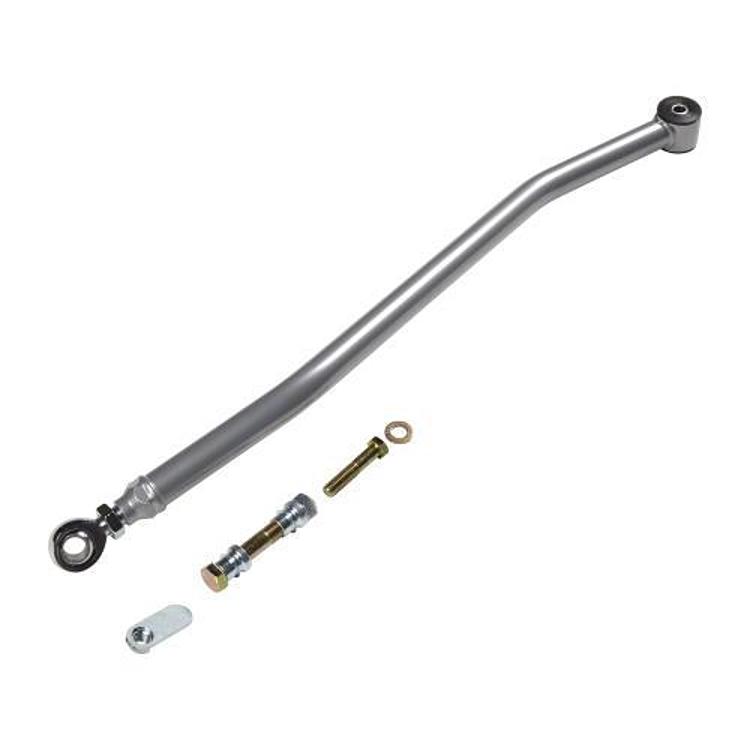
To set it, Rubicon Express has a helper rotate the steering wheel until the body centers over the axle with the weight on the tires, then the bar is adjusted to fit its mounts and tightened. Re-torque after 50 miles and again after every off-road trip. A worn or loose mount at this joint is also a leading cause of the shake described in the death wobble repair guide. Browse adjustable track bars and track bar brackets by vehicle.
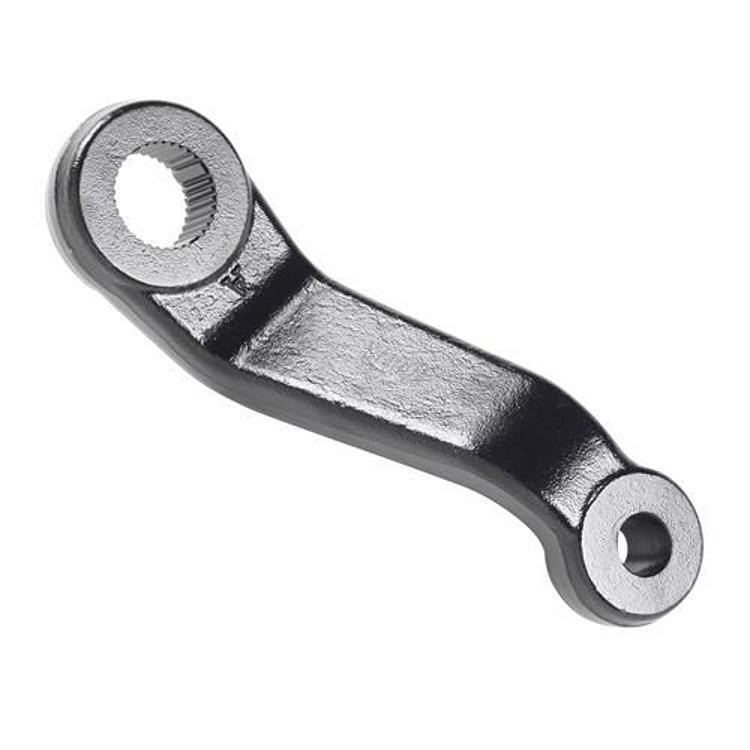
Pitman arm and drag link: how does a lift change XJ steering?
A lift steepens the drag link, the rod that connects the pitman arm on the steering box to the steering knuckle. When the drag link and track bar sit at different angles, they swing through different arcs and the axle steers itself over bumps. That is bump steer. The two should run close to parallel at ride height.
A drop pitman arm lowers the steering box end of the drag link. These fit power steering boxes:
- 4-inch drop: the Rubicon Express RE2500, for lifts above 3.5 inches, and the forged Skyjacker JA500, for 4 to 8 inches of XJ lift.
- 3-inch drop: the Rugged Ridge 18006.54, which fits 1984-2000 XJs.
The RE6130 parts list contains no pitman arm, and Skyjacker includes the JA500 in its 4.5-inch system, so measure rather than assume. The factory linkage uses Y-type steering, where the tie rod joins the drag link instead of running from knuckle to knuckle. High-speed wobble is fairly common with this design on lifted XJs, and the alignment target is minimum factory caster and maximum factory toe-in. Reducing positive caster eliminates the wobble in most cases.
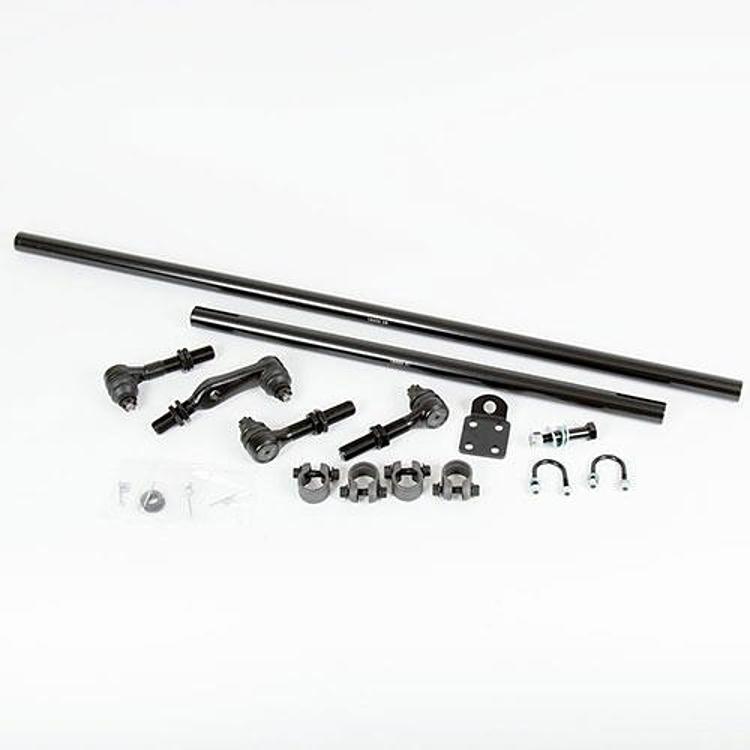
Larger tires load the factory tie rod tube heavily on rocks. The Rugged Ridge 18050.82 tie rod and drag link kit uses 1.25-inch steel tube with a 1/4-inch wall and 7/8-inch tapered ends. See pitman arms.
Sway bar links and disconnects: what does the XJ need?
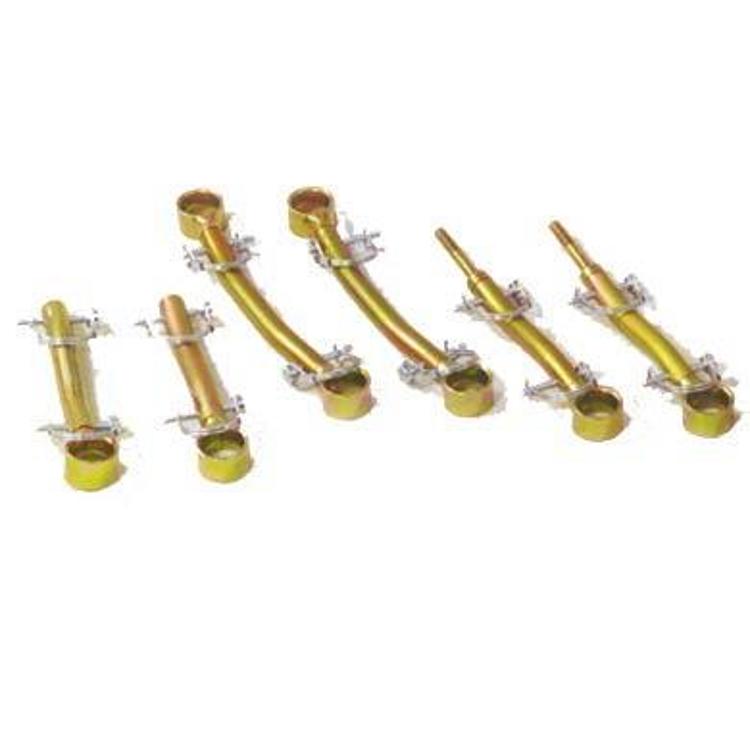
The front sway bar needs longer links or disconnects, because lifting the body leaves the factory links too short and puts the bar at a poor angle. Disconnects also release the bar on the trail so the front axle can articulate. Reconnect the bar before highway driving, because it controls body roll.
- Quick disconnects: the Skyjacker SBE320 front disconnects are rated for 3 to 4 inches and come in Skyjacker’s own 4.5-inch system. The TeraFlex 1713000 disconnects cover 2.5 to 4 inches and use self-centering polyurethane bushings. Some drilling is required.
- Fixed extended links: the RE1175 front end links suit 2 inches of lift or more and mount through an adapter bracket kit such as the RE1171 for pre-1996 XJs.
- No disconnecting: the Currie CE-9900XJF Antirock system for 1987-2001 XJs replaces the bar with a splined torsion bar, billet aluminum brackets and adjustable heim-jointed links.
At the rear, RE6130 removes the factory sway bar and does not reinstall it. If you tow or carry weight and want to keep it, the Skyjacker SBE638-6XJ extended rear links use 4140H steel and polyurethane bushings. See sway bar disconnects.
How long should shocks be for a 4.5-inch XJ?
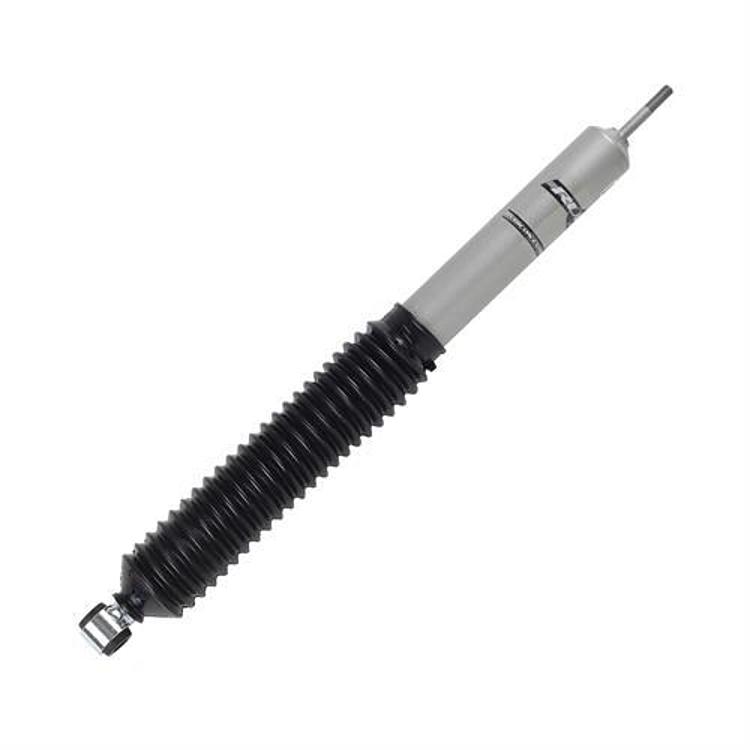
Choose shocks rated for the lift, because the extended length has to reach full droop without the shock acting as the travel stop. The difference across lift ratings is large on a front XJ shock:
| Front shock | Lift rating | Extended | Collapsed |
|---|---|---|---|
| Pro Comp ES9000 921515 | 0 to 2 in | 21.75 in | 13.06 in |
| Bilstein 5100 24-185622 | 2 to 3 in | 22.09 in | 13.58 in |
| Fox 2.0 985-26-108 | 2 to 3.5 in | 25.30 in | 15.20 in |
| Rubicon Express RXJ701B | 3.5 to 4.5 in | 27.8 in | 17.2 in |
Shocks rated for 4 to 5 inches on the XJ:
- Monotube: the Skyjacker M95 M9525 front has a 46mm bore and an internal bump stop. Pair the RXJ701B with the RXJ508B rear, which is rated for a 4-inch lift.
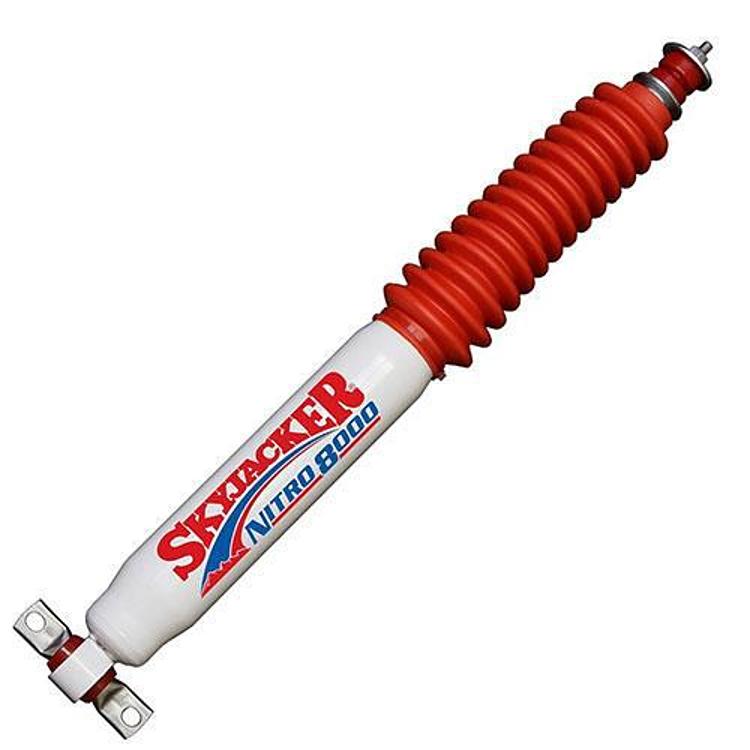
- Gas-charged: the Skyjacker Nitro N8025 front and N8028 rear carry 150 PSI nitrogen.
Skyjacker uses its Black Max B8525 front and B8528 rear in the 4.5-inch system. Some shocks need a bar pin pressed through the eye, and the TeraFlex 1203700 front lower bar pin eliminator and 1204800 rear upper version replace that arrangement on 1997-2001 XJs. For valving, read twin-tube, monotube or reservoir shocks and the Bilstein 5100 vs Fox 2.0 comparison.
Why do brake lines and bump stops change with a lift?
Brake hoses and bump stops set the limits of suspension travel, and a lift moves both limits. The hose must reach at full droop without pulling tight, and the bump stop must keep the tire and shock from hitting anything at full compression.
Brake lines
A factory-length hose such as the Crown 52008674 front brake hose is sized for 0 to 2 inches of lift. At 4.5 inches, use extended lines:
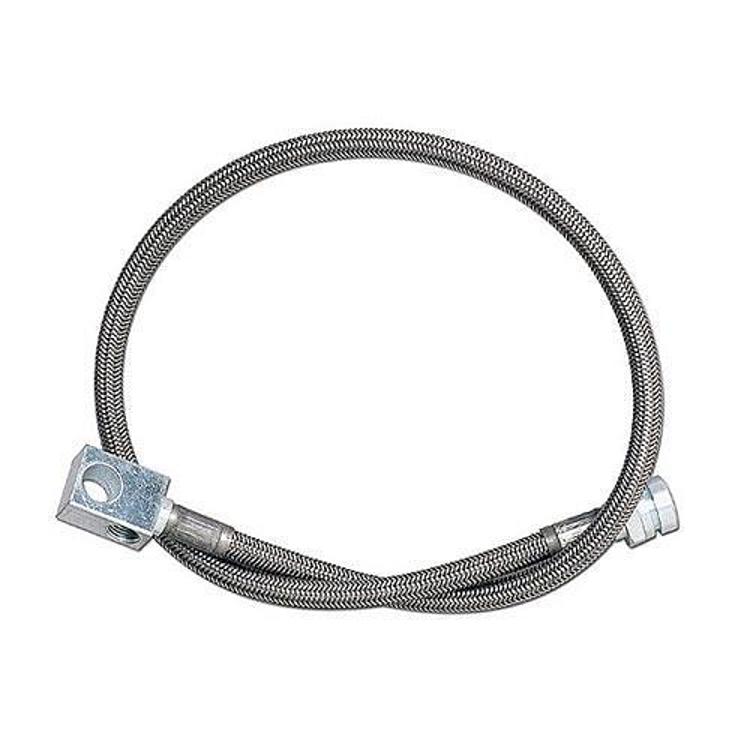
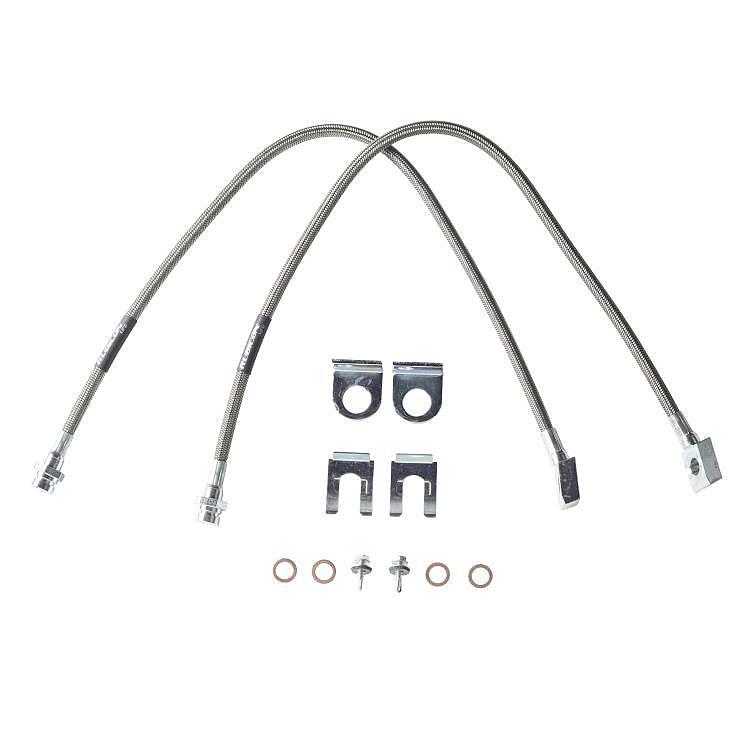
- Front: the RE1550 22-inch set, a Teflon inner hose in a woven stainless shell for 4 to 6 inches of lift.
- Rear: the RE1515 18-inch line, stainless for the same lift range.
Route the new hoses away from the coils and exhaust, cycle the steering lock to lock with the axle hanging, then bleed the system and check for leaks. See brake lines and fittings.
Bump stops
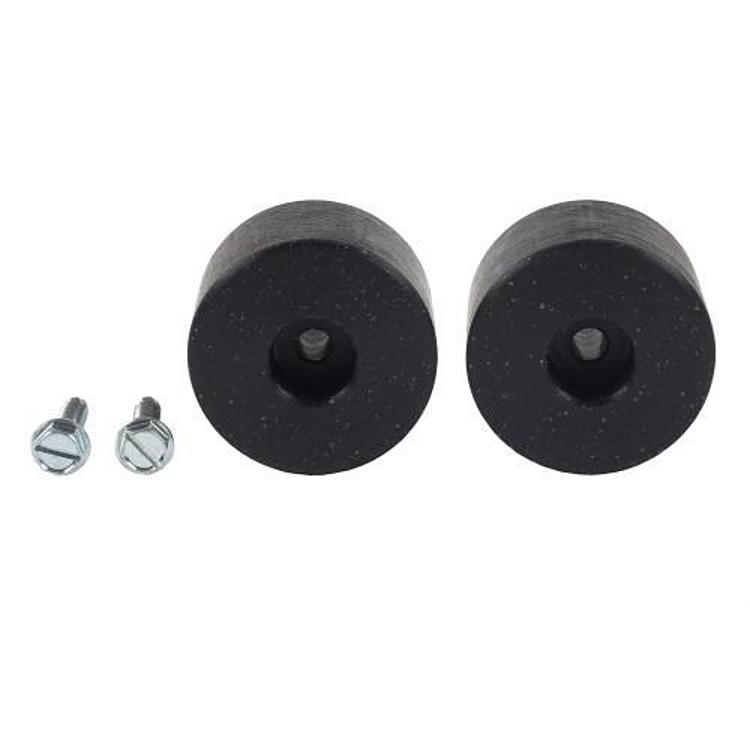
Taller coils raise the body away from the axle, so the factory stop now contacts later and a larger tire can reach the fender first. An extension brings that contact point back. The RE1380 2-inch stop sits inside the coil on a self-tapping bolt, installed through a 5/16-inch hole drilled in the lower coil seat. The RE1383 3.0-inch stop fits the same way for bigger tires. Skyjacker’s kit uses 3.5-inch spacers. To check clearance, remove the coils, jack the axle to the stops at full steering lock and look at tire, fender and shock shaft. See bump stops.
XJ leaf springs vs add-a-leaf vs block: which rear lift is right?
New XJ leaf springs are the best rear lift when the factory packs have sagged or you carry weight. An add-a-leaf takes less labor to install, and a block is the least desirable part of any rear lift. All three reach height differently:
| Method | What it does | Strength | Weakness |
|---|---|---|---|
| Full leaf pack | Replaces the pack, with new eyes and bushings | Restores rate and height, best ride control | Most labor, and old hardware often fights removal |
| Add-a-leaf | Adds one leaf to the existing pack | Quick, keeps the original pack | Stiffens the ride, and tired main leaves stay in service |
| Lift block | Spaces the axle from the spring | No change in spring rate | Longer lever for axle wrap |
| Lift shackle | Raises the rear eye of the spring | Small, simple height gain | Lifts one end only and changes spring geometry |
Full XJ leaf springs
The RE1463 3.5-inch leaf and RE1462 4.5-inch leaf are single springs, so buy two. The Skyjacker JC25RSB Softride leaf is a progressive multileaf pack that Skyjacker runs in its 4.5-inch system. Rubicon Express springs use a 3/8-inch center pin, which is stronger than factory and usually requires enlarging the hole in the spring pad.
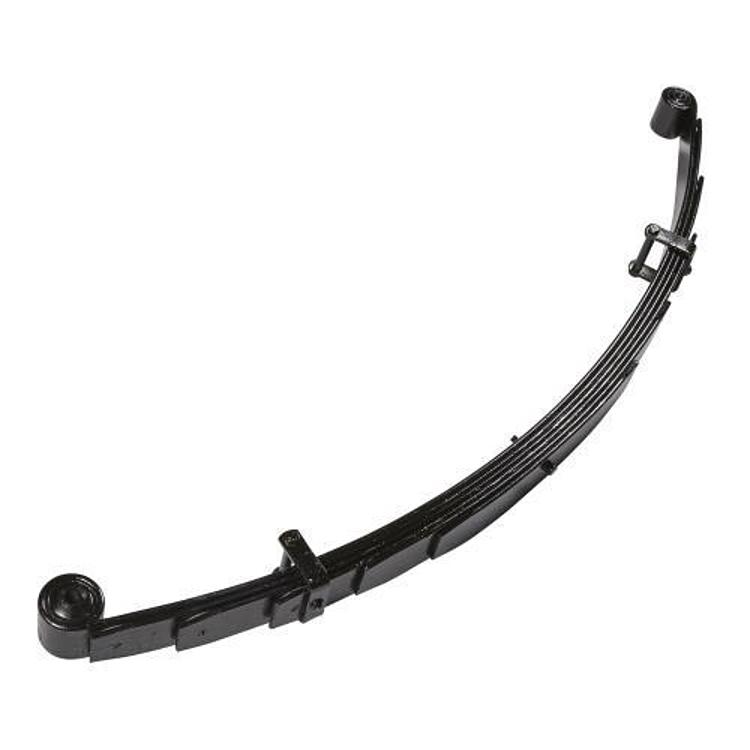
Add-a-leaf and block
The RE6111 kit and its RE6111M monotube version raise the rear with a lift block, U-bolts and an add-a-leaf. For separate parts, the RE1410 add-a-leaf gives about 2.5 inches, and the Skyjacker R3136 is a 2-inch short leaf. An add-a-leaf works when the pack beneath it is healthy, so inspect for flat or cracked leaves first.
A block sits between the spring and the axle. Eaton Detroit Spring explains the catch: the distance from the axle center to the spring seat acts as a lever, so a taller block makes axle wind-up worse, and building the height into the spring is better where possible. Never stack blocks, and use them on the rear only. Violent hop under throttle points to wrap, which the traction bar and ladder bar guide covers.
U-bolts by axle
U-bolts have to match the axle tube and the new stack height, and they should be new whenever the spring comes off. The kit pack covers the Dana 35, the separately sold RE1225 kit at 3 inches wide fits the Chrysler 8.25, and the RE2445 kit fits a Dana 44. See leaf springs and add-a-leaf kits.
Does a 4.5-inch XJ need a slip yoke eliminator and new driveshaft?
Often, but not on every build. A slip yoke eliminator (SYE) replaces the sliding yoke at the rear of the transfer case with a fixed yoke, and a CV (double cardan) driveshaft handles the steep angle. Slip yoke vibration is very common from 2 inches of lift up. The transfer case output stays put while the axle drops, and the single U-joint at the slip yoke has to work through the steeper angle.
There are three levels of fix, in rising order of work:
- Transfer case drop: the RE2120 kit spaces the crossmember down with bolt-in spacers, and the TeraFlex 1970104 kit uses four 1/2-inch spacers for 3 to 4.5-inch lifts. A drop reduces angle but gives up ground clearance.
- Longer slip yoke: the RE1822 slip yoke adds 5/8 inch of length for the NP231 and helps pre-1996 XJs, because later XJs already have the longer yoke.
- SYE and CV shaft: the permanent answer, and it usually makes the drop kit unnecessary.
SYE kits differ in how they get there:
- New output shaft: the Skyjacker RR231 has a 32-spline shaft and adds 4.5 inches of driveshaft length. The TeraFlex 4444402 and 4444401 add four inches. All three are for the NP231.
- Modified output shaft: the Rubicon Express RE1807 modifies the factory shaft with an included drill and tap, uses a stainless flange and also covers the NP242. It fits 1997-2001 XJs.
The transfer case decides which you can use. The NP231 Command-Trac and NP242 Selec-Trac arrived in 1987, so 1984-1986 XJs carry an earlier case that these kits do not cover. TeraFlex short shaft kits must run a CV driveshaft and fit only the NP231-J. The Skyjacker 6-inch XJ system requires an SYE and CV shaft, and the 4.5-inch system works best with a transfer case drop.
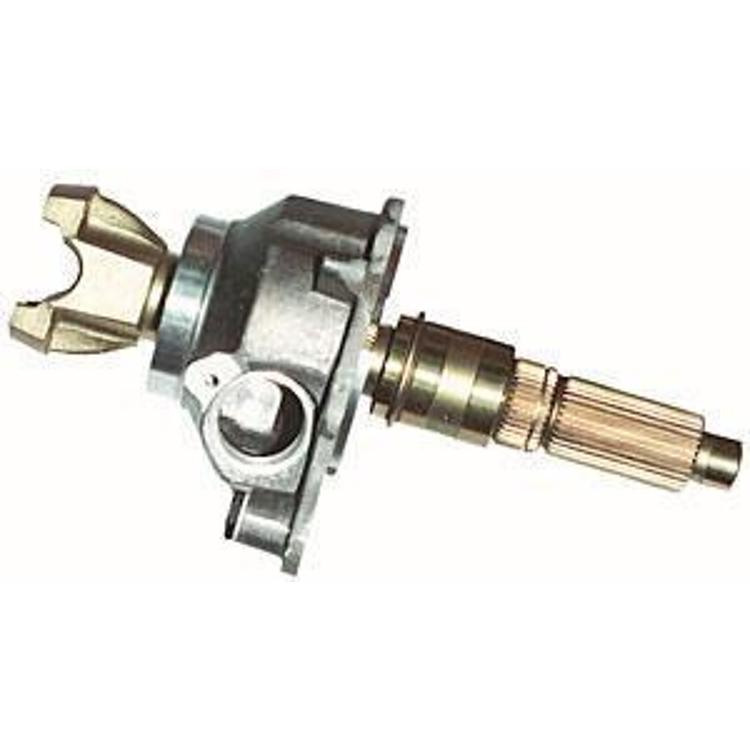
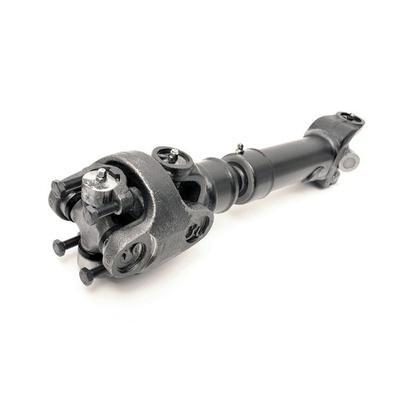
For the shaft itself, the Rough Country 5084.1 CV shaft fits automatic XJs with an SYE, and the Rubicon Express RE1898-155 CVF shaft is a universal unit: measure from the flange face to the rear U-joint center with the vehicle on the ground and the slip stub at mid-travel. Run a CV shaft on all lifts of 3.5 inches and taller. Set the rear pinion about 2 degrees below parallel with the CV shaft, using axle shims under the leaf springs. Vibration under acceleration means the pinion sits too high, and vibration on deceleration means it sits too low.
The front shaft matters too. The 1984-1986 XJs use a double offset joint and may need modifications, and a later double cardan joint can be retrofitted with the later transfer case output yoke. In full-time mode an NP242 turns the front shaft at road speed, so any front angle problem shows up on pavement. See slip yoke eliminator kits and transfer case lowering kits.
What are the Dana 30, Dana 35 and Chrysler 8.25 limits?
The lift itself does not break axles. Bigger tires, lockers and throttle do. The XJ left the factory with one of three rear axles, so identify yours before choosing tires:
| Axle | XJ years | Ring gear | Shafts | Weak point |
|---|---|---|---|---|
| Dana 30 front | 1984-1999 high pinion, 2000-2001 low pinion | 7.125 in | 27-spline | Shaft U-joints and ball joints |
| Dana 35 rear | 1984-1989 non-C-clip, 1990-2001 C-clip | 7.562 in | 27-spline | Smallest ring gear, shaft retention |
| Chrysler 8.25 rear | 1991-2001, non-ABS only; 29-spline from late 1996 | 8.25 in | 27-spline, then 29-spline | C-clip retention |
| Dana 44 rear | 1987-1991, tow package, non-ABS | 8.5 in | 30-spline | Rare, and the strongest of the group |
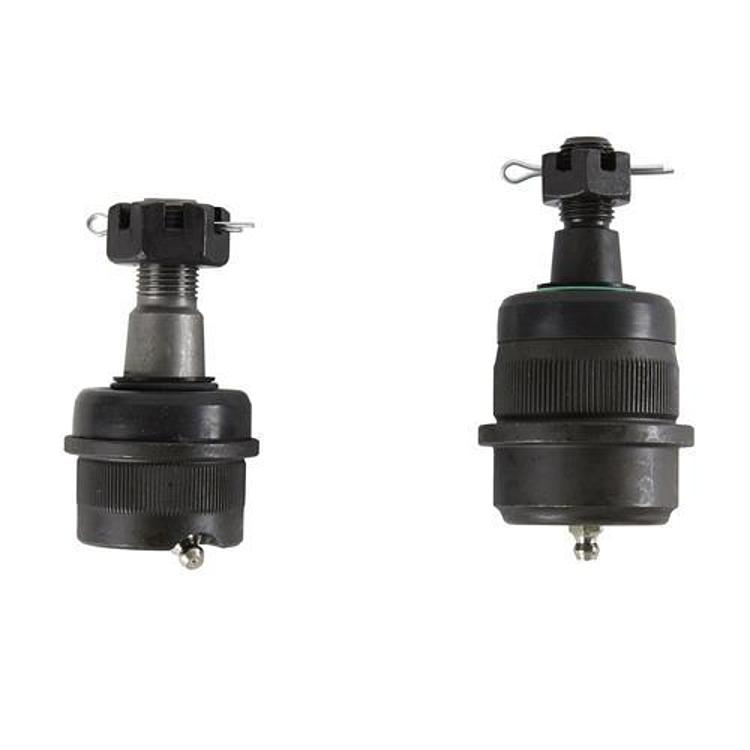
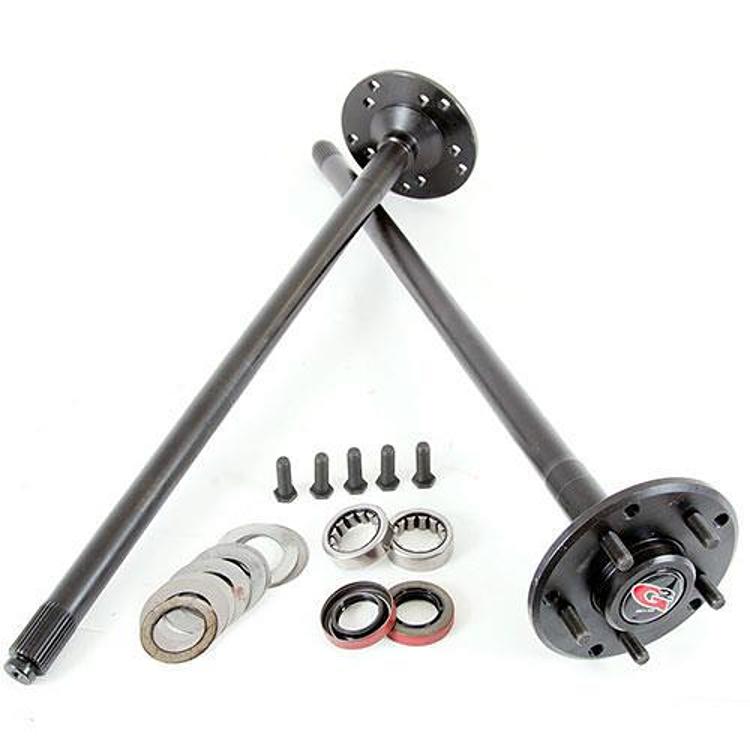
Dana 30 front: the high pinion, reverse-cut version under most XJs puts the pinion above the axle center, which improves front driveshaft angle on a lifted vehicle. It holds up to 32-inch tires in normal use, and the first failures are usually U-joints and ball joints. The G2 69-2045-4 ball joint set is a greasable upper and lower set for both sides, and G2 98-2031-001 27-spline chromoly shafts strengthen the assembly without changing the differential. The Dana 30 vs Dana 44 vs Dana 60 guide compares the housings.
Dana 35 rear: a C-clip holds each shaft in the housing from inside the differential, so a shaft that breaks outside the clip can leave the axle with the wheel attached. For a stronger Dana 35, G2 96-2049-2-30 chromoly shafts for 1991-and-later axles move to 30 splines and need a 30-spline aftermarket differential. Chrysler 8.25 rear: the larger ring gear and later 29-spline shafts make it the better factory choice short of a Dana 44, though it came only on non-ABS XJs.
What tire sizes work on a 4.5-inch XJ?
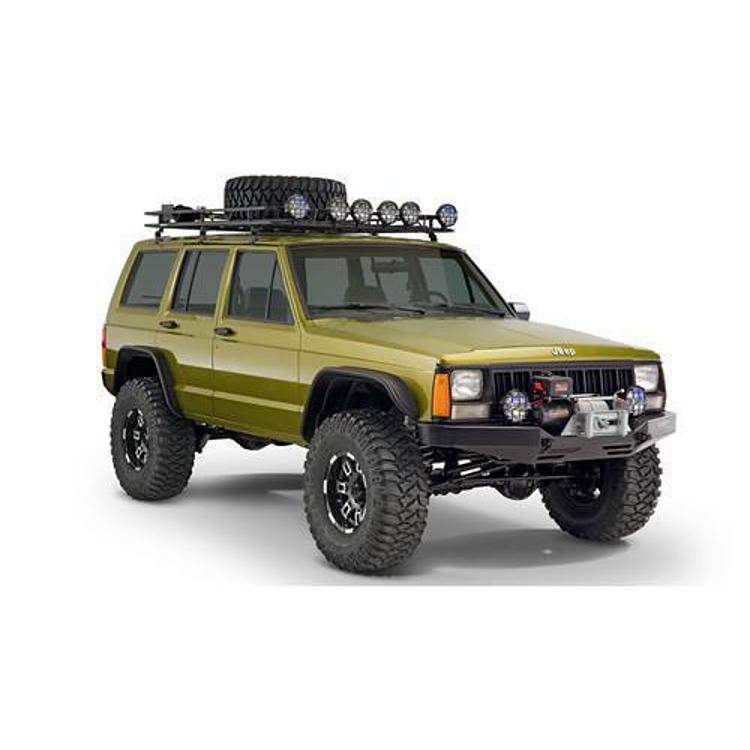
A 4.5-inch XJ runs 31 or 32-inch tires without cutting, and 33-inch tires generally need trimmed fenders. The Skyjacker 4.5-inch XJ system is rated for a maximum 32 x 11.50 tire on wheels 15 to 20 inches in diameter and 8 to 10 inches wide, with 3.75 inches of backspacing. The Rubicon Express RE6300 5.5-inch kit moves to 33 inches. The XJ uses a 5 x 4.5-inch bolt pattern. The tire size math guide converts metric sizes to inches.
The Bushwacker 10922-07 flat style flares add up to 6 inches of tire coverage.
Taller tires raise the effective gearing. Most 4.0L XJs left the factory with 3.55 gears behind the automatic or 3.07 behind the manual, on tires near 28 inches. Holding the same effective ratio takes:
| Tire height | From factory 3.55 | From factory 3.07 |
|---|---|---|
| 31 inches | 3.89 | 3.36 |
| 32 inches | 4.01 | 3.47 |
| 33 inches | 4.14 | 3.58 |
Those figures assume a 28.3-inch 225/75R15 tire. 4.10 is the usual choice for an automatic XJ on 32s. Both axles must match, so buy them as a set for your exact pairing:
- Dana 30 reverse and Dana 35: the G2 4-XJ-410 kit is 4.10 front and 4.11 rear, and the G2 4-XJ-456 kit is 4.56.
- Dana 30 reverse and Chrysler 8.25: the G2 4-XJ5-456 kit.
- Dana 30 short and Chrysler 8.25: the G2 4-XJ6-456 kit, for the low-pinion front axle.
G2’s Dana 30 gears use a 3.73-and-up carrier and its Dana 35 gears a 3.54-and-up carrier. A factory 3.55 Dana 35 keeps its carrier, a factory 3.55 Dana 30 needs a new one, and a 3.07 axle needs one at either end. See all ring and pinion sets.
XJ 4.5-inch lift parts checklist
Confirm nothing is missing before the XJ goes up on stands. The second column shows what the RE6130 box holds.
| Part | In RE6130? | Example | Why it matters |
|---|---|---|---|
| Front coil springs | Yes | RE1310 | Sets front height |
| Rear leaf springs | Yes | RE1463 | Sets rear height, replaces tired packs |
| Rear shackles | Yes | RE2700 | Adds about 1.25 inches at the rear |
| Front lower arms | Yes | RE3700 | Stronger joints, correct length |
| Front upper arms | Yes | RE3780 | Resets caster and pinion angle |
| Adjustable track bar | Yes | RE1600 | Centers the axle |
| Track bar drop bracket | No | RE1665 | Restores angle on taller lifts |
| Drop pitman arm | No | JA500 | Corrects drag link angle when needed |
| Sway bar links | Yes, disconnects | SBE320 | Keeps the bar in range |
| Shocks | In M and T versions | RXJ701B | Reach full droop safely |
| Brake lines | Yes | RE1550 | Reach at full droop |
| Bump stops | Yes | RE1380 | Limit compression |
| U-bolts | Dana 35/44 only | RE1225 | Match tube and stack height |
| Transfer case drop | Yes | RE2120 | Reduces slip yoke angle |
| SYE and CV shaft | No | RR231 | Permanent cure for vibration |
| Gears | No | 4-XJ-410 | Restores effective ratio |
| Tires and alignment | No | Lift kits by vehicle | Final fit and steering feel |
The short version
Buy the full system, not springs alone. For most street and trail XJs, a 4.5-inch short arm kit with full rear leaf springs, 32-inch tires and 4.10 gears is the balanced build. Plan the labor to re-center the axle, align to minimum factory caster and maximum factory toe-in, and re-torque after 50 miles. Add an SYE and CV shaft if vibration remains. Go long arm if you plan on 33s and frequent rock use.
Frequently asked questions
What comes in the Rubicon Express 4.5 lift for the XJ?
The RE6130 parts list holds Gen II sway bar disconnects, the RE1310 front coil set, 2-inch front bump stop extensions, two RE1463 rear leaf springs, RE2700 rear shackles, front and rear stainless brake hoses, the RE1600 adjustable track bar, the RE2120 transfer case lowering kit, Dana 35/44 U-bolts and front upper and lower control arms. RE6130M and RE6130T add monotube or twin-tube shocks. RE6111 swaps the leaf springs for add-a-leafs and blocks.
What is the difference between the Rubicon Express 3.5 and 4.5 lift on an XJ?
The 3.5-inch RE6030 replaces the front lower control arms and keeps the factory upper arms and track bar. The 4.5-inch RE6130 replaces both arms, and its adjustable uppers let you reset caster and front pinion angle. RE6130 also adds an adjustable track bar, front brake lines, a transfer case lowering kit and RE2700 shackles. Both use the same RE1463 rear leaf.
What size tires fit a 4.5-inch XJ lift?
Plan on 31 or 32 inches. The Skyjacker 4.5-inch XJ system is rated for a maximum 32 x 11.50 tire on 8- to 10-inch wide wheels with 3.75 inches of backspacing. A 33-inch tire generally needs fender trimming at this height.
Do I need a slip yoke eliminator on a 4.5-inch XJ lift?
Not always, but it is the lasting fix for rear driveline vibration. A transfer case lowering kit reduces the angle and can be enough on some 4.5-inch XJs, while a pre-1996 XJ with an NP231 may also respond to a longer slip yoke. If vibration remains, install a slip yoke eliminator with a CV rear driveshaft, which usually makes the lowering kit unnecessary.
Do I need a drop pitman arm with a 4.5-inch XJ lift?
It depends on the system. Skyjacker includes a 4-inch drop JA500 pitman arm with its 4.5-inch kit, while the RE6130 parts list has none. Measure the drag link and track bar at ride height. They should run close to parallel, because a mismatch causes bump steer. Change the pitman arm when the measurement calls for it, and set the rest of the steering after that.
Is a Dana 35 strong enough behind a 4.5-inch lift?
A 4.5-inch lift by itself adds little strain to a Dana 35; bigger tires, a locker and hard throttle do the damage. It is the smallest factory XJ rear axle, with a 7.562-inch ring gear, and 1990-2001 versions retain the shafts with C-clips. On 31- to 32-inch tires with moderate driving it can serve. For 33-inch tires and regular trail use, plan on 30-spline shafts or a stronger axle.
Start with the complete lift kits and all parts for the XJ Cherokee, then add the steering and driveline pieces your build needs.
Sources
- Jeep Cherokee (XJ): suspension, axles and transfer cases by year
- Skyjacker JC4258KSBLT 4.5-inch XJ lift system: parts list, tire and wheel specifications
- Skyjacker JC6258KSMLT 6-inch XJ lift system
- TeraFlex transfer case component guide: short shaft SYE and CV driveshaft requirements
- TeraFlex XJ short control arm kit: caster and pinion angle
- Eaton Detroit Spring: why lift blocks can cause axle wind-up
- Rubicon Express RE6130 and RE6111 XJ 4.5-inch installation instructions
- Rubicon Express RE6030 and RE6010 XJ 3.5-inch installation instructions