Axle Parts
Axle parts cover what sits inside and around the axle housing, including ring and pinion sets, installation kits, replacement shafts, locking hubs, wheel bearings and steering components like pitman arms. This large category draws on G2 Axle and Gear, Crown Automotive, Dana Spicer and Alloy USA. Identify your axle model, then compare the products below.

Bigger tires, lower gears and hard trail use all load the axles first. This section gathers the internal and wheel-end parts that keep a solid axle turning: gears, shafts, hubs, bearings, seals, spindles and the steering pieces bolted to the front axle.
Gears and their install kits make up the largest groups, followed by axle shafts. The wheel end is split into small, specific parts: locking hubs, spindles, spindle nuts, washers and seals, so you can rebuild one corner without buying a whole kit. Match each part to your axle model, the side of the truck and the spline count before you order.
Shop axle parts by type


More part types (23)
- Hub Conversions 6
- Live Axle Spindles 6
- Pinion Angle Kit 4
- Pinion Oil Slinger 8
- Pitman Arm Shaft Seal 3
- Ring and Pinion Bearing Kit 5
- Ring and Pinion Bolt Set 1
- Ring Gear Bolt Strap 1
- Snap Ring 6
- Solid Axle Conversion Kit 1
- Spider Gear Kit 6
- Spindle Bearing 7
- Spindle Bushing 3
- Spindle Nut 5
- Spindle Nut And Washer Kit 8
- Spindle Nut Retainer 2
- Spindle Nut Washer 3
- Spindles 5
- Spindle Thrust Washer 3
- Third Member Assemblies 3
- Wheel Bearing Attaching Bolts 6
- Wheel Bearing Dust Cap 5
- Wheel Bearing Lock Washer 1
Popular axle parts
-
-
Leaf Spring Axle Shim
Rubicon Express Degree Shim 2.5 Inch Wide X 2 Degree Steel – RE1464
- Solid steel shim with a 2 degree angle for leaf springs 2.5 inches wide
- Used front or rear to set pinion angles
- Becomes part of the spring pack, so it does not come loose
- Center pins are not included
- Brand Rubicon Express, part number RE1464
SKU: R/ERE1464 -
Dana 44 Hubs and Spindles, Locking Hubs
Warn Premium Manual Locking Hubs (Chrome ) – 20990
- Manual locking hub for 19-spline outer axle shafts
- All metal construction with zinc aluminum alloy dial
- Fits most 1/2 and 3/4 ton Dana 44 and GM 10 bolt axles
- Chrome finish with limited lifetime warranty
- Part number 20990
SKU: WAR20990 -
Dana 44 Oil Seals, Differential Pinion Bearing Baffle and Axle Slingers

Dana Spicer Pinion Seal Slinger – 13575
 Dana 44 Oil Seals, Differential Pinion Bearing Baffle and Axle Slingers
Dana Spicer Pinion Seal Slinger – 13575
- Pinion seal slinger for Dana 44 axles, front or rear location
- Limits the oil that reaches the pinion seal to help prevent seal leaks
- Dana Spicer part number 13575, UPC 23913136499
SKU: D/S13575 -
Dana 44 Axle Shafts, Replacement Axle Shafts

G2 Placer Gold Series Dana 44 JK Rubicon Rear Axle Shaft (Driver Side) – 195-2052-321
 Dana 44 Axle Shafts, Replacement Axle Shafts
G2 Placer Gold Series Dana 44 JK Rubicon Rear Axle Shaft (Driver Side) – 195-2052-321
- Rear driver side axle shaft for Dana 44 JK Rubicon
- Forged 4340 chromoly steel, made in the USA
- Dual bolt pattern flange for 5 x 5 and 5 x 5.5
- For use with 32 spline aftermarket lockers
- Listed for 2007–2014 Jeep Wrangler JK Rubicon
SKU: G/2195-2052-321


Axle identification and setup reference
Quick numbers for identifying an axle and planning a gear or shaft job. Ring gear sizes are nominal; always confirm against the axle tag or casting before ordering.
Common ring gear diameters
| Dana 30 | 7.2" |
|---|---|
| Dana 44 | 8.5" (8.9" in Jeep JK) |
| Dana 60 | 9.75" |
| Dana 70 | 10.5" |
| GM 14 bolt (full floating) | 10.5" |
| Ford 8.8 | 8.8" |
| Ford 9 inch | 9.0" |
| Toyota 8 inch | 8.0" |
Spline and flange matching
| Warn Premium manual hub | 19-spline outer shafts (1/2, 3/4 ton Dana 44) |
|---|---|
| Dana 60 Extreme hubs | 35-spline aftermarket shafts |
| Toyota Big Spline birfield | 30 splines, aftermarket inner shafts only |
| Dana 44 JK Rubicon rear shaft | 32-spline aftermarket lockers |
| JK rear shaft flange | Dual drilled for 5 x 5 and 5 x 5.5 |
| Count splines | On the shaft end, not the hub |
Front gear cut: low vs high pinion
| Low pinion | High pinion | |
|---|---|---|
| Pinion position | Below axle centerline | Above axle centerline |
| Gear rotation | Standard cut | Reverse cut |
| Driveshaft clearance | Lower, more exposed | Higher, better clearance |
| Tooth side loaded going forward | Coast side | Drive side |
| Example in this section | Most standard front axles | Dana 30 JK front (reverse 4.56) |
Regear math
- Same effective gearing: new ratio = old ratio x new tire height / old tire height
- Example: 3.73 gears, 31" to 35" tires: 3.73 x 35 / 31 = 4.21
- Pick the closest ratio made for your axle; many builders go one step numerically higher
- Ratios split carrier families: check notes like "for use with 3.73 and up carrier"
- Order both axles in the same ratio, and an install kit for each
What a master install kit includes
- Timken pinion and carrier bearings with races
- Pinion shims and carrier shims
- Pinion nut, pinion seal and crush sleeve
- Ring gear bolts (kit dependent)
- Gear marking compound, thread locker and silicone sealer (kit dependent)
- Ring gear bolt kits sold separately list size, e.g. 7/16" Dana 44 bolts
Front and rear axles on the same vehicle often differ, for example a Dana 30 front with a Dana 44 rear. Identify each axle on its own before ordering gears or shafts.
All Axle Parts 1,206 parts
-
Front Axle CV And U-Joint Snap Rings
G2 Dana 44/30 Axle U-Joint Full Circle Snap Ring – 1400-118PP
- G2 full circle snap ring for Dana 44/30 U-joint caps, 1400-118PP
- Encircles the U-joint cap for positive cap retention
- Four rings required per U-joint
- Works with GM 10 bolt axles, per G2
SKU: G/21400-118PP -
-
-
-
Replacement Axle Shafts
G2 Toyota Birfield CV Style Big Spline Chromoly Inner Axle Shaft – 97-2044-004
 Replacement Axle Shafts
G2 Toyota Birfield CV Style Big Spline Chromoly Inner Axle Shaft – 97-2044-004
- Big Spline driver-side long inner axle shaft, 30 splines
- 28.937 in overall length, Toyota 9.5 inch front axle
- Requires an aftermarket CV joint
- Listed for the 1975–1984 Toyota Land Cruiser (FJ40)
SKU: G/297-2044-004 -
Dana 44 Axle Shafts, Replacement Axle Shafts
G2 Dana 44 Replacement Axle Shaft – 95-2033-2-331
- Driver side rear axle shaft for Dana 44, 33 splines
- For 1997–2006 Jeep Wrangler TJ with the Dana 44 option
- Forged high-grade alloy steel, heat treated
- Designed for extended service life and high-torque use
- G2 Axle and Gear part 95-2033-2-331
SKU: G/295-2033-2-331 -
Dana 44 Bearings and Install Kits, Differential Pinion Bearing Baffle and Axle Slingers
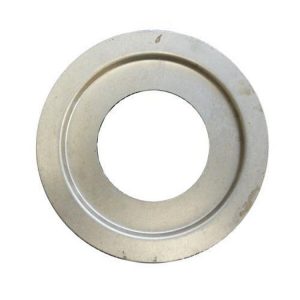
Dana Spicer Dana 44 Inner Pinion Bearing Baffle – 30765
 Dana 44 Bearings and Install Kits, Differential Pinion Bearing Baffle and Axle Slingers
Dana Spicer Dana 44 Inner Pinion Bearing Baffle – 30765
- Dana Spicer Dana 44 inner pinion bearing baffle, part 30765
- Helps oil pool behind the inner pinion bearing
- Aids oiling of the outer pinion bearing in high pinion and highly rotated axles
SKU: D/S30765 -
Dana 44 Bearings and Install Kits, Differential Pinion Bearing Baffle and Axle Slingers
Dana Spicer Dana 30/44 Pinion Head Slinger – 30764
 Dana 44 Bearings and Install Kits, Differential Pinion Bearing Baffle and Axle Slingers
Dana Spicer Dana 30/44 Pinion Head Slinger – 30764
- Dana Spicer pinion head slinger for Dana 30 and Dana 44 axles
- Part number 30764, UPC 70000006723
- Mounts behind the pinion head
- Slings oil away from the inner pinion bearing
SKU: D/S30764


The axle and its parts
The axle transfers engine torque to the wheels and carries vehicle weight. On a solid axle, a housing contains the differential, ring and pinion and the axle shafts, which end at wheel bearings and hubs. Front 4x4 axles also include steering knuckles and, on many vehicles, locking hubs. Parts wear with mileage, and they take extra abuse from bigger tires, lower gears and trail use.
Common parts and when you need them
- Ring and pinions and install kits: Used for gear ratio changes after fitting larger tires, or to replace worn gears. Installation kits provide the bearings, seals and shims for the job.
- Axle shafts: Replace bent or broken shafts, or upgrade to stronger materials such as chromoly. Spline count and length must match.
- Locking hubs: Let the front wheels disengage when not in four-wheel drive.
- Wheel bearings: Wear causes noise, play and heat. Replace them in sets with seals.
- Pitman arms and steering parts: Part of the steering linkage, critical for control.
Identify your axle first
Axle parts depend on the axle model more than the vehicle. Common examples include Dana 30, Dana 44 and Dana 60, along with the GM 14 bolt and Ford 9 inch. Note the ring gear diameter, spline count, bolt pattern, and whether the axle is front or rear. Axle tags, casting numbers and measurements help identify it, and parts for similar-looking axles may not interchange. Confirm fitment for your exact year, make and model and check the manufacturer's specifications.
Installation notes
Gear setup needs correct pinion depth, bearing preload and backlash. Errors cause noise and failure, so it is best done by an experienced shop. Steering and wheel bearing work is safety-critical, so use jack stands, torque fasteners to specification and have the alignment checked afterward. When you change gear ratio, change both axles to matching ratios, and recalibrate the speedometer. Use the correct gear oil, and replace it after the break-in period.
Finally, plan the whole drivetrain, not just one axle. Stronger axle shafts help only if the carrier, locker and housing can keep up, and heavier gears and larger tires also load the driveshafts, u-joints and steering. A balanced upgrade avoids creating a new weak link, and a qualified shop can help you plan the combination.
Measuring, matching and common mistakes
Before ordering, confirm the axle identity by checking the tag, then measure the track width, spring perch spacing and wheel bolt pattern, since these details separate otherwise similar axles. For shafts, compare spline count, overall length and the type of hub or flange. For ring and pinion sets, confirm ring gear diameter, ratio and whether the set is for the front or rear.
- Do not mix ratios between front and rear axles.
- Do not reuse old bearings, seals or crush sleeves when rebuilding.
- Do not forget to torque axle nuts and hub fasteners to specification.
Check wheel bearings for play by lifting each wheel and rocking it top to bottom, and listen for humming that changes when turning. Keeping gear oil and breathers in good condition protects every component inside the housing.
Popular Axle Parts brands
- G2 Axle and Gear (656)
- Crown Automotive (140)
- Dana Spicer (105)
- Omix-Ada (64)
- Alloy USA (60)
- Trail Gear (35)
- Warn (31)
- Pro Comp Suspension (23)
- Skyjacker (21)
- Motive Gear (15)
- Rugged Ridge (12)
- Rubicon Express (11)
Axle Parts FAQ
Do I need to regear after installing bigger tires?
Larger tires effectively raise the gear ratio, which can reduce power and fuel economy. Many owners regear to restore performance. The right ratio depends on tire size, engine, transmission and use.
How do I identify my axle model?
Check for an axle tag, casting numbers, the cover shape and the number of cover bolts, and measure the ring gear. Confirm the findings against the manufacturer's information before buying parts.
Why must front and rear gear ratios match?
Mismatched ratios make the front and rear axles turn at different speeds, which can bind a four-wheel-drive system and cause drivetrain damage. Both axles should use the same ratio and similar tire sizes.
What does an axle spline count mean?
The splines are the teeth where the shaft meets the differential. Shafts and carriers must have the same spline count, such as 27 or 30. A higher count is generally stronger for the same diameter.