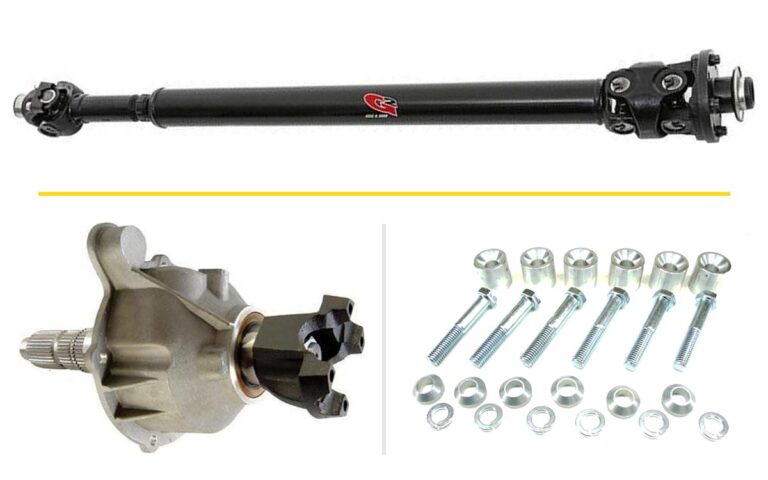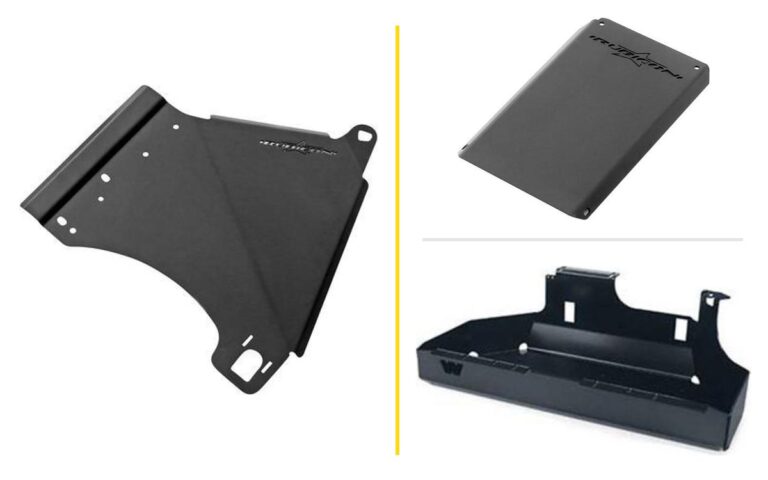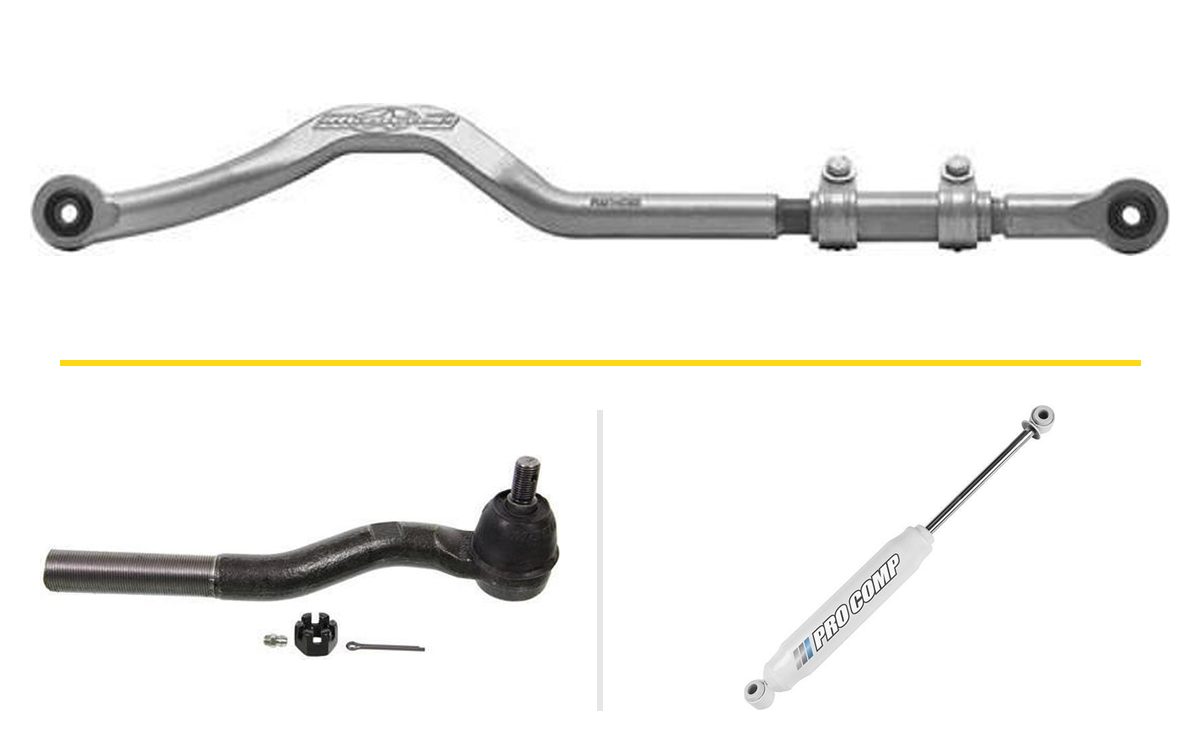
Death wobble is a violent, self-sustaining shake of the front wheels and steering that starts when a solid front axle hits a bump at speed, and it does not stop until the vehicle slows down. It is a symptom, not a single broken part: somewhere in the track bar, steering linkage, ball joints, bearings or alignment there is enough play to let the axle and wheels start oscillating against each other. Jeep Wrangler JK and TJ, Cherokee XJ and Grand Cherokee ZJ owners know it well, and so do Ram 2500, Ram 3500 and Ford Super Duty owners.
Key takeaways
- It is play, not a bad part number: death wobble needs looseness somewhere in the front end plus a trigger, usually a bump or expansion joint at 45 mph and up.
- Check the track bar first: bushings, the bolts, the bolt holes in both brackets and the bar itself account for more death wobble than any other part. Tie rod ends, the drag link and the ball joints come next.
- A steering stabilizer hides it: a stiffer damper can quiet the shake, but the worn joint is still there and the wobble returns, usually worse.
- The dry-steer test finds most of it: with the truck on the ground and the engine running, a helper rocks the wheel while you watch each joint for movement that does not match the part next to it.
- Lifted vehicles need geometry, not just parts: re-center the axle with an adjustable track bar, keep the track bar and drag link close to parallel, restore caster and set toe after every lift.
What death wobble is, and how it differs from a shimmy
The steering wheel snaps left and right faster than you can follow it and the whole front end shakes. It almost always starts the same way: one front tire hits a pothole, a seam in the pavement or a bridge expansion joint at highway speed, and instead of the bump fading out, the wheels start swinging side to side in a steady rhythm. Holding the wheel tighter does not stop it; slowing down does.
Some 2017-2019 F-250 and F-350 4WD trucks have exactly this condition, covered by Technical Service Bulletin 18-2268: a sustained steering wheel oscillation after driving over rough pavement or an expansion joint above 45 mph.
A shimmy is a different, milder problem:
- Shimmy: a steady vibration in the steering wheel that comes in at a certain speed band (often 50 to 65 mph), stays there on smooth road and fades as you go faster or slower. Out-of-balance tires, a bent wheel, a tire that is out of round or has a shifted belt are the usual causes.
- Death wobble: violent, sudden, set off by a bump, and self-sustaining. It does not need a particular speed band to continue once it starts, and it only stops when speed drops a lot. The tires can make it easier to trigger, but loose parts are what let it happen.
Why solid front axles get it
An independent front suspension lets each wheel move on its own. A solid front axle ties both wheels to one housing, and that is the root of the problem. When one tire is knocked rearward or sideways by a bump, the motion is passed straight across the axle and through the tie rod to the other wheel. Large, heavy tires add a gyroscopic effect: a spinning wheel tipped by a bump tries to steer. If every joint is tight and the geometry is right, the caster built into the axle pulls the wheels back to center and the motion dies out in one or two cycles.
Add play and that stops happening. The front axle on most of these vehicles is held side to side by one part, the track bar (also called a panhard bar), bolted to the frame on one side and to the axle on the other. The steering drag link runs from the pitman arm on the frame-mounted steering box out to the axle on a similar path. If the track bar lets the axle shift a fraction of an inch sideways, the axle moves relative to the drag link, and that movement turns the wheels. The wheels turning shifts the axle again, and the cycle locks in. Worn tie rod ends, ball joints and bearings each add their own slop.
The vehicles that suffer most share this layout:
- Jeep Cherokee XJ, Grand Cherokee ZJ, Wrangler TJ and JK: coil springs, four control arms and a front track bar, with a Dana 30 or Dana 44 front axle (the differences between those axles are covered in Dana 30 vs Dana 44 vs Dana 60).
- Ram 2500 and 3500 4WD: a coil-sprung solid front axle located by links and a track bar.
- Ford Super Duty 4WD from 2005: coil springs, radius arms and a track bar with a ball joint at one end. Leaf-sprung front axles, such as the 1999-2004 Super Duty and older trucks, have no track bar because the leaf springs locate the axle, though they can still wobble from worn steering joints.
Lifts, bigger tires and wheels with less backspacing all make it worse, which is why death wobble so often shows up soon after a lift.
The causes, in the order to check them
Work through the front end in this order, from the most common cause to the usual triggers. Fix everything you find: two half-worn joints wobble as readily as one bad one.
1. Track bar, bushings, brackets and bolts
The track bar is the first suspect on every solid-axle 4X4, because any play in it moves the axle sideways under the frame, which steers the wheels. Check all of it:
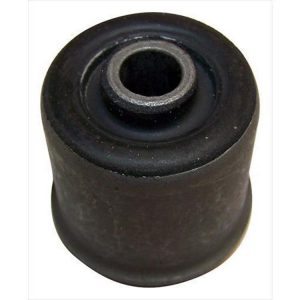
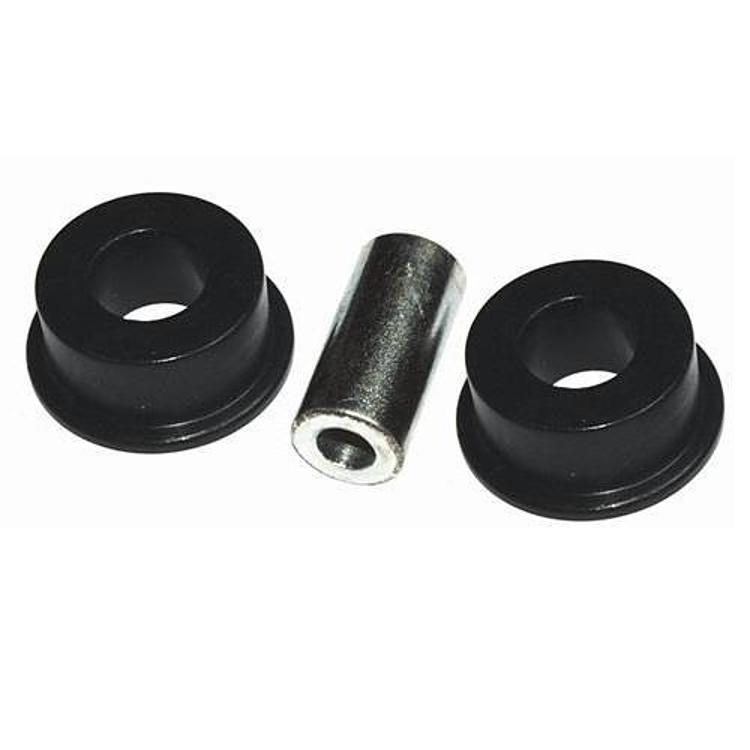
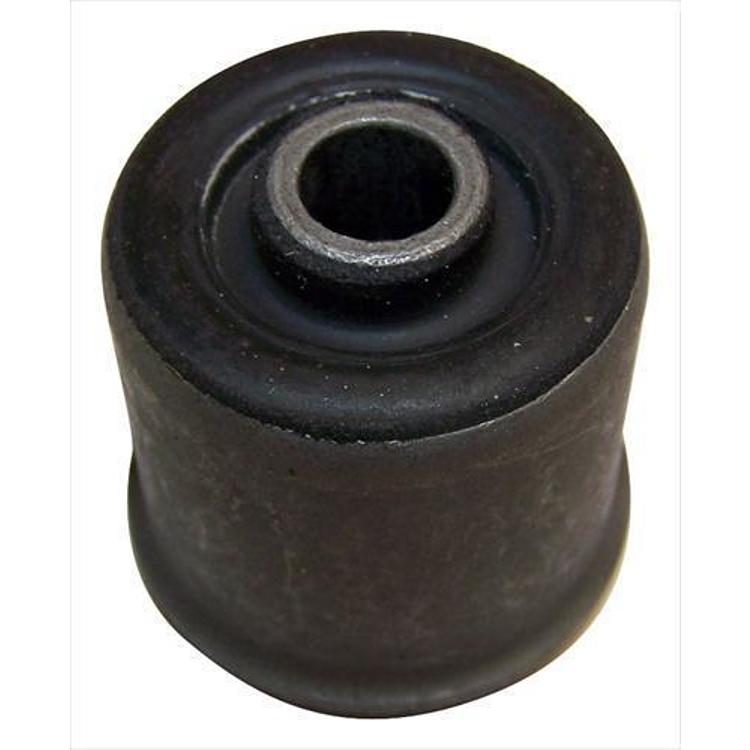
- Bushings: rubber or polyurethane bushings at the ends of the bar crack, split and go soft. A bushing that lets the sleeve move inside the bar eye is play. Crown Automotive track bar bushing 52088431 is a direct-fit front axle-end bushing for the 1997-2006 Wrangler TJ and 2004-2006 LJ, and the MOOG K3147 front track bar bushing fits the Cherokee XJ, Comanche, Grand Cherokee ZJ and Wrangler TJ.
- Ball joint ends: many aftermarket bars and the Super Duty factory bar use a ball joint at one end instead of a bushing. MOOG names a loose track bar ball joint as a likely cause of front-end shimmy on 2005-2020 F-250 and F-350 4WD trucks, and its test is simple: disconnect the bar from the stud and move it by hand. If the stud catches, binds or quickly releases tension through its range, the joint is done.
- Bolts and holes: a track bar bolt that has been loose even once wallows out the bolt hole in the bracket. An oval hole will not hold a new bolt tight.
- Brackets: frame-side brackets can crack at the welds or flex on the frame.
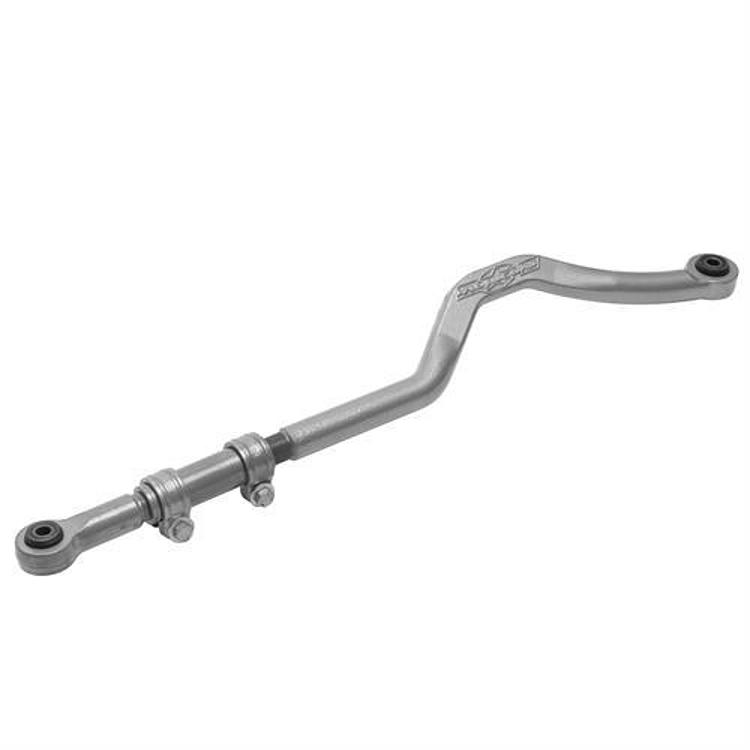
Replacement bushings come in two materials. Rubber is quieter and matches the factory feel. Polyurethane is firmer and holds its shape longer but passes more road noise. The Rubicon Express RE1687 heavy-duty front track bar bushing kit is a polyurethane set for the Rubicon Express RE1610 and RE1660 extreme-duty bars.
2. Tie rod ends and the drag link
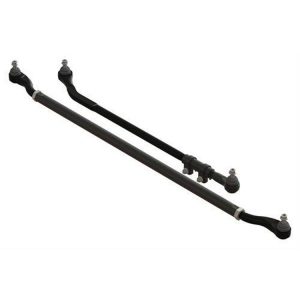
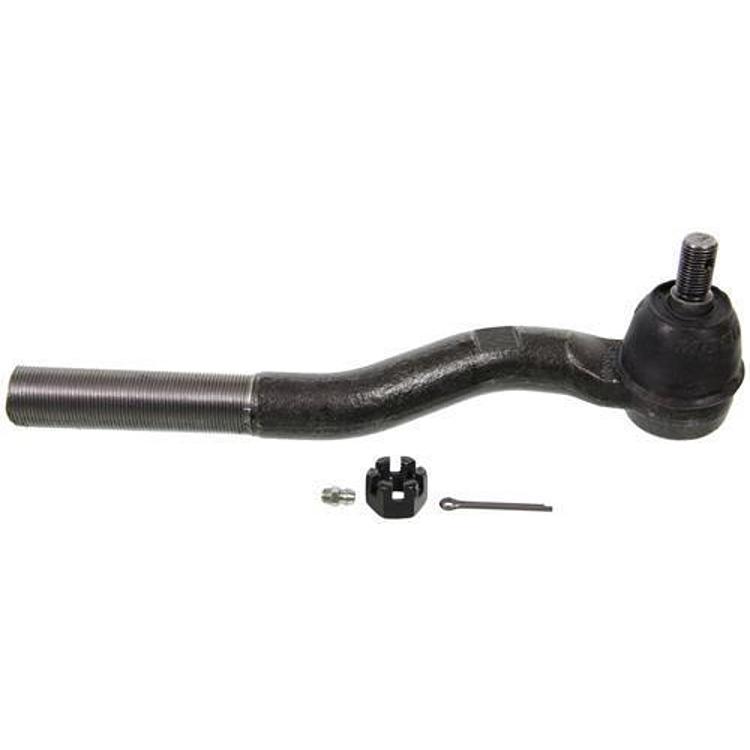
The tie rod connects the two steering knuckles; the drag link connects the pitman arm on the steering box to the knuckle or the tie rod. Every end is a small ball-and-socket joint, and each one that has worn loose lets the wheels steer a little on their own. Look for torn boots and any movement of the ball stud in its socket, and check that the adjusting sleeve clamps are tight.
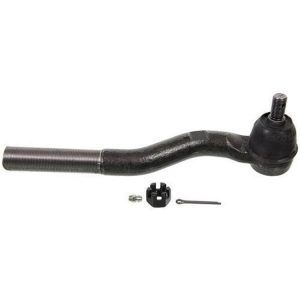
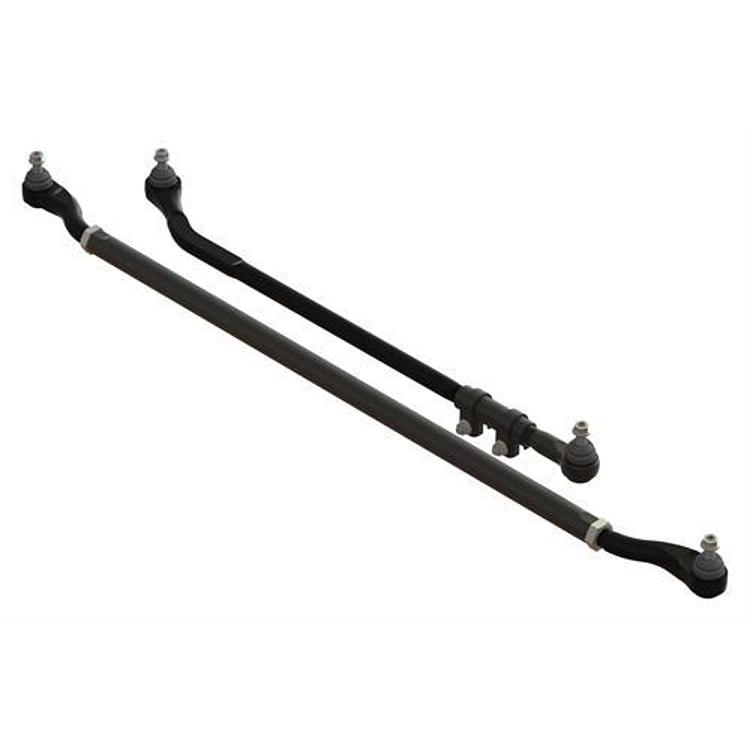
Replace worn ends with a quality OE-style part such as the MOOG ES800594 outer tie rod end (left-hand outer, 2007-2010 Wrangler JK) or, for a 2005-2015 Super Duty, the MOOG ES80754 outer tie rod end. On Jeeps with factory tie rods that bend on the trail, a heavy-duty tie rod and drag link set is the better repair. The TeraFlex HD tie rod and drag link kit 1853900 for the 2007-2016 Wrangler JK uses a 1.6-inch outside-diameter, heat-treated 4140 chromoly tie rod and a fully forged drag link with an oversized adjusting collar and pinch clamp.
3. Ball joints
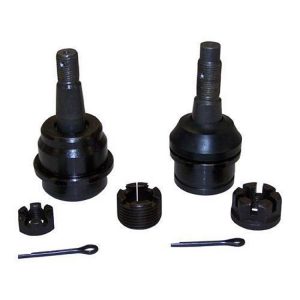
The upper and lower ball joints hold each steering knuckle to the axle and carry the weight of the front end while letting the knuckle steer. Worn joints let the knuckle tip in and out, which is enough to start a wobble on a heavy truck or a Jeep on big tires.
One detail catches a lot of people out. MOOG explains that many Dodge and Ram 1500, 2500 and 3500 trucks and Jeep Cherokee, Grand Cherokee, Wrangler TJ and JK axles use a telescoping upper ball joint, where the stud is designed to slide in and out of its housing. That movement is normal and does not mean the joint is worn. MOOG’s replacement limits for these axles, measured with a dial indicator, are a total of 0.060 inch at the upper joint and 0.090 inch at the lower joint. Above that, replace the joint.
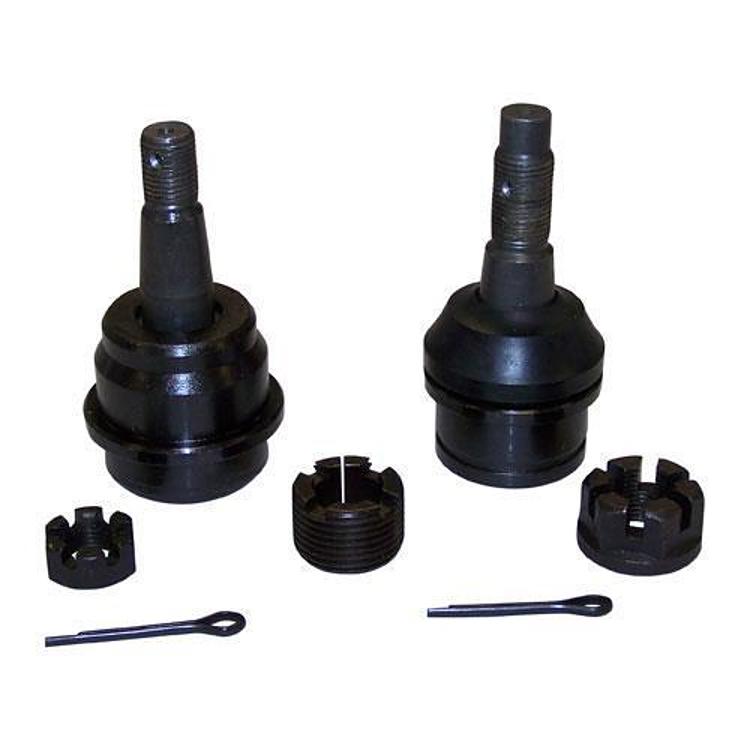
Replacement ball joints come as factory-style sets such as the Crown Automotive 68004085AA complete ball joint assembly (upper and lower for one side of a 2007-2018 Wrangler JK Dana 30 or Dana 44, non-greaseable) or heavier greaseable designs in the axle ball joints category.
4. Wheel bearings and unit bearings
A loose wheel bearing lets the whole wheel tip on the spindle, and it feels identical to a bad ball joint until you look closely. Most late solid-axle Jeeps and many heavy-duty trucks use a sealed unit bearing (a hub assembly) bolted to the knuckle; it cannot be adjusted and is replaced as a unit once it has play. Older axles with serviceable tapered bearings can be cleaned, repacked and adjusted. The axle hub assemblies and wheel bearings categories cover both types.
5. Control arm bushings
The control arms (or radius arms on a Super Duty) locate the axle fore and aft and set its rotation, which sets caster. Torn or collapsed control arm bushings let the axle shift and twist under braking and over bumps, and that changes caster on the fly. Look for cracked rubber, bushings pushed out of center in the arm and polished marks where the arm has been moving on its bolt. Control arm bushings can be pressed into the factory arms; adjustable control arms replace the arms and let you set caster after a lift.
6. Steering box, its mounting and the pitman arm
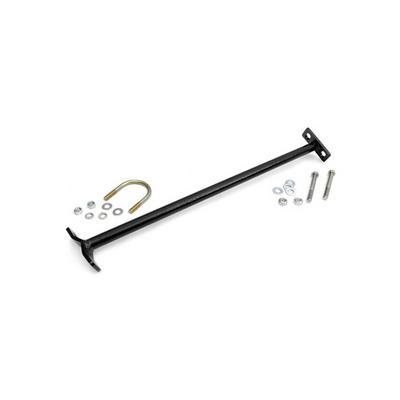
The steering box bolts to the frame rail, and the frame has to hold it still against every steering load the front tires put into it. On Jeeps such as the TJ and XJ the frame around the box can crack, and loose mounting bolts let the box move. A steering box brace ties the box to the opposite frame rail; the Rough Country 1153 steering box brace fits the 1997-2002 Wrangler TJ with minor drilling, and the steering box braces category covers other models.
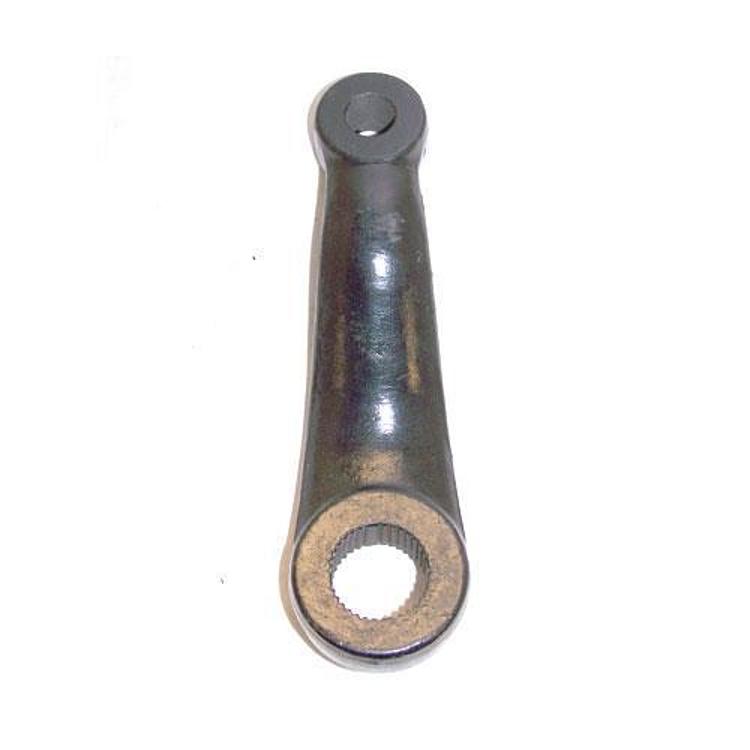
The pitman arm is splined to the box’s output (sector) shaft and held by a large nut. A loose nut or worn splines let the arm move before the shaft does. Lifted Jeeps often use a dropped arm, such as the Rubicon Express RE2500 pitman arm for 3.5-inch-plus lifts, to bring the drag link angle back toward the track bar angle. Stock-height repairs take a factory-style arm like the Crown Automotive 52038337 power steering pitman arm; match the part number to your original arm. More options are in the pitman arms category.
7. Alignment: caster and toe
Caster is the backward tilt of the steering axis, and it is what pulls the wheels back to center after a bump. On link-and-coil front ends, lifting the vehicle rotates the axle and reduces caster unless the control arms are adjusted to put it back. Low caster leaves the front end with little self-centering, so a small disturbance lasts longer. Lifts of 3 inches and up on the Wrangler JK need control arms to correct pinion and caster angles, and to help with steering and death wobble.
Toe is whether the fronts of the tires point slightly in or out. Set it to the factory specification; toe-out makes the wheels want to wander apart, and any tie rod work changes it. Ford’s TSB 18-2268 procedure for the Super Duty includes checking and adjusting caster, camber and toe along with the damper, which is a good reminder that alignment belongs in every death wobble repair.
8. Tire balance, out-of-round tires and pressure
Tires are the usual trigger rather than the cause. An out-of-balance wheel, a tire that is out of round or has a separated belt, mismatched tire pressures or a bent wheel can each start the oscillation on a front end that is already loose. Road-force balance the tires, check them for bulges, set the pressures, and swap the fronts to the rear as a test.
Why a steering stabilizer masks death wobble instead of fixing it
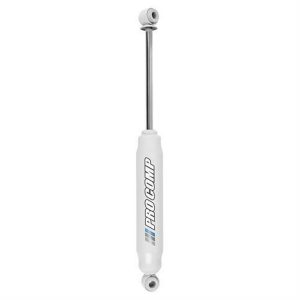
A steering stabilizer is a shock absorber mounted between the tie rod and the axle or frame. It resists fast steering movement, which is why a stiffer one often makes the wobble go away for a while. It does not remove the play: the worn joint keeps moving and wearing until the stabilizer can no longer keep up.
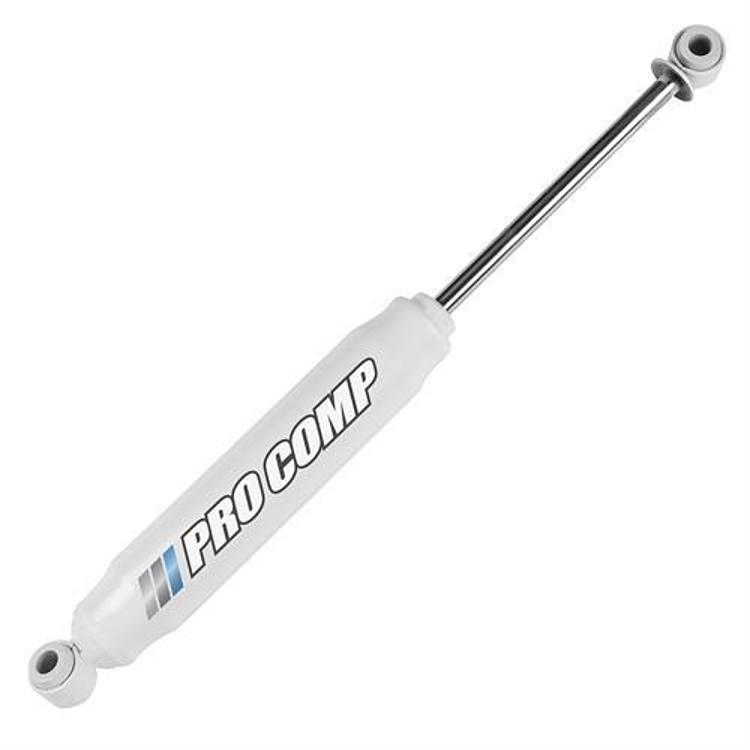
A stabilizer with no resistance left lets the front end oscillate longer after every bump, and Ford’s fix for some 2017-2019 F-250 and F-350 trucks with a sustained oscillation above 45 mph was a test of the steering linkage damper for lag or lash and a new damper where it failed. The right order is: find and fix the play, align the front end, then fit a healthy stabilizer of the right size for your tires. A single stabilizer such as the Pro Comp ES2000 223200 for 2000-2012 Ram 2500 and 3500 trucks matches the single-stabilizer factory layout of most of these trucks; the steering stabilizers category has single and dual setups. For how shock valving affects ride and control, see Bilstein 5100 vs Fox 2.0.
Step-by-step death wobble inspection
You need a helper, a flashlight, a jack, jack stands and a long pry bar. The dry-steer test is done with the vehicle on the ground so the steering is loaded as it is when driving; it finds most worn track bar, tie rod, drag link, pitman arm and steering box problems in minutes.
Dry-steer test
- Set up safely: level ground, transmission in park, parking brake on, rear wheels chocked. Keep hands and sleeves clear of the moving linkage.
- Start the engine so the power steering works, and have the helper rock the steering wheel quickly an inch or two each way, enough to load the linkage without turning the tires much.
- Watch the track bar first: put a hand or the flashlight beam on each end. The bar, bushing sleeve, bolt and bracket should move together. If the bar moves before the bolt, the bushing or ball joint is worn; if the bolt moves in the bracket, the hole is wallowed out or the bolt is loose. Watch the axle housing against the frame: any sideways shift of the axle is track bar play.
- Move along the steering: check each tie rod end and drag link end. The stud and the socket should move as one; a clunk you can feel or a stud that moves up and down in its socket is a worn end.
- Check the pitman arm and steering box: the arm should turn the instant the sector shaft turns, and the box should not move on the frame at all. Look for cracks around the box mounting on the frame rail.
Wheel-off-the-ground checks
- Support the axle: raise one front wheel and set the axle on a jack stand, so the ball joints are unloaded. Never work under a vehicle held only by a jack.
- Rock the tire top to bottom (hands at 12 and 6 o’clock). Movement points to ball joints or a wheel bearing; watch the knuckle against the axle yoke to tell which. If the knuckle moves on the yoke, it is a ball joint; if the tire moves on a still knuckle, it is the bearing or hub.
- Rock the tire side to side (hands at 3 and 9 o’clock). Movement here is usually a tie rod end, drag link end or steering box play.
- Pry the ball joints: put the bar between the axle yoke and the knuckle and lever up and down. For telescoping upper joints on Jeep and Ram axles, measure with a dial indicator rather than judging by eye.
- Inspect control arm bushings and every bolt for looseness, cracks and shiny wear marks.
- Spin the tire and watch for wobble or bulges, and listen for a grinding bearing.
MOOG’s general front-end check uses the same wheel-shake method: grip the tire at the sides and then at the top and bottom, and any movement or noise points to worn tie rods or ball joints.
The fixes that keep it from coming back
Adjustable and heavy-duty track bars
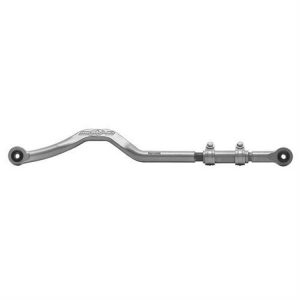
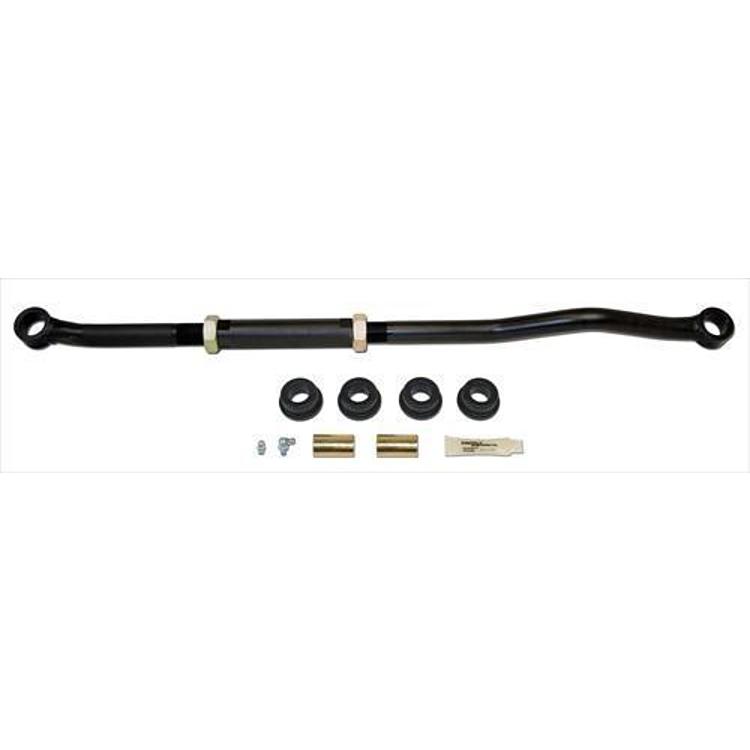
On a lifted vehicle with a fixed-length factory bar, replace the bar rather than just the bushings. An adjustable track bar lets you set the axle back in the center of the vehicle after a lift, and the heavier designs resist the bending that big tires put into the factory bar. Examples:
- Wrangler JK: the Rubicon Express RE1683 adjustable heavy-duty forged track bar is heat-treated forged steel with a sleeved adjuster collar and OE-style bushings, for 0 to 6 inches of lift on 2-door and 4-door models. The Rubicon Express JKHD1 pairs a forged track bar with a heavy-duty tie rod on 1-ton ends.
- Ford Super Duty: the BD Diesel 1032013-F adjustable track bar kit uses a 1-5/8-inch bar with a heat-treated stamp-forged rod end, for stock height up to an 8-inch lift.
- Other models: the track bars category covers bars for Jeep, Ram, Ford and GM solid axles.
Set the length with the vehicle at ride height, on its wheels, so the axle is centered side to side (measure from the frame rails or the inner fenders to the tire or wheel on each side). Tighten the bolts to the maker’s torque and check them after the first drive.
Relocation brackets after a lift
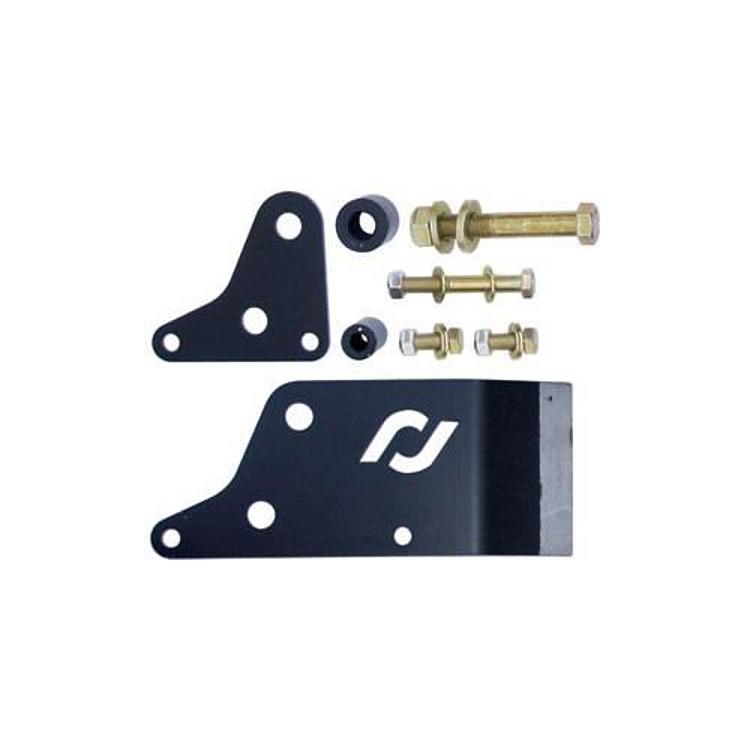
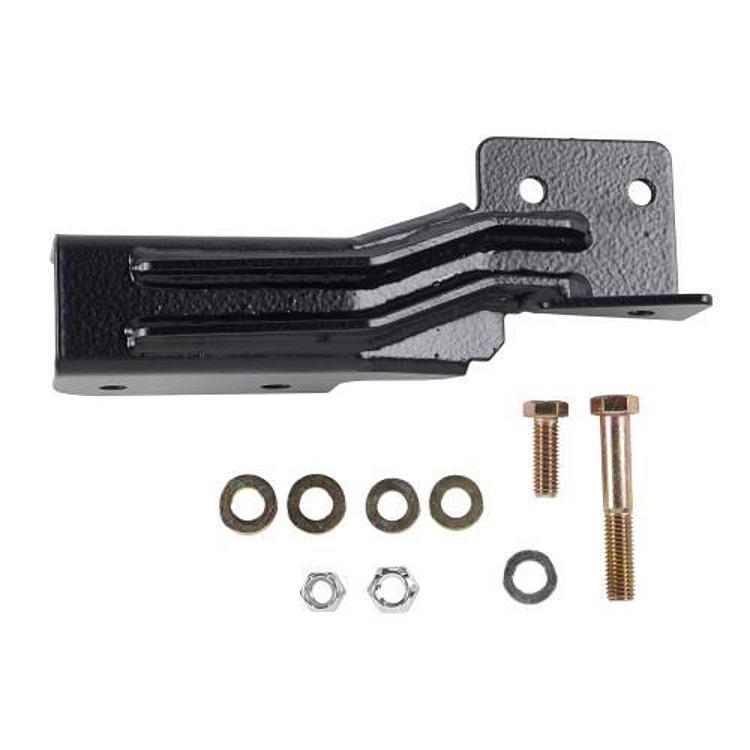
A lift steepens the track bar, so the axle moves sideways as the suspension compresses, and if the bar no longer matches the drag link, every bump steers the vehicle. Keep the track bar and drag link close to parallel and close to the same length, and the axle and steering move together. A relocation bracket restores that relationship by lowering the frame-side mount or raising the axle-side mount:
- Currie CE-9807FTBK: an axle-side front track bar relocation kit with inner and outer brackets and all hardware for the 2007-2018 Wrangler JK; it needs minor welding. See Currie front track bar relocation kit.
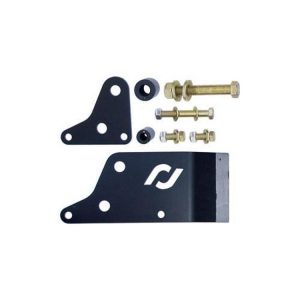
- Rubicon Express RE1675: a frame-side front track bar bracket laser-cut and CNC-formed from 3/16-inch cold-rolled steel, for 2-door and 4-door models. See Rubicon Express front track bar bracket RE1675.
- More brackets: the track bar brackets category has frame braces, drop brackets and axle-side brackets for other models.
A dropped pitman arm does the same job on the steering side, lowering the drag link back toward the track bar angle.
Upgraded tie rods, drag links and ball joints
Replace tie rod and drag link ends in pairs on the same bar, and replace the whole bar when it is bent. A heavier tie rod resists bending on the trail, and a bent tie rod changes toe and loads the ends unevenly. The drag links and steering upgrades and tie rod assemblies categories cover heavy-duty sets; the tie rod ends category covers single ends. When ball joints are worn on one side, the other side is rarely far behind, so do both knuckles while the axle is apart. If you are weighing factory-style replacements, Crown vs Omix-Ada explains how the two main Jeep replacement brands differ.
Alignment after the lift or the repair
Finish with an alignment on a rack. Have the shop set toe to the factory figure, measure caster on both sides, and adjust the control arms if caster is low. If you change neither the control arms nor the track bar, lift height does not alter toe and the steering wheel is the only thing that needs adjusting. As soon as you change the track bar length or any steering part, a full alignment is needed.
What to do when it happens
When it starts:
- Hold the wheel firmly and keep the vehicle pointed straight; do not fight each oscillation.
- Ease off the throttle and brake smoothly, not hard.
- Slow down until it stops, then pull over where it is safe and look at the front end. A backed-out track bar bolt or a separated tie rod end means the vehicle gets towed.
- Drive slowly to the repair and fix it before the next highway trip. Each episode overloads the steering joints and brackets and makes the next one easier to trigger.
Death wobble checklist
| Order | Part | What to look and feel for | Usual fix |
|---|---|---|---|
| 1 | Track bar bushings or ball joint | Bar moves before the bolt; cracked rubber; binding stud | New bushings or joint; adjustable bar if lifted |
| 2 | Track bar bolts, holes and brackets | Bolt moves in the bracket; oval holes; cracked welds | New bolts; repair or replace the bracket |
| 3 | Tie rod ends and drag link | Stud moves in socket; torn boot; loose clamp | New ends in pairs; heavy-duty tie rod and drag link |
| 4 | Ball joints | Knuckle moves on the yoke at 12 and 6 o’clock | New upper and lower joints, both sides |
| 5 | Wheel bearings or unit bearings | Tire moves while the knuckle stays still; grinding noise | New hub assembly, or repack and adjust |
| 6 | Control arm bushings | Cracked or off-center rubber | New bushings or adjustable arms |
| 7 | Steering box and pitman arm | Box moves on the frame; arm moves before the shaft | Tighten or brace the box; new pitman arm |
| 8 | Alignment | Low caster after a lift; toe-out | Rack alignment; adjust control arms for caster |
| 9 | Tires and wheels | Imbalance, out-of-round tire, bent wheel | Road-force balance; replace damaged tires or wheels |
| 10 | Steering stabilizer | No or uneven resistance by hand | New stabilizer, after everything above is fixed |
The short version
Death wobble is play plus a trigger. Check the track bar first, then the tie rod ends, drag link and ball joints, then bearings, bushings and the steering box. Fix every worn part, restore the geometry after a lift, align, balance the tires, and only then judge the stabilizer.
Frequently asked questions
Will a new steering stabilizer fix death wobble?
No. A stabilizer is a damper: it slows fast steering movement, so a stiffer one can hide the oscillation, but the loose track bar bushing, tie rod end or ball joint that lets the axle move is still there and keeps wearing. Find the play first. A worn-out stabilizer with no resistance left is worth replacing, because it no longer helps the front end settle after a bump, but treat it as the last piece of the repair, not the first.
What is the most common cause of death wobble?
The front track bar and its mounts. Worn bushings or a worn ball joint at either end, a loose bolt, an oval bolt hole in the frame or axle bracket, or a bent bar let the axle shift sideways under the truck, and that side-to-side movement steers the wheels. Check the track bar first, then the tie rod ends and drag link, then the ball joints.
Can unbalanced tires cause death wobble?
Tires alone cause a shimmy, a steady vibration in a speed band that fades when you speed up or slow down. An out-of-balance or out-of-round tire can, however, be the trigger that sets off death wobble on a front end that already has play in it. Balance and inspect the tires as part of the repair, but do not stop there if the front end is loose.
Do I need an alignment after fixing death wobble?
Yes, whenever you replace a tie rod, drag link, track bar or ball joint, or change the lift height. Toe changes with any tie rod work, an adjustable track bar changes where the axle sits under the vehicle, and caster changes with lift height on link-and-coil front ends. Have toe set to the factory figure and caster checked on the alignment rack.
Why did death wobble start right after I lifted my Jeep?
A lift steepens the track bar, pulls the axle off center, adds bump steer and, on link-and-coil Jeeps, reduces caster. An adjustable track bar, a relocation bracket or dropped pitman arm, and adjustable control arms to restore caster are the usual fixes for lifts of about 3 inches and up.
Start with the parts at the top of the checklist: track bars, track bar bushings and track bar brackets, then tie rod ends, drag links, ball joints and pitman arms.
Sources
- MOOG, Track Bar Ball Joint Solves Front End Shimmy: the track bar ball joint test for 2005-2020 Super Duty trucks.
- MOOG, Measuring Ball Joint Movement: telescoping ball joints and the 0.060 and 0.090 inch limits.
- MOOG, The complete front end assembly check: the wheel-shake test for tie rods and ball joints.
- Ford Motor Company, Technical Service Bulletin 18-2268 (NHTSA file): the 2017-2019 F-250 and F-350 oscillation procedure.
- TeraFlex, Frequently Asked Questions: caster, track bars and alignment after a JK lift.