




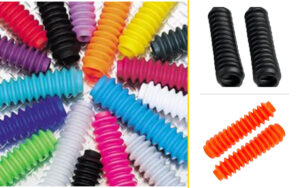
Shock boots keep grit and water off a lifted shock's shaft and seal. How to size, vent and inspect one, when it can trap…
Bump stops limit suspension travel so axles, shocks and frames do not slam metal on metal. This branch of Suspension Accessories lists urethane, microcellular, hydraulic and air-style bump stops, along with strike pads and mounting sleeves. TeraFlex, Energy Suspension, Timbren, King Shocks and Rock Krawler are among the brands. Use the product pages to compare height, type and part numbers, then compare the products below.
Bump Stops
Showing 1–12 of 169 resultsSorted by popularity
-
Bump Stops
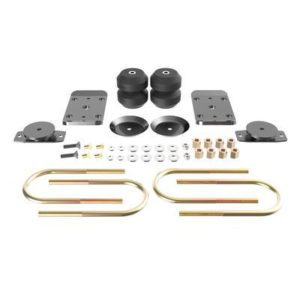
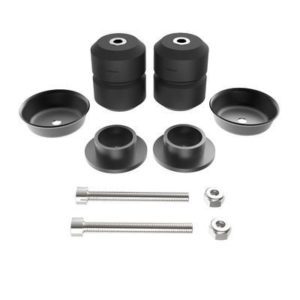
Timbren Active Off-Road Rear Bumpstops – ABSTRFK
- Rear Active Off-Road bump stop for Toyota Tacoma
- Also fits 2015–2016 Chevrolet Colorado and GMC Canyon
- Includes a U-bolt flip kit for more ground clearance
- Progressive-rate action with a natural rubber compound
- Lifetime warranty and satisfaction guarantee
SKU: T/IABSTRFK -
Bump Stops
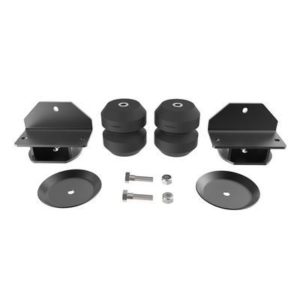
Timbren Active Off-Road Rear Bumpstops – ABSTORLC2
- Rear Active Off-Road bump stop for Toyota Land Cruiser 200 series
- Fits 2008–2011 and 2013–2021 Lexus LX570 and Toyota Land Cruiser Base trims
- Progressive-rate action at the end of axle travel
- Natural rubber compound
- Lifetime warranty and satisfaction guarantee
SKU: T/IABSTORLC2 -
Bump Stops
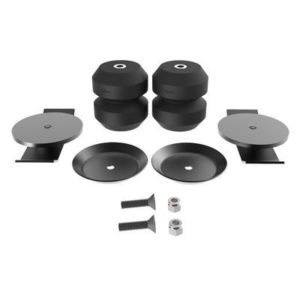
Timbren Active Off-Road Rear Bumpstops – ABSOSR
- Rear Active Off-Road bump stop for 2015–2016 Colorado, Canyon, Nissan Frontier and Toyota Tundra
- Progressive-rate action at the end of axle travel
- Natural rubber compound built for continued use after long off-road sessions
- Lifetime warranty and satisfaction guarantee
- Natural rubber compound with progressive-rate action
SKU: T/IABSOSR -
Bump Stops
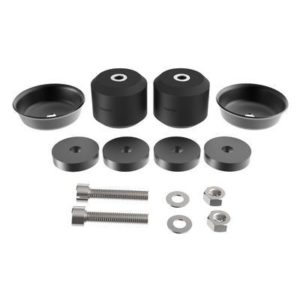
Timbren Active Off-Road Front Bumpstops – ABSGMFCC
- Front Active Off-Road rubber bump stop for 2015–2016 Chevrolet Colorado and GMC Canyon
- Progressive-rate springs for smooth, quiet engagement
- Natural rubber compound designed to outlast factory stops
- Lifetime warranty and satisfaction guarantee
- Listed trims include LT, WT and Z71 for the Colorado
SKU: T/IABSGMFCC -
Bump Stops
Timbren Active Off-Road Bumpstops – ABSJFTJ
- Rubber active off-road bump stop for the Jeep Wrangler TJ front or rear
- Also fits JK, JL and Gladiator front positions
- Progressive-rate action with smooth, quiet engagement
- Natural rubber compound
- Lifetime warranty and satisfaction guarantee
SKU: T/IABSJFTJ -
Bump Stops
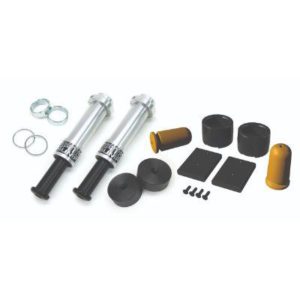
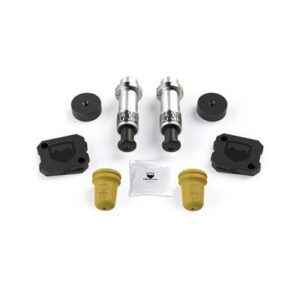
TeraFlex SpeedBump Bumpstop Kit – 1958250
- SpeedBump composite bump stop kit for 2007–2018 Jeep Wrangler JK
- Progressive closed-cell microcellular polyurethane stops
- Self-lubricating Delrin acetal resin shaft
- Includes front and rear SpeedBump stops and front strike pads
- Fits JK models with 2.5 inch of lift.
SKU: TER1958250 -
-
-
Bump Stops
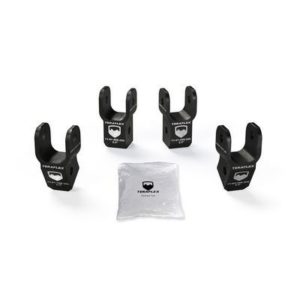
TeraFlex 2†Bump Stop Strike Pad Kit – 1959500
- 2 inch front and rear bump stop strike pads for 2018–2021 Jeep Wrangler JL
- Rear mounting plates and straps included
- Works on lifted Rubicon models with up to 35 inch tires
- With the shim kit, up to 37 inch tires on all JL and JLU models
- All necessary hardware included
SKU: TER1959500 -
Bump Stops
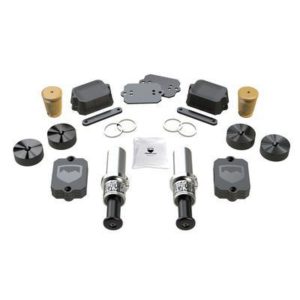
TeraFlex 2″ Stroke SpeedBump and Progressive Bump Stop Kit (2.5-3.5″ Lift) – 1968352
- 2 inch stroke SpeedBump and progressive bump stop kit for 2.5 to 3.5 inch lift
- Fits 2020–2026 Jeep Gladiator
- Progressive stops are 1.5 inch longer than stock
- SpeedBump stops with a Delrin acetal resin shaft
- Bolt-on front and rear installation
SKU: TER1968352 -
Bump Stops
TeraFlex 2″ Stroke SpeedBump and Progressive Bump Stop Kit – 1958352
- 2 inch stroke SpeedBump and progressive bump stop kit
- Fits 2018–2026 Jeep Wrangler JL, 2-door and 4-door
- Progressive bump stops are microcellular polyurethane and 1.5 inch longer than stock
- Self-lubricating Delrin shaft on the SpeedBump stops
- Bolt-on installation with a factory bell removal for the front
SKU: TER1958352 -
What a bump stop does
A bump stop is a cushion that stops suspension compression before the axle hits the frame, a body part or the tire hits a fender. On a stock vehicle, factory foam or rubber stops handle that job. When you lift a vehicle or add longer-travel shocks, the factory stops often no longer sit in the right place, so aftermarket stops are used to protect the shocks and chassis.
Types you will see
- Urethane or rubber bump stops: simple, inexpensive and common for mild lifts. They firm up as they compress.
- Microcellular progressive stops: closed-cell polyurethane units that squeeze gradually, absorbing energy while increasing resistance. Many are designed to pop into factory locations.
- Hydraulic bump stops: use fluid damping to slow the last part of travel, and they are used where large hits at speed are expected.
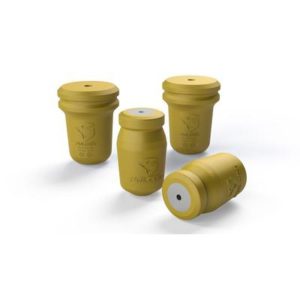
- Air bump stops and sleeves: designed for shock-integrated bump stops, with mounting sleeves to position them on the shock shaft.
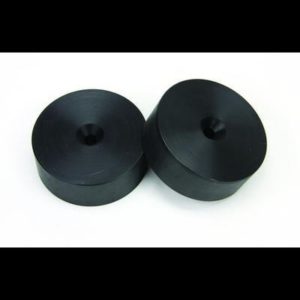
- Stackable pucks and strike pads: let you tune the stop height in increments, and the strike pad gives the stop a flat surface to land on.
Choosing the right one
Match the stop to the axle and lift height. Listings often state the lift range, such as 0 to 4.5 inches, and the stroke length. Think about use: slow rock crawling needs less energy absorption than desert or high-speed driving. Make sure the stop is mounted so it contacts before the shock bottoms out and before the tire reaches the body or the driveshaft hits something. Check whether a mounting sleeve, bracket or strike pad is included.
Installation notes
Measure available travel with the suspension cycled, since stops that are too tall limit flex and ones that are too short allow damage. Use proper jack stands, follow torque specifications and have the vehicle inspected after the first drive. Suspension work is safety related, so use a professional installer if you are not confident.
Bump stop placement and travel are tied to other suspension choices. Shocks are designed with a specific amount of travel, and a bump stop that lets the shock fully collapse risks internal damage. Likewise, extended brake lines, sway bar links and driveshafts need to accommodate the full range of motion. When tuning stop height, measure from the axle to the stop contact point with the suspension fully compressed and leave a small safety margin before the tire contacts the fender or frame.
Different materials suit different uses. Basic urethane is fine for light trail use, while microcellular and hydraulic designs are made for repeated big hits and high speeds. Check for cracks, tears or flattening during regular inspections, since a worn bump stop no longer protects the suspension. Make sure mounting cups, brackets and sleeves are secure and free of rust. If your lifted vehicle bottoms out often, revisit the springs, shock length and stop position together rather than just adding more cushion.
Fitment
Many stops are vehicle specific, others are universal. Confirm your exact year, make, model and lift height, and read the manufacturer's specifications before choosing a product below.
Related guides
- Shock Boots: Why Every Lifted Shock Needs One
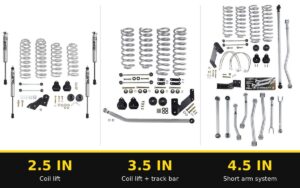
- Jeep JK Lift Heights: 2.5 vs 3.5 vs 4.5 Inch Compared
Jeep JK lift heights compared: the tires 2.5, 3.5 and 4.5-inch lifts clear, the track bars, arms, lines and driveshafts each needs, and which…
Popular Bump Stops brands
- Energy Suspension (28)
- TeraFlex (21)
- Crown Automotive (20)
- Daystar (17)
- Rubicon Express (14)
- Fox Racing Shox (9)
- King Shocks (9)
- Omix-Ada (7)
- Pro Comp Suspension (7)
- Timbren (5)
- Rock Krawler (5)
- Currie (4)
Bump Stops FAQ
Do I need new bump stops after a lift?
Often yes. A lift changes where the axle sits relative to the frame, so factory stops may no longer prevent bottoming out. Longer stops or extensions, sized for your lift height, restore protection for shocks, axle and body.
What is a progressive bump stop?
A progressive bump stop compresses gradually, with resistance rising as it squeezes, rather than stopping suddenly. Microcellular polyurethane designs are common and absorb large impacts better than a simple solid rubber block.
What is the difference between a bump stop and a shock?
A shock controls the speed of suspension movement through damping, while a bump stop limits how far the suspension can compress. They work together, and a bump stop can prevent a shock from bottoming out.
How tall should my bump stops be?
They should contact before the shock fully compresses and before the tire or axle hits anything, while still allowing the travel you want. Measure with the suspension cycled and follow the maker's lift-height guidance for your vehicle.