Choosing between 33, 35 and 37-inch tires is choosing how much of the Jeep or truck you will rebuild. A 33 is close to a bolt-on for most Wranglers and half-ton trucks. A 35 asks for lift, new gears and a few supporting parts. A 37 is a drivetrain project: axles, steering, brakes, bump stops and the spare carrier all change. Below: lift by platform, regear math with worked examples, speedometer error and the extra load on everything else.
Key takeaways
- 33s: about 2 to 3 inches of lift on a JK or a half-ton truck. A JL Rubicon already rides on 32.7-inch tires, and 4.10 gears can stay.
- 35s: 3.5 inches is the JK sweet spot, and 4.56 is the usual Wrangler gear. Effective gearing drops about 7% from a 32.7-inch tire.
- 37s: 4 to 4.5 inches on a JK, 4.88 to 5.13 gears, plus steering, brake and axle upgrades.
- The rule: new ratio = old ratio × new tire diameter ÷ old diameter. On 37s, true speed runs 13% above a speedometer set for 32.7 inches.
What 33, 35 and 37 mean in real inches
Flotation sizes such as 35x12.50R17 state the height. Metric sizes need math: a 285/70R17 is 32.7 inches, a 285/75R17 is 33.8, and the 315/70R17 that many people call a 35 is 34.4 inches. The tire size conversion guide walks through the formula, and the Tire Size Calculator converts any metric or flotation size in one step. Use real diameters in the math below.
A lift raises the body, but only the tire raises a solid axle: a 33 to 37 swap lifts the housing 2 inches, half the diameter gain. The fenders have to clear the other half.
How much lift each tire size needs
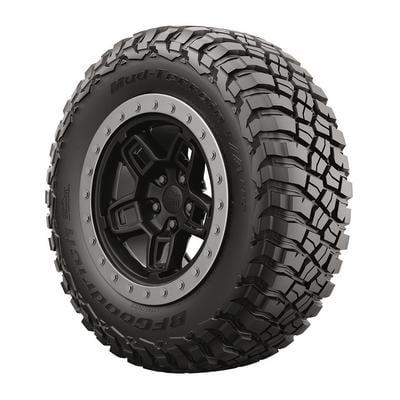
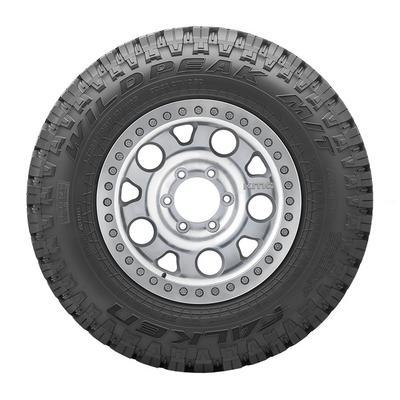
Backspacing, tire width and fender style decide whether a tire rubs at full lock and full compression, so these are typical heights:
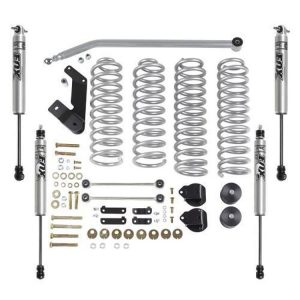
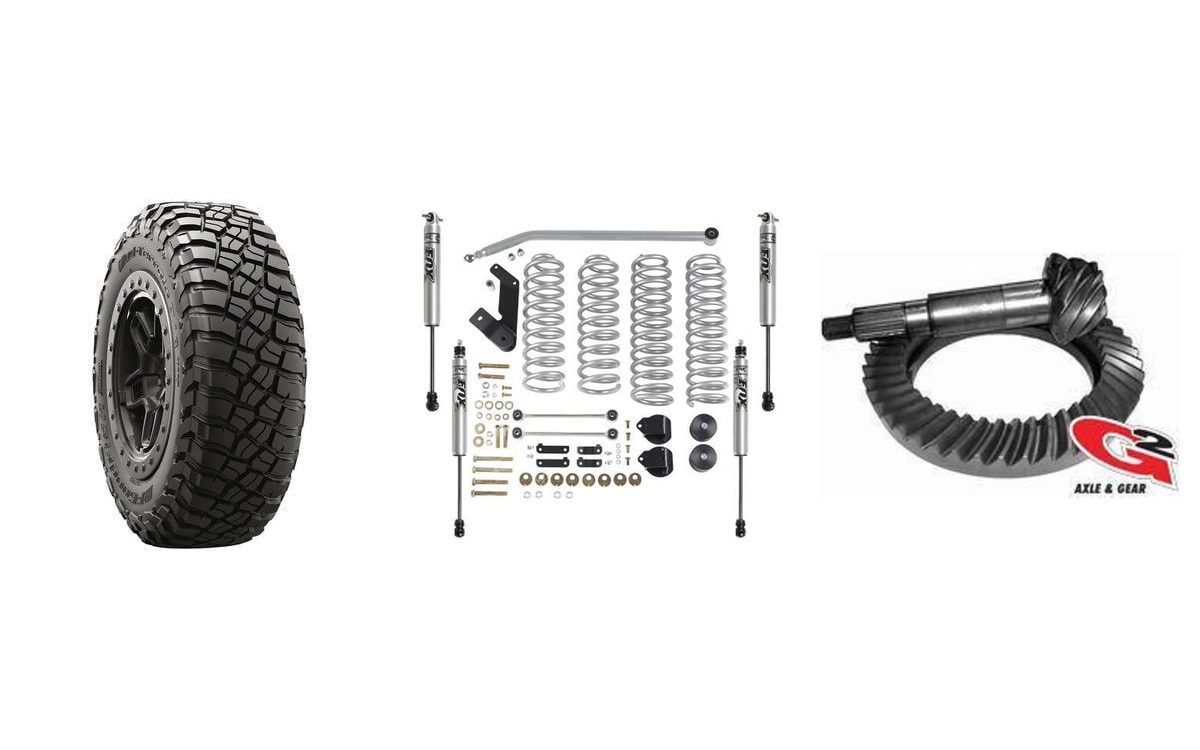
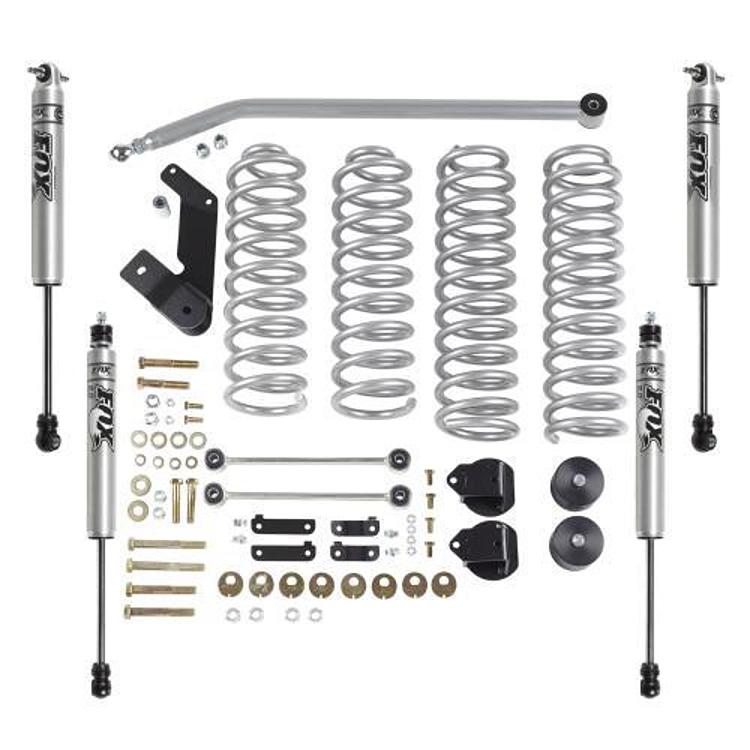
- Jeep Wrangler JK (2007-2018): 33s on 2.5 inches with almost any wheel. 35s fit at 2.5 inches on wheels with 4.5 inches of backspacing, but 3.5 inches gives real up-travel; kits like the Rubicon Express RE7122FP are built for it. 37s want 4 to 4.5 inches, wheels with 4.5 inches of backspacing or less, and often trimmed or high-clearance fenders. See the JK lift height comparison.
- Jeep Wrangler JL (2018 on): the Rubicon ships on LT285/70R17 tires, 32.7 inches. The factory Xtreme Recon package fits LT315/70R17 tires (34.4 inches) on a 1.5-inch lift with a 4.56 axle ratio. Aftermarket builds usually run 35s on 2 to 2.5 inches and 37s on 3.5 inches or more.
- Jeep Wrangler TJ (1997-2006): 33s on 3 to 4 inches. 35s take about 4 inches or more plus fender trimming or flat fenders.
- Jeep Cherokee XJ (1984-2001): a 4.5-inch lift clears about 32 inches without cutting; 33s mean trimmed fenders. See the XJ 4.5-inch lift guide.
- Half-ton trucks with IFS: 33s on most 2 to 3-inch leveling or lift kits, 35s on specific 3-inch kits or, more often, 4 to 6 inches of lift, and 37s at 6 inches or more with trimming. The leveling kit vs lift kit guide lists kits and their tire limits.
Browse complete lift kits by vehicle, and match the tire to wheels with the backspacing the kit calls for.
Effective gearing: the regear math
A taller tire acts like a numerically lower axle ratio. The effective ratio is the axle ratio × old diameter ÷ new diameter. A JL Rubicon with 4.10 gears on 32.7-inch tires behaves like 3.83 gears on 35s and 3.62 on 37s. The engine falls out of its power band and the transmission hunts on grades.
To get the stock feel back, use new ratio = old ratio × new tire diameter ÷ old diameter, then round to a ratio that is made for your axle. Worked examples:
- JK Rubicon, 4.10 on LT255/75R17 (32.1 in): 35s give 4.10 × 35 ÷ 32.1 = 4.47, so 4.56. 37s give 4.73, so 4.88.
- JL Rubicon, 4.10 on 32.7 in: 35s give 4.39, so 4.56. 37s give 4.64, so 4.88.
- Half-ton truck, 3.73 on 31.6 in: 33s give 3.90, so 3.91 or 4.10. 35s give 4.13, so 4.10 or the next step up.
Most builders round up, because bigger tires are also heavier. The factories do the same: the Xtreme Recon puts 4.56 gears behind 34.4-inch tires, and the Bronco Sasquatch package pairs 35-inch tires with a 4.7 final drive.
Cruise rpm follows from mph = rpm × tire diameter ÷ (ratio × 336.13), where the ratio is the axle times the gear the transmission is in. A JL with the eight-speed automatic (0.67 top gear) at 65 mph turns about 1,835 rpm on stock 4.10s and 32.7-inch tires, 1,715 rpm on 35s with the same gears, 1,907 rpm on 35s with 4.56s, 1,622 rpm on 37s with 4.10s and 1,931 rpm on 37s with 4.88s. The Gear Ratio Calculator runs this for your transmission, transfer case and tire, with crawl ratio and an rpm chart.
Common regear choices by tire size
- 33s: 3.73 to 4.10. A Wrangler that already has 4.10s can keep them; vehicles with 3.21 or 3.73 gears move to 4.10.
- 35s: 4.56 is the standard Wrangler choice, such as the G2 4-JK-456 kit for a non-Rubicon JK with its Dana 30 front and Dana 44 rear. Heavily loaded rigs go to 4.88. Half-ton trucks usually land between 4.10 and 4.56.
- 37s: 4.88 is the common pick, as in the G2 4-JKRUB-488M for Rubicon Dana 44s, and 5.13 for heavy builds and steep trails (G2 4-JKRUB-513M).
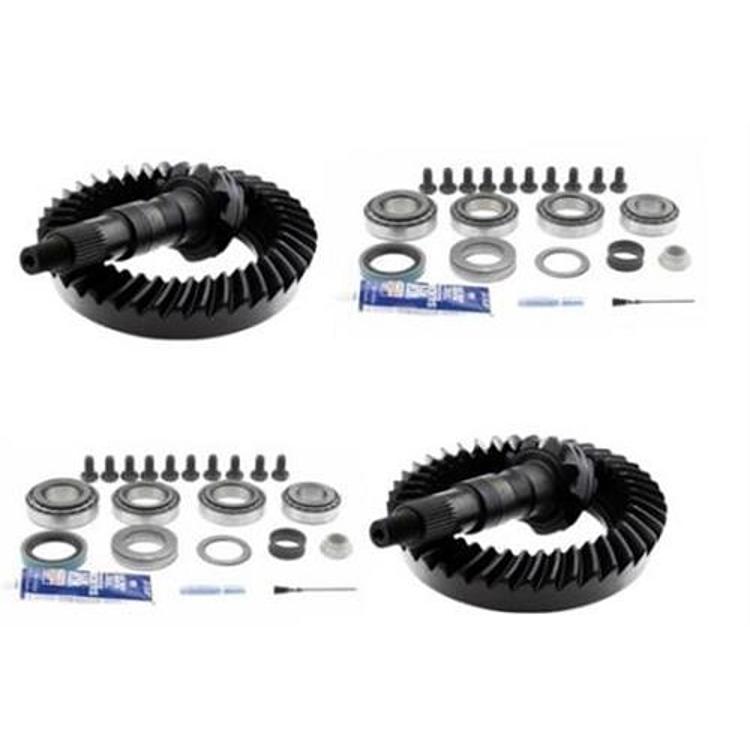
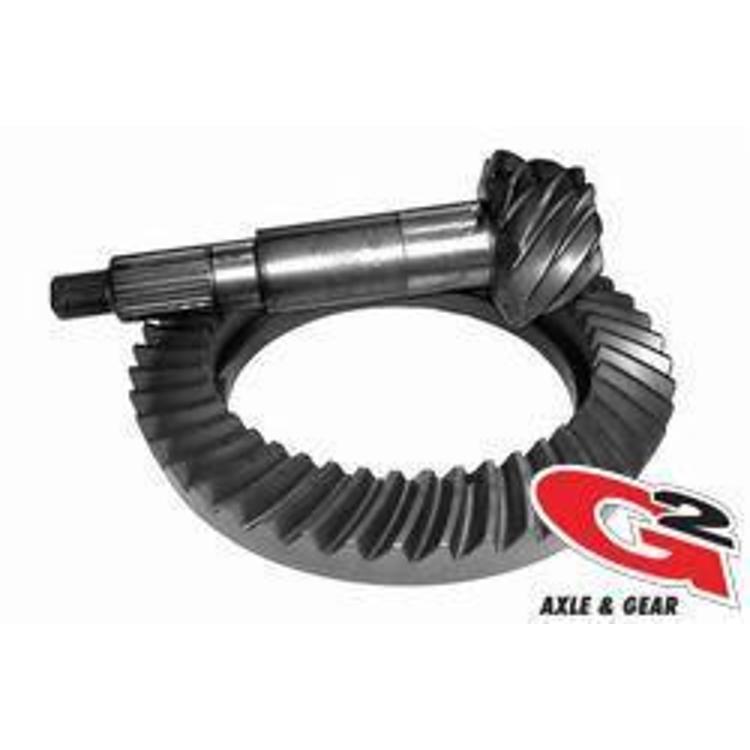
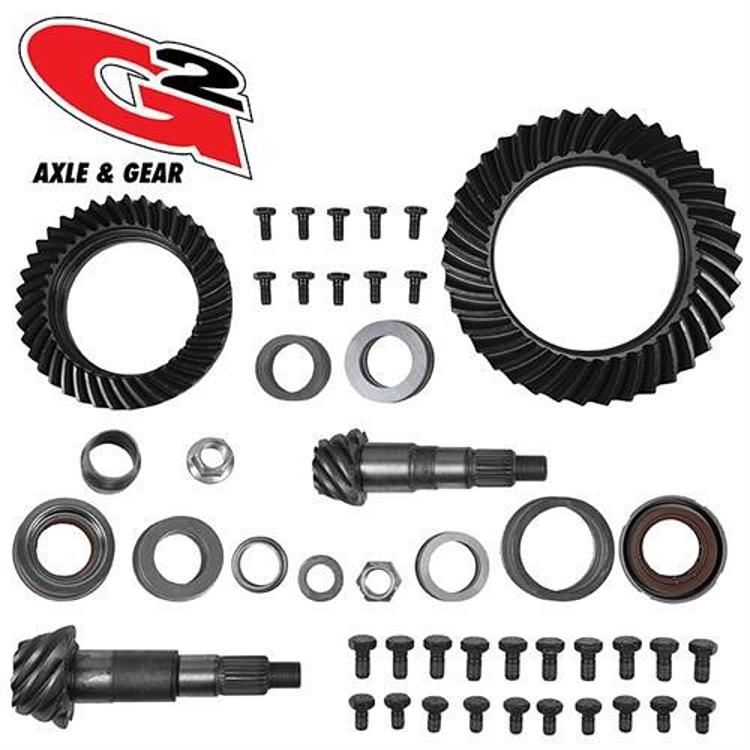
A 4X4 needs the same ratio front and rear, so a regear is always two axles. Check the carrier too: Dana 44 gears of 3.91 and numerically higher, like the G2 2-2033-456, fit the 3.91-and-up carrier, so a Dana 44 moving from 3.73 to 4.56 needs a new carrier or a locker built for the higher series. Shop ring and pinions, Dana 44 ring and pinion sets and ring and pinion installation kits.
Speedometer error
The speedometer counts axle or output shaft turns and assumes the stock tire. On a taller tire, true speed = indicated speed × new diameter ÷ old diameter. With the speedometer set for 32.7 inches, an indicated 60 mph is 60.5 mph on 33s, 64.2 mph on 35s and 67.9 mph on 37s. The odometer is off by the same 7% or 13%.
Newer vehicles are corrected with a programmer that stores the tire size; older ones take a different speedometer driven gear. The Speedometer Calculator gives true speed, odometer error and the axle ratio that would restore the reading.
Brakes, axles and steering
A bigger tire is a longer lever. To stop at the same rate, the brakes need torque in proportion to the tire radius: about 7% more on 35s and 13% more on 37s than on 32.7-inch tires, before counting the extra weight and rotating mass.
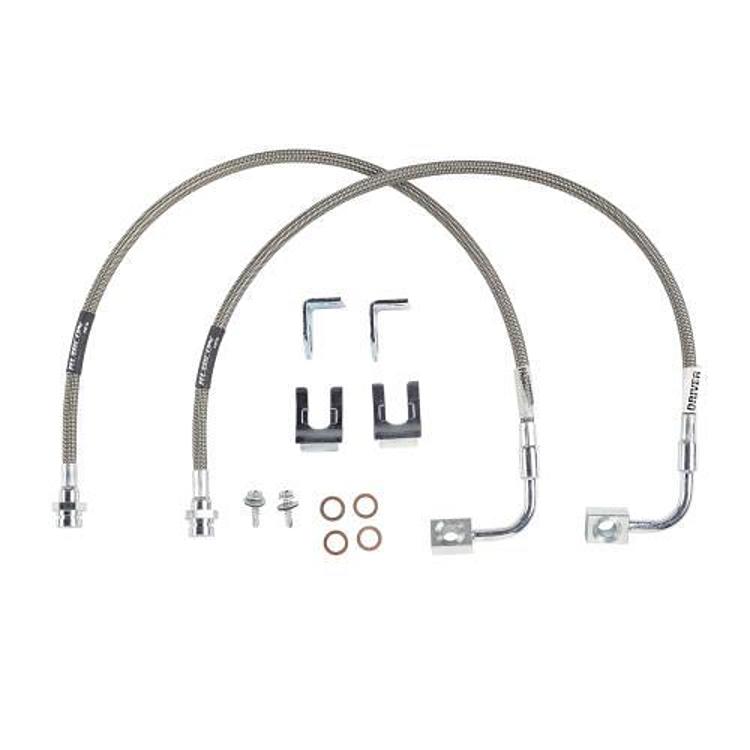
- Brakes: larger rotors and calipers from disc brake upgrade kits restore stopping power, and lifts of 4 inches and up need longer brake hoses, such as the Rubicon Express RE15301 24-inch front lines for JKs lifted 4 to 6 inches.
- Axles: a Dana 30 front lives on 33s, works on 35s driven with care, and is the weak link on 37s. A Dana 44 handles 35s and, with chromoly shafts, 37s; a Dana 60 is the axle for heavy 37-inch and larger builds. A Dana 35 rear is already at its limit on 33s. Compare them in the Dana 30 vs 44 vs 60 guide.
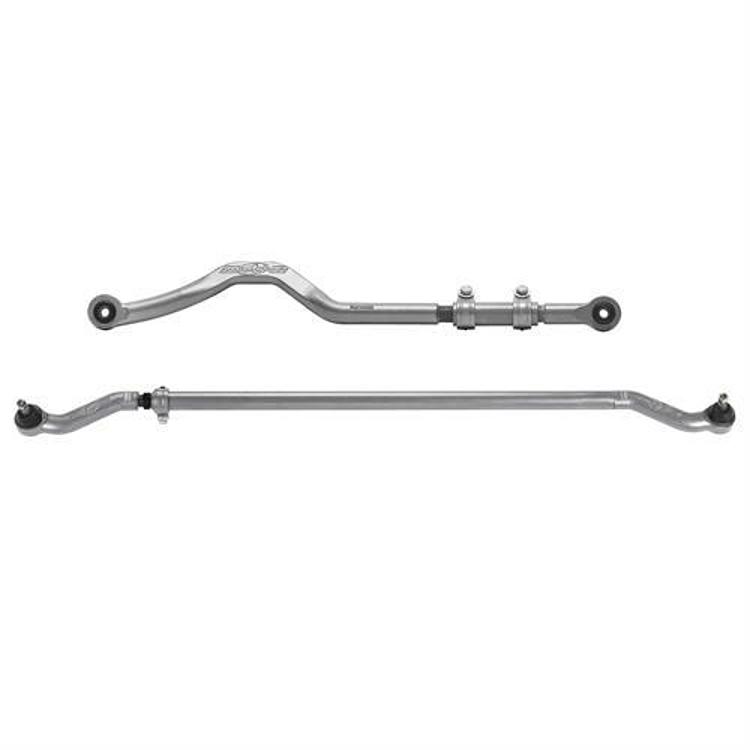
- Steering: wide tires on low-backspacing wheels load the tie rod, track bar and ball joints. The Rubicon Express JKHD1 pairs a forged track bar of 1.5-inch, 0.250-wall 4140 chromoly tube with a tie rod on greasable 1-ton ends, for JKs with 0 to 6 inches of lift. A steering stabilizer damps big tires but fixes nothing loose (death wobble guide).
- Driveshafts: taller lifts steepen the shaft angles; see the driveline vibration guide.
Fenders, bump stops and the spare
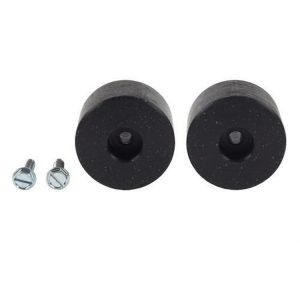
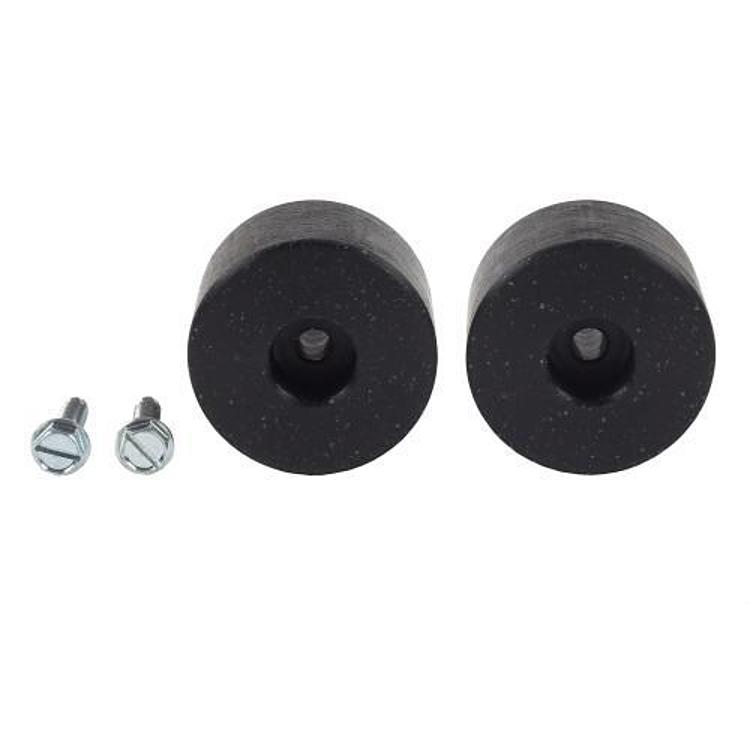
At full compression the axle still travels up toward the body, and a 37 carries 2 more inches of radius into the fender than a 33. Bump stop extensions stop the axle before the tire reaches the flare or the shock bottoms out. The Rubicon Express RE1380 sits inside the front coil and adds 2 inches of limitation, mounted with self-tapping bolts. Check by cycling the axle onto the stops at full lock with the springs out. More under bump stops.
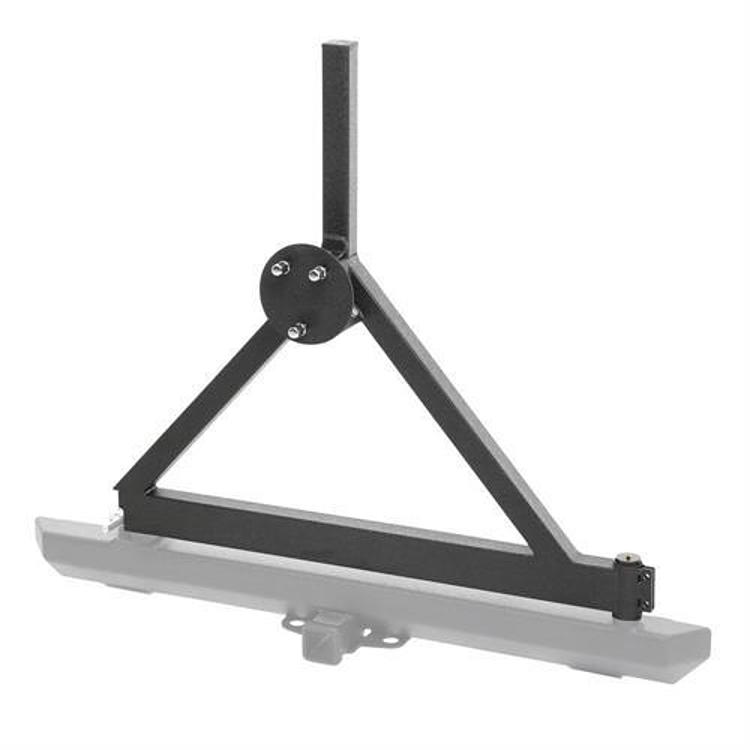
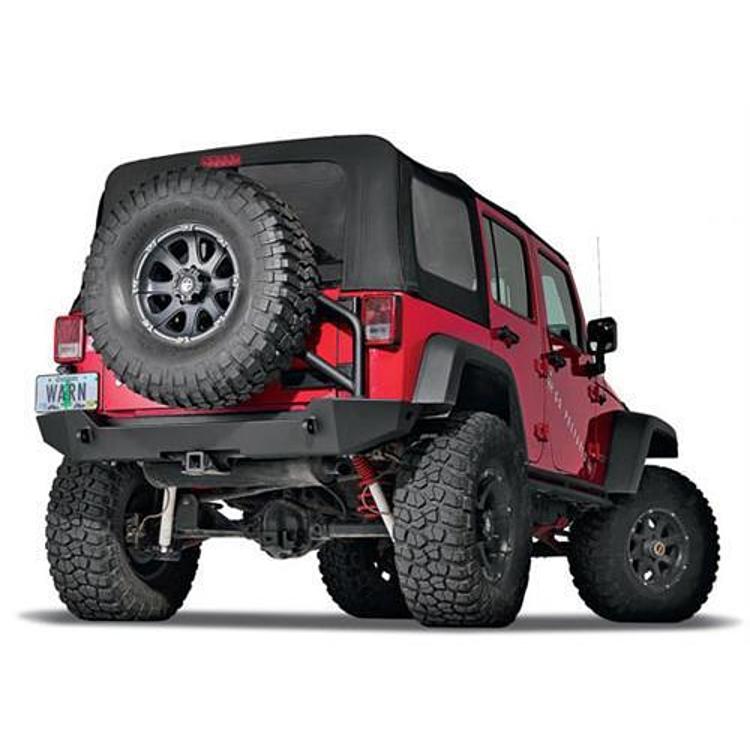
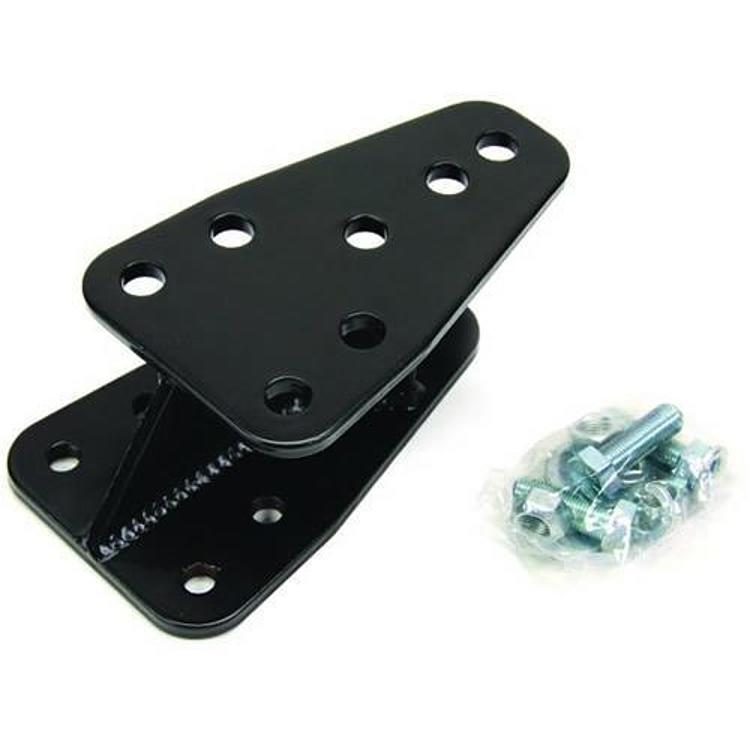
A heavy 35 or 37 spare is more than a factory tailgate carrier was built to swing. On YJ, TJ and JK Wranglers the TeraFlex 1907200 bracket moves the spare 2.75 inches out and 1.75 inches up for clearance. For 37s, a bumper-mounted carrier takes the weight off the gate: the Smittybilt SRC carrier holds up to 37 inches, and the Warn Elite Series carrier up to 40 inches. See all tire carriers.
33 vs 35 vs 37 at a glance
| 33-inch | 35-inch | 37-inch | |
|---|---|---|---|
| Common sizes | 285/70R17 (32.7 in), 33x12.50R17 | 315/70R17 (34.4 in), 35x12.50R17 | 37x12.50R17 |
| Wrangler JK lift | 2.5 in | 3.5 in (2.5 in with 4.5 in backspacing) | 4 to 4.5 in |
| Half-ton IFS lift | 2 to 3 in | 4 to 6 in, some 3 in kits | 6 in and up |
| Gears from 4.10 on 32.7 in | 4.10 (math 4.14) | 4.56 (math 4.39) | 4.88 to 5.13 (math 4.64) |
| Indicated 60 mph is | 60.5 mph | 64.2 mph | 67.9 mph |
| Extra brake torque | About 1% | About 7% | About 13% |
| Added parts | Bump stops | Track bar, caster correction, gears | Arms, gears, steering, brakes, axles, carrier |
Verdict: which size fits your build
Pick 33s for a daily driver: little lift, gears optional on 4.10s. Pick 35s for the best balance on a Wrangler or half-ton: a 3.5-inch JK or 2.5-inch JL lift, 4.56 gears and bump stops. Pick 37s only as a complete build: 4 inches or more of lift, 4.88 or 5.13 gears, a front axle stronger than a Dana 30, heavier steering, longer brake lines and a bumper-mounted spare carrier. Run the numbers in the Gear Ratio Calculator first.
Frequently asked questions
Do I need to regear for 35-inch tires?
Usually, yes. 35s make the effective ratio about 7% taller than on 32.7-inch tires, so a 4.10 Wrangler feels like 3.83. Most Wranglers move to 4.56 for 35s, and half-ton trucks to 4.10 through 4.56.
What gear ratio do 37-inch tires need on a Jeep?
4.88 is the common choice on a Wrangler with 37s, and 5.13 for heavy builds or steep trails. From 4.10 gears on 32.7-inch tires the math gives 4.64, and builders round up for the heavier tire.
How much lift does a Jeep Wrangler JK need for 35s?
3.5 inches is the usual height. 35s fit at 2.5 inches on wheels with 4.5 inches of backspacing, with extended bump stops.
How far off is my speedometer with bigger tires?
True speed equals indicated speed times new diameter divided by old diameter. With a speedometer set for 32.7-inch tires, an indicated 60 mph is about 64.2 mph on 35s and 67.9 mph on 37s, and the odometer under-reads by the same percentage.
Can a Dana 30 handle 37-inch tires?
Not reliably. A Dana 30 works on 33s and on 35s driven with care, but on 37s its ring gear, shafts and tubes are the weak link. 37-inch builds usually move to a Dana 44 with chromoly shafts or to a Dana 60.
Start with tires in your size, then the matching lift kit, ring and pinion, bump stops and tire carrier.