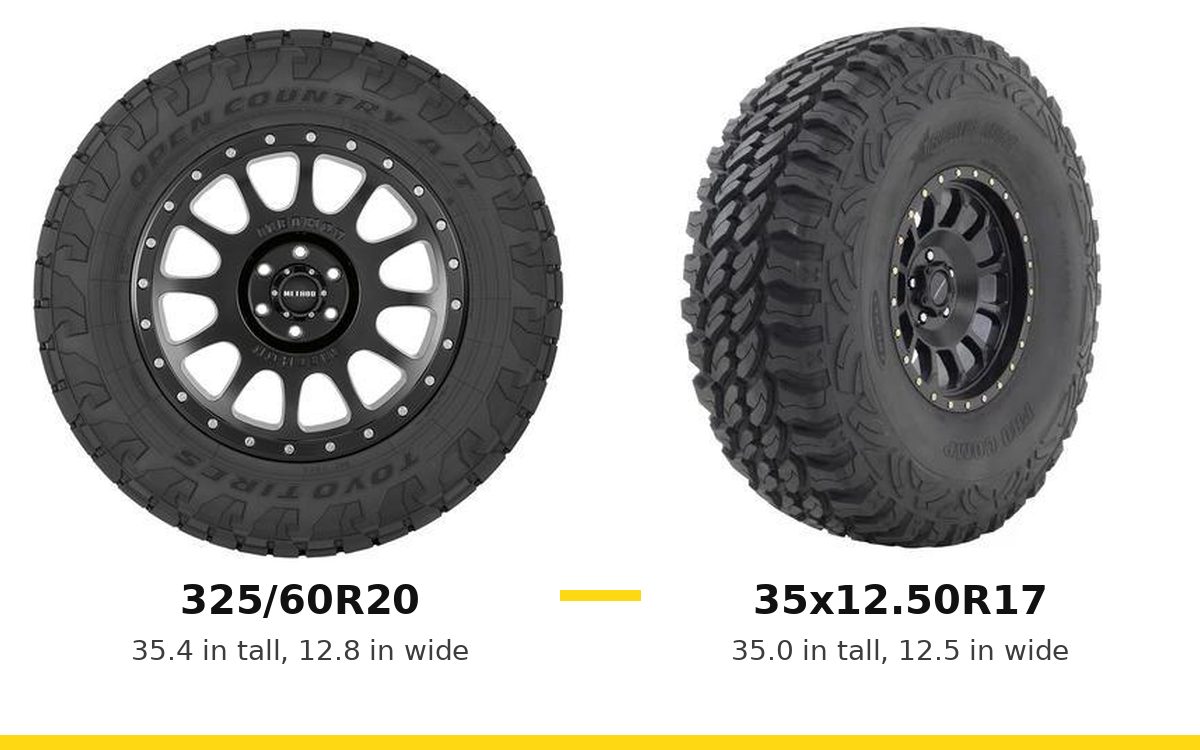
A 325/60R20 tire is 35.4 inches tall and 12.8 inches wide and mounts on a 20-inch wheel. That is the answer most people want when they type “325/60R20 in inches,” and the same three-step math converts every metric tire size on the market: turn the width from millimeters into inches, use the aspect ratio to get the sidewall height, then add two sidewalls to the wheel diameter. Below is the formula, worked examples for the sizes off-roaders search most, a conversion table of 24 common truck, Jeep and SUV sizes, and what a bigger tire changes once it is on the truck: speedometer error, gearing, lift and wheel backspacing.
Key takeaways
- The formula: diameter in inches = 2 × width (mm) × aspect ratio ÷ 100 ÷ 25.4 + rim diameter. Width in inches = width (mm) ÷ 25.4.
- 325/60R20 = 35.4 × 12.8 inches on a 20-inch wheel, a 35-inch-class tire with a 7.7-inch sidewall.
- Other popular sizes: 285/70R17 = 32.7 in (a “33”), 315/70R17 = 34.4 in, 275/70R17 = 32.2 in, 235/65R16 = 28.0 in, 225/65R17 = 28.5 in.
- Speedometer error = (new diameter ÷ old diameter − 1) × 100. Going from 265/70R17 to 315/70R17 reads 8.7% slow: 60 on the dash is 65.2 mph.
- Regearing rule: new ratio = old ratio × new diameter ÷ old diameter. A 3.73 truck moving from 31.6-inch to 35.4-inch tires needs about 4.17 to feel stock.
How to read a metric tire size
Every passenger and light-truck tire sold in the U.S. has its size molded into the sidewall. A metric size such as LT325/60R20, followed by its service description, breaks down like this:
- LT (prefix): the service type. LT means light truck; P means P-metric passenger; no prefix means Euro-metric (also a passenger tire, often with “XL” for extra load).
- 325: section width in millimeters, measured from the widest point of one sidewall to the widest point of the other on the tire’s measuring rim, at rated inflation, with no load. It is not the tread width.
- 60: the aspect ratio, the sidewall height as a percentage of the section width. A 60 sidewall is 60% as tall as the tire is wide.
- R: radial construction. A D or a dash means bias ply, which still shows up on some mud tires, trailer tires and most ATV tires.
- 20: the wheel (rim) diameter in inches. Metric sizes mix units on purpose: millimeters for width, inches for the wheel.
- Service description: the load index and speed rating that follow the size, such as 126/123R. LT tires also carry a load range letter (C, D, E, F), and a dual load index such as 121/118 gives the rating for single and dual-wheel use.
Michelin’s tire markings guide and Continental’s tire markings page show the same layout, including where the DOT code and date of manufacture sit. The only part that changes the size math is the middle: width, aspect ratio and wheel.
LT vs P-metric: same numbers, different tire
An LT315/70R17 and a 315/70R17 without the prefix calculate to the same 34.4 inches, but they are not interchangeable on every truck. LT tires use heavier carcass construction and run higher inflation pressures, and their capacity is stated as a load range: C (6-ply rating), D (8-ply rating), E (10-ply rating) and F (12-ply rating) on the larger sizes. A P-metric tire fitted to a light truck, SUV or trailer has its load capacity reduced by dividing the sidewall rating by 1.10 under Tire and Rim Association practice, which is why three-quarter-ton and one-ton trucks come from the factory on LT tires. If the door-jamb placard lists an LT size, replace it with an LT tire of equal or higher load range.
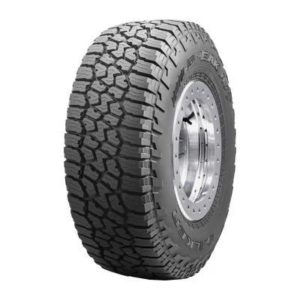
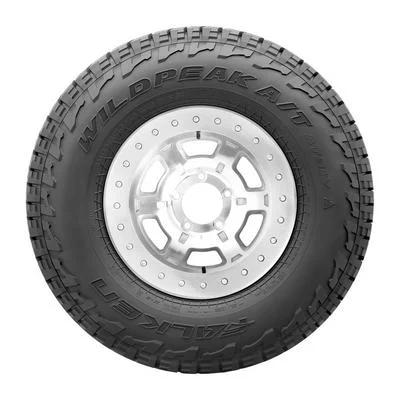
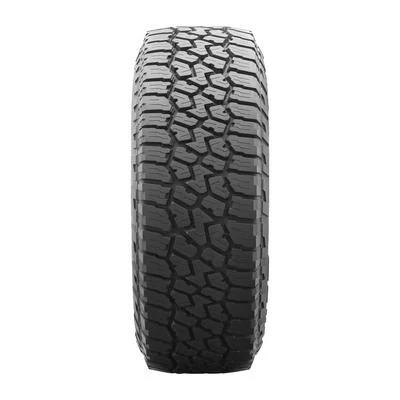
The Falken Wildpeak A/T3W in LT325/60R20 and the BFGoodrich KO2 in LT325/60R20 are light-truck versions of the size; the Toyo Open Country A/T III 325/60R20 is the same size in Toyo’s all-terrain line. Read the service description on the sidewall, not just the size, before you mount any of them on a heavy truck.
The tire size formula, step by step
Three numbers and one conversion factor, 25.4 millimeters to the inch, are all you need. Here is the whole calculation for a 325/60R20:
- Width in inches: 325 ÷ 25.4 = 12.80 inches.
- Sidewall height: 12.80 × 0.60 = 7.68 inches (the same as 325 × 60 ÷ 100 ÷ 25.4).
- Overall diameter: one sidewall above the wheel and one below, so 7.68 × 2 + 20 = 35.35 inches, which rounds to 35.4.
Written as a single line, the formula is diameter = (2 × width × aspect ÷ 100 ÷ 25.4) + rim. From the diameter you can also get the circumference (diameter × 3.1416, or 111.1 inches for a 325/60R20) and the calculated revolutions per mile (63,360 inches in a mile ÷ circumference, or 570 for this size). Those last two numbers drive everything in the speedometer and gearing sections further down.
Skip the math: the Tire Size Calculator converts any metric size to inches and any flotation size to the closest metric sizes, with height, width, sidewall and revolutions per mile.
Worked examples for the most-searched sizes
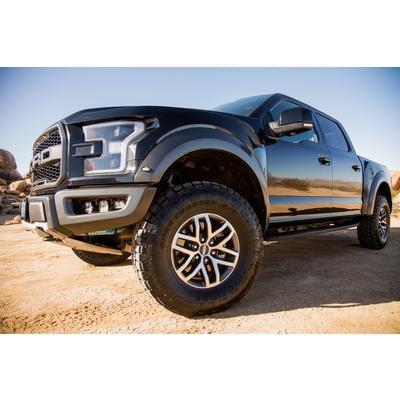
- 325/60R20: 325 ÷ 25.4 = 12.80 in wide; 12.80 × 0.60 = 7.68 in sidewall; 2 × 7.68 + 20 = 35.4 inches tall. A 35-inch tire for 20-inch wheels; the shortest sidewall of the common 35 sizes.
- 315/70R17: 315 ÷ 25.4 = 12.40 in wide; 12.40 × 0.70 = 8.68 in sidewall; 2 × 8.68 + 17 = 34.4 inches tall. Often sold alongside 35s, but it calculates to 34.4 inches: about six-tenths of an inch shorter than a 35×12.50R17.
- 285/70R17: 285 ÷ 25.4 = 11.22 in wide; 11.22 × 0.70 = 7.85 in sidewall; 2 × 7.85 + 17 = 32.7 inches tall. The classic metric “33.” It calculates to 32.7 inches and is narrower than a 33×12.50.
- 275/70R17: 275 ÷ 25.4 = 10.83 in wide; 10.83 × 0.70 = 7.58 in sidewall; 2 × 7.58 + 17 = 32.2 inches tall. A tall, narrow 32: 10.8 inches wide, popular where fender room is short side to side.
- 235/65R16: 235 ÷ 25.4 = 9.25 in wide; 9.25 × 0.65 = 6.01 in sidewall; 2 × 6.01 + 16 = 28.0 inches tall. A van and light-commercial size, often with a C suffix for commercial load capacity.
- 225/65R17: 225 ÷ 25.4 = 8.86 in wide; 8.86 × 0.65 = 5.76 in sidewall; 2 × 5.76 + 17 = 28.5 inches tall. A compact crossover size; the kind of tire people upgrade from, not to.
Toyo, Falken and BFGoodrich all publish overall diameter, section width and approved rim widths for each size on their product pages; the Open Country A/T III page and the Wildpeak A/T3W page are typical. Use the formula to shortlist sizes and the maker’s chart for the final check, because the two are not always identical (more on that below).
What “325 tires” means in inches
“325” on its own is only the width: 325 mm is 12.8 inches. How tall a 325 is depends on the aspect ratio and the wheel. The common light-truck 325s line up like this:
- 325/60R18: 33.4 × 12.8 inches
- 325/65R18: 34.6 × 12.8 inches
- 325/50R22: 34.8 × 12.8 inches
- 325/60R20: 35.4 × 12.8 inches
So a 325 can be anything from a 33-inch tire to a 35-inch tire. The same goes for “315 tires” (12.4 inches wide) and “285 tires” (11.2 inches wide): the width tells you how much the tire sticks out, not how tall it stands.
Tire size conversion chart: metric and flotation sizes in inches
Every figure below comes from the formula above, rounded to one decimal place. For any other size, use the tire size calculator. Revolutions per mile are calculated from the unloaded diameter; makers’ published figures run a little higher because a tire under load rolls on a shorter radius. The last column is the nominal size people use when they talk about these tires, such as “running 33s.”
| Size | Diameter (in) | Width (in) | Sidewall (in) | Wheel (in) | Revs per mile | Called a |
|---|---|---|---|---|---|---|
| 225/65R17 | 28.5 | 8.9 | 5.8 | 17 | 707 | 28.5 |
| 235/65R16 | 28.0 | 9.3 | 6.0 | 16 | 720 | 28 |
| 235/65R17 | 29.0 | 9.3 | 6.0 | 17 | 695 | 29 |
| 245/75R16 | 30.5 | 9.6 | 7.2 | 16 | 662 | 30.5 |
| 265/70R16 | 30.6 | 10.4 | 7.3 | 16 | 659 | 30.5 to 31 |
| 265/70R17 | 31.6 | 10.4 | 7.3 | 17 | 638 | 31.5 |
| 265/75R16 | 31.6 | 10.4 | 7.8 | 16 | 637 | 31.5 |
| 255/75R17 | 32.1 | 10.0 | 7.5 | 17 | 629 | 32 |
| 275/65R18 | 32.1 | 10.8 | 7.0 | 18 | 629 | 32 |
| 275/70R17 | 32.2 | 10.8 | 7.6 | 17 | 627 | 32 |
| 285/70R17 | 32.7 | 11.2 | 7.9 | 17 | 617 | 33 |
| 285/75R16 | 32.8 | 11.2 | 8.4 | 16 | 614 | 33 |
| 275/60R20 | 33.0 | 10.8 | 6.5 | 20 | 611 | 33 |
| 305/55R20 | 33.2 | 12.0 | 6.6 | 20 | 607 | 33 |
| 275/65R20 | 34.1 | 10.8 | 7.0 | 20 | 592 | 34 |
| 295/70R18 | 34.3 | 11.6 | 8.1 | 18 | 589 | 34 |
| 315/70R17 | 34.4 | 12.4 | 8.7 | 17 | 587 | 34 to 35 |
| 315/75R16 | 34.6 | 12.4 | 9.3 | 16 | 583 | 35 (a tall 34) |
| 325/65R18 | 34.6 | 12.8 | 8.3 | 18 | 582 | 35 (a tall 34) |
| 325/60R20 | 35.4 | 12.8 | 7.7 | 20 | 570 | 35 |
| 33×12.50R15 | 33.0 | 12.5 | 9.0 | 15 | 611 | 33 |
| 35×12.50R17 | 35.0 | 12.5 | 9.0 | 17 | 576 | 35 |
| 35×12.50R20 | 35.0 | 12.5 | 7.5 | 20 | 576 | 35 |
| 37×12.50R17 | 37.0 | 12.5 | 10.0 | 17 | 545 | 37 |
Sizes on the same line of the chart are not automatically swaps for each other. A 305/55R20 and a 285/70R17 are both about 33 inches tall, but one needs a 20-inch wheel and has a 6.6-inch sidewall, and the other has a 7.9-inch sidewall on a 17. Browse the off-road tires by size once you know the diameter you are after.
Flotation sizes: 35×12.50R17 vs metric
Flotation sizes skip the conversion because they are already in inches. As General Tire’s sizing explainer puts it, the first number of a size such as 35×12.50R15 is the tire diameter, the second the width, and the last the wheel size. A 35×12.50R17LT is a nominal 35 inches tall and 12.5 inches wide on a 17-inch wheel. Flotation sizes are light-truck tires, and the LT may appear at the end of the size instead of the front.
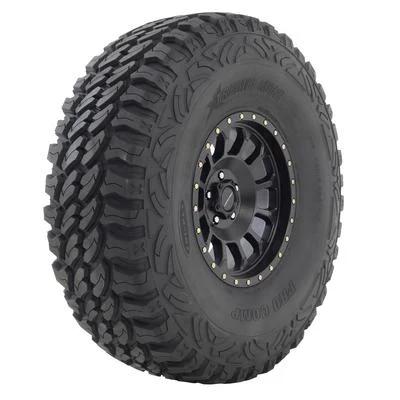
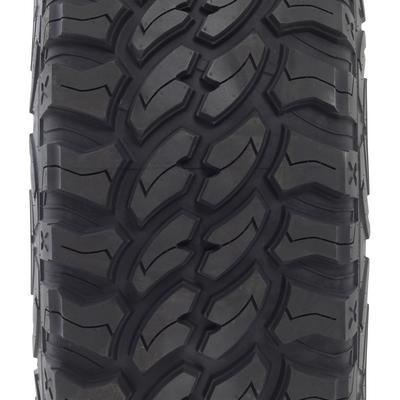
Run the formula backward and a flotation size turns into a metric one. The sidewall of a 35×12.50R17 is (35 − 17) ÷ 2 = 9.0 inches, the width is 12.5 × 25.4 = 317.5 mm, and 9.0 ÷ 12.5 gives a 72% aspect ratio. In metric terms it is roughly a 318/72R17, a size nobody makes, which is why the nearest metric choices are both a little off:
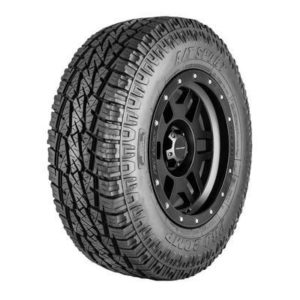
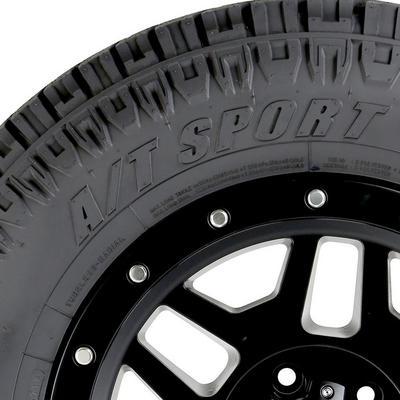
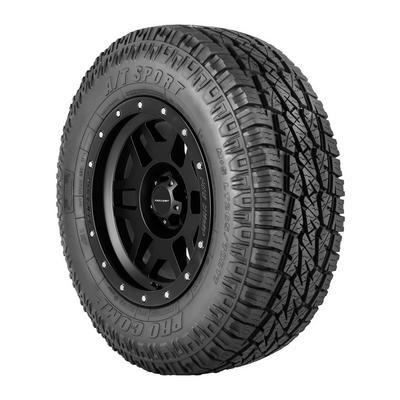
- 315/70R17: 34.4 × 12.4 in. Almost the same width, about 0.6 inch shorter. The Pro Comp A/T Sport LT315/70R17 is an example.
- 315/75R16: 34.6 × 12.4 in, a 16-inch-wheel size with a tall 9.3-inch sidewall.
- 325/60R20: 35.4 × 12.8 in. Slightly taller and wider than a 35×12.50R20, with the same 20-inch wheel.
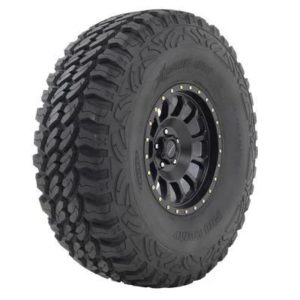
The Pro Comp Xtreme MT2 in 35×12.50R17LT and the 35×12.50R20 versions of the same tread share a nominal 35-inch height but not a sidewall: 9.0 inches on the 17 and 7.5 inches on the 20. A taller sidewall gives more air volume to air down on the trail and more protection for the wheel lip. A shorter sidewall turns in sharper on pavement and leaves more room inside a 20-inch wheel for big brakes.
ATV and UTV sizes read the same way
ATV tires and UTV tires use the flotation format almost exclusively. A 29.5×10⁻¹⁴ mud tire is 29.5 inches tall and 10 inches wide on a 14-inch wheel; the dash in place of an R marks a bias-ply carcass. A 28x10R12 is a 28-inch radial for a 12-inch wheel. Because no conversion is involved, the only trap is the wheel: a 29.5×10⁻¹⁴ does not fit a machine on 12-inch wheels, however close the height looks.
Why a tire measures differently from the math
Put a tape measure on a new 325/60R20 and you will rarely read exactly 35.35 inches. The formula gives a design dimension, not a guarantee, and four things move the real number:
- Manufacturer spec: each maker builds a size to its own mold, and its published overall diameter can sit a few tenths of an inch above or below the calculated figure. Many flotation 35s are built slightly under 35 inches. The maker’s size chart is the number to plan clearance with.
- Rim width: section width and diameter are specified on the measuring rim. Mount the tire on a wider wheel and the section width grows; on a narrower one it shrinks. A common rule of thumb is about 0.2 inch of section width for every half inch of rim width. Stay inside the approved rim width range for the size.
- Load and pressure: the tire’s height is measured unloaded at rated inflation. Parked on the ground, the bottom of the tire flattens, so the axle center sits lower than half the diameter. That loaded radius, not the unloaded one, decides real ground clearance and what the speed sensor counts.
- Tread wear: wear comes off the top and the bottom of the tire, so every 1/32 inch of tread lost reduces the diameter by 1/16 inch. Wearing a tire from 18/32 to 4/32 removes 14/32 inch from each side, about 0.9 inch of diameter.
For a lift-and-tire plan, use the published diameter for clearance and the calculated diameter for gear and speedometer math. The difference between the two is usually small compared with the jump from a stock tire to a 35.
Speedometer error from a tire size change
The speedometer counts revolutions and assumes the factory tire. A taller tire covers more ground per turn, so the gauge reads slow. The math is one ratio:
- Error (%) = (new diameter ÷ old diameter − 1) × 100
- True speed = indicated speed × new diameter ÷ old diameter
Example: a truck on 265/70R17 tires (31.6 inches) moves to 315/70R17 (34.4 inches). 34.4 ÷ 31.6 = 1.087, so the speedometer reads 8.7% slow and an indicated 60 mph is really 65.2 mph. The odometer under-reports by the same 8.7%, which matters for service intervals and warranty mileage. Going from the same 265/70R17 to a 325/60R20 is an 11.9% change: 60 on the dash is 67.1 mph.
On most late-model trucks and Jeeps the tire size is a setting in a body or powertrain control module, changed with a dealer scan tool or a handheld programmer. Older trucks with a cable-driven speedometer use a speedometer drive gear in the transmission or transfer case, and the fix is a driven gear with a different tooth count. Recalibrating also corrects the shift points on electronically controlled transmissions, which use vehicle speed to pick a gear.
Regearing for bigger tires: the rule of thumb
A taller tire is a taller final drive. To bring engine speed and acceleration back to where the truck started, scale the axle ratio by the same amount the tire grew: new ratio = old ratio × new diameter ÷ old diameter. Then pick the nearest ring and pinion ratio offered for your axle, usually the next one up if the truck tows or carries weight.
| Stock ratio | With 315/70R17 (34.4 in) | With 325/60R20 (35.4 in) |
|---|---|---|
| 3.21 | 3.49 | 3.59 |
| 3.42 | 3.72 | 3.83 |
| 3.55 | 3.86 | 3.97 |
| 3.73 | 4.06 | 4.17 |
| 4.10 | 4.46 | 4.59 |
All rows assume the truck started on 31.6-inch 265/70R17 tires. A 3.73 truck going to a 325/60R20 needs a 4.17 to match its original effective gearing, so 4.10 is the usual choice; a 3.55 truck going to a 315/70R17 lands at 3.86, between the common 3.73 and 4.10 ratios.
Engine speed shows the same effect. Engine rpm in a 1:1 transmission gear = mph × axle ratio × 336 ÷ tire diameter. At 65 mph with 3.73 gears, the truck turns about 2,580 rpm on 31.6-inch tires and 2,310 rpm on 35.4-inch tires, a 10.6% drop. That is why an automatic hunts between gears on the highway after a big tire swap.
Whether you must regear depends on the engine and the job. A one-inch increase is rarely noticed; two inches is often livable on a strong engine; three inches or more on a small engine, or any size jump on a truck that tows, usually earns new gears. Heavier tires also add rotating mass and load the axle shafts and ring gear harder, so the jump to 35s is also the point where the axle matters. The Dana 30 vs Dana 44 vs Dana 60 guide covers what each axle carries.
Lift and clearance for a bigger tire
A tire grows in every direction at once, and each direction has its own clearance problem. Working through it with the numbers keeps the guesswork down:
- Up: the axle center rises by half the diameter increase. Going from a 265/70R17 (31.6 in) to a 325/60R20 (35.4 in) lifts the axle and the differential by 1.9 inches and puts the top of the tire 1.9 inches closer to the fender at ride height.
- Out: half of the width increase goes to each side. The same swap is 2.4 inches wider (10.4 to 12.8 in), so 1.2 inches more per side before backspacing changes anything.
- Fore and aft: a taller tire reaches farther toward the bumper and the rear of the wheel well, which is where full steering lock and full compression usually rub first.
- In motion: clearance at ride height is the easy part. The tire has to clear at full suspension compression and at full steering lock, together, and articulation puts one corner at full compression while the opposite one droops.
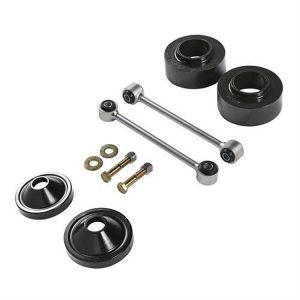
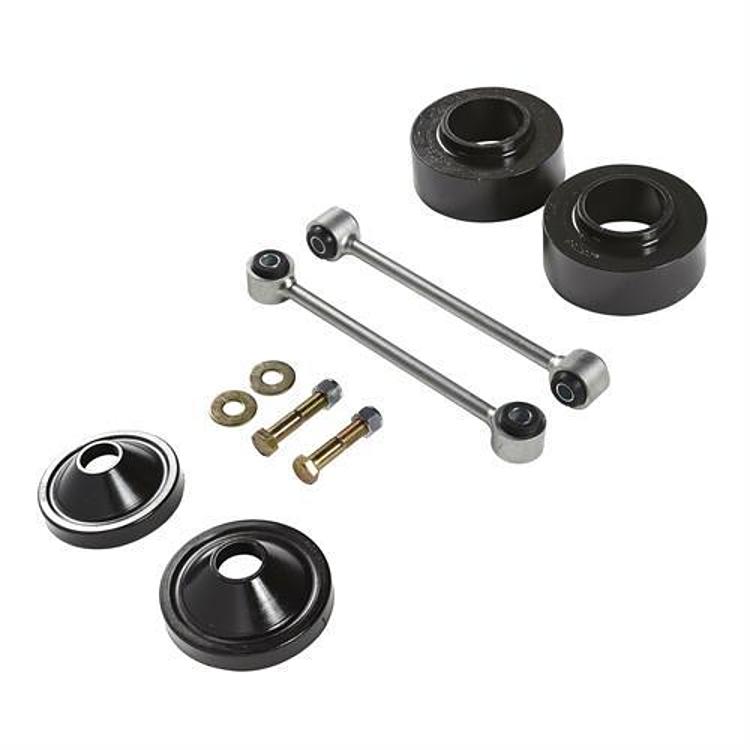
A leveling kit raises the front to match the rear and frees roughly one tire size on many trucks and Jeeps. The Rubicon Express JK1301, for example, adds 1.5 inches with polyurethane coil spacers and is rated for 33×12.50 tires on the 2007-2018 Wrangler JK. Bigger jumps take a suspension lift kit, and many builds combine a modest lift with trimming, bump-stop extensions or a wheel with less backspacing rather than lifting the whole height of the tire increase.
Wheel width, offset and backspacing basics
The tire size names the wheel diameter, but the wheel’s width and its offset or backspacing decide where the tire sits in the wheel well. Three terms cover it:
- Wheel width: measured between the bead seats, not across the outer lips. A 20×9 wheel is 9 inches between the bead seats and about 10 inches overall.
- Offset: the distance in millimeters from the wheel’s centerline to its mounting face. Positive offset puts the mounting face toward the outside (the wheel tucks in); negative offset pushes the wheel out.
- Backspacing: the distance in inches from the mounting face to the inner lip. Less backspacing moves the tire outward, away from the suspension and frame.
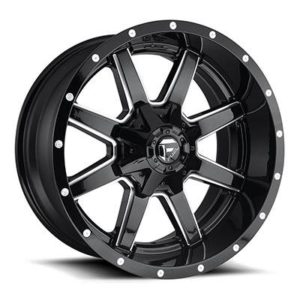
The two convert with a simple approximation: backspacing ≈ (wheel width + 1) ÷ 2 + offset ÷ 25.4. The FUEL Maverick D610 20×9 at +20 mm works out to 10 ÷ 2 + 0.79 = 5.8 inches of backspacing, and the FUEL Tactic D630 18×9 at +1 mm to 5.0 inches. A tire 2.4 inches wider than stock on a wheel with stock backspacing puts all 1.2 extra inches on the inside of each wheel, toward the control arms and sway bar links, which is the usual reason oversized tires rub on the inside even when the fender clears.
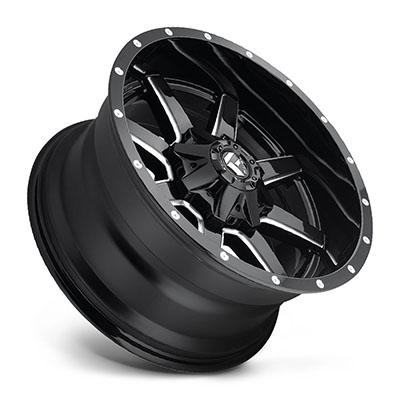
Match the wheel width to the tire. Each size has an approved rim width range, and an off-road tire on the narrow end of its range bulges the sidewall more for air-down protection, while the wide end stretches it for a squarer shoulder. The full range of off-road wheels lists width, offset and backspacing for each part number.
Wheel spacers
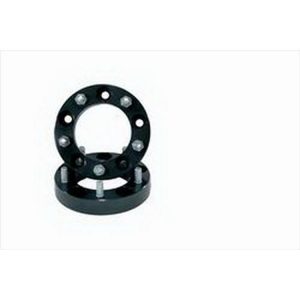
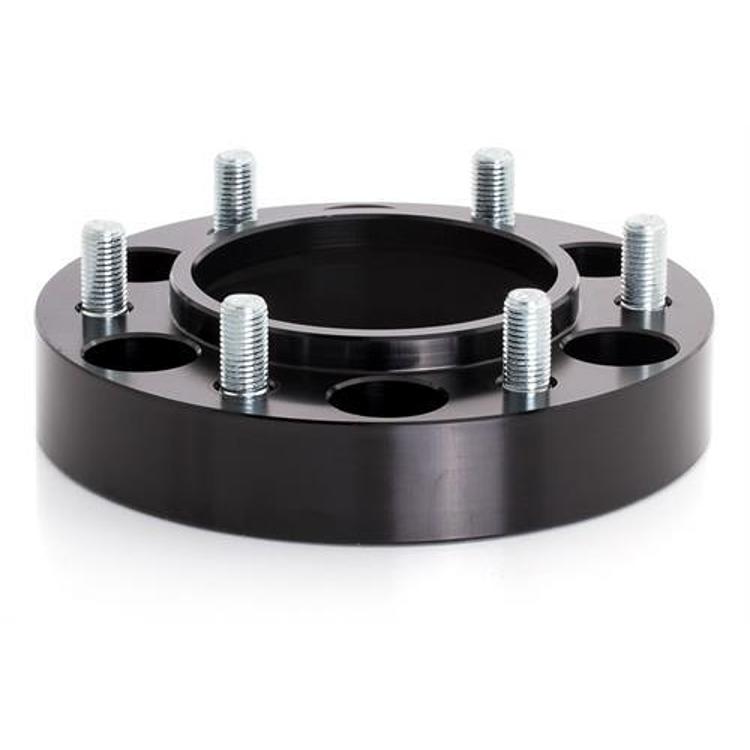
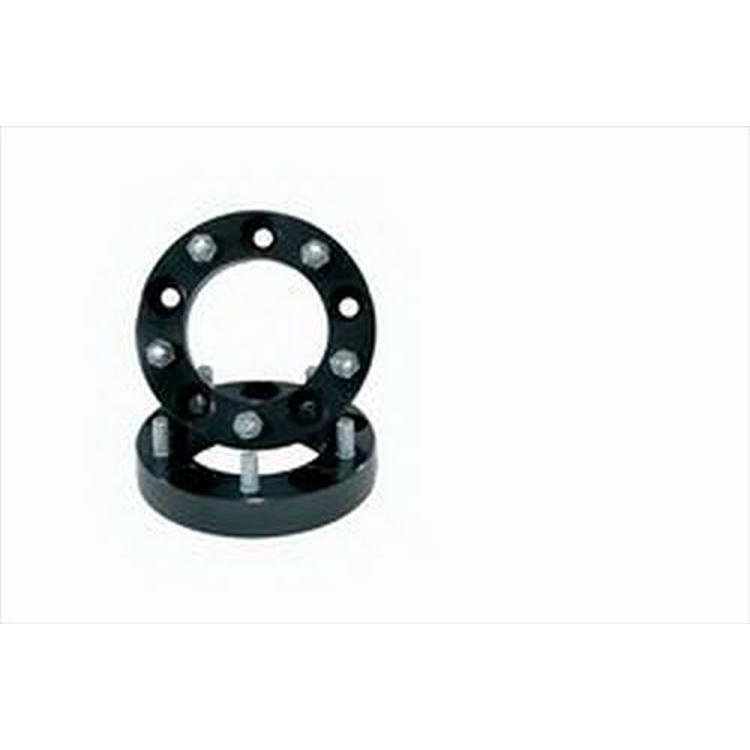
A wheel spacer bolts to the hub and moves the wheel outward by its own thickness, so a 1.25-inch spacer reduces effective backspacing by 1.25 inches. The Spidertrax WHS007K is a pair of 1.25-inch 6061-T6 aluminum spacers for the 6 on 5.5 pattern, hub centric and wheel centric, with M12x1.5 studs pre-installed. The Rugged Ridge 15201.02 pair is the same thickness for the 5 on 4.5 pattern, double anodized, with Grade 8 hardware. Pushing the tire out clears the inside but widens the track and increases scrub radius, which adds leverage on the wheel bearings and steering, so use the thinnest spacer that solves the rub and torque the hardware to the spacer maker’s spec. All wheel spacers and adapters are listed by bolt pattern.
Converting and choosing a size: the short version
- Convert: width ÷ 25.4 = inches wide; width × aspect ÷ 100 ÷ 25.4 = sidewall; 2 × sidewall + rim = diameter.
- Compare: 325/60R20 = 35.4 in, 35×12.50R17 = 35.0 in, 315/70R17 = 34.4 in, 285/70R17 = 32.7 in.
- Check load: replace an LT tire with an LT tire of equal or higher load range; a P-metric tire on a truck loses capacity.
- Correct the speedometer: error % = (new ÷ old − 1) × 100; reprogram the module or change the driven gear.
- Gear it: new ratio = old ratio × new diameter ÷ old diameter, then round to the nearest ratio offered for your axle.
- Clear it: half the diameter gain goes up, half the width gain goes to each side, and backspacing decides how much of that lands inside the wheel well.
Frequently asked questions
How tall is a 325/60R20 tire in inches?
A 325/60R20 is 35.4 inches tall and 12.8 inches wide and fits a 20-inch wheel. The sidewall is 7.7 inches: 325 mm × 0.60 ÷ 25.4. It is a 35-inch-class tire, slightly taller and wider than a 35×12.50R20 on paper, and the maker’s published diameter for each tire model is the figure to use for clearance.
Is a 325/60R20 the same as a 35×12.50R20?
They fill the same role but are not identical. A 35×12.50R20 is a nominal 35.0 by 12.5 inches; a 325/60R20 calculates to 35.4 by 12.8 inches. Both need the same 20-inch wheel, and real tires of both sizes land within a few tenths of an inch of each other, so the choice usually comes down to the tread, load range and the maker’s published dimensions.
What size is a 285/70R17 in inches?
A 285/70R17 is 32.7 inches tall and 11.2 inches wide on a 17-inch wheel, with a 7.9-inch sidewall. It is sold and talked about as a 33-inch tire, and it is about 1.3 inches narrower than a 33×12.50 flotation tire.
What is 235/65R16 and 225/65R17 in inches?
A 235/65R16 is 28.0 inches tall and 9.3 inches wide on a 16-inch wheel. A 225/65R17 is 28.5 inches tall and 8.9 inches wide on a 17-inch wheel. Both have a sidewall of about 5.8 to 6.0 inches and are crossover and van sizes rather than off-road sizes.
How much will bigger tires throw off my speedometer?
Divide the new diameter by the old one. Going from a 31.6-inch 265/70R17 to a 34.4-inch 315/70R17 makes the speedometer read 8.7% slow, so an indicated 60 mph is 65.2 mph. Going to a 35.4-inch 325/60R20 makes it 11.9% slow. Reprogram the tire size in the vehicle’s module, or change the speedometer driven gear on older trucks.
Do I need to regear for 35-inch tires?
Usually, if the truck started on 31 or 32-inch tires. Multiply the stock ratio by the new diameter divided by the old one: a 3.73 truck going from 31.6-inch to 35.4-inch tires needs about 4.17 to match its original gearing, so 4.10 is the common pick. Trucks with strong engines that never tow can live with the stock ratio longer.
Do the math once and the rest of the decision gets easier: the diameter sets the gearing and the lift, the width and backspacing set the rub, and the load range sets what the tire can carry. Shop off-road tires by the size you landed on, match them with wheels of the right width and backspacing, and start at the tires and wheels department or the leveling kits page if the truck needs room first.
Sources
- Michelin, How to Read Tire Markings and Sidewall Codes: size format, LT and P prefixes, service description.
- Continental, Tire markings: sidewall layout and size designation.
- General Tire, Making Some Sense of Metric and American Standard Tire Sizing: metric and flotation size formats.
- Yokohama, Sizing Information: metric, LT and flotation size formats.
- Nitto, Decoding an Off-Road Tire: flotation sizing and LT load ranges.
- The Tire and Rim Association, Publications: the standards behind tire dimensions, load tables and measuring rims.
- Toyo Tires, Open Country A/T III, Falken, Wildpeak A/T3W, and BFGoodrich, All-Terrain T/A KO2: size charts with published diameters and rim ranges.