Skid plates are steel, aluminum or plastic shields bolted under a 4X4 to keep rocks and ledges off the parts that hang lowest: the transfer case, transmission, oil pan and fuel tank. They spread an impact into the frame and let the vehicle slide over an obstacle instead of hanging up on a fragile housing.
Key takeaways
- Protect what strands you: the oil pan, transmission, transfer case and fuel tank come first because a hole in any of them ends the trip. Differential, steering box, control arm and EVAP plates follow.
- 3/16-inch steel is the baseline: 3/16-inch steel is the common thickness for Jeep and truck plates. Step to 1/4-inch steel for regular rock contact, or 1/4-inch 6061-T6 aluminum to save weight.
- Aluminum saves real weight: Rock Hard 4X4 rates its JK oil pan and transmission plate at 57 lb in steel and 33 lb in aluminum.
- UHMW is for light vehicles: plastic plates suit side-by-sides, and 176°F is the long-term service limit of standard UHMW, so it stays away from exhaust heat.
- A lift changes the plate choice: long arm crossmembers, transfer case lowering kits and control arm mounts all decide which plate fits.
What is a skid plate, and how does it work?
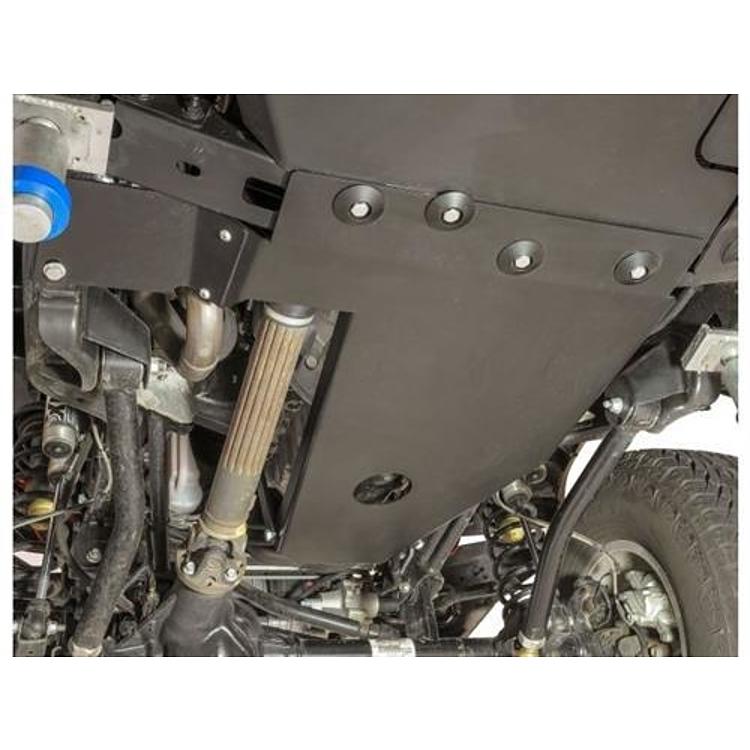
A skid plate is a formed shield that mounts between a vulnerable part and the ground, with an air gap between plate and part. It has two jobs: it takes the blow and passes the load into the frame or a crossmember, and it gives the vehicle a smooth surface to slide on.
The shape matters as much as the metal. A plate with a swept front edge rides up onto a rock, while a bare transmission pan or a bolt head catches on it. Countersunk bolts and tapered washers do the same job at the fasteners. Rock Hard 4X4 fits tapered bolt head protectors on its JK plates, and Artec countersinks every bolt under its belly pan.
A plate is only as strong as the bolts and crossmember holding it. The Rugged Ridge evaporative canister plate passes a hit into the frame and cross member, and the Trail Gear FJ Cruiser kit uses tubing to send impacts up to the frame and away from the drivetrain.
What does each skid plate protect?
Each skid plate guards one fluid-filled or fragile part, and the part it guards tells you how badly you need it. The table lists the positions in the order most builds add them, followed by the details for each.
| Plate | Protects | What a hit can do | Example |
|---|---|---|---|
| Oil pan | Engine oil pan, drain plug | Dents or holes the pan; oil loss can destroy the engine | Rubicon Express REA1010 for the JK |
| Transmission | Automatic pan, fluid lines, crossmember area | Leaks fluid, or a dented pan interferes with the parts inside | Rubicon Express REA1013 automatic plate |
| Transfer case | Case housing, output yokes, linkage | Cracks the housing, loses fluid and drive | Rubicon Express REA1014 for the JK |
| Fuel tank | Tank, straps, lines | Splits a tank or crushes it; fuel leak | Warn 67820 fuel tank plate |
| EVAP canister | Plastic emissions canister and hoses | Cracks the canister or tears it off, check engine light | Rubicon Express REA1017 |
| Muffler | Muffler and exhaust pipe | Crushes the muffler or tears a hanger | Rough Country 10599 for the JL |
| Differential | Cover or independent front diff housing | Dents the cover, leaks gear oil | Rough Country 10623 for the JL M186 |
| Steering box | Steering gear mounted forward and low | Damages the gear and its mounts | Warn 64250 |
| Control arm | Arm, axle and frame mounts, bolts | Bends the mount and shears bolts; it can hang the vehicle | Rancho RS6210B for the TJ and JK |
Transfer case skid plates
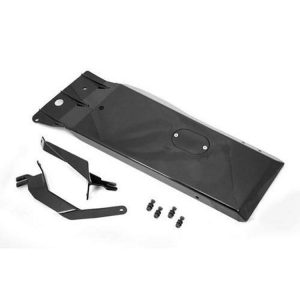
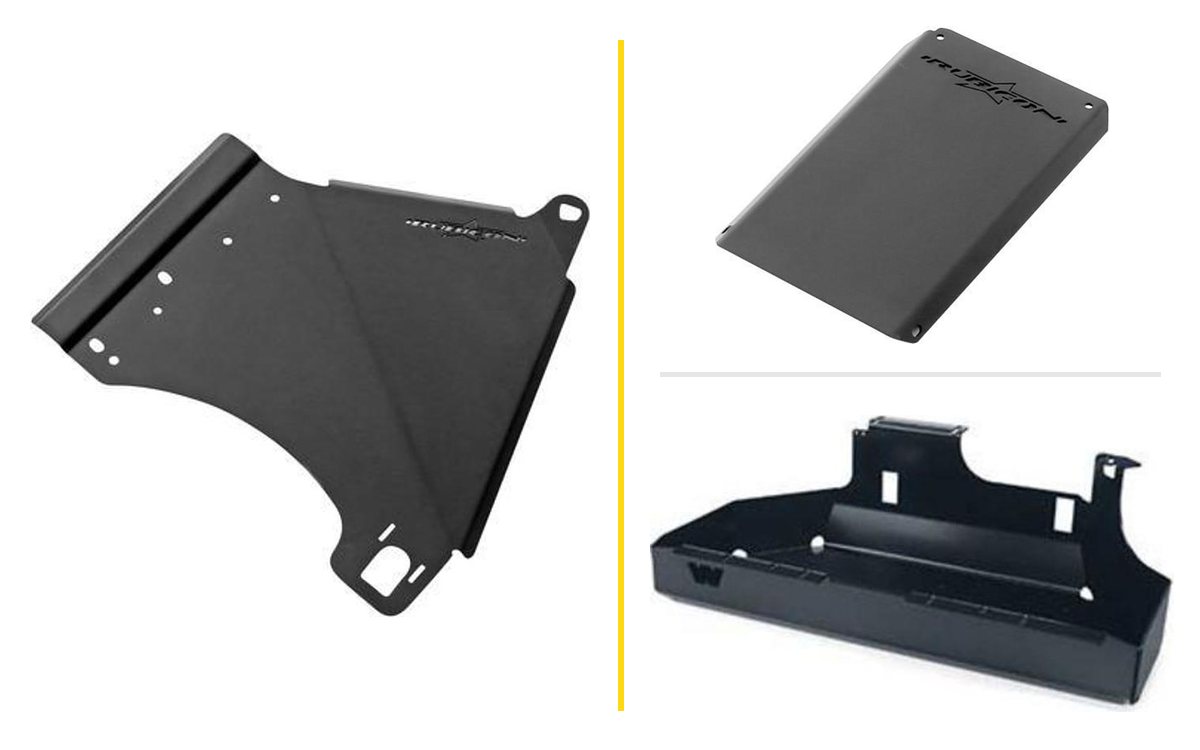
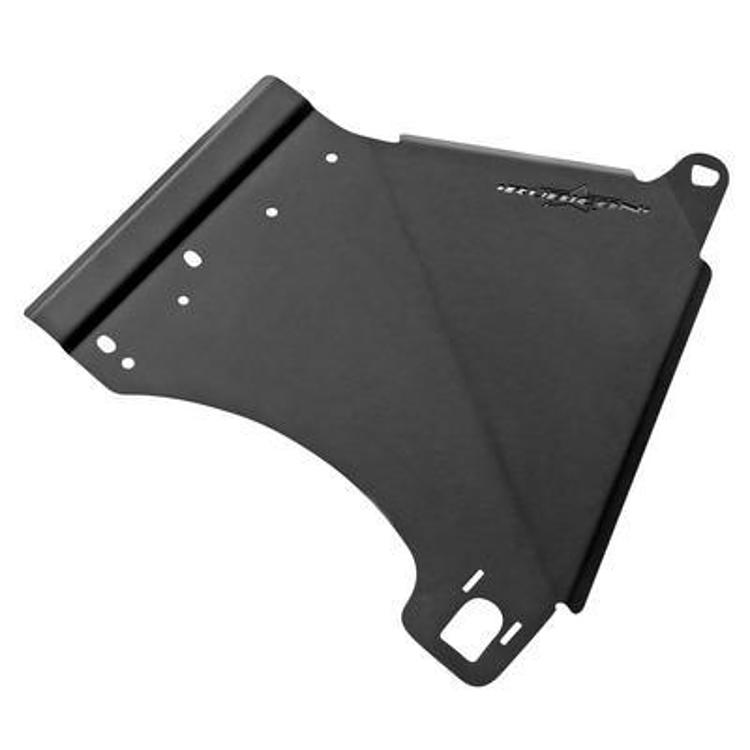
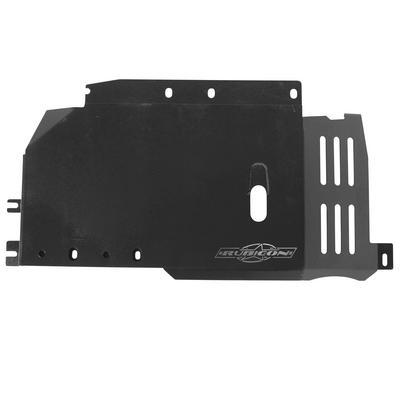
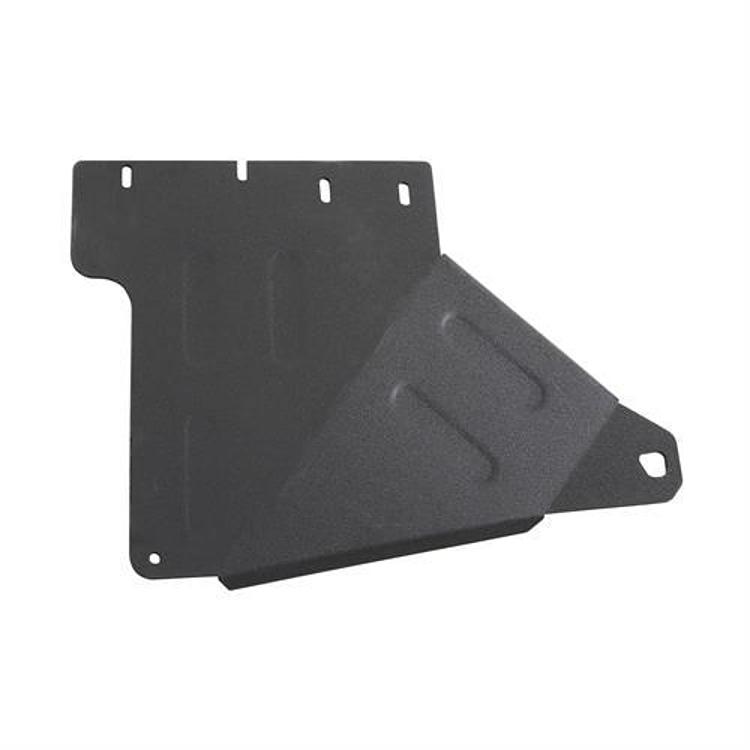
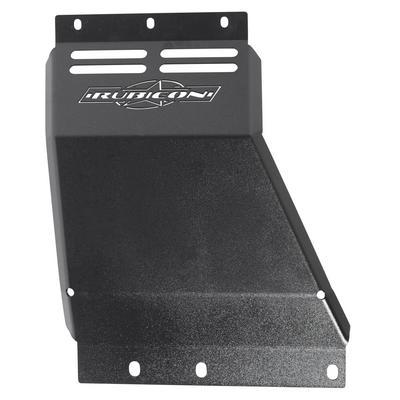
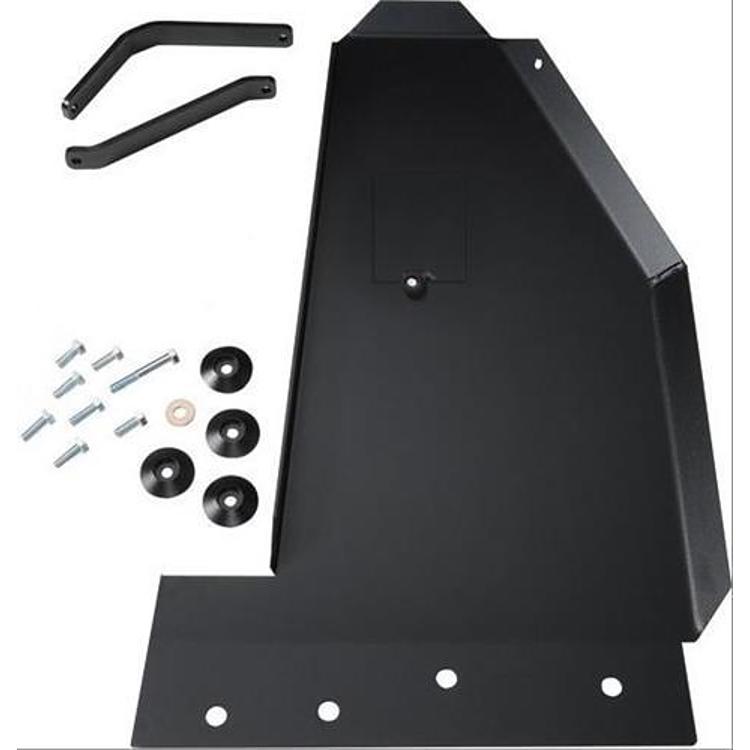
A transfer case skid plate protects the gearbox that splits power between the axles, and on many Jeeps that case is the lowest point in the middle of the vehicle. The Rubicon Express REA1014 transfer case skid plate for the 2007-2018 Wrangler JK is CNC laser cut from 3/16-inch steel and installs with no cutting or drilling. Its Wrangler JL and Gladiator counterpart, the Rubicon Express REA1022, is built for 3.6L models and lets you change the transfer case fluid with the plate in place.
Other options include the Rock Hard 4X4 RH6004 for the JK and the Smittybilt XRC 76920, both 3/16-inch steel. The Rock Hard RH-6004 has a steel rear support brace so the plate resists collapsing under load. For the NP231 case, the JcrOffroad XJSD-TC231P takes 10 drilled holes, and on the Toyota FJ Cruiser the Trail Gear 120065-1-KIT pairs a 3/16-inch plate with 1.5-inch tubing.
Transmission skid plates
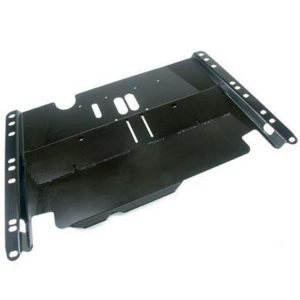
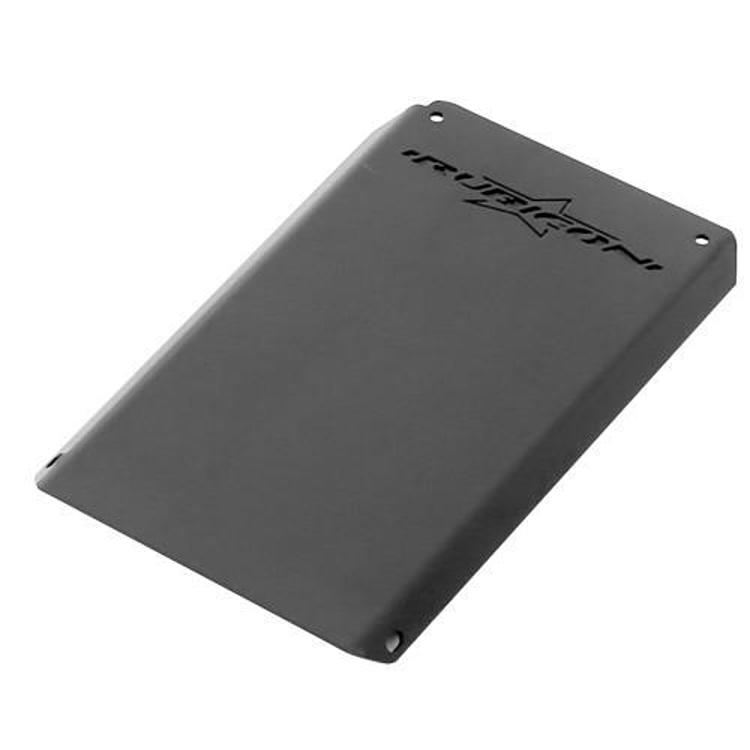
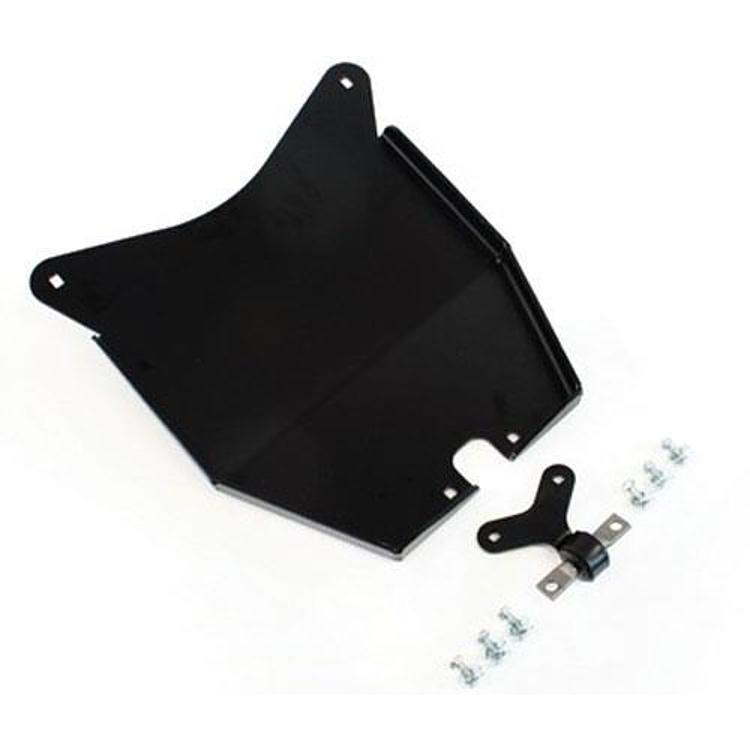
A transmission skid plate covers the pan, fluid lines and the area around the crossmember. Automatic transmissions need it most, because the fluid pan is a thin part that sits low. The Rubicon Express REA1013 automatic transmission skid plate is 3/16-inch steel, mounts high and tight on existing hardware, and is sold for automatic JKs in both body styles. Its sibling, the Rubicon Express REA1012, covers 2007-2011 automatic JKs, so match the plate to your model year.
Manual transmissions get their own plates, such as the manual-only REA1018 and REA1019. For the JL and Gladiator, use the Rubicon Express REA1021. The TeraFlex 4607100 for the TJ and LJ fits manual and automatic transmissions but requires the TeraFlex BellyUp plate and heavy-duty oil pan plate alongside it.
Fuel tank skid plates
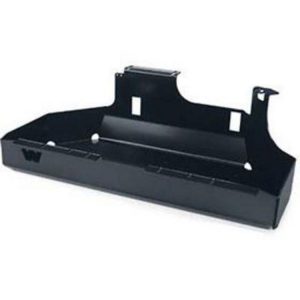
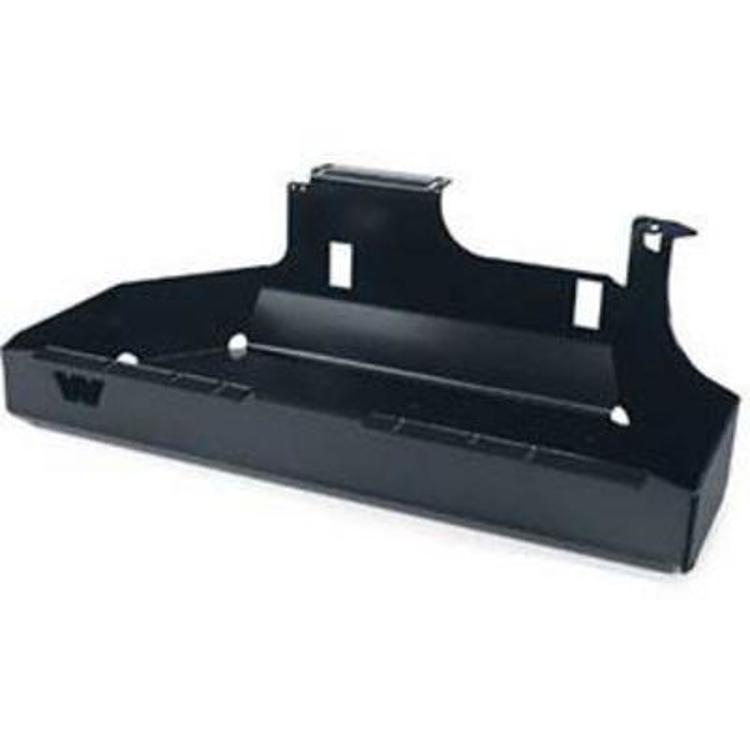
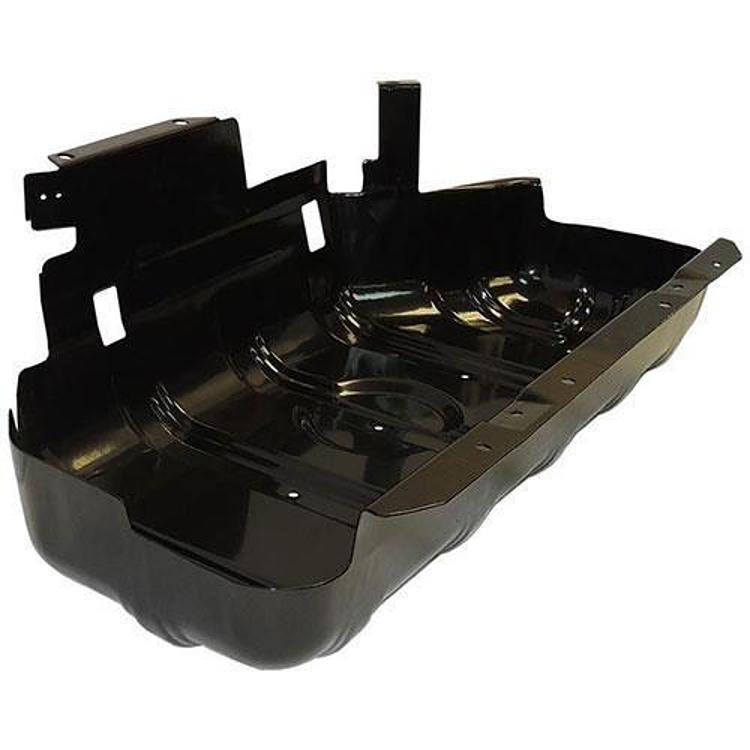
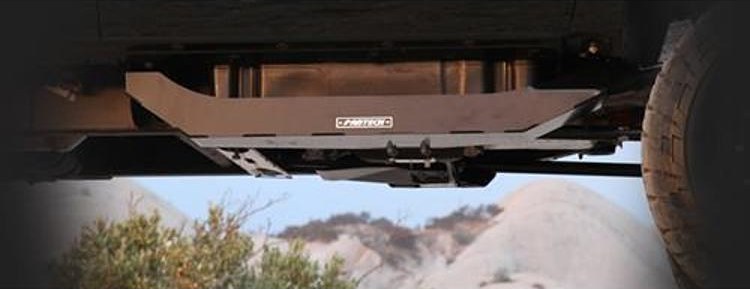
A fuel tank skid plate carries and protects the tank, and where the tank sits decides how it gets hit. On the TJ, YJ and XJ it hangs at the rear, so a low tail and a poor departure angle bring it down onto rocks. On the JK it sits ahead of the rear axle, so it takes belly hits on a crest. Rubicon Express splits the line by vehicle: REA1015 for 2-door Wranglers, REA1016 for the 4-door JK, REA1023 for the JL and REA1024 for the Gladiator.
For older Jeeps, the Warn 66550 and Rugged Ridge 18003.21 fit the YJ in 3/16-inch steel, and the Warrior 90710 is a 12-gauge option for the 20-gallon YJ tank. The Crown Automotive 52100219AB is a direct replacement for the TJ, and the Skid Row JP-3001 wraps the tank on the 1997-2001 XJ and 1993-1998 ZJ in 3/16-inch steel on the bottom and sides.
On many Jeeps the factory plate also holds the tank up. The JK factory tank skid is the tank’s main mount, so Artec’s aluminum plate goes over the factory part. A crushed plate means the tank needs checking too, and a damaged one calls for a replacement fuel tank.
Oil pan and engine skid plates
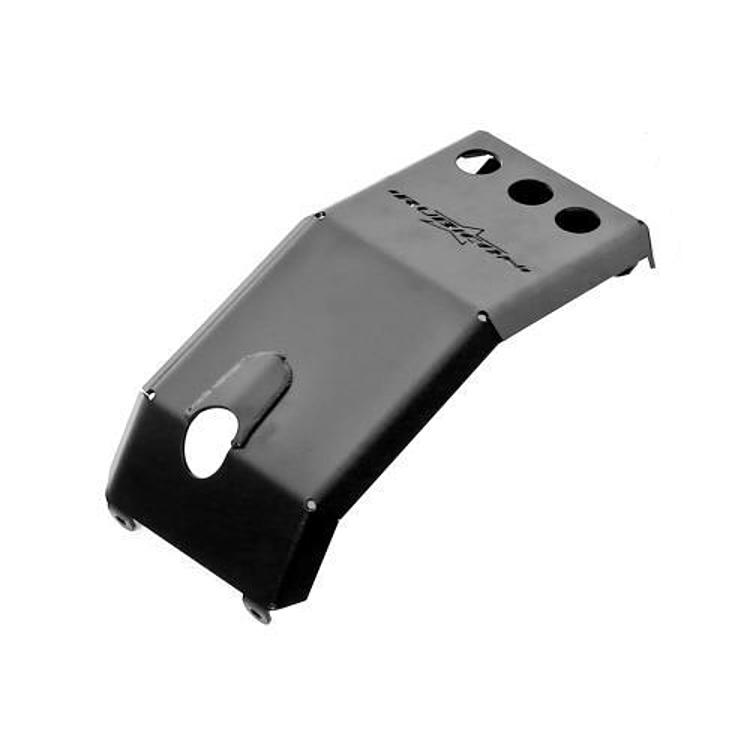
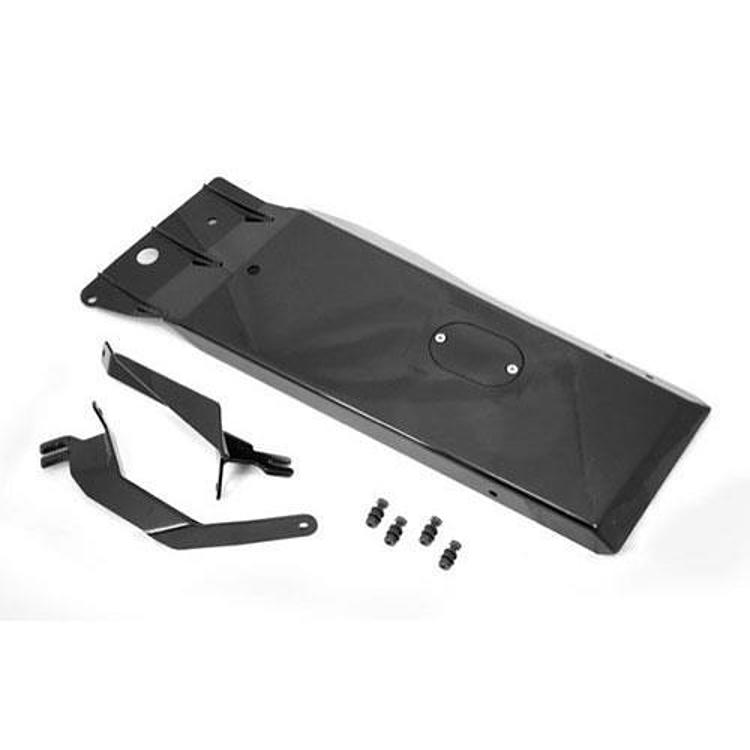
An oil pan skid plate protects the part with the worst failure mode: a holed pan empties the engine in moments. The Rubicon Express REA1010 and REA1011 are the JK plates, with the REA1011 built around the 3.6L engine, and the REA1025 fits the JL and Gladiator, all in 3/16-inch steel. The TeraFlex 4667100 fits the TJ and LJ with the 4.0L six. Combined plates such as the Rugged Ridge 18003.51 engine and transmission skid plate and the ARB 5450110 cover the pan and the transmission in one piece.
EVAP canister, muffler and differential plates
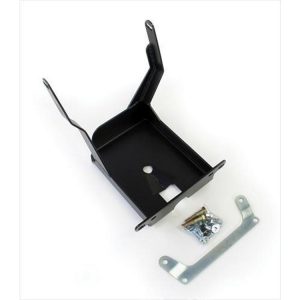
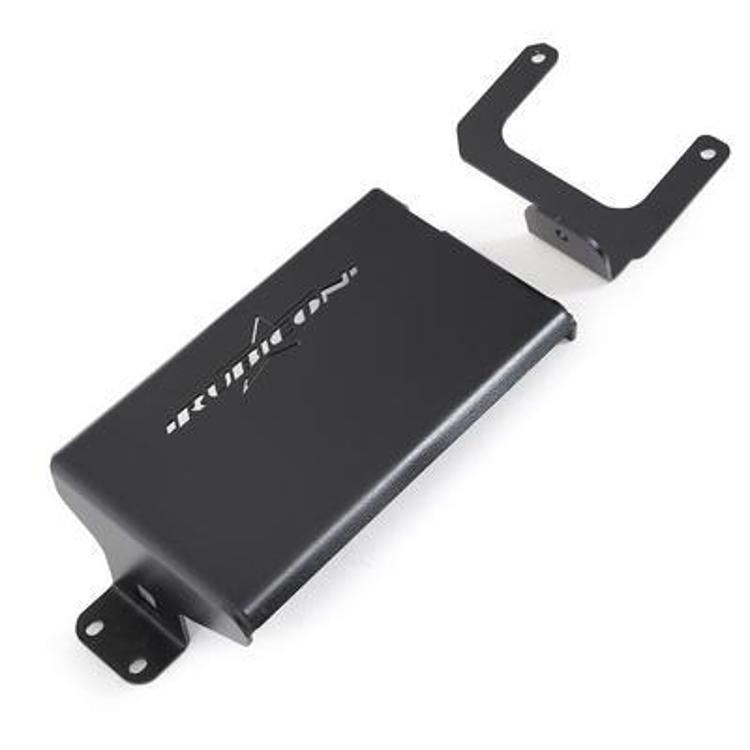
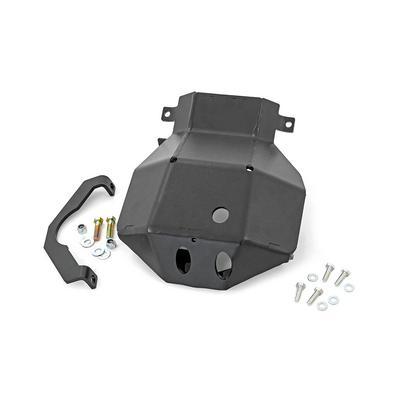
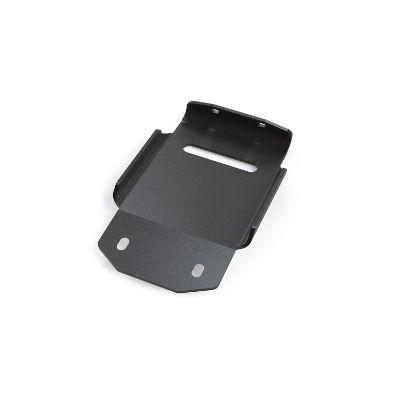
The REA1017 skid plate guards the evaporative emissions canister, a plastic part that stores fuel vapor and sits under the Jeep between the rear driveshaft and the frame rail. The Rubicon Express REA1017 evaporator skid plate surrounds the canister in 3/16-inch plate steel for the 2007-2018 JK. The Rugged Ridge evaporative canister skid plate does the same job in 3/16-inch steel.
The Rough Country 10599 fits the JL and the Rugged Ridge 18003.31 fits the JK in 5 mm steel. Differential guards add a layer over the cover: the Warn 65447 fits Dana 44 axles, and the Rough Country 797 fits the JK front Dana 30 in 1/4-inch plate steel. Knowing which Dana axle is under your Jeep settles which one fits.
Control arm skids and steering box plates
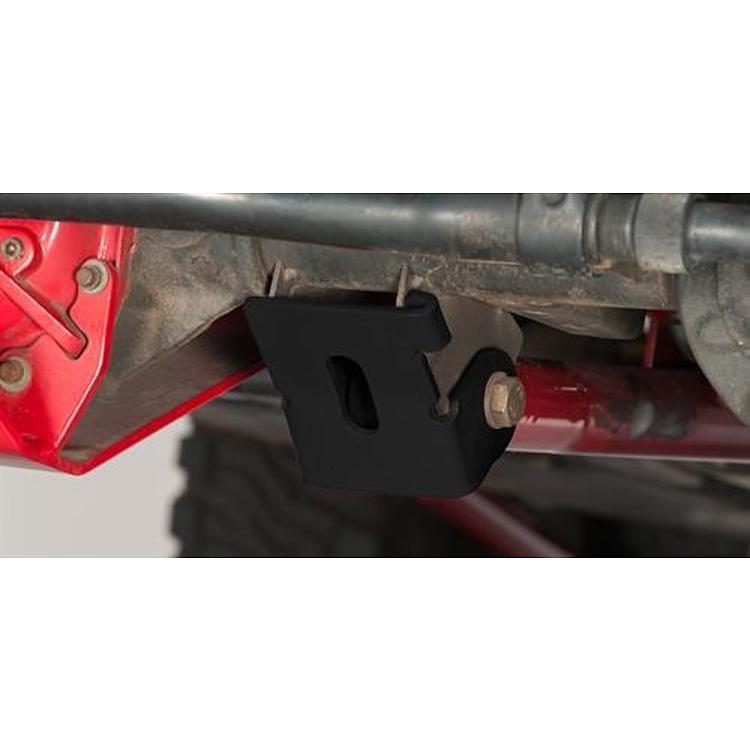
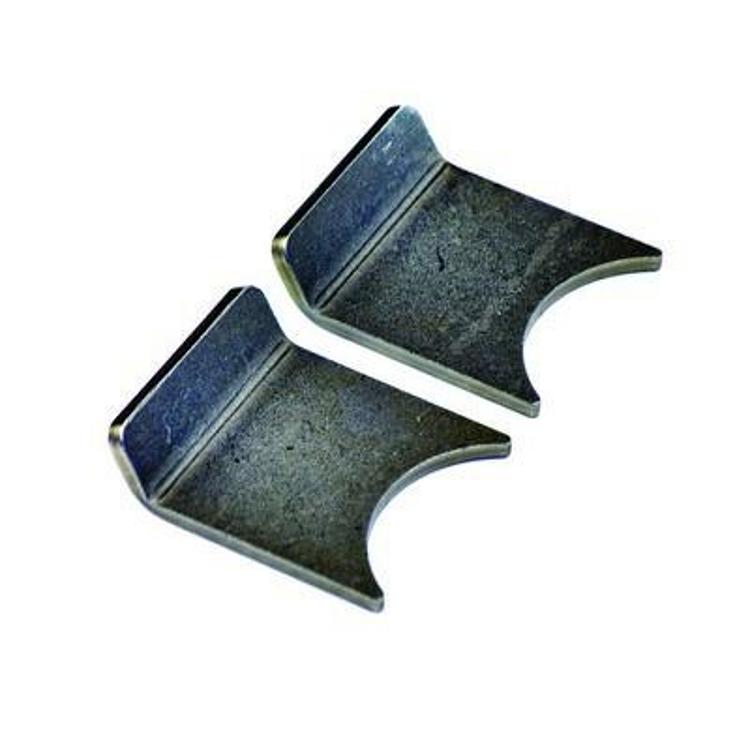
Lower control arm mounts hang below the frame and axle and take a lot of rock contact, and a crushed mount can leave you with a bent bolt that will not come out. The bolt-on Rancho RS6210B is a 3/16-inch steel pair for the axle end of the front lower arms on the TJ and JK, while the TeraFlex 4937330 is a 1/4-inch steel part designed to be welded on. On independent-front vehicles, the ICON 56107 covers the lower arms on 2016-2023 Tacomas, and the Artec TY6805 covers the 2010-2019 4Runner.
Steering box plates protect a heavy gear that sits forward and low on many Jeeps. The Warn 64250 encloses the box in 3/16-inch steel with 1/4 inch of clearance, uses large holes to let debris clear, and requires cutting or drilling to fit.
Steel vs aluminum vs UHMW: which skid plate material is best?
Steel is the best all-round skid plate material for a Jeep or truck, aluminum is the right choice when weight matters, and UHMW plastic is the right choice for side-by-sides and light trail use. The numbers below compare common thicknesses per square foot, with stiffness set against 3/16-inch steel.
| Material and thickness | Weight per sq ft | Bending stiffness vs 3/16 in steel | Best use |
|---|---|---|---|
| 12-gauge steel (0.105 in) | 4.3 lb | 0.17x | Light coverage, factory-style tank plates |
| 1/8 in steel | 5.1 lb | 0.30x | Front valance plates, light impacts |
| 3/16 in steel | 7.7 lb | 1.00x | Most Jeep and truck belly plates |
| 1/4 in steel | 10.2 lb | 2.37x | Regular rock contact, control arm skids |
| 3/16 in 6061-T6 aluminum | 2.6 lb | 0.34x | Small plates, light vehicles |
| 1/4 in 6061-T6 aluminum | 3.5 lb | 0.82x | Weight-conscious belly pans |
| 3/8 in UHMW | 1.8 lb | 0.03x | UTV trail skids on close supports |
| 1/2 in UHMW | 2.4 lb | 0.06x | UTV full skids, rock sliders |
Bending stiffness scales with the cube of thickness. Going from 3/16-inch to 1/4-inch steel adds 33 percent to the weight and 137 percent to the stiffness.
Steel skid plates
Steel dents instead of cracking, and it slides over rock better than aluminum. Mild steel has a modulus of about 200 GPa and 20 percent elongation or more, so it can absorb a heavy hit by stretching, and any welder can repair it. Its weakness is weight and rust. A chipped powder coat lets corrosion start, so touch up bare spots. An E-coat under the powder coat, as on Rugged Ridge plates, slows that down.
Aluminum skid plates
Aluminum is the weight-saver. Rock Hard 4X4 rates its 3/16-inch steel RH-6003 at 57 lb and its 1/4-inch aluminum RH-6043 at 33 lb, a 24 lb saving at one position. 6061-T6 aluminum has a yield strength of 276 MPa against 250 MPa for A36 mild steel, so a 1/4-inch 6061-T6 plate takes about twice the load of a 3/16-inch A36 plate before it bends for good, though it is a little less stiff.
The tradeoff is how it fails. 6061-T6 stretches only 12 to 17 percent, it can crack at tight bends and mounting points, and welding softens the metal next to the weld. It also gouges on sharp rock, and the burrs can catch. The TeraFlex RockGuard 4609100, the Rock Hard RH6040 and the Artec JK1010 belly pan all use 1/4-inch aluminum.
UHMW plastic skid plates
UHMW stands for ultra-high molecular weight polyethylene, a dense, slick plastic. It weighs about a third as much as aluminum of the same thickness, cannot rust and slides over rock with very little friction. It flexes instead of denting, which is why it needs close-spaced support. Standard UHMW is rated at 80°C (176°F) long term and melts at 135°C (275°F), so it does not belong near an exhaust.
Plastic also works as a slider over steel on heavy trucks. The Fabtech FTS21095 for 2011-2013 Silverado and Sierra HD trucks spans a 1/4-inch steel pan with a 3/8-inch high density plastic cover: steel carries the impact, and plastic does the sliding.
How thick should a skid plate be?
For most off-road use, a skid plate should be 3/16-inch steel or 1/4-inch aluminum. Heavier vehicles and regular rock contact justify 1/4-inch steel, while light vehicles and low-speed fire roads can run less.
- 3 mm to 12 gauge: folded plates and factory-style parts. The ARB 5421110 for the Land Cruiser and FJ Cruiser uses 3 mm folded steel and gets its strength from the bends.
- 3/16 inch or 5 mm: the standard for bolt-on Jeep plates. Nearly the whole Rubicon Express line, from REA1010 through REA1025, uses 3/16-inch steel.
- 1/4 inch steel: for parts that carry the vehicle’s weight on rock, such as the Skid Row JP-0008 long arm engine plate.
- 1/4 inch aluminum: the usual thickness when a maker swaps steel out.
- 3/8 or 1/2 inch UHMW: the common range for side-by-sides.
Shape can do as much as thickness. A formed flange or a fold along the edge stiffens a plate far more than the same metal left flat, and a rear brace keeps a long plate from folding up.
What is a belly pan, and do you need one?
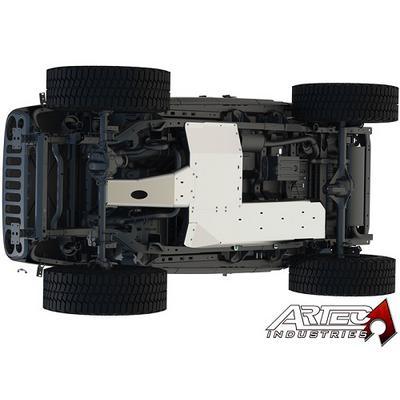
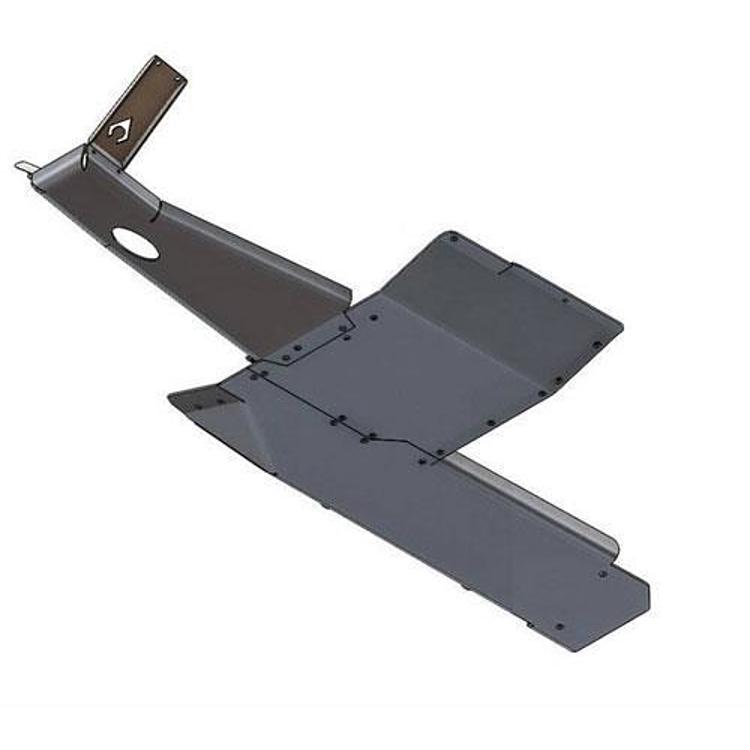
A belly pan is a set of linked plates that covers the underside from the engine to the fuel tank as one surface. You need one if you regularly slide the whole vehicle over rock; most drivers are better served by individual plates added where they hit.
The appeal is the smooth, one-piece bottom. The Artec JK1010 belly pan for the 4-door JK and the Artec JK1020 for the 2-door use 1/4-inch 6061 aluminum over 3/16-inch zinc-plated steel brackets, and protect the oil pan, transmission pan, fuel tank, front exhaust and transfer case. The kit gains clearance over the factory parts. One section comes off for service, with nuts pressed into the brackets for one-tool removal.
The tradeoffs of a full belly pan:
- Weight: full coverage adds up even in aluminum.
- Heat and mud: a long closed surface holds packed mud against the parts above it.
- Exhaust changes: the JK1010 needs a Y-pipe modification on every model, a loop delete when it runs with a long arm crossmember, and light trimming of the factory tank skid.
- Service: oil changes depend on the access panels. Check that your kit has them before you buy.
- Crossmember match: the Artec kits work best with Artec crossmembers, such as the Artec JK2004 heavy-duty crossmember.
How do you change the oil with skid plates installed?
The best skid plates let you drain the oil and transfer case fluid without taking them off, through an access door, a drain opening or a removable section. Check for this before you choose a plate, because a plate that must come off at every oil change soon stays off.
- Access doors: Rock Hard 4X4 builds a laser-cut oil change access door into its JK oil pan and transmission plates.
- Drain openings: the Skid Row JP-0008 has an oil drain opening, so the oil can be changed with the plate in place.
- Fluid-change access: the Rubicon Express REA1022 lets you change transfer case fluid without removing the plate.
- Reachable plugs: the ARB 5450110 wraps the oil pan on all sides and keeps the drain plug reachable.
Fill plugs matter as much as drain plugs on a transfer case: always loosen the fill plug first so you know you can refill it.
Do skid plates trap heat?
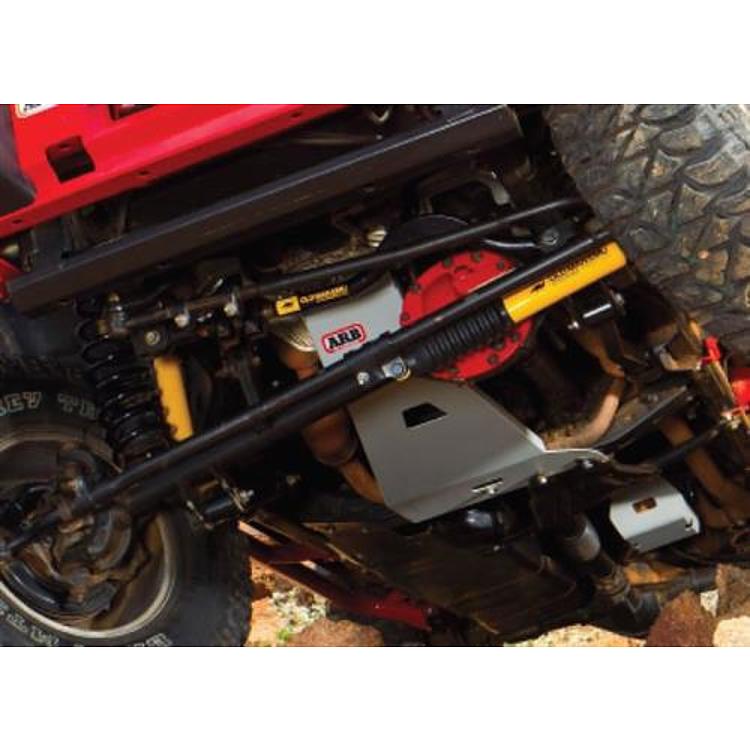
Skid plates can trap heat when they sit close to the exhaust or when mud packs behind them. Rock Hard 4X4 leaves the 3.6L JK exhaust loop uncovered because that loop runs very hot and a plate could trap the heat and crack it.
Practical rules for heat:
- Leave an air gap: keep space around exhaust pipes and catalytic converters, and do not add a plate where the maker left one out.
- Clean out mud: packed mud insulates a transmission pan and oil pan.
- Watch the automatic: it runs hot under heavy load, so compare temperature readings before and after fitting a plate.
- Use vents where they exist: the slots and holes in plates such as the REA1021 and the Rough Country 10599 muffler plate let air move and water drain.
Do skid plates reduce ground clearance?
A skid plate takes up very little ground clearance on its own, since 3/16-inch steel is under 0.2 inch thick, but its brackets and mounting height can take more. Plates that mount high and tight against the drivetrain give up the least, and some gain clearance by replacing lower factory parts.
Ground clearance is the distance from the ground to the lowest point, usually the axle housing on a solid-axle vehicle. A suspension lift does not raise the axle at all; only bigger tires do. What the lift raises is the belly, and that sets your breakover angle: the steepest crest the vehicle can straddle without touching in the middle.
Wheelbase has a large effect on breakover. With 10 inches of belly clearance, the figures work out like this:
| Vehicle | Wheelbase | Breakover at 10 in belly clearance | At 9 in |
|---|---|---|---|
| Wrangler JK 2-door | 95.4 in | 23.7° | 21.4° |
| Wrangler JK 4-door | 116.0 in | 19.6° | 17.6° |
| Jeep Gladiator | 137.3 in | 16.6° | 14.9° |
One inch of belly height is worth about two degrees of breakover, and a long-wheelbase vehicle hits its belly plates more often. High-clearance parts go after this directly. The TeraFlex BellyUp 4648403 replaces the factory TJ and LJ skid with a lower-profile support that adds up to 2 inches of clearance. A one-inch body lift is recommended with it, some exhaust adjustment may be needed, and a slip yoke eliminator may be needed if driveshaft vibration appears.
How does a lift kit change skid plates and crossmembers?
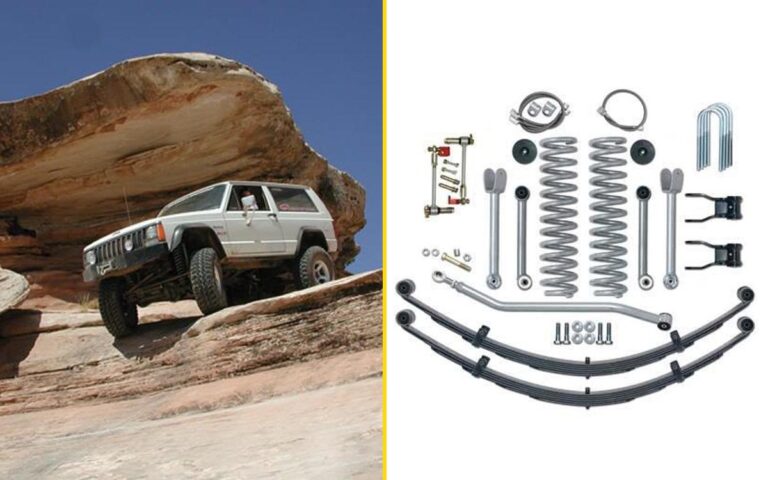
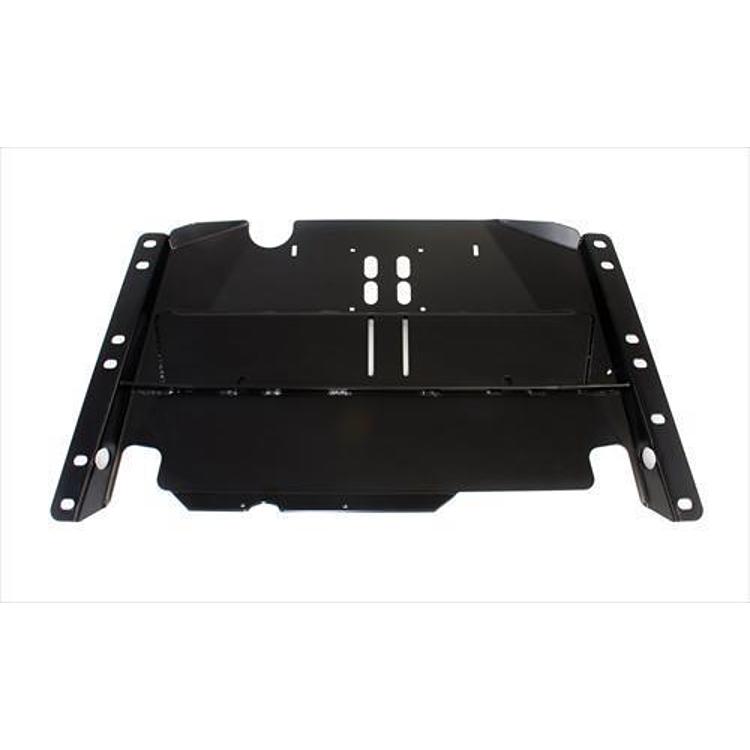
A lift kit changes the skid plate decision in three ways: it can require a plate to drop with a lowered transfer case, it can replace the crossmember the plate bolts to, and it opens up the room that some plates need. Check the plate against the exact lift before you buy either part.
The JK lift height comparison covers the control arm and driveshaft side.
Transfer case lowering kits
A transfer case lowering kit drops the transmission crossmember, and with it the transmission, transfer case and usually the skid plate, to ease driveshaft angles after a lift. Spicer’s guidance is to keep U-joint angles at 3 degrees or less, and equal or within 1 degree of each other. The Rubicon Express RE2100 gives YJ, TJ and LJ Wranglers a 1-inch drop, the RE2120 does the same job on the XJ and ZJ, and the Pro Comp 55076 is a 1-inch drop for 2-inch to 4-inch lifts.
Every inch of drop comes straight off the belly. The alternative is a slip yoke eliminator and a CV driveshaft, such as the Rubicon Express RE1811 for the NP231, which handles steeper angles and lets the case stay up high. Browse transfer case lowering kits and slip yoke eliminator kits together.
Long arm crossmembers
Long arm suspension replaces the short factory control arms with longer ones that mount on a new crossmember, which often removes the mounting points a factory-based plate needs. Both the Rubicon Express RE4521 JK crossmember and the RE9920 XJ crossmember kit require welding. Parts built around this geometry include:
- Separate long arm plates: the Rock Hard RH6040 is the long arm version, and the RH6043 is the short arm or factory version. Rock Hard requires the long arm version when the control arm mounts are relocated.
- Crossmember-mounted plates: the TeraFlex RockGuard 4609100 mounts to and reinforces the TeraFlex long arm crossmember on the JL, in 1/4-inch 6061-T6 aluminum. That crossmember has a 70 percent higher maximum bending moment than the factory part.
- Clearance built in: the ARB 5450110 has a narrow rear section so aftermarket long arm kits still fit.
Aftermarket transmission crossmembers and frame crossmembers can also use different threads than the factory part, so customer-supplied bolts may be needed.
Lift and articulation room
Some plates need a lift to work properly because they take up room the suspension uses. Run at least a 2.5-inch lift with the XRC 76922 transmission plate, for clearance when the vehicle needs a lot of articulation. The same 2.5 inches applies to the Rugged Ridge 18003.51. Check the driveshaft, exhaust and steering at full compression and full droop after any plate goes on.
What makes UTV skid plates different?
UTV skid plates cover much more of the floor than Jeep plates and are usually UHMW or aluminum, because a side-by-side has a light chassis and little weight to spare. Steel is rare on side-by-sides for that reason.
A full UTV skid set often runs the whole floor, with extra plates for the front, the rear and the A-arms and trailing arms. Trail Armor builds 1/2-inch polymer full skids with drain holes so debris can wash out without pulling the plates. UHMW plates usually run 3/8 or 1/2 inch.
- UHMW: slides best, runs quiet, cannot rust, and springs back after a hit. Once it is badly gouged or split, you replace it.
- Aluminum: resists sharp rock cuts better and can be hammered back into shape, but rattles and bangs louder and can snag.
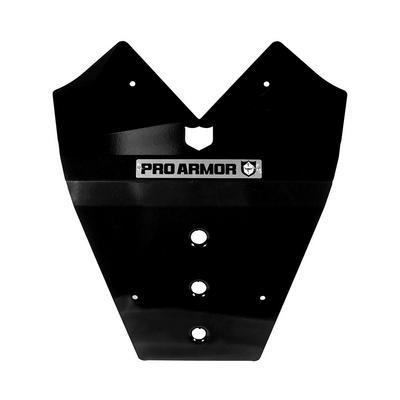
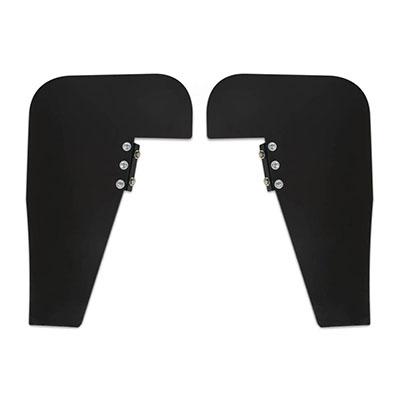
- Position plates: the Pro Armor P141026BL front skid plate fits 2014-2017 Polaris RZR XP 1000 models, the aluminum Pro Armor P141P362BL rear skid plate goes with the XP1000 Asylum cage system, and the Cognito 360-90621 rock guard kit uses UHMW flaps to keep kicked-up rock off the trailing arms, wheels and brakes.
Browse UTV skid plates and under-body armor by machine.
Which skid plates should you buy first?
Buy the plate for the part that hits first on your vehicle and whose failure stops you, then work outward. On most trail rigs that means the oil pan and transmission, then the transfer case, then the fuel tank, with control arm and EVAP plates after those.
Priority by vehicle
Look under the vehicle first, because a factory part may already cover the position. The question then becomes whether it is strong enough: the 2021-2026 Bronco’s front plate is plastic, while a Wrangler’s factory tank skid is formed metal that often stays on under an upgrade.
- Wrangler JK, JL and Gladiator: oil pan and transmission, then transfer case, fuel tank, EVAP canister on the JK and control arm skids. The Rubicon Express line is built to be added this way, one plate at a time. Longer wheelbases hit the belly sooner, so a Gladiator moves the transfer case up the list.
- Wrangler TJ, LJ and YJ: oil pan and steering box first, because these Jeeps already carry a factory tank skid, and the TJ and LJ a factory belly skid. Upgrade those next. On a TJ or LJ the TeraFlex BellyUp adds strength and clearance together.
- Cherokee XJ: transfer case, fuel tank and control arm mounts. The NP231 and the rear-mounted tank both hang low, and the XJ tank has its own 3/16-inch plate in the JP-3001.
- Tacoma, 4Runner and other independent-front 4X4s: front differential and lower control arms first, since the front suspension hangs lowest. See how the Wrangler, Bronco and 4Runner compare from the factory.
- Ford Bronco: the front comes first, since the factory plate is plastic. The Addictive Desert Designs Rock Fighter replaces the factory plastic front plate on 2021-2026 trucks with powder coated steel and covers the whole front underbelly.
- Full-size trucks: front first, then transfer case and tank on long wheelbases. The Go Rhino RC3 LR skid plate fits the 2015-2019 F-150 with a recessed light bar mount.
Priority by terrain
| Terrain | Plates to add first | Material | Watch for |
|---|---|---|---|
| Rock crawling | Oil pan, transmission, transfer case, tank, control arm skids | 3/16 to 1/4 in steel, or 1/4 in 6061-T6 | Mount strength, bolt heads, breakover |
| Forest and mud | Oil pan, front differential, transfer case | 3/16 in steel with openings | Packed mud and trapped heat |
| Desert and whoops | Front plate, oil pan, transmission, control arms | Aluminum or 3/16 in steel | Weight on the front suspension |
| Overland and gravel | Oil pan, transfer case, fuel tank | 1/4 in aluminum or 3/16 in steel | Payload and service access |
| Salt and snow | Oil pan, transfer case | Aluminum, or E-coated steel | Rust under chipped coating |
| UTV trails and rock | Full floor, A-arm and trailing arm guards | 3/8 to 1/2 in UHMW | Gouges, exhaust clearance |
Plate weight matters most on overland builds, because they already carry gear close to the payload rating. See the guide to modern overland 4X4s for the vehicles.
The short version
Start with 3/16-inch steel plates for the oil pan, transmission and transfer case, and add the tank plate if your rear end sits low. Choose 1/4-inch 6061-T6 aluminum if weight matters and you can accept gouges and possible cracks. Use UHMW on a side-by-side. Before you buy, confirm three things: the plate fits your suspension and crossmember, you can drain the fluids with it installed, and it leaves room around the exhaust.
Frequently asked questions
What does a transfer case skid plate do?
A transfer case skid plate is a steel or aluminum plate bolted under the transfer case, the gearbox that splits power to the front and rear axles. It keeps rocks and ledges off the case housing and its output yokes. The Rubicon Express REA1014 for the 2007-2018 Wrangler JK, for example, is CNC laser cut from 3/16-inch steel and needs no cutting or drilling.
What is the REA1017 skid plate?
The Rubicon Express REA1017 is a 3/16-inch plate steel guard for the evaporative emissions (EVAP) canister on the 2007-2018 Jeep Wrangler JK. It wraps the plastic canister, which sits under the Jeep between the rear driveshaft and the frame rail, and installs with no cutting or drilling.
Is 3/16-inch steel thick enough for a skid plate?
Yes, for most trail-driven Jeeps and trucks. 3/16-inch steel is the common thickness for bolt-on transmission, transfer case and fuel tank plates. Move to 1/4-inch steel when the vehicle regularly lands its weight on rock. A 1/4-inch plate is about 2.4 times as stiff as a 3/16-inch plate and about a third heavier.
Are aluminum skid plates as strong as steel?
A 1/4-inch 6061-T6 aluminum plate has about 82 percent of the bending stiffness of a 3/16-inch mild steel plate at less than half the weight, and it takes more load before it bends for good. Steel stretches further before it breaks and slides better across rock, while aluminum gouges and can crack at bends and mounting points.
Do skid plates cause overheating?
A well-designed plate does not on its own, but trapped heat and packed mud can cause trouble. Keep clearance around exhaust parts, keep the plate clear of mud, and never run UHMW plastic close to an exhaust.
Are UHMW or aluminum UTV skid plates better?
UHMW suits most rock and trail riding on a UTV because it slides over obstacles, flexes back after a hit, cannot rust and runs quieter than metal. Aluminum resists sharp rock cuts better and can be hammered back into shape.
Start with the plate that protects what you hit most, then build outward. The full range is under skid plates and armor and protection, with lift-related parts under transfer case lowering kits, transmission crossmembers and control arms.
Sources
- Rock Hard 4X4, RH-6003 steel oil pan and transmission skid plate.
- Rock Hard 4X4, RH-6043 aluminum oil pan and transmission skid plate.
- Rock Hard 4X4, RH-6004 transfer case skid plate.
- Artec Industries, JK Under Armor belly pan kit.
- Trail Armor, Can-Am Commander full skids.
- Spicer Parts, Measuring Angles.
- AZoM, Aluminum 6061 alloy properties and ASTM A36 mild steel properties.
- Ensinger, PE 1000 (UHMW) data sheet.