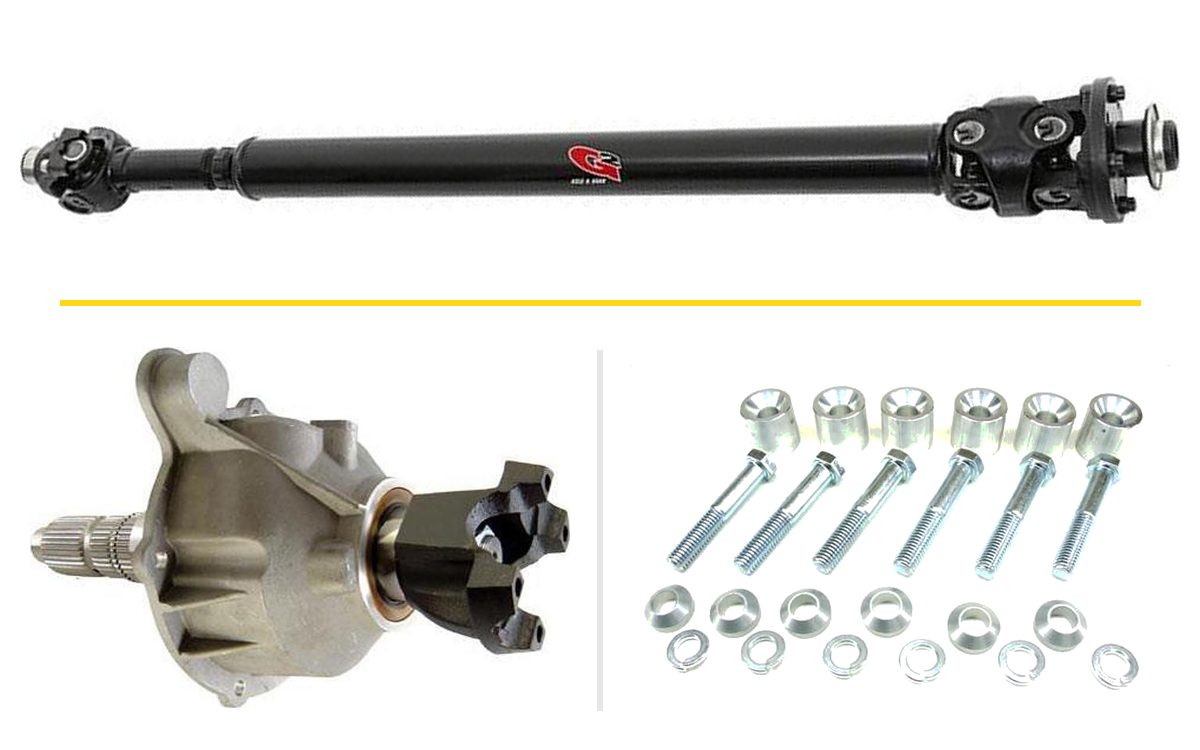
Driveline vibration after a lift comes from steeper u-joint operating angles. A transfer case drop of 1/2 to 1 inch can settle a small lift, while a slip yoke eliminator (SYE) with a double cardan CV driveshaft is the lasting fix for larger lifts on NP231 Jeeps, with the pinion angle reset to match.
Key takeaways
- Angle target: Spicer asks for u-joint operating angles of no more than 3 degrees for vibration-free running, at least 1/2 degree, and within 1 degree of each other on the same shaft.
- Transfer case drop: quick and simple, but a 1-inch drop gives back 1 inch of clearance under the transfer case skid plate and only flattens the shaft a few degrees.
- SYE on an NP231: adds 4 to 7 inches of rear driveshaft length, keeps the belly clearance and makes a double cardan shaft possible.
- Pinion angle: parallel to the transfer case output on a two-joint shaft, about 1 to 3 degrees below the shaft slope on a double cardan shaft.
- Speed tells you the cause: a shudder under load below about 40 mph is usually angles; vibration that grows with speed above about 50 mph is usually balance, wear or runout.
- Crawl boxes: gearing parts, not vibration fixes.
Why does driveline vibration start after a lift?
A lift moves the axles away from the transfer case, so the driveshafts tilt steeper and each u-joint works through a larger angle. Once the angles at the two ends of a shaft stop matching, the joints no longer cancel each other, and the shaft delivers uneven speed to the axle twice per revolution.
The operating angle is the angle between a driveshaft and the part it connects to: the transfer case output at one end and the axle pinion at the other. A universal joint (u-joint) is a cross with four bearing cups that lets a shaft turn through that angle. It does not turn evenly. When the input spins at a steady speed, the output speeds up and slows down twice per revolution, and the swing grows quickly with angle.
| Operating angle | Output speed swing | What it means |
|---|---|---|
| 3 degrees | about ±0.14% | Spicer’s limit for vibration-free running |
| 7 degrees | about ±0.75% | Spicer’s maximum at 2,500 shaft rpm |
| 15 degrees | about ±3.5% | Near the practical limit of a two-joint shaft |
| 20 degrees | about ±6% | Too steep for a two-joint shaft at road speed |
A two-joint shaft handles this by using the second joint to undo the first. That only works when the angles at both ends match and the yokes are in phase. The cancellation is never perfect: the tube between the joints still speeds up and slows down, and the steeper the shaft, the larger that load.
Lift height sets the rise, and shaft length decides how much of that rise becomes angle. Short-wheelbase Jeeps such as the Wrangler TJ and Wrangler YJ feel it first because their rear shafts are so short. This worked example uses a shaft 20 inches long between joint centers, with the transfer case joint 4 inches above the pinion joint at factory height.
| Setup | Rise | Shaft length | Shaft slope |
|---|---|---|---|
| Factory height | 4 in | 20 in | 11.5 degrees |
| 4-inch lift | 8 in | 20 in | 23.6 degrees |
| 4-inch lift + 1-inch transfer case drop | 7 in | 20 in | 20.5 degrees |
| 4-inch lift + SYE adding 4 inches | 8 in | 24 in | 19.5 degrees |
| 4-inch lift + SYE adding 7 inches | 8 in | 27 in | 17.2 degrees |
A drop removes rise, and an SYE adds length. Neither brings the shaft back to its factory slope, so a lifted Jeep usually needs a joint design that tolerates the slope as well.
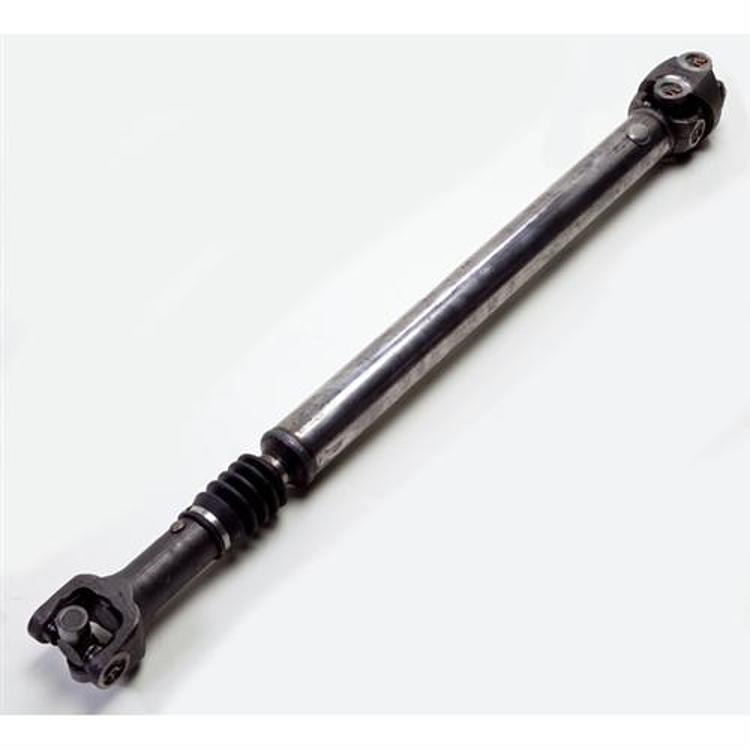
What are safe u-joint operating angles?
Spicer’s figure for vibration-free running is 3 degrees or less at each joint, at least 1/2 degree, and within 1 degree of each other. Spicer’s ceiling also falls as the shaft spins faster, so an angle that is tolerable on the trail can shake at highway speed.
| Driveshaft rpm | Spicer’s maximum operating angle |
|---|---|
| 1,500 | 11.5 degrees |
| 2,000 | 8.7 degrees |
| 2,500 | 7.0 degrees |
| 3,000 | 5.8 degrees |
| 3,500 | 5.0 degrees |
| 4,000 | 4.2 degrees |
- Above 3 degrees: Any operating angle over 3 degrees lowers u-joint life and may cause a vibration.
- Below 1/2 degree: the needle rollers barely rotate, so the same spots carry all the load and grease does not move through the bearing.
- Joint life: a joint’s load rating assumes 3 degrees and 3,000 rpm for 5,000 hours, and doubling the angle halves the life.
- Practical limit: Tom Wood’s Custom Drive Shafts puts the working limit of a two-joint shaft near 15 degrees, where a slight vibration appears around 45 to 50 mph when you flutter the throttle.
- Binding: u-joints can bind at about 25 to 30 degrees. Allow for axle droop, frame flex and differential roll, not only the angle at ride height.
How to measure driveline angles
You need an angle finder and the vehicle on level ground at normal ride height, with its weight on the tires. Chock the wheels first. Keep two terms apart: slope is measured against level ground, and angle is the difference between two slopes.
- Driveshaft: set the finder directly on the tube.
- Transfer case: measure on the flat machined edge of the output yoke or flange.
- Pinion: measure on the pinion yoke or flange, or across two vertically stacked differential cover bolts.
- The math: a shaft sloping 20 degrees down from a transfer case output sloping 5 degrees down has a 15-degree operating angle. If the output points 5 degrees up instead, the operating angle is 25 degrees.
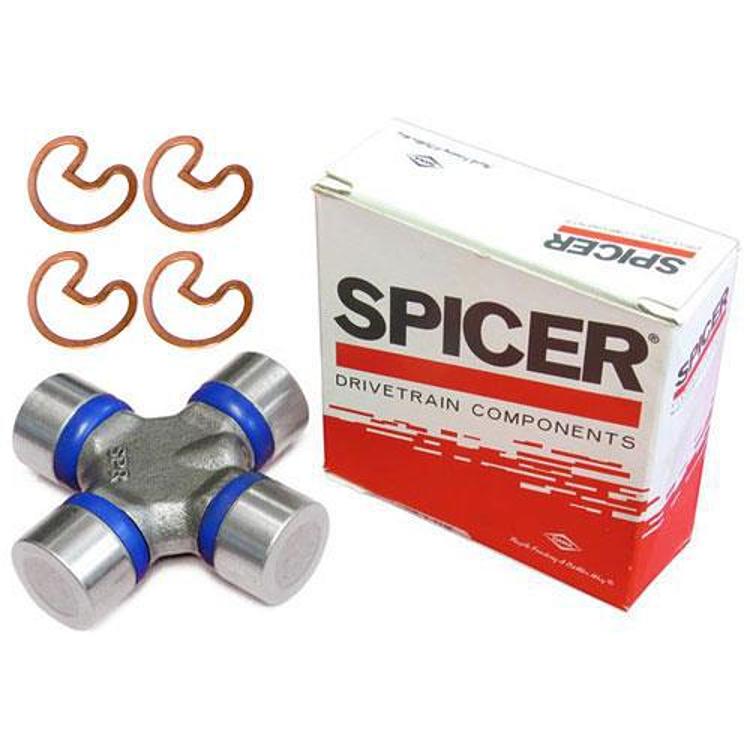
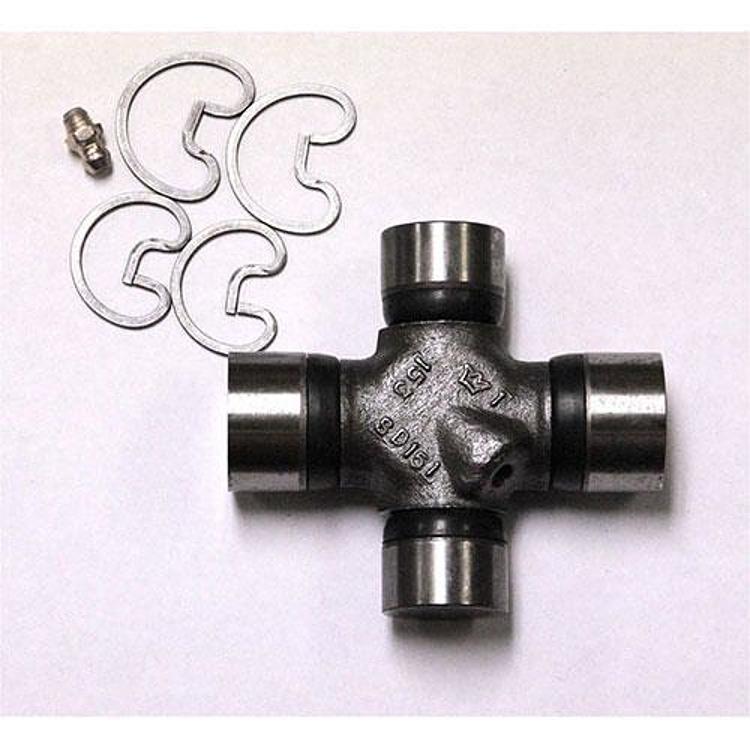
Worn joints make every angle problem worse, so replace any joint with play before you measure. A Spicer 5-1310X 1310 series u-joint matches the 1310 series yokes on NP231 rear outputs, and the Spicer 5-1350X 1350 series u-joint has larger 1.188-inch cups. The Spicer 5-460X crossover u-joint joins the two sizes. The drive shaft u-joint category covers the other series.
What does u-joint phase do?
Phase is the rotational alignment of the yokes at each end of one driveshaft. In phase, the two yokes sit in the same plane, so the second joint slows the shaft’s output exactly when the first joint speeds it up.
A lift does not change phase by itself. Phase goes wrong when a shaft comes apart at its slip spline and goes back together in a different position, which is common after a shaft is pulled, lengthened or repaired. The usual signs of bad phase are vibration at certain speeds, clunking or rattling from the shaft, and early u-joint wear. An out-of-phase shaft also moves its balance weights away from where they were set.
- Check it: sight down the shaft. The yoke faces at the two ends should lie in the same plane.
- Before disassembly: mark both halves of the slip spline with paint so it goes back in the same spot.
- Fix it: pull the slip joint apart and rotate it until the yoke faces line up. They line up in two positions 180 degrees apart, so use the paint mark to keep the balance weights where they were set.
How does a double cardan CV driveshaft handle steep angles?
A double cardan driveshaft puts two u-joints together at the transfer case end, joined by a short center yoke, so they split the steep angle between them and cancel each other. The single joint at the axle end then runs at almost no angle, which keeps the pinion turning smoothly.
It is often called a CV shaft. Three rules govern how it works on a lifted vehicle:
- The double joint goes at the transfer case. A shaft installed backward will not run smoothly.
- The pinion has to rotate up. The axle-end joint is on its own, with no partner to cancel it, so its angle has to stay small. Set the pinion 1 to 3 degrees lower than the slope of the driveshaft.
- It is smooth, not more flexible. A double cardan does not allow a greater operating angle than a two-joint shaft, and some bind sooner. The double joint is also longer, which takes back part of the run and steepens the shaft.
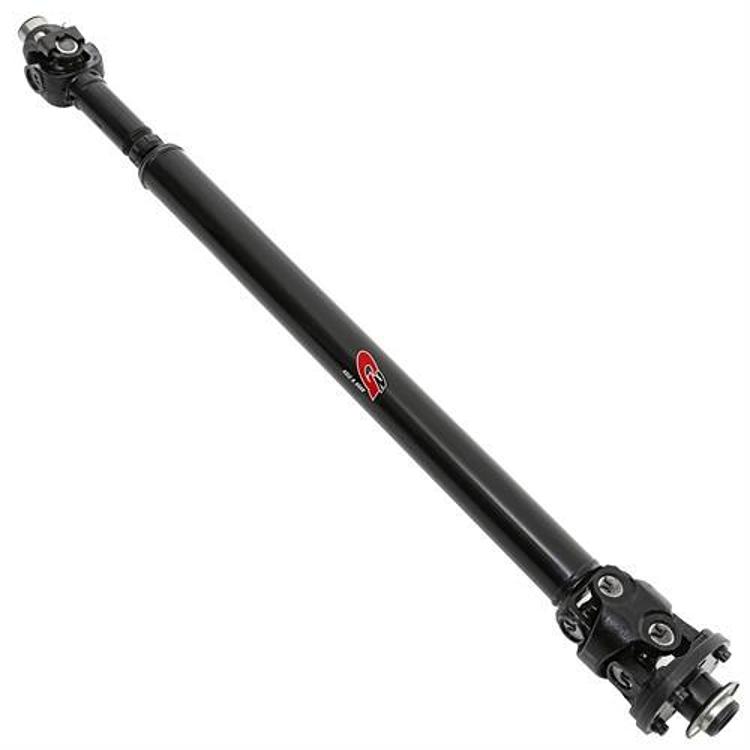
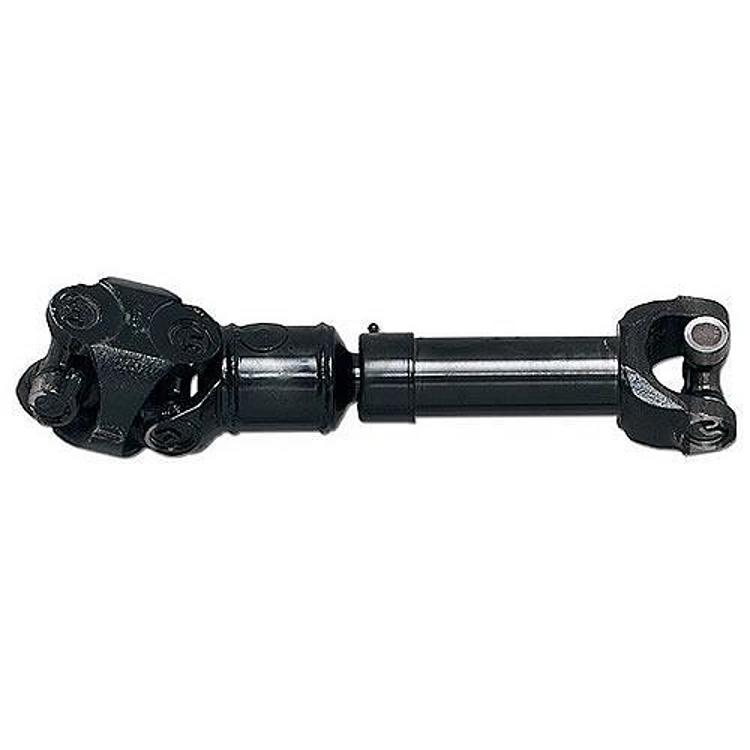
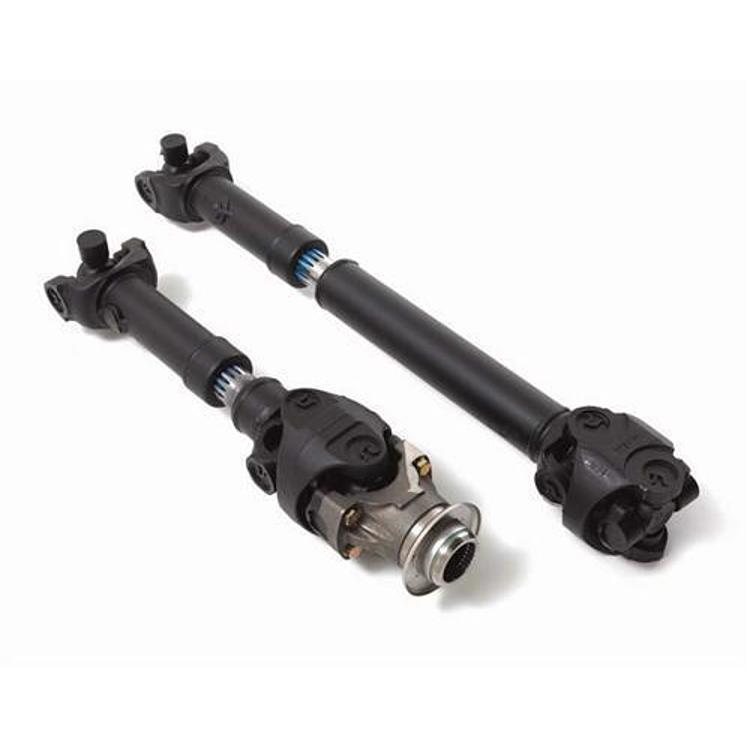
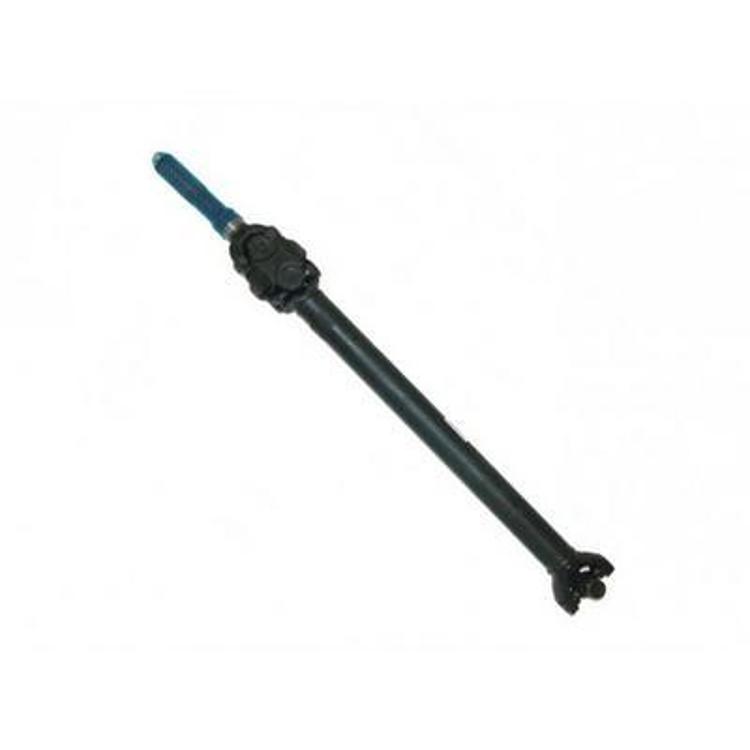
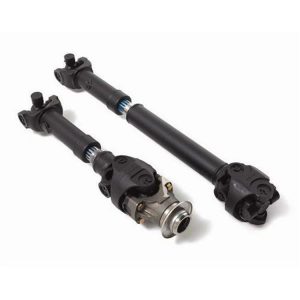
Shaft choice depends on the vehicle. For a short Jeep with an SYE, the Rubicon Express RE1860-165 CV drive shaft is a 16.5-inch rear shaft for 1310 yokes. For the Wrangler JK, the G2 92-2052-4 double cardan rear shaft fits four-door automatics with 1350 joints, and the Fabtech FTS94051 rear CV shaft and Fabtech FTS94057 front CV shaft are extended-length replacements. On 2017-2018 Duramax and Allison HD trucks with a 6-8 inch California Super Trucks lift, the California Super Trucks CSP-C28-6 front shaft is the high-angle equivalent. The full range is in the drive shafts category.
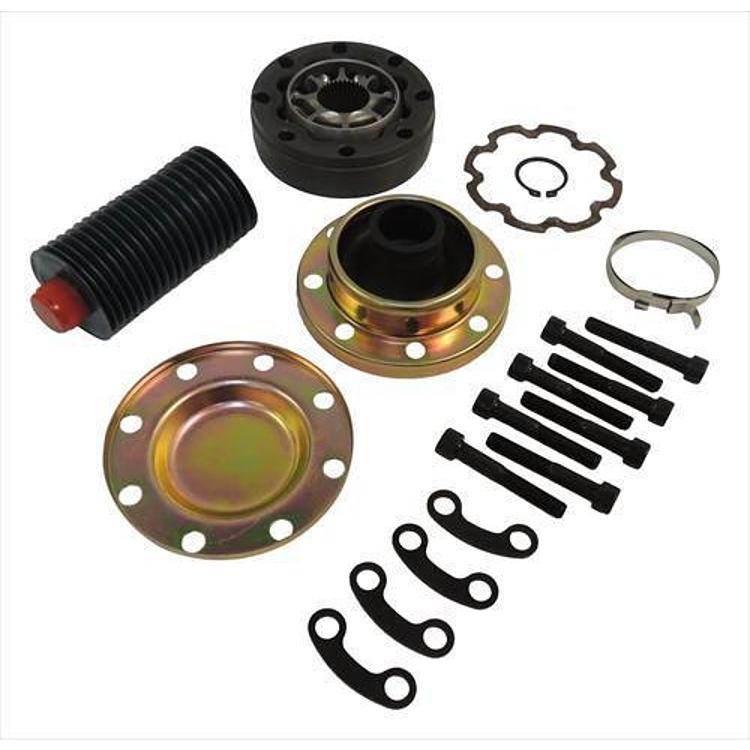
Factory JK shafts use a booted CV joint instead of a double cardan. The boot is the weak spot on a lifted JK: once it tears, grit gets into the joint. The Crown 528533FRK CV joint repair kit rebuilds that joint, and JK lift heights compared covers how lift height changes the rest of the setup.
Two-piece shafts have one more adjustment point. Trucks with a center support bearing can lower that bearing to correct the front section, and the Fabtech FTS419 carrier drop bearing does this on 1999-2004 Ford F-250 and F-350 Super Duty trucks.
How should pinion angle be set after a lift?
Set the pinion parallel to the transfer case output on a two-joint shaft, so the two operating angles match, and point it nearly at the transfer case on a double cardan shaft. The hardware that gets you there depends on whether the axle sits on leaf springs or links.
Leaf springs: degree shims
A degree shim is a wedge between the leaf spring and the axle spring perch that rotates the axle housing, and with it the pinion. This applies to leaf-sprung Jeeps such as the YJ, the CJ-7 and the rear axle of the Cherokee XJ. The leaf spring axle shim category covers the common sizes.
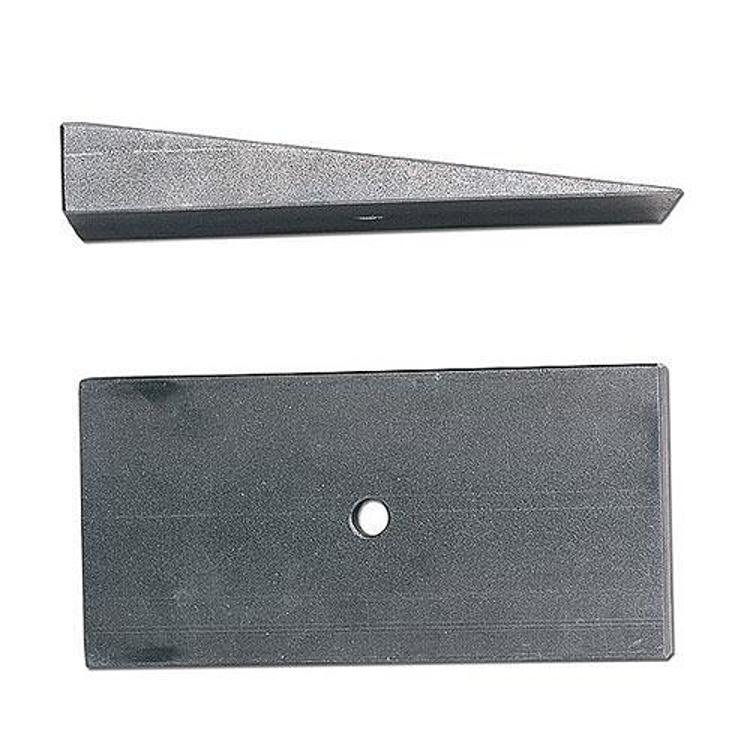
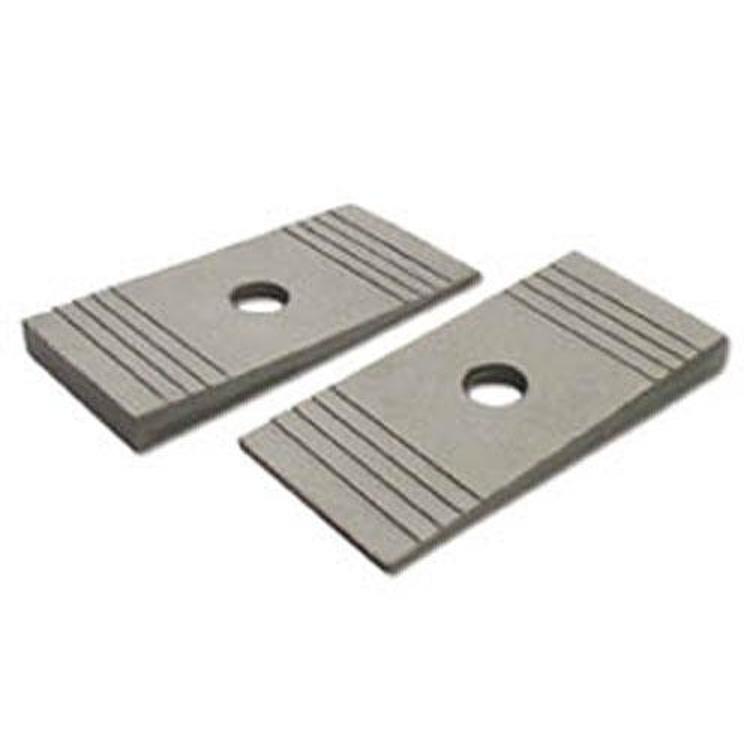
- Sizes: the Rubicon Express RE1465 2-degree aluminum shim, the Pro Comp 99-250 2.5-degree shim, the Rubicon Express RE1467 4-degree steel shim and the Skyjacker WS325 4-degree shim cover most jobs.
- Size it from the measurement: too little correction leaves the vibration, and too much creates a new one.
- Center pins: these Rubicon Express and Skyjacker shims come without them. The pin has to be long enough to pass through the shim and locate in the perch.
- Orientation: a shim fitted backward moves the pinion the wrong way. Confirm the direction, then re-torque the U-bolts after installation.
- Axle wrap: leaf springs let the pinion rise under power. If the vibration only shows on hard acceleration, traction bars and ladder bars address the wrap itself.
Link suspensions: adjustable control arms
Coil-sprung Jeeps such as the TJ, the LJ and the JK rotate the axle with adjustable control arms. Changing arm length gives fine adjustment, keeps the wheelbase correct and needs no wedge under the axle. It is the most precise way to correct pinion angle on a link suspension.
The front axle compromise
The front pinion has less room to move because rotating the front axle also changes caster. Pointing the pinion up at the transfer case reduces caster, and that hurts straight-line stability and steering return. A cut-and-turn, where the knuckles are cut off the tubes and rotated, restores both, but it is permanent. Low caster is also one of the conditions behind death wobble, so do not trade all of it away to quiet the front shaft.
What does a transfer case drop do to ground clearance?
A transfer case drop lowers the transfer case by the height of its spacers, usually 1/2 to 1 inch, and the transfer case skid plate drops with it. When you drop the transfer case you give back that clearance one for one, so a 1-inch drop on a 4-inch lift leaves 3 inches of the belly clearance the lift added.
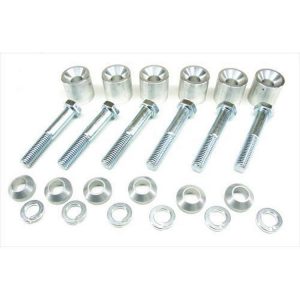
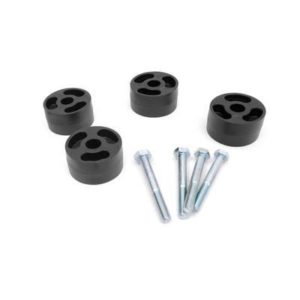
A transfer case drop, or lowering kit, is a set of spacers and longer bolts between the frame and the crossmember or skid plate. The output joint moves down, reducing the rise to both axles, and the powertrain tilts slightly around the motor mounts, bringing the output closer to the slope of the rear shaft.
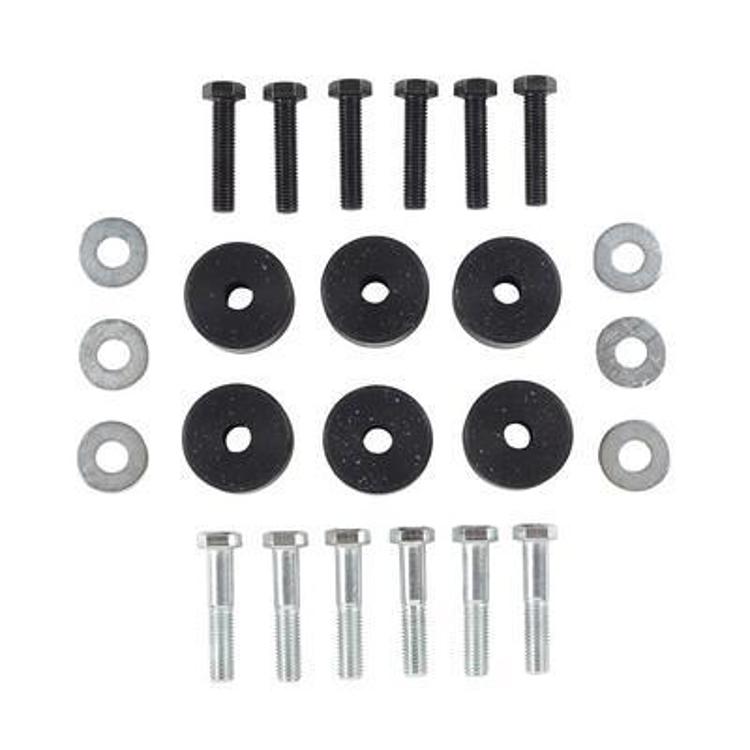
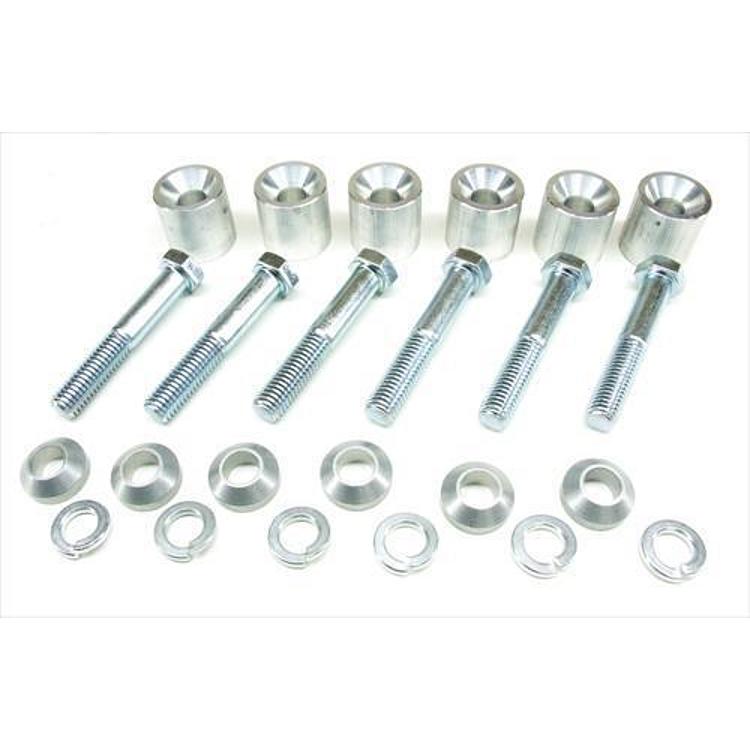
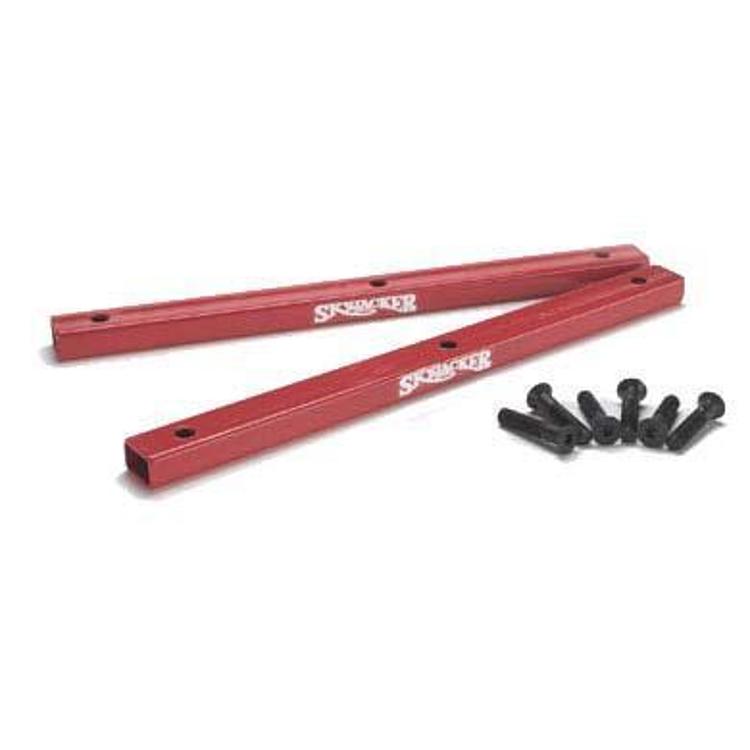
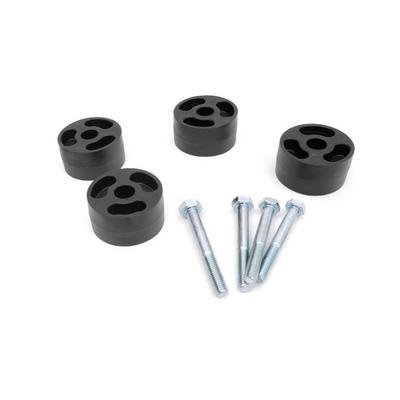
- YJ, TJ, LJ: the Rubicon Express RE2100 1-inch lowering kit and the TeraFlex 1900103 1-inch lowering kit (TJ and LJ). The Pro Comp 55589 lowering kit is a 1-inch drop for 2 to 4 inches of lift on YJ and 1997-2002 TJ.
- 1997-2002 TJ, smaller correction: the TeraFlex 1900000 1/2-inch lowering kit reuses the factory transfer case bolts.
- Cherokee XJ: the TeraFlex 1970104 1/2-inch lowering kit suits 3 to 4.5 inches of lift, and the Rough Country 1072 drop kit suits 4.5 to 6.5 inches.
- CJ: the Rubicon Express RE2140 1-inch kit mounts at the transmission crossmember on CJ-5, CJ-6 and CJ-7 models with a non-CV shaft.
- Other 2-inch and taller lifts: the Skyjacker TCL25 lowering kit uses 1-inch steel spacers. The transfer case lowering kit category lists the rest.
Check these after installation:
- Shifter linkage: A shift linkage plate may be needed on TJs with a lowering kit or body lift.
- Engine clearance: the tilt moves the fan and the back of the engine, so check fan-to-shroud and firewall clearance.
- Two-joint rule: the transfer case output slope changes, so recheck the pinion and keep the two operating angles equal.
What does a slip yoke eliminator do on an NP231 Jeep?
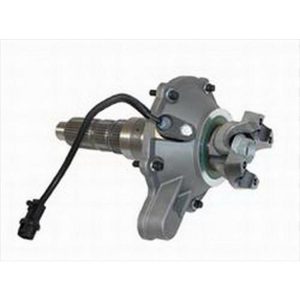
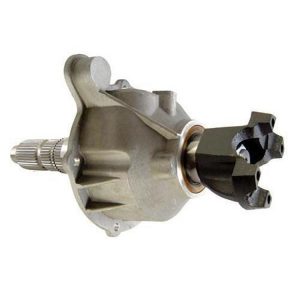
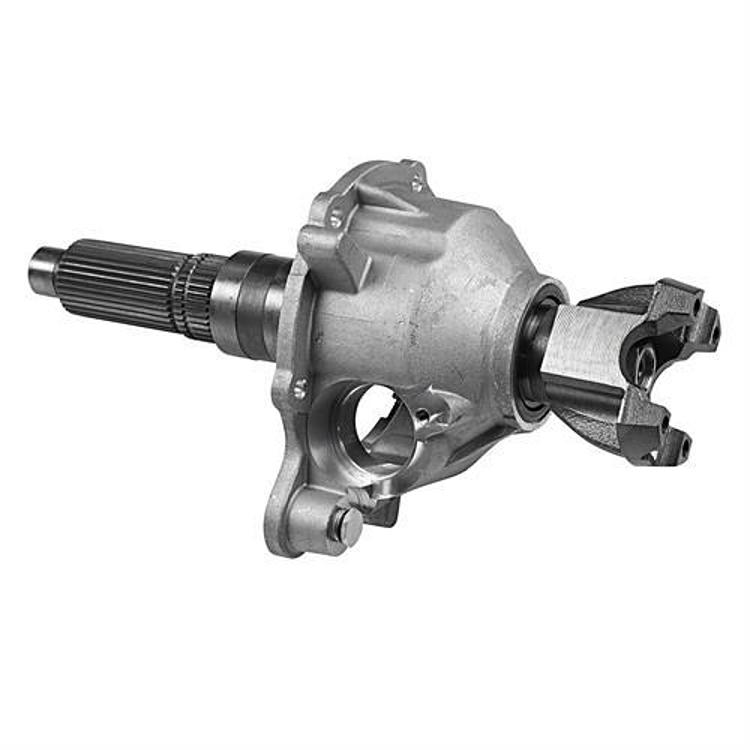
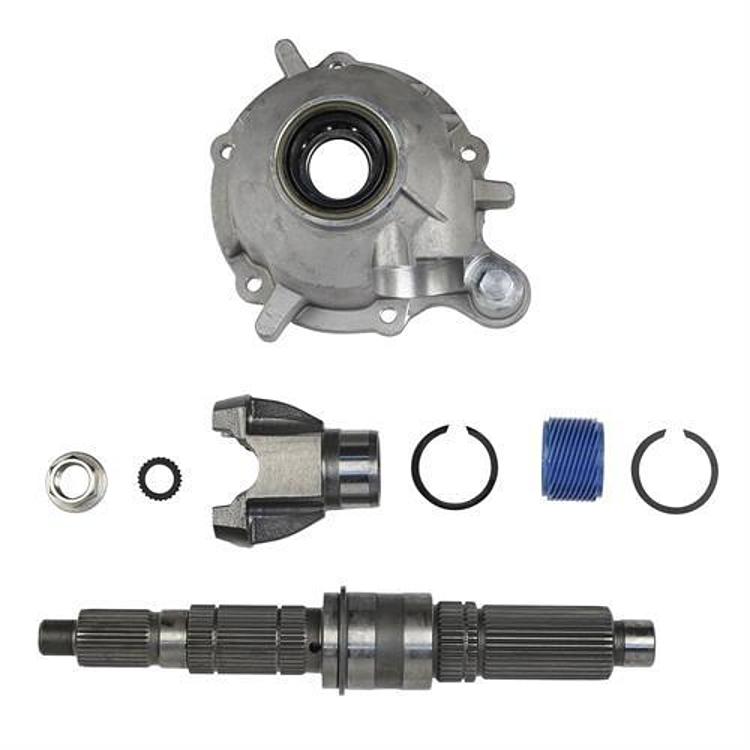
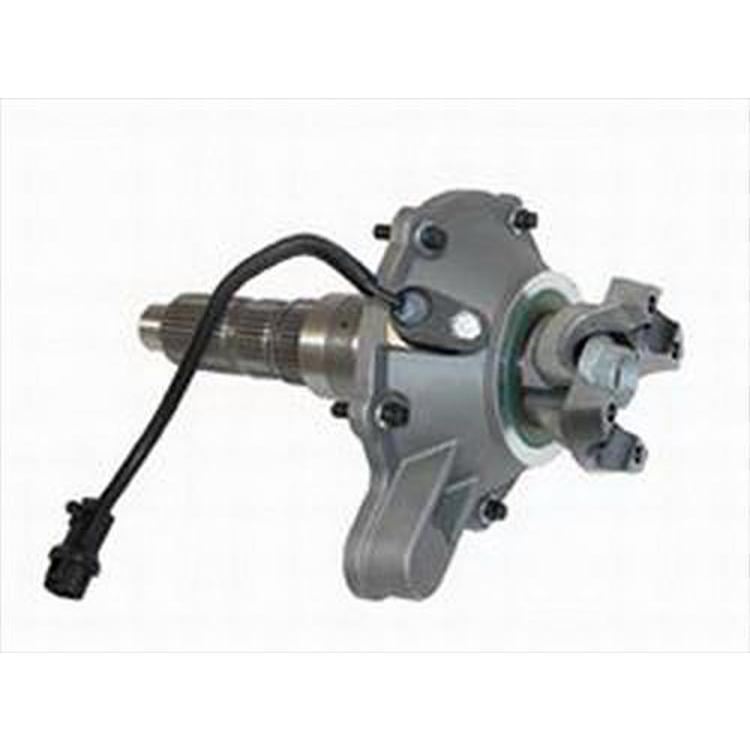
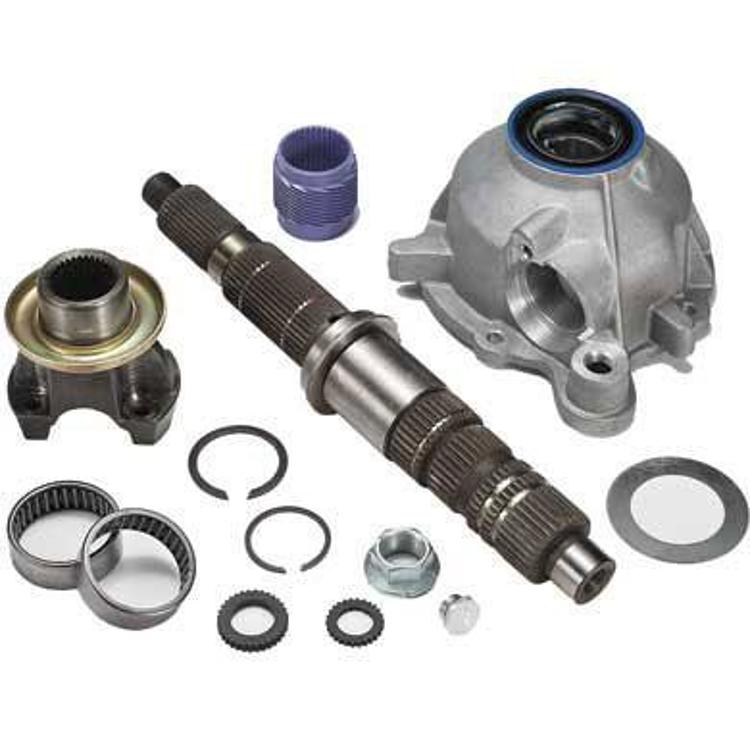
A slip yoke eliminator replaces the NP231’s long tailshaft and sliding yoke with a shorter tailshaft and a fixed yoke. That adds 4 to 7 inches of rear driveshaft length, moves the rear joint closer to the output bearing and makes a double cardan shaft possible.
The NP231 is the chain-drive, part-time transfer case behind the 1988-1995 Wrangler YJ (the 1987 YJ used an NP207), non-Rubicon 1997-2006 Wrangler TJ and LJ models, and the Command-Trac Cherokee XJ. Its factory rear output uses a slip yoke: the rear shaft’s front yoke, like the Crown 4882714 rear output slip yoke, slides on splines inside the transfer case tail to absorb suspension travel. That design leaves the rear joint far behind the last bearing. The Rubicon Express RE1822 long slip yoke is for lifted pre-1996 Cherokees that keep a two-joint shaft. Its extra 5/8 inch helps avoid bind, but the shaft slope barely changes.
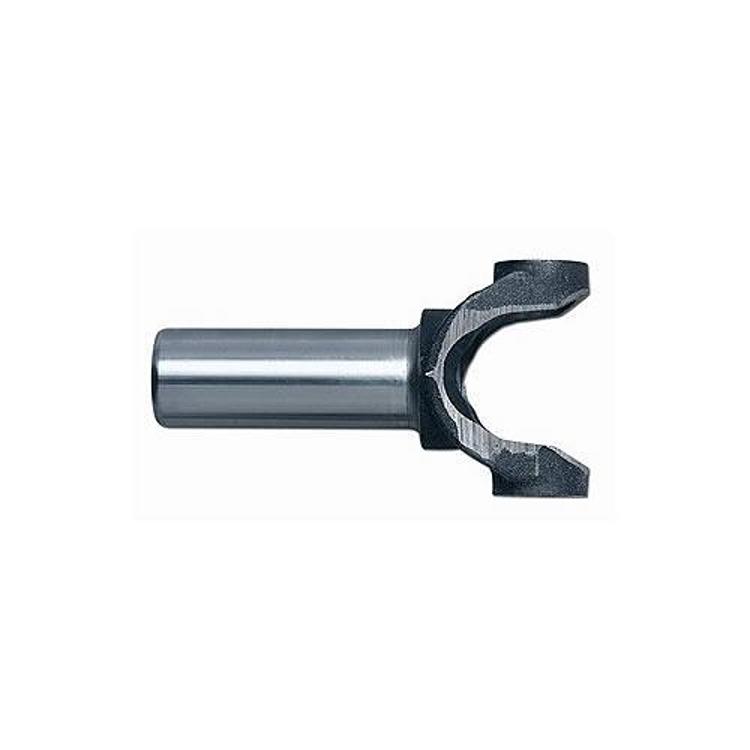
An SYE changes four things:
- Length: a shorter tail leaves more room for the driveshaft. TeraFlex short-shaft kits add 4 inches and eliminate a lowering kit in most cases.
- Joint design: the fixed yoke accepts a double cardan shaft. The slip moves into the shaft as a spline stub.
- Strength: the replacement output shaft is usually larger than factory.
- Fluid: with a fixed yoke, a damaged rear shaft comes off on the trail without losing all the transfer case fluid. A slip yoke that pulls out leaves the case open, and on a slip-yoke case, a shaft that comes loose at the axle and keeps spinning commonly bends the output shaft.
NP231 kits differ mainly in how much length they add:
| Kit | Rear shaft length gain | Notes |
|---|---|---|
| TeraFlex 4444401 Short Shaft SYE | 4 in | TJ, LJ and XJ; engineered for 50% more torque; 1310 CV-style yoke |
| TeraFlex 4444402 Short Shaft SYE | 4 in | Cherokee XJ; new output shaft and housing |
| Pro Comp 4007 tail shaft conversion | 4 in | YJ; mainshaft 20% larger than factory |
| Skyjacker RR231 SYE kit | 4.5 in | XJ, TJ and LJ; 32-spline output shaft |
| Rugged Ridge 18676.72 Mega Short SYE | 7 in | YJ and TJ; for lifts of 2 inches and taller |
| Rubicon Express RE1811 NP231 SYE | Shorter tailshaft | NP231 Jeeps through 2006; 1-3/8 inch, 32-spline main shaft |
| Advance Adapters 50-7906 SYE | Shorter tailshaft | NP231; aluminum rear housing and heavy-duty output shaft |
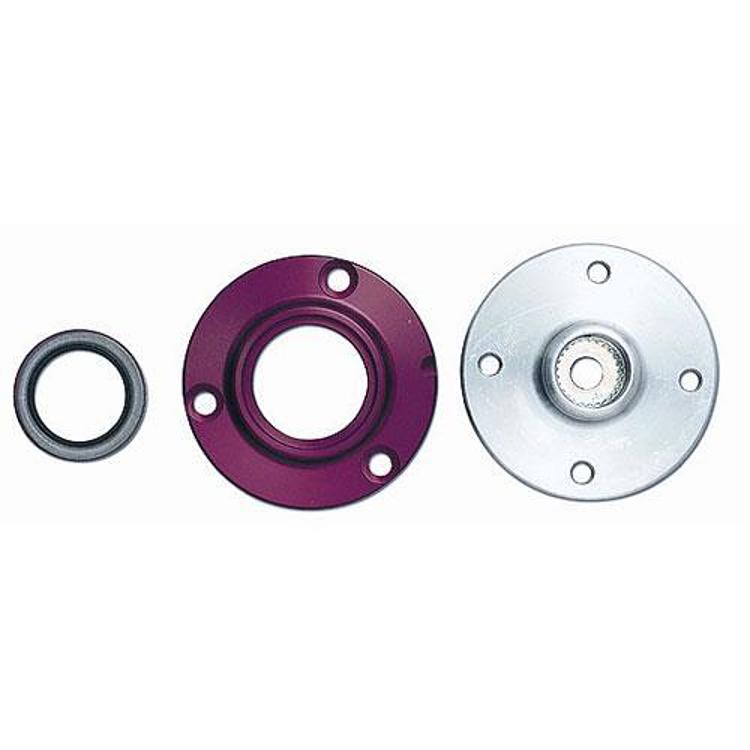
Another style keeps the factory output shaft. The Rubicon Express RE1801 flange-style SYE and RE1807 flange-style SYE fit NP231 and NP242 cases. You modify the factory shaft, using the included drill and tap, and fit a machined stainless steel flange. The conversion suits lifts over 3.5 inches.
An SYE is a bigger job than a drop. Most kits replace the output shaft, and you need a new rear shaft measured after the kit is in. The slip yoke eliminator kits category holds the parts and hardware.
Transfer case drop or SYE: how do they compare?
A transfer case drop is the fast correction that gives back ground clearance, and an SYE with a double cardan shaft is the larger job that fixes the shaft design and keeps clearance. Pinion correction goes with either one.
| Transfer case drop | SYE + double cardan shaft | Shims or adjustable arms | |
|---|---|---|---|
| What it changes | Lowers the transfer case 1/2 to 1 inch | Lengthens the rear shaft 4 to 7 inches, changes joint type | Rotates the axle and pinion |
| Ground clearance | Loses the drop height | No loss | No loss |
| Shafts affected | Front and rear | Rear | One axle at a time |
How do you diagnose driveline vibration by speed?
Speed and throttle response separate the causes. A shudder below about 40 mph under load usually means angles, and vibration that grows with road speed above about 50 mph usually means balance, runout (a shaft or yoke spinning off center) or wear.
| When it happens | Likely cause | What to check |
|---|---|---|
| Below about 40 mph, worse under heavy throttle or on a hill, eases off the gas | U-joint operating angles | Measure transfer case, shaft and pinion slopes |
| Around 45 to 50 mph with a fluttering throttle | Two-joint shaft near its angle limit | Compare both operating angles; consider a double cardan shaft |
| Above about 50 mph, grows with speed, little change off the gas | Shaft imbalance, bent tube, off-center yoke | Check balance weights and the tube, then yoke runout |
| Gets worse when you lift off the gas | A loose part rattling while unloaded | Shake each shaft by hand; check joints and yoke bolts |
| Same road speed in any gear, felt through the steering wheel | Tire balance or a bent wheel | Balance and inspect the tires and wheels |
| Violent front-end shake after a bump | Loose steering and front axle parts, not the driveline | Death wobble inspection |
Work through these steps in order, and change one thing at a time:
- Note the trend: a vibration that worsens over time suggests wear or looseness, and an angle problem stays the same.
- Test in neutral: at the speed of the vibration, shift to neutral and coast. Angle shudder usually fades. If the vibration changes with engine rpm while parked in neutral, it is not the driveshaft.
- Shake the shafts: with the wheels chocked, the engine off and the transmission in neutral, push each shaft up and down and look for movement or knocking.
- Inspect joints and yokes: replace worn joints, tighten yoke hardware and confirm the double cardan is at the transfer case.
- Measure angles and check shaft speed: at ride height on level ground, front and rear, then use the formula below.
- Isolate the front shaft if needed: on a part-time system, remove the front shaft, stay in 2WD and road test. If the vibration goes away, the front shaft is the source.
How fast is your driveshaft turning?
Driveshaft rpm in high range equals mph times axle ratio times 336, divided by tire diameter in inches. The usual highway target is about 2,500 to 2,800 rpm at 60 mph, and anything above 3,000 rpm is fast for the road speed. Spicer’s angle limit drops with it, from 7 degrees at 2,500 rpm to 5.8 at 3,000, and imbalance force rises with the square of shaft speed, so a re-gear can bring out a shaft that was quiet before.
| Axle ratio and tire | Shaft rpm at 60 mph |
|---|---|
| 3.73 with 35-inch tires | 2,148 |
| 4.10 with 33-inch tires | 2,505 |
| 4.88 with 35-inch tires | 2,811 |
| 5.13 with 33-inch tires | 3,134 |
Use the tire’s real diameter in this formula. Tire size math in inches shows how to work it out from a metric size.
Which driveline fix suits each lift height?
Under about 2 inches of suspension lift, measure and correct only what is out. Above 2 inches, an NP231 Jeep usually needs an SYE and double cardan shaft, and pinion correction goes along with it at every height.
| Suspension lift | Typical driveline work | Example parts |
|---|---|---|
| Body lift only | None for the driveline; check the shifter linkage | None |
| Up to 2 in | Measure; replace worn joints; small drop or small shim if needed | TeraFlex 1900000, RE1465 shim |
| 2 to 3.5 in | A drop can work on a two-joint shaft; SYE and double cardan is the lasting fix; set the pinion | Pro Comp 55589, TeraFlex 4444401 |
| 3.5 to 6 in | SYE and double cardan shaft; adjustable arms or shims; check caster at the front | RE1811, RE1860-165, RE1467 shim |
| 6 in and up | Longest available shaft; high-angle or 1350 double cardan shafts; check travel and bind | Rugged Ridge 18676.72, CST CSP-C28-6 |
The cutoff depends on the build. A drop may suffice for lifts of 1 to 2 inches, and lifts above 2 inches typically call for an SYE and CV shaft; a CV shaft belongs on all lifts of 3.5 inches and taller. On a substantially lifted TJ with a double cardan rear shaft, no transfer case drop spacers are needed.
A JK has no slip yoke at the transfer case, so there is no SYE to fit. When a lift outgrows the factory shaft, a JK goes straight to a double cardan shaft and pinion correction.
Is an NP231 crawl box a vibration fix?
No. A crawl box is a gear reduction that multiplies low-range torque for slow rock work, and it has no effect on the operating angles that cause vibration at road speed.
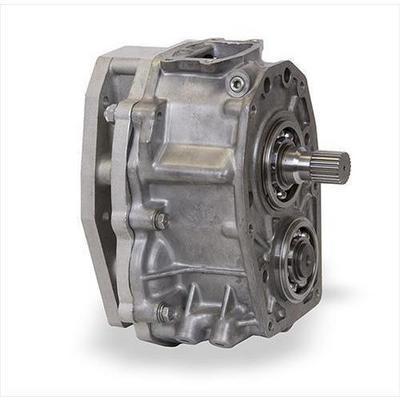
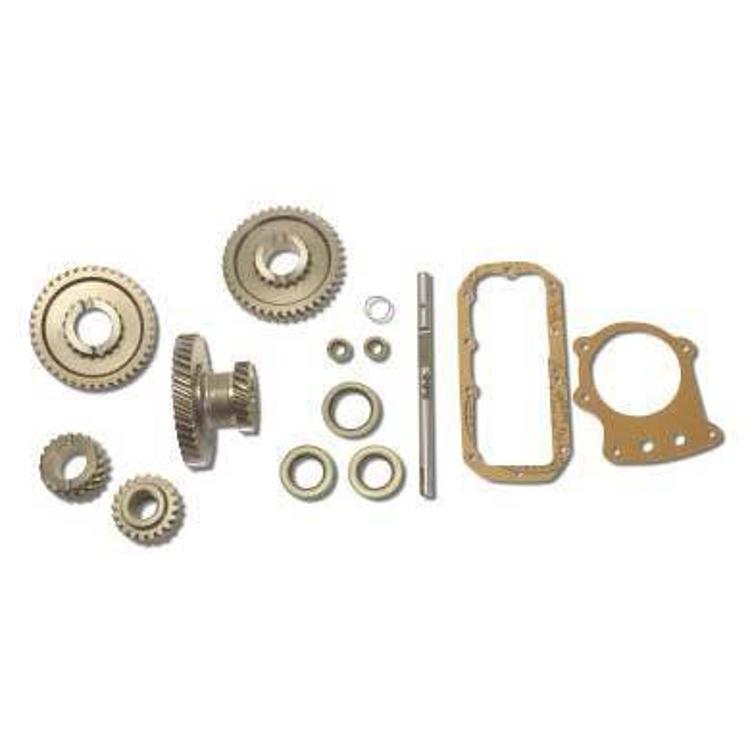
A crawl box, or doubler, adds a second reduction to the drivetrain. Crawl ratio is first gear times transfer case low range times axle ratio. The NP231 has a 2.72:1 low range, so a 42RLE automatic with its 2.84:1 first gear and 4.10 axles crawls at about 32:1. Adding a 2.72:1 reduction box brings that to about 86:1.
- Automatic Jeeps: the Advance Adapters RubiCrawler replaces the 42RLE tailhousing on 2003-2011 Jeeps. With an NP231 or NP241 it gives 2.72:1 and 7.40:1 low ranges, and with a 4:1 Rock-Trac case it reaches 10.88:1.
- Toyota: the Trail Gear Trail-Creeper crawl box suits 1979-1995 Pickups and 1985-1995 4Runners.
- Changing gears inside the case: the TeraFlex 2123000 Dana 300 low range kit gives 4.00:1.
- NP231 low range without a ratio change: the TeraFlex 2204000 2WD low range kit adds a 2-low position to NP231-J cases, leaving the front axle free to turn. It keeps the 2.72:1 ratio.
Whether a crawl box changes the driveshafts depends on the design. The RubiCrawler takes the place of the tailhousing, and the drive shafts go back in afterward. A Toyota dual-case build is different: the adapter moves the rear case back about 6.5 inches in a four-cylinder truck, which shortens and steepens the rear shaft, lengthens the front shaft and calls for driveshaft and floorboard work. Any reduction also multiplies the torque that reaches the u-joints, which is a good reason to look at 1350 series joints. Browse transfer case upgrades and crawl boxes for options.
The short answer: drop or SYE?
- Choose a transfer case drop for a lift of about 2 inches or less, a two-joint rear shaft and a road-first Jeep that seldom sees rocks.
- Choose an SYE and double cardan shaft for an NP231 Jeep with more than about 2 inches of lift, any rock use, or a drop that did not cure the shudder.
- Set the pinion either way, because neither part works properly with the wrong pinion angle.
- Measure first. Three slope readings tell you which problem you have.
Frequently asked questions
Do I need a transfer case drop with a 2-inch lift?
Often not. Measure the u-joint angles first, because a 2-inch lift may leave them close enough to run smoothly. If a shudder appears under load and the angles are out, a 1/2-inch or 1-inch drop is the simple fix. TeraFlex lowering kits suit a ride height 2 inches or more above factory, especially on vehicles without adjustable control arms or a slip yoke eliminator.
Does a slip yoke eliminator need a new driveshaft?
Yes. An SYE shortens the transfer case tail, so the factory rear shaft no longer fits, and the sliding spline moves from the transfer case into the driveshaft. Most fixed-yoke kits for the NP231 use a 1310 CV-style yoke, which pairs with a double cardan rear shaft measured after the kit is installed.
Can I run a transfer case drop and an SYE together?
You can, but most builds do not need both. A short-shaft SYE adds about 4 inches of rear driveshaft length, which removes the need for a lowering kit in most cases. Add a drop later only if measured angles still call for it.
Does a body lift cause driveline vibration?
No. A body lift raises the body on the frame and leaves the transfer case and axles where they were, so the u-joint angles do not change. A body lift can still affect shifter linkage clearance.
Why does my Jeep shudder only when accelerating at low speed?
A shudder below about 40 mph that gets worse under heavy throttle and fades when you lift off the gas points to u-joint operating angles. Torque changes the pinion angle, especially on leaf springs, and the mismatch between the joints grows. Measure the transfer case, driveshaft and pinion slopes at ride height.
Will an NP231 crawl box stop driveline vibration?
No. A crawl box is a gear reduction that lowers low-range gearing, and it does nothing for the angles at highway speed. A bolt-in unit like the RubiCrawler leaves the transfer case where it was, but a dual-case setup moves it rearward, which shortens the rear driveshaft and steepens its angle, so plan the driveline at the same time.
Start with the measurements, then shop by the fix: transfer case lowering kits for small corrections, slip yoke eliminator kits and driveshafts for larger lifts, and axle degree shims or adjustable arms to set the pinion.
Sources
- Spicer, Driveline Operating Angle Calculator
- Offroaders.com, NP-231 Transfer Case
- Tom Wood’s Custom Drive Shafts, Understanding Driveline Angles
- Tom Wood’s Custom Drive Shafts, How to Measure Driveline Angles
- Tom Wood’s Custom Drive Shafts, Diagnosing Drive Shaft Vibrations
- Tom Wood’s Custom Drive Shafts, Slip Yoke Eliminators Explained
- Tom Wood’s Custom Drive Shafts, Pinion Angle Adjustment
- Tom Wood’s Custom Drive Shafts, Is My Drive Shaft In Phase?
- Tom Wood’s Custom Drive Shafts, Jeep JK Rear Drive Shafts
- Tom Wood’s Custom Drive Shafts, Measuring for Jeep TJ Drive Shafts
- TeraFlex, TJ Wrangler Transfer Case Component Guide
- Advance Adapters, RubiCrawler Information
- Advance Adapters, RubiCrawler Installation Instructions