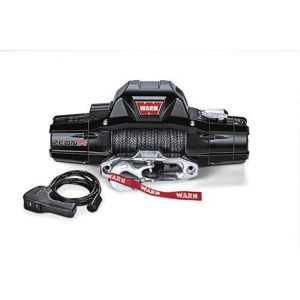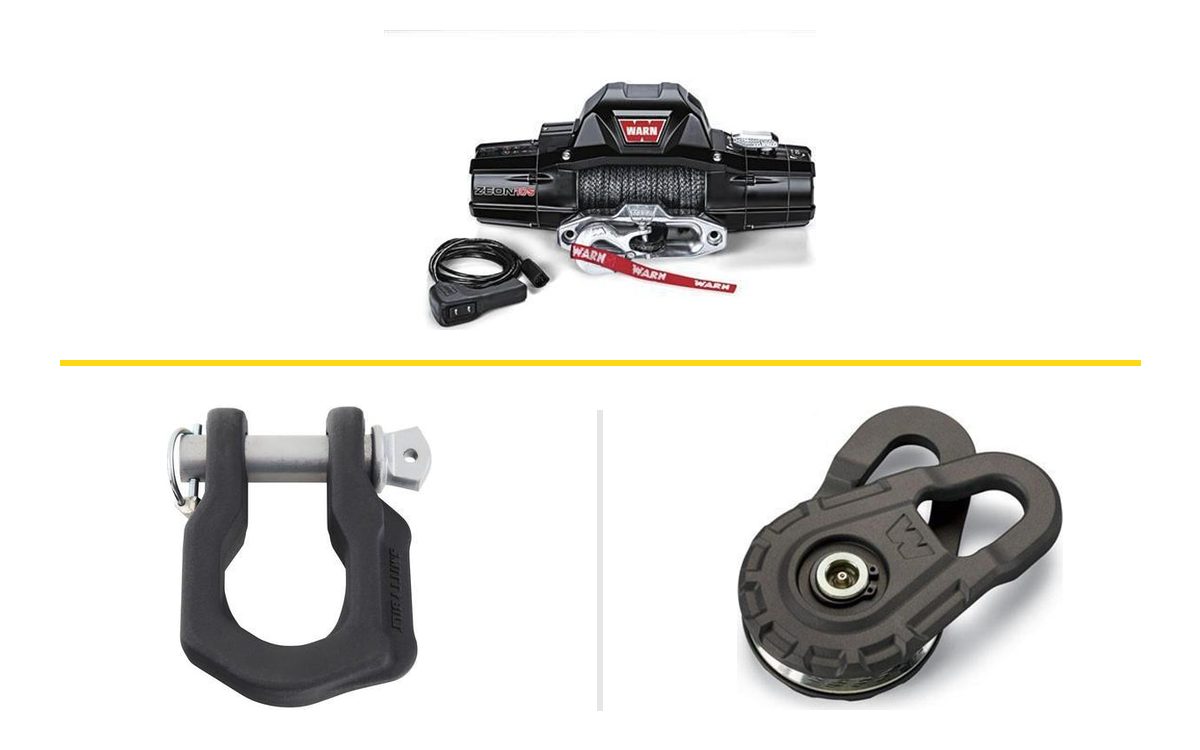
Winch sizing starts with one formula: multiply your vehicle’s gross vehicle weight rating (GVWR) by 1.5 to get the minimum rated line pull. Then match the rope to the fairlead, bolt the winch to a mount built for that pull, feed it from a 650 CCA battery, and rig with shackles rated for the load.
Key takeaways
- Sizing rule: GVWR x 1.5 = minimum rated line pull. Most adventure rigs target 2x.
- Rated pull: the number on the box applies on the first layer of rope only. One 8,000 lb winch drops to 5,100 lb on the fourth layer.
- Rope and fairlead are a pair: steel rope with a roller fairlead, synthetic rope with a hawse fairlead.
- Drum wraps: never run with fewer than 5 wraps of wire rope or 10 wraps of synthetic.
- Shackles: a 3/4-inch D-ring is typically rated 4.75 tons. That is its working load limit (WLL), not its breaking strength.
Winch sizing: what size winch do I need?
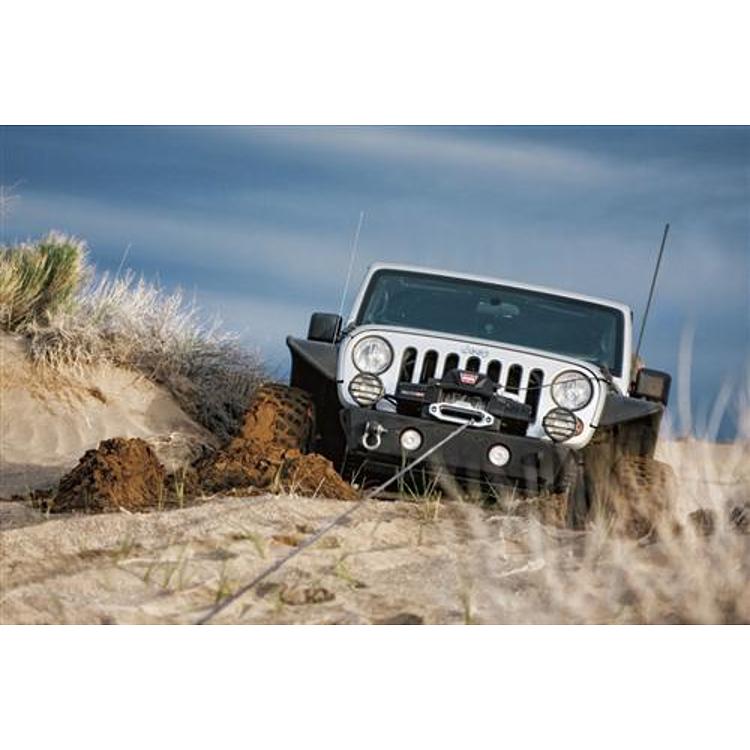
Multiply GVWR by 1.5 and buy at least that much rated line pull. GVWR is the maximum operating weight of the vehicle, printed on the driver door sticker. Use GVWR and not curb weight, because curb weight leaves out occupants and cargo.
The same multiplier has been the industry standard for decades. It is better to go higher than lower, and most adventure rigs target twice the vehicle weight. So 1.5x is the floor and 2x is the target for a build that runs loaded.
| Vehicle | GVWR | x 1.5 minimum | x 2 target | Winch to look at |
|---|---|---|---|---|
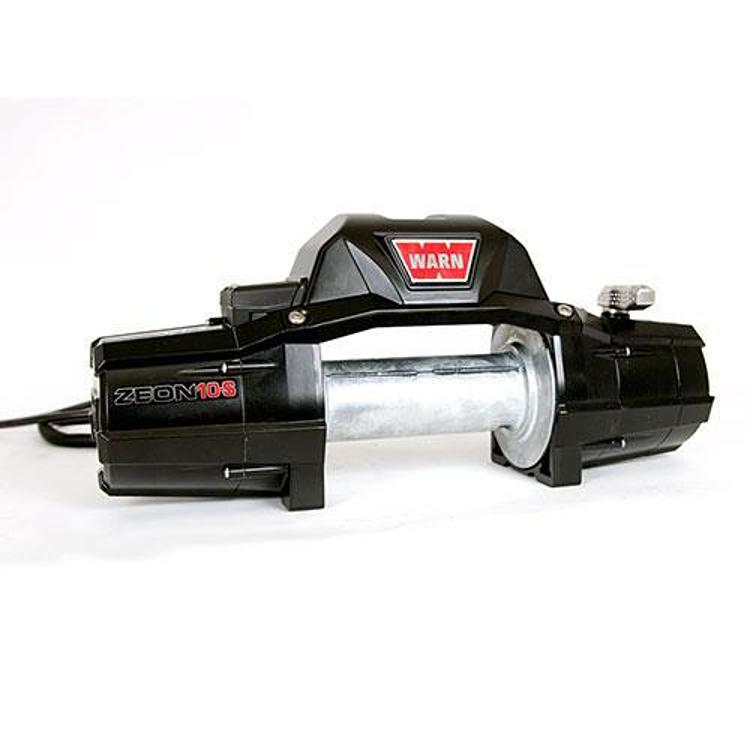
| Jeep Wrangler Rubicon 2-door | about 5,000 lb | 7,500 lb | 10,000 lb | WARN ZEON 8-S 8,000 lb winch or ZEON 10-S 10,000 lb winch |
| Toyota Tacoma (2016) | 5,600 lb | 8,400 lb | 11,200 lb | WARN 9.5XP-S 9,500 lb winch or Smittybilt X2O GEN3 12K winch |
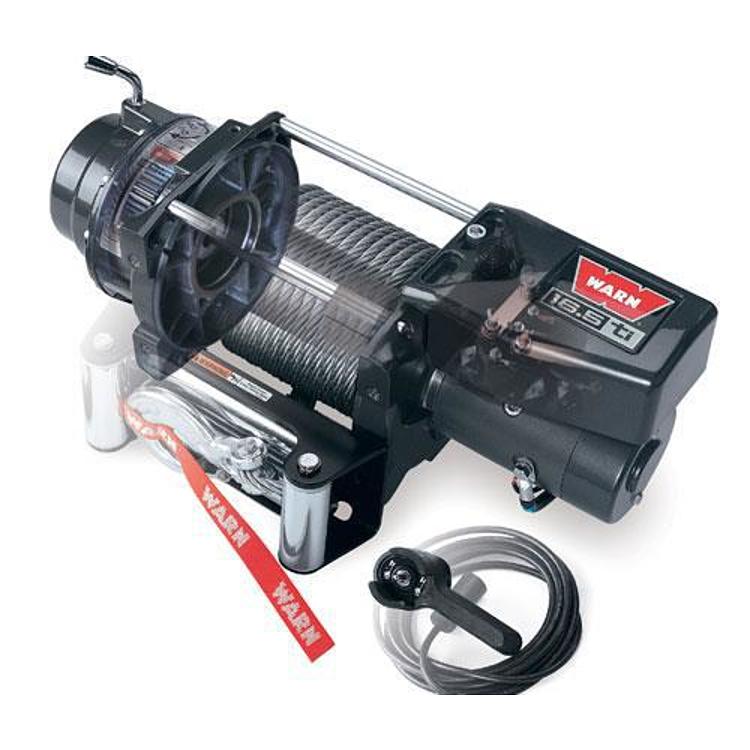
| Chevrolet Silverado 2500 | 9,900 lb | 14,850 lb | 19,800 lb | WARN 16.5ti-S 16,500 lb winch |
GVWR varies by year, cab and axle, so read your own door sticker. Four-door Wranglers are typically best with a 10,000 lb winch. A Silverado 2500 needs a 15,000 or 16,500 lb winch; do not drop back to 12,000 lb.
Does GVWR cover what I actually carry?
GVWR is the ceiling the formula assumes, so a vehicle loaded past it needs a bigger number. Armor, roof tents and water add up quickly on the modern overland 4X4s, and Smittybilt’s advice to go higher exists for the day the GVWR is maxed out. Use a scale weight when your build is heavy. A trailer still hitched behind the vehicle is load too: add its loaded weight or unhitch it before the pull.
The rule uses weight alone, while the force a recovery takes depends on the slope, how deep the tires are sunk, and how much mud is holding the chassis. That is why the doubled line described below belongs in the plan.
What does rated line pull mean on a winch?
Rated line pull is the most the winch can pull, and it applies only on the first layer of rope on the drum. On the Smittybilt XRC Gen3, maximum pulling power is achieved only from the first layer. Each added layer makes the effective drum diameter larger, so the motor and gears work through a longer lever and line pull falls.
| Rope layer | Rope on the drum | Smittybilt XRC8 | Smittybilt XRC10 | Smittybilt XRC12 |
|---|---|---|---|---|
| 1 | up to 16 ft | 8,000 lb | 10,000 lb | 12,000 lb |
| 2 | up to 42 ft | 6,900 lb | 8,633 lb | 10,270 lb |
| 3 | up to 72 ft | 5,850 lb | 7,716 lb | 9,200 lb |
| 4 | up to 94 ft | 5,100 lb | 7,089 lb | 8,500 lb |
On that XRC8 the fourth layer delivers about 64 percent of the rating. A short pull with nearly all the rope on the drum is the weakest pull the winch can make, and the 1.5x margin has to cover that loss. The loss runs approximately 14 percent per layer on a WARN ZEON XC, which matches the XRC8’s first step from 8,000 to 6,900 lb. For heavy pulls, pull off as much line as you can and, if that is not practical, use a snatch block and a double line.
Two winches with the same rating can perform very differently, so compare line speed and amp draw at load as well. WARN’s ZEON 10-S and VR10-S are both 10,000 lb winches, yet full-load line speed is 4.8 ft/min against 2.3 ft/min.
Synthetic rope or steel cable: which winch rope is better?
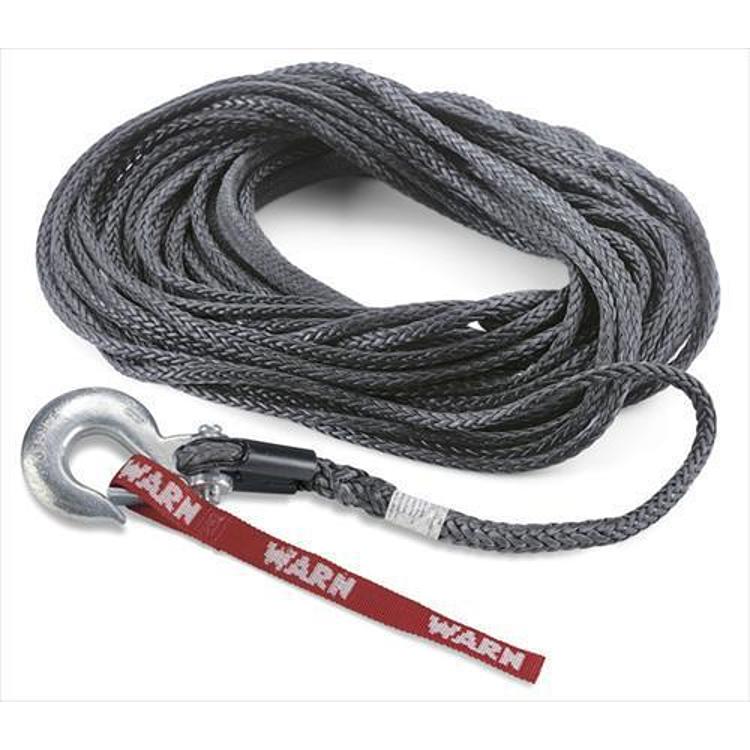
Synthetic rope is lighter and stores less energy under load, and steel wire rope resists abrasion and UV better. Synthetic is a great product if you winch often and care about weight, and steel is less prone to abrasion and fraying.
| Factor | Synthetic rope | Steel wire rope |
|---|---|---|
| Weight | Light. The ZEON 10-S weighs 75 lb | Heavy. The ZEON 10 with wire rope weighs 98 lb |
| Stored energy under load | Stores less | Stores more |
| Abrasion | Its main weakness; use the abrasion sleeve | Resists it very well |
| UV and chemicals | Can be damaged by both | UV is not a factor |
| Handling | No sharp barbs, easy to handle | Develops burrs; wear heavy gloves. Can rust |
| Fairlead | Hawse | Roller |
| Minimum wraps on drum | 10 | 5 |
| Replace when | Frayed or kinked, 25% strand volume lost to abrasion, or two adjacent strands cut | Frayed, crushed, kinked, cut, or heavily rusted |
The weight gap shows up across brands. The Smittybilt XRC Gen3 9.5K weighs 87 lb with steel cable and 66 lb in the synthetic COMP version, and that 21 lb sits ahead of the front axle. On a Jeep Wrangler JK carrying a lift and larger tires, front weight is a real consideration.
For replacement line, WARN Spydura synthetic rope 87915 is 3/8 inch by 100 ft of ultra high molecular weight polyethylene with a urethane coating, a heat-resistant first-layer sleeve and a sliding nylon sleeve. WARN Spydura Pro rope 96040 uses Spectra 1000 fiber at the same 100 ft. A Spydura 50 ft rope extension adds reach when the anchor is far away. When you change rope, match the old rope’s length and diameter and check its capacity against the winch. The winch cable and synthetic rope category holds both types.
New line must be spooled under load or the outer wraps pull into the inner wraps and damage the rope. The basic winching rule is at least 1,000 lb on first use. Re-spool synthetic rope under that load before each use, and wash it after use.
Light fuzz on new synthetic rope is normal. WARN explains that the outer filaments break and the roughened surface protects the fibers underneath, and that the condition should stabilize. Roughness that keeps growing means abrasion is costing strength. Open the strands and look for powdered fiber, a sign of internal wear, and treat localized discoloration as possible chemical attack from gear oil or battery acid. When in doubt, replace the rope.
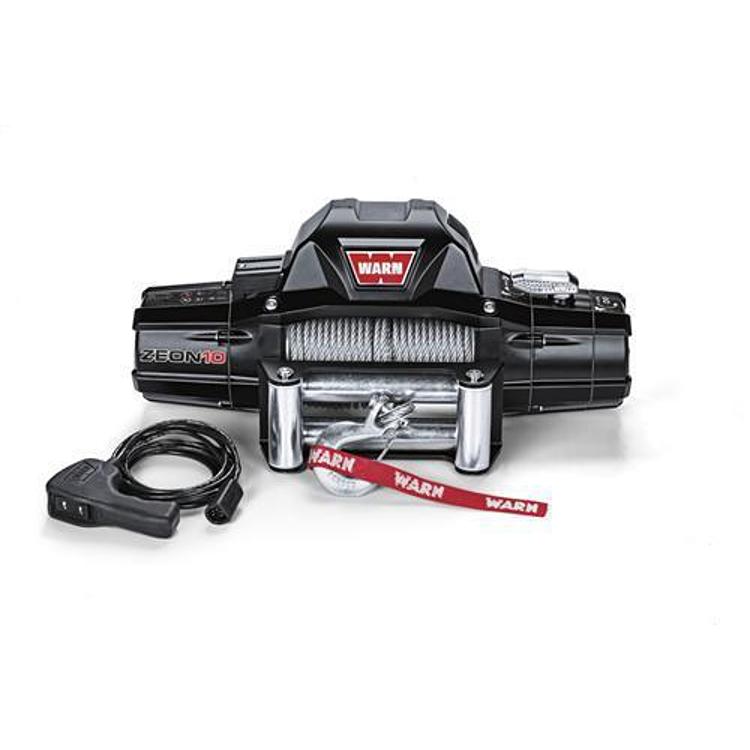
Which winch fairlead goes with which rope?
Use a roller fairlead with steel rope and a hawse fairlead with synthetic rope. A fairlead guides the rope onto the drum and protects it at the angle where it leaves the bumper. A roller fairlead uses four rollers. A hawse fairlead is a single opening with a large, smooth radius.
Synthetic rope should run only through a hawse fairlead, and an aluminum hawse is the one to use with it. At extreme angles the rope can touch a roller fairlead’s frame, which does not hurt steel but can abrade synthetic. If you switch from steel to synthetic, always fit a new hawse, because steel can leave nicks and barbs on a fairlead that then cut synthetic fiber.
| Fairlead | Type | Rope | Key specs |
|---|---|---|---|
| Smittybilt roller fairlead 97281-47 | 4-way roller | Steel | Fits standard winch mounting plates |
| Smittybilt low-profile 4-way roller fairlead 2810 | 4-way roller | Wire rope only | 10 in. top and bottom holes, 11 in. center holes |
| Rugged Ridge 4-way roller fairlead 11238.51 | 4-way roller | Steel | Solid steel body, four steel rollers |
| WARN hawse fairlead 87914 | Hawse | Synthetic only | Matte aluminum, winches over 4,000 lb |
| WARN hawse fairlead 73850 | Hawse | Wire or synthetic | Black, winches over 4,000 lb |
| Smittybilt aluminum hawse fairlead 2809 | Hawse | Synthetic | 10 in. bolt pattern, 6,000 to 12,000 lb winches |
| Poison Spyder aluminum hawse fairlead 45-45-010 | Hawse | Synthetic | Billet aluminum, black powder coat |
Daystar takes a different route with polyurethane fairlead rollers KU70054BK, which replace the steel rollers in a standard roller fairlead and are made for synthetic rope only. Browse the whole winch fairlead category with your bolt spacing in hand.
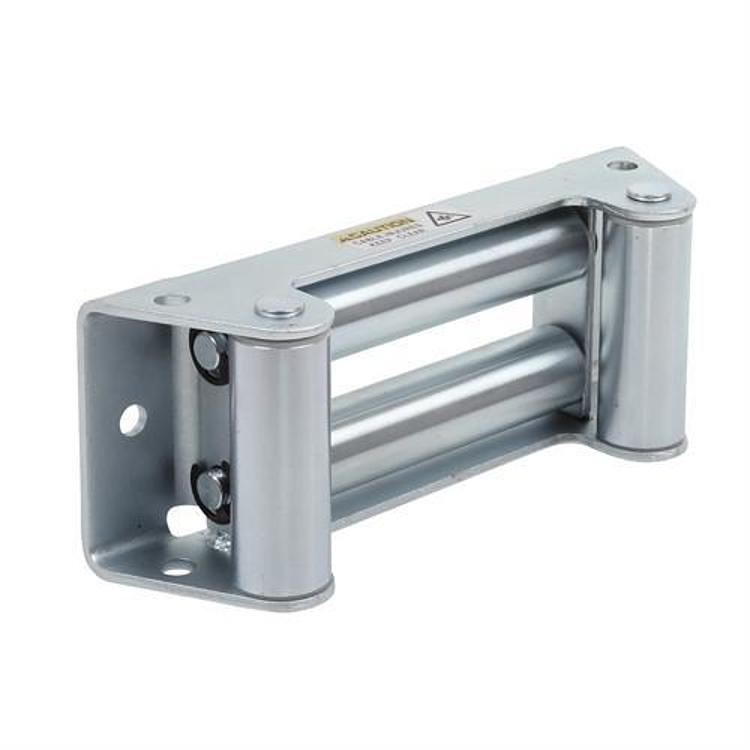
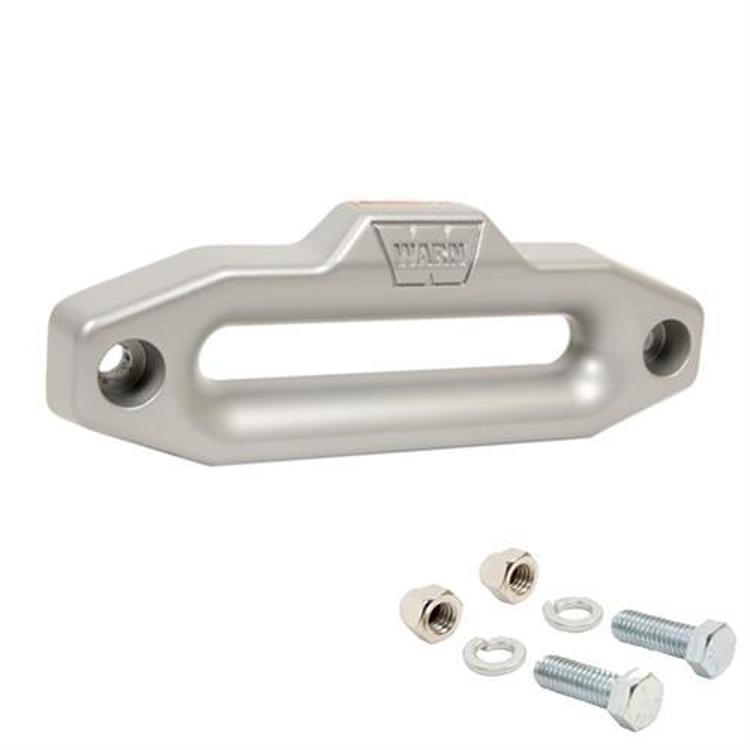
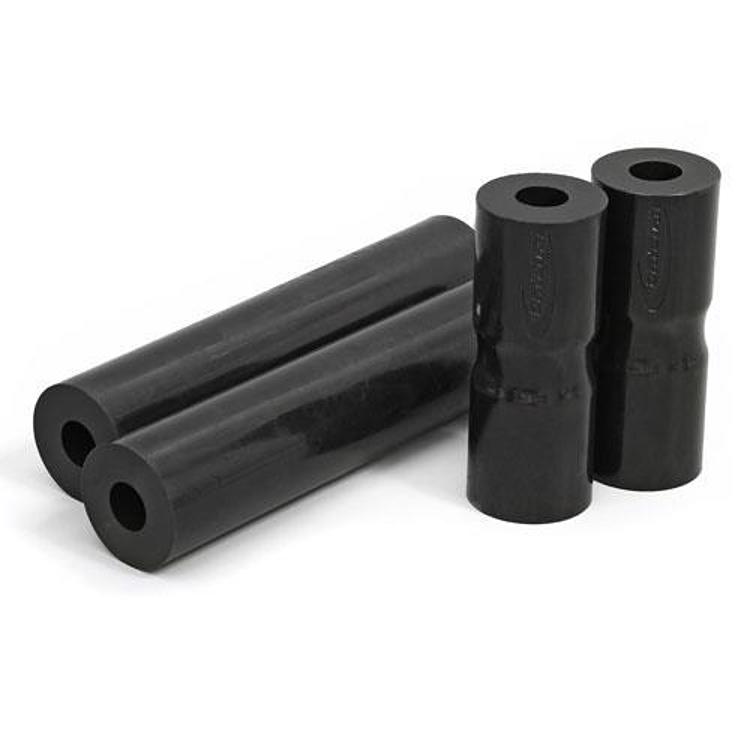
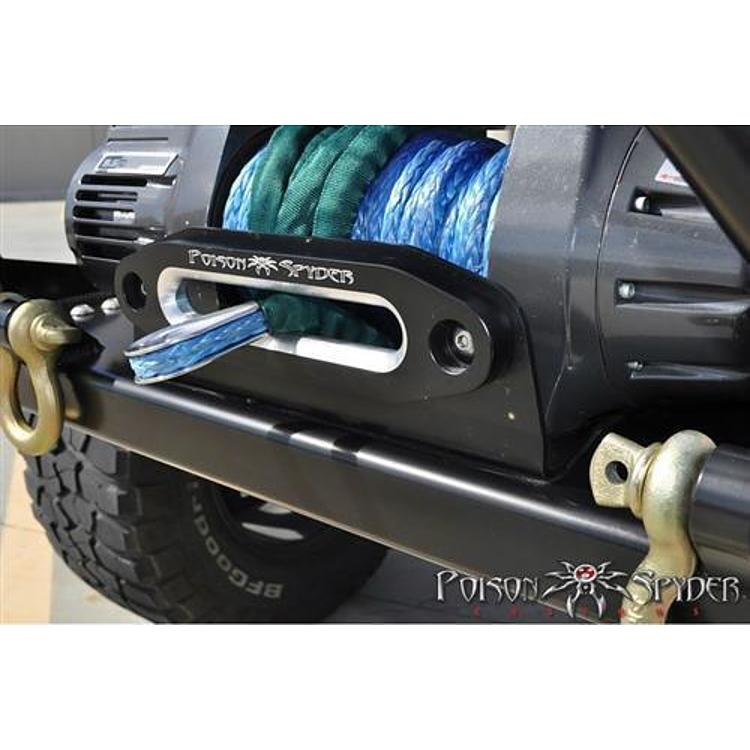
Fairlead bolts matter too. Part 97281-48 is sold as the fairlead mount bolt for the Smittybilt XRC8, whose factory fairlead is the 97281-47 roller, and the XRC Gen 2 9.5K and 12K use hardware kit 97495-48. Use the correct bolts or rated equivalents. A WARN ZEON Platinum needs class 8.8 metric (grade 5) or better hardware; never weld mounting bolts or use bolts that are too long. Mount the fairlead with its warning label readable on top.
How should a winch be mounted?
Mount a winch only to a structure strong enough to take the maximum pull of that winch. A WARN ZEON Platinum also needs a smooth, flat mounting surface at least 1/4 inch (6.4 mm) thick. The Smittybilt XRC Gen3 needs a steel mounting frame with a plate at least 6 mm thick, and a flat surface so the motor, drum and gear housing stay aligned.
WARN divides winches by frame. Mid-frame winches run 8,000 to 12,000 lb, bolt in feet down and suit Jeeps, mid-size trucks, quarter-ton pickups and many SUVs. Large-frame winches are wider and need more room. The M12000 mounts feet forward with horizontal bolts, and the M15000 and 16.5ti share the wider package. They are meant for trucks such as the Ford F-250 Super Duty, GMC Sierra 2500 HD and Ram 2500. Check that the frame style fits before you pick the bumper. A common bolt pattern is 10 in. x 4.5 in., used by the Smittybilt XRC Gen3, the WARN ZEON Platinum and the WARN 9.5cti.
- Factory winch-ready bumper: the WARN JL Rubicon winch carrier 101255 is 1/4-inch steel, certified for 12,000 lb pulls, and fits the 2018-2026 Wrangler JL with the winch-ready Rubicon bumper.
- Replacement bumper: the WARN Elite Series front bumper 87750 is 3/16-inch steel plate and takes WARN mid-frame winches up to 12,000 lb, except the M8274-50. See more in winch front bumpers.
- Mounting kits: the WARN planetary winch mounting kit 13910 mounts the 9.5ti and most other WARN winches to a WARN Rock Crawler, standard factory or optional factory tube bumper, and the WARN Gen II Trans4mer bracket kit 95176 pairs with Gen II Trans4mer carrier kits. The winch mounting plate category has universal plates, and winch carriers have more.
- Portable: the Smittybilt winch cradle 2811 slides into a 2-inch receiver and uses 3/16-inch and 1/4-inch cold rolled steel, so one winch can serve the front or rear.
- Fairlead only: the Poison Spyder fairlead mount 45-57-010 gives the fairlead a surface between winch and bumper on most WARN winches, except the 8274.
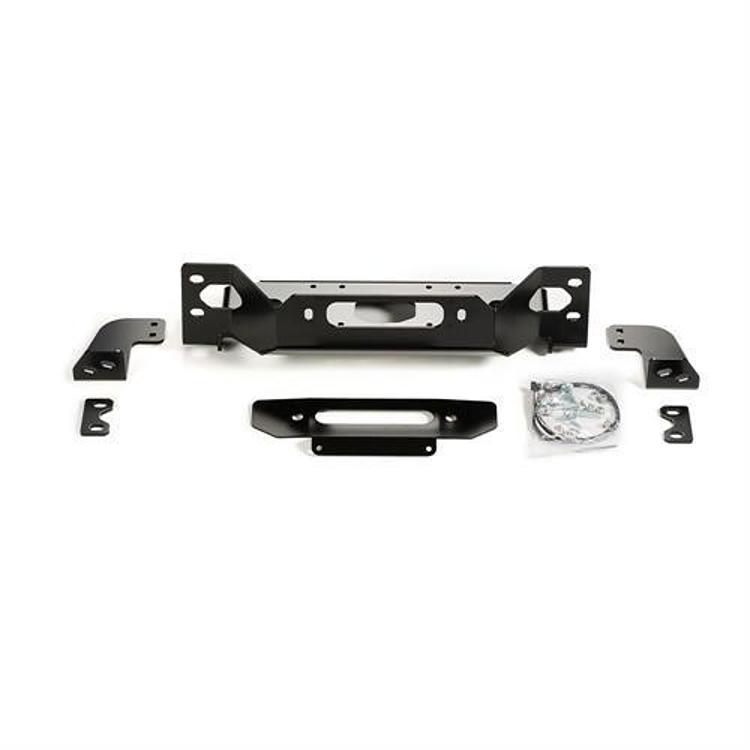
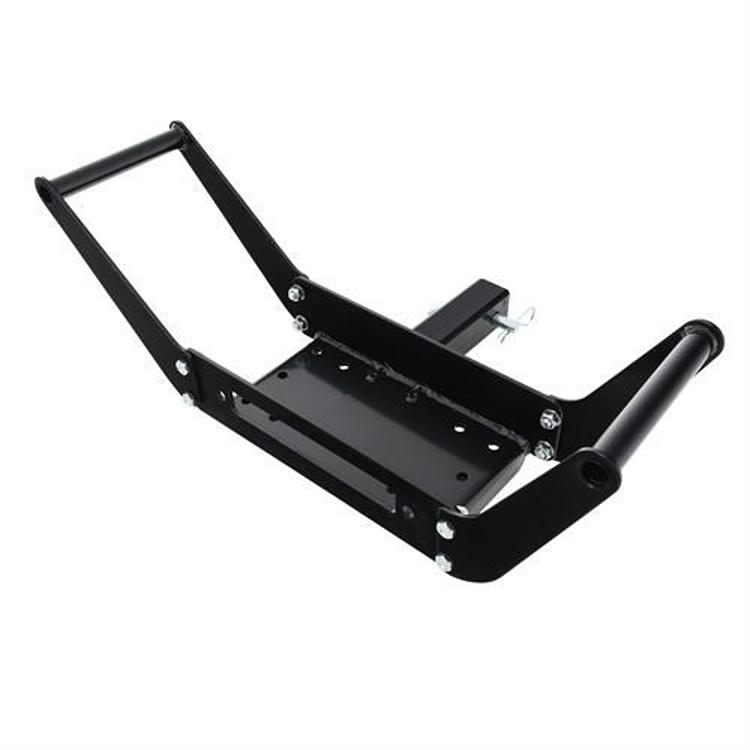
One more check on late-model vehicles: a winch or frontal protection system can affect how SRS airbags trigger. Confirm that the mounting system has been tested and approved for a winch on your airbag-equipped vehicle.
What battery and wiring does a winch need?
A 12-volt truck winch needs a healthy battery of at least 650 cold cranking amps (CCA) and the engine running. A Jeep winch does not require a dual-battery setup; 650 CCA or more in good condition is enough. Cold cranking amps measure how much current a battery delivers in the cold, and reserve capacity measures how long it can power the winch.
| Winch | Rated pull | Draw at rated pull |
|---|---|---|
| WARN VR10-S | 10,000 lb | 502 A |
| Smittybilt XRC10 | 10,000 lb | 425 A |
| WARN ZEON 10-S | 10,000 lb | 409 A |
| Smittybilt XRC8 | 8,000 lb | 410 A |
| Smittybilt XRC Gen3 9.5K | 9,500 lb | 385 A |
| Smittybilt XRC12 | 12,000 lb | 370 A |
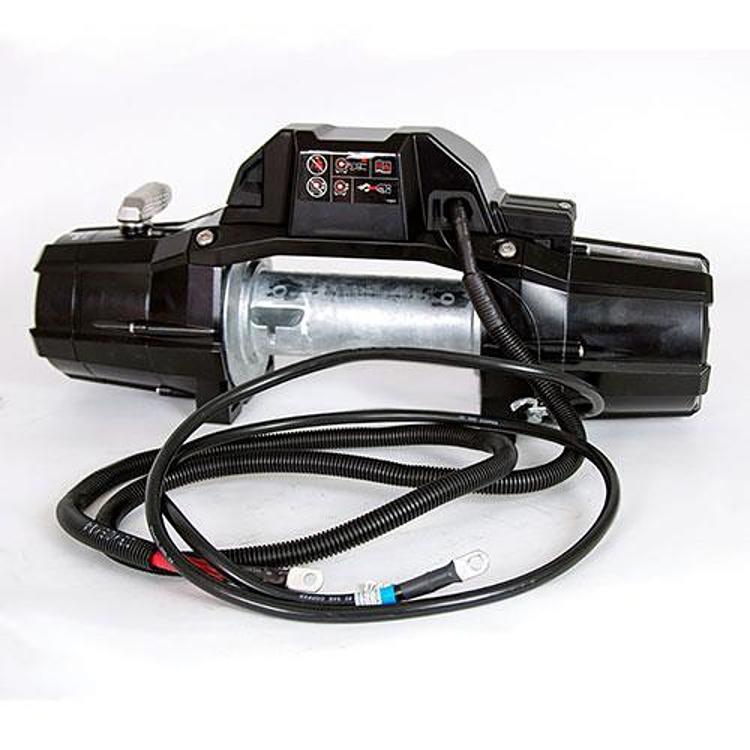
Draw depends on the motor and gearing, so the bigger winch is not always the hungrier one. Leads are specified too: the WARN 9.5XP-S uses 2 gauge leads 72 in. long, and the Smittybilt XRC 9.5K family uses 25 mm² leads of the same length.
Even with the engine idling, the battery may drain faster than it charges, and a winch with the engine off runs only for a few minutes. A high-CCA starting battery suits occasional use, and a stand-alone winch battery connected with a properly sized wiring kit suits heavier use. AGM batteries need higher alternator output to fully charge.
Wiring and heat
- Routing: never run power cables across sharp edges, near hot parts, through moving parts or over battery terminals. Fit the terminal boots.
- Order of work: disconnect the battery negative terminal first, and finish the winch and hook installation before the wiring.
- Remote: unplug the remote after use, since leaving it connected risks accidental activation and battery drain. The WARN wireless winch control system 90287 reaches up to 50 ft on winches with a five-wire control pack. More options are in winch controllers.
- Heat: long pulls without cooling damage the motor. A motor too hot to touch needs to cool before you continue. On a WARN ZEON XC, allow at least 10 minutes between short pulls, and more after heavy or long ones.
What does a snatch block do, and what rating do I need?
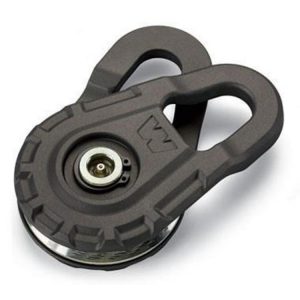
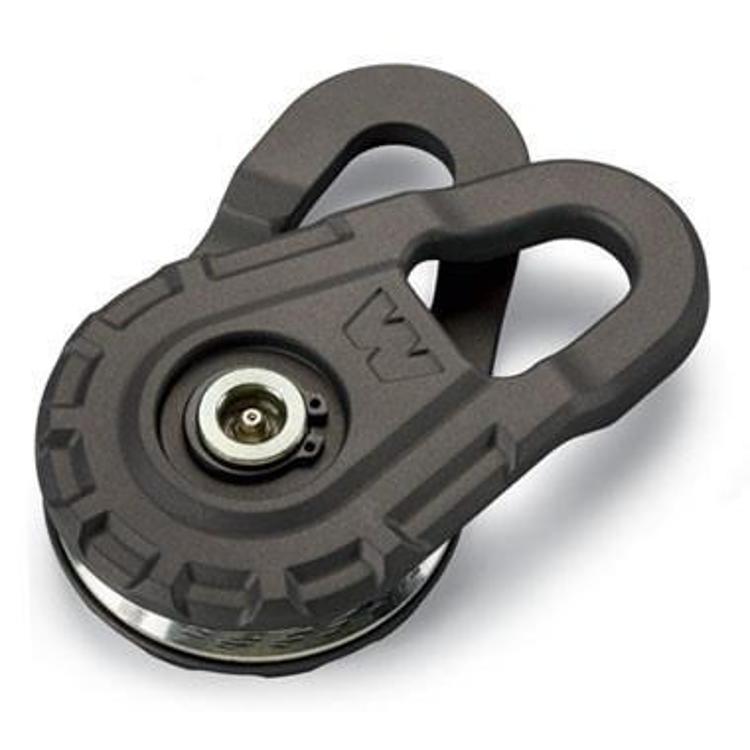
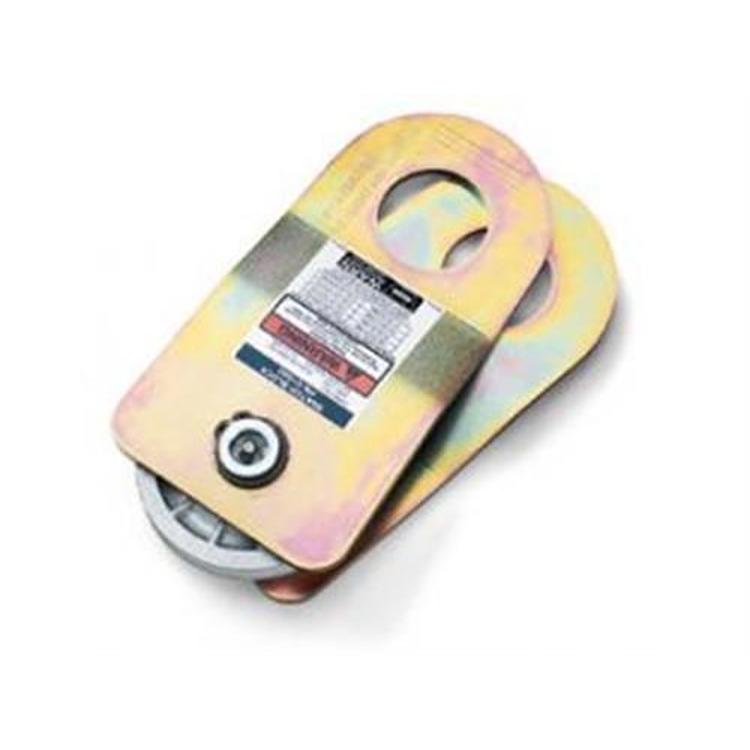
A snatch block is a pulley that nearly doubles pulling power on a double line and lets you change the direction of the pull. The rope runs from the winch, through the block at the anchor, and back to a frame recovery point, so two sections of rope share the load. This also reduces amp draw and heat buildup. The double line halves winching speed.
A double line also pulls more rope off the drum, which puts the winch on a stronger layer. The hook must attach to the vehicle frame, not the winch mounting plate.
| Snatch block | Rating | Rope and winch notes |
|---|---|---|
| WARN Epic snatch block 92097 | 10,000 lb working load | Winches 5,500 lb and under, for ATVs and UTVs; 1/4-inch line maximum |
| WARN Epic snatch block 92188 | 24,000 lb working load | Winches 12,000 lb and under; wire or synthetic, 3/8-inch line maximum |
| WARN snatch block 88899 | 20,000 lb maximum | 5/16-inch wire rope; winches up to 10,000 lb; overload indicator |
| Rugged Ridge snatch block with damper kit | 20,000 lb | Includes a high-visibility line dampener |
| Rugged Ridge snatch block 11235.11 | Up to 30,000 lb | Winch cable up to 1/2 inch |
Compare the maximum winch size, not only the big number on the block. WARN’s 88899 carries 20,000 lb for a 10,000 lb winch and its Epic 92188 carries 24,000 lb for a 12,000 lb winch, because the block sees about twice the line tension. The small Epic 92097 is the trap: its 10,000 lb working load looks ample, yet WARN limits it to winches of 5,500 lb and under. Safety factors change the number too. The WARN 63490 heavy-duty block is rated 12,000 lb at a 4:1 safety factor for general rigging and lifting and 24,000 lb at 2:1 for vehicle recovery, with a 48,000 lb minimum breaking strength and a 12,000 lb maximum recommended winch.
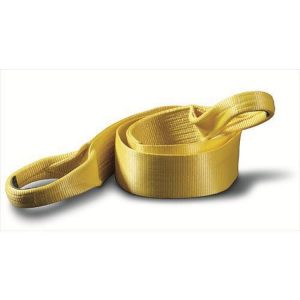
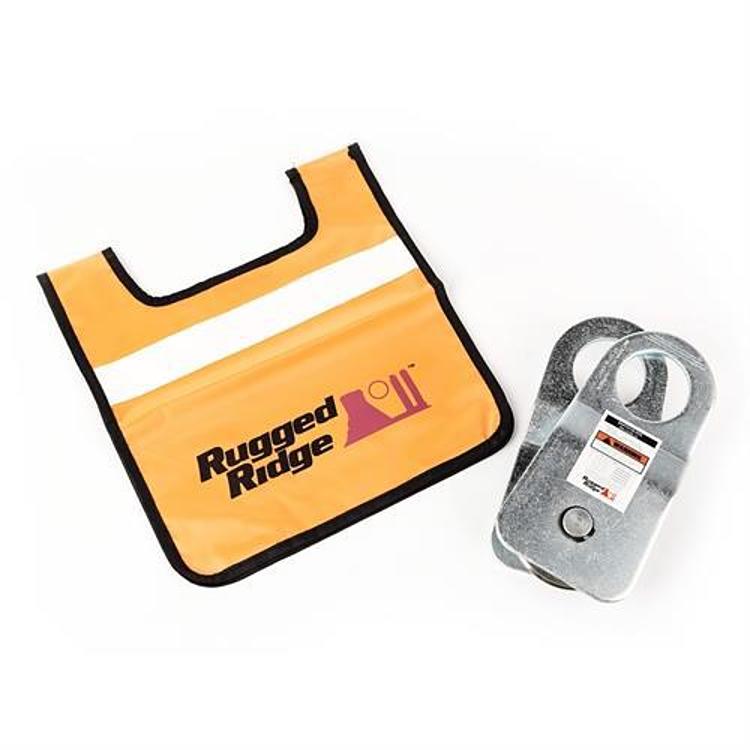
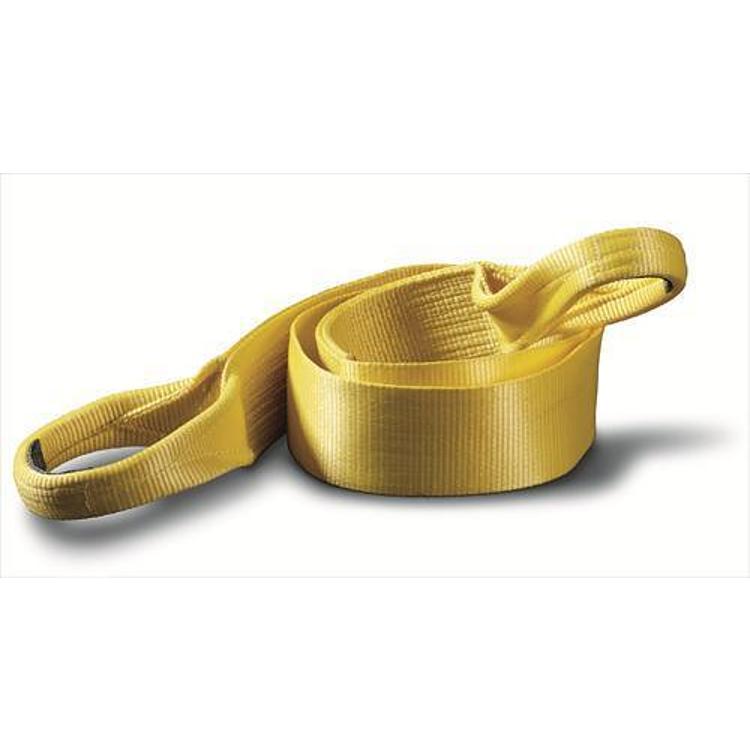
If you switch rope types, look at the sheave too. The Smittybilt Delta snatch block works with either rope, but do not use it with synthetic rope after steel wire has run through it. Browse the snatch block category for more, or start with a winch accessory kit such as the Smittybilt premium winch accessory bag 2725, which holds an 18,000 lb block, a 30 ft tow strap, an 8 ft tree saver and two D-rings.
What do D-ring and shackle ratings mean?
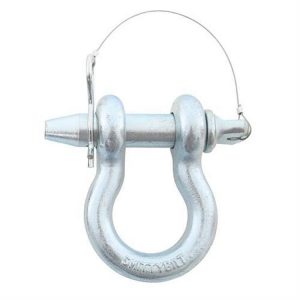
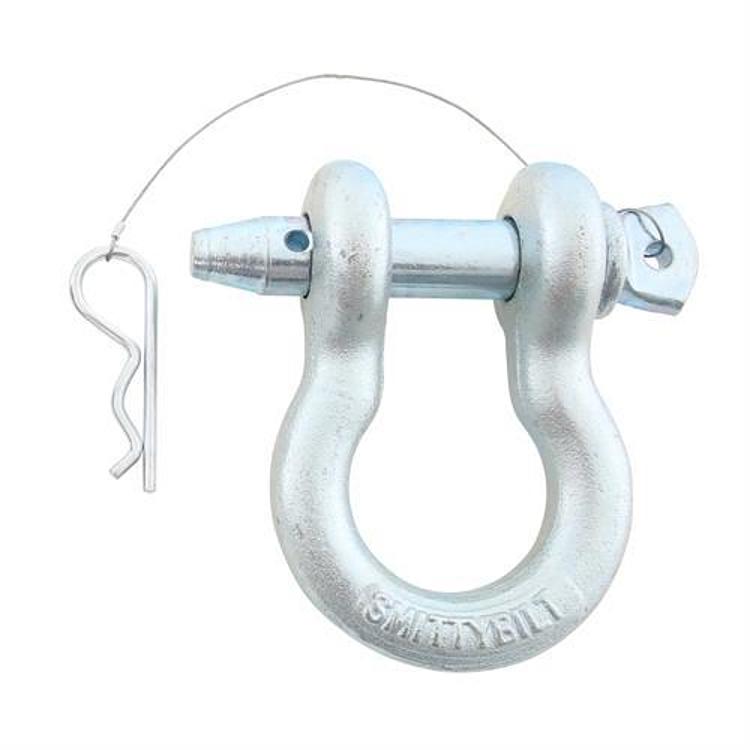
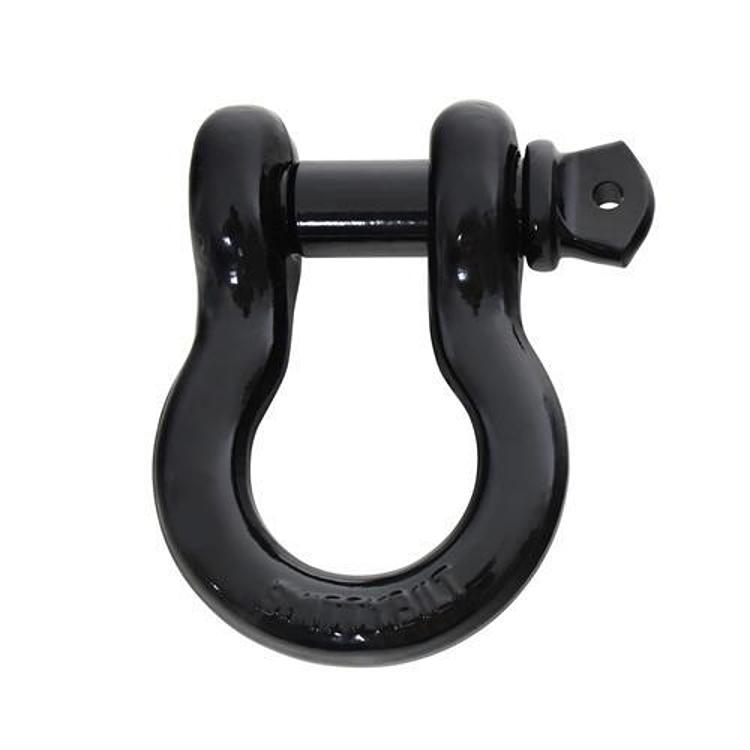
A shackle’s rating is its working load limit (WLL), the most it should carry in service, and it sits well below its breaking strength. A D-ring shackle is a U-shaped steel link closed by a pin, used to join straps, blocks and recovery points. The Crosby G-209 screw pin shackle carries a 6:1 design factor, so minimum ultimate strength is six times the WLL. Its maximum proof load is twice the WLL.
| Shackle size | Crosby G-209 WLL | As metric tons | At 2,000 lb per ton | Recovery shackles at that size |
|---|---|---|---|---|
| 1/2 in. | 2 t | about 4,410 lb | 4,000 lb | Smittybilt 1/2-inch D-ring 13046B, 2 ton |
| 5/8 in. | 3 1/4 t | about 7,170 lb | 6,500 lb | The minimum size class for straps, 3.25 tons |
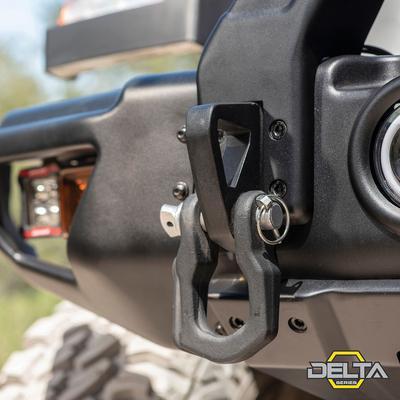
| 3/4 in. | 4 3/4 t | about 10,470 lb | 9,500 lb | Smittybilt Delta D-ring 4.75 ton 99047, Smittybilt 3/4-inch zinc D-ring 13049, Smittybilt 3/4-inch red D-ring 13047R, ARB 4.75T bow shackle ARB2015 |
| 7/8 in. | 6 1/2 t | about 14,330 lb | 13,000 lb | Smittybilt 7/8-inch D-ring 13048B, 6.5 ton |
Crosby’s t is a metric ton of 2,205 lb. Recovery shackles are often marked only in tons, so plan on the lower 2,000 lb figure unless the maker gives the rating in pounds.
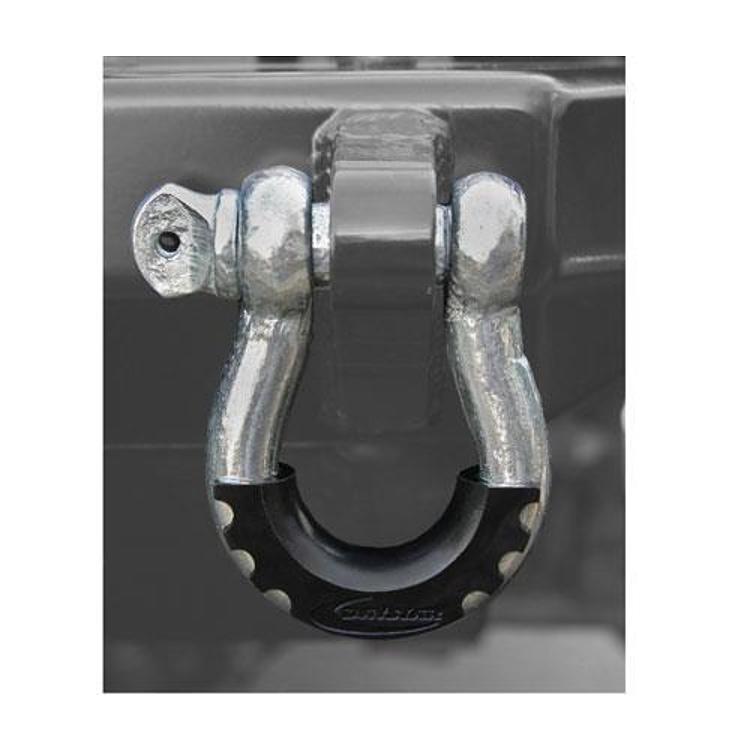
The Smittybilt Delta D-ring 99047 is forged steel with a 3/4-inch shackle body and a 7/8-inch pin, e-coated and powder coated, with a cam-over pull ring that retains the pin. The WARN 3/4-inch D-ring 88999 also uses a 7/8-inch threaded pin and is meant for winches of 6,000 lb and larger. Because the pin is the thick part, measure your bumper tab before you buy: the pin must pass through the hole and the tab must fit inside the jaw.
Run the numbers at the block. On a double line the block and the shackle anchoring it carry about twice the rope tension, which is why WARN pairs a 12,000 lb winch with a 24,000 lb block. At 2,000 lb per ton, a 3/4-inch shackle reaches its WLL at about 4,750 lb of line tension and a 7/8-inch shackle at about 6,500 lb. A 10,000 lb winch can pull past both, so rig that anchor for the pull you expect and treat the WLL as the limit.
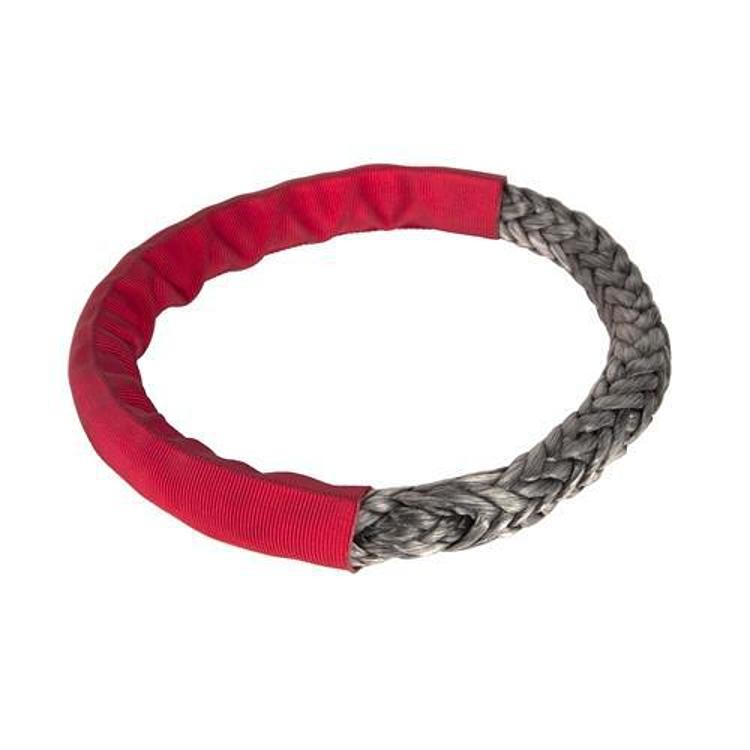
Soft shackles are rope loops that replace the steel link. Read their ratings closely, since makers often quote breaking strength. The Rugged Ridge 7/16-inch soft shackle 11235.55 has a 6,750 lb WLL and a 27,000 lb breaking strength. The Daystar 1/2-inch soft shackle KU10501BK has a 20,000 lb maximum breaking strength and a 2 ton rating, and the Bubba Rope Gator-Jaw soft shackle 176745 has a 32,000 lb breaking strength.
How to load a shackle correctly
- Center the load: Keep the load centered in the bow, with multiple sling legs kept off the pin.
- Respect side loads: at 31 to 45 degrees from in-line a screw pin shackle drops to 70 percent of its WLL, and at 71 to 90 degrees to 50 percent.
- Tighten and back off: Tighten the pin and back it off 1/2 turn; that keeps the pin from seizing.
- Keep the rating visible: Use only load-rated shackles with the rating visible on the shackle.
- No modifications: Crosby prohibits welding, heating or bending a shackle.
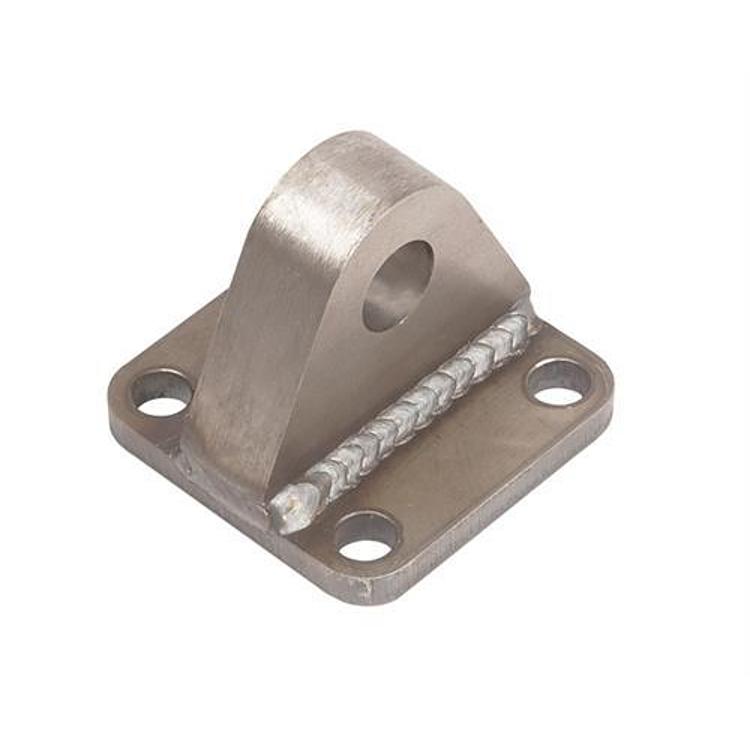
The shackle is only as strong as what it attaches to. The Trail Gear bolt-on D-ring mount 303385-2-KIT uses a 3/8-inch steel plate with a 1-inch thick tab on a 3 x 3 inch pattern, and the Poison Spyder D-ring tab 45-42-010 is 1-inch plate that must be welded on. Both take a 3/4-inch shackle. The D-ring and shackle category has the rest of the range.
Winch safety: what do the manufacturers require?
Stay clear of a loaded line, keep the required wraps on the drum, and rig with rated gear. Your winch’s own manual has the final word, and these rules appear across the WARN, Smittybilt and ARB instructions.
- Inspect first. Check the rope, hook and slings before each use. Replace frayed, kinked or damaged rope before operating.
- Wear heavy leather gloves whenever you handle the rope, and use the hook strap when spooling so your fingers stay away from the fairlead.
- Protect the anchor. Use a tree trunk protector or a choker chain and be certain the anchor will hold. Never wrap the rope back onto itself. Rigging high on a trunk can uproot the tree.
- Pull straight. Run a straight line from winch to load. Spool in the direction the drum rotation label shows, which is the bottom of the drum on WARN winches, because the automatic brake depends on it.
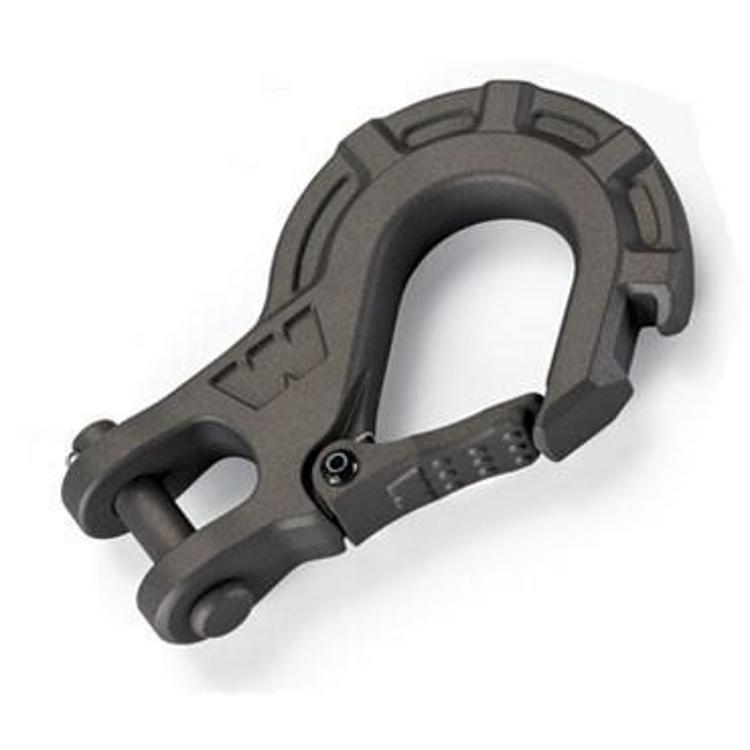
- Use the hook properly. Load the center of the winch hook, never the tip or latch.
- Fit a damper. It helps prevent rope recoil if the rope fails. Place it midway along the line before tension goes on. Over extended wire rope, use a heavy blanket.
- Run the engine and block the wheels on an incline, and start slowly with light tension on the rope.
- Stand well clear. Keep others away, never step over a loaded line, and never touch the rope or hook under tension. Power in slack from about 8 ft away.
- See your helper. Do not run the winch unless you can see both of the helper’s hands, and never use the remote without the vehicle in your line of sight.
- Leave the clutch alone under load, and never engage it while the drum is moving.
- No towing, no hoisting. Never use a winch or rope for towing, and never use a winch as a hoist. Never use a strap for winching, since a strap can be easily cut or abraded, and never use a strap as a lifting sling.
The short version: how to spec a winch setup
- Winch: GVWR x 1.5 at minimum, x 2 for a loaded build, and remember the rating is first-layer only.
- Rope and fairlead: synthetic with a hawse, steel with a roller. Replace the fairlead when you change rope.
- Mount: rated for the winch’s maximum pull. Mid-frame for Jeeps and mid-size trucks, large-frame for 3/4-ton pickups.
- Power: 650 CCA minimum, engine running, and cooling time on long pulls.
- Rigging: a block rated for your winch, a 3/4-inch or larger D-ring with its rating visible, a tree trunk protector and a damper.
Frequently asked questions
What size winch do I need for a 5,000 lb Jeep?
WARN’s formula gives a 7,500 lb minimum for a Jeep with a 5,000 lb gross vehicle weight rating, so an 8,000 lb winch is the starting point. Most adventure rigs target twice the vehicle weight, which points to a 10,000 lb winch on a heavily loaded build.
Should I use GVWR or curb weight to size a winch?
Use the gross vehicle weight rating, printed on the driver door sticker. It is the maximum operating weight of the vehicle with occupants and cargo. Curb weight leaves those out, so it gives an answer that is too small for a loaded truck or SUV.
Can I put synthetic rope on a winch with a roller fairlead?
Synthetic rope needs a hawse fairlead, so replace the roller fairlead with a new hawse when switching from steel. Steel rope can leave nicks and sharp barbs on a fairlead, and those can cut synthetic fibers. An aluminum hawse is the one to use with synthetic rope.
What does 4.75 ton mean on a D-ring?
It is the rated load of a 3/4-inch shackle, the same 4 3/4 t working load limit Crosby gives its 3/4-inch G-209. That is 9,500 lb at 2,000 lb per ton and about 10,470 lb as metric tons, so plan on the lower figure. The working load limit is the most the shackle should carry in service. It is not the breaking strength, which is a much higher number.
Does a snatch block really double winch pulling power?
Nearly. A snatch block can increase pulling ability by nearly two times, because the rope runs out to the block and back to the vehicle and two rope sections share the load. Line speed drops by half, and the winch also draws less current and builds less heat for the same recovery.
How many wraps of rope must stay on the winch drum?
Keep at least 5 wraps of wire rope or 10 wraps of synthetic rope on the drum. The rope attachment on the drum is not designed to hold a load, so the rope can come loose if you spool out past that point.
Start with the recovery winch category once you have your GVWR, then fill in the winches and winch accessories department for rope, fairleads and rigging.
Sources
- WARN, Determine the Right Winch Capacity for Your Truck or SUV: the GVWR x 1.5 formula, Tacoma and Silverado examples.
- WARN, How to Choose the Right Winch: sizing rule and the Wrangler example.
- WARN, How To Choose a Winch for Jeeps: battery guidance and rope comparison.
- WARN, Mid Frame or Large Frame Winch?: frame classes and mounting styles.
- WARN, Basic Guide to Winching: rigging, wraps, dampers, hand signals.
- WARN, R-Series Manual: battery disconnect, wiring routing and remote warnings.
- WARN, ZEON Platinum Operators and Install Manual: mounting surface, hardware class, fairlead position, spooling direction.
- WARN, ZEON XC Winch Service Manual: pull loss per layer, motor cooling, synthetic rope inspection.
- WARN, Epic Snatch Block 92188 and Epic Snatch Block 92097: working load, winch size, line diameter.
- WARN, Winch Rope FAQ: synthetic and steel rope, fairleads, replacement criteria.
- WARN, Winch Battery Basics: CCA, reserve capacity, battery types.
- WARN, Comparison: WARN VR vs. ZEON: line speed and amp draw at rated load.
- WARN, Heavy-Duty Snatch Block: working load limits by safety factor.
- Smittybilt, Winches 101: the 1.5x and 2x sizing guidance.
- Smittybilt, XRC Gen3 Installation Instructions: first-layer pull, mounting plate, double-line and safety rules, amp draw.
- Smittybilt, Delta D-Ring 99047 and Delta Snatch Block 99044: construction and rope notes.
- Kito Crosby, G-209 / S-209 Screw Pin Anchor Shackles and Shackle Warnings and Applications: WLL chart, design factor, side-load reductions.
- ARB, Recovery Basics: Part I: shackle ratings, dampers, tree protectors.