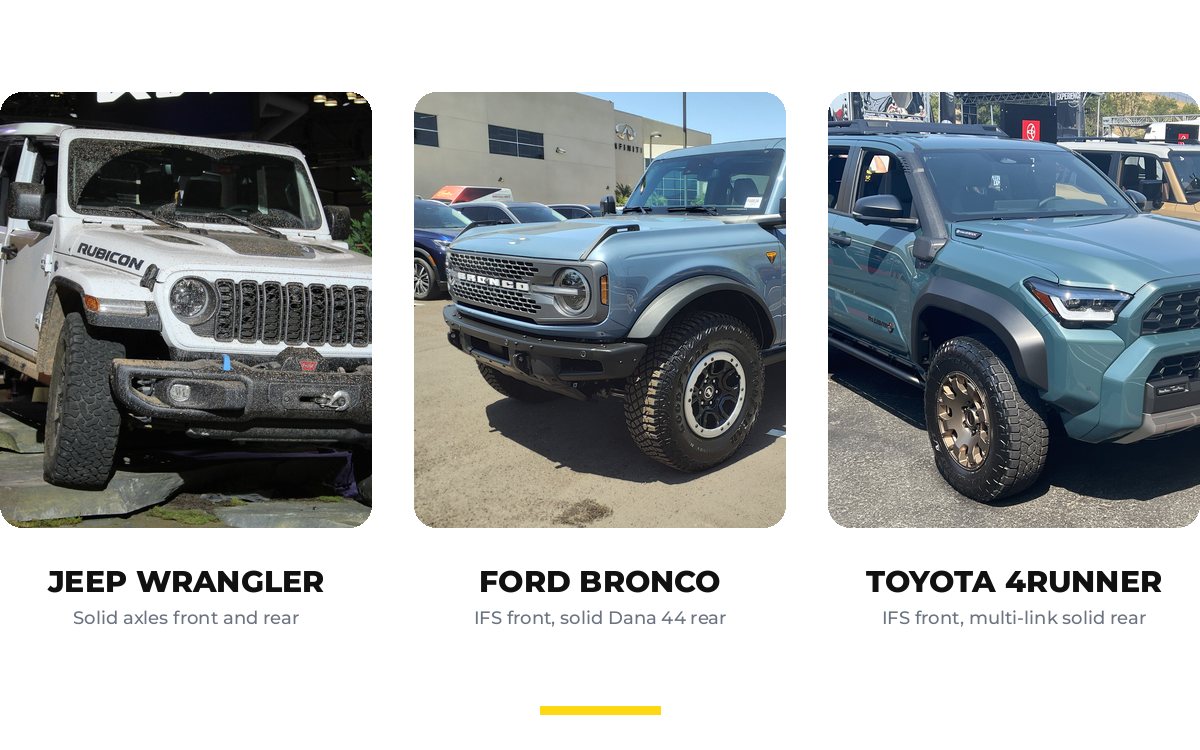
Jeep Wrangler vs Ford Bronco vs Toyota 4Runner is the comparison that fills every trailhead conversation, and most of it is argued on looks, badges and brand loyalty. This one is argued on hardware. The three are the only body-on-frame, removable-roof-or-not, trail-rated mid-size SUVs you can still buy new with a two-speed transfer case and at least one locking differential from the factory, and under the skin they take three different engineering paths: a solid front axle on the Wrangler JL, an independent front with a solid Dana 44 rear on the Bronco, and an independent front with a coil-sprung multi-link rear on the sixth-generation 4Runner. Every number below comes from Ford’s 2025 Bronco technical specifications, Jeep’s 2025 Wrangler press kit and Toyota’s 2025 4Runner product information sheet unless it says otherwise, and the full list of sources is at the end.
Key takeaways
- Only the Wrangler keeps solid axles at both ends. The Bronco and the 4Runner both use double-wishbone independent front suspension (IFS) with a solid rear axle.
- Lowest crawl ratios: Wrangler Rubicon up to 100:1 (manual, 4.88 gears), Bronco up to 94.75:1 (seven-speed manual with the 3.06:1 transfer case), 4Runner about 40.6:1 (eight-speed automatic, 2.57:1 low range, 3.583 final drive).
- Factory lockers: Wrangler Rubicon and Bronco Badlands, Sasquatch and Raptor lock both axles; the 4Runner TRD Off-Road, TRD Pro and Trailhunter lock the rear only.
- Biggest factory tires and clearance: Bronco Raptor on 37s with 13.1 inches, Wrangler Rubicon Xtreme 35 at 12.9 inches, Bronco Sasquatch on 35s at 11.6, Wrangler Rubicon on 33s at 10.8, 4Runner TRD Pro and Trailhunter at 10.1.
- Towing and weight run the other way: the 4Runner is rated to 6,000 pounds with the hybrid, the Wrangler to 5,000 at most, the Bronco to 3,500.
Three body-on-frame SUVs, three different frames
All three sit on a ladder frame, which is why they are in this comparison and a Grand Cherokee or a Bronco Sport is not. A separate frame carries the suspension loads, takes the hits from rocks, and lets the maker (and later, you) change ride height without touching the body structure. The similarity ends at the rails.
- Wrangler JL: high-strength steel ladder frame with the five-link coil suspension cradles welded to it at both ends; aluminum doors, hood, fenders and windshield frame; 96.8 inch (two-door) or 118.4 inch (Unlimited) wheelbase, the longest of the three. Jeep’s Wrangler page lists the body and powertrain combinations by trim.
- Bronco: Ford’s T6 architecture, shared with the Ranger. Seven crossmembers, 9.06 by 3.58 inch side rails in 0.087 inch wall, section modulus 4.95 cubic inches, yield strength 49,300 psi, identical on the 100.4 inch two-door and the 116.1 inch four-door. The numbers are on page one of Ford’s spec sheet.
- 4Runner: Toyota’s TNGA-F global truck frame, shared with the Tacoma, Land Cruiser 250, Lexus GX and Tundra. Fully boxed, laser-welded in its high-stress sections, one wheelbase of 2,850 mm (112.2 inches), 1,980 mm wide, or 2,030 mm on the TRD Pro and Trailhunter for their wider track. Toyota’s pressroom has the platform background.
The Wrangler JL frame is a high-strength steel ladder with the five-link coil suspension cradles welded to it at both ends. Jeep saves weight in the body instead: the doors, hood, fenders and windshield frame are aluminum, which is why a JL hood dents when a JK hood did not. Wheelbase is 96.8 inches for the two-door and 118.4 for the four-door Unlimited, the longest of the three, and the one reason a four-door Rubicon has the weakest breakover angle in this group.
The sixth-generation Bronco rides on Ford’s T6 architecture, shared with the Ranger. Ford publishes the frame numbers most makers keep to themselves: seven crossmembers, 9.06 by 3.58 inch side rails in 0.087 inch wall, a section modulus of 4.95 cubic inches and a yield strength of 49,300 psi, the same for the 100.4 inch two-door and the 116.1 inch four-door. Those rails are what the Raptor’s 37 inch tires and 13 inches of front travel hang from without a different frame.
The 2025 4Runner moved to Toyota’s TNGA-F global truck platform, the same frame family under the Tacoma, the Land Cruiser 250, the Lexus GX and the Tundra. It is fully boxed, laser-welded in its high-stress sections, and stiffer than the fifth generation’s frame, which dated to 2009. Wheelbase is 2,850 mm, or 112.2 inches, with only one body length. The TRD Pro and Trailhunter are 2,030 mm wide against 1,980 mm for the rest of the range because their fender flares cover a wider track.
Front suspension: solid axle against independent
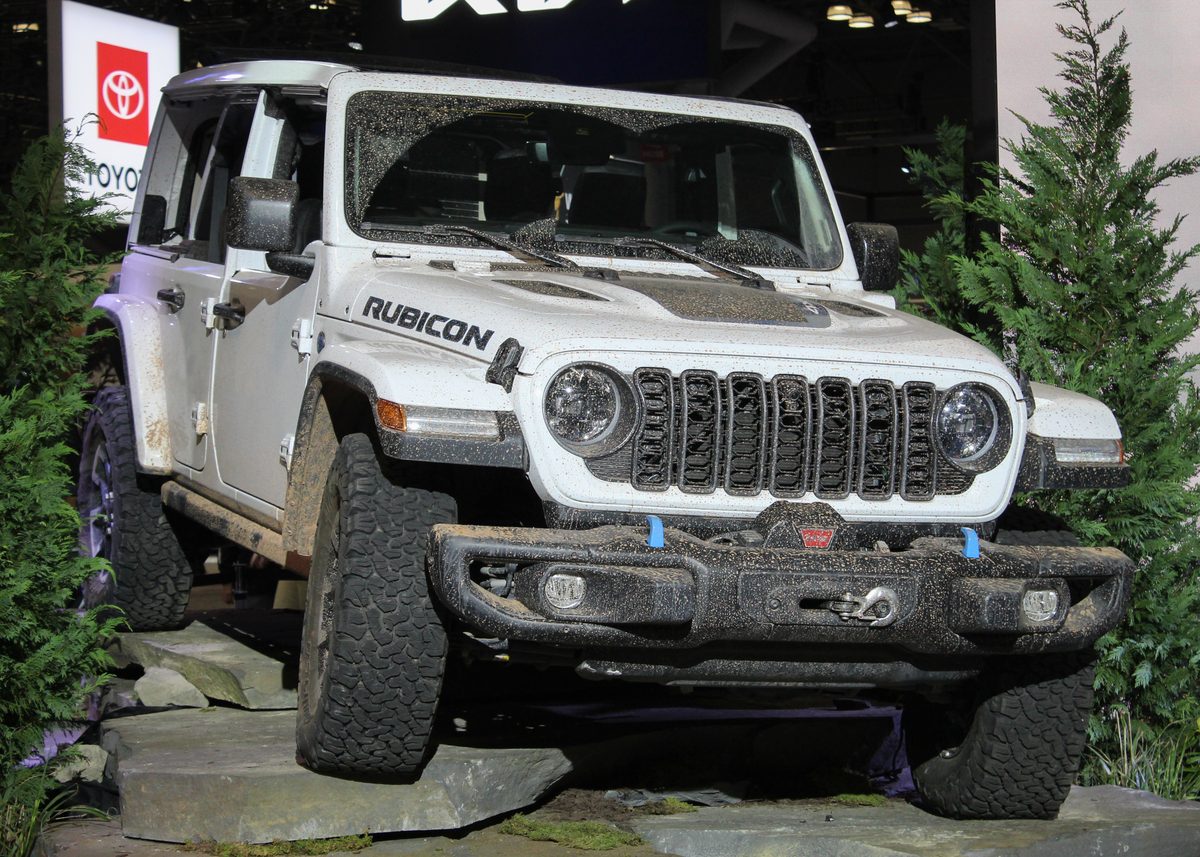
This is the engineering fork in the road, and everything else in the comparison follows from it. The Wrangler hangs a solid Dana axle under the front of the frame on five links: two lower arms, two upper arms, a track bar to locate the axle side to side, coil springs and shocks. The Bronco and the 4Runner use double-wishbone independent front suspension with the differential bolted to the frame and the wheels hanging on their own control arms.
Why the Wrangler keeps a beam
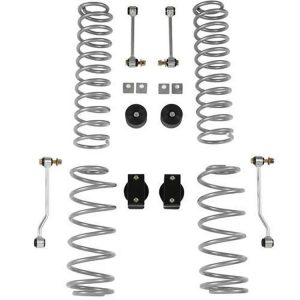
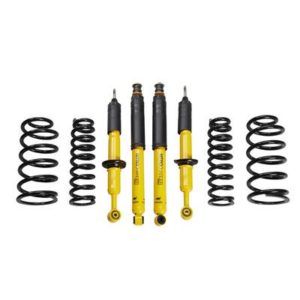
A solid axle holds the wheels perpendicular to the axle housing no matter where the suspension sits. When one wheel climbs a ledge, the opposite wheel is pushed down, which keeps both tires loaded and the differential, the lowest point, lifted with the axle rather than fixed at the frame height. Ground clearance under the front differential rises with tire size, so moving from 33s to 35s on a Rubicon raises the pumpkin by an inch along with everything else. The axle also carries the full driveline in one piece: tubes, shafts, knuckles and the center section. Lifting it is a matter of longer coil springs and, past about 2.5 inches, longer control arms to correct the caster angle, which is why a Wrangler lift kit is a box of springs and arms rather than a new front suspension. A {a(P_JL7141, “Rubicon Express 2.5 inch Super-Ride kit for the JL”)} clears 37 inch tires on a Rubicon with chromoly lower arms and no change to the factory geometry beyond the arm length.
The costs are unsprung mass, steering precision and ride. Every pound of the axle, hubs, brakes and tires moves with the wheel, so the front end is slow to follow washboard and the whole beam steers slightly as it articulates. The track bar and the drag link describe arcs that do not match, so a lifted Wrangler needs a dropped track bar bracket or an adjustable bar to stop bump steer, and the Rubicon’s electronic front sway bar disconnect exists because a solid axle with the bar connected flexes poorly. With it disconnected the JL front end articulates further than either independent rival can, which is the main reason a stock Rubicon wins the ramp.
What the beam axle gives the Wrangler, and what it takes:
- Both front tires stay loaded as the axle tilts, and the differential rises with the tires: 35s raise the front pumpkin an inch, no lift needed.
- Lifting is springs and arms. Up to about 2.5 inches is coils and bump stops; beyond that, longer or adjustable control arms restore caster and a relocated track bar stops bump steer.
- The whole driveline, tubes, shafts, knuckles and center section, is one assembly, which is why a Dana 60 swap is a bolt-on job and why the Rubicon’s factory Tru-Lok units can be swapped for an ARB or Eaton unit without touching the suspension.
- The costs: around twice the unsprung mass of an independent front, a steering box and drag link instead of a rack, slower response on washboard, and a track bar and drag link that describe different arcs once the Jeep is lifted.
Why the Bronco and the 4Runner went independent
Ford’s front end is a Dana AdvanTEK independent unit with forged aluminum upper and lower control arms, forged spindles and computer-selected coil-over springs. On the Raptor the front differential is a Dana 44 AdvanTEK. The arms are long by IFS standards: Ford quotes 9.4 inches of front travel on the Badlands, 9.1 on the Sasquatch package, 7.9 on the base truck and 13.0 inches on the Raptor with its wider track and Fox 3.1 Live Valve dampers. The 4Runner uses Toyota’s double-wishbone front with a stabilizer bar and twin-tube dampers on most grades, upgraded to 2.5 inch Fox internal bypass units on the TRD Pro and 2.5 inch Old Man Emu forged monotubes on the Trailhunter.
- Camber and caster stay where the geometry puts them through the travel, so the tire contact patch is flatter under braking and cornering.
- Unsprung mass is roughly half of a beam axle’s: faster response on washboard, less tire bounce, and dampers that can do their job (the Raptor’s Fox 3.1 Live Valve units and the TRD Pro’s Fox internal bypass units exist because of this).
- Rack-and-pinion steering mounts to the frame, with no drag link arcing over a moving axle.
- Front differential height is fixed to the frame, so bigger tires do not raise it; the lift ceiling is set by CV joint angles at about 2 to 3 inches without a differential drop.
- One wheel climbing a ledge does not push its twin down, so the inside tire unloads sooner. Ford’s own ramp travel index numbers put a two-door Badlands at 560 connected and 700 with the front bar disconnected.
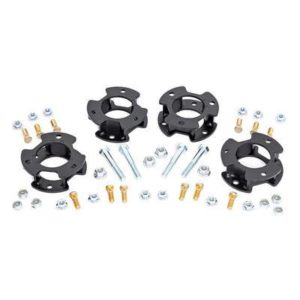
Independent suspension keeps each wheel’s camber and caster where the geometry wants them, cuts unsprung mass roughly in half, and lets the rack-and-pinion steering work without a drag link arcing over a moving axle. On a fast dirt road at speed the Bronco Raptor and a Fox-equipped 4Runner are in a different class from a Wrangler. The bill comes due at crawling speed. Front differential height is fixed to the frame, so bigger tires do not raise it. Travel is limited by the CV joint angles, so a lift beyond about 2 to 3 inches needs a differential drop or longer arms, and the inside wheel on a ledge tucks into the fender instead of being pushed down by its twin. Ford’s own ramp travel index figures tell the story: a two-door Badlands scores 560 with the front stabilizer bar connected and 700 with it disconnected, strong for IFS but short of what a Rubicon reaches with its bar open. A {a(P_RC40400, “Rough Country 2 inch Bronco lift”)} or a set of {a(P_4WP, “2.5 inch coilovers for the Bronco front”)} works inside those limits; on the 4Runner the {a(P_OME, “Old Man Emu 3 inch kit”)} lives at the top of what the front CVs will take without a drop bracket.
Rear axles: three solid axles, three different jobs
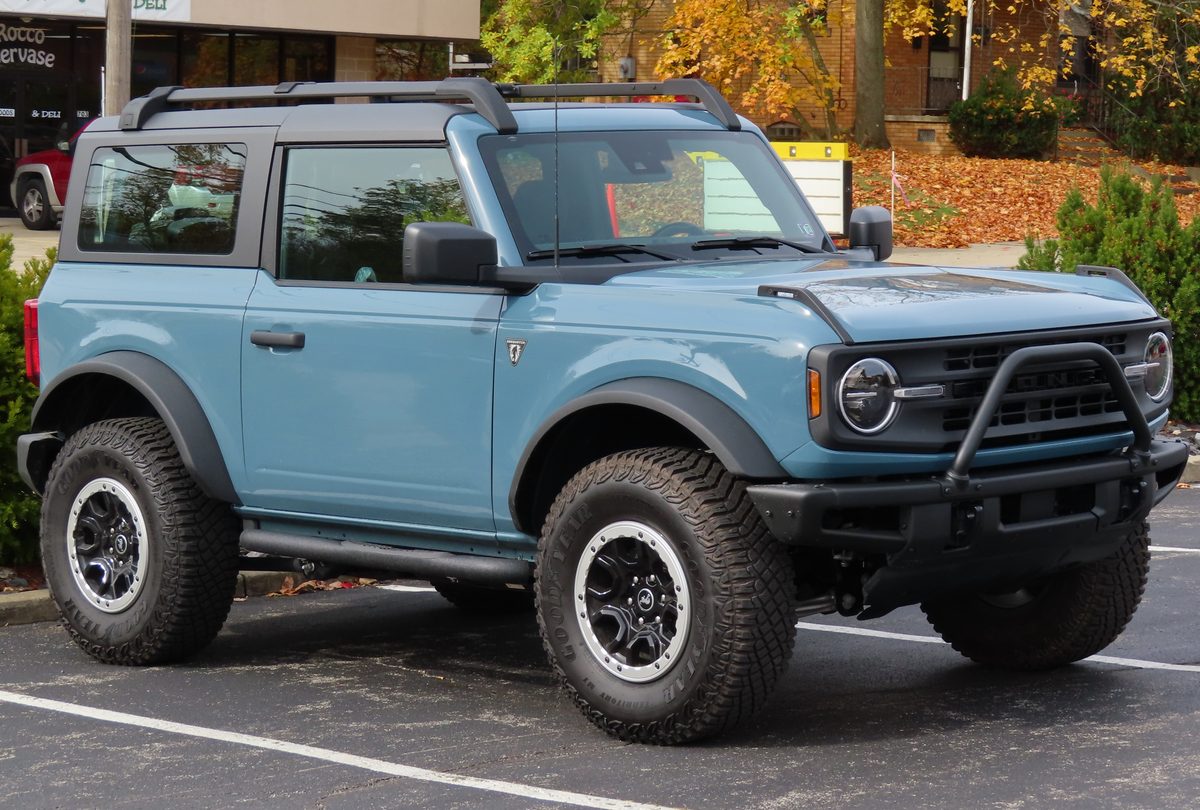
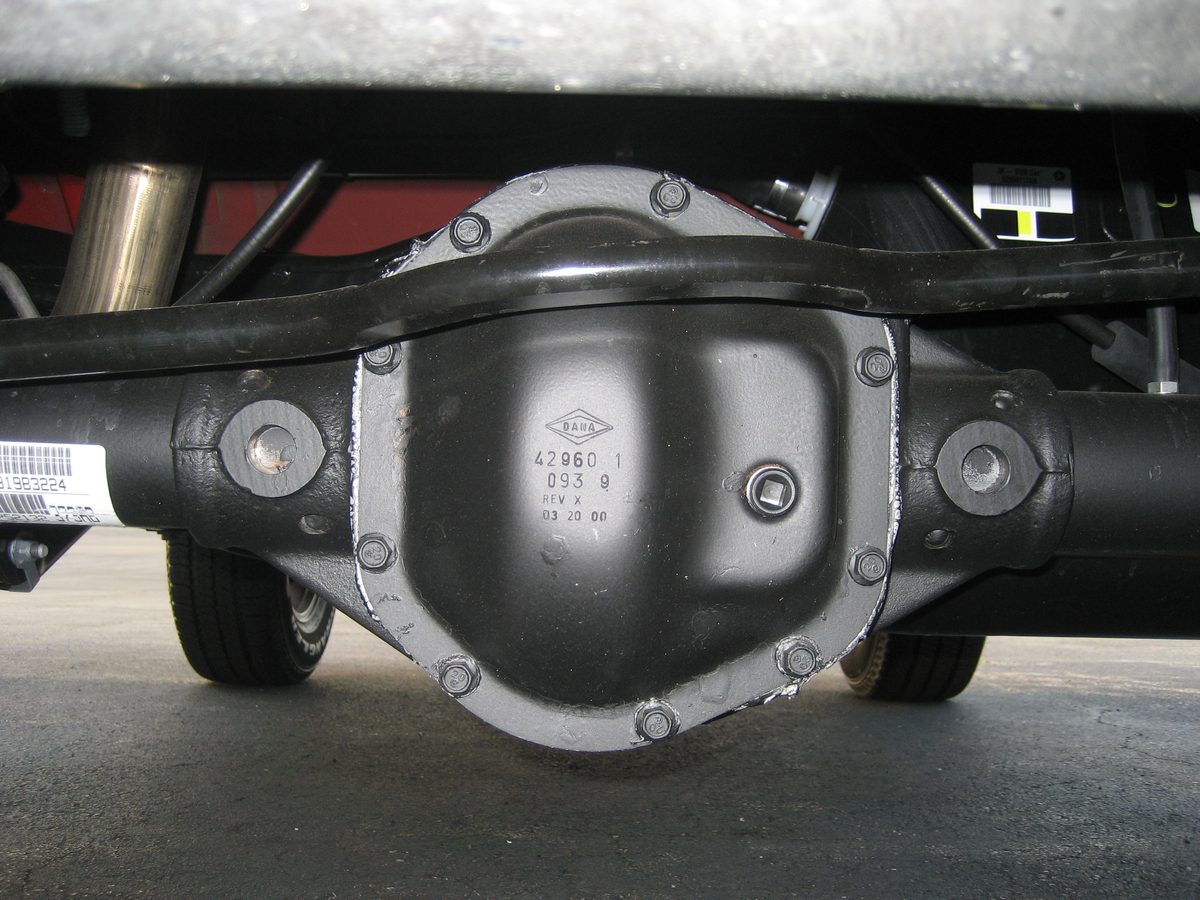
All three use a solid rear axle on coil springs, which tells you something about how much the makers trust independent rear suspension for towing and rock work. The differences are in the axle itself and in how it is located.
- Wrangler: Dana M200 (Dana 35) on Sport and Sahara, M220 (Dana 44, 8.66 inch ring gear) on the Rubicon, and since 2024 a next-generation heavy-duty Dana 44 full-float rear on the Rubicon X and Xtreme 35 packages. Five links, coil springs, track bar.
- Bronco: Dana 44 AdvanTEK solid axle on every non-Raptor Bronco (locking on Badlands and Sasquatch, open elsewhere), Dana 50 heavy-duty AdvanTEK on the Raptor. Axle ratios 4.27, 4.46, 4.70; Raptor 4.70. Coil springs on a five-link.
- 4Runner: a new solid rear axle on a coil-sprung multi-link with outboard-mounted twin-tube dampers, 3.583 final drive on every grade, electronic locker on TRD Off-Road, TRD Pro and Trailhunter.
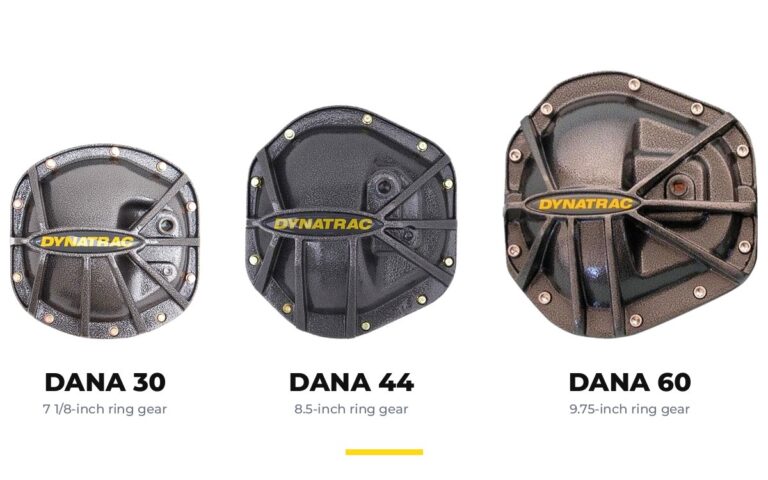
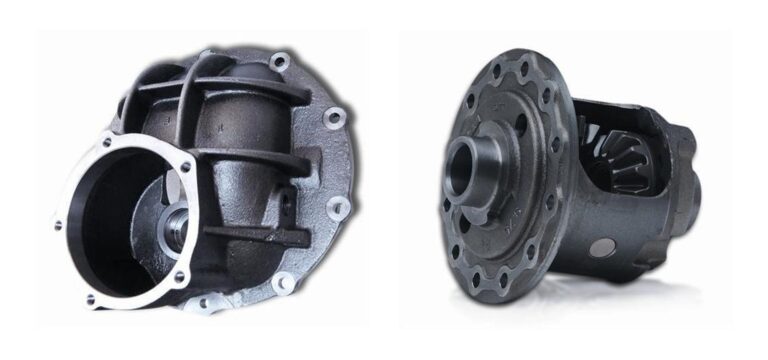
The Wrangler’s rear is a Dana 44 on the Rubicon (Dana’s M220, with an 8.66 inch ring gear) and a Dana 35 (M200) on the Sport and Sahara, both on five links with a track bar. For 2024 Jeep added a next-generation heavy-duty Dana 44 full-float rear axle on the Rubicon X and Xtreme 35 packages and as an option on other Rubicons, the first full-floating axle on a factory Wrangler. A full-float design carries the vehicle weight on the hub bearings rather than on the axle shaft, so a broken shaft does not drop the wheel, the same reason three-quarter-ton trucks use them. The whole family is covered in our Dana 30 vs Dana 44 vs Dana 60 guide, and the Rubicon’s factory Tru-Lok units can be replaced with a 35 spline ARB Air Locker when the stock lockers or shafts become the weak point. Our Dana 44 section carries gears, shafts, bearings and lockers and spools for both Wrangler axles.
Ford fits a Dana 44 AdvanTEK solid axle in the back of every non-Raptor Bronco, with a locking differential on the Badlands and on anything with the Sasquatch package, and an open differential elsewhere. Axle ratios are 4.27, 4.46 or 4.70 depending on tire and package; the Sasquatch gets 4.70 to turn 35s. The Raptor moves up to a Dana 50 heavy-duty AdvanTEK with 4.70 gears. Ford’s AdvanTEK gear sets use a different tooth profile from the classic Dana 44, which is why Bronco ring-and-pinion sets and lockers are their own part numbers and not interchangeable with a Jeep’s.
The 4Runner keeps a solid rear axle under a multi-link, coil-sprung setup with outboard-mounted twin-tube dampers, the same concept as the fifth generation but a new axle and link design on the TNGA-F frame. Final drive is 3.583:1 across the range, which is tall by off-road standards and chosen for the turbo engines’ 1,700 rpm torque peak rather than for crawling. An electronic rear locker comes on the TRD Off-Road, TRD Pro and Trailhunter; the other grades rely on Toyota’s Auto LSD brake-based traction control.
Transfer cases and crawl ratios
Crawl ratio is the number that tells you how slowly a vehicle can move with the engine at a useful speed: first gear times low range times the axle ratio. The higher it is, the less you ride the brake on a descent and the more torque reaches the tires on a ledge without clutch or converter abuse. The three makers land far apart.
| Wrangler | Bronco | 4Runner | |
|---|---|---|---|
| Standard transfer case | Command-Trac part-time, 2.72:1 low | Electronic shift-on-the-fly part-time, 2.72:1 low | Part-time two-speed, 2.57:1 low |
| Upgraded transfer case | Rock-Trac 4.0:1 low (Rubicon); Selec-Trac full-time 2.72:1 | Advanced 4×4 with automatic 4A mode, 3.06:1 low (Badlands, Sasquatch, Raptor) | Full-time with Torsen center differential, 2.57:1 low (Limited, Platinum) |
| Axle ratios | 3.45, 4.10 (Rubicon, Willys), 4.56 (392, Xtreme 35), 4.88 (optional, 3.6L Rubicon) | 4.27, 4.46, 4.70; Raptor 4.70 | 3.583 |
| Best crawl ratio, manual | 100:1 (Rubicon, 4.88); 84.2:1 (Rubicon, 4.10) | 94.75:1 (3.06 case); 79.92:1 (2.72 case) | No manual offered |
| Best crawl ratio, automatic | 77.2:1 (Rubicon, 4.10, eight-speed) | 67.80:1 (3.06 case); 57.19:1 (2.72 case); 67.7:1 Raptor | 40.6:1 (4.41 first gear, 2.57 low, 3.583 axle) |
Jeep’s Rock-Trac case is the outlier. A 4.0:1 low range is the deepest reduction sold in any factory vehicle today, and paired with the manual transmission’s 5.13:1 first gear and 4.88 axles it reaches the 100:1 figure Jeep quotes. The eight-speed automatic with 4.10 gears lands at 77.2:1, which is also what the 4xe hybrid is rated at. Below the Rubicon, a Sport or Sahara with Command-Trac and 3.45 gears crawls in the 40s like the 4Runner.
Ford gets most of the way there with gearing rather than a deep case. The Bronco’s seven-speed Getrag manual, offered only with the 2.3 liter engine, has a 6.56:1 crawler first gear below the normal six; with the 3.06:1 Advanced 4×4 case and 4.70 Sasquatch axles that is 94.75:1. The ten-speed automatic’s 4.71:1 first gear gives 67.80:1 with the same case, and the Raptor, automatic only, sits at 67.7:1. The Advanced case also brings the 4A mode, an automatic all-wheel-drive setting that a Wrangler only gets with the full-time Selec-Trac or the 392’s full-time Rock-Trac.
Toyota did not chase the number. The 4Runner’s 2.57:1 low range, 4.41:1 first gear and 3.583 axles multiply to about 40.6:1, half of a Rubicon automatic. Toyota compensates electronically: Crawl Control runs the throttle and brakes at a set walking speed, Multi-Terrain Select changes the traction logic by surface, and the hybrid’s 465 lb-ft arriving at 1,700 rpm masks some of the gearing gap. It works, but it is software and torque standing in for reduction, and on a long steep descent the gearing still decides how hot the brakes get.
Lockers, sway bars and the electronics around them
The factory traction hardware by model, before the software layered on top of it:
- Wrangler Rubicon: Tru-Lok electronic lockers front and rear, electronic front sway bar disconnect, Rock-Trac 4.0:1 case, 4.10 gears (4.56 or 4.88 available). Willys: rear locker only. Sport and Sahara: open differentials, Command-Trac 2.72:1.
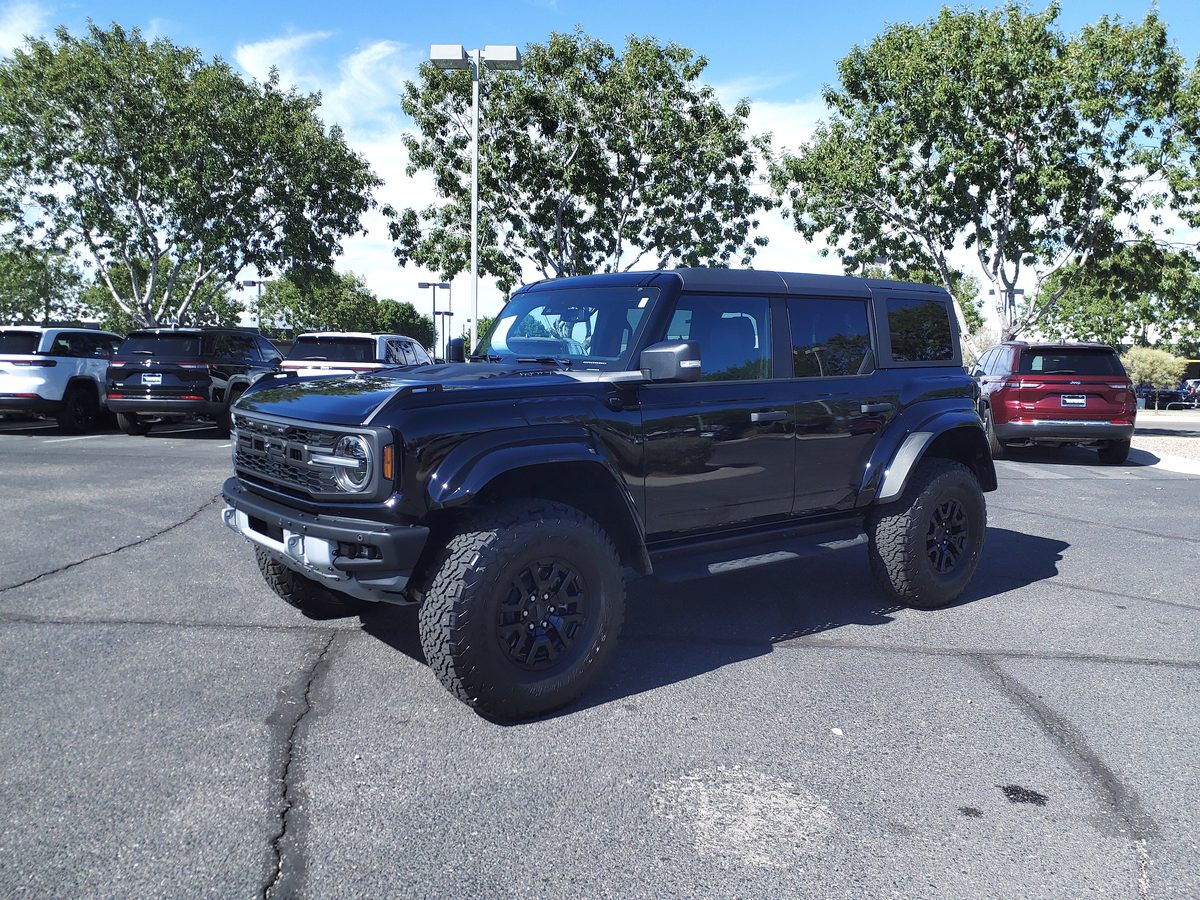
- Bronco Badlands, Sasquatch and Raptor: electronic lockers front and rear, hydraulic front stabilizer bar disconnect on Badlands and Raptor, the 3.06:1 Advanced 4×4 case with automatic 4A mode, G.O.A.T. terrain modes, Trail Turn Assist and Trail One-Pedal Drive. Big Bend and Outer Banks without Sasquatch: open front, optional rear locker.
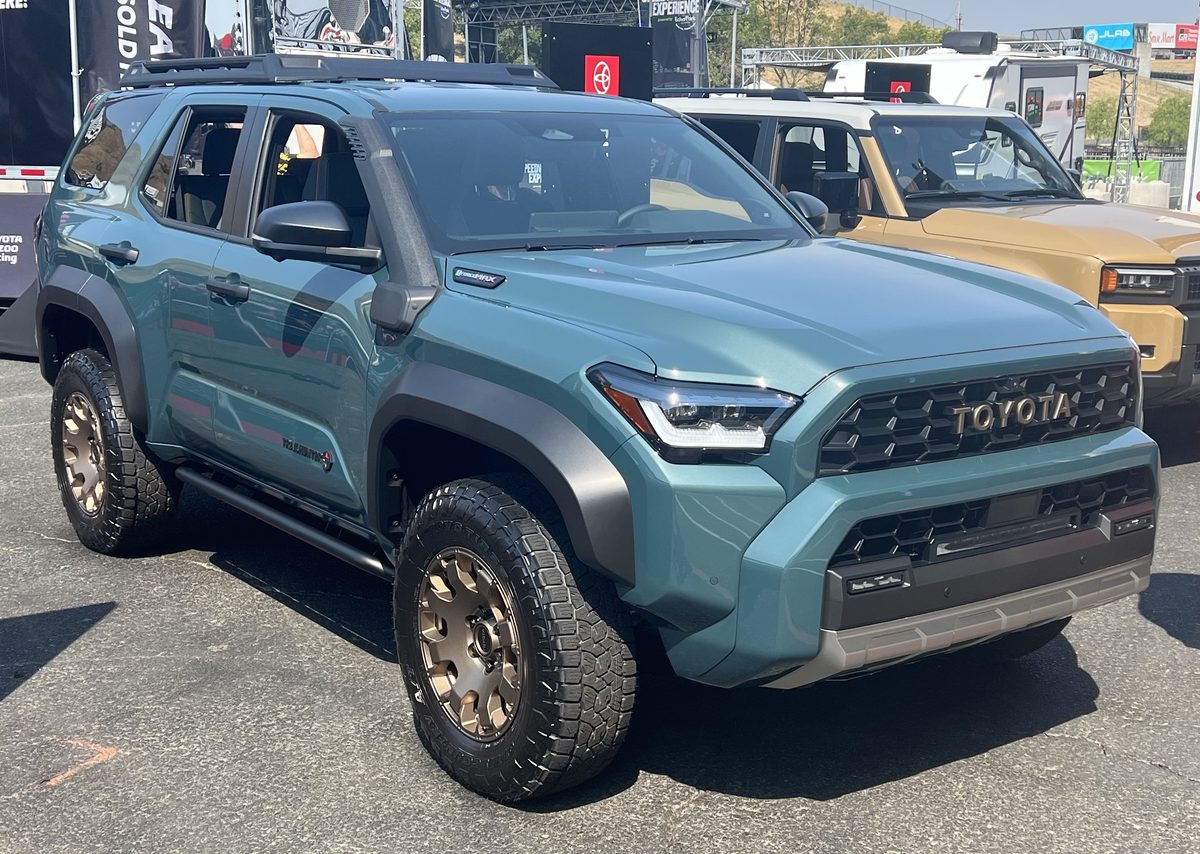
- 4Runner TRD Off-Road, TRD Pro and Trailhunter: electronic rear locker, Stabilizer Disconnect Mechanism on the front bar, A-TRAC brake traction control on the open front differential, Crawl Control and Multi-Terrain Select, 2.57:1 low range. Limited and Platinum: full-time 4WD with a Torsen center differential, no locker.
The Rubicon has had front and rear Tru-Lok electronic lockers and an electronic front sway bar disconnect since 2003, and the JL keeps both. The disconnect is a button on the dash that uncouples the bar at speeds under about 18 mph in 4-Low, and it is the single feature that most separates a stock Rubicon from a stock Sport on a ramp. Willys models get the rear locker only, with a mechanical limited slip on some years. On the Sport and Sahara you add lockers yourself, which is where the Dana 44 and Dana 35 aftermarket comes in.
Ford matched the package on paper: Badlands and any Sasquatch-equipped Bronco lock front and rear, the Badlands and Raptor have a hydraulic front stabilizer bar disconnect that can release under load, and the G.O.A.T. drive mode selector tunes throttle, traction control and locker engagement by terrain. Two Bronco-only tricks are worth naming because they are software solving IFS problems. Trail Turn Assist brakes the inside rear wheel to tighten a turn, which shortens the four-door’s path through switchbacks the Wrangler takes with a longer wheelbase but no help. Trail One-Pedal Drive handles the brake on descents where the Bronco’s shallower crawl ratio would otherwise have you on the pedal.
Toyota’s sixth-generation 4Runner adds, for the first time, a Stabilizer Disconnect Mechanism on the TRD Off-Road, TRD Pro and Trailhunter, an electrically actuated front bar release in the same spirit as Jeep’s. It pairs with the rear locker, A-TRAC brake-based traction control on the open front differential, Crawl Control and Multi-Terrain Select. There is still no factory front locker on any 4Runner, and none of the three grades with the rear locker gets the Torsen full-time case; you pick part-time 4WD with the locker or full-time without it.
Engines, transmissions and torque where it matters
Trail work is about torque at low revolutions and a transmission that will hold a gear, so the headline horsepower matters less than the shape of the curve and the first gear ratio. The 2025 lineups:
| Engine | Horsepower | Torque | Transmission |
|---|---|---|---|
| Wrangler 3.6L Pentastar V6 | 285 hp | 260 lb-ft | six-speed manual or eight-speed automatic |
| Wrangler 2.0L turbo four | 270 hp | 295 lb-ft | eight-speed automatic |
| Wrangler 4xe plug-in hybrid (2.0L turbo plus two motors, 400 V, 17 kWh) | 375 hp | 470 lb-ft | eight-speed automatic |
| Wrangler 392 Final Edition 6.4L V8 | 470 hp | 470 lb-ft | eight-speed automatic |
| Bronco 2.3L EcoBoost four | 300 hp (premium fuel), 275 regular | 325 lb-ft (premium), 315 regular | seven-speed manual (six plus crawler) or ten-speed automatic |
| Bronco 2.7L EcoBoost V6 | 330 hp (premium), 315 regular | 415 lb-ft (premium), 410 regular | ten-speed automatic |
| Bronco Raptor 3.0L EcoBoost V6 | 418 hp | 440 lb-ft | ten-speed automatic |
| 4Runner i-FORCE 2.4L turbo four | 278 hp | 317 lb-ft at 1,700 rpm | eight-speed automatic |
| 4Runner i-FORCE MAX 2.4L turbo hybrid (1.87 kWh NiMH) | 326 hp | 465 lb-ft at 1,700 rpm | eight-speed automatic |
Three things stand out. First, every maker has moved its torque peak down: the 4Runner’s turbo four makes its full 317 lb-ft at 1,700 rpm, and the hybrid’s 465 lb-ft is Wrangler 392 territory from 2.4 liters. Second, the Wrangler is the only one left with a naturally aspirated engine and the only one with a manual behind a six-cylinder; the Bronco’s manual is tied to the 2.3 and the 4Runner has none. Third, the two hybrids solve the crawl problem differently. The Wrangler 4xe’s motors sit in the transmission and can move the Jeep on electricity alone through the Rock-Trac case, so it crawls in near silence at 77.2:1. The 4Runner’s motor is also in the transmission housing, but its 1.87 kWh pack is a torque-fill and launch device rather than an electric drive mode.
Final drive choices follow the engines. The 4Runner’s 3.583 gears are chosen for the turbo’s low torque peak and fuel economy; regearing a 6th-gen 4Runner for 35s is possible but early. Ford’s 4.46 and 4.70 ratios on 33s and 35s mean the Bronco is already geared for its tires from the factory, which is one reason Sasquatch trucks drive better on 35s than a Rubicon on 35s with 4.10s. Jeep answers with the 4.56 and 4.88 options and, on the Rubicon, a factory 35 inch package that comes with the gears.
Tires, clearance, angles and travel
The numbers below are each maker’s published figures for the configuration named. They are not directly comparable across brands because each company measures clearance at a different point, but within the group they describe the shape of each truck well.
| Tire | Ground clearance | Approach / breakover / departure | Water fording | |
|---|---|---|---|---|
| Wrangler Rubicon four-door (33s) | LT285/70R17, 33 in | 10.8 in | 43.9 / 22.6 / 37.0 deg | 30 in |
| Wrangler Rubicon with Xtreme 35 package | 35 in on 17 in beadlock-capable wheels | 12.9 in | 47.4 / 26.7 / 40.4 deg (two-door breakover 32.4) | about 34 in |
| Bronco with Sasquatch package | 315/70R17, 35 in | 11.6 in two-door, 11.5 four-door | 43.2 / 29.0 / 37.2 deg two-door; 43.2 / 26.3 / 37.0 four-door | 33.5 in |
| Bronco Raptor | 37 in | 13.1 in | 47.2 / 30.8 / 40.5 deg | 37.0 in |
| 4Runner TRD Off-Road | 265/70R18, about 32.6 in | 9.1 in (231 mm) | 19 / 24 / 24 deg | not published |
| 4Runner TRD Pro and Trailhunter | 265/70R18, about 32.6 in | 10.1 in (257 mm) | 33 / 24 / 24 deg | not published |
Read the approach column with the bumpers in mind. The 4Runner TRD Off-Road’s 19 degree approach is not a clearance problem, it is the SR5-style front bumper; the TRD Pro and Trailhunter get a higher-clearance bumper and jump to 33 degrees on the same suspension. The same is true of the Wrangler: a steel stubby bumper on a Sport improves the approach angle more than a lift does. Breakover is where wheelbase bites. The two-door Wrangler and two-door Bronco post 32.4 and 29.0 degrees on 35s; the four-doors drop to 26.7 and 26.3, and the 112.2 inch 4Runner sits at 24 on every grade because Toyota sells one wheelbase.
Suspension travel is the number Ford publishes and the others mostly do not. Bronco front and rear travel, from the spec sheet:
- Base: 7.9 inches front, 8.5 inches rear
- Big Bend: 8.0 front, 9.8 rear
- Badlands: 9.4 front, 10.3 rear
- Sasquatch package: 9.1 front, 9.9 rear
- Raptor: 13.0 front, 14.0 rear, on Fox 3.1 Live Valve dampers
A stock Rubicon’s coil-sprung solid axles are in the 8 to 9 inch range at each end and gain more from a disconnect and longer shocks than any IFS truck can. The sixth-generation 4Runner has not had its travel published by Toyota; the Trailhunter’s 2.5 inch Old Man Emu dampers with rear piggyback reservoirs and the TRD Pro’s Fox internal bypass units with rear remote reservoirs are the makers’ signal that both grades are tuned for speed over washboard rather than for maximum droop.
Weight, payload and towing
Toyota publishes a full weight table for the 4Runner, which makes it the honest baseline: 4,685 pounds for an SR5, 4,850 for the TRD Off-Road, 5,225 for the TRD Off-Road hybrid, 5,455 for the TRD Pro and 5,500 for the Trailhunter, with a 6,505 pound GVWR on the hybrids. Towing is rated at 6,000 pounds with the i-FORCE MAX and 5,000 with the base engine in the U.S. market. The Wrangler is rated at 2,000 pounds as a two-door, 3,500 as a four-door and up to 5,000 with the towing package Jeep quotes in its 2025 press kit. The Bronco is rated at 3,500 pounds across the range, Raptor included.
The gap is not an accident. The 4Runner’s 3.583 axles, Torsen full-time case and integrated hitch are tuned for a boat or a small camper; its frame is the Tundra’s little brother. The Wrangler’s short rear overhang, soft rear springs and solid front axle with a track bar make it the least happy of the three with a trailer pushing it. The Bronco sits between them, with the stiffer frame but a rear overhang and spring rate aimed at articulation. If you tow every weekend and wheel once a month, this table matters more than the crawl ratio one.
Which one takes modifications best
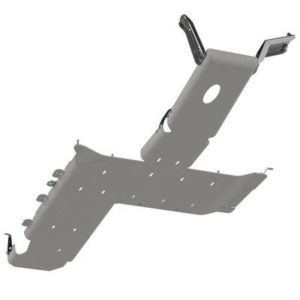
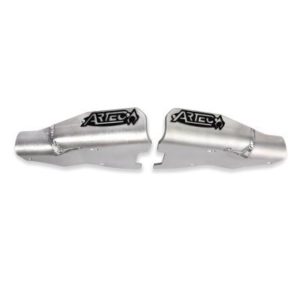
The aftermarket has had seven years with the JL, five with the sixth-generation Bronco and barely one with the new 4Runner, and the engineering of each front end sets what is possible. On the Wrangler, the solid axles make the usual path simple: a 2 to 3.5 inch coil lift from our lift kit section with corrected control arms, a set of adjustable arms to reset caster, a dropped track bar, and 35s or 37s on the Rubicon’s Dana 44s. Beyond 37s the front M210 and its ball joints are the limit, and the answer is a Dana 60 swap, which is a bolt-on job on a Jeep because the five-link brackets are reproduced by every axle builder. Underbody protection is the other upgrade a JL needs early; the factory skid plates cover the transfer case and little else, and a full bellypan skid adds the engine, transmission and transfer case in one plate.
The first three upgrades on a Wrangler, in the order most owners do them:
- Lift: a 2 to 2.5 inch coil lift with corrected control arms, such as the Rubicon Express Super-Ride JL kit, and 35s on a Rubicon’s Dana 44s (37s with the kit’s chromoly arms).
- Armor: a full bellypan skid from Artec Industries for the engine, transmission and transfer case, and a steel front bumper for approach angle.
- Axles and lockers: Spicer and Dynatrac both build complete Dana 44 and Dana 60 replacements for the JL, and ARB Air Lockers replace the Tru-Loks when 37s and a locker start breaking factory shafts.
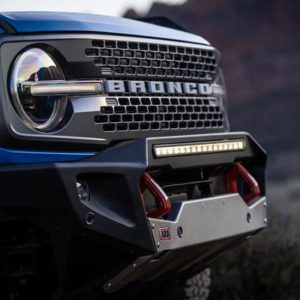
The Bronco rewards a different list. Because the IFS geometry limits lift to about 2 inches before CV angles and ball joint travel become the problem, the strongest Bronco builds spend on dampers: 2.5 inch coilovers up front and remote-reservoir shocks at the rear turn a Badlands into something close to a Raptor on dirt without touching clearance. Our Bilstein 5100 vs Fox 2.0 comparison covers the choice. The front bumper is the second priority, because the stock plastic fascia on non-Badlands trucks is the approach angle; a full-width ARB steel bumper adds recovery points, light mounts and the winch platform the winch needs. The rear Dana 44 AdvanTEK takes 35s and lockers in stride, but any gearing change is Bronco-specific hardware.
On a Bronco the order flips:
- Dampers first: 2.5 inch coilovers up front and remote-reservoir shocks at the rear, from Fox, Bilstein or the 2.5 inch VSRT coilovers in the catalog.
- A modest lift: 1.5 to 2 inches, such as the Rough Country 2 inch Bronco kit (Rough Country publishes the CV-angle limits for each of its kits), with upper control arms if the lift is at the top of that range.
- Front bumper and winch: the ARB full-width steel bumper fixes the approach angle and gives the winch a platform. Gearing changes are Bronco-specific AdvanTEK parts, so plan them with the tire size, not after it.
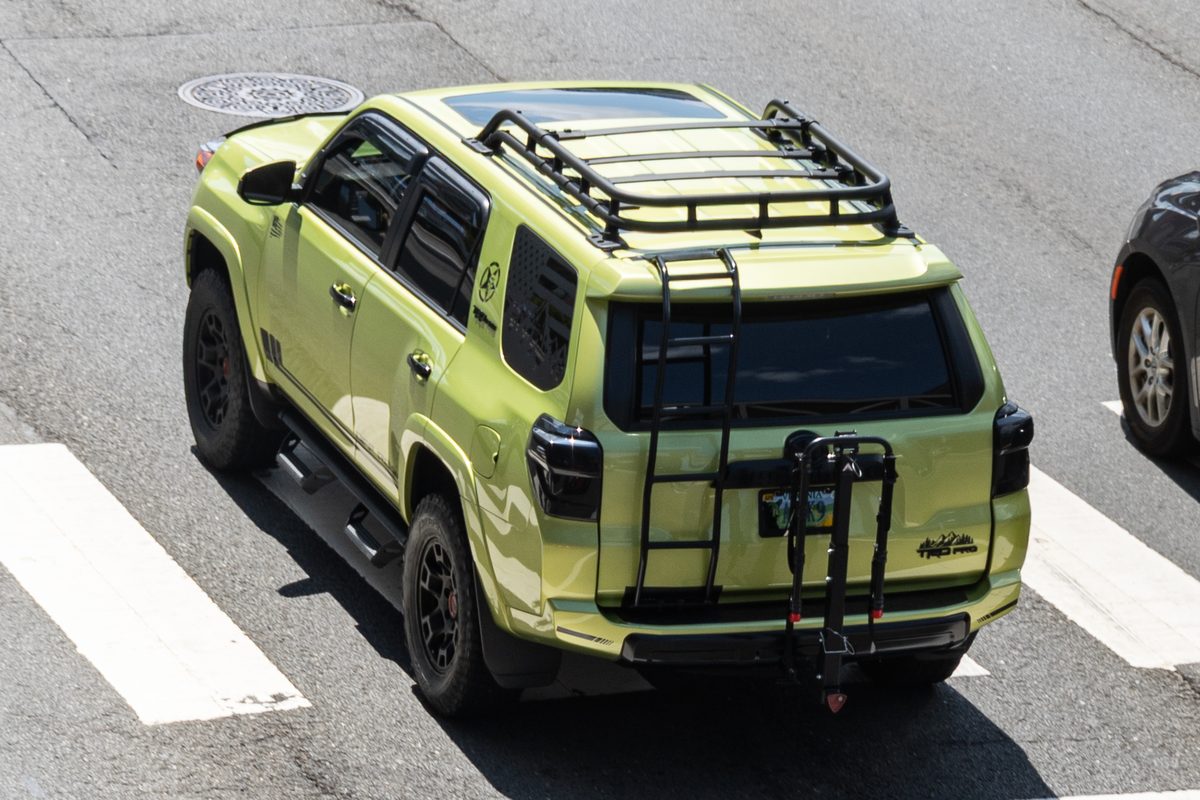
The 4Runner’s aftermarket is really two catalogs. The fifth generation (2010 to 2024) has the deepest parts bench of any Toyota: 3 inch Old Man Emu and Icon systems, lower control arm skids, sliders, full skid plate sets and 33s with a modest trim. Most of it does not carry over to the sixth generation, which shares its suspension pickup points with the new Tacoma rather than with the old 4Runner, so for the 2025 truck expect Tacoma-derived kits to arrive first. The constants are the same as the Bronco: a 2 to 3 inch IFS lift, better dampers, a front bumper for approach angle, and the rear locker already in the TRD grades. What the 4Runner lacks for rock work, a front locker and a deeper low range, is a harder aftermarket problem than anything on the other two, and it is why hard-core 4Runner builds still live on the fifth generation.
And on a 4Runner, fifth or sixth generation:
- Lift and dampers: a 2 to 3 inch IFS lift with better dampers: the Old Man Emu 3 inch kit from ARB’s Old Man Emu line is the benchmark on the fifth generation, and Toyota chose the same brand for the Trailhunter.
- Protection: for the parts that hang below an IFS, lower control arm skids, a full skid plate set and rock sliders.
- Front bumper: on the TRD Off-Road and lower grades, where the 19 degree approach angle is the bumper, not the suspension; and the rear locker the TRD grades already carry.
How to read the three as engineering choices
Jeep built the Wrangler around the axle. Everything from the five-link geometry to the Rock-Trac case to the 4.88 gear option exists so that two beam axles can crawl, flex and swallow big tires, and the cost is the on-road manners of a vehicle with a solid front axle and a steering box. Ford built the Bronco around the frame and the front suspension: a stiff T6 ladder, long-arm aluminum IFS, big travel numbers and the deepest manual gearing in the segment, then let software (Trail Turn Assist, One-Pedal Drive, G.O.A.T. modes) cover the places where IFS gives ground to a beam. Toyota built the 4Runner around the powertrain and the platform: a global frame, a hybrid with truck torque, 6,000 pound towing and a 20 year reputation for not breaking, with the off-road grades adding dampers, a rear locker and a disconnect on top.
None of the three is wrong. The Wrangler wins any contest decided by articulation, crawl ratio and axle strength, and it is the easiest of the three to take further than the factory did. The Bronco wins at speed and ties the Wrangler on lockers and tires while giving up some flex and all of the front axle upgrade path. The 4Runner wins the drive to the trailhead, the trailer behind it and the odometer, and gives up the most at low speed on rock.
Sources and further reading
The figures above come from the makers and from technical sources that show the hardware rather than describe it:
- 2025 Ford Bronco technical specifications (PDF): frame, transfer case, crawl ratio, axle, suspension travel, angle and fording tables, and the Bronco model page for current packages.
- 2025 Jeep Wrangler press kit (Stellantis media): engines, crawl ratio claims, Xtreme 35 clearance and angles, towing; the Wrangler page on jeep.com for trims and the axle, gear and transfer case options by model.
- 2025 Toyota 4Runner product information (PDF): engines, gear ratios, transfer case, final drive, suspension, angles, clearance, weights and towing; Toyota pressroom and the 4Runner page on toyota.com for grades and equipment.
- The Autopian’s teardown of the 2025 4Runner: photos of the double-wishbone front, the multi-link rear and the frame from underneath.
- Dana for the AdvanTEK and Dana 44 family, Spicer Parts for the aftermarket axle assemblies, Dynatrac, ARB, Old Man Emu, Fox, Artec Industries and Rough Country for the parts named in the modification section.
Frequently asked questions
Which has the best crawl ratio, the Wrangler, the Bronco or the 4Runner?
The Wrangler Rubicon: up to 100:1 with the six-speed manual, the 4.0:1 Rock-Trac transfer case and 4.88 axles, or 77.2:1 with the eight-speed automatic and 4.10s. The Bronco reaches 94.75:1 with the seven-speed manual’s 6.56:1 crawler gear, the 3.06:1 Advanced 4×4 case and 4.70 Sasquatch axles, and 67.80:1 with the ten-speed automatic. The 2025 4Runner’s 4.41:1 first gear, 2.57:1 low range and 3.583 final drive multiply to about 40.6:1.
Does the Ford Bronco have a solid front axle?
No. Every sixth-generation Bronco uses Dana AdvanTEK independent front suspension with forged aluminum control arms and coil-over springs; the Raptor’s front differential is a Dana 44 AdvanTEK. The solid axle is at the rear: a Dana 44 AdvanTEK on most trims and a Dana 50 heavy-duty unit on the Raptor. The Jeep Wrangler is the only one of the three with solid axles at both ends.
Does the 2025 Toyota 4Runner have front and rear lockers?
Rear only. The TRD Off-Road, TRD Pro and Trailhunter have an electronic rear locking differential, a front stabilizer bar disconnect, Crawl Control and Multi-Terrain Select, with A-TRAC brake-based traction control working the open front differential. The Limited and Platinum use a full-time four-wheel-drive system with a Torsen center differential and no locker. There is no factory front locker on any 4Runner grade.
Which of the three can run the biggest tires from the factory?
The Bronco Raptor, on 37 inch tires with 13.1 inches of ground clearance. The Wrangler Rubicon’s Xtreme 35 package and the Bronco Sasquatch package both fit 35s from the factory, at 12.9 and 11.6 inches of clearance. The 4Runner TRD Pro and Trailhunter use 265/70R18 tires, about 32.6 inches tall, with 10.1 inches of clearance.
Which one tows the most?
The 4Runner. Toyota rates the i-FORCE MAX hybrid at 6,000 pounds and the base i-FORCE engine at 5,000 in the U.S. market. The Wrangler is rated at 2,000 pounds as a two-door, 3,500 as a four-door and up to 5,000 with the towing package. The Bronco is rated at 3,500 pounds in every configuration, including the Raptor.
Whichever platform is in your driveway, the parts that move the needle are the same: springs, dampers and arms from the lift kits and suspension section, lockers and differential parts, armor from skid plates, and a front bumper that fixes the approach angle the factory left on the table. The Wrangler JL, Bronco and 4Runner vehicle pages list every part in the catalog fitted to each one by year.