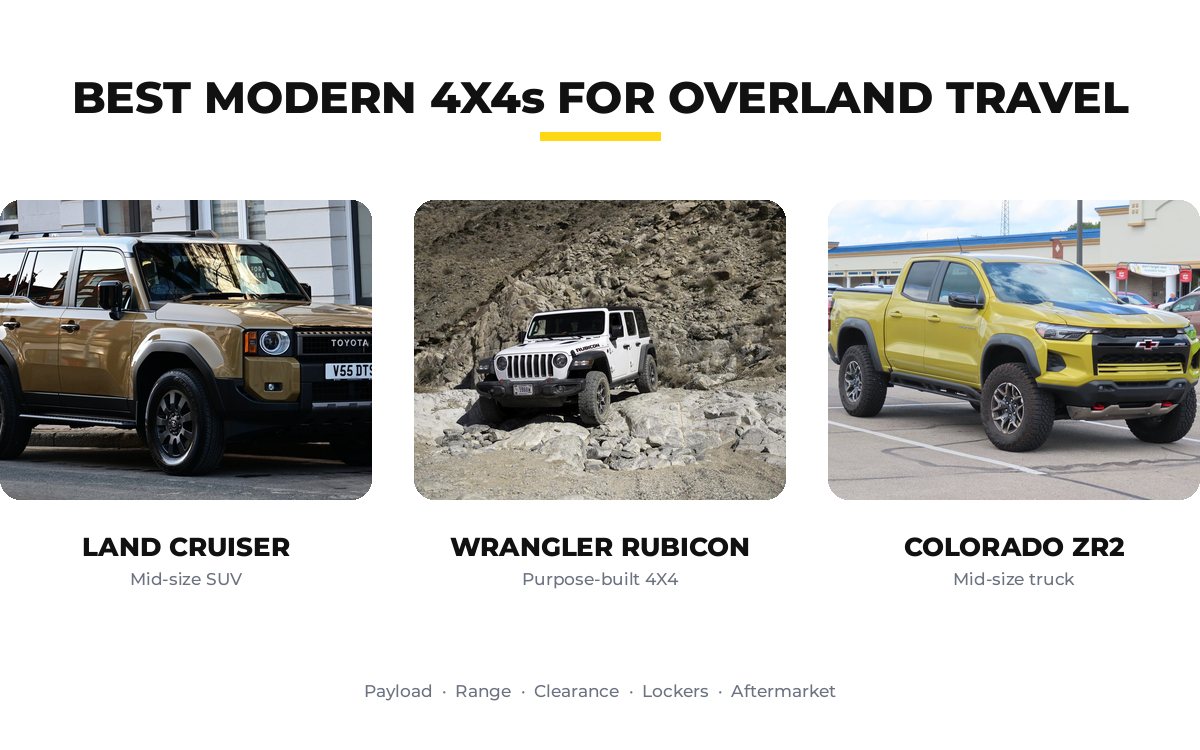
The best modern 4X4 for overland travel is not the one that wins a rock-crawling comparison. Overlanding is a loading problem first: a week of water, fuel, food, recovery gear, a tent and two people adds 800 to 1,200 pounds to a vehicle before anyone bolts on a bumper, and the truck has to carry it for a thousand miles of washboard without breaking, then get up a shelf road at the end. So this guide ranks twelve current 4X4s the way an overlander should, by payload, range, clearance, traction hardware, roof load and how much of the aftermarket fits them, with every number taken from the makers’ own spec sheets (the sources are listed at the end) and the aftermarket data from our own fitment tables. It covers the Toyota Land Cruiser, Lexus GX 550, 4Runner, Tacoma, Jeep Wrangler, Gladiator, Ford Bronco, Land Rover Defender 110, Ineos Grenadier, Chevrolet Colorado ZR2, F-150 Tremor and Ram 2500 Power Wagon, with the Nissan Frontier as the budget alternative.
Key takeaways
- Payload separates the field more than anything else. The Ineos Grenadier (1,841 lb), Land Rover Defender 110 (1,764) and Toyota Land Cruiser (about 1,690) carry a full kit with margin; the 4Runner TRD Pro and Trailhunter (about 1,050 and 1,005) and the Colorado ZR2 Bison (1,050) run out before the fridge is full.
- Range: the F-150 Tremor’s 36 gallon tank gives 612 to 648 miles at the EPA figure, the Defender 452, the 4Runner 437, the Wrangler 409; the Bison’s 16 mpg leaves 336. The Grenadier and the Power Wagon have no EPA rating at all.
- Lockers at both ends come standard on the Wrangler Rubicon, Gladiator Rubicon, Bronco Sasquatch, Colorado ZR2 and Power Wagon, and on the Grenadier Trialmaster with a center lock as well; the deepest low range is still Jeep’s 4.0:1 Rock-Trac.
- Only Ford, Land Rover and Ineos publish a roof load. The Bronco allows 110 pounds moving and no static load on 35 inch tires; the Defender 220 to 370 moving and 661 parked; the Grenadier 330 and 925. Every truck here sidesteps the limit with a bed rack.
- The aftermarket is lopsided: our fitment tables list 876 products for the Wrangler and Gladiator for 2022 and later model years, more than the other ten vehicles combined.
What overland travel asks of a vehicle
Trail driving rewards articulation, gearing and a short wheelbase. Overlanding rewards something closer to a light truck: the ability to carry a load a long way, over bad roads, and still have enough traction and clearance left to reach the campsite. The order of priorities below is the order most experienced travelers settle on after a trip or two, and it is the order this guide uses.
- Payload is the budget everything else spends from. Payload is the gross vehicle weight rating minus the curb weight, and it covers people, gear, fuel above the tank, water, the roof tent, the bumper, the winch and the drawers. A 1,100 pound rating sounds generous until a steel front bumper with a winch (160 to 220 pounds), a roof tent and rack (150 to 200), a 63 quart fridge full of food (90), 20 gallons of water (167), two adults and a dog (400) and a recovery kit (60) are on board. That is the whole rating gone, before the lift kit and the larger tires that each add weight of their own. Trucks and three-quarter-ton platforms win this category outright.
- Range decides the route. Fuel stops are 150 to 300 miles apart on the long western routes, and a loaded truck on 33 inch tires uses 20 to 30 percent more fuel than the EPA figure. Tank size times a realistic loaded mpg, minus a reserve, is the number to plan with. A hybrid helps in town and does little on a dirt road at 40 mph.
- Clearance and angles get you to camp. Ten inches of ground clearance and a breakover angle in the twenties handle most graded forest and desert roads loaded. The approach angle matters more than the departure angle because the front bumper meets the washout first, and the low point is usually the rear differential, the transfer case skid or the frame rails under the cab on a long-wheelbase truck.
- Traction hardware is insurance. A two-speed transfer case is the baseline. A rear locker gets a loaded vehicle up a wet, rutted climb with the front tires still steering; a front locker and a sway-bar disconnect are rock tools that an overlander uses a few times a year. Brake-based traction control has become good enough that an open-diff truck with the right tires goes farther than most people expect, but it heats the brakes on a long climb and does nothing in deep sand.
- Reliability and parts come before power. The vehicle that finishes a 4,000 mile loop is the one that does not strand you 300 miles from a dealer, and the one whose brake pads, belts and sensors a small-town parts counter stocks. That favors high-volume platforms with long production runs and conservative engineering, and it is why Toyota and Jeep dominate the long-distance crowd even when a newer design posts better numbers.
- Aftermarket support turns a 4X4 into an overland vehicle. Bumpers, sliders, racks, drawers, suspension rated for the load, a second battery tray: all of it is built first for the platforms that sell in volume. The fitment table further down puts a number on that for each model.
- Size is a compromise, not a feature. A full-size truck carries and tows more and rides better loaded, and it also does not fit between the trees on an eastern forest road or around a tight switchback in Utah. A mid-size SUV goes where the truck cannot and runs out of payload first.
Two things this guide leaves out on purpose. What each one costs is not a technical specification and changes with every model year, so the vehicles are compared on what they do. And the ranking is about the vehicle as the maker builds it: a suspension built for the load, armor, a rack and recovery gear are the same purchase for every one of them, and they are covered at the end.
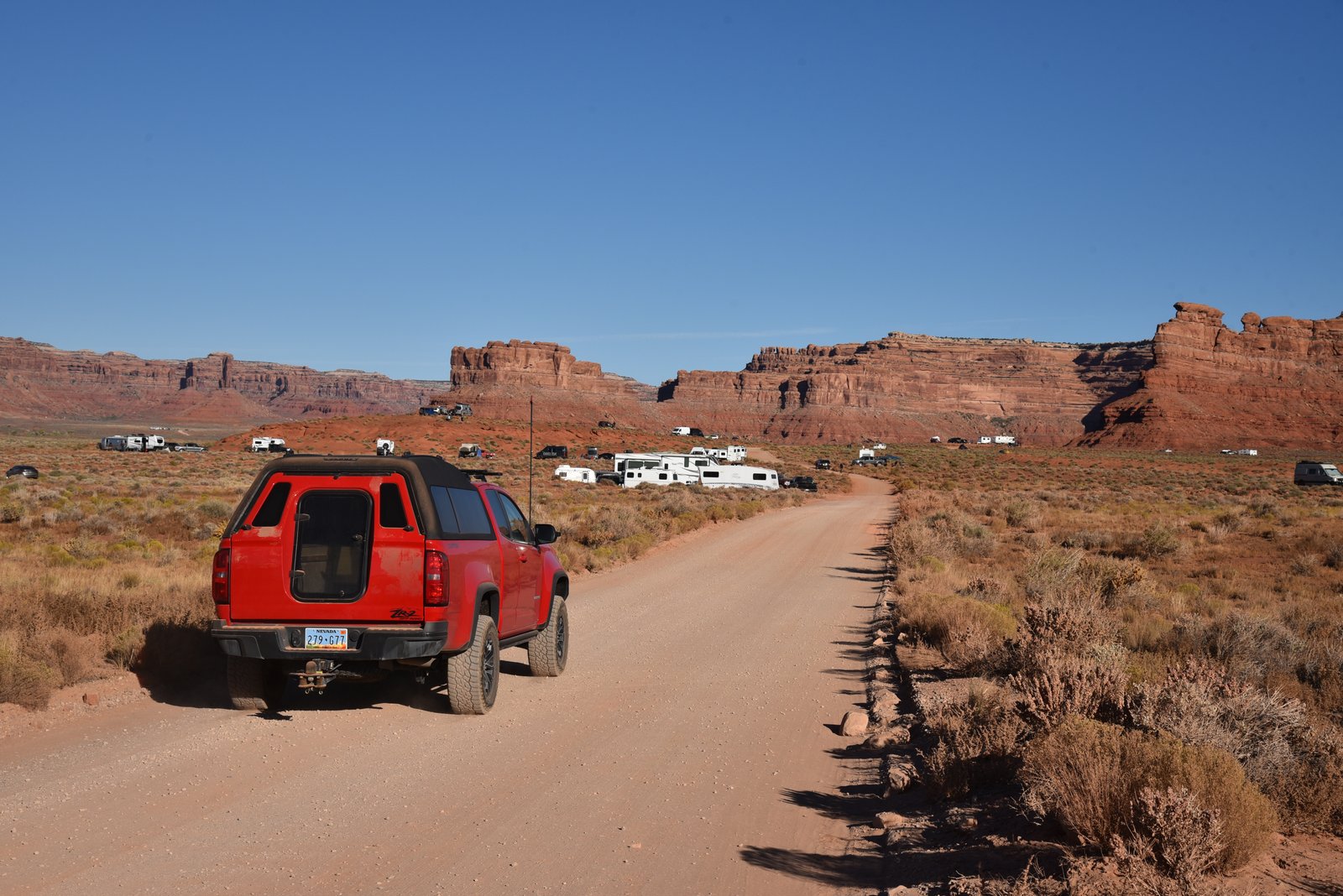
The twelve contenders at a glance
The table holds the figures that matter most for a loaded, long-distance vehicle: payload, clearance, the two angles that catch loaded trucks (approach and breakover), range from the standard tank at the EPA combined figure, and which differentials lock. Each number is for the trim named, from the maker’s current specifications; a dash means the maker does not publish it.
| Vehicle (trim) | Max payload (lb) | Ground clearance (in) | Approach / breakover / departure | Tank (gal) and EPA range | Lockers (front / rear) | Low range |
|---|---|---|---|---|---|---|
| Toyota Land Cruiser (2025) | about 1,690 (GVWR 6,725 minus curb) | 8.7 | 32 / 23 / 22 | 17.9; 412 mi | Center + rear | 2.57:1 |
| Lexus GX 550 Overtrail (2025) | about 1,460 to 1,490 (computed) | 9.8 | 26 / 24 / 22 | 21.1; 359 mi | Center Torsen + rear | not published |
| Toyota 4Runner TRD Pro / Trailhunter (2025) | about 1,050 / 1,005 (computed) | 10.1 | 33 / 24 / 24 | 19; 437 mi | Rear | 2.57:1 |
| Toyota Tacoma TRD Pro / Trailhunter (2025) | 1,420 to 1,710 (hybrid 4X4 double cabs) | up to 11.5 | up to 35.7 / 27.4 / 25.3 | 18.2; 419 mi | Rear | 2.57:1 |
| Chevrolet Colorado ZR2 / ZR2 Bison (2024 table) | 1,280 / 1,050 | 10.7 / 12.2 | 38.6 / 24.8 / 25.2; Bison 38.2 / 26.9 / 26 | 21; 357 / 336 mi | Front + rear | not published |
| Nissan Frontier Pro-4X crew cab (2025) | 1,220 | 9.5 | 32.3 / 19.6 / 23.0 | 21; 378 mi | Rear | 2.72:1 |
| Jeep Wrangler Unlimited Rubicon 3.6L (2025) | 1,327 | 10.8 (12.9 Xtreme 35) | 43.9 / 22.6 / 37.0 | 21.5; 409 mi | Front + rear | 4.0:1 |
| Jeep Gladiator Rubicon / Mojave (2025) | 1,100 / 1,050 | 11.1 / 11.6 | 43.4 / 20.3 / 26; Mojave 44.7 / 20.9 / 25.5 | 22; 418 mi | Front + rear / rear | 4.0:1 / 2.72:1 |
| Ford Bronco Badlands Sasquatch 4-door 2.7L (2025; weights 2026) | 1,204 | 11.5 | 43.2 / 26.3 / 37.0 | 20.8; 374 mi | Front + rear | 3.06:1 |
| Land Rover Defender 110 P300 / P400 (2025) | 1,764 / 1,653 | 8.9 coil; 11.5 air | 37.6 / 27.9 / 41.9 (air, off-road height) | 23.8; 452 mi | Center + rear (X, Trophy) | not published |
| Ineos Grenadier Trialmaster | 1,841 | 10.4 | 36.2 / 28.2 / 36.1 | 23.7; no EPA rating | Center + front + rear | 2.5:1 |
| Ford F-150 Tremor SuperCrew (2025; geometry 2026) | not published for the trim | 10.7 | 27.6 / 21.1 / 24.1 | 36; 612 to 648 mi | Rear (Torsen front) | not published |
| Ram 2500 Power Wagon (2025) | 1,570 | 14.2 | 29.4 / 22 / 26 | 31; no EPA rating | Front + rear | 2.64:1 |
Read the payload column first. The spread between the best and the worst mid-size figure is the difference between carrying a full overland kit and carrying half of it. The clearance and angle columns separate the vehicles that reach a hard campsite loaded from the ones that reach it empty. The range column is the honest planning number; take 20 to 30 percent off it for a loaded truck on all-terrain tires.
The mid-size SUVs: Land Cruiser, GX 550 and 4Runner
Toyota builds all three on the same TNGA-F ladder frame, with a 112.2 inch wheelbase, a double-wishbone independent front and a coil-sprung solid rear axle on a multi-link. They differ in the engine, the drivetrain, the suspension tune and, for an overlander, in weight: the three span almost 700 pounds of curb weight on the same frame, and every one of those pounds comes out of the payload.
Toyota Land Cruiser (250 series)
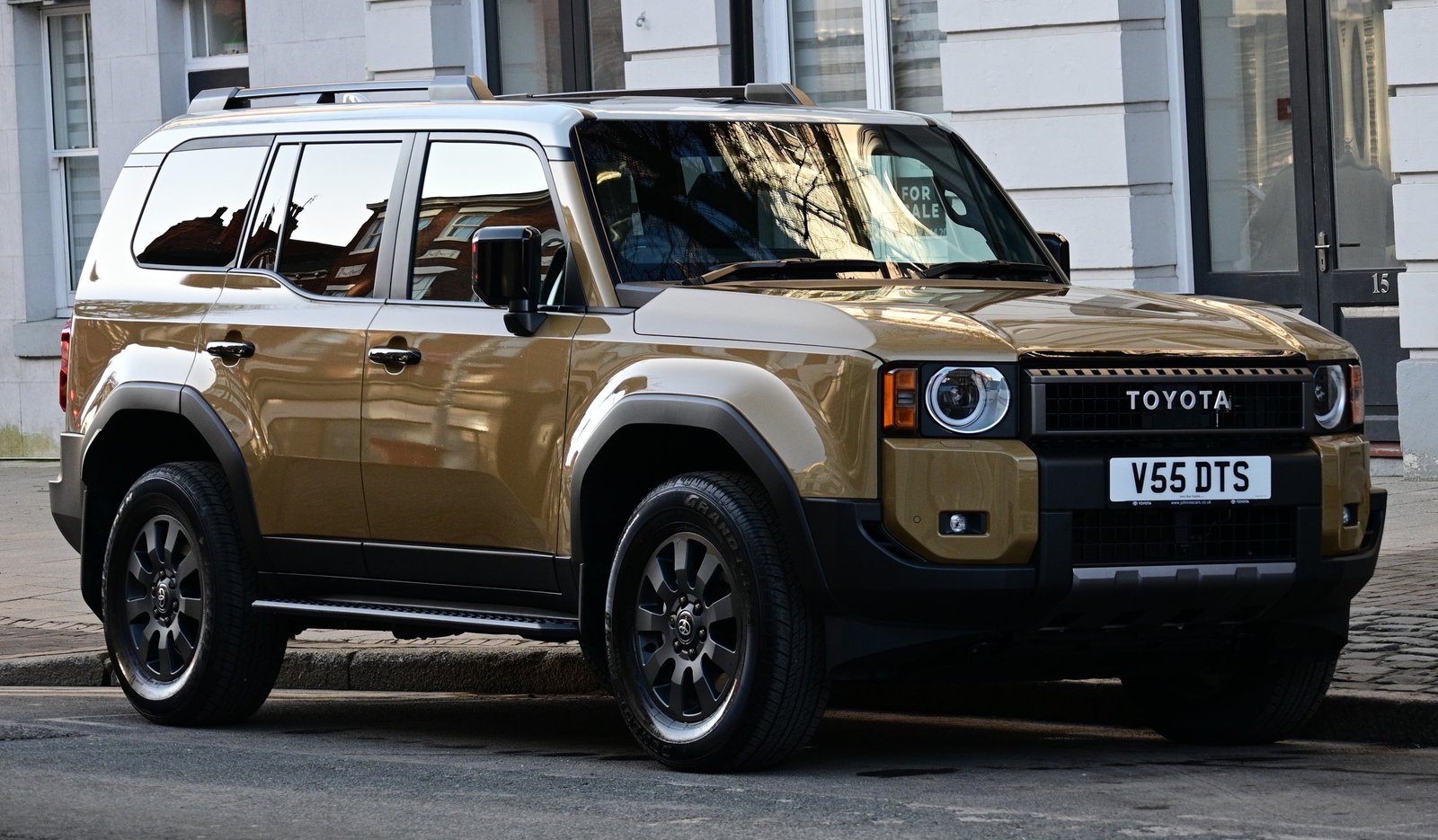
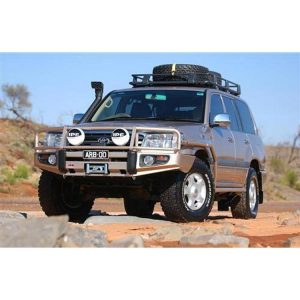
The Land Cruiser that returned for 2024 is the Prado-sized 250, not the 200 or 300 series, and that is the right size for North American trails. Toyota’s 2025 product information lists a 5,037 pound curb weight against a 6,725 pound GVWR, which works out to roughly 1,690 pounds of payload, the best of the three Toyota SUVs by a wide margin and better than several of the trucks here. Power is the 2.4 liter turbo hybrid, 326 horsepower and 465 lb-ft, through an eight-speed automatic and full-time four-wheel drive with a locking center differential and a 2.57:1 low range; a rear locker is standard on every grade, and the 2025 release lists the Stabilizer Disconnect Mechanism for the Land Cruiser grade. Clearance is 8.7 inches with 32, 23 and 22 degree approach, breakover and departure angles, modest for the class and the first thing an owner changes with a one-size-up tire and a mild lift. The 17.9 gallon tank at 23 mpg combined gives an EPA range of 412 miles.
- Strengths: the payload, full-time 4WD with a center lock, a rear locker on every grade, the hybrid’s low-rpm torque, and a frame shared with four other Toyotas, which means the parts counter in a small town knows it.
- Weak points: 8.7 inches of clearance and the 1958 grade’s 245 width tires; the 17.9 gallon tank is the smallest of the Toyota three; the hybrid battery under the cargo floor raises the load floor.
- Aftermarket: young but growing fast, led by ARB (a Land Cruiser bull bar with a winch mount is already in the catalog) and Old Man Emu suspension; structured fitment for the 250 is still thin in our data.
Lexus GX 550 Overtrail
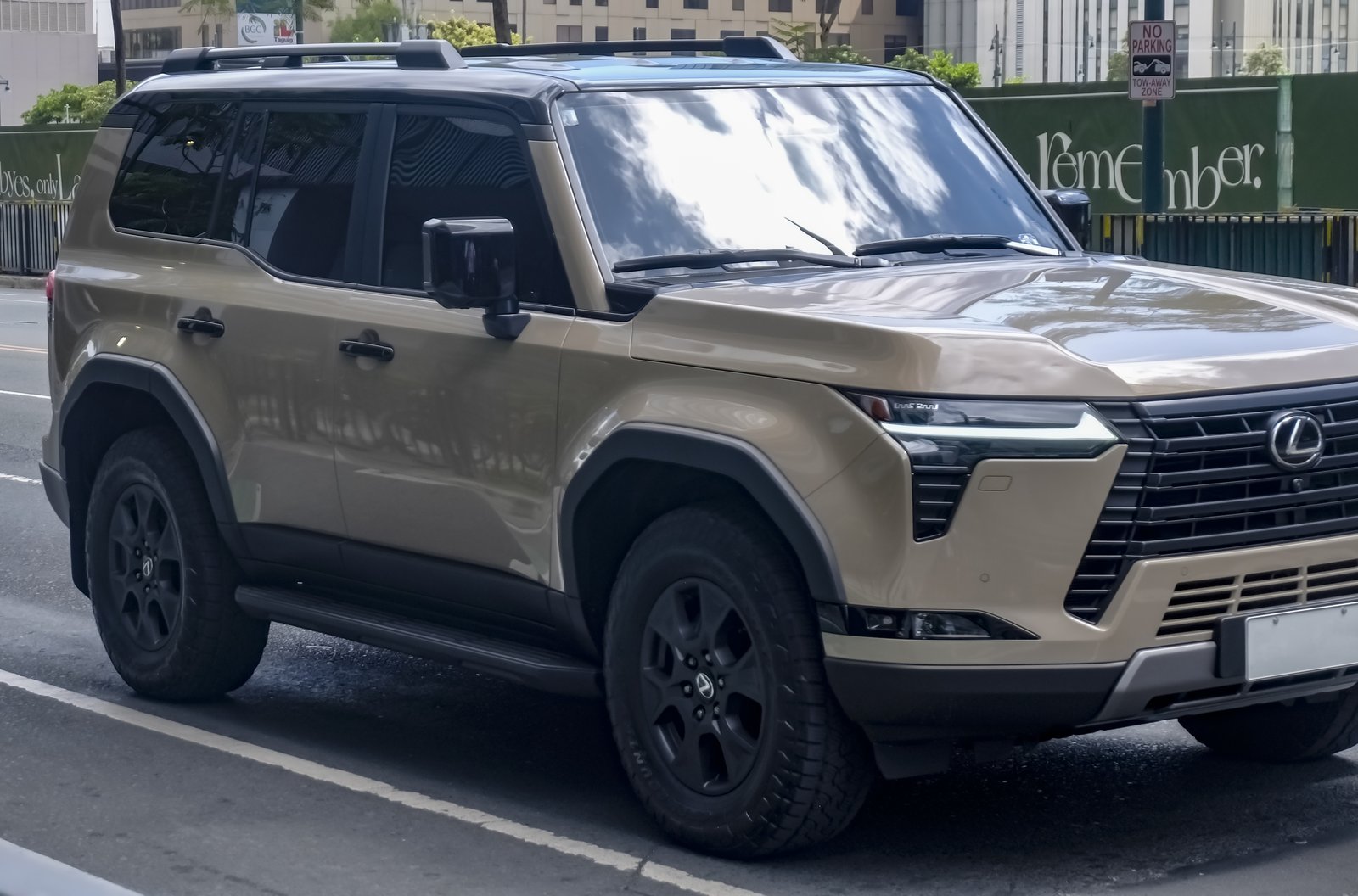
The GX 550 is the Land Cruiser frame with a 3.4 liter twin-turbo V6 (349 horsepower, 479 lb-ft), a ten-speed automatic and full-time four-wheel drive through a Torsen center differential. The 2025 Lexus spec sheet gives the Overtrail 9.84 inches of clearance on 33 inch all-terrain tires, 26, 24 and 22 degree angles, a 21.1 gallon tank, a rear electronic locker, and the one piece of hardware nobody else in this group has: E-KDSS, a hydraulic system that lets both sway bars go slack on their own when the suspension articulates, which Lexus measures at 24.45 inches of wheel travel on the Overtrail against 22 on other grades. Curb weight is 5,675 to 5,705 pounds against a 7,165 pound GVWR, so payload is roughly 1,460 to 1,490 pounds, and the tow rating is 9,096 pounds, highest of the mid-size SUVs. The cost is thirst: Lexus’s own estimate is 17 mpg combined, which makes the big tank worth 359 miles of EPA range, the shortest leg of any SUV here except the Bison-packaged Colorado among the trucks. Lexus also publishes a 27.56 inch wading depth.
- Strengths: the best articulation and clearance of the Toyota SUVs, a rear locker, Torsen full-time drive, 9,000 pounds of towing, and a cabin built for twelve-hour days.
- Weak points: the fuel economy, the weight, and a low range ratio Lexus does not publish; the Overtrail is a five-seat grade, so the third row is not an option with it.
- Aftermarket: shared with the Land Cruiser 250 under the skin, so the ARB and Old Man Emu hardware carries over; the Lexus-specific bumper and rack market is small.
Toyota 4Runner TRD Pro and Trailhunter
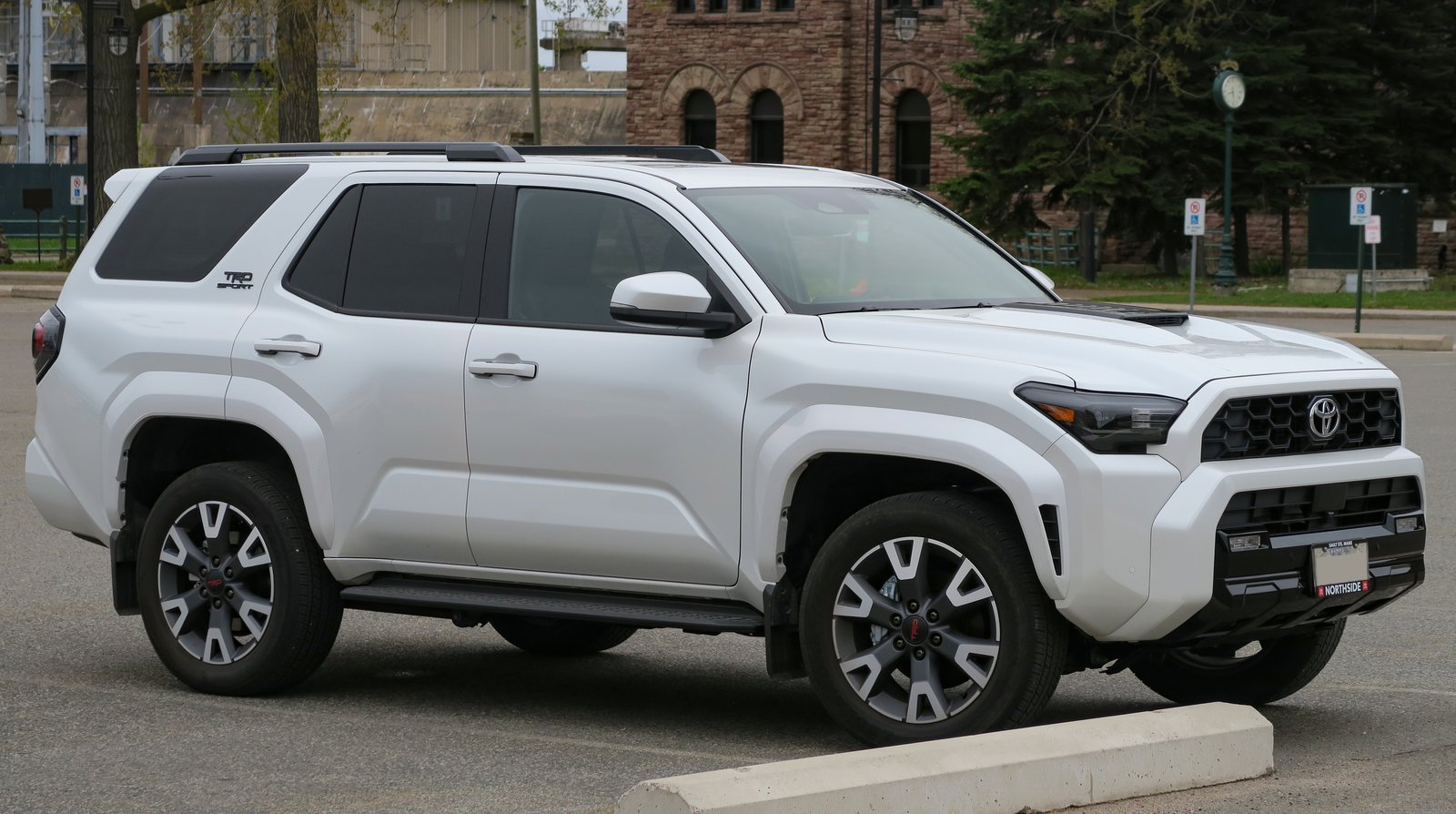
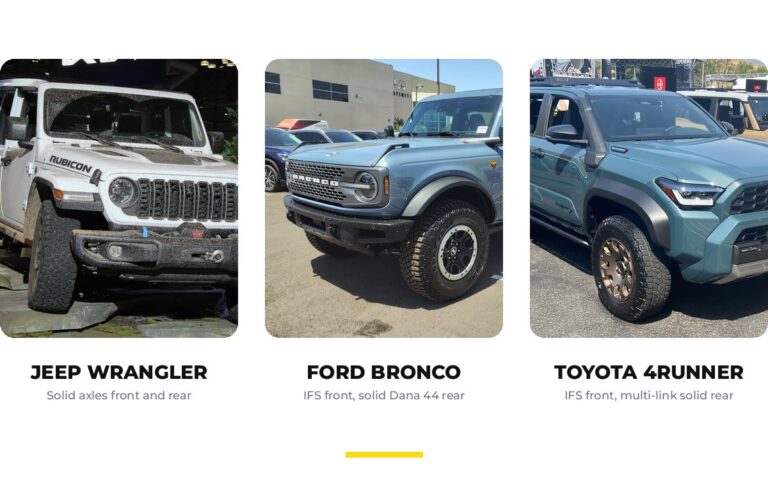
The sixth-generation 4Runner shares the Land Cruiser’s frame, hybrid drivetrain and 112.2 inch wheelbase, and in its two top off-road grades it has the best angles of the three: Toyota’s 2025 product information lists 10.1 inches of clearance and 33, 24 and 24 degree approach, breakover and departure for the TRD Pro and Trailhunter, against 8.7 inches on the Land Cruiser. Both run part-time four-wheel drive with a 2.57:1 low range, a standard rear locker and the Stabilizer Disconnect Mechanism, 33 inch tires on 18s, and a 19 gallon tank that at 23 mpg combined gives the longest EPA range of the Toyota SUVs, 437 miles. The dampers are the difference between the two: 2.5 inch Fox QS3 units on the TRD Pro, 2.5 inch Old Man Emu units on the Trailhunter, which also arrives with an ARB roof rack, steel skid plates, rock rails, a high-mount intake and an onboard air compressor, as the launch release describes. We compared the 4Runner’s hardware with the Wrangler’s and the Bronco’s in a separate engineering comparison.
The problem is payload. Toyota does not publish one, but the sheet’s 6,505 pound GVWR against a 5,455 pound curb weight (TRD Pro) and 5,500 (Trailhunter) leaves about 1,050 and 1,005 pounds, the lowest figures here among vehicles that are not the Bison. The Trailhunter’s factory rack, bumper and compressor are already counted in its curb weight, which is some consolation, but two adults, a full fridge, water and a roof tent on that ARB rack use most of what is left. The 4Runner is the right choice for one or two people traveling light on hard trails, and the wrong one for a family with a trailer of gear.
- Strengths: the clearance and angles, the rear locker and sway bar disconnect, a 437 mile EPA range, the Trailhunter’s factory overland kit, and a 15-year fifth-generation aftermarket that is moving across to the sixth.
- Weak points: about 1,000 pounds of payload, the lowest here; the hybrid battery in the cargo floor; a 2.57:1 low range and 3.58 axle gears that make a crawl ratio of about 41:1, half of a Rubicon’s.
- Aftermarket: 59 fitted products in our tables for 2022 and later, with the sixth-generation parts arriving through 2025 and 2026; a 3 inch Old Man Emu kit and a BajaRack basket are typical of what the fifth generation already has.
The mid-size trucks: Tacoma, Colorado ZR2 and Frontier
A mid-size pickup is the overlander’s compromise between a wagon and a three-quarter-ton: the bed takes the fuel, water and camp hardware out of the cabin and off the roof, the frame carries a bed rack and a tent without touching the roof load limit, and the payload runs several hundred pounds past the equivalent SUV. The cost is a wheelbase 20 inches longer, which costs breakover angle and turning circle on a tight switchback.
Toyota Tacoma TRD Pro and Trailhunter
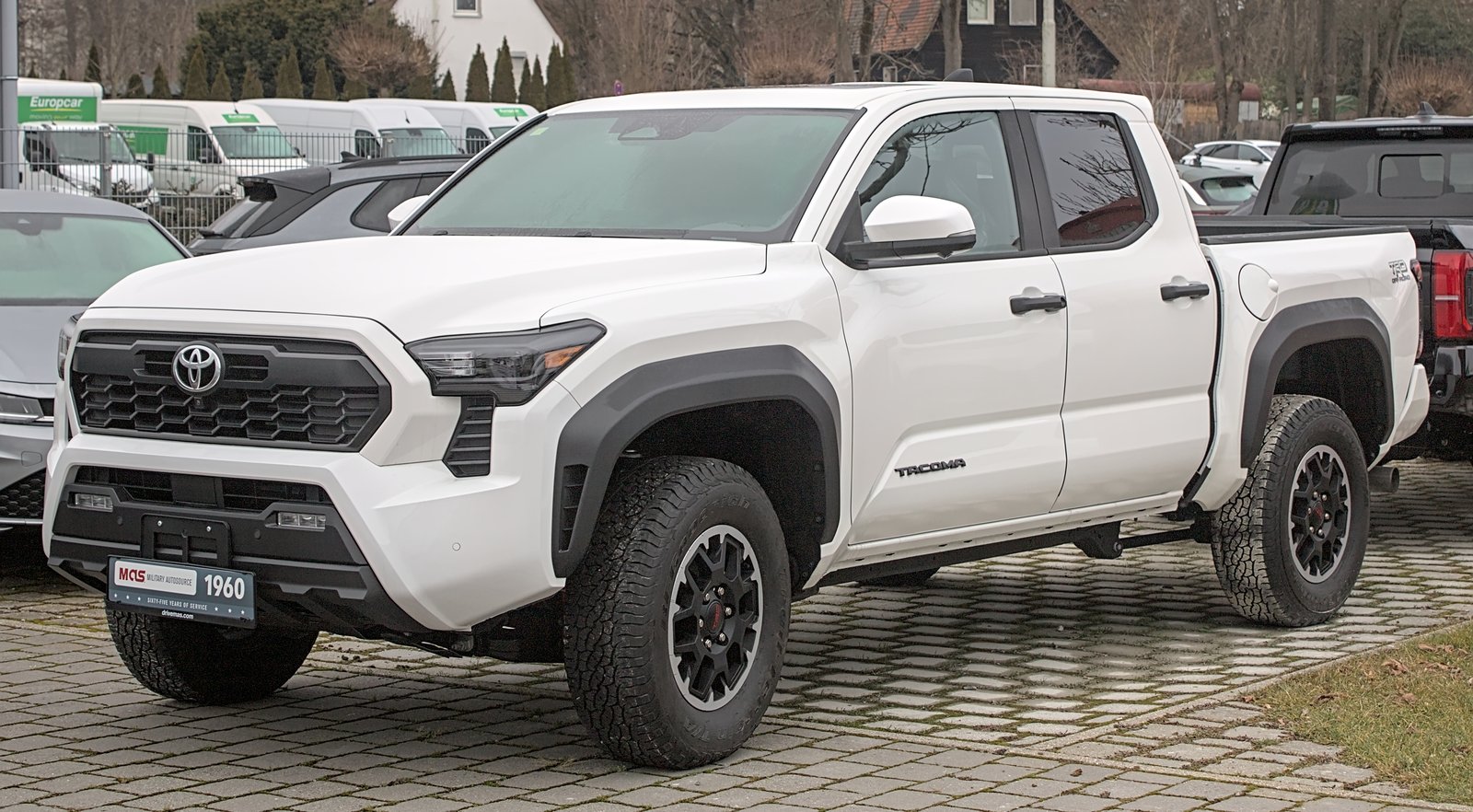
The fourth-generation Tacoma moved to the same TNGA-F frame as the 4Runner and Land Cruiser, with a 131.9 inch wheelbase on the five-foot bed and 145.1 inches on the Trailhunter’s six-foot option. The TRD Pro and Trailhunter get a coil-sprung multi-link rear axle instead of the lower grades’ leaf springs, the same 326 horsepower turbo hybrid (323 in the Trailhunter, which breathes through a high-mount intake), a 2.57:1 low range, the sway bar disconnect, 33 inch Goodyear Territory R/T tires, and the same Fox QS3 or Old Man Emu 2.5 inch damper split as the 4Runner. Toyota’s 2025 product information gives the TRD Pro up to 11.5 inches of clearance and 35.7, 27.4 and 25.3 degree angles, the best breakover of any truck here except the Bison, and publishes payload only as a range across the hybrid four-wheel-drive double cabs: 1,420 to 1,710 pounds against a 6,665 to 6,835 pound GVWR. The 18.2 gallon tank at 23 mpg gives 419 miles of EPA range. The Trailhunter arrives, per the 2025 release, with an ARB steel rear bumper, bed utility bar, rock rails, skid plates and an onboard compressor, the first factory truck sold with the overland basics installed.
- Strengths: payload in the 1,400 to 1,700 pound band with a bed to put it in, the coil rear on the top grades, the Trailhunter’s factory kit, the hybrid’s 465 lb-ft at low rpm, and a Tacoma aftermarket that has been building bumpers and sliders for thirty years.
- Weak points: Toyota will not quote a grade-specific payload, so a loaded Trailhunter with the long bed needs the door-jamb sticker before the first trip; the 2.57:1 low range; a 145 inch wheelbase on the long bed that is a full-size truck on a shelf road.
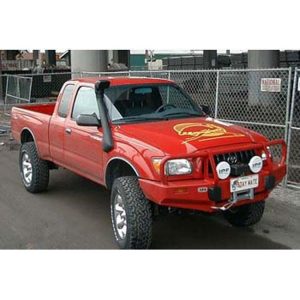
- Aftermarket: 101 fitted products in our tables for 2022 and later, most of them for the third generation; fourth-generation parts such as the ARB deluxe bull bar for the Tacoma are arriving steadily.
Chevrolet Colorado ZR2 and ZR2 Bison
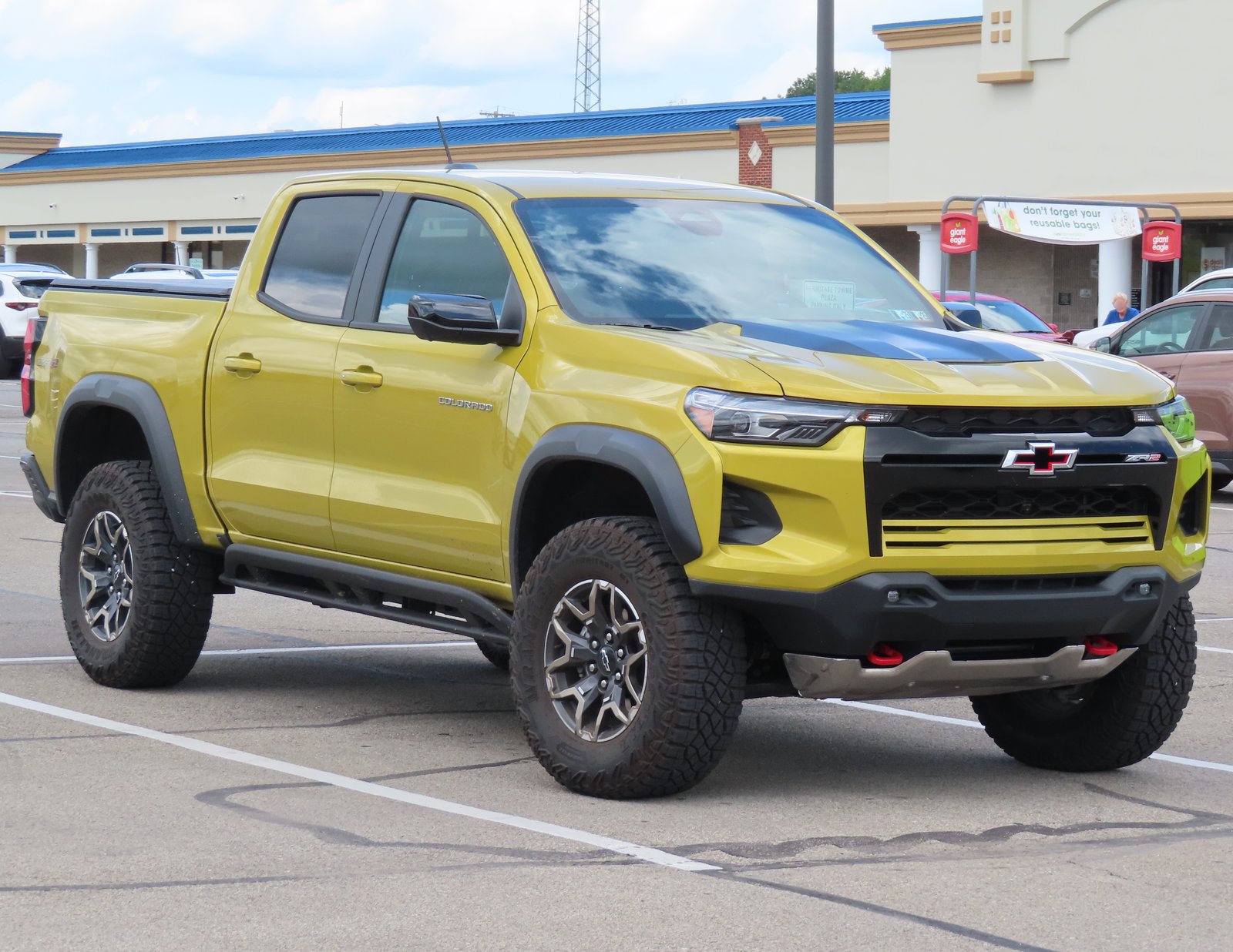
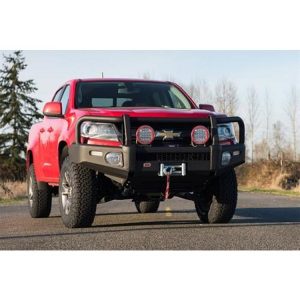
The third-generation Colorado ZR2 (and its GMC Canyon AT4X twin) is the best-damped truck in the group and the most ready for a rocky trail: Multimatic DSSV spool-valve dampers, front and rear electronic lockers standard, a 3 inch factory lift, 33 inch mud-terrain tires, 10.7 inches of clearance and a 38.6 degree approach angle that nothing else here matches, with breakover and departure at 24.8 and 25.2 degrees. The Bison package raises that to 35 inch tires, 12.2 inches of clearance, 38.2, 26.9 and 26 degrees, AEV steel bumpers and boron steel skid plates, and jounce dampers for the big hits. The engine is the 2.7 liter turbo four, 310 horsepower and 430 lb-ft, through an eight-speed automatic, and the rear axle is a solid unit on two-stage leaf springs. These figures come from GM’s 2024 ZR2 and Bison launch table, the last full spec table GM published for the pair; the 2025 truck is a carry-over and Chevrolet’s current page quotes the same lift, clearance and tires.
The overland arithmetic is where the ZR2 loses ground. The standard ZR2 is rated at 1,280 pounds of payload on a 6,250 pound GVWR; the Bison, with its steel bumpers and 35s already on the truck, drops to 1,050 pounds, and its 16 mpg combined EPA rating on the 21 gallon tank gives 336 miles, the shortest range of the twelve. GM does not publish the low range ratio, and there is no front sway bar disconnect; the DSSV dampers and the lockers do the work instead. It is a superb trail truck that needs a careful packing list.
- Strengths: the DSSV dampers, lockers at both ends, the approach angle, the Bison’s armor and 35s from the factory, a 21 gallon tank.
- Weak points: 1,050 to 1,280 pounds of payload, 16 to 17 mpg, no disconnect, a leaf-sprung rear that rides harder loaded than the Tacoma’s coils, and GM’s thin published data.
- Aftermarket: 47 fitted products for 2022 and later in our tables, shared with the Canyon; ARB’s Summit bumper for the Colorado and the AEV catalog cover the essentials.
Nissan Frontier Pro-4X: the budget pick
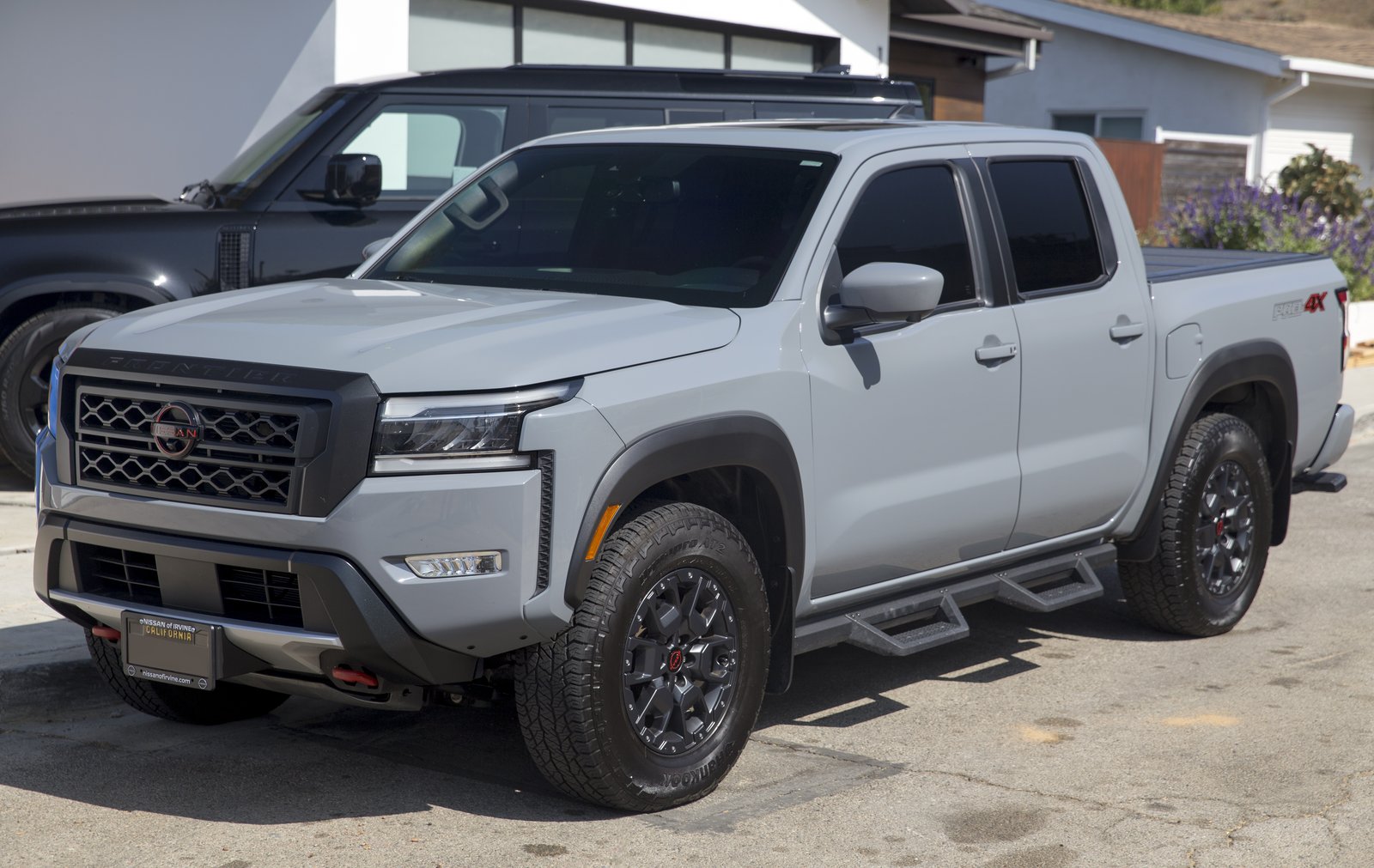
The Frontier is here for a reason the spec table does not show: it is the simplest drivetrain here. A naturally aspirated 3.8 liter V6 (310 horsepower, 281 lb-ft), a nine-speed automatic, a part-time transfer case with a 2.717:1 low range, a Dana rear axle on leaf springs and Bilstein dampers at both ends, with a rear electronic locker on the Pro-4X. Nissan’s 2025 press kit rates the Pro-4X crew cab at 1,220 pounds of payload on a 6,012 pound GVWR, 6,680 pounds of towing, 9.5 inches of clearance under the front and 9.8 under the rear differential, 32.3, 19.6 and 23.0 degree angles, and a 21 gallon tank that at 18 mpg combined gives 378 miles. The 19.6 degree breakover is the lowest here and the number to remember on a crested two-track.
- Strengths: no turbo, no hybrid battery, a locker, Bilsteins, a 21 gallon tank and a payload that beats the 4Runner and the Bison.
- Weak points: the breakover angle, 281 lb-ft that has to be revved, and an aftermarket that is a fraction of the Tacoma’s: nine fitted products for 2022 and later in our tables.
The purpose-built 4X4s: Wrangler, Gladiator, Bronco, Defender and Grenadier
These five were designed around the trail first and the highway second, and they bring the hardware that proves it: lockers at both ends, deep low ranges, sway bars that let go, and angles the Toyotas cannot approach. The overland question is what each one gave up to get there, and the answer is usually payload, range or the aftermarket.
Jeep Wrangler Unlimited Rubicon
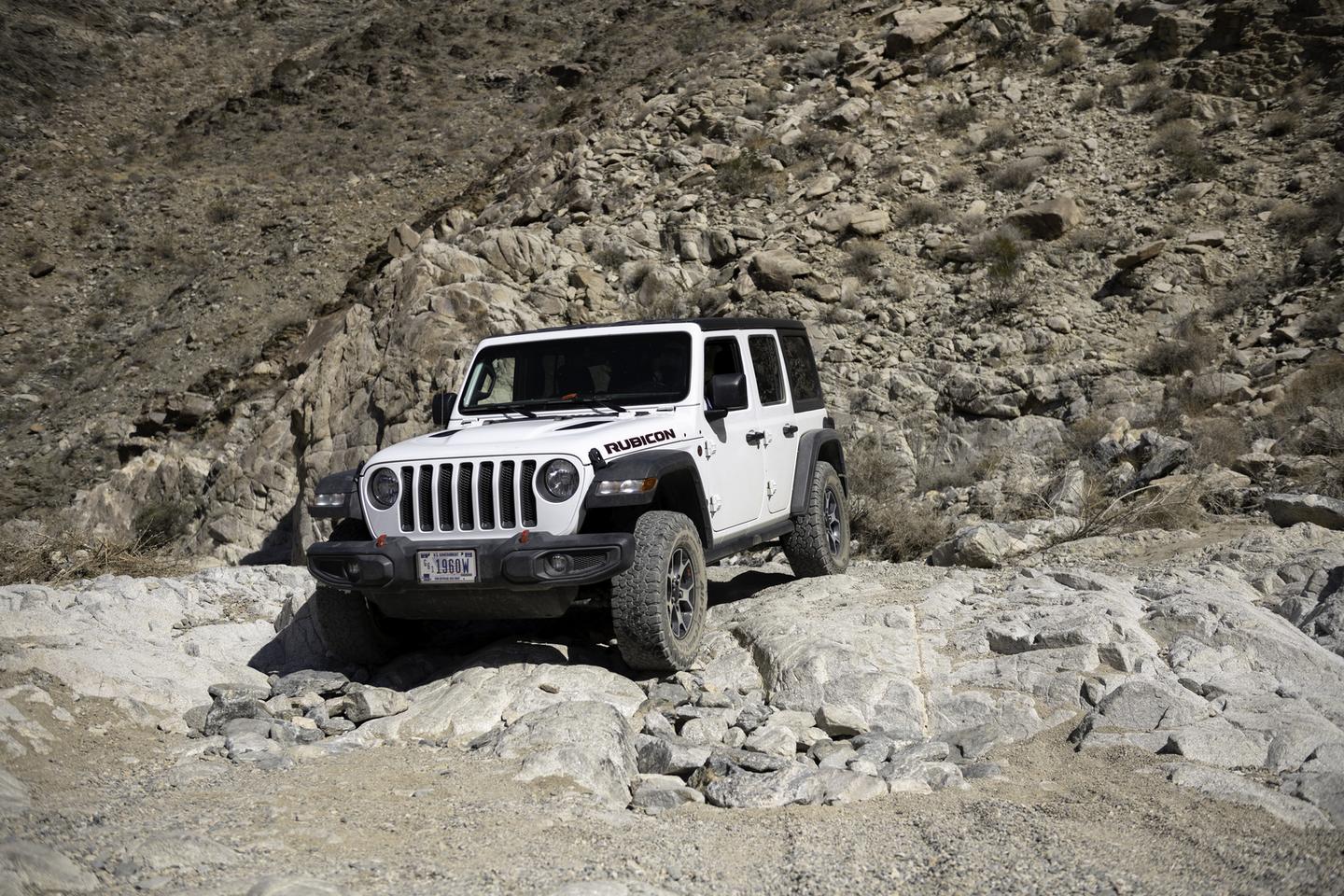
The Wrangler JL is still the only vehicle here with solid axles at both ends, and the Rubicon carries the deepest reduction sold in any factory 4X4: Rock-Trac with a 4.0:1 low range, Tru-Lok electronic lockers front and rear, an electronic front sway bar disconnect and a heavy-duty full-float Dana 44 rear. Jeep’s 2025 press kit and spec sheet put a four-door Rubicon at 10.8 inches of clearance with 43.9, 22.6 and 37 degree angles on 33 inch tires, and 12.9 inches with 47.4, 26.7 and 40.4 degrees on the Xtreme 35 package. The 21.5 gallon tank at 19 mpg combined with the 3.6 liter V6 gives 409 miles; the Rubicon 4xe plug-in hybrid (375 horsepower, 470 lb-ft) carries a 17.2 gallon tank for 344 miles plus 21 on the battery, and 650 more pounds of curb weight. Fording depth is 31.5 inches. We put the Wrangler’s hardware next to the Bronco’s and the 4Runner’s in a dedicated comparison.
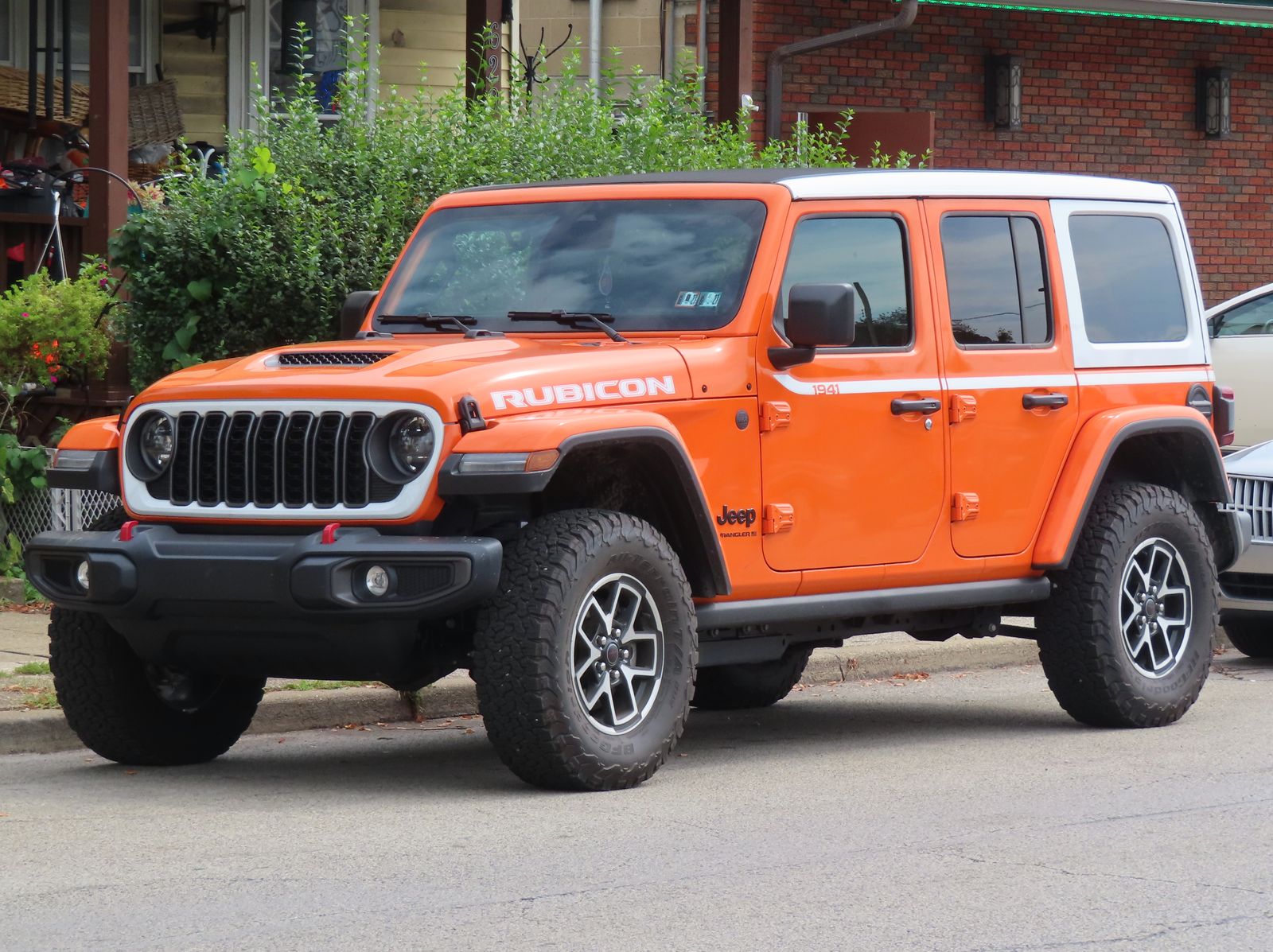
For overland use the Wrangler’s numbers go the other way. Jeep rates the four-door Rubicon at 1,327 pounds of payload (1,328 for the 4xe), the 3.6 liter is manual-only for 2025 with towing capped at 3,500 pounds (5,000 needs the 2.0 liter turbo with the automatic), and Jeep publishes no roof load figure at all, which matters because most Wrangler roof tents go on a rack bolted to the body or the hardtop. The payload is respectable for a vehicle that weighs 4,575 pounds, and the reason the Wrangler remains the most common overland build in the country is further down this page: 544 fitted products in our tables for 2022 and later, more than any other vehicle, from bumpers to cargo-area drawer systems to three choices of long-range fuel tank.
- Strengths: the 4.0:1 low range, lockers front and rear, the disconnect, solid axles that lift with the tires, a removable roof, 409 miles of EPA range, and an aftermarket nothing else approaches.
- Weak points: a 22.6 degree breakover on the four-door, 33 inch stock tires on the base Rubicon, aluminum doors and hood that dent, no published roof rating, and the manual-only 3.6 liter for 2025.
- Aftermarket: 544 fitted products in our tables for 2022 and later, the largest in the group: suspension, bumpers, sliders, racks and storage from dozens of makers.
Jeep Gladiator Rubicon and Mojave
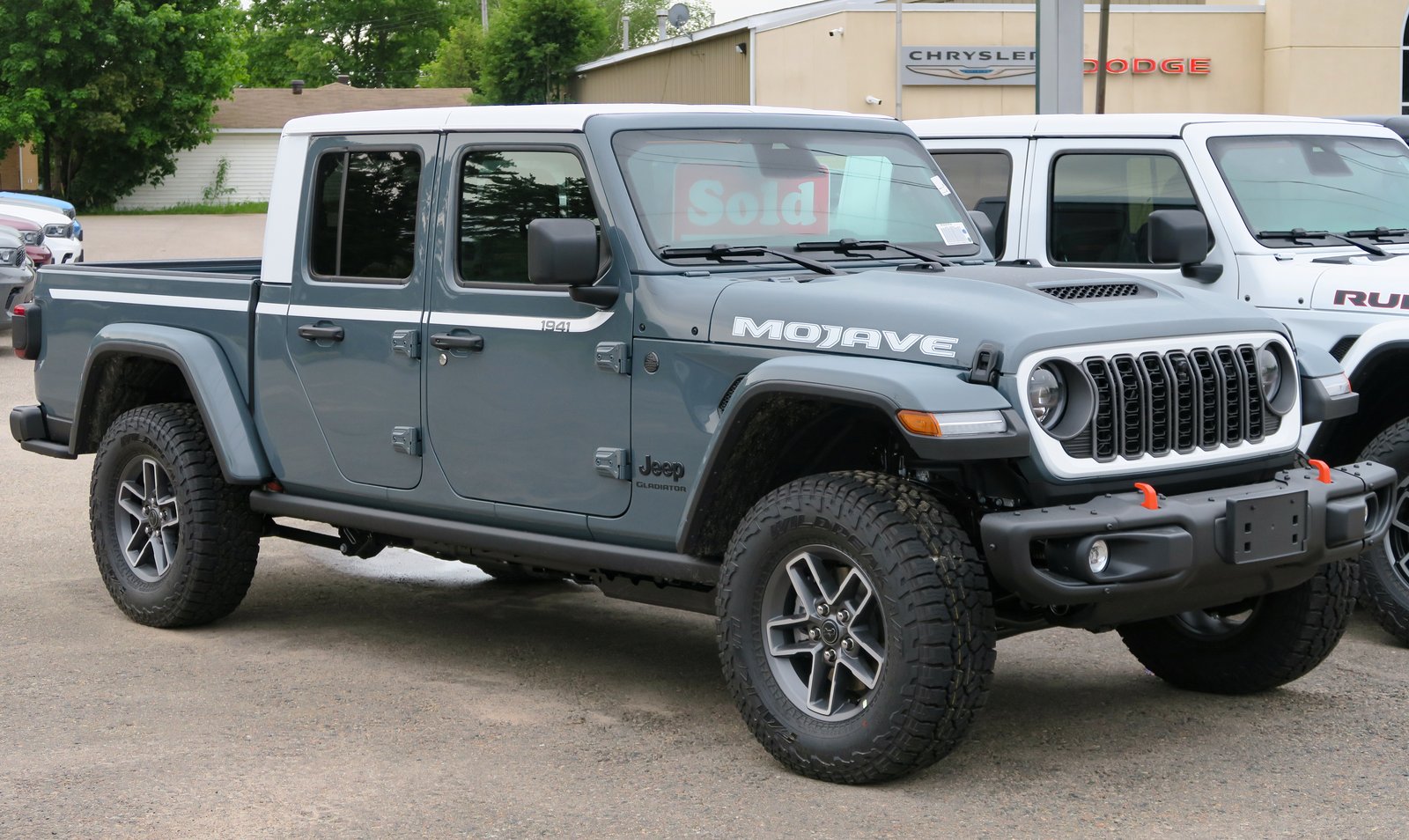
The Gladiator is the Wrangler’s hardware on a 137.3 inch wheelbase with a five foot bed, and the two trims split the overland job between them. The Rubicon keeps Rock-Trac, the 4.0:1 low range, both Tru-Lok lockers and the sway bar disconnect, with 11.1 inches of clearance and 43.4, 20.3 and 26 degree angles, and it is rated to tow 7,000 pounds. The Mojave trades the front locker, the disconnect and the deep case (Command-Trac, 2.72:1) for 2.5 inch Fox internal bypass dampers with reservoirs, Fox jounce bumpers and a one inch lift, which gives it 11.6 inches of clearance, 44.7, 20.9 and 25.5 degree angles and the ride a loaded truck wants on 60 miles of washboard. Jeep’s 2025 Gladiator press kit lists payload at 1,100 pounds for the Rubicon and 1,050 for the Mojave, both with the 3.6 liter V6 and the eight-speed automatic, and the 22 gallon tank at 19 mpg gives 418 miles.
That payload is the Gladiator’s surprise. The truck is 456 pounds heavier than a four-door Wrangler Rubicon on the same axles and the same gross axle ratings, so the bed does not bring the payload a Tacoma or Colorado buyer expects; a Sport with the Max Tow package reaches 1,725 pounds, but the Rubicon and Mojave do not. What the bed does bring is placement: a bed rack carries the tent and the heavy kit on the frame, not on the roof, and keeps fuel and water out of the cabin. The 20.3 degree breakover is the lowest of the purpose-built group and the reason Gladiator owners add sliders early.
- Strengths: Wrangler traction hardware in a pickup, the Mojave’s Fox suspension for loaded dirt roads, a 22 gallon tank, 7,000 pounds of towing on the Rubicon, and the second-largest aftermarket in the group.
- Weak points: 1,050 to 1,100 pounds of payload on the trail trims, the 20 degree breakover on a 137 inch wheelbase, and a front locker you give up for the Mojave’s dampers.
- Aftermarket: 332 fitted products in our tables for 2022 and later; an ARB rear bumper for the Gladiator and a 3.5 inch Rough Country lift with N3 shocks show the range.
Ford Bronco Badlands with the Sasquatch package
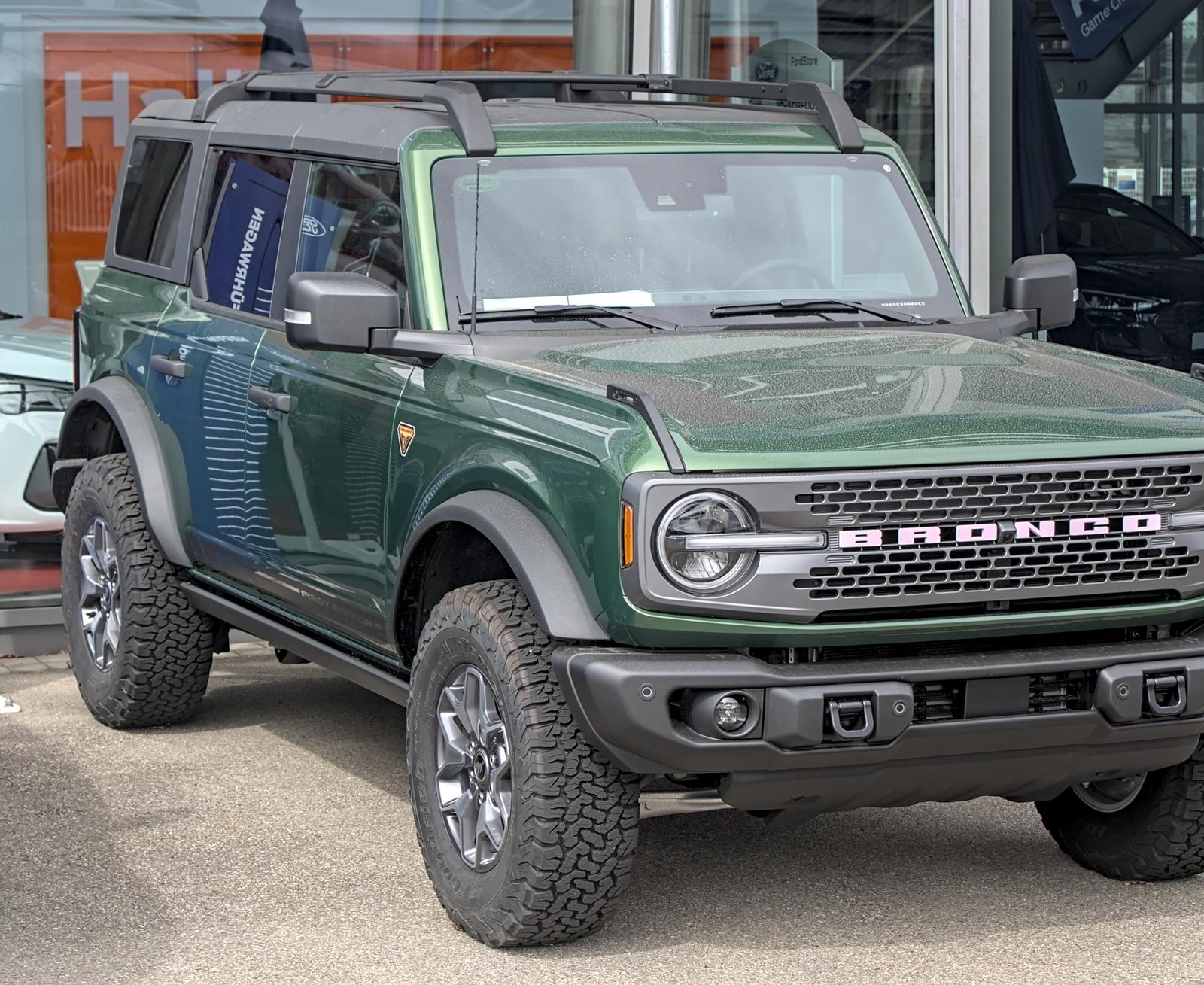
The four-door Bronco Badlands on the Sasquatch package is the closest thing Ford sells to a Rubicon: electronic lockers front and rear on 4.70 gears, the Advanced 4×4 transfer case with a 3.06:1 low range and an automatic 4A mode, a front sway bar disconnect, 35 inch Goodyear tires, Bilstein position-sensitive dampers (Fox internal bypass units are optional) and, per Ford’s 2025 Bronco technical specifications, 11.5 inches of clearance with 43.2, 26.3 and 37.0 degree angles and a 33.5 inch fording depth. The front is independent, a Dana AdvanTEK unit on long forged aluminum arms; the rear is a solid Dana 44. The 2.7 liter EcoBoost makes 330 horsepower and 415 lb-ft on premium fuel, and the 20.8 gallon tank at 18 mpg combined gives 374 miles.
Ford’s 2025 sheet carries no weights, so the load figures come from the 2026 sheet for the same body and engine: a 5,046 pound curb weight, a 6,250 pound GVWR and 1,204 pounds of payload, with towing at 3,460 pounds. Ford is also the only maker here that publishes a roof rating and the fine print with it: 110 pounds dynamic and 450 static on the four-door hardtop, and the static rating is withdrawn on the 35 inch tire, which means a Sasquatch Bronco has no factory-sanctioned roof tent at all. The answer is the same as the Gladiator’s: carry the camp on a rack over the cargo area or go to a ground tent.
- Strengths: lockers at both ends, the 3.06:1 case with 4A, 35s and 11.5 inches from the factory, the best fording depth after the Defender, the Bilstein and Fox damper options.
- Weak points: the 110 pound dynamic roof limit (no static rating on 35s), 1,204 pounds of payload, 374 miles of range on premium fuel, and towing under 3,500 pounds.
- Aftermarket: 114 fitted products in our tables for 2022 and later, with a winch-ready front bumper and 2 to 2.5 inch lifts the common first steps.
Land Rover Defender 110
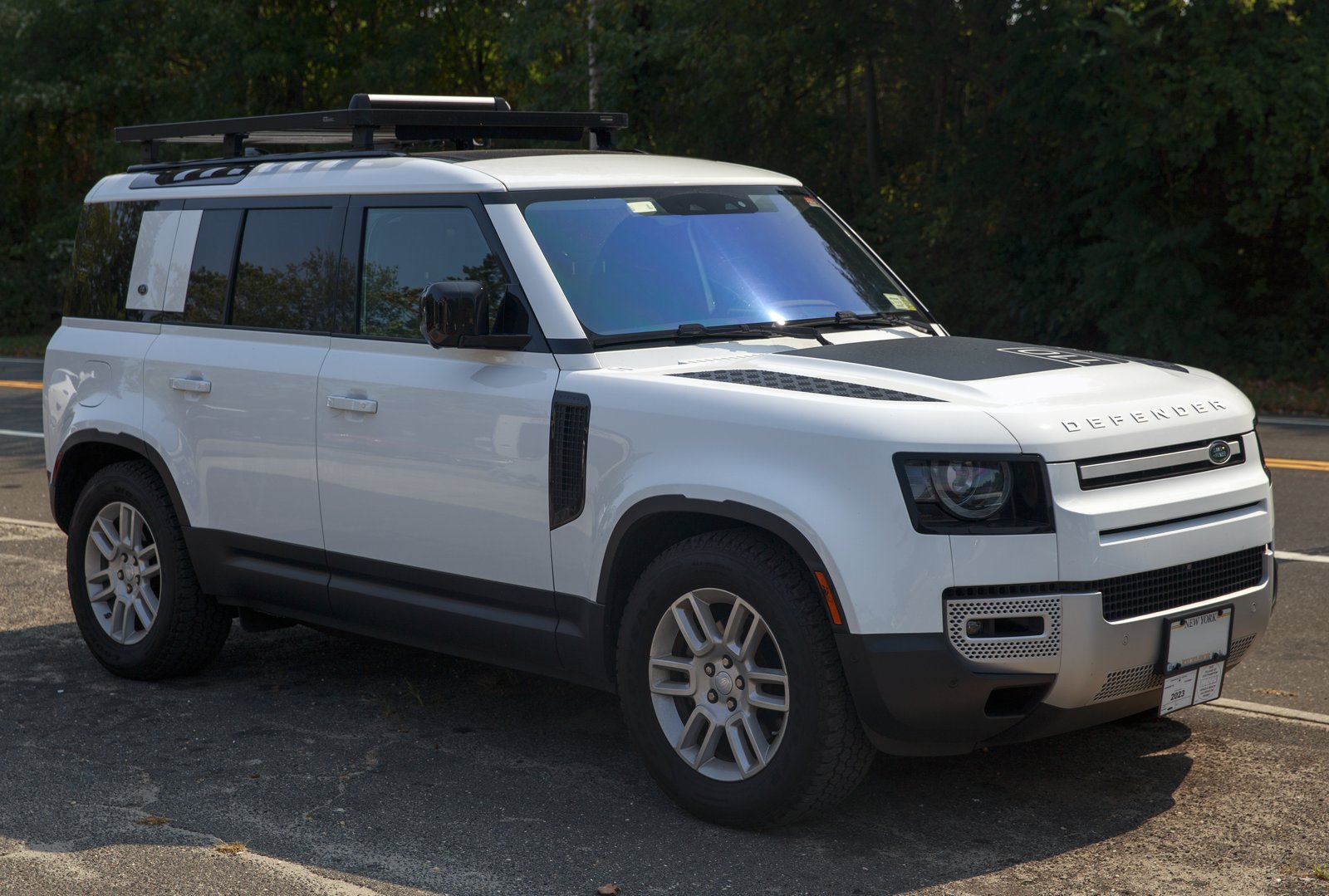
The L663 Defender is the one unibody vehicle here, and it earns its place on load capacity. Land Rover’s 2025 technical specification rates the 110 P300 at 1,764 pounds of payload on a 6,845 pound GVWR, the P400 straight six at 1,653 pounds, both at 7,716 pounds of towing, with a 23.8 gallon tank that at 19 mpg combined gives 452 miles, the longest range of the SUVs. On the optional air suspension at off-road height the 110 reaches 11.5 inches of clearance with 37.6, 27.9 and 41.9 degree angles and a 35.4 inch wading depth, the deepest published here; on coil springs the figures are 8.9 inches, 32.0, 22.2 and 37.7 degrees and 33.5 inches. Drive is permanent four-wheel drive through a twin-speed transfer box with a locking center differential and, on the X and Trophy grades, an active locking rear differential; there is no front locker and no sway bar disconnect, and Land Rover does not publish the low range ratio. The roof is rated at 220 pounds dynamic, 370 with the off-road tires and expedition rack, and 661 static, which Land Rover USA’s models page spells out.
- Strengths: the payload, the range, the wading depth, air suspension that lifts for the trail and drops for the highway, and a roof that can carry a tent and two people without an asterisk.
- Weak points: a unibody with no frame to bolt armor to, air springs and electronics that a small-town shop will not touch, no front locker, and a short list of makers building for it.
- Aftermarket: ARB, Old Man Emu and Land Rover’s own expedition catalog; our structured fitment for the L663 is a single product, which tells you how far it is from the Jeep and Toyota ecosystem.
Ineos Grenadier Trialmaster
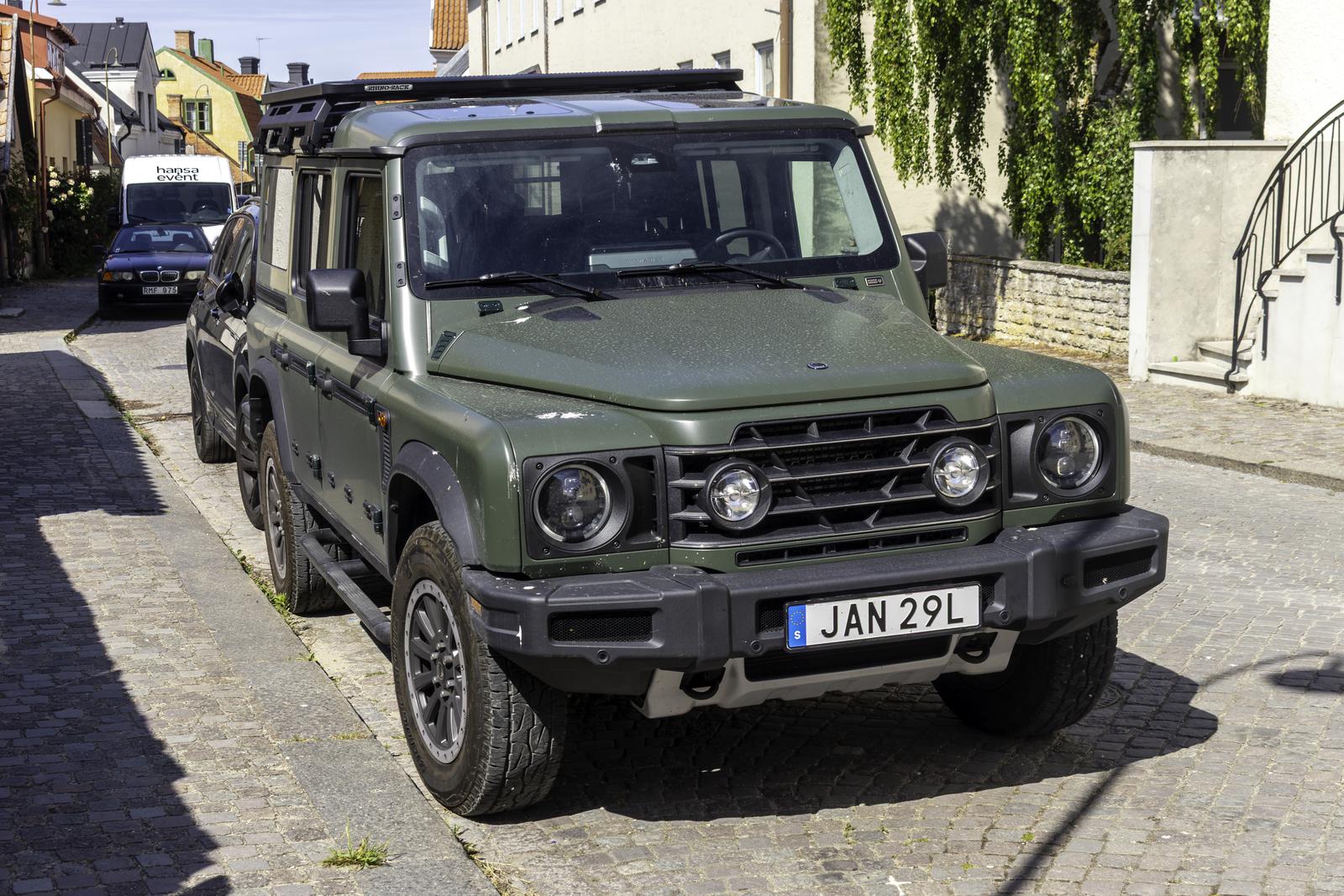
The Grenadier is the only new vehicle with beam axles front and rear other than the Wrangler and the Power Wagon, and the only one designed from the start as an expedition wagon. Ineos’s US specifications list a 5,875 pound curb weight against a 7,716 pound GVWR, which is 1,841 pounds of payload, the highest of any SUV here; a 23.7 gallon tank; 10.4 inches of clearance with 36.2, 28.2 and 36.1 degree angles; 31.5 inches of wading; and a roof rated at 330 pounds dynamic and 925 static with the full-length rack. The drivetrain is a BMW 3.0 liter straight six (282 horsepower, 332 lb-ft) through a ZF eight-speed, a Tremec two-speed transfer case with a 2.5:1 low range and a lockable center differential, and on the Trialmaster, Eaton lockers front and rear as standard, with a crawl ratio of about 54:1. There is no EPA fuel rating, because Ineos sells too few to be listed, so range is a figure you measure yourself; Ineos’s own documents also disagree with each other on curb weight and roof limits by a few percent, as its media site shows against the owner’s handbook.
- Strengths: the payload, the roof rating, three lockers, a ladder frame with beam axles, recirculating-ball steering that shrugs off a rock, and a maker that designs for racks, drawers and auxiliary power from the factory.
- Weak points: 2.5:1 low range, no sway bar disconnect, a dealer network of a few dozen points, no EPA figures, and an aftermarket that is mostly Ineos’s own catalog plus a handful of specialists.
The full-size trucks: F-150 Tremor and Ram 2500 Power Wagon
Two full-size pickups make the list because for a long trip with a family, a trailer or a slide-in camper, nothing in the mid-size class carries the load. The cost is 145 to 149 inches of wheelbase, breakover angles in the low twenties, and width that keeps them off the tighter eastern and mountain trails.
Ford F-150 Tremor
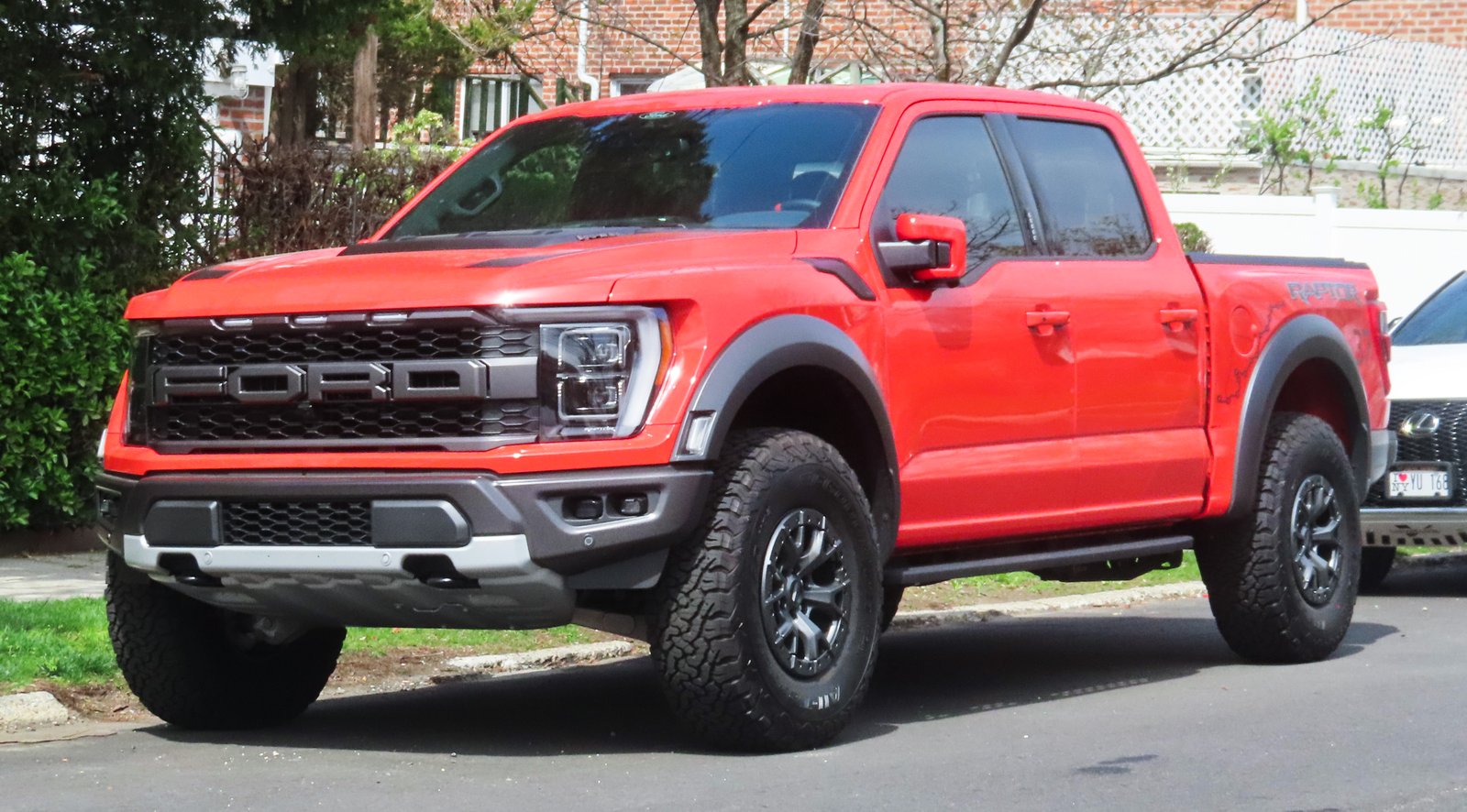
The Tremor is the F-150 with the off-road hardware short of a Raptor: a factory lift on 33 inch all-terrain tires, monotube off-road dampers, a 3.73 electronic-locking rear axle, and with the 402A equipment group a Torsen limited-slip front differential and the Hi-Lock two-speed transfer case with automatic four-wheel drive. Ford’s 2026 F-150 specifications (Ford did not publish a 2025 tech sheet for the gas F-150) give the Tremor SuperCrew 10.7 inches of clearance and 27.6, 21.1 and 24.1 degree angles on a 145.6 inch wheelbase, with the 5.0 liter V8 (400 horsepower, 410 lb-ft) standard and the 3.5 liter EcoBoost (400 and 500) optional. The 36 gallon tank is the Tremor’s trump card: at 17 or 18 mpg combined per the EPA, that is 612 to 648 miles of range, the longest in the group by 150 miles. Ford does not publish a Tremor-specific payload or tow rating, only the per-engine maxima, so the door sticker on the truck you are looking at is the number that counts; a typical Tremor SuperCrew lands between 1,500 and 1,900 pounds. For comparison, the Raptor runs 12.0 inches of clearance on 35s and 13.1 on 37s, with 31 to 33 degree approach angles, and gives up most of the Tremor’s payload to its long-travel suspension.
- Strengths: the range, half-ton payload and towing, a rear locker and the Torsen front, a bed that takes a camper or a full rack system, and the F-150’s parts network.
- Weak points: a 21.1 degree breakover and 24.1 degree departure, 80 inches of width, no front locker, and a low range ratio Ford does not publish.
- Aftermarket: 95 fitted products in our tables for 2022 and later, with bed and cargo management and leveling and lift kits the usual overland additions.
Ram 2500 Power Wagon
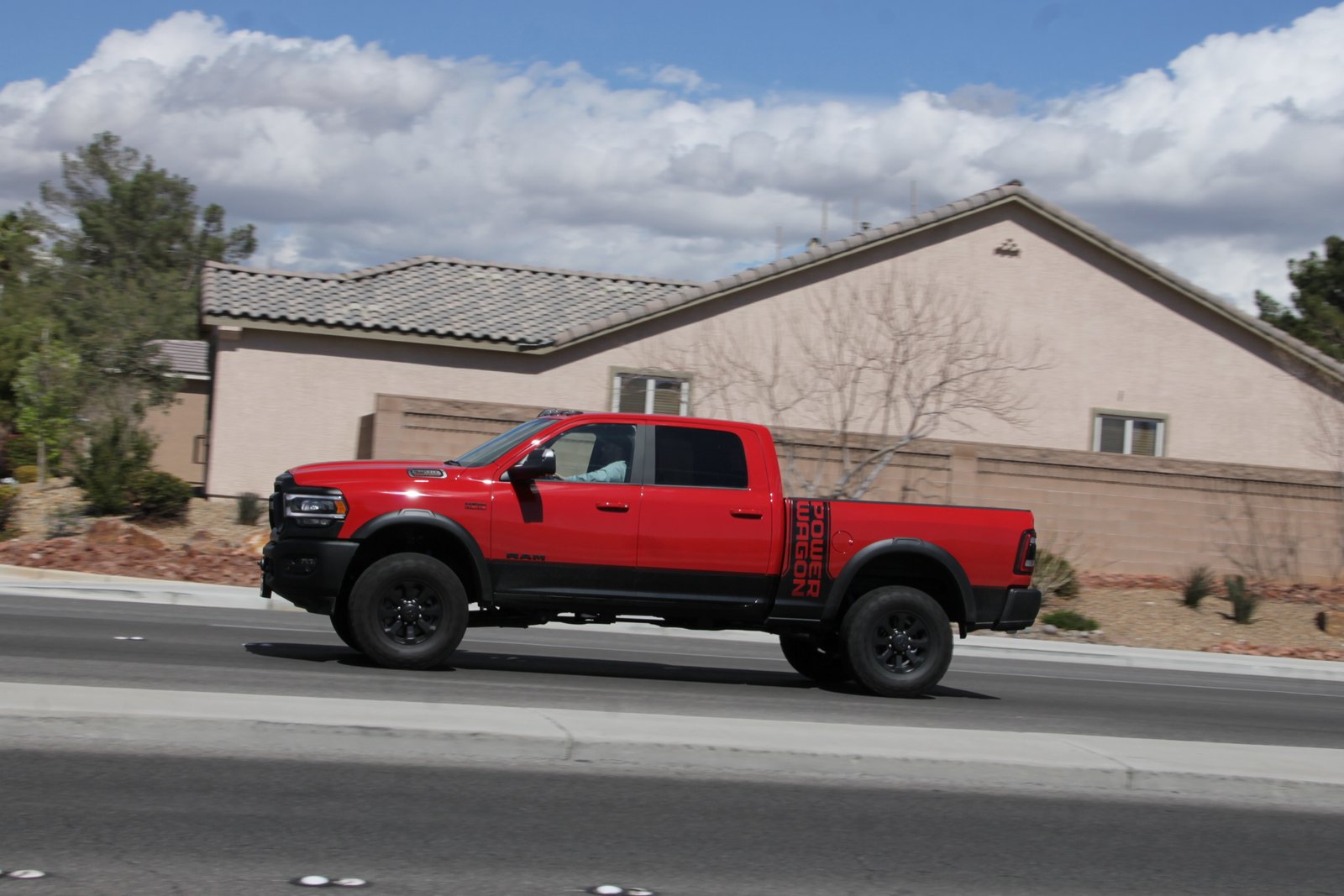
The Power Wagon is a three-quarter-ton truck built for the trail rather than a trail truck with a bed, and its numbers are in a different class. Ram’s 2025 heavy-duty press kit and spec sheet give it 14.2 inches of clearance, 29.4, 22 and 26 degree angles, a 6.4 liter Hemi V8 (405 horsepower, 429 lb-ft) through an eight-speed automatic, a BorgWarner part-time transfer case with a 2.64:1 low range, electronic lockers front and rear on solid AAM axles (a 9.25 inch front, an 11.5 inch rear), an electronic front sway bar disconnect, Bilstein monotube dampers, Ram’s Articulink front suspension and a 12,000 pound Warn winch behind the bumper from the factory. The 31 gallon tank has no EPA rating because the truck’s 8,565 pound GVWR is over the limit for one. Ram’s 2025 towing and payload chart rates it at 1,570 pounds of payload and 10,530 pounds of towing.
That payload looks ordinary next to the Defender or the Grenadier until you remember what it sits on: a frame and axles rated for a 3500’s work, brakes to match, and a bed that takes a slide-in camper. The Power Wagon is the only vehicle here that carries a camper, two adults, a week of water and a winch and still has margin. Its limits are the ones every three-quarter-ton has: a 149 inch wheelbase, 22 degrees of breakover, fuel consumption that lands somewhere in the low teens loaded, and a width that makes narrow forest roads a two-point exercise.
- Strengths: 14.2 inches of clearance, lockers at both ends, the disconnect, the factory winch, a 31 gallon tank, towing over 10,000 pounds, and solid axles that take a lift and 37s without geometry correction.
- Weak points: size and weight, no fuel rating to plan from, a 2.64:1 low range, and a gas V8 that drinks when loaded.
- Aftermarket: 100 fitted products in our tables for 2022 and later, shared with the rest of the Ram heavy-duty line; leveling kits and bed racks lead.
Aftermarket support, by the numbers
An overland build is mostly bolt-on hardware, and the parts exist in proportion to how many of each vehicle are on the road. Our fitment tables list which products fit which vehicle, by model year, and the count of distinct catalog products fitted to each of these platforms for the 2022 and later model years is a fair proxy for how much of the aftermarket has caught up with it. The two Jeeps sit in a different league: between them they account for nearly 876 fitted products, more than the other ten vehicles combined. The Land Cruiser 250, GX 550, Defender and Grenadier do not appear because the structured fitment data for them is still thin; their support comes from a smaller group of specialist makers (ARB, Old Man Emu, Dobinsons, Westcott, Ineos’s own catalog) rather than from the broad market.
| Vehicle | Catalog products fitted, 2022 and later model years | Vehicle page |
|---|---|---|
| Jeep Wrangler JL | 544 | Parts for the Wrangler JL |
| Jeep Gladiator | 332 | Parts for the Gladiator |
| Ford Bronco | 114 | Parts for the Bronco |
| Toyota Tacoma | 101 | Parts for the Tacoma |
| Ram 2500 | 100 | Parts for the 2500 |
| Ford F-150 | 95 | Parts for the F-150 |
| Toyota 4Runner | 59 | Parts for the 4Runner |
| Chevrolet Colorado / GMC Canyon | 47 | Parts for the Colorado / GMC Canyon |
| Toyota Tundra | 21 | Parts for the Tundra |
| Nissan Frontier | 9 | Parts for the Frontier |
The practical reading: a Wrangler or Gladiator can be built from a catalog, with three or four makers for every part and a used market for the parts you change your mind about. A Tacoma, Bronco, F-150 or Ram 2500 has everything an overlander needs from several makers. A 4Runner or Colorado has the essentials. The newest platforms are where you pay more and wait longer, and where a bull bar or a load-rated suspension may come from one or two makers only.
Which one for which kind of trip
- Long western routes, two people, hard roads but few rocks: the Tacoma Trailhunter or a Tremor. Payload and range are the whole job, and both have a bed for the fuel and water.
- Technical trails on the way to camp: the Wrangler Rubicon or the Bronco Badlands Sasquatch. Lockers, disconnect, 35s and the angles; pack light and put the camp on a rack over the cargo area rather than the roof.
- One vehicle for the whole continent, years at a time: the Land Cruiser or the Grenadier. The Toyota for the parts network and the payload, the Ineos for the payload, the roof and the beam axles, if you can live near one of its dealers.
- Family, slide-in camper or a trailer behind: the Power Wagon. Nothing else in the group carries that weight and still has lockers at both ends and a winch.
- Tight eastern and mountain trails: the 4Runner TRD Pro, the GX 550 Overtrail or a two-door Wrangler; the 112 inch wheelbase and the width matter more than the payload on a switchback. Pack to the 4Runner’s thousand pounds and no more.
- Simplest drivetrain, lowest buy-in: the Frontier Pro-4X, with the breakover angle in mind.
- Long days at the wheel with a trailer: the GX 550 Overtrail (9,096 pounds of towing, E-KDSS, the Land Cruiser frame) or the Defender 110 on air suspension (1,764 pounds of payload, 452 miles, 35 inches of water).
The verdict
The best modern 4X4 for overland travel, for most people, is the Toyota Land Cruiser 250. It is the only mid-size SUV here that combines a payload near 1,700 pounds, full-time four-wheel drive with a locking center and rear differential, a frame and drivetrain shared with four other Toyotas, and a parts counter in every town. Its 8.7 inches of clearance is its weak point, and it is the cheapest one to fix. The Tacoma Trailhunter is the pick if you want a bed, because it arrives with the armor, the compressor and the rear bumper already counted against its payload.
If the trail is the point and camp is the reward, the Wrangler Unlimited Rubicon is still the answer: the hardware is unmatched, the range is honest, and 544 fitted products in our tables mean every overland problem on a Wrangler has three solutions. For the heaviest loads, the Power Wagon; for the longest legs, the F-150 Tremor; for the most payload in a wagon, the Grenadier, and the Defender 110 right behind it with a fuel rating and a dealer network.
Building any of them for the road
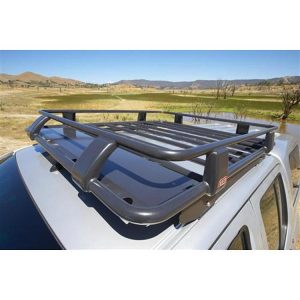
Whichever vehicle you start with, the overland build follows the same order, and the order matters because every item spends payload. Start with the things that keep a loaded truck alive: a suspension matched to the load (a stock spring rate sags two inches under a full kit and the rear shocks overheat on washboard; our Bilstein 5100 vs Fox 2.0 comparison covers the damper choice), a set of all-terrain tires one size up with a full-size spare, and skid plates and rock sliders for the parts of the underside that will meet the trail. Then the recovery kit: a strap, shackles, traction boards and a jack on every trip, a winch behind a winch-rated bumper when you travel alone, and a compressor because airing down is the single biggest traction and comfort gain on a dirt road and airing back up is not optional. Storage goes last, because it is the easiest to overdo: a drawer system or bed rack, a fridge on a slide, fuel and water cans where the weight sits low, and a roof tent only after checking the roof load limit, which on most of these vehicles is lower than the tent plus the rack plus the people in it.
- Suspension first: springs rated for the finished weight, not the empty truck, and dampers that can shed heat for an hour of washboard. Lift only what the tires need. Everything in lift kits, suspension and shocks.
- Tires and spare: one size up on an all-terrain, load range C or E, aired down to 18 to 22 psi on dirt and back up with a compressor before pavement.
- Protection: skid plates under the engine, transfer case and tank, sliders that can take a jack, and a front bumper that holds a winch and a recovery point.
- Recovery: kinetic rope, soft shackles, traction boards, a jack that works with the lift, and a winch rated at 1.5 times the loaded weight. All of it in trail jacks and vehicle recovery equipment.
- Living: fridge, drawers, water and fuel storage, tent or awning, camp and driving lights. See the whole overlanding and camping section.
Frequently asked questions
What matters most in an overland vehicle, payload or ground clearance?
Payload. Ground clearance gets you over the last obstacle before camp; payload decides whether the vehicle is safe and controllable for the thousand miles before it. A full overland kit for two people weighs 800 to 1,200 pounds with the people included, and a vehicle run at or over its gross weight rating brakes longer, overheats its shocks, cracks its mounts and wears its wheel bearings. Pick the vehicle whose payload covers your kit with a 15 to 20 percent margin, then buy the clearance you still need with tires and a suspension rated for the load.
Is a mid-size SUV or a pickup better for overlanding?
A pickup carries more, separates fuel and gear from the cabin and takes a bed rack and drawer system without touching the roof load limit. A mid-size SUV keeps everything inside and locked, turns tighter, has the shorter wheelbase for breakover and sleeps two inside in a pinch. For one or two people on western routes with long dirt sections, the truck’s payload usually wins; for two people in a tight-trail region such as the eastern forests or the Rockies’ shelf roads, the SUV’s size usually wins.
Do I need front and rear lockers for overland travel?
A rear locker, yes, for a loaded vehicle on wet, rutted or rocky climbs. A front locker is a rock-crawling tool that an overlander uses a handful of times a year, and the brake-based traction control on every vehicle here covers most of those moments at the cost of hot brakes. If you are choosing between a trim with a rear locker and one with a front locker and lower payload, take the rear locker and the payload.
How much range should an overland vehicle have?
Plan for 300 miles of loaded, dirt-road range from the standard tank before the fuel light, which means an EPA combined range of roughly 400 miles, because a loaded truck on all-terrain tires at trail speed uses 20 to 30 percent more fuel than its rating. Below that, carry fuel cans on a rack or in the bed, mounted low and outside the cabin, and count their weight against the payload.
Can I put a roof top tent on any of these vehicles?
Only within the roof load limit, and the limit the maker publishes is for the vehicle moving (the dynamic rating), typically 100 to 220 pounds for the SUVs here. A hard-shell tent and a rack together weigh 150 to 220 pounds, so some combinations are already over the dynamic limit before the trip starts. The static limit (parked, people inside) is far higher because the roof is not taking road shock. Truck owners sidestep the problem with a bed rack, which carries the tent on the frame rather than the roof.
Which overland vehicle has the best aftermarket support?
The Jeep Wrangler JL and Gladiator, by a wide margin: our fitment data lists more products for those two than for the other ten vehicles here combined, and the Wrangler has had the same basic architecture, with aftermarket parts carrying over, since 2007. The Tacoma, Bronco, F-150 and Ram 2500 follow with full support from several makers; the 4Runner and Colorado have the essentials; the newest platforms (Land Cruiser 250, GX 550, Grenadier) are still being catalogued and are served by a few specialists.
The right overland 4X4 is the one whose payload covers your kit with margin, whose range covers your routes, and whose parts you can get in a town of 2,000 people. Start the build in overlanding and camping, size the suspension and armor for the finished weight, and carry the recovery gear before the roof tent. The vehicle pages for the Land Cruiser, 4Runner, Tacoma, Wrangler, Gladiator, Bronco, Colorado, F-150 and Ram 2500 list the parts fitted to each by model year.
Sources
- Toyota: 2025 Land Cruiser product information and press materials and the 2025 model-year release
- Lexus: 2025 GX product information and the 2025 GX release
- Toyota: 2025 4Runner product information and the launch release
- Toyota: 2025 Tacoma product information and the 2025 Tacoma release
- GM Canada: 2024 Colorado ZR2 and ZR2 Bison specifications, Chevrolet’s Colorado page and EPA fuel economy, 2025 Colorado
- Nissan: 2025 Frontier press kit and crew cab specifications
- Jeep: 2025 Wrangler press kit and the 2025 Wrangler 4xe release
- Jeep: 2025 Gladiator press kit
- Ford: 2025 Bronco technical specifications (PDF) and the 2026 Bronco technical specifications (PDF), for weights and fuel tank
- Land Rover: Defender technical specification 2025 (PDF) and Land Rover USA Defender models page
- Ineos: Grenadier Station Wagon US specifications and the Ineos media site
- Ford: 2026 F-150 technical specifications (PDF) and EPA fuel economy, 2025 F-150
- Ram: 2025 heavy-duty press kit and the 2025 Ram HD towing and payload chart (PDF)
- Aftermarket counts: slickrock4x4.com fitment tables, distinct catalog products fitted to each model for the 2022 and later model years, 2026-11-02.