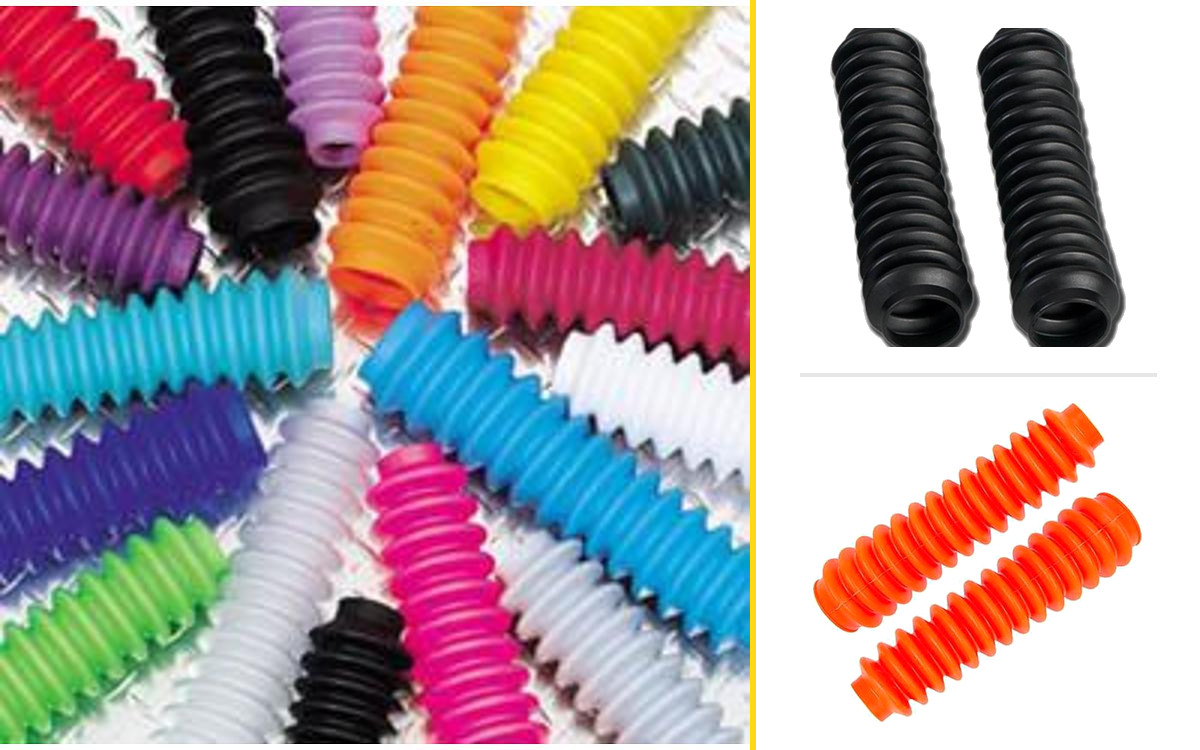
Shock boots are flexible covers that keep grit, mud, water and small rock strikes off a shock’s exposed chrome shaft and the seal behind it. Nearly every lifted shock that works in dirt, sand, mud or road salt benefits from one. A boot matters less on pavement-only trucks and on shocks built to run without one.
Key takeaways
- What it protects: the chrome shaft, also called the piston rod, and the wiper and seal it slides through on every stroke.
- Why lifts raise the stakes: lift shocks carry long strokes, such as 11 inches on the Rubicon Express RXT2621B, so more chrome is out in the open at droop.
- Sizing: match the boot to exposed shaft length, body diameter and the shaft-end mount. Shaft diameter is the smallest part of the decision.
- The exception: a Bilstein shock supplied without a boot does not necessarily need one, and an added boot can hold moisture against the rod.
- Limits: a boot stops grit and gravel, not a sharp rock, and it never fixes a leak.
What does a shock boot actually do?
A shock boot, or shock absorber boot, is a barrier between the outside world and the part of the shock that has to stay perfectly smooth. Inside the body, the shaft carries the piston through the oil. To get out of the body, it passes three things stacked at the shaft end of the body, in a part called the seal head:
- Wiper: the outer lip or ring that scrapes dirt off the shaft as it retracts.
- Rod seal: the lip or U-cup that holds the oil and gas pressure in.
- Rod guide: the bushing or wear band that keeps the shaft centered in the seal head.
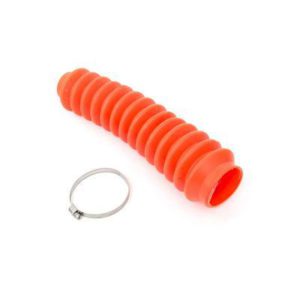
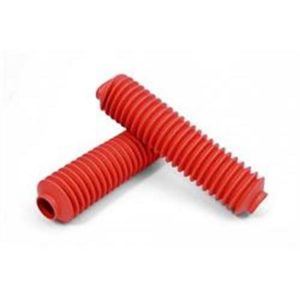
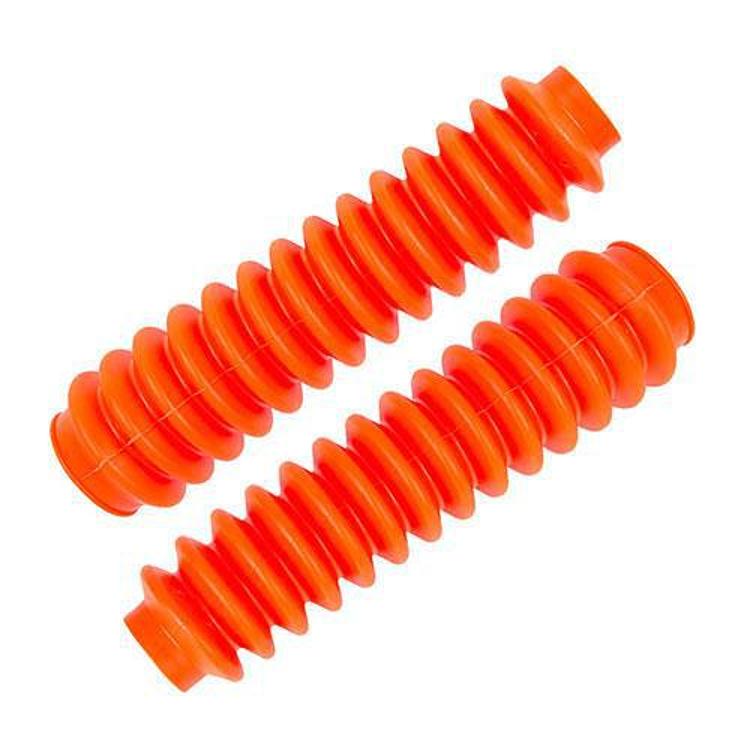
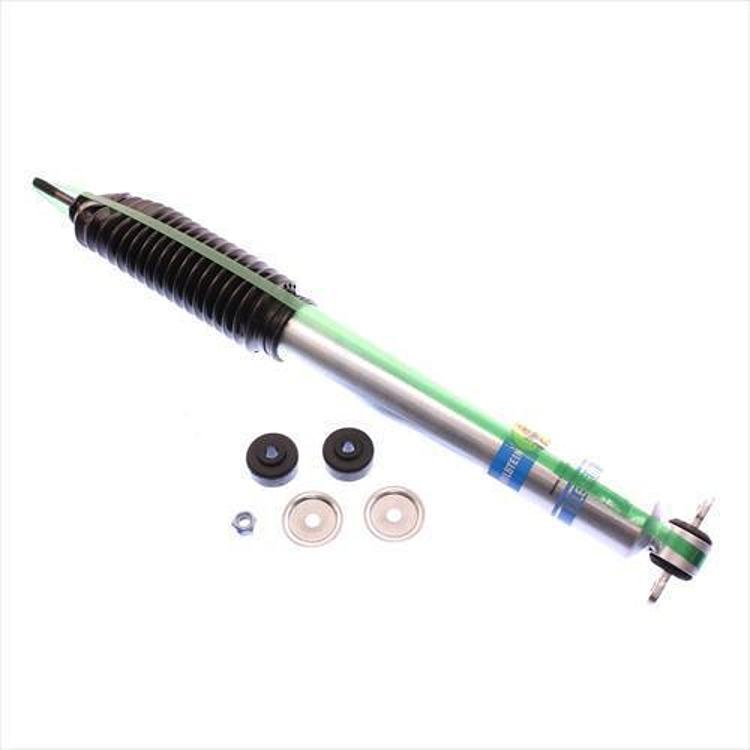
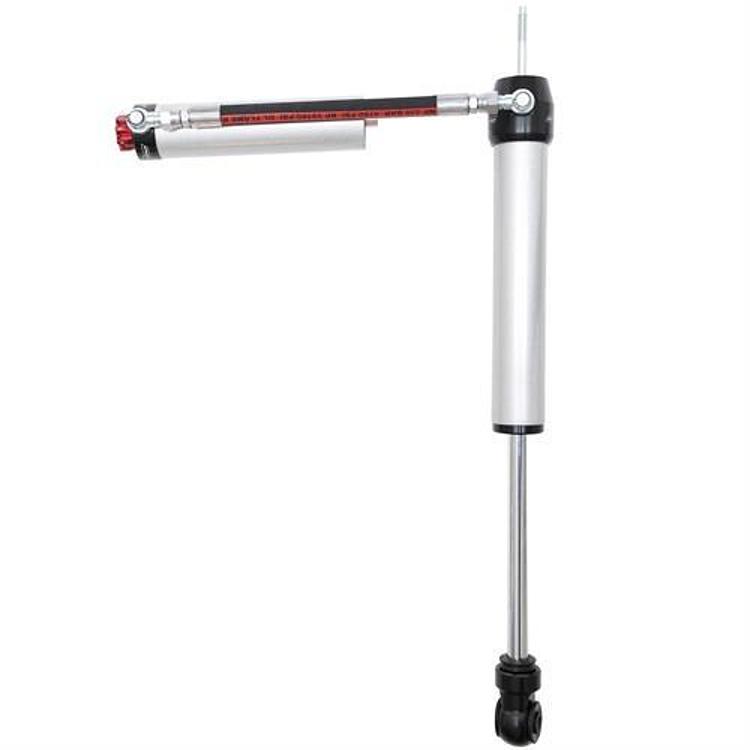
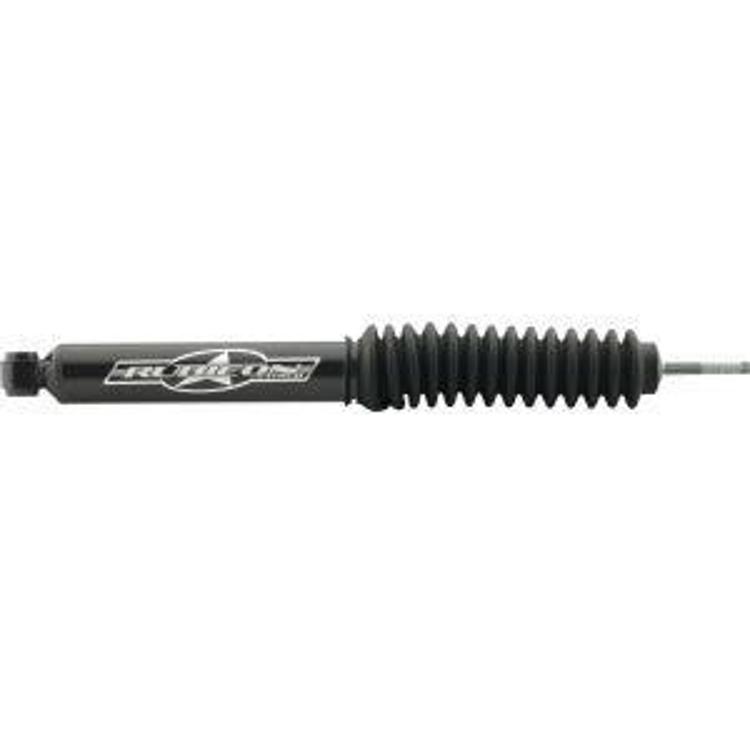
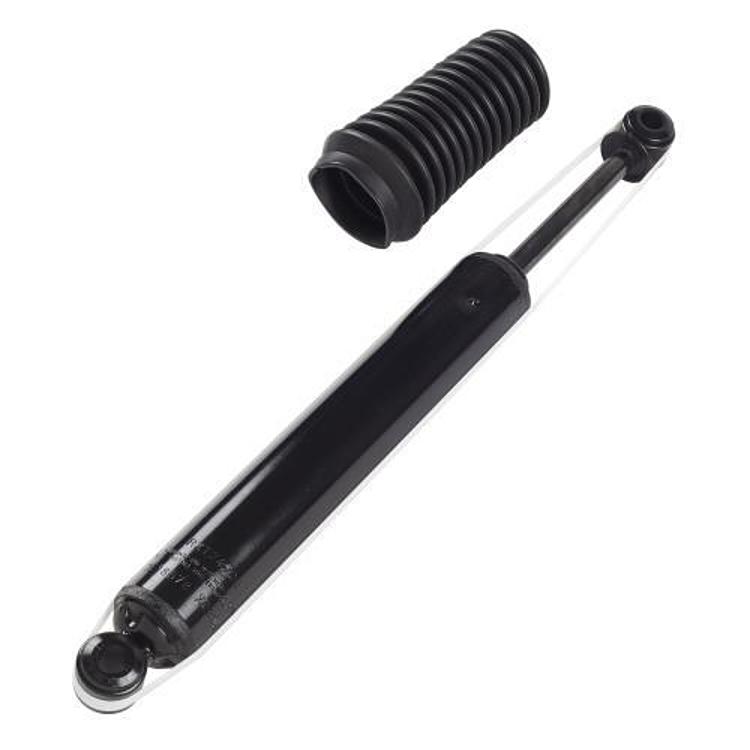
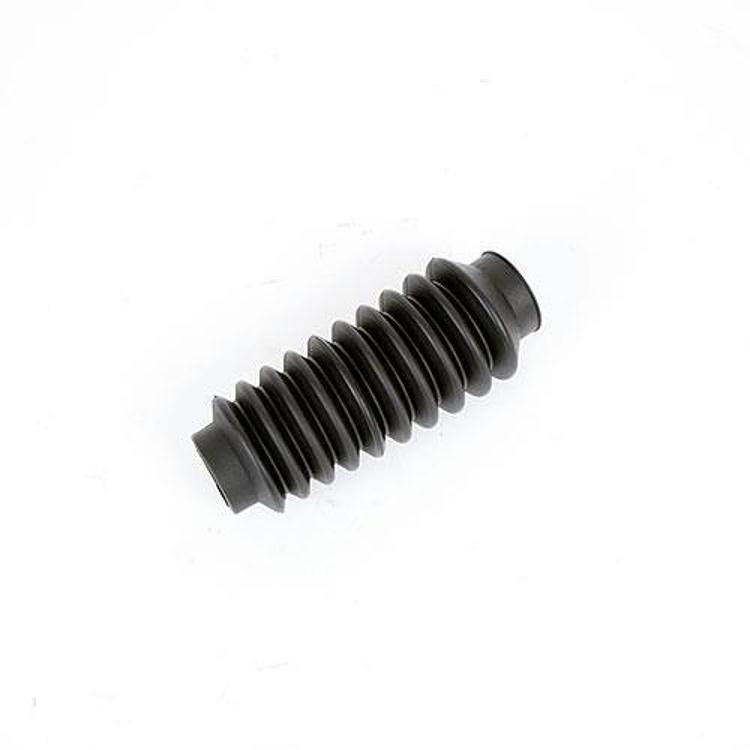
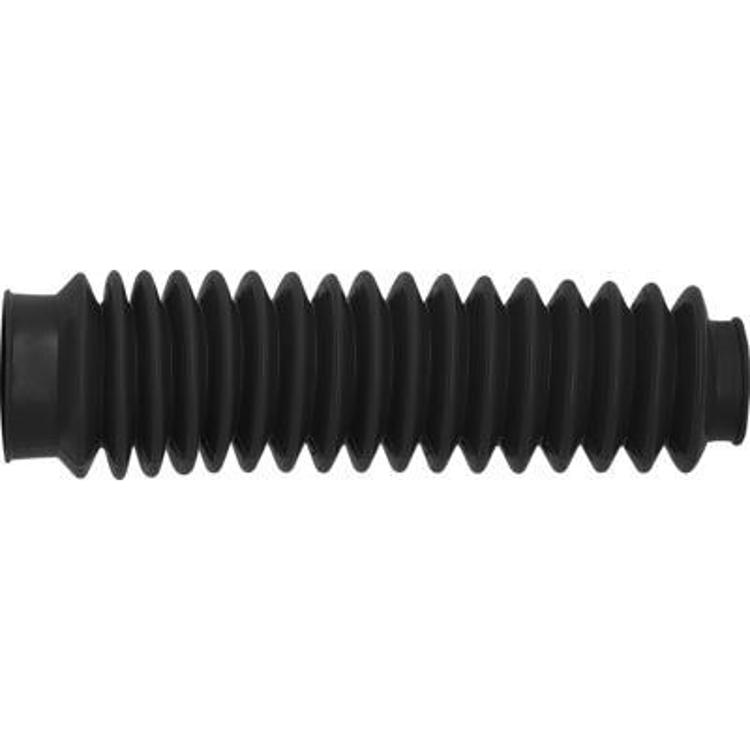
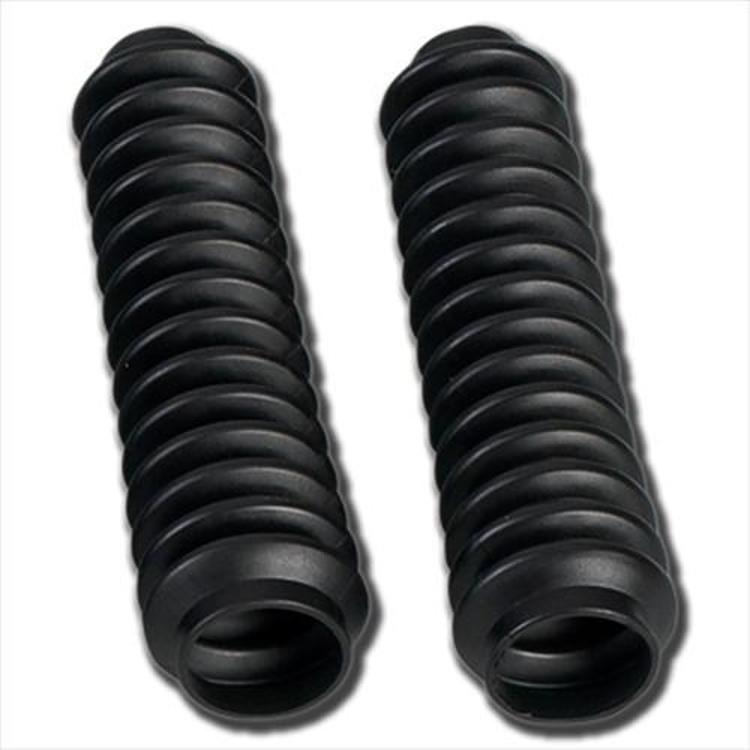
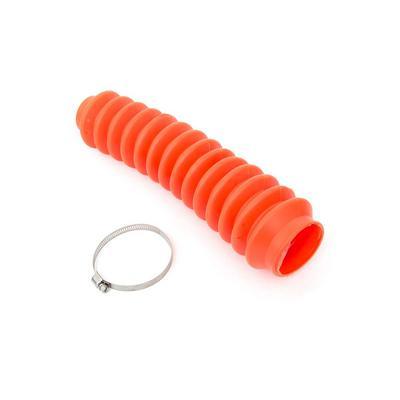
The wiper does most of the cleaning, and a good one handles a lot. The boot lowers how much it has to handle. On an uncovered shaft, wet mud and dust cling to the chrome at full extension and get dragged back to the wiper thousands of times on a washboard road. Under a boot, most of that material never touches the shaft. Pro Comp’s fluorescent orange 11110 and Skyjacker’s black B10K are typical of the design: a pleated tube sized to cover the chrome-hardened piston rod through its travel.
How do grit and rock strikes damage a shock shaft and seal?
Grit wears the seal and scores the shaft, corrosion pits the chrome, and rock strikes leave nicks that cut the seal on every stroke. Each path ends the same way: oil and gas get out, and damping drops. The surface matters because the seal lip rides on a very thin film of oil, and a small flaw in the chrome breaks that film.
- Abrasive wear: fine dust gets under the wiper and into the rod seal. Particles forced between a shaft and its seal cause scoring, and each score mark becomes a small leak path. Sand and dried silt are the worst offenders because they are hard and fine.
- Chrome wear and micro-cracks: hard chrome is durable but not perfect. On hydraulic cylinder rods, which pair chrome and seals the same way, micro-cracks can form in the plating, abrasion of the chrome tips can leave long score marks across the running surface, and those marks can damage the whole sealing system.
- Corrosion pitting: salt water and road brine attack the shaft, especially where the plating is already scratched. A pit has sharp edges, and the seal lip drags over them on each stroke.
- Rock strikes: a thrown rock or a hit on a ledge can raise a burr on the chrome. A burr can cut a seal quickly.
- Bent shafts: a hard side impact can bend the shaft. A bent shaft loads the rod guide on one side and binds. No boot prevents this, and no new seal fixes it.
Seal damage does not always start with the outside world. A shock that binds at a bad mounting angle side-loads the guide and wears the seal on one side, and pliers on the chrome during installation can mark a shaft before it ever turns a wheel. Check for those causes before blaming a missing boot.
Monotube shocks, which keep oil and high-pressure nitrogen in a single tube, also lose gas charge when the seal fails, so the shaft stops pushing out on its own. The article on twin-tube, monotube and reservoir shocks explains how each design handles oil, gas and heat.
Why do lifted shocks need shock boots more than factory shocks?
A lift does not make a shaft any softer. It puts more chrome in the open and usually comes with harder use. Lift shocks are longer to reach the axle at full droop, so a lifted truck tends to carry more exposed shaft at ride height and far more at full extension.
- More exposed chrome: the Bilstein 5100 24-187190 for a 1997-2006 Jeep Wrangler TJ or 2004-2006 LJ with a 4.5-inch lift travels 9.99 inches, and the Pro Comp PRO-M PR2001 runs from 18.4 to 29.6 inches collapsed to extended, a difference of 11.2 inches.
- More dirt: the owners who lift a truck tend to take it on gravel, sand and trails, and that exposure matters more than the lift height itself.
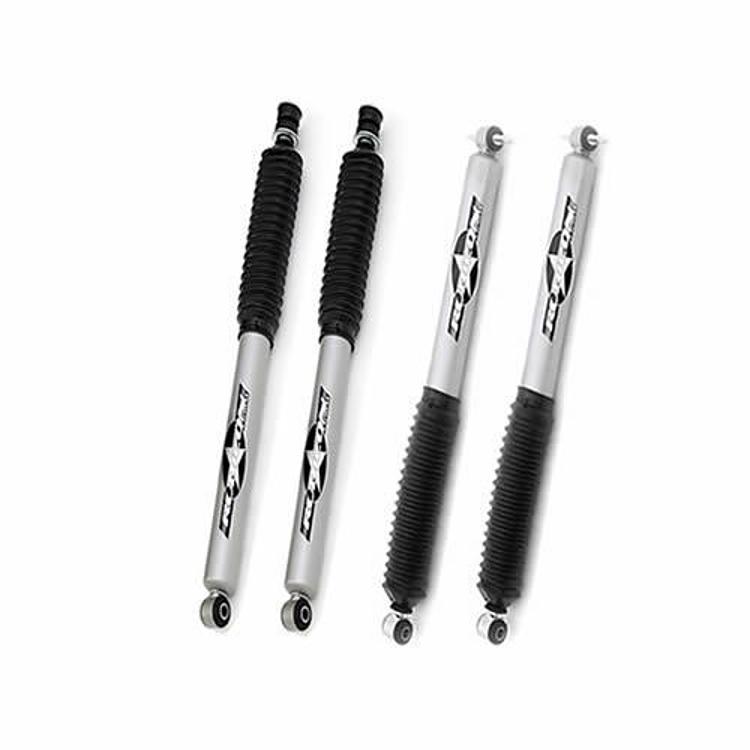
That is why many lift-focused shocks come with a boot already on. The Bilstein 5100 24-186728 for the 2005-2018 Toyota Tacoma, the PR2001 for trucks such as the Chevrolet Silverado 1500 and the Rubicon Express SK010902RXJ kit all include them, the last with four boots for four shocks. Others do not: the Bilstein 5160 25-187601 and the Pro Comp ES9000 929500 come without one. If you are still picking a lift height for a Jeep, the guide to JK lift heights covers what changes with each step.
When does a shock boot matter less?
A boot matters least on a shock whose maker designed it to run uncovered, on a truck that stays on pavement, and anywhere a boot cannot clear the parts around it. “Every lifted shock” is the right starting point for a truck that sees dirt, but these are the real exceptions.
- Some shocks need no boot: a Bilstein shock or steering damper supplied without a boot does not necessarily need one. Its hardened chrome shaft and 3-lip wiper seal protect the rod, and an added boot can trap moisture and debris against it. Leave those shocks without one.
- Pavement-only trucks: a truck that never leaves paved roads sees far less abrasive material, so the boot has less to do. Salt-belt winters are the exception, since brine reaches every shaft.
- Serviced race and performance shocks: a rebuildable shock with a good wiper gets a seal change and a shaft polish on a schedule, so damage gets caught and corrected.
- Tight packaging: a boot that rubs a spring, a reservoir hose or a bracket will wear through and can do harm. Coilovers usually leave little room between shaft and spring.
- Shocks with a built-in shield: a metal dust shield or an integrated cover already does part of the job, so check with the shock maker before adding a second layer.
How do you size a shock boot to shaft and travel?
Size a shock boot by four measurements: exposed shaft at full extension, shaft left at full compression, shock body diameter and the size of the shaft-end mount. Most boots are sold as universal fit, which means they are not tied to a vehicle. It does not mean they fit every shock.
- Exposed shaft at full extension: measure from the seal cap to the shoulder of the shaft-end mount with the shock fully out. The boot has to reach that distance, plus its overlap at both ends, without pulling tight.
- Shaft left at full compression: measure the same span with the shock fully in. The folded boot has to stack up inside this length. If it cannot, it will bulge, crumple or push itself off.
- Body outside diameter: measure the shock body with a caliper where the wide end will sit. Names like “2.0” and “46 mm ID” usually describe the bore, so the outside of the body is larger.
- Shaft-end mount: the narrow end has to get over an eye (a loop with a bushing), a stem (a threaded post) or a bar pin (a cross bar pressed through the eye). On a bar pin, it can help to push the pin to one side of the eye so the boot slides past.
Use the travel the truck actually has. If bump stops halt the axle before the shock bottoms, or limit straps stop it before the shock tops out, the boot only sees the distance between those limits. You can also estimate from the spec sheet: extended length minus collapsed length equals the stroke, and the boot has to cover the stroke plus whatever shaft still shows at full compression.
Common shock shaft sizes and strokes
| Shock | Type | Shaft diameter | Stroke |
|---|---|---|---|
| Bilstein 5100 24-186728 | Monotube | 11 mm (0.43 in) | 8.92 in |
| Bilstein 5100 24-187190 | Monotube | 14 mm (0.55 in) | 9.99 in |
| Bilstein 5160 25-187601 | Reservoir monotube | 14 mm (0.55 in) | 11.55 in |
| Pro Comp PRO-M PR2001 | Monotube | 14 mm (0.55 in) | 11.2 in |
| Fox 2.0 Performance 985-24-087 | IFP (internal floating piston) monotube | 5/8 in (0.625 in) | 10.6 in |
| Rubicon Express RXT2421B | Twin-tube | 11/16 in (0.69 in) | 10 in |
| Rubicon Express RXR713 | Reservoir monotube | 3/4 in (0.75 in) | 9.2 in |
Shaft diameter affects the boot less than the numbers above suggest, because the narrow end rides on the mount, not on the chrome. It matters much more for two other jobs. Seal kits are sized to the shaft, so identify it before ordering rebuild parts. Thicker shafts also resist bending better: for solid shafts of the same material, stiffness rises with the fourth power of diameter, so a 14 mm shaft is about 2.6 times as stiff as an 11 mm shaft.
Short-stroke shocks are where oversize boots cause trouble. A boot long enough for 11 inches of stroke has nowhere to go on a shock such as the Bilstein 24-253161, with 4.37 inches of travel and a boot of its own. Smaller options like the Pro Comp 11147 mini boot exist for smaller bodies and shorter strokes.
Accordion boot or sleeve: which shock absorber boot style and material fits?
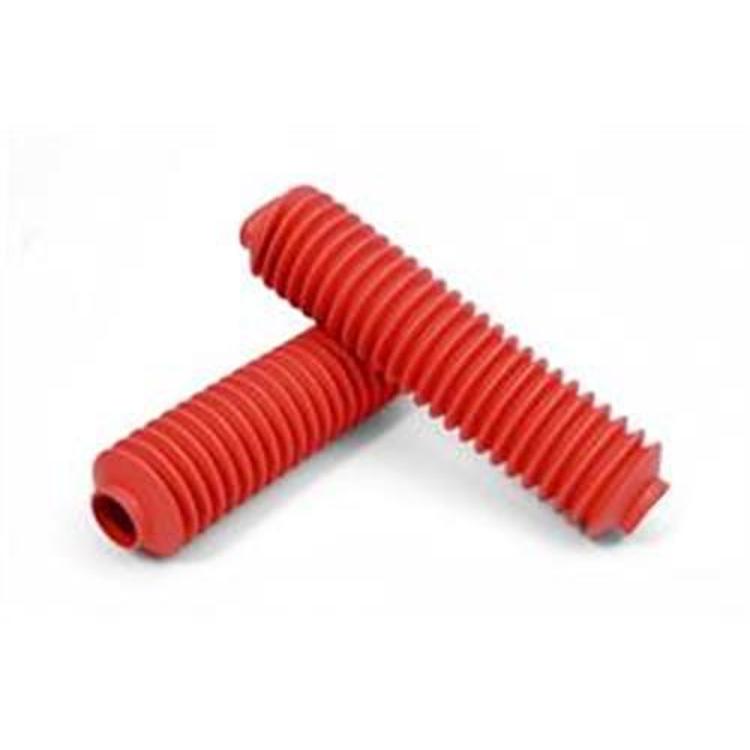
An accordion boot is the right choice for almost every exposed shaft, because its folds follow the stroke and can breathe through vents. Sleeves and wraps solve other problems: covering a coilover or guarding the shock body. Each one protects a different part, so check what is actually covered.
| Style | Material | Covers | Closure | Example |
|---|---|---|---|---|
| Accordion boot | Poly-vinyl | Shaft | Tie or clamp | Pro Comp 12110 (pair) |
| Accordion boot | Poly | Shaft | Zip ties (2 per pair) | Daystar KU20002BK |
| Accordion boot | Polyurethane | Shaft | Stainless clamp | Rough Country 87172 |
| Fitted accordion kit | Polyurethane | Shaft of one shock line | Kit hardware | ICON 614700 for 2.0 Aluminum Series |
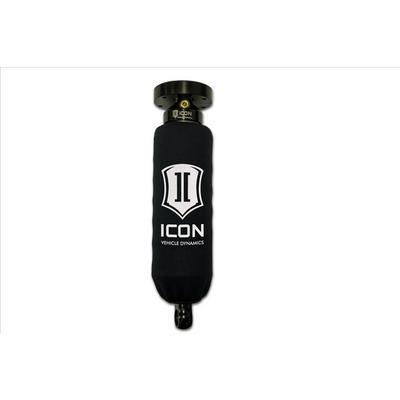
| Neoprene wrap | Neoprene | Coilover shaft and seals | Velcro, elastic ends | ICON 191009 2.5 coil wrap |
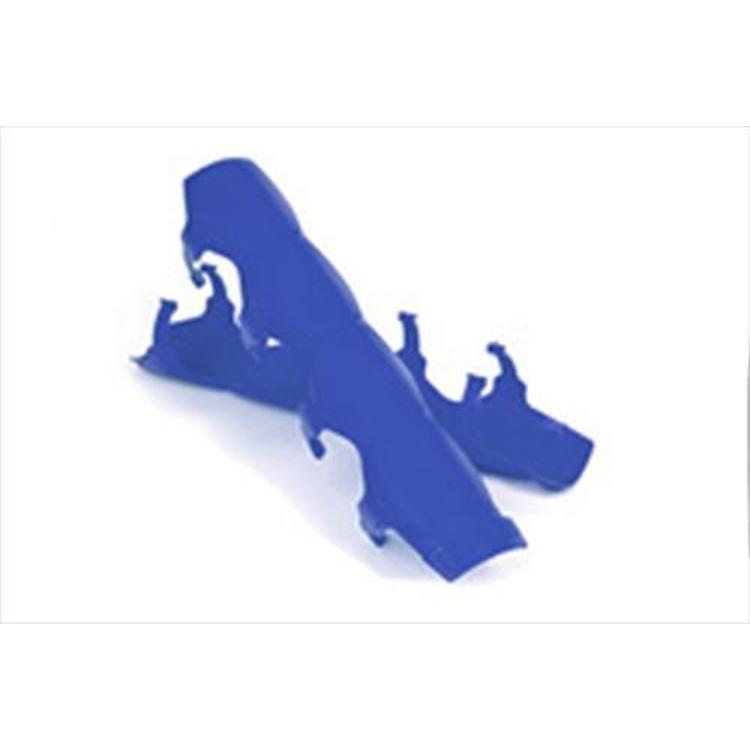
| Body armor | Thermoplastic polyurethane | Shock or stabilizer body | Reusable attachment | Daystar KU71112RB Shock Armor |
- Poly-vinyl: flexible when new and widely available in colors. Long sun exposure can stiffen and crack it, so inspect older boots closely.
- Polyurethane: resists tearing and holds its shape through repeated folding, which suits trail use. It can stiffen in very cold weather, so warm it before fitting it in winter.
- Rubber: flexible, but oil and ozone age it over time, so look for surface cracking in the folds.
- Neoprene: the ICON 191009 fastens in seconds and suits coilovers that see mud, snow or road salt. It is also easy to remove for drying, which helps because a soaked wrap dries slowly.
- Thermoplastic polyurethane armor: the Daystar KU71127BK is meant to prevent pitting and dents on shock and stabilizer bodies. It complements a shaft boot and does not replace one.
No common boot is real rock armor. A thin vinyl or urethane fold stops dust, mud and gravel, and it softens a glancing hit, but a sharp rock can still go through it. On rock-heavy routes, the real protection is placement: a shock mounted body-down keeps the shaft high and away from the axle, while a monotube mounted body-up, where the maker allows it, puts the shaft low, where rocks and tire spray reach it first. Other choices in this group include the Warrior 700004 black pair, the Rancho RS1952 and the Fabtech FTS7000BK.
Do orange shock boots work differently?
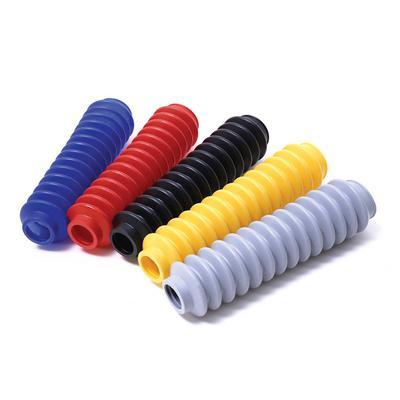
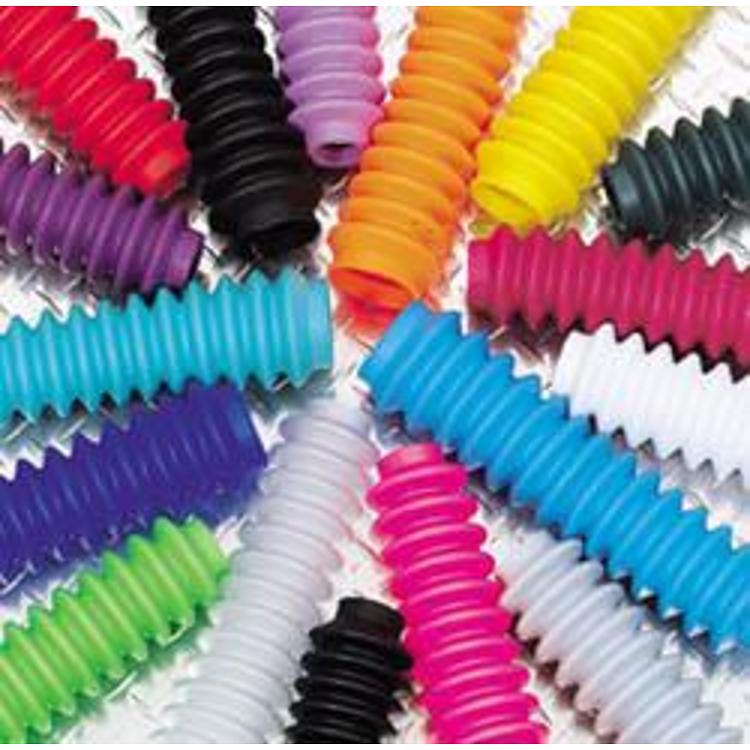
Orange shock boots work exactly like black ones; the color only makes them easier to see. Bright boots give a real inspection benefit, since a tear, a dark streak of oil or a slipped end stands out on fluorescent orange in a way it does not on black under a muddy truck.
Orange options come in singles and pairs, so read the quantity before ordering, since a truck axle needs two. The Pro Comp 11110 is sold singly, the Pro Comp 12110 is a poly-vinyl pair, and Pro Comp’s 10110 is an orange boot in bulk packaging. The Rough Country 87172 is a neon orange polyurethane boot with a stainless steel clamp, designed to resist fading. For other colors, see Pro Comp’s yellow 11129, its red poly-vinyl 12128 pair or Skyjacker’s red B10R.
How should you install a shock boot: zip ties, clamps and venting?
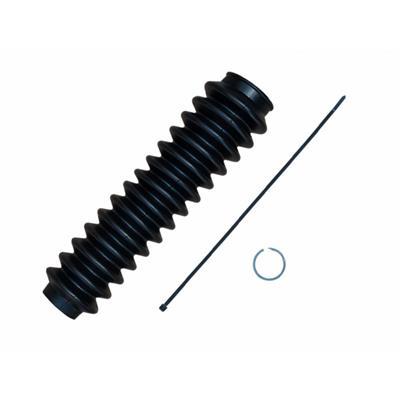
Secure the wide end around the shock body with one snug tie or clamp, seat the narrow end on the shaft-end mount, and leave the boot a way to breathe. Never clamp a boot to the chrome: the shaft has to move freely, and a tie on the chrome can mark the surface the seal depends on.
- Clean first: wipe the shaft with a clean, soft cloth before covering it. A boot installed over grit traps that grit right at the seal.
- Fit it off the truck when possible: support the axle before you unbolt a shock, since the shock may be the part limiting droop.
- Seat the narrow end: slide it over the eye, stem or bar pin until it sits in place. On a stem-top shock, Zone Offroad’s instructions seat the top washer inside the boot and put the zip tie at the bottom. Do not twist the boot. A twisted boot crumples instead of folding evenly.
- Tie the wide end: snug the zip tie or clamp around the body, with no slack, but do not crush the fold. The Daystar KU20002BK pack has two boots and two ties, one for each boot.
- Trim and aim: cut the tail flush and turn it away from brake lines, wiring and the tire.
- Check both ends of travel: cycle the suspension and look for rub on springs, brackets, hoses and tires at full compression and full droop. Recheck the tie after the first drive.
Why a shock boot has to breathe
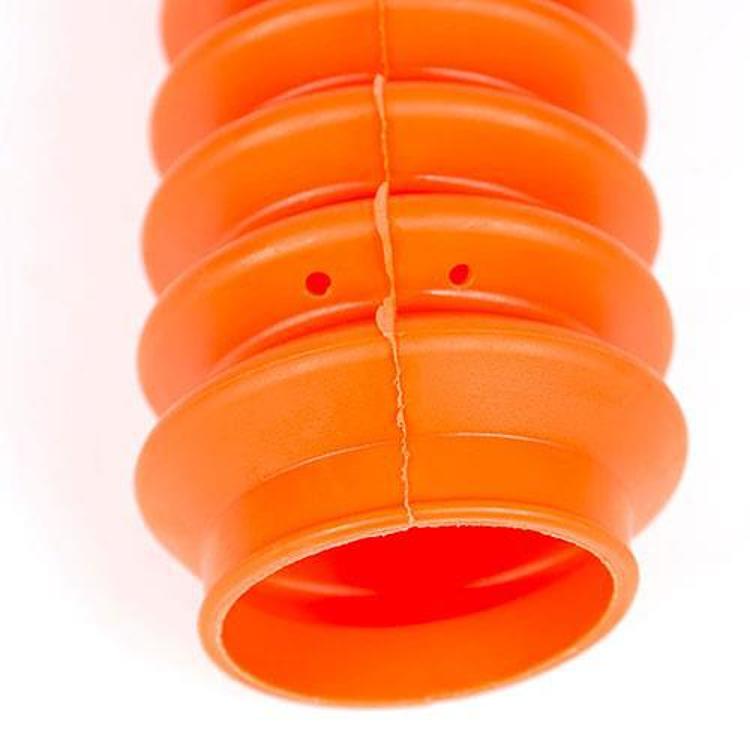
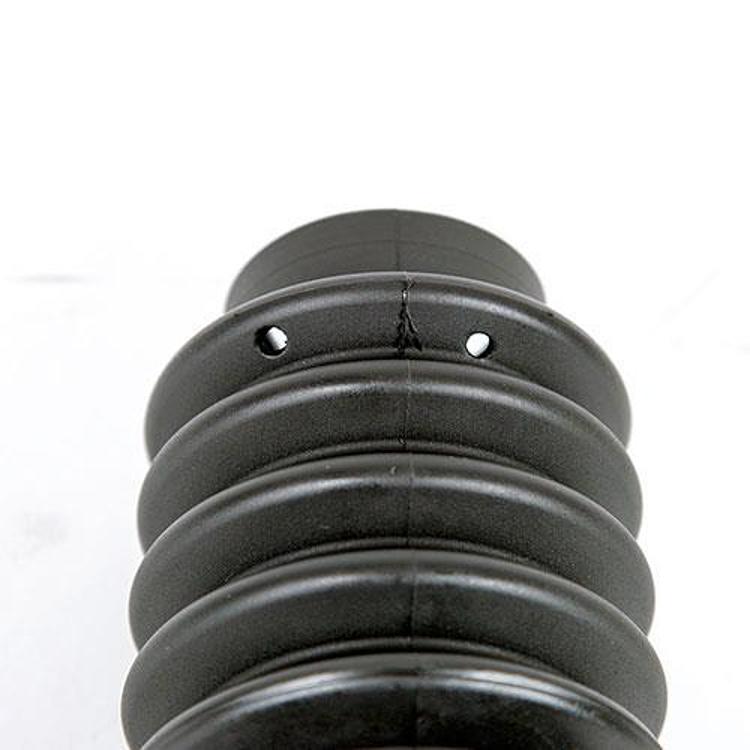
An accordion boot changes volume every time the shaft moves, so air must flow in and out. If it cannot, the boot balloons on compression, collapses on extension and works its own ends loose. Some boots use small breather holes; one boot patent describes earlier designs with at least twelve holes of about 0.150 inch. Others vent past a seal at the floating end. The Pro Comp 11110 and 12147 each have two small holes through a fold, shown in the close-ups below.
Breathing has a downside: air moving through a vent can carry fine dust with it. That is usually a minor effect, but it becomes more significant in very sandy or dusty conditions, so a boot is not a sealed system and the shaft still needs checking. Do not plug factory vents. If mud has packed a vent shut, clear it. After a muddy trip, rinse the boot with low-pressure water, since a pressure washer aimed at a boot or seal can drive grit where it does not belong.
When does a shock boot trap moisture?
A shock boot traps moisture when water gets in faster than it can drain or dry, and the risk is greatest with salt, repeated water crossings and shafts mounted facing up. It is the strongest argument against fitting a boot and forgetting it, and it is why Bilstein cautions against adding boots to shocks supplied without them.
- Shaft-up mounting: with the body at the bottom, the wide end tied around the body forms a cup right at the seal, so water collects where it can do the most harm. Twin-tube shocks generally have to stand roughly shaft-up, so this applies to most of them.
- Shaft-down mounting: with the seal above the shaft, water tends to run away from the seal and collect at the low end of the boot. Monotubes can run this way when the maker’s instructions allow it, but the shaft then sits low, closer to spray and thrown rock, so the drier seal comes with more exposure.
- Torn folds: a split near the top lets in water and grit but drains poorly. A torn boot can be worse than none, so replace it.
- Salt and deep water: brine under a boot stays wet long after the truck has dried and works on any scratch in the chrome. After a winter of salt or a deep crossing, pull the boot back, rinse and dry the shaft, and refit it.
- Packed mud: mud inside the folds holds water against the shaft and can block the vents. Clean it out instead of letting it dry in place.
How do you inspect shock boots and shafts?
Inspect shock boots at every oil change and after every hard trail day, and pull the boot back at least once a season, because a boot can hide both rust and oil. A flashlight is enough for most of it.
- Boot: look for tears, splits along the molded seam, cracks in the folds, flat spots and rub marks.
- Fastener: confirm the tie or clamp is tight and that the boot has not slid down the body.
- Inside the boot: check for packed mud, standing water and oil.
- Shaft surface: look for pits, rust freckles, scratches and dull bands. Drag a fingernail lightly across any mark: if the nail catches, the seal will too.
- Shaft straightness: compress and extend the shock off the truck when possible and feel for a catch or a tight spot.
- Body and mounts: check the body for dents and the shock absorber bushings for cracking or missing material.
Weepage or a real leak?
A little oil on a shock is not automatically a failure. Monroe separates weepage from leakage: weepage is a minimal amount of fluid, carried past the seal by the film on the rod during extension, and it does not call for replacement. Leakage is when most of the shock looks wet and oily, or fluid is dripping off it, and that does call for replacement. Under a boot, even normal weepage can collect and catch dust, so wipe the shaft and body clean, drive for a while and look again before you decide.
Rain and road spray can look like oil, so check on a dry day. Oil has a slick feel and usually leaves a dust-coated film. A truck that keeps bouncing after a bump, with a wet shock, gives a clear answer.
Should you rebuild or replace a shock with seal or shaft damage?
Rebuild a serviceable shock when the seal has failed but the shaft and body are sound; replace it when the shock is sealed or the shaft is bent or deeply pitted. The first question is whether the shock can be opened at all. Bilstein classes its B4, B6 4600 and B8 5100 series and its steering dampers as sealed, with replacement as the usual fix, while the M 7100, M 9100 and other off-road race models are rebuildable. All King shocks are serviceable with rebuild kits, and King’s factory service includes micro polishing of shafts and new seals and wear bands.
| Condition | Serviceable shock | Sealed shock |
|---|---|---|
| Light weepage, clean shaft | Clean, monitor, fit a good boot | Clean, monitor, fit a good boot |
| Worn seal, smooth shaft | Rebuild with new seals and oil | Replace |
| Light surface marks | Rebuild; shaft polish may clear them | Replace if leaking |
| Deep pits that catch a fingernail | New shaft or new shock | Replace |
| Bent shaft | New shaft or new shock | Replace |
| Dented monotube body | Replace the body or the shock | Replace |
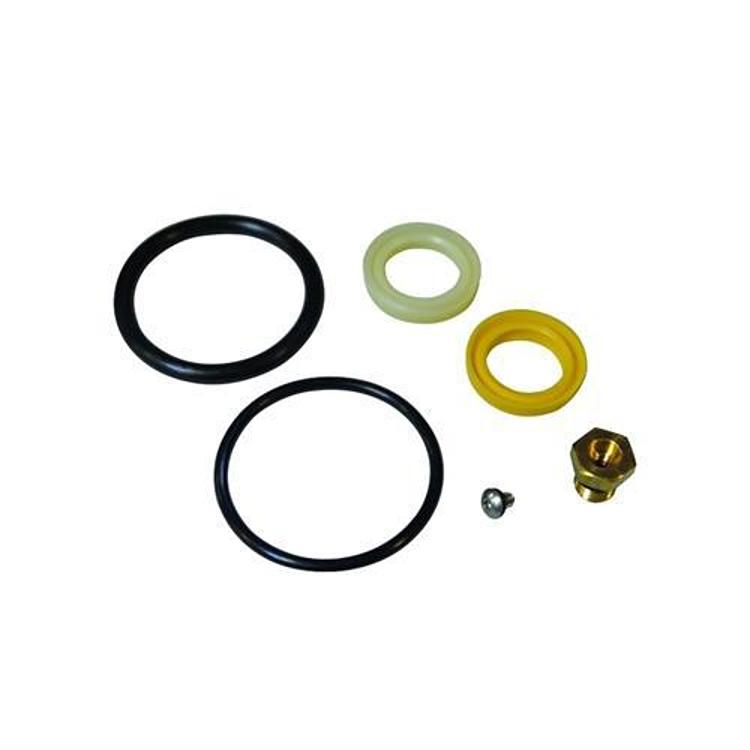
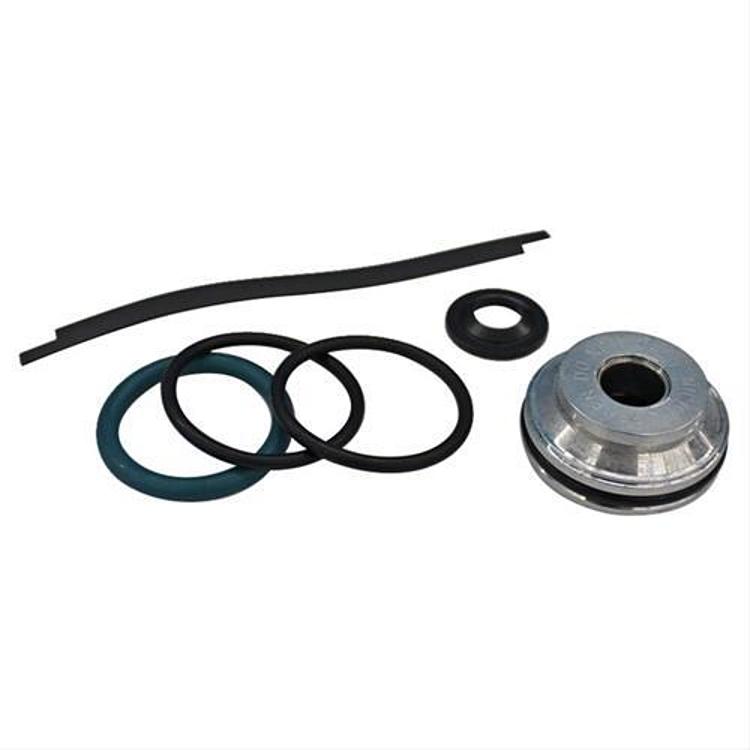
A rebuild is a precise job, not a quick seal swap. ICON’s 2.5-inch IFP rebuild kit covers one shock, with a Disogrin U-cup, a D-wiper, seal head and floating piston O-rings and a nitrogen charge port. ICON’s 2.0 IFP kit 202002 and its 2.5 piggyback, remote reservoir and bypass kit 252011 serve other shocks in that line. Bilstein’s 7100 kit supplies seals, bands and O-rings depending on the application, and Fabtech’s FTS86162 is for Dirt Logic 2.0 shocks without a reservoir. Fox’s JM92 suspension fluid comes in a gallon jug.
- Release the gas first: a charged shock holds high-pressure nitrogen. Bleed it through the charge valve before opening anything, and wear eye protection. Never cut, drill or heat a charged shock.
- Inspect as you go: a King shock rebuild guide calls for inspecting the oil for debris and the shaft and cylinder walls for scratches and damage.
- Consider factory service: FOX’s truck service includes new oil and seals, a deburr and polish of the shaft, and a deep cleaning. Bilstein points to certified service centers for rebuildable models.
Which other shock accessories help a boot do its job?
Bump stops, limit straps, correct mounts and clamped reservoirs protect the shock from the hits and over-travel that a boot cannot handle. They also define the travel you size the boot for, so sort them out first.
- Bump stops: bump stops keep the shock from being the thing that stops the axle on compression, and they keep the folded boot from being crushed. Options range from Daystar’s polyurethane KJ09101BK extended pair to Rubicon Express RE1382 hydraulic bump stops.
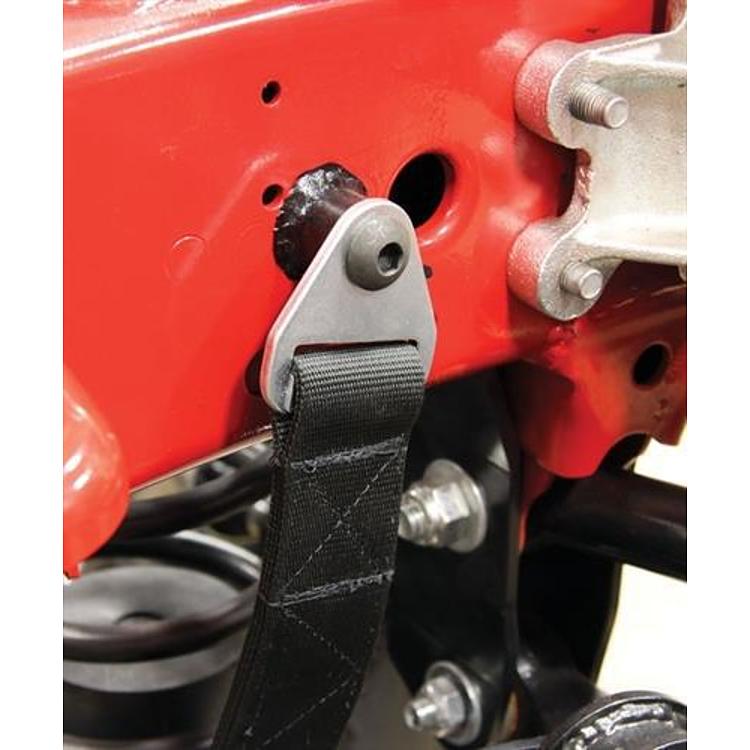
- Limit straps: a strap stops droop before the shock tops out, which protects the internal stop and keeps the boot from being pulled tight. The TeraFlex 4853100 kit, Trail Gear’s 8-inch 111271-KIT, rated at 9,000 lb test, and Pro Comp’s 16-inch 5162 straps cover a range of lengths.
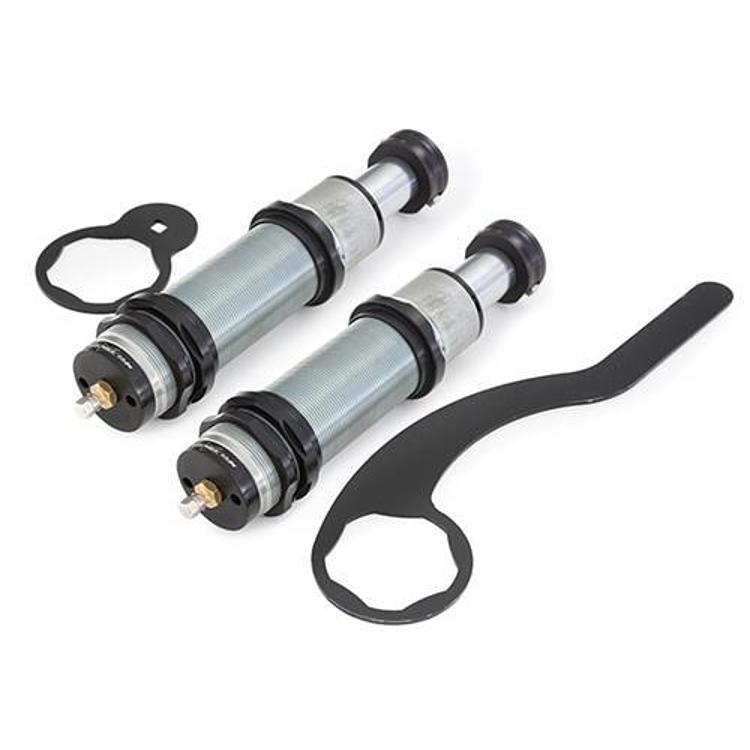
- Shock extensions: extensions place the shock in a better part of its travel after a lift. The TeraFlex 1553800 adds 2.5 inches at the front of a 2007-2015 JK, and Pro Comp’s 66131K adds 2 to 2.5 inches front or rear. The Currie CE-9601 works at the rear lower mount of a TJ or LJ and moves the bottom of the shock outward, away from the coil spring cup. See all shock extensions. Recheck boot fit afterward.
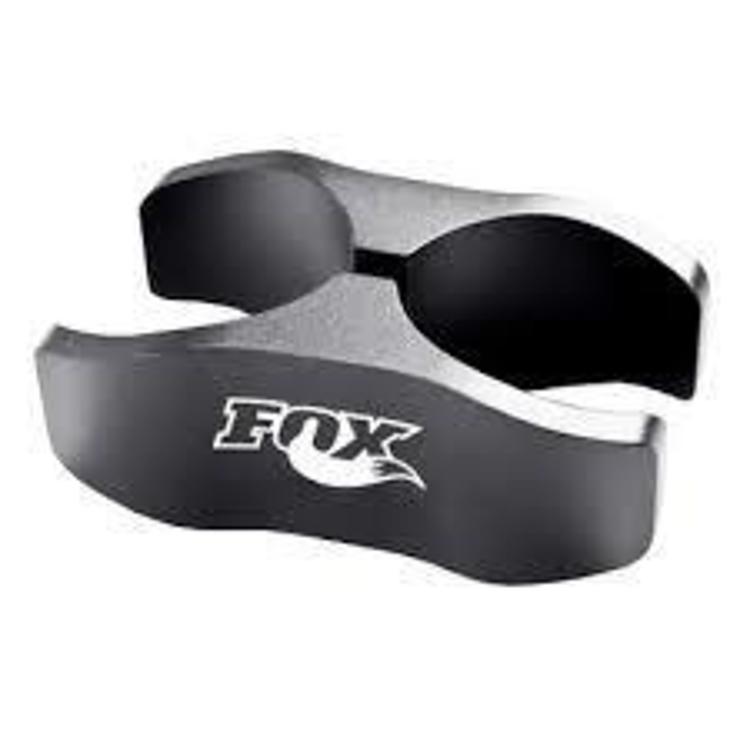
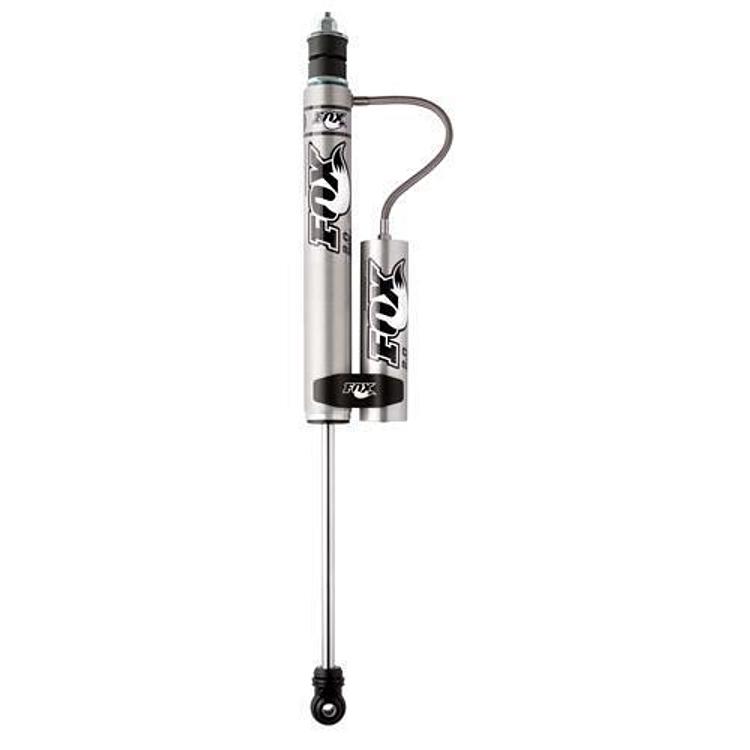
- Reservoir mounts: a remote reservoir shock such as the Fox 2.0 Performance 985-24-052 or the King 2.5 OEM Performance 25001-279 for a 2010-2017 Toyota 4Runner has a hose to protect as well. Secure it with a Fox 803-02-044 clamp and isolate the mount with Energy Suspension 9.9162G isolators. Check that the boot clears the hose at full travel.
Shock choice comes first in all of this. The comparison of the Bilstein 5100 and Fox 2.0 Performance covers two common choices for lifted trucks. Worn shocks can also make front-end problems feel worse, and the guide to death wobble causes and fixes explains where the steering stabilizer fits in.
The short answer on shock boots
Fit a boot if your lifted shock sees dirt, sand, mud or road salt, and the shock maker does not advise against it. Keep the boot that came on your shock, and replace it when it tears. Skip it if the shock is built to run without one, the truck stays on clean pavement, or a boot cannot clear the parts around it. Whatever you choose, look at the chrome regularly, because the shaft tells you how the seal is doing.
Frequently asked questions
Do orange shock boots protect better than black ones?
No. Color changes nothing about how a shock boot seals or how long the shaft lasts. Orange and other bright colors make a tear, a slipped end or a streak of oil easier to spot during a walk-around, and they are a styling choice. Pick the boot for its length, body fit and material, then choose the color.
What size shock boot do I need?
Measure the exposed shaft at full extension, the shaft left showing at full compression, the outside diameter of the shock body and the size of the shaft-end mount. The boot has to reach the first number without pulling tight, stack up within the second, and fit over the body and the mount. Shaft diameter matters less than those four.
Should a shock boot be zip-tied at both ends?
Usually not. The common setup is one tie or clamp around the shock body at the wide end, with the narrow end seated on the shaft-end mount, and kits such as the Daystar KU20002BK pack one zip tie per boot. Never tie or clamp a boot onto the chrome shaft itself. Follow the instructions for your boot when they differ.
Do shock boots trap moisture and cause rust?
They can. A boot keeps most water out, but water that gets in through a torn fold, a vent or a loose end dries slowly and sits on the chrome. The risk is highest on shaft-up shocks in salt or repeated water crossings. Keep the vents clear, replace torn boots and pull the boot to rinse and dry the shaft after salt or deep water.
Do Bilstein shocks need a boot if they come without one?
No: a Bilstein shock or steering damper supplied without a boot does not necessarily need one, because of its hardened chrome shaft and 3-lip wiper seal, and an added boot can trap moisture and debris. Keep the boot on a Bilstein that came with one, and replace it if it tears.
Will a shock boot stop a shock from leaking?
No. A boot keeps contaminants away from a healthy seal, but it cannot repair a worn seal, a pitted shaft or a bent shaft, and it can hide the oil. If most of the shock is wet and oily or fluid is dripping, rebuild a serviceable shock or replace a sealed one. Then fit a new boot.
Measure your shock first, then browse shock absorber boots for the style and color you want. The shock absorbers and accessories section has replacement shocks and hardware, shock rebuild kits cover serviceable shocks, and the full shock absorber range is the place to start when a shaft is past saving.
Sources
- Bilstein, If a shock absorber or steering damper is not supplied with a dust boot, is one required?
- Bilstein, Are my shocks rebuildable?
- Monroe, Shock weepage vs leakage
- FOX, Truck shock service
- King Shocks, Service and rebuild information
- Crawlpedia and Filthy Motorsports, Shock rebuild instructions
- Power & Motion, Alternatives to hard chrome rods
- Zone Offroad, Shock absorber installation instructions
- US Patent 4,989,884, Automotive boot: venting and particle scoring
- US Patent 4,529,213, Boot structure: breather holes, tie straps and breathing contamination