
Dana 44 complete assemblies are ready-to-install axles with the housing, gears, shafts and often a locker already built, so there is no differential setup to do. This branch of the Dana 44 category lists front and rear units, mostly for Jeep JK Wranglers, in a range of gear ratios. G2 Axle and Gear, Dana Spicer and TeraFlex are listed. Open a product page for ratio and locker details, then compare the products below.
Dana 44 Complete Assemblies
Showing 1–12 of 38 resultsSorted by popularity
-
Dana 44 Complete Assemblies

Dana Spicer Jeep JK Ultimate Dana 44 Front Axle Assembly 4.10 Ratio – 10010455
 Dana 44 Complete Assemblies
Dana Spicer Jeep JK Ultimate Dana 44 Front Axle Assembly 4.10 Ratio – 10010455
- Dana Spicer Ultimate Dana 44 front axle with 4.10 gears
- Factory electric locker, selectable electronic locking differential
- Redesigned thicker brackets and Spicer chromoly axle shafts
- Dana Spicer part number 10010455, UPC 23913483708
SKU: D/S10010455 -
-
Dana 44 Complete Assemblies

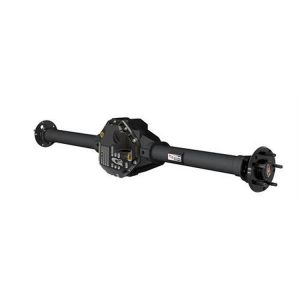
CORE 44 Rear Axle Assembly with 4.10 Ratio and Detroit Locker Ratio and Disc Brake Kit
 Dana 44 Complete Assemblies
CORE 44 Rear Axle Assembly with 4.10 Ratio and Detroit Locker Ratio and Disc Brake Kit
- Dana 44 rear axle assembly for 1987-1995 Jeep YJ Wranglers and 1984-2001 Jeep XJ Cherokees
- 4.10 gear ratio with a Detroit Locker
- Disc brake kit listed with the assembly
- Part number C4YSR410LC0D, UPC 631410135596
SKU: G/2C4YSR410LC0D -
-
Dana 44 Complete Assemblies
CORE 44 Rear Axle Assembly with 4.88 Ratio and Detroit True Trac Locker
- CORE 44 rear axle for 1997–2006 Jeep Wrangler TJ and LJ models
- 4.88 gear ratio with a Detroit True Trac locker
- High pinion Dana 44 housing that takes stock Dana 44 ring and pinions
- 30-spline axle; 5 on 4.5 inch wheel bolt pattern
- Part number C4TSR488TC0
SKU: G/2C4TSR488TC0 -
Dana 44 Complete Assemblies
CORE 44 Rear Axle Assembly with 4.88 Ratio and ARB Air Locker
- Dana 44 rear axle assembly for 1997-2006 Jeep TJ and 2004-2006 Jeep LJ Wranglers
- 4.88 gear ratio with an ARB Air Locker
- Factory brakes retained (Reuse Factory)
- Part number C4TSR488AC5, UPC 631410134018
SKU: G/2C4TSR488AC5 -
Dana 44 Complete Assemblies
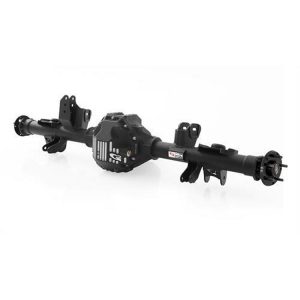
CORE 44 Rear Axle Assembly with 4.88 Ratio and ARB Air Locker and Disc Brake Kit
 Dana 44 Complete Assemblies
CORE 44 Rear Axle Assembly with 4.88 Ratio and ARB Air Locker and Disc Brake Kit
- Dana 44 rear axle assembly for 1997-2006 Jeep TJ and 2004-2006 Jeep LJ Wranglers
- 4.88 gear ratio with an ARB Air Locker
- Disc brake kit listed with the assembly
- Part number C4TSR488AC0D, UPC 631410134865
SKU: G/2C4TSR488AC0D -
Dana 44 Complete Assemblies
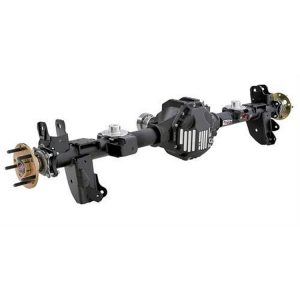
G2 JK CORE 44 Rear Axle With 5.13 Ratio and 30 Spline ARB Air Locker Differential- C4JSR513AC0
 Dana 44 Complete Assemblies
G2 JK CORE 44 Rear Axle With 5.13 Ratio and 30 Spline ARB Air Locker Differential- C4JSR513AC0
- Fits 2007–2018 Jeep Wrangler (JK) models
- Rear CORE 44 axle with a 5.13 ratio and ARB Air Locker
- 30-spline axle shafts
- Reuse factory wheel ends and brakes
- Part number C4JSR513AC0
SKU: G/2C4JSR513AC0 -
Dana 44 Complete Assemblies
G2 JK CORE 44 Rear Axle With 4.88 Ratio and Placer 30 Spline Eaton E-Locker Differential – C4JSR488EP0
Dana 44 Complete AssembliesG2 JK CORE 44 Rear Axle With 4.88 Ratio and Placer 30 Spline Eaton E-Locker Differential – C4JSR488EP0
- Fits 2007–2018 Jeep Wrangler (JK) models
- Rear CORE 44 axle with a 4.88 ratio and Eaton E-Locker
- 30-spline axle with Placer Chromalloy shafts
- Reuse factory wheel ends and brakes
- Part number C4JSR488EP0
SKU: G/2C4JSR488EP0 -
Dana 44 Complete Assemblies
G2 JK CORE 44 Rear Axle With 4.88 Ratio and Placer 35 Spline ARB Air Locker Differential- C4JSR488AP5
Dana 44 Complete AssembliesG2 JK CORE 44 Rear Axle With 4.88 Ratio and Placer 35 Spline ARB Air Locker Differential- C4JSR488AP5
- Fits 2007–2018 Jeep Wrangler (JK) models
- Rear CORE 44 axle with a 4.88 ratio and ARB Air Locker
- Placer Chromalloy axle shafts with 35 splines
- Reuse factory wheel ends and brakes
- Part number C4JSR488AP5
SKU: G/2C4JSR488AP5 -
Dana 44 Complete Assemblies
G2 JK Metric CORE 44 Rear Axle With 4.56 Ratio and Placer 35 Spline ARB Air Locker Differential – C4JMR456AP5
Dana 44 Complete AssembliesG2 JK Metric CORE 44 Rear Axle With 4.56 Ratio and Placer 35 Spline ARB Air Locker Differential – C4JMR456AP5
- Fits 2007–2018 Jeep Wrangler (JK) models
- Metric rear axle with a 4.56 gear ratio and ARB Air Locker
- Placer 35-spline axle shafts
- Reuse factory wheel ends and brakes
- Part number C4JMR456AP5
SKU: G/2C4JMR456AP5 -
Dana 44 Complete Assemblies
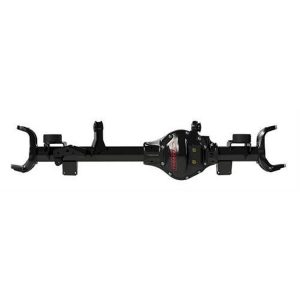
G2 JK CORE 44 Front Axle With 4.88 Ratio and 35 Spline ARB Air Locker Differential – C4JMFS488AP5
 Dana 44 Complete Assemblies
G2 JK CORE 44 Front Axle With 4.88 Ratio and 35 Spline ARB Air Locker Differential – C4JMFS488AP5
- Fits 2007–2018 Jeep Wrangler (JK) models
- Front high pinion axle with a 4.88 gear ratio and ARB Air Locker
- USA-made 4340 Chromalloy 35-spline axle shafts
- Heavy-duty 3-inch DOM tubes and reinforcing ribs
- Part number C4JMFS488AP5
SKU: G/2C4JMFS488AP5

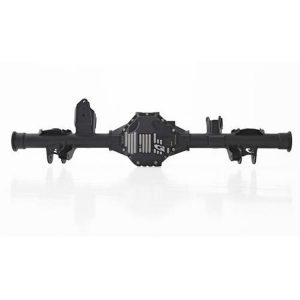
What a complete assembly is
A complete Dana 44 assembly is a fully built axle: housing, ring and pinion, carrier or differential, axle shafts, brackets and usually the cover. It saves the labor of building an axle from parts and setting up gears. Builders often use these when upgrading from a lighter factory axle on a Jeep, or when swapping a rear axle for a stronger design.
Choosing one
Start with the application. The sample products here are largely Jeep JK units, and they are sold front or rear. Housing brackets, spring perches, control arm mounts and track bar positions are vehicle-specific, so an assembly for one chassis will not bolt up to another without modification. Pick by position, intended lift height and tire size.
- Gear ratio: Taller tires call for numerically higher ratios, such as 4.88, 5.13 or 5.38, to bring back acceleration and keep the engine in its power band. The front and rear must match each other.
- Locker or limited slip: Options include air lockers, electric lockers and automatic lockers. Each has different control, cost and street manners.
- Spline count and axle shafts: More splines and larger shafts add strength but may need matching hubs and joints.
Specs to compare
Look at tube wall thickness, axle shaft material, the U-joint series, and whether the housing has extra caster built in for taller lifts. Check track width so the wheels sit where your fenders and wheel offset allow. Note whether the assembly includes brakes or a disc brake kit, and whether it is the standard or metric version where the listing says so. A replacement housing alone, as one listing here shows, is not the same as a complete axle.
Installation and compatibility
Swapping an axle is a major job that involves suspension, steering, brake lines, driveshafts and sometimes ABS sensors. Brake and steering systems are safety items, so professional installation and alignment are strongly recommended, along with torque to specification on every bolt. Fill with the gear oil the manufacturer specifies, and break in new gears carefully with gentle driving and an early fluid change.
You may need new drive shafts, a different track bar, and updated brake lines. Confirm fitment for your exact year, make, model and trim, and read the manufacturer's specifications. Verify that the axle's ratio matches the other axle and your tire size before ordering.
Planning a swap and common mistakes
Before buying, make a full plan. Check the width of the axle against your fender clearance and wheel offset, the bolt pattern of the hubs, and whether your wheels and brake rotors will carry over. Find out whether your steering linkage, track bar and drive shafts must change. Some builders also need a transmission or transfer case upgrade to take advantage of a stronger axle, though that is a separate decision.
Common mistakes include forgetting the cost of ancillary parts, mismatching gear ratios, and neglecting the pinion angle. Pinion angle should point the yoke toward the transfer case or transmission within the range that the drive shaft joints can handle. Skipping the alignment after a swap leads to uneven tire wear and poor handling.
After the swap, check fluid levels, torque on bolts and the gear mesh pattern if gears were adjusted. Change the gear oil after the first few hundred miles to remove break-in wear metal. Listen for whine or clunks, and check axle breather lines so they are routed up high.
Popular Dana 44 Complete Assemblies brands
Dana 44 Complete Assemblies FAQ
Why must front and rear gear ratios match?
Both axles must turn at the same relative speed in four-wheel drive. Mismatched ratios cause binding and driveline wear. When regearing or swapping an axle, use the same ratio at both ends.
What gear ratio should I choose for bigger tires?
Larger tires lower the effective ratio, so a numerically higher ratio helps restore performance. The right number depends on tire size, engine and transmission. Gear ratio calculators and the manufacturer's recommendations can guide you.
Is a Dana 44 complete assembly a bolt-in swap?
Usually not fully. Brackets are chassis-specific, and you may need drive shafts, brake lines or alignment work. Check what the listing covers and have the swap done carefully, preferably by a professional.
What is the difference between air and electric lockers?
Both lock the differential on command. Air lockers use an onboard compressor and air line, while electric lockers use a wiring and switch. Each has its own installation needs, so check what comes with the axle.