Side Steps & Running Boards
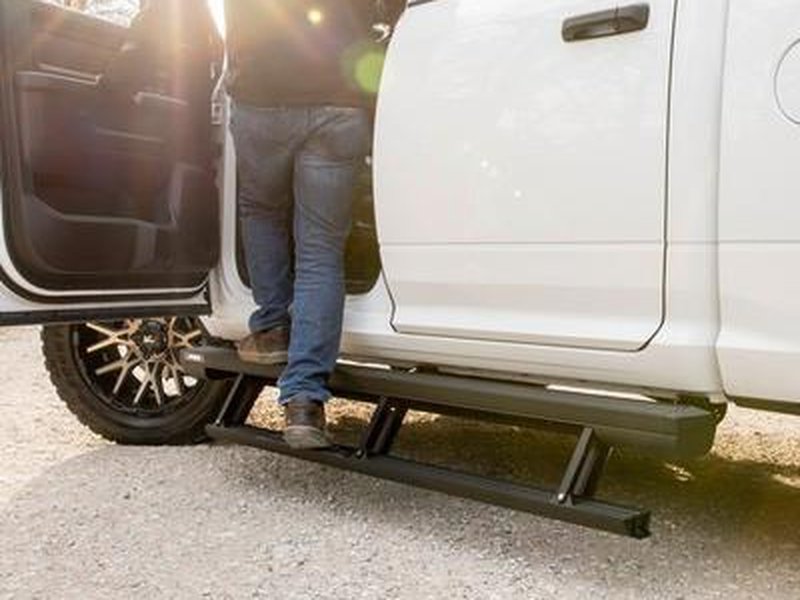
Side steps and running boards make it easier to climb into lifted trucks, Jeeps and SUVs, and many double as rocker panel protection. This category spans round nerf bars, wheel-to-wheel steps, rock sliders with steps, running boards and powered steps from brands such as N-Fab, Smittybilt, AMP-Research and Aries Offroad. Open a product page for part numbers and fitment details, then compare the products below.

A good step makes a lifted truck or Jeep easy to get into, and the right one also keeps rocks and road debris off the rocker panels. This range runs from light tube steps and wide boards to powered steps and frame-mounted sliders that can take the vehicle's weight on a ledge.
The four groups split mostly by how much abuse they can take. Nerf bars and steps are the biggest group and suit street use and light trails. Running boards trade clearance for a wider tread. Electric steps tuck away when the doors close. Rock sliders bolt to the frame and protect the body on hard trails. Check whether brackets come in the box, since several systems sell them separately.
Shop steps and sliders by type
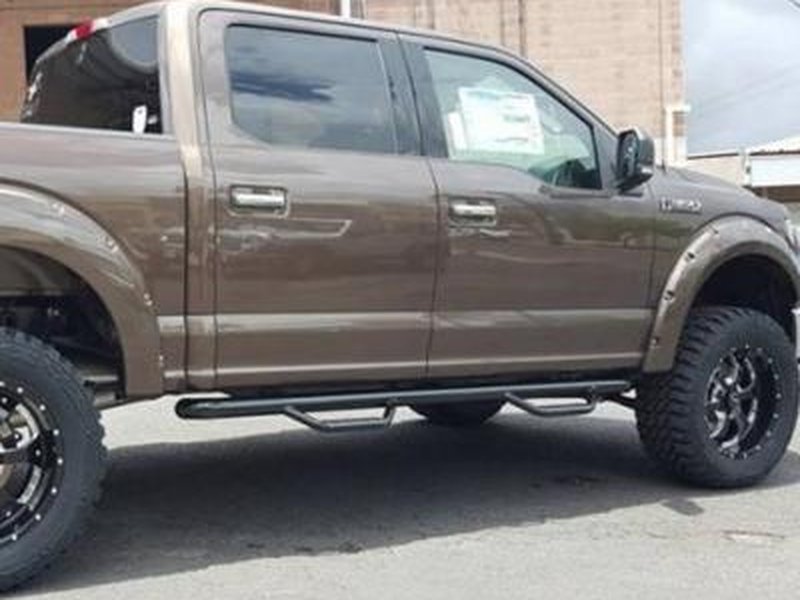
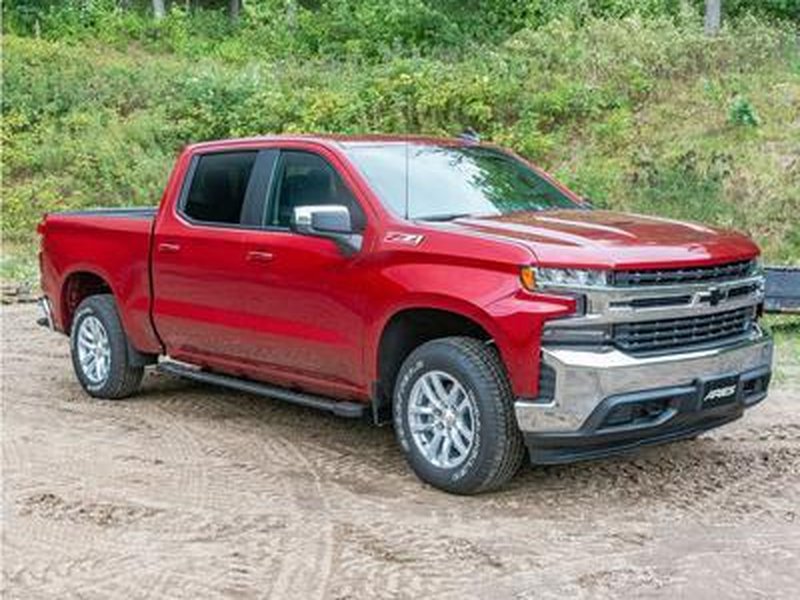
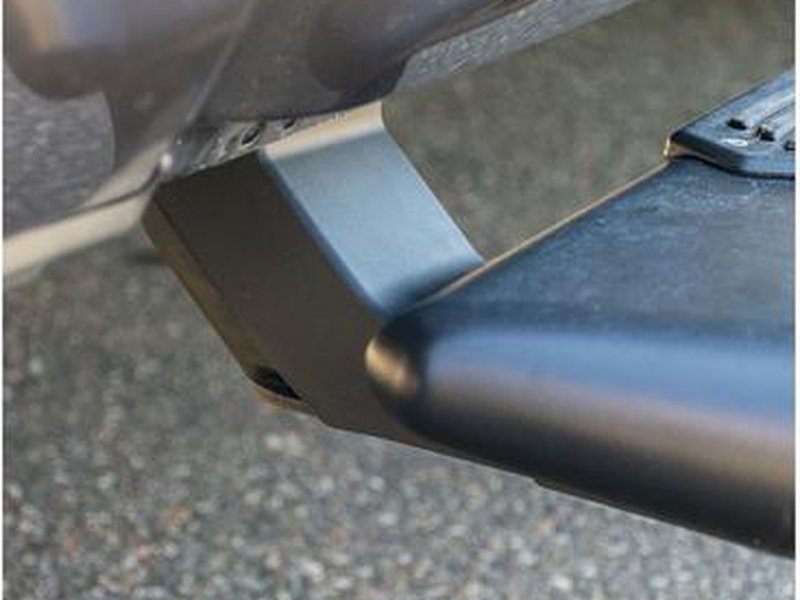
Popular side steps
-
Nerf Bars & Steps, Nerf Steps, Side Steps & Running Boards

4 Wheel Parts Factory Bronco Side Steps (2-Door) – 61669W
 Nerf Bars & Steps, Nerf Steps, Side Steps & Running Boards
4 Wheel Parts Factory Bronco Side Steps (2-Door) – 61669W
- 4 Wheel Parts factory Bronco side steps for the 2-door, part number 4WP61669W
- Hybrid design in textured matte black steel, cab length
- Mounting hardware included and no drilling required
- Fits 2021–2022 Ford Bronco models
SKU: 4WP61669W -
Rock Sliders, Side Steps & Running Boards
Poison Spyder JT Rocker Knockers – 22-08-030P1C
- Poison Spyder JT Rocker Knockers for the 2020 to 2022 Jeep Gladiator
- Formed plate guard with tubular standoff, part number PSC22-08-030P1C
- Gloss black SpyderShell Armor Coat finish
- No cutting or drilling required
- Removable slider skid
SKU: PSC22-08-030P1C -
Nerf Bars & Steps, Nerf Steps, Side Steps & Running Boards

Smittybilt Sure Step 3″ Diameter Side Bars (Textured Black) – JN40-S2T
 Nerf Bars & Steps, Nerf Steps, Side Steps & Running Boards
Smittybilt Sure Step 3″ Diameter Side Bars (Textured Black) – JN40-S2T
- Fits the 1976-1986 Jeep CJ7
- 3-inch tube with textured black powder coat
- 8-point frame mount and oversize bolt attachment
- Non-slip polyester step pads
- All installation hardware included
SKU: S/BJN40-S2T -
Rock Sliders, Side Steps & Running Boards

Rock Slide Engineering 3rd Generation Step Sliders – BD-SS-300-BR4
 Rock Sliders, Side Steps & Running Boards
Rock Slide Engineering 3rd Generation Step Sliders – BD-SS-300-BR4
- Powered Rock Slide Engineering step slider, part number RSEBD-SS-300-BR4
- Listed fitment: 2021–2022 Ford Bronco in seven trims
- Step extends 12 inches from the slider body
- 10-gauge steel body, textured black finish
- Stand-alone wire harness and no-drill installation
SKU: RSEBD-SS-300-BR4 -
Electric Steps & Running Boards, Power Running Board, Side Steps & Running Boards

AMP-Research PowerStep Running Boards – 76242-01A
 Electric Steps & Running Boards, Power Running Board, Side Steps & Running Boards
AMP-Research PowerStep Running Boards – 76242-01A
- Fits 2022 Ford F-250 and F-350 Super Duty (King Ranch, Lariat, Limited, Platinum)
- Part number AMP76242-01A, black cab-length electric running board
- Die-cast aluminum alloy components with stainless steel pivot pins
- Extends when a door opens and retracts when the doors close
SKU: AMP76242-01A -
Rock Sliders, Side Steps & Running Boards
Rock Slide Engineering Step Slider (Passenger Side) – BD-SS-200-JK4P
 Rock Sliders, Side Steps & Running Boards
Rock Slide Engineering Step Slider (Passenger Side) – BD-SS-200-JK4P
- Passenger side Rock Slide Engineering Step Slider, part number RSEBD-SS-200-JK4P
- Listed fitment: 2007–2018 Jeep Wrangler JK Unlimited four-door models
- Powered step drops a full twelve inches from the slider body
- Eleven gauge steel with stainless steel internals
- No-drill installation with a stand-alone wire harness
SKU: RSEBD-SS-200-JK4P -
Running Boards, Running Boards, Side Steps & Running Boards

Go Rhino RB20 Running Board with Drop Steps (Black) – 6944158020PC
 Running Boards, Running Boards, Side Steps & Running Boards
Go Rhino RB20 Running Board with Drop Steps (Black) – 6944158020PC
- Go Rhino RB20 running boards with bolt-on drop steps
- Lists fit for 2020 Toyota Tundra models
- Black textured powder coat finish
- Part number ORP6944158020PC
SKU: ORP6944158020PC


Side step comparison and fitment notes
How each style trades step room against ground clearance and protection, plus install notes taken from the listings in this range.
What each style is built for
| Clearance | Body protection | |
|---|---|---|
| Round nerf bar | Moderate, sits under the rocker | Light; not made to take impacts |
| Running board | Lowest, widest profile | Road spray and light scuffs |
| Drop or hoop steps | Good between the doors | Minimal |
| Electric step | Tucks up when doors close | None when retracted |
| Rock slider with step | Tight to the body | Built to carry vehicle weight |
Install type in sample listings
| RSE 3rd Gen step sliders | No cutting or drilling |
|---|---|
| Smittybilt SRC side armor with steps | No cutting or drilling |
| ARB Bronco and JT rock sliders | No cutting or drilling |
| DV8 Offroad side step/sliders | No cutting or drilling |
| Smittybilt Apollo sliders with steps | Cutting or drilling required |
| American Trail Products rock rail steps | Cutting or drilling required |
Jeep and Bronco options listed
- Smittybilt J1866 wheel-to-wheel steps for 2018-2022 Wrangler JL, 2- and 4-door
- Smittybilt Sure Step 3" side bars with 8-point frame mount for 1976-86 CJ7
- Aries ActionTrac mounting brackets for Wrangler JK
- ARB rock sliders for Bronco and for the JT Gladiator
- Poison Spyder JT Rocker Knockers (formed plate with tube standoff)
- 4 Wheel Parts Factory Bronco 2-door cab-length side steps
- Dee-Zee Jeep rear door WorkBench
Parts that can be sold separately
- Mounting brackets (Aries AscentStep boards ship without them)
- Vehicle-specific ActionTrac and VersaTrac bracket kits
- VersaTrac bracket covers
- Dee-Zee NXc running board braces and Rough Step brackets
- Skid plates for Rock Slide Engineering step sliders
- Single-side sliders, such as passenger-side-only listings
Bracket kits change with cab style, door count and bed length. Match the bracket part number to your exact truck, not just the board.
All Side Steps & Running Boards 502 parts
-
Rock Sliders, Side Steps & Running Boards
Smittybilt XRC Rock Sliders (Black) – 76865
- Smittybilt XRC rock sliders in gloss black, part number 76865
- Fits 1976 to 1986 Jeep CJ7 in Base, Golden Eagle, Golden Hawk, Laredo, Limited and Renegade trims
- Formed from 3/16-inch solid plate with a 1.75-inch over-rider tube
- Bolts up to factory holes; no cutting or drilling required
- Five-year limited warranty
SKU: S/B76865 -
Nerf Bars & Steps, Nerf Steps, Side Steps & Running Boards
SmittyBilt Wheel-to-Wheel Nerf Steps (Light Textured) – J1980T
 Nerf Bars & Steps, Nerf Steps, Side Steps & Running Boards
SmittyBilt Wheel-to-Wheel Nerf Steps (Light Textured) – J1980T
- Fits the 2020–2022 Jeep Gladiator in its listed versions, including Mojave, Overland, Rubicon and Willys
- Apollo side steps built from 1-1/2 inch tubing with a one-piece welded design
- Light textured matte black finish with customizable accent plates
- Wheel-to-wheel coverage with bolt-on installation
SKU: S/BJ1980T -
Nerf Bars & Steps, Nerf Steps, Side Steps & Running Boards
Smittybilt Wheel-to-Wheel Nerf Steps (Black) – T0786CC-TX
 Nerf Bars & Steps, Nerf Steps, Side Steps & Running Boards
Smittybilt Wheel-to-Wheel Nerf Steps (Black) – T0786CC-TX
- Fits the 2020 Toyota Tundra in its 1794 Edition, Limited, Platinum and SR5 versions
- Black wheel-to-wheel nerf steps on a 3-inch main tube
- Four or six step drop-down design with cleated step plates
- One-piece bolt-on unit, rated for up to 445 pounds
SKU: S/BT0786CC-TX -
Nerf Bars & Steps, Nerf Steps, Side Steps & Running Boards
Smittybilt Wheel to Wheel Nerf Steps with Cleated Steps (Textured Black) – J0764
 Nerf Bars & Steps, Nerf Steps, Side Steps & Running Boards
Smittybilt Wheel to Wheel Nerf Steps with Cleated Steps (Textured Black) – J0764
- Fits the 2007–2018 four-door Jeep Wrangler Unlimited JK in its 70th Anniversary, 75th Anniversary, Rubicon, Sahara, Sport, Sport S and X versions
- Textured matte black wheel-to-wheel nerf steps on a 3-inch main tube
- Cleated step plate design, custom-made for each application
- Described with 304 marine grade stainless construction and a limited lifetime warranty
SKU: S/BJ0764 -
Nerf Bars & Steps, Nerf Steps, Side Steps & Running Boards
Smittybilt Wheel to Wheel Nerf Steps with Cleated Steps (Textured Black) – C1489CC-SS
 Nerf Bars & Steps, Nerf Steps, Side Steps & Running Boards
Smittybilt Wheel to Wheel Nerf Steps with Cleated Steps (Textured Black) – C1489CC-SS
- Fits the 2014–2018 Chevrolet Silverado 1500 and GMC Sierra 1500 in the versions covered
- Textured matte black wheel-to-wheel nerf steps with cleated plates
- Four or six step drop-down design on a 3-inch main tube
- One-piece bolt-on frame mount, rated for up to 445 pounds
SKU: S/BC1489CC-SS -
Nerf Bars & Steps, Nerf Steps, Side Steps & Running Boards
Smittybilt Wheel to Wheel Nerf Steps with Cleated Steps (Stainless) – T0678CC-SS
 Nerf Bars & Steps, Nerf Steps, Side Steps & Running Boards
Smittybilt Wheel to Wheel Nerf Steps with Cleated Steps (Stainless) – T0678CC-SS
- Fits the 2005–2015 Toyota Tacoma in its Base, Pre Runner, TRD Pro and X-Runner versions
- Polished stainless wheel-to-wheel nerf steps on a 3-inch main tube
- Four or six step drop-down design with cleated plates
- One-piece frame-bolt unit rated for up to 445 pounds
SKU: S/BT0678CC-SS -
Nerf Bars & Steps, Nerf Steps, Side Steps & Running Boards
Smittybilt Wheel to Wheel Nerf Steps with Cleated Steps (Stainless) – N0482CC-SS
 Nerf Bars & Steps, Nerf Steps, Side Steps & Running Boards
Smittybilt Wheel to Wheel Nerf Steps with Cleated Steps (Stainless) – N0482CC-SS
- Fits the 2004–2011 and 2013–2015 Nissan Titan in its LE, PRO-4X, S, SE, SL, SV and XE versions
- Polished stainless wheel-to-wheel nerf steps with cleated plates
- Four or six step drop-down design on a 3-inch main tube
- One-piece bolt-on frame mount
SKU: S/BN0482CC-SS -
Nerf Bars & Steps, Nerf Steps, Side Steps & Running Boards
Smittybilt Wheel to Wheel Nerf Steps with Cleated Steps (Stainless) – J1246-SS
 Nerf Bars & Steps, Nerf Steps, Side Steps & Running Boards
Smittybilt Wheel to Wheel Nerf Steps with Cleated Steps (Stainless) – J1246-SS
- Fits the 2012–2018 two-door Jeep Wrangler JK in its 75th Anniversary, Rubicon, Sahara, Sport and Sport S versions
- Polished stainless wheel-to-wheel nerf steps
- Drop-down design with cleated plates on a one-piece bolt-on frame mount
- Rated for loads of up to 445 pounds
SKU: S/BJ1246-SS -
Nerf Bars & Steps, Nerf Steps, Side Steps & Running Boards
Smittybilt Wheel to Wheel Nerf Steps with Cleated Steps (Stainless) – J0746-SS
 Nerf Bars & Steps, Nerf Steps, Side Steps & Running Boards
Smittybilt Wheel to Wheel Nerf Steps with Cleated Steps (Stainless) – J0746-SS
- Fits the 2007–2018 two-door Jeep Wrangler JK in its 70th Anniversary, 75th Anniversary, Rubicon, Sahara, Sport, Sport S and X versions
- Polished stainless wheel-to-wheel nerf steps with cleated plates
- Three-inch main tube with a drop-down step design
- One-piece frame-bolt unit, rated for up to 445 pounds
SKU: S/BJ0746-SS -
Nerf Bars & Steps, Nerf Steps, Side Steps & Running Boards
Smittybilt Wheel to Wheel Nerf Steps with Cleated Steps (Stainless) – F99100CC-SS
 Nerf Bars & Steps, Nerf Steps, Side Steps & Running Boards
Smittybilt Wheel to Wheel Nerf Steps with Cleated Steps (Stainless) – F99100CC-SS
- Fits the 1999–2016 Ford F-250 and 1999–2015 F-350 Super Duty in their listed versions
- Polished stainless wheel-to-wheel nerf steps with cleated plates
- Four or six step drop-down design on a 3-inch main tube
- One-piece bolt-on unit rated for up to 445 pounds
SKU: S/BF99100CC-SS -
Nerf Bars & Steps, Nerf Steps, Side Steps & Running Boards
Smittybilt Wheel to Wheel Nerf Steps with Cleated Steps (Stainless) – F0486SC-SS
 Nerf Bars & Steps, Nerf Steps, Side Steps & Running Boards
Smittybilt Wheel to Wheel Nerf Steps with Cleated Steps (Stainless) – F0486SC-SS
- Fits the 2004–2008 Ford F-150 in its FX2, FX4, King Ranch, Lariat, 60th Anniversary, XL and XLT versions
- Polished stainless wheel-to-wheel nerf steps with cleated plates
- Four or six step drop-down on a 3-inch main tube
- One-piece frame-bolt design
SKU: S/BF0486SC-SS

Types of side steps
Round nerf bars are tubes, usually 3 inches in diameter, with step pads along the length. Running boards are flat, wide platforms that give more foot room and more coverage against road spray. Step systems such as drop-style or hoop designs place compact steps at the door openings only. Rock sliders with steps use heavier tubing and frame-level mounting for trail protection, and electric steps deploy when a door opens and retract when it closes.
How to choose
Start with how the truck is used. Daily drivers and family vehicles usually benefit from a wide, grippy surface. Trail rigs need clearance, so a tucked-in profile or a slider that sits above the rocker may suit better than a low-hanging board. Sizing details to compare:
- Length: cab length, crew cab, wheel-to-wheel (covering the bed side too) or step-only layouts.
- Finish: gloss black, textured black, powder coat or stainless steel. Textured coatings hide scuffs better than gloss.
- Step surface: cleated, perforated or rubber pads. Look for a surface that drains water and sheds mud.
- Mounting: many listings are described as no-drill or direct fit, using factory holes or existing frame points. Others require drilling.
Fitment and ground clearance
Side steps are vehicle specific. Cab configuration, bed length, door count and sometimes trim level change the bracket design and overall length, so confirm fitment for your exact year, make, model and cab style before choosing a part number. Check the manufacturer's listed mounting points and whether the kit includes brackets.
Consider ground clearance and departure geometry too. A board that hangs low can catch on rocks, ledges and snow ridges, which can bend brackets or dent the body. Steps designed for lifted vehicles may sit higher and use taller brackets.
Installation notes
Most bolt-on kits can be installed with ordinary hand tools in an afternoon, and a helper makes alignment easier. Leave bolts finger tight until every bracket is in place, then tighten to the torque values in the instructions. Rock sliders and any step that mounts to the frame or body structure carry real load, so have a qualified shop do the work if you are unsure. Recheck fasteners after the first few hundred miles and after trail use.
Electric steps also require wiring and a connection to the door switch circuit. Read the instructions closely, or use a shop for the electrical hookup.
Care
Rinse off salt and mud, especially around the brackets, and touch up chips in powder coat to prevent rust. Stainless pieces still benefit from an occasional wipe-down.
Measuring and avoiding mistakes
Before choosing a length, look at your door openings and the distance between wheel wells. Cab-length steps end near the rear of the cab, while longer styles continue behind the rear door. If you tow or carry loads, check that the rear end of the step does not interfere with a trailer hitch, mud flaps or bed side access.
- Do not stack lifts and low steps. After adding a lift or larger tires, the step height changes. A step that suited stock height may now sit too low to clear obstacles, or too far down to be useful.
- Check weight ratings. Steps are meant to carry a person, not to hold up a vehicle. Never use a side step as a jacking point or a recovery anchor, unless the manufacturer says it is designed to be one.
- Look for drainage. Solid surfaces that collect water freeze in winter and collect mud in spring. Cleats or perforations help shed it.
- Pick the finish for your climate. Road salt attacks poorly coated steel, so intact powder coat or stainless matters.
Pairing steps with matching mud flaps, fender flares or bed rails can make the look consistent, though each part should be confirmed for fit separately.
Popular Side Steps & Running Boards brands
- N-Fab (134)
- Smittybilt (106)
- AMP-Research (42)
- Go Rhino (40)
- Lund (39)
- Aries Offroad (38)
- Dee-Zee (17)
- Rock Slide Engineering (11)
- Carr (10)
- Bestop (8)
- Rampage (8)
- Poison Spyder Customs (6)
Side Steps & Running Boards FAQ
What is the difference between nerf bars and running boards?
Nerf bars are narrow tubes with step pads. Running boards are wider, flatter platforms that give more foot room and cover more of the rocker area. Nerf bars look sportier and weigh less, while running boards are easier to step onto in dress shoes.
Will side steps fit my truck without drilling?
Many are listed as direct fit or no-drill and use factory holes or frame points, but this depends on the vehicle and the kit. Check the product details and confirm fitment for your exact year, make, model and cab style.
Can I use side steps off-road?
Light-duty steps can be damaged by rocks. For trail use, look at rock sliders or heavier steps that mount to the frame, and consider ground clearance. Follow the manufacturer's rating for how much load the step can hold.
How long should the steps be?
Cab length covers the door openings, and wheel-to-wheel styles run from the front wheel well to the rear wheel well, covering the bed side on trucks. Pick based on look, protection and how much clearance you want at the ends.