
Steering Parts
Steering parts keep a 4×4 pointing where you aim it. This main category spans stabilizers, tie rods and ends, drag links, steering boxes, shafts, knuckles, pumps, hoses and wheels from Crown Automotive, Pro Comp Suspension, Omix-Ada, Skyjacker, Rancho and Fabtech, among others. Use the subcategories to narrow by part type, then compare the products below.

Every lift, bigger tire and hard trail day puts more load on the parts between your steering wheel and the front knuckles. This section covers that whole chain, from the column and box to the linkage and the dampers that keep it calm.
Stabilizers and their brackets are the largest group, followed by tie rod ends and complete linkage upgrades. Restoration owners will find gear box internals, seals and bearings back to 1941 Jeep MB and CJ models. Builders running one-ton axles will find knuckles, high steer arms, steering stops, rams and hydraulic assist parts. Decide first whether you are restoring factory feel or building for larger tires.
Shop steering parts by type


More part types (43)
- Hydraulic Ram Cylinder 4
- Orbital Valve Steering Column 1
- Power Steering Cap 5
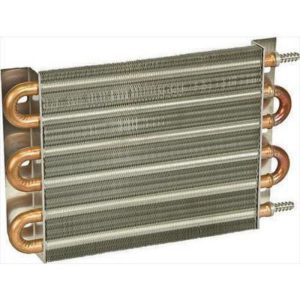
- Power Steering Cooler 2
- Power Steering Fluid 5
- Power Steering Pump Bracket 1
- Power Steering Pump Pulley 3
- Power Steering Reservoir 3
- Sector Shaft Washer 2
- Steering Arm 9
- Steering Bell Crank 7
- Steering Block 3
- Steering Column 2
- Steering Column Adapter 1
- Steering Column Covers 3
- Steering Column Shaft Seal 1
- Steering Coupler 6
- Steering Gear Box Gasket 1
- Steering Gear Mount Bracket 5
- Steering Gear Sector Shaft 2
- Steering Gear Sector Shaft Bushing 1
- Steering Gear Sector Shaft Nut 1
- Steering Gear Sector Shaft Seal 2
- Steering Gear Shim Kit 1
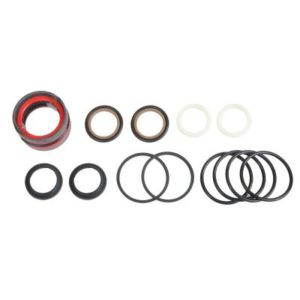
- Steering Gear Valve Ring/Seal Repair Kit 1
- Steering Gear Worm Shaft 3
- Steering Gear Worm Shaft Bearing 2
- Steering Gear Worm Shaft Seal 4
- Steering King Pin Bearing 2
- Steering Shaft Bellcrank Bearing Seal 1
- Steering Shaft Coupling Boot 3
- Steering Shaft Coupling Clamp 1
- Steering Shaft Coupling Nut Bearing 8
- Steering Shaft Coupling Nut Spring 1
- Steering Shaft Retainer 3
- Steering Wheel Insert 2
- Steering Wheel Installation Kit 7
- Tie Rod 3
- Tie Rod Adapter Sleeve 1
- Tie Rod Assembly Components 1
- Tie Rod End Adjusting Sleeve Clamp 3
- Tie Rod End Kit 2
- Tie Rod Reinforcing Sleeve 1
Popular steering parts
-
-
-
Steering Stabilizer
Rubicon Express Monotube Steering Stabilizer – RXJ2000B
- Front steering stabilizer for the 2007-2018 Jeep Wrangler JK, two-door and four-door
- 36mm monotube gas pressure design
- Bolt-on OE replacement, reuse the factory hardware
- Powder coat finish, part number RXJ2000B
SKU: R/ERXJ2000B -
Steering Stabilizer Kit
Pro Comp Pro Runner Single Steering Stabilzer – ZX2904
- Pro Comp ZX2904 single monotube steering stabilizer from the Pro Runner Series
- Fits 2005–2018 Ford F-250 and F-350 Super Duty and 2018 Ram 2500 and 3500
- Helps reduce bump steer from oversized tires, per the manufacturer
- Stabilizer only; the boot and bracket inclusion needs confirming
SKU: EXPZX2904 -
Steering Stabilizer Bracket
Pro Comp Single Steering Stabilizer Bracket – 2508
- Pro Comp single steering stabilizer bracket, part number 2508
- Mount only, for the ES2000 steering stabilizer shock
- Designed for an I-beam axle
- Includes bracket and mounting hardware
- Fits older Dodge, Ford, Jeep and Isuzu vehicles, 1941 to 1997
SKU: EXP2508 -
-
-
Steering Stabilizer
Pro Comp Steering Stabilizer Cylinder – 218000
- Pro Comp 218000 single steering stabilizer from the ES2000 series, front position
- Helps reduce wheel vibration and bump steer from oversized tires or rough roads
- Fits the 1999-2006 Chevrolet Silverado 1500
- Brackets and shock boot not included
SKU: EXP218000


Steering linkage and spec reference
How the common front steering layouts differ, plus sample specs taken from parts in this section. Use them to see what changes when you move from a factory linkage to a built one.
Common linkage layouts
| Inverted Y (Jeep TJ, XJ, ZJ) | Tie rod ties into the drag link, not both knuckles |
|---|---|
| Knuckle to knuckle (Jeep JK) | Tie rod spans both knuckles; drag link meets one |
| High steer / crossover | Linkage rides on top of the knuckles via steering arms |
| Hydraulic assist | Ram added to a normal box and mechanical linkage |
| Full hydraulic | Orbital valve and ram; no shaft to the axle |
Dry-steer check
- Park on pavement with the engine running so power assist is active
- Have a helper rock the steering wheel a few inches each way
- Watch each joint in order: shaft, box mount, pitman, drag link, tie rod
- Any joint that moves before the part it drives is worn or loose
- Look for frame flex at the box mount; that points to a brace or mount
Specs from listed parts
| Borgeson 1966–77 Bronco box | Power assist, 14:1 ratio, cast iron |
|---|---|
| TeraFlex HD tie rod end | 7/8"-18 left-hand thread, large taper |
| Artec D60 knuckle bolt | 3/4"-16, grade 8, 10" long |
| Trail Gear ram cylinder kit | 8" double-ended ram with clevis ends |
| Trail Gear ram hose | 50" long, single line |
| Crown factory-style wheel | 17", 3-spoke, 2 3/8" horn button |
Know before you order
- Manual or power steering; shafts and boxes differ between the two
- Two-door or four-door body, since some linkage lengths change
- Front axle model (Dana 30, 44, 60 and so on) and knuckle style
- Tie rod end taper size and thread hand on each side
- Lift height, which decides whether a drop pitman arm is needed
- Single or dual stabilizer mount, and the axle tube diameter for clamps
Steering parts are often side- and year-specific. Match the part number to your vehicle and get an alignment after changing linkage.
All Steering Parts 746 parts
-
-
-
Steering Stabilizer
King Shocks 2.0 Steering Stabilizer – 20001-152
- Fits 2007–2016 Jeep Wrangler (JK) models, including Unlimited
- King Shocks 2.0 Series single steering stabilizer, part number 20001-152
- Balanced flow piston technology for control over unwanted steering forces
- Shock boot and brackets not included
SKU: KST20001-152 -
-
Tie Rod End
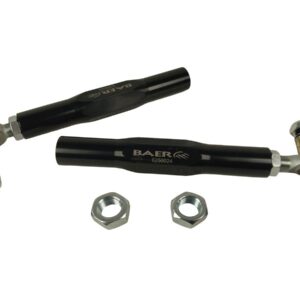
Baer Brakes Tracker Adjustable Front Tie Rods Bump Steer Kit For 88-98 GM C10 Trucks – 3301010
 Tie Rod End
Baer Brakes Tracker Adjustable Front Tie Rods Bump Steer Kit For 88-98 GM C10 Trucks – 3301010
- Baer Brakes Tracker adjustable front tie rod kit, part number 3301010
- Fits 1988–1998 GM C10 2WD trucks and 1992–1999 C10 2WD SUVs with stock spindles
- Adjusts 0.875 inch at the spindle with an 8.125 inch sleeve
- Includes two tie rods, adjusting sleeves, locking nut, mounting hardware and washers
- Black e-coated 6061 T-6 aluminum tie rods with Teflon lined 5/8 inch heim joints
SKU: 3301010-BKCZ -
-
Hydraulic Steering
Trail Gear Hydro Assist Ram Kit – 130251-1-KIT
- Rock-Assault ram steering assist kit with a 6″ x 1.5″ stroke hydraulic ram
- 3/4″ rod; brackets formed from 1/4″ plate steel
- Built for 1979-1995 Toyota Pickup and 1985-1995 4Runner with solid front axle
- Trail Gear estimates about one hour to install the ram once the steering box is tapped
SKU: TGI130251-1-KIT -
-
Steering Stabilizers

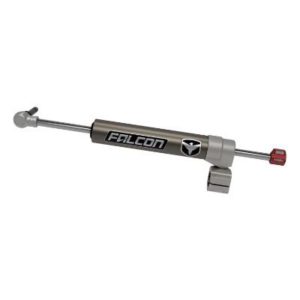
TeraFlex Falcon Nexus EF 2.2 Fast Adjust Steering Stabilizer for HD 1-5/8 Inch (42mm) Tie Rod – 01-02-22-110-158
 Steering Stabilizers
TeraFlex Falcon Nexus EF 2.2 Fast Adjust Steering Stabilizer for HD 1-5/8 Inch (42mm) Tie Rod – 01-02-22-110-158
- Fits 2007–2018 Jeep Wrangler JK and JKU
- Built for the heavy-duty 1-5/8 inch (42mm) tie rod
- Three-position Fast Adjust knob with soft, medium and firm settings
- Brackets included with this single stabilizer
SKU: TER01-02-22-110-158 -
Steering Stabilizers
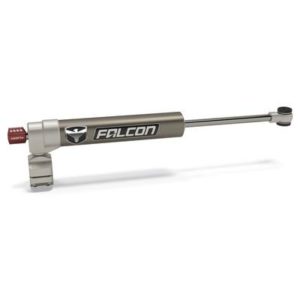
TeraFlex Falcon Nexus EF 2.2 Fast Adjust Steering Stabilizer – 01-02-22-110-1582
 Steering Stabilizers
TeraFlex Falcon Nexus EF 2.2 Fast Adjust Steering Stabilizer – 01-02-22-110-1582
- Covers 2007–2018 Jeep Wrangler JK, 2- and 4-door models
- Fast Adjust knob with soft, medium and firm settings
- Available for a stock 1-3/8 inch or heavy-duty 1-1/2 or 1-5/8 inch tie rod
- Single stabilizer, direct fit
SKU: TER01-02-22-110-1582






How the steering system fits together
On most 4x4s the steering wheel turns a steering shaft that drives a steering gear box. The gear box moves a pitman arm, which pushes a drag link that moves the steering knuckle or arm on one wheel. A tie rod connects the two wheels so they turn together. A power steering pump, reservoir and hoses supply hydraulic assist in most vehicles. A steering stabilizer, a damper that mounts across the linkage, calms vibration and shock from the front wheels.
Main part families
- Stabilizers and brackets: single and dual steering stabilizer kits, cylinders and mounting brackets that reduce steering wheel shake.
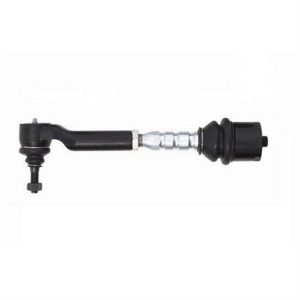
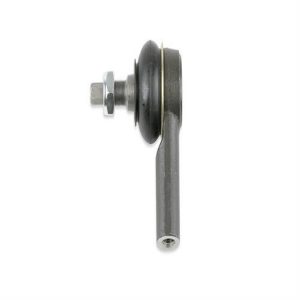
- Tie rods, ends and drag links: assemblies, adjusting sleeves, boots and heavy-duty replacement ends.
- Gear boxes and braces: replacement boxes, seals, mounts and braces that stiffen the frame mounting area.
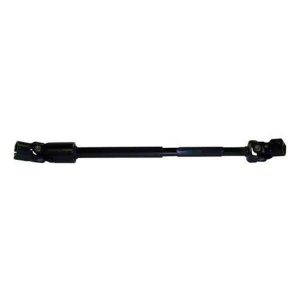
- Shafts and couplers: lower steering shafts, u-joints and couplers, including heavy-duty telescopic shafts.
- Power steering: pumps, reservoirs, caps, return and pressure hoses, fluid and hydraulic assist systems.
- Steering knuckles and arms: including high steer arms for lifted vehicles.
- Steering wheels and installation kits: replacement or aftermarket wheels with the adapters that mount them.
Choosing for your use
- Repair or upgrade: factory-style replacements restore stock behavior, while upgrades like heavy-duty tie rods or high steer arms suit larger tires, lifts and heavy use.
- Lift height: taller lifts can change linkage angles, which can call for drop pitman arms, drag link adjustments or a stabilizer with different travel.
- Tire size: larger tires load the steering more and may call for stronger parts.
- Vehicle detail: two- and four-door models, steering gear type and year ranges can all change fitment.
Safety and installation
Steering is a safety system. Loose or worn parts can cause wandering, a vague feel or loss of control, so inspect ends and joints regularly for play, torn boots and leaks. Use the correct torque for each fastener, new cotter pins where specified, and the right tools for tapered joints. A professional alignment is recommended after replacing tie rods, drag links or steering geometry components. When in doubt, have a qualified shop handle installation and inspection.
Always confirm fitment for your exact year, make and model, and follow the manufacturer's specifications, then compare the products below.
Keeping the steering system healthy
Regular inspection catches problems early. Look at boots and seals for tears, check the power steering fluid level and color, and look for leaks at the pump, hoses and gear box. Fluid that is dark or smells burned should be changed using the type the vehicle maker specifies. Grease the fittings on greasable ends and check that stabilizer mounts and bushings remain tight.
Rotate and balance tires on schedule and keep tire pressures even, as uneven pressure can create pull that mimics steering trouble. If the steering wheel is off-center, vibrates or the vehicle wanders, have it inspected promptly.
When shopping, start from the symptom. A vibrating wheel after hitting a bump points toward a stabilizer or tie rod end, a heavy or noisy wheel suggests the pump or fluid, and excessive play points to the gear box or linkage. Replace related worn parts together, such as both tie rod ends on an axle, so the repair lasts and alignment is stable.
Popular Steering Parts brands
- Crown Automotive (121)
- Pro Comp Suspension (103)
- Skyjacker (77)
- Omix-Ada (74)
- Trail Gear (45)
- Rancho (44)
- Fabtech (40)
- Borgeson Steering (36)
- Moog (32)
- TeraFlex (28)
- PSC Steering (24)
- Rugged Ridge (23)
Steering Parts FAQ
What does a steering stabilizer do?
A steering stabilizer is a damper that mounts to the steering linkage to reduce shake and shock from the front wheels, which helps with oversized tires and rough terrain. It does not repair worn steering components.
How do I know which steering part is worn?
Look for play in the wheel, clunks, wandering, uneven tire wear or leaks around the gear box and hoses. A technician can check ends, joints and the box with the front end lifted.
Do I need an alignment after replacing steering parts?
Usually yes, especially after tie rods or drag link work. Parts like these affect toe, so an alignment helps protect tires and keep the vehicle tracking straight.
Will a lift change my steering parts needs?
It can. Lifts change linkage angles, and larger tires add load. Drop pitman arms, high steer kits or longer stabilizers are among the parts people consider. Follow your lift manufacturer's recommendations.