





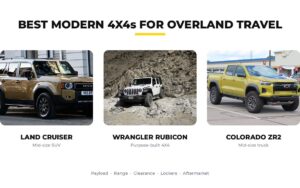
Twelve current 4X4s judged the overland way: payload, range, clearance, lockers, roof load and aftermarket support, with the numbers from each maker.
Overlanding & Camping
Gear for overland travel and trailside camping, including tents and awnings, camp storage bags, overland racks, fridge freezers, cooking equipment and camp furniture. It is aimed at anyone planning multi-day trips beyond the pavement. Brands include Smittybilt, ARB 4×4 Accessories, Rhino-Rack USA and H3R Performance. Open a product page for part numbers and details, then compare the products below.

When the trip runs longer than a day, your truck becomes the camp. This section gathers the shelter, kitchen, storage and rack pieces that let you sleep, cook and stay organized far from town.
General camp gear is the biggest group: trail tools, chairs, extinguisher mounts and tent accessories. Tents and awnings cover rooftop, SUV and truck tents, 180 and 270 degree awnings, walls and mesh rooms. Storage bags and hard cases keep gear dry, overland racks give you a place to mount it all, and the cooking group covers stoves, griddles and a camp oven. Plan around sleeping first, then the kitchen.
144Parts listed
26Brands
5Part types
3–4Rooftop tent sleep count
270°Widest awning coverage
56" x 60"ADD-Lander rack size
Shop overland and camp gear
Popular overland gear
-
Roof Top Tents
Thule Tepui Low-Pro 2 Roof Top Tent (Light Gray) – 901002
- Thule Tepui Low-Pro 2 roof top tent, part number 901002, light gray
- Accommodates up to two people
- Ultra low profile folds down to 10 in. (25 cm)
- Thermoplastic base and lightweight all-season dome canopy
- Stated fitment: Universal Fit; check vehicle roof fit
SKU: THU901002 -
Roof Top Tents
Smittybilt GEN2 Overlander Tent XL – 2683
- GEN2 Overlander Tent XL, part number 2683, sleeps four
- Second-generation rooftop tent with above-ground sleeping quarters
- Sets up in minutes and is completely self-contained
- Bedding and accessories stored inside during travel
- Universal fit per the manufacturer
SKU: S/B2683 -
Backpacks & Storage Bags
Go Rhino Xventure Gear Hard Case (X-Large) – XG252014
- Go Rhino Xventure Gear Hard Case, X-Large, part number XG252014
- Injection-molded high impact PPC thermoplastic
- IP67 waterproof rating and UV-safe
- Stackable with finger-safe flex latches
- Limited lifetime warranty
SKU: ORPXG252014 -
-
Backpacks & Storage Bags
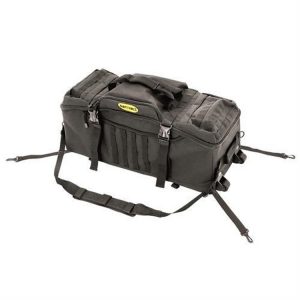
Smittybilt Trail Gear Bag with Storage Compartment (Black) – 2826
- Smittybilt trail gear bag with storage compartment in black, part number 2826, UPC 631410114232
- 1000 denier ballistic nylon with five zippered compartments
- Two internal mesh separators; integrated tie-down points
- Roller wheels, backpack straps and hideaway rain cover
SKU: S/B2826 -
Backpacks & Storage Bags
Rockagator Hydric Series 40L Waterproof Backpack (Original) – HDC40ORIG
- Rockagator Hydric Series 40L waterproof backpack, part number RKGHDC40ORIG, in black
- Universal Fit, not built for a specific vehicle
- 40-liter capacity, rated 100% quick-submersion waterproof
- Top cinch strap with UTX clip, two hypalon tether points and daisy-chain straps
SKU: RKGHDC40ORIG -
Camping Tools
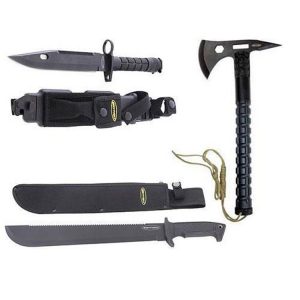
Smittybilt Explorer Tool PAK – TRAILTOOLPKG3
- Explorer Tool PAK, model TRAILTOOLPKG3, with a TRU knife, trail machete and trail axe
- TRU knife has a 7.75-inch blade; machete has a 13.75-inch blade
- Trail axe with 402 stainless head and survival kit with compass
- Universal fit; hand tools not tied to a vehicle
SKU: S/BTRAILTOOLPKG3
Camp planning reference
Standard weights, fuel behavior and extinguisher classes worth knowing before you load up, plus specs from racks and gear in this section.
What your supplies weigh
| Water | About 8.3 lb per gallon |
|---|---|
| Gasoline | About 6 lb per gallon |
| Diesel | About 7 lb per gallon |
| Propane | About 4.2 lb per gallon |
| 20 lb propane tank, full | About 4.7 gallons of propane |
| Drinking water, rule of thumb | 1 gallon per person per day |
Racks and gear specs
| ADD-Lander overland rack | 56" wide, 60" long, 5 planks, no drilling |
|---|---|
| Fab Fours Tacoma rack, 2016–2023 | 12 GA steel, pod mounts, access step |
| Fab Fours rack cross members | 11 GA plate steel |
| Smittybilt Galley stove | Propane, isobutane or butane |
| Camp Chef outdoor oven | Dual 7,500 BTU brass burners |
| Smittybilt trail gear bag | 1000 denier ballistic nylon |
Stove fuels in the cold
| Boils at | Cold-weather use | |
|---|---|---|
| Propane | About -44°F | Works well in winter |
| Isobutane | About 11°F | Fine to around freezing |
| Butane | About 31°F | Weak near or below freezing |
Fire extinguisher classes
| Class A | Wood, paper, fabric, trash |
|---|---|
| Class B | Fuel, oil and other flammable liquids |
| Class C | Energized electrical equipment |
| Class K | Cooking oils and fats |
| Mounts in this section | 1-3/4" and 2-1/4" roll bar clamps |
Weights are approximate. Add up water, fuel, tent and rack, then compare the total with the payload on your door jamb label before a long trip.
All Overlanding & Camping 161 parts
-
Overland Racks
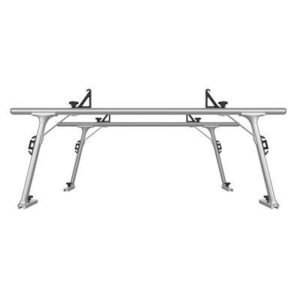
Thule TracRac SR Truck Rack – 43001XT
- Thule TracRac SR sliding truck rack, part number THU43001XT
- Slides into different positions for loads of different sizes
- Load capacity of up to 1250 lbs
- Direct fit for compact pickups from 1994–2019, including Ford Ranger and Nissan Frontier
- Direct fit, with specific vehicles listed
SKU: THU43001XT -
Roof Top Tents
Thule Tepui Low-Pro 2 Roof Top Tent (Light Gray) – 901002
- Thule Tepui Low-Pro 2 roof top tent, part number 901002, light gray
- Accommodates up to two people
- Ultra low profile folds down to 10 in. (25 cm)
- Thermoplastic base and lightweight all-season dome canopy
- Stated fitment: Universal Fit; check vehicle roof fit
SKU: THU901002 -
-
-
-
-
Fridge, Coolers & Accessories
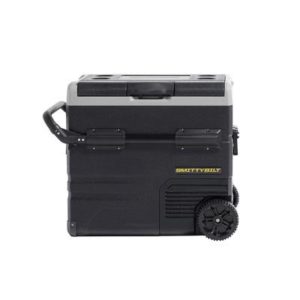
Smittybilt Waypoint 55L Fridge/Freezer – 2889
- Waypoint 55L battery-powered dual zone fridge freezer, part number 2889
- Bluetooth smartphone controls, removable wheels and extendable handles
- Dual zone freezing and cooling
- Solar panel ready; battery life up to six hours
- Universal fit; spare batteries sold separately
SKU: S/B2889
Building an overland setup
Overlanding is vehicle-supported travel where the route is as much the goal as the destination. A workable setup covers four needs: shelter, food and water, storage and organization, and carrying capacity. Start with how many days you want to be self-sufficient and how many people travel, then add gear in that order instead of buying everything at once.
Shelter and shade
Awnings attach to a roof rack or bar system and give shade or rain cover along one side of the vehicle. Some accept wall panels or annexes that turn them into an enclosed space. Roof top tents and truck or SUV tents offer a sleeping option; roof top tents add weight on the roof, so check the static load rating of your rack and the roof limit in your owner's manual.
- Check the packed size and weight.
- Look at fabric weight and waterproof ratings for your climate.
- Confirm the mounting hardware is compatible with your rack.
Food, water and cooking
A 12-volt fridge freezer keeps food cold without ice, but it draws power, so think about your battery setup and whether you need a dual battery or portable power station. Consider fuel type and wind protection for stoves, and pack water containers that fit your storage layout.
Storage and carrying capacity
Weatherproof luggage bags, drawer systems and roof-mounted cargo carriers keep gear dry and organized. Keep heavy items low and near the vehicle's centerline, secure everything with rated tie-downs, and stay within the payload rating of your vehicle. Overland racks and truck bed racks extend usable space but add weight and wind resistance.
Every item you add changes the load. Add up the weight of tents, water, fuel, a fridge and recovery gear, and compare the total with your vehicle's payload rating on the door jamb label. Water is heavy at roughly eight pounds per gallon, so carry it low. If you run a fridge or lights from the vehicle's electrical system, fuse each circuit properly and consider a dedicated battery so you can still start the engine at the end of a long camp stay.
Fitment and compatibility
Many items here are universal fit, but racks, mounts and awning brackets can depend on the vehicle and the existing rack system. Confirm fitment for your exact year, make and model, and check the manufacturer's specifications for loads and mounting requirements before a trip. Test your setup at home before heading out.
A good habit is to test every piece of gear before you leave. Set up the awning and tent in the driveway, run the fridge overnight, light the stove and check that your storage bags actually fit the vehicle with the rear seats in use. Keep a packing list sorted by category and weigh heavy items if you are close to payload limits. Leave no trace principles apply: pack out your trash, use established sites and follow fire restrictions, which can change quickly in dry seasons. Carry basic recovery gear, a first aid kit, a paper map and extra water in addition to the camp equipment, because a comfortable camp does not help if you cannot reach it or get back out. Finally, check regulations for the land you plan to visit, since permits and camping rules vary.
Related guides
- The Best Modern 4X4s for Overland Travel
Popular Overlanding & Camping brands
- Smittybilt (32)
- ARB 4x4 Accessories (28)
- Rhino-Rack USA (10)
- H3R Performance (10)
- AO Coolers (10)
- Rightline Gear (9)
- Thule (8)
- Rampage (7)
- Rockagator (6)
- Camp Chef (5)
- Fab Fours (5)
- Fishbone Offroad (4)
Overlanding & Camping FAQ
What do I need to start overlanding?
A reliable, well-maintained vehicle, basic recovery gear, navigation, water, food and a way to sleep. Add storage, shade and a fridge as your trips get longer. Practice setting everything up at home first.
Can my roof support a roof top tent?
Check two numbers: your vehicle's roof load limit and your rack's static rating. Both must exceed the tent's weight plus occupants and gear when parked. Dynamic limits apply while driving, and are usually lower.
How do I power a camping fridge?
Most 12-volt fridges plug into the vehicle's accessory outlet, but a dedicated, fused circuit is better. For long stays, a second battery or portable power station prevents draining the starting battery.
Do I need an awning if I have a tent?
Not strictly, but an awning provides shade and a dry area for cooking and gear. It attaches to a rack or bar system on the vehicle, so confirm your rack's mounting compatibility.