




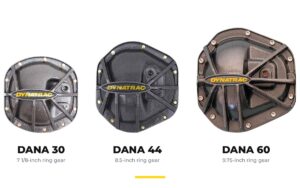
Dana 30 vs Dana 44 vs Dana 60: how to identify the axle under your Jeep or truck, what each one handles, and when…
Ring and Pinions
Showing 25–36 of 390 resultsSorted by popularity
-
-
-
-
-
-
-
-
Performance Axle Components
G2 Ring and Pinion Set, Dana 35 / M190 Rear 5.13 Ratio – 2-2149-513
- Rear ring and pinion set for Dana 35 / M190, 5.13 ratio, part G/22-2149-513
- Rear axle location with Dana 35 axle type
- Designed for oversized tires and high-power engines.
- No vehicle models or years are named
SKU: G/22-2149-513 -
-
-
Performance Axle Components
G2 Ring and Pinion Set, Dana 30 / M186 Front 5.38 Ratio – 2-2050-538R
- Front ring and pinion set, Dana 30 / M186, 5.38 ratio, part G/22-2050-538R
- Front axle location with Dana 30 axle type
- Designed for oversized tires and high-power engines.
- No vehicle models or years are named
SKU: G/22-2050-538R -
Performance Axle Components

G2 Ring and Pinion Set, AAM / GM 14 Bolt 11.5 Front 4.56 Ratio – 2-2024-410
 Performance Axle Components
G2 Ring and Pinion Set, AAM / GM 14 Bolt 11.5 Front 4.56 Ratio – 2-2024-410
- Front ring and pinion set for AAM / GM 14 Bolt 11.5-inch axles, part G/22-2024-410
- Gear ratio to confirm before ordering (4.10 or 4.56)
- Designed for oversized tires and high-performance engines
- No vehicle models or years are named
SKU: G/22-2024-410
What a ring and pinion set does
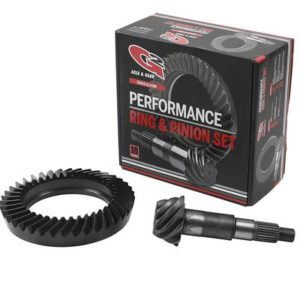
The ring gear bolts to the differential carrier, and the pinion gear on the end of the driveshaft meshes with it. Their tooth-count ratio sets the final drive ratio. A 4.56 ratio, for example, means the driveshaft turns 4.56 times for every turn of the axle shaft. Lower numbers are taller gears for highway cruising, and higher numbers are shorter gears that restore pull with larger tires.
Choosing a ratio
Gear ratio is usually chosen to compensate for tire diameter. After a lift and larger tires, an engine can feel sluggish and fuel economy often drops, because the effective gearing has become taller. Regearing brings back lost acceleration and lets an automatic transmission shift less often.
- Stock tire size to about 33 inches: many vehicles move up one or two steps from the factory ratio.
- 35 inch tires and larger: higher numerical ratios, such as 4.88 or 5.13, are common on lighter engines.
- Heavy trailers or crawling use: shorter gears help, but expect higher engine speed at highway speeds.
Front and rear must always match. Many Jeep listings here are sold as front and rear pairs for that reason, such as kits for TJ, XJ, YJ, and JK Rubicon models.
Specs to compare
- Axle model and size, for example Dana 44, Ford 9 inch, or Chrysler 8.25 inch.
- Ratio and whether the set is thick or standard, which depends on the carrier.
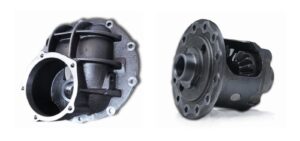
- Carrier compatibility, since some ratios need a specific carrier break.
- Front or rear use, and whether the axle is IFS or solid.
- Included hardware, which is often limited to the gear set itself.
Installation notes
Setting up ring and pinion gears is precision work. Pinion depth, backlash, and bearing preload must be measured and adjusted with shims, and a gear marking compound pattern check confirms the setup. Incorrect setup causes noise and early failure, so many owners leave this to an experienced shop. You will usually also need a bearing and seal installation kit, and fresh gear oil with a proper break-in period.
Confirming fitment
Axle sizes vary within the same model by year and option package. Identify your axle by tag, tooth count, or housing, and confirm fitment for your exact year, make, and model using the manufacturer specifications.
Break-in and maintenance
New gears need a gentle start. Most gear makers recommend a break-in period of roughly the first 500 miles, with moderate speeds, no towing, and cool-down stops on long drives, followed by a gear oil change to flush the fine metal particles from the first heat cycles. Use the gear oil grade and any friction modifier the axle maker specifies, especially if the axle has a limited slip carrier. Afterward, listen for whining on acceleration and deceleration, which can point to a poor contact pattern or loose preload. Check the axle breather and the axle seals for leaks during oil changes. If you changed ratios, correct the speedometer and any traction control calibration so readings match the new gearing.
Related guides
- Dana 30 vs Dana 44 vs Dana 60: Which Axle Is Under Your Jeep or Truck, and When to Upgrade
- Is the Legendary Ford 9-Inch Overrated? Why Modern 4X4s Are Switching to the 8.8
Ford 9-inch vs Ford 8.8: how the two axles differ in gearing, pinion support and shaft retention, and why the 31-spline 8.8 is the…
Popular Ring and Pinions brands
- G2 Axle and Gear (317)
- Motive Gear (30)
- Dana Spicer (29)
- Alloy USA (17)
- Genuine Packages (6)
- Crown Automotive (3)
- Rough Country (2)
- Omix-Ada (1)
- Jeep (1)
Ring and Pinions FAQ
What gear ratio do I need for 35 inch tires?
There is no single answer, but many vehicles with 35 inch tires use ratios around 4.56 to 5.13. Engine power, transmission, and vehicle weight all matter, so compare the ratio against your tire size and use.
Do I have to change both front and rear gears?
Yes. Front and rear axles must run the same ratio on a four-wheel-drive vehicle, or the transfer case and drivetrain bind. That is why front and rear kits are sold together for several Jeep models.
Can I install a ring and pinion myself?
It is possible with the right tools, but setup needs a dial indicator, shim selection, and pattern checking. Mistakes cause noise and damage, so many owners have the work done at a shop that does gear installs regularly.
What is the difference between a thick and standard ratio set?
Some axles accept gears with different ring gear thickness, usually tied to the carrier used. Thick sets are matched to a particular carrier design, so confirm which one your axle needs before choosing.