In the domain of automotive powertrain engineering and aftermarket high-performance fabrication, few solid rear axle architectures have achieved the ubiquity, durability, and empirical validation of the Ford 9-inch and the Ford 8.8-inch differentials. Introduced in 1957 and 1983 respectively, these two assemblies represent distinct eras of industrial manufacturing and mechanical prioritization. The Ford 9-inch, a front-loading axle with a removable carrier (the “third member”), was engineered during an era prioritizing raw torsional capacity, cast-iron modularity, and heavy-duty serviceability. The Ford 8.8-inch, a rear-loading integral-carrier (Salisbury-style) assembly, emerged from late-20th-century Corporate Average Fuel Economy (CAFE) mandates, prioritizing reduced parasitic driveline loss, automated assembly efficiency, and lower unsprung mass.
Below is a technical and historical comparison of the two axles: hypoid gear geometry, pinion support, axle shaft retention, metallurgy, and why the 8.8 has become the default swap for light-duty 4x4s and off-road trucks. The aim is a clear way to judge each assembly for street, trail, and competition use.
Key takeaways
- The Ford 9-inch is a drop-out design: the whole gearset lives in a removable third member, so ratio swaps take an hour and the pinion is supported on both sides of the gear.
- The Ford 8.8 is an integral-carrier (Salisbury) axle with a rear cover. Its smaller 1.50-inch hypoid offset runs cooler and wastes 2 to 5 percent less power than the 9-inch.
- Factory 8.8s hold the axle shafts with C-clips; the 9-inch uses a bolt-on bearing retainer plate that keeps the wheel on the truck if a shaft breaks.
- The 1995-2001 Explorer and F-150 8.8 (31-spline, 3.25-inch tubes, disc brakes, 5×4.5 pattern) is the cheapest serious upgrade for a Jeep YJ, TJ, XJ or Ford Ranger that has outgrown its Dana 35 or Chrysler 8.25.
- Above roughly 750 to 850 horsepower, for trans-brake launches, rock bouncing or custom link suspensions, the 9-inch with a nodular or billet third member is still the right call.
Where the Ford 9-inch and the 8.8 came from
The Ford 9-inch (1957 to 1986): built heavier than it needed to be
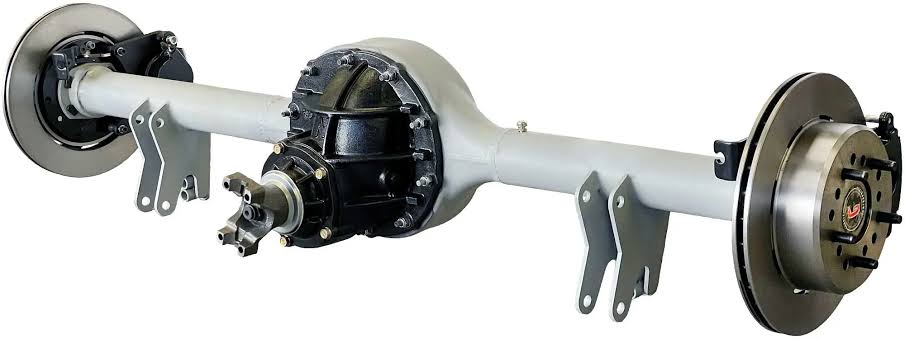
During the mid-1950s, American automotive manufacturers were engaged in a rapid escalation of engine displacement and gross vehicle weight ratings (GVWR). Ford Motor Company’s existing rear axle designs proved increasingly vulnerable to the high-torque outputs of emerging big-block V8 platforms. Debuting in the 1957 model year across passenger cars and light-duty F-Series pickup trucks, the Ford 9-inch was conceived as a universal, heavy-duty hypoid rear drive axle. For nearly three decades, the 9-inch served as the backbone of Ford’s rear-wheel-drive fleet, spanning applications from the compact Mustang and Shelby GT350 to full-size sedans, Broncos, and F-150 trucks. Its long OEM production run, which lasted until the mid-1980s, created a massive surplus of salvageable cores, which subsequently catalyzed the most comprehensive aftermarket manufacturing ecosystem in the history of automotive drivelines.
The Ford 8.8 (1983 to today): built for efficiency
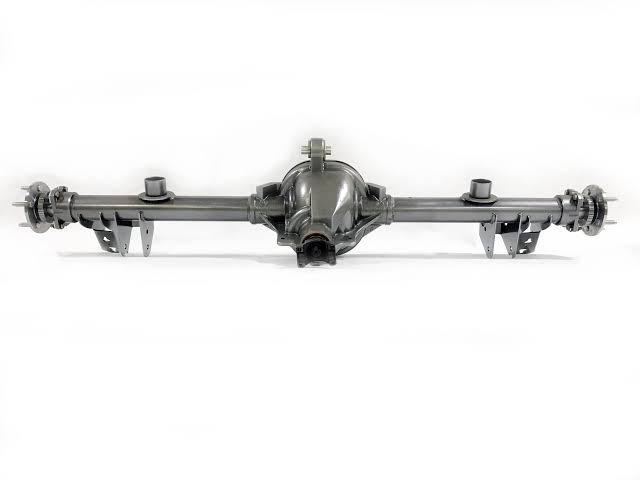
By the late 1970s, macroeconomic shifts and federal fuel economy regulations forced automotive engineers to scrutinize every source of mechanical friction and manufacturing expenditure. While the 9-inch was exceptionally robust, its stamped-and-welded sheet-metal housing was labor-intensive to produce, and its aggressive hypoid pinion offset generated substantial frictional heat and parasitic horsepower loss. In 1983, Ford commenced production of the Ford 8.8-inch axle at its Sterling Axle Plant in Sterling Heights, Michigan. Utilizing a cast-iron center section with pressed-and-plug-welded tubular steel outers, the 8.8-inch reduced manufacturing complexity while significantly improving mechanical efficiency. In 1986, the 8.8-inch famously debuted under the Fox-body Ford Mustang 5.0L, cementing its reputation as a highly capable performance axle. Simultaneously, Ford deployed the 8.8-inch across its light truck and utility fleet (the F-150, Bronco, Ranger, and Explorer), where it proved that an integral-carrier differential could rival or exceed the structural capacity of legacy drop-out axles while remaining in continuous production for over four decades.
Drop-out third member vs. integral carrier
The 9-inch banjo housing and its removable third member
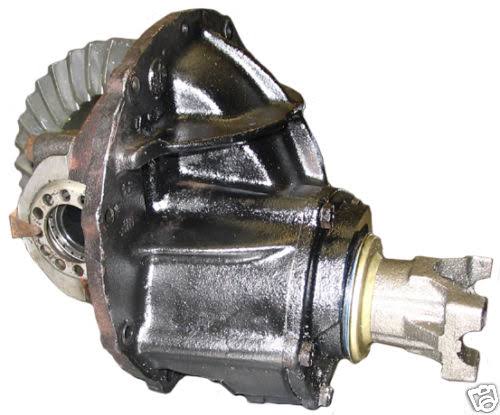
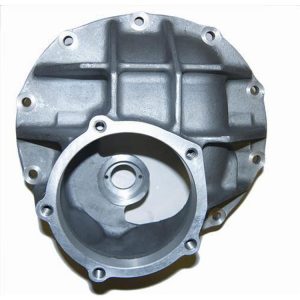
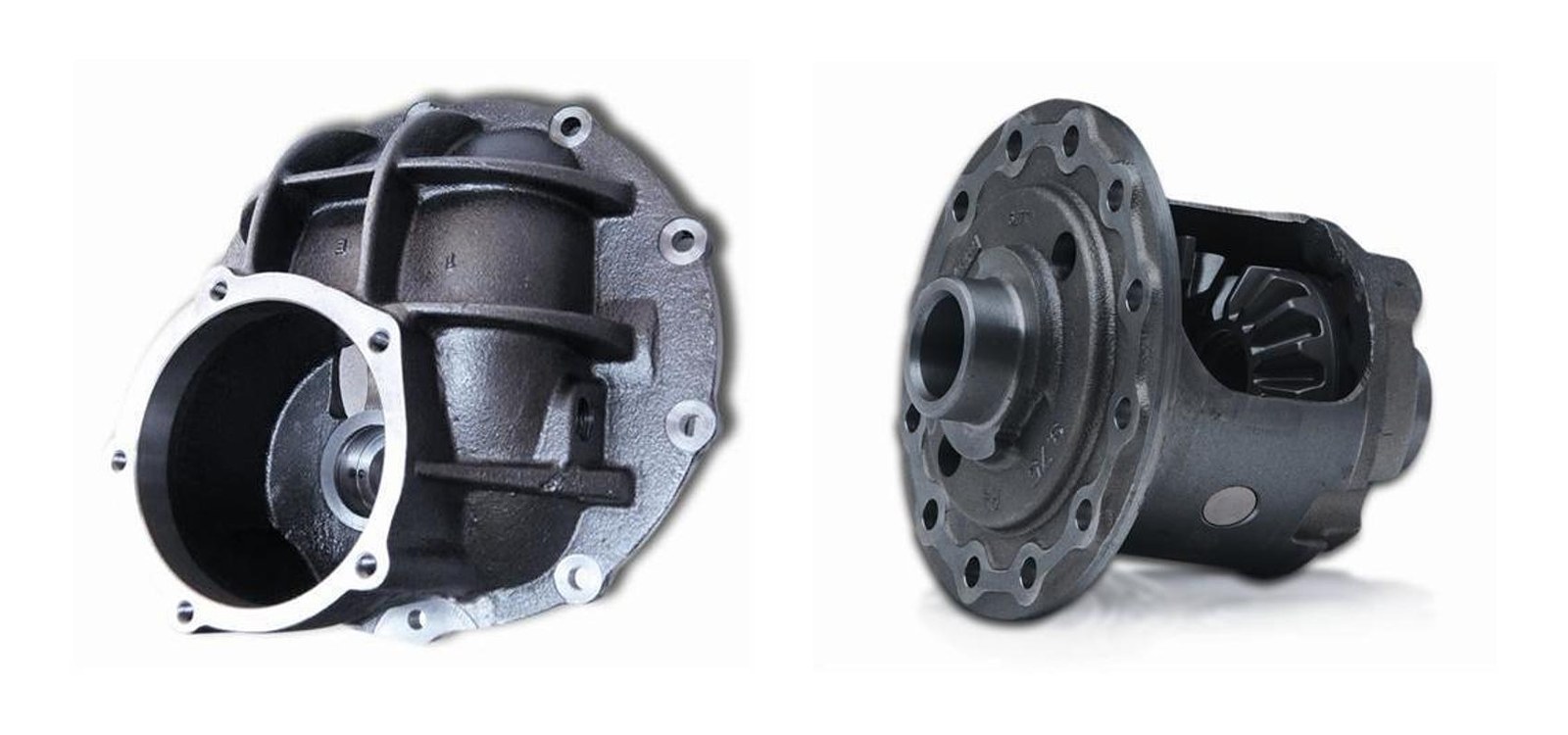
The primary architectural divergence between the two platforms lies in how the differential carrier and ring-and-pinion gearset are housed, supported, and serviced. The Ford 9-inch utilizes a Hotchkiss (or “banjo”) architecture, wherein the outer housing is a continuous, closed-back structural stamping (or fabricated plate assembly in aftermarket variants) with a circular aperture machined into its forward face. All internal gearing (the pinion gear, ring gear, differential carrier, and bearings) is self-contained within a removable cast-iron or billet-aluminum housing known as the third member or “pumpkin.” Because gear backlash, pinion depth, and bearing preload are established entirely within the removable third member on a workbench, a mechanic or race team can swap gear ratios in under an hour simply by sliding the axle shafts outward, unbolting the ten retaining nuts on the front of the housing, and bolting in a pre-configured center section. Furthermore, the absence of a rear inspection cover allows the back of the 9-inch housing to act as an unbroken structural bridge, resisting torsional deflection across the axle tubes.
The 8.8’s Salisbury housing
The Ford 8.8-inch employs an integral carrier, commonly referred to in drivetrain engineering as a Salisbury axle. The central differential housing is cast directly from nodular iron, and seamless steel axle tubes (ranging from 2.75 inches in passenger cars to a massive 3.25 inches in outer diameter on truck and SUV variants) are hydraulically pressed into machined bores in the casting and secured via rosette plug welds. By eliminating the redundant double-wall structure where a removable third member bolts into an outer housing, the Salisbury configuration lowers manufacturing cost and reduces unsprung weight in comparable OEM configurations. Setting up gears in an 8.8-inch axle must be performed inside the housing through a 10-bolt rear inspection cover (12-bolt on post-2015 “Super 8.8” units). Under extreme torsional shock, such as launching a high-horsepower drag car on slick tires or binding a large off-road tire in a rock crevasse, the factory press-fit and plug-welded junction between the steel axle tubes and the cast-iron center section on an 8.8-inch can experience rotational slip. Consequently, heavy-duty preparation of an 8.8-inch housing mandates full-circumference TIG or MIG welding of the axle tubes to the center casting, alongside the installation of a load-bolt stud girdle rear cover to prevent main cap deflection.
Gear geometry and power loss
Pinion offset and friction
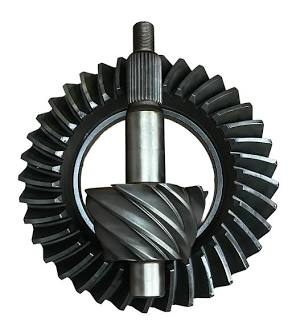
From a purely mechanical engineering perspective, the most compelling contrast between the Ford 8.8 and Ford 9-inch involves their hypoid gear geometry and internal bearing support structures. Both axles utilize hypoid bevel gears, wherein the centerline of the drive pinion is offset below the centerline of the ring gear to lower the vehicle’s driveshaft tunnel and increase the contact ratio between meshing gear teeth. However, hypoid offset introduces a combination of rolling and sliding action across the gear faces; the greater the offset, the greater the sliding velocity and resultant frictional losses. The Ford 9-inch incorporates a severe 2.25-inch hypoid offset, placing the pinion deep at the bottom of the ring gear to maximize tooth surface engagement and keep the pinion gear head physically large even at numerically high ring and pinion ratios (such as 4.56:1 or 5.14:1), but turning the gearset into a high-friction interface that incurs approximately 2% to 5% greater parasitic power loss than less offset differentials. Engineered specifically to combat this friction, the Ford 8.8-inch utilizes a moderate 1.50-inch hypoid offset (identical to the General Motors 12-bolt). By raising the pinion centerline closer to the centerline of the ring gear, sliding friction is substantially curtailed. The 8.8-inch therefore runs cooler on extended highway drives, improves fuel economy in daily-driven trucks and overland rigs, delivers noticeably higher wheel horsepower, and keeps the driveshaft universal joint higher out of harm’s way over rocks and trail obstacles.
Pinion support: the 9-inch pocket bearing vs. the 8.8’s overhung pinion
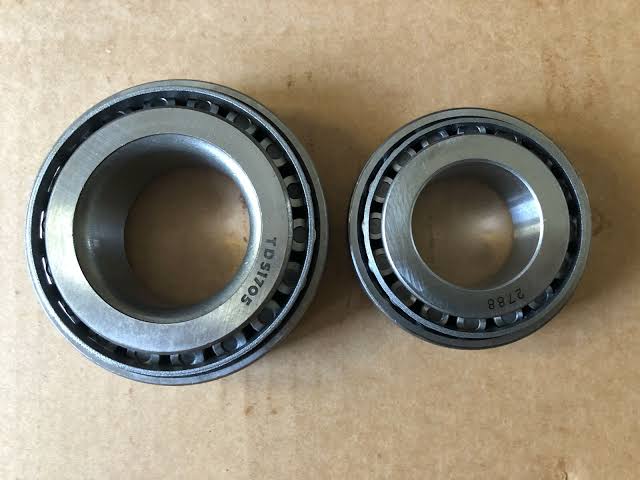
Under high-torque acceleration, the rotational force of the pinion gear attempts to climb the ring gear teeth, generating immense radial and axial separation forces that try to push the pinion gear away from the ring gear. The crowning mechanical triumph of the Ford 9-inch is its internal pocket bearing (pilot bearing). In addition to the two opposed tapered roller bearings supporting the pinion stem at the front of the case, the nose of the 9-inch pinion gear features a machined journal behind the gear teeth that rides inside a third cylindrical roller bearing cast directly into the interior web of the differential case. Because the pinion gear head is supported on both sides of the tooth mesh (straddle mounting), gear deflection under extreme shock loads is virtually eliminated. Conversely, like the Dana 60 and GM 12-bolt, the Ford 8.8-inch utilizes an overhung pinion design, where the pinion gear is supported solely by two tapered roller bearings along its shaft, leaving the gear head cantilevered inside the housing. To compensate for the lack of a rear pilot bearing, Ford engineered the 8.8 with an exceptionally thick pinion stem (1.625-inch diameter on standard 8.8s, and even larger on the post-2015 Super 8.8). While an overhung pinion remains inherently more susceptible to deflection than a straddle-mounted 9-inch pinion under 1,000+ horsepower drag racing launches, the massive pinion shank of the 8.8 provides more than enough rigidity to resist deflection under low-range 4×4 crawl ratios and high-torque street applications.
How each axle holds its shafts in
C-clips on the standard Ford 8.8
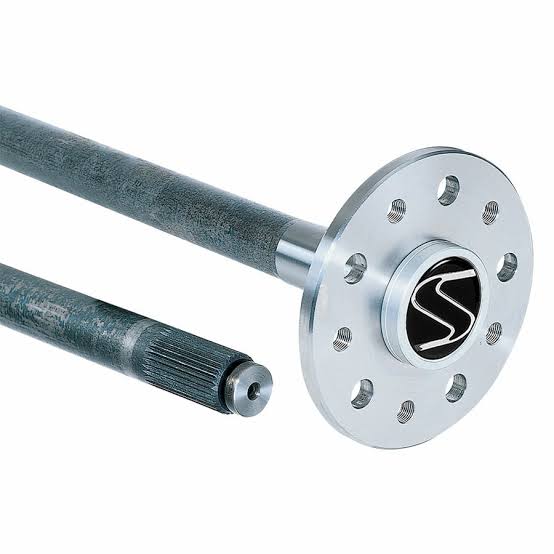
A critical safety and durability distinction between the two assemblies involves how the axle shafts are retained laterally within the housing tubes, as well as how vehicle weight is borne by the wheel bearings. In its factory solid-axle configuration, the Ford 8.8-inch is a semi-floating axle that utilizes internal C-clips (horseshoe-shaped retaining locks). The axle shafts slide through the outer wheel bearings into the differential side gears; a C-clip is inserted into a recessed groove at the inboard splined end of the shaft, and the differential cross-pin (spider gear shaft) is slid into place, preventing the axle from moving inward and dropping the clip. On factory C-clip 8.8 axles, the hardened steel axle shaft itself acts as the inner race for the cylindrical outer roller bearing; if a bearing fails or water and mud contaminate the gear oil during deep-water off-roading, the rollers will score the axle shaft directly, necessitating complete axle shaft replacement alongside the bearing. Furthermore, because lateral retention occurs entirely inside the differential carrier at the splined end of the shaft, if an axle shaft shears anywhere along its length due to torsional overload, nothing natively retains the wheel and tire assembly within the housing tube, though the caliper bracket on disc-brake-equipped 8.8 housings (such as the 1995–2001 Explorer) provides secondary emergency retention by trapping the brake rotor. Fortunately, off-road and drag-racing fabricators routinely cut the factory bearing ends off an 8.8 housing and weld on billet Ford 9-inch (“Big Ford / Torino”) housing ends or install bolt-on “Super 88” conversion kits, upgrading the 8.8 to press-on bearings with bolt-on outer retainer plates.
Press-on bearings and retainer plates on the Ford 9-inch
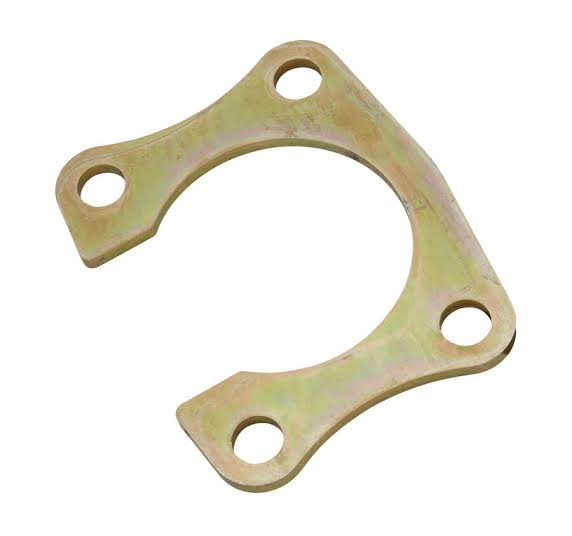
From its inception in 1957, the Ford 9-inch eschewed C-clips in favor of an external 4-bolt bearing retainer plate. A sealed ball bearing or tapered roller bearing (commonly categorized as “Small Ford” or “Big Ford / New Style Torino” ends) is hydraulically pressed onto a machined journal near the outboard wheel flange of the axle shaft. When the axle is slid into the housing, a heavy steel retainer plate bolts directly to the housing flange, capturing the outer race of the bearing. Consequently, even if an axle shaft snaps cleanly at the differential splines under a violent trans-brake launch or while bound between boulders on a trail, the outer bearing remains mechanically bolted to the housing end, keeping the wheel and brake assembly safely attached to the chassis.
Why the Ford 8.8 is the modern 4×4 swap
The problem with small factory 4×4 axles
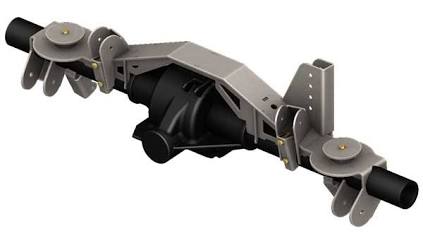
While the Ford 9-inch remains the undisputed monarch of professional drag racing and trophy trucks, the Ford 8.8-inch has emerged as arguably the most practical, cost-effective, and structurally balanced axle upgrade for modern light-duty 4x4s, mid-size pickups, and off-road trail rigs. Enthusiasts who modify light-duty 4×4 platforms, most notably Jeep Wranglers (YJ, TJ, and JK generations), Jeep Cherokees (XJ), Comanches (MJ), early Ford Rangers, Mazda B-Series pickups, and first-generation Toyota Tacomas or 4Runners, quickly encounter the mechanical threshold of their factory rear differentials. Stock assemblies such as the Dana 35 and the Chrysler 8.25 suffer from small ring gear diameters, thin-walled 2.5-inch to 2.75-inch axle tubes that bend over rough terrain, tiny 27-spline axle shafts, and archaic drum brakes. When an owner fits 33-inch to 37-inch mud-terrain tires and adds the weight of steel bumpers, winches, and overland camping gear, these factory axles fail with alarming regularity. Historically, upgrading to a custom-built Dana 44, Dana 60, or aftermarket Ford 9-inch required thousands of dollars in custom housing fabrication; however, drivetrain engineers and off-road fabricators realized that Ford had already mass-produced the ideal solution in millions of sport-utility vehicles and half-ton pickups: the 31-spline Truck and Explorer Ford 8.8.
Why the Explorer and F-150 8.8 works so well off-road
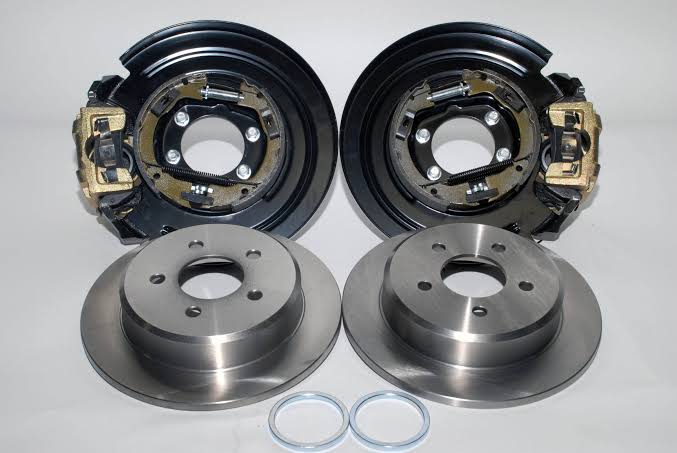
Specifically, the 1995–2001 Ford Explorer and 1997–2014 Ford F-150 / Ranger FX4 Level II variants of the 8.8-inch axle possess an extraordinary combination of heavy-duty specifications that outclass even a standard factory Dana 44. Unlike the passenger-car 8.8 found in Mustangs (which uses 2.75-inch tubes), the Explorer and F-150 8.8 features 3.25-inch outer diameter axle tubes with a full 0.250-inch (1/4-inch) wall thickness. In bending and beam-load resistance over severe off-road washboards and rocks, these 3.25-inch tubes are markedly stiffer than standard factory Ford 9-inch stamped housings or Dana 44 tubes, resisting housing camber deflection under heavy payload. At 8.8 inches in diameter, its ring gear is physically larger and thicker than a Dana 44 (8.5 inches), and its 31-spline, 1.32-inch diameter alloy shafts exceed the torsional yield strength of standard 30-spline Dana 44 shafts. Furthermore, the 1995–2001 Ford Explorer 8.8 measures approximately 59.5 inches from wheel-mounting surface to wheel-mounting surface (WMS-to-WMS), placing it within half an inch of the factory track width of a Jeep YJ, TJ, XJ, and Ford Ranger while natively sharing the 5×4.5-inch (5×114.3mm) wheel lug pattern and offering factory vented rear disc brakes with an integrated drum-in-hat parking brake. The compact nodular-iron center section of the 8.8 also provides nearly an inch more under-pumpkin ground clearance than a bulky Dana 60, preventing the differential housing from acting as an anchor in deep ruts and rock gardens.
The 12-bolt Super 8.8 in today’s half-ton trucks
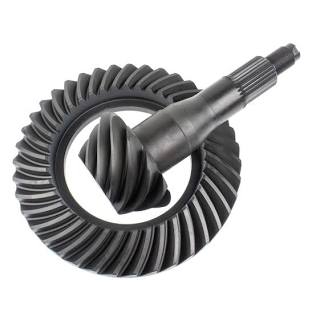
Ford’s confidence in the 8.8 architecture for truck applications culminated in 2015 with the introduction of the Super 8.8 under the thirteenth-generation aluminum-body F-150 fleet and S550 Mustang chassis. Tasked with handling the immense low-end torque surge of twin-turbocharged 2.7L and 3.5L EcoBoost V6 engines and the 5.0L Coyote V8 while towing upwards of 10,000 pounds, Ford enlarged the 8.8’s ring gear cross-section, expanded the rear housing cover to 12 bolts, upgraded the internal carrier to 34-spline axle shafts, and enlarged both the carrier and pinion bearings. In modern light-truck and 4×4 engineering, the solid-axle F-150 Super 8.8 demonstrates that an integral Salisbury axle can effortlessly manage modern half-ton towing and off-road abuse while maintaining the fuel-saving low-friction geometry required by contemporary emissions standards.
Castings, splines and aftermarket support
Factory vs. aftermarket Ford 9-inch cases
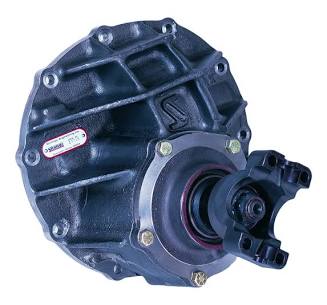
Neither axle is a monolithic entity; both underwent substantial metallurgical and dimensional evolutions throughout their production lifespans. A recurring misconception in automotive circles is that any salvage-yard Ford 9-inch is indestructible. Early passenger-car 9-inch third members were cast from standard gray iron, had thin vertical webbing around the main bearing caps, and utilized small-journal 28-spline axle shafts (1.21-inch diameter). Under high horsepower or severe off-road tire bind, a standard gray-iron 9-inch case will split cleanly across the pinion pilot bearing web or blow out the main caps. To withstand high-output factory engines (such as the 427 SOHC, 428 Cobra Jet, and Boss 429), Ford introduced specialized heavy-duty castings, most notably the “WAR” case and the legendary “N-case” (cast from high-strength nodular iron with thick structural ribs and a “Daytona” large-bearing pinion support). In the contemporary aftermarket, builders rarely rely on OEM castings, instead specifying third members cast from ductile iron or CNC-machined from 7075-T6 billet aluminum, fitted with 31-, 35-, or 40-spline forged alloy shafts.
| Engineering Parameter | Ford 8.8-Inch (Standard Car/Truck) | Ford Super 8.8 (2015+ Truck/IRS) | Ford 9-Inch (OEM / Aftermarket) |
| Housing Architecture | Integral Carrier (Salisbury) | Integral Carrier (Salisbury / IRS) | Drop-Out Carrier (Banjo / Third Member) |
| Rear Cover / Retention | 10-Bolt Rear Inspection Cover | 12-Bolt Rear Inspection Cover | Closed Back / 10-Stud Front Mount |
| Ring Gear Diameter | 8.80 Inches | 8.80 Inches (Thick Cross-Section) | 9.00 Inches |
| Hypoid Pinion Offset | 1.50 Inches | 1.50 Inches | 2.25 Inches |
| Pinion Bearing Support | Overhung (2 Tapered Bearings) | Overhung (2 Oversized Bearings) | Straddle-Mounted (3 Bearings w/ Pilot) |
| Axle Shaft Retention | Internal C-Clips (OEM) | C-Clip (Truck) / Circlip (IRS) | External 4-Bolt Bearing Retainer Plate |
| Axle Spline Counts | 28-Spline or 31-Spline | 34-Spline | 28, 31, 35, or 40-Spline |
| Axle Tube Diameter (O.D.) | 2.75 in. (Car) / 3.25 in. (Truck/SUV) | 3.25 in. (Solid Truck Axle) | 3.00 in. (Standard OEM & Aftermarket) |
Which axle to pick for your build
When the Ford 8.8 is the right axle
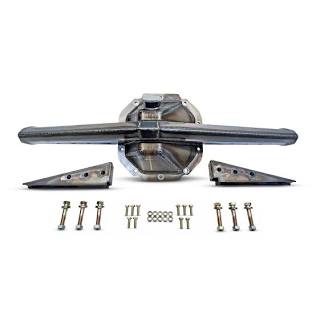
When evaluating whether to specify a Ford 8.8-inch or a Ford 9-inch axle for an engineering, off-road, or restoration build, the decision should be governed by peak shock torque, thermal efficiency, fabrication geometry, and service cadence. For light-to-medium-duty 4×4 conversions, overland trucks, and street-driven performance vehicles up to roughly 750–850 horsepower, the Ford 8.8-inch offers an unmatched balance of mechanical efficiency and structural strength. In the off-road sector, a 31-spline Explorer or F-150 8.8 provides 3.25-inch heavy-wall tubing, factory vented disc brakes, high pinion-yoke ground clearance, and vast aftermarket locker availability (including air lockers, electronic lockers, and mechanical automatic lockers) at a fraction of the weight and expense of a full-floating axle or custom 9-inch build. On the street and highway, its 1.50-inch hypoid offset transmits noticeably more horsepower to the tires, keeps differential oil temperatures lower during summer towing or overland expeditions, and preserves fuel economy. To maximize the 8.8 for severe off-road or drag strip duty, builders should weld the axle tubes fully to the center casting, install an over-the-top structural truss or stud-girdle rear cover, and upgrade to Torino 9-inch housing ends or a C-clip eliminator kit with 31- or 33-spline chromoly shafts.
When the Ford 9-inch is the right axle
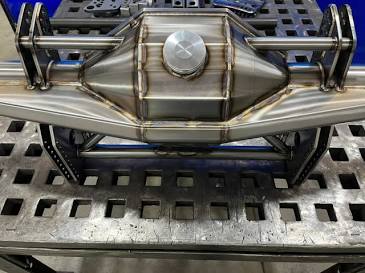
Once an application enters the realm of dedicated drag racing with trans-brake launches, ultra-heavy desert trophy trucks, rock bouncing, or four-digit horsepower, the straddle-mounted third pinion bearing of the Ford 9-inch (paired with an aftermarket nodular iron or billet aluminum third member and 35- to 40-spline axles) becomes mandatory to prevent ring-and-pinion deflection. Furthermore, because welding suspension links directly onto the cast-iron center section of an 8.8-inch requires specialized pre-heating and high-nickel filler procedures, custom builders fabricating triangulated 4-link, ladder-bar, or Watts-link suspensions overwhelmingly favor fabricated mild-steel or chromoly Ford 9-inch housings, which allow brackets to be TIG-welded cleanly anywhere along the continuous sheet-metal housing span. Finally, for competitive racers who frequently alter final drive ratios between venues, the drop-out third member of the 9-inch remains an irreplaceable mechanical advantage.
Frequently asked questions
What is the difference between a Ford 8.8 and a Ford 9-inch axle?
The 9-inch (1957-1986) is a drop-out axle: the ring and pinion, carrier and bearings sit in a removable third member that bolts into the front of a closed-back housing, the pinion rides in three bearings including a pocket bearing behind the gear, and the shafts are held by four-bolt retainer plates. The 8.8 (1983-present) is an integral-carrier axle serviced through a rear cover, with a two-bearing overhung pinion, a smaller 1.50-inch hypoid offset and C-clip shafts. The 9-inch is stronger at the extremes and quicker to re-gear; the 8.8 is lighter, more efficient and far cheaper because Ford built millions of them.
Is a Ford 8.8 strong enough for a Jeep on 35-inch tires?
A 31-spline Explorer or F-150 8.8 with 3.25-inch, quarter-inch-wall tubes handles 33- to 35-inch tires on a trail-driven Wrangler, Cherokee or Ranger once the tubes are welded to the center section and a truss or load-bolt cover is added. For 37s, lockers and hard use, add chromoly shafts with C-clip eliminators or 9-inch housing ends, or step up to a 9-inch or a Dana 60.
Which Ford 8.8 is the best one to swap into a Jeep or Ranger?
The 1995-2001 Explorer and Mountaineer rear axle. It has 31-spline shafts, 3.25-inch heavy-wall tubes, factory vented disc brakes with a drum-in-hat parking brake, the 5×4.5-inch lug pattern Jeeps and Rangers already use, and a width of about 59.5 inches between wheel mounting surfaces, within half an inch of a YJ, TJ, XJ or Ranger.
Does the Ford 9-inch really cost horsepower?
Yes, a little. Its 2.25-inch hypoid offset makes the gear teeth slide more against each other than the 1.50-inch offset of an 8.8 or GM 12-bolt, which costs roughly 2 to 5 percent more power as heat. That matters on a daily driver or an overland truck that spends hours on the highway; it is irrelevant on a drag car that needs the straddle-mounted pinion.
Can you weld suspension brackets to a Ford 8.8 housing?
The tubes are steel and weld normally, which is how trusses and swap brackets go on. The center section is nodular cast iron, so brackets welded to it need pre-heat and a high-nickel filler to avoid cracking. That is why fabricated 9-inch housings, which are plain steel end to end, are preferred for 4-link, ladder-bar and Watts-link builds.
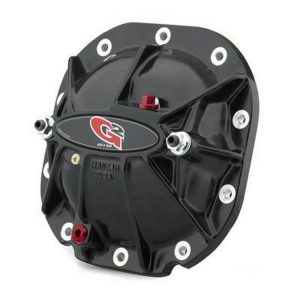
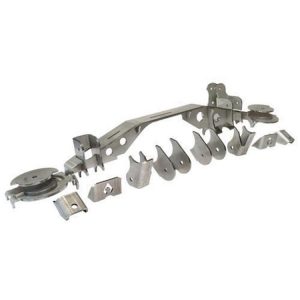
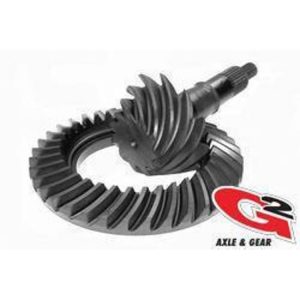
Building or re-gearing either axle? Start with the ring and pinion sets and ring and pinion installation kits, then browse differential covers, axle trusses and the rest of the differential parts catalog. If you are not sure which gearset or locker fits your housing, contact us and we will help you sort it out.