
Performance Axle Components
Performance Axle Components covers the internal and replacement parts used to rebuild, regear or strengthen Dana, Chrysler and Ford axles. Ring and pinion sets, differentials and lockers, axle upgrade kits, ball joints and housing parts come from brands such as G2 Axle and Gear, Dana Spicer, Moog and ARB. Check each product page for specifications, then compare the products below.
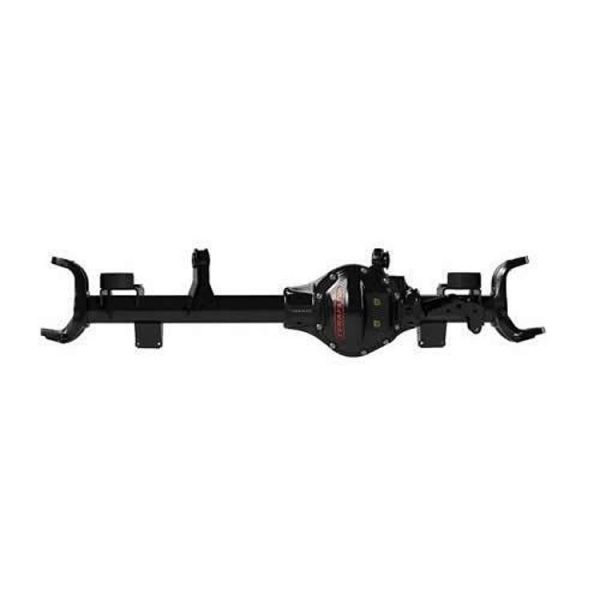
Bigger tires and harder trails load an axle far past what it saw from the factory. These are the gears, lockers, shafts, housings, ball joints and covers you use to regear, lock or rebuild a Dana, GM, Ford or Chrysler axle so it keeps up with the rest of the build.
Differential covers and ball joints make up the largest groups, followed by ring and pinion sets and axle upgrade kits. Differentials and lockers, complete housings and install kits come next, with smaller groups for king pin parts, air locker lines, seals, spindle nuts and hub parts. Most parts are tied to one axle model, spline count and ratio range, so know those three before you compare.
Shop axle components by type


Popular axle upgrade parts
-
Differential Covers
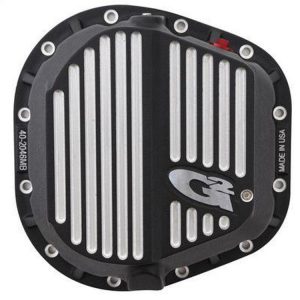
G2 Ford 10.25 Inch/10.5 Inch Ball Milled Aluminum Cover – 40-2046MB
- Rear Ford 10.25 and 10.5 inch Sterling axles
- Cast lightweight aluminum with ball milled ribs
- Heat treated and shot peened body with a machined seal surface
- Extra oil capacity with filler, fill level and drain plugs
SKU: G/240-2046MB -
-
Differential Covers

G2 Axle & Gear Hammer Front Differential Cover – M186/Dana 30 (Bronze) – 40-2150BR
 Differential Covers
G2 Axle & Gear Hammer Front Differential Cover – M186/Dana 30 (Bronze) – 40-2150BR
- Front cover for M186 and Dana 30 axles, for Wrangler JL and Gladiator JT
- Cast and machined nodular iron in bronze
- Magnetic zero-leak plug and reusable aluminum core gasket
- UV-stable powder coat resists corrosion
SKU: G/240-2150BR -
-
Axle Upgrade Kits
Alloy USA Ford 8.8 Rear Axle Shaft – 15103
- Replacement Ford 8.8 passenger side rear axle shaft
- 31 splines; bearings, seals and studs not included
- Fits 1987–1996 Ford Bronco and F-150, and related Ford models
- Made from 1541H or 4140 steel, heat-treated and induction hardened
SKU: ALY15103 -
-


Axle identification and upgrade reference
Nominal ring gear sizes for axles that appear in this category, plus how the common kits and locker types differ. Many axle names are simply the ring gear diameter.
Ring gear size by axle
| Dana 35 | 7.56" |
|---|---|
| Dana 44 | 8.5" |
| Dana 60 | 9.75" |
| Dana 70 | 10.5" |
| Chrysler 8.25 / 9.25 | 8.25" / 9.25" |
| Ford 8.8 | 8.8" |
| GM 12 bolt 9.5 | 9.5" |
| Ford Sterling 10.25 / 10.5 | 10.25" / 10.5" |
| Dana AdvanTEK (M186, M200, M220) | Number is ring gear size in mm |
Differential cover materials
| Stamped steel | Cast aluminum | Nodular iron | |
|---|---|---|---|
| Weight | Light | Light | Heaviest |
| Rock impact | Dents easily | Good with thick ribs | Strongest |
| Heat shedding | Fair | Good | Fair |
| Examples | Most factory covers | G2 ball milled, Super 44 | G2 Hammer covers |
Ring and pinion install kits
| Minor kit | Master kit | |
|---|---|---|
| Shims and crush sleeve | Yes | Yes |
| Pinion seal | Yes | Yes |
| Pinion and carrier bearings | No | Yes, with races |
| Best for | Reusing good bearings | Full rebuild or high miles |
Selectable locker types
| Air | Electric | |
|---|---|---|
| Engaged by | Air pressure from a compressor | Electric coil or motor |
| Extra hardware | Compressor, air line, fittings | Wiring, switch, relay |
| Wear and service items | Seal housing O-rings, air lines | Switches, sensors, connectors |
| Examples here | ARB Air Locker, Ox air locker | Toyota E-Locker switch kit |
Spline and carrier checks
- Spline counts in these listings include 27, 31, 32 and 35
- Lockers and carriers cover a ratio range, such as Dana 30 3.73 and up
- High-pinion and low-pinion front axles take different gear sets
- Swapping to 35-spline shafts needs a carrier or locker to match
- Ball joint kits name the axle, e.g. TeraFlex 3452010 for JL/JT Dana 30 or 44
Read the axle tag or casting numbers and count splines before ordering. Gear setup needs precise measuring tools, so plan the install along with the parts.
All Performance Axle Components 669 parts
-
Inner Axle Seals
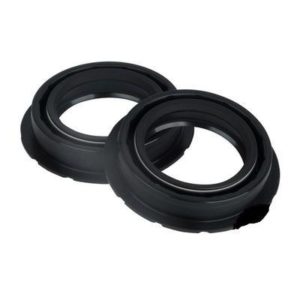
Trail Gear Trail Safe FJ80 Inner Axle Seal – 303751-1-KIT
- Trail Gear 303751-1-KIT Trail Safe front inner axle seal
- Fits 1990–1997 Toyota Land Cruiser (FJ80) and 1996–1997 Lexus LX450
- Garter spring supports the inner seal lip; outer diameter fully rubber coated
- Sold in pairs
SKU: TGI303751-1-KIT -
Axle Housing
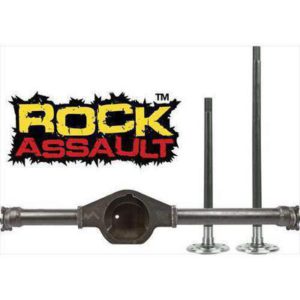
Trail Gear Samurai Rock Assault Axle Housing Kit – 141038-3-KIT
- Toyota-width front axle housing offset for a Samurai transfer case
- Press formed 1/4 in. plate steel center section with 3/4 in. of added clearance
- Fits the 1986–1995 Suzuki Samurai in Base, JA, JL, JS, JX and JX SE trims
- Includes the Differential Stud Eliminator Kit
SKU: TGI141038-3-KIT -
-
-
Hub Gears And Drive Flanges
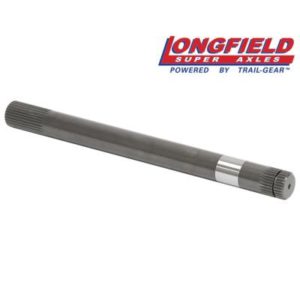
Trail Gear Longfield Hub Gear – 303109-1-KIT
- Trail Gear 303109-1-KIT longfield hub gear
- Fitment list covers selected 1979–1995 Toyota Pickup and 1985–1994 Toyota 4Runner years
- Fitment marked as direct fit
- Check size, material and ratio against your installation before ordering.
SKU: TGI303109-1-KIT -
-







What belongs in this category
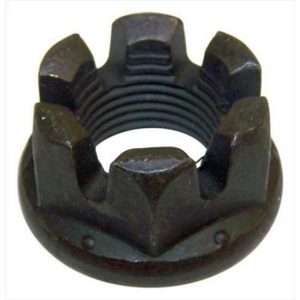
These are the parts that live inside and around the axle housing. Ring and pinion gear sets and installation kits set the final drive ratio. Differentials, including limited-slip and locking units, control how torque is split between the wheels. Axle upgrade kits, axle housing parts, differential covers, ball joints and locking hub spindle nuts round out the group.
The sample listings mention axles such as the Dana 44, Dana 70, Chrysler 8.25 inch and Ford 9.75 inch, so identifying your axle model is the first step.
Choosing a ratio and a differential
Gear ratio should follow tire size and how the vehicle is used. Larger tires effectively raise the overall gearing, which makes the engine work harder and can hurt acceleration and towing. Regearing to a numerically higher ratio restores some of that lost performance. Front and rear ratios must match on a four-wheel-drive vehicle.
- An open differential is the stock choice and offers smooth street manners.
- A limited-slip unit shifts torque toward the wheel with traction while keeping some road manners.
- A locker forces both wheels to turn together for maximum traction on the trail, with some trade-offs in tire wear and handling on pavement.
What to verify before ordering
- Axle model, spline count, bolt pattern and carrier style, because parts differ even within one axle family.
- Tooth count and ratio of the existing gears, which determine whether you need a new matched set.
- Whether a kit includes bearings, shims, seals and hardware or only the gears.
- Front or rear position and side, as parts are often not interchangeable.
Installation notes
Setting up ring and pinion gears requires measuring pinion depth, backlash and bearing preload with the right tools. Mistakes cause noise and premature failure, so many owners leave this job to an experienced drivetrain shop. Ball joints, seals and axle shafts are more approachable but still need proper torque values and clean, correctly lubricated assemblies.
Replace gear oil after installation, follow the break-in procedure from the gear maker, and confirm fitment for your exact year, make and model against the manufacturer's specifications.
Further checks and care
Common mistakes to avoid
Mixing gear sets is a frequent error, since a ring gear and pinion are lapped and matched as a pair. Reusing old bearing races, skipping new shims or ignoring carrier spread can undo an otherwise good build. Another mistake is regearing only one axle. Before you start, gather the correct crush sleeve or shims, thread locker, gear marking compound and the specified gear oil, and keep the work area clean, since grit inside a differential shortens its life.
Measuring and confirming your axle
Beyond the ID tag, confirm the number of ring gear bolts, the carrier bearing style, the axle spline count and the housing width before ordering anything. Record the existing ratio from the tooth counts on the ring gear and pinion, or by counting driveshaft turns for one full wheel rotation. Photos of the cover shape and the axle tube diameter help when comparing against the listing. If a product mentions a specific vehicle platform, confirm it matches yours before proceeding.
Materials, construction and maintenance
Gear sets are usually made from forged alloy steel that is heat treated, and quality depends on tooth pattern accuracy and finishing. Ball joints and bearings rely on correct grease and sealing. After the first few hundred miles of use, change the gear oil to remove break-in metal, then follow the maker's interval. Check axle seals and vent hoses periodically, since a plugged vent can push fluid past seals and contaminate brakes.
Popular Performance Axle Components brands
- G2 Axle and Gear (297)
- Dana Spicer (64)
- Moog (59)
- Crown Automotive (34)
- ARB 4x4 Accessories (33)
- Trail Gear (27)
- Alloy USA (22)
- Eaton (16)
- Motive Gear (15)
- Mag-Hytec (12)
- Omix-Ada (10)
- Dynatrac (9)
Performance Axle Components FAQ
How do I know which axle I have?
Look for a tag or ID number on the housing, check the cover shape and bolt count, and consult the vehicle's build information. Measuring the ring gear diameter can confirm it. Verify before ordering gears, because many axles look alike.
Do I have to change both front and rear gears together?
On a part-time or full-time four-wheel-drive vehicle, yes. Front and rear ratios must match so the axles turn at the same relative speed, or the driveline can bind and wear out quickly.
Can I install a ring and pinion myself?
It is possible with a dial indicator, torque wrench and the right bearing tools, but correct setup takes experience. Incorrect pinion depth or backlash causes noise and failures, so a professional drivetrain installation is often the safer route.