
Wiring harnesses for adding fog lights, driving lights, light bars and pods. A proper harness includes a relay, fuse and switch connections, so lights draw power safely and not through factory wiring. Rigid Industries, Rugged Ridge, Pro Comp, PIAA and Hella are listed here. Compare light count, connector type and wire gauge on each product page, then compare the products below.
Fog/Driving Light Wiring Kit
Showing 1–12 of 35 resultsSorted by popularity
-
Fog/Driving Light Wiring Kit
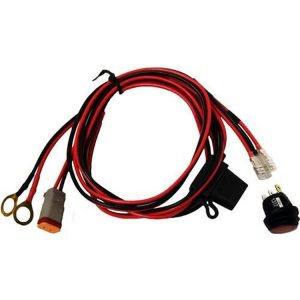
Pro Comp Light Wiring Harness with Switch and Relay – 76400
- Wiring harness for a pair of lights, pre-terminated
- Includes a 12V relay and an inline fuse holder
- Illuminated, waterproof dash switch
- Battery terminals on one end, Deutsch connectors on the other
- Fits 2007–2018 Jeep Wrangler JK
SKU: EXP76400 -
Fog/Driving Light Wiring Kit
Baja Designs Blacklit Add-On LP9/LP6/LP4 Wiring Harness – 640176
- Blacklit add-on wiring harness for LP9, LP6 and LP4 lights
- Adds backlighting to an existing harness
- Includes four fuse taps, an alternate splice connector and zip ties
- Part number 640176; universal fit
SKU: BAJ640176 -
-
-
-
Fog/Driving Light Wiring Kit

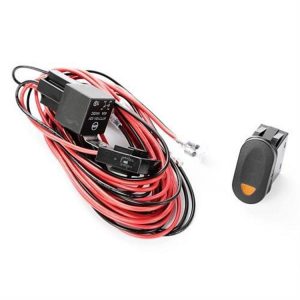
Rugged Ridge 3-Light Installation Wiring Harness with Rocker Switches – 15210.73
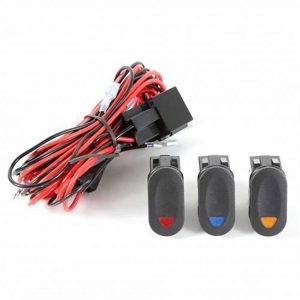 Fog/Driving Light Wiring Kit
Rugged Ridge 3-Light Installation Wiring Harness with Rocker Switches – 15210.73
- Installation wiring harness with rocker switches, part number 15210.73
- Includes wiring harness, relay and illuminated dash switch
- Wires two or three lights, depending on your layout
- Universal fit, not tied to a model year
SKU: RUG15210.73 -
Fog/Driving Light Wiring Kit
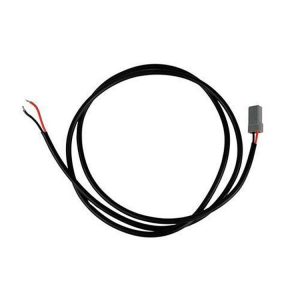
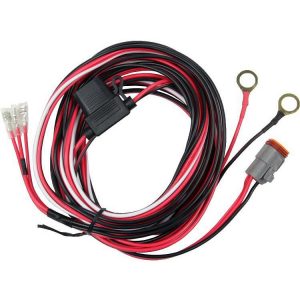
Rigid Industries Harness – 40199
- Single LED light wiring harness, Rigid Industries part number 40199, 8′ length
- Battery terminals on one end and Deutsch connector on the other
- Includes inline fuse holder, 12V relay and waterproof switch
- Works with SR-M, SR-M2, SR-Q and SR-Q2 LED lights
SKU: RIG40199 -
-
-
-
Fog/Driving Light Wiring Kit
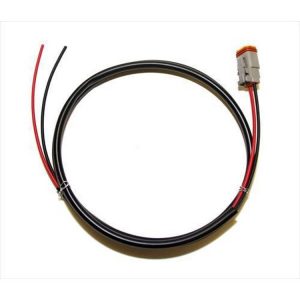
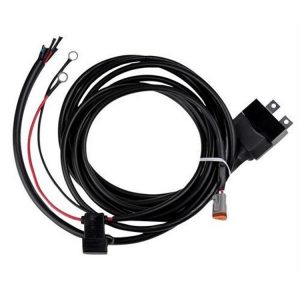
Rigid Industries 3-Wire Light Wire Harness – 40187
- Rigid Industries 40187 3-wire light wire harness for a single E Series Amber/White LED light bar
- Sized for a 20″-50″ light bar on a 12V electrical system
- 13′ harness with battery terminals on one end and a Deutsch connector on the other
- Includes an inline fuse holder, a 14V relay and a waterproof switch
- A universal design, not tied to a specific vehicle
SKU: RIG40187 -
Fog/Driving Light Wiring Kit
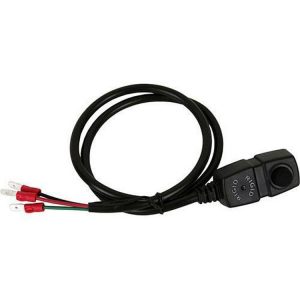
Rigid Industries Pendant Switch Kit – 40052
- Rigid Industries pendant switch kit, part number 40052
- Mounts without drilling, using VHB tape and a radius mount pad
- Waterproof, dust-proof and impact resistant, with an LED indicator
- Universal fit; suits powersports applications as well
SKU: RIG40052




Why a wiring kit matters
Auxiliary lights draw more current than a switch or factory wire is meant to carry. A harness uses a relay, so the switch only triggers a low current and the relay passes the high current directly from the battery, protected by a fuse near the power source. This helps prevent melted wires, blown fuses and voltage drop that makes lights look dim.
What a kit contains
- A relay, usually a 12 volt automotive type
- An inline fuse or fuse holder
- Power and ground leads sized for the load
- Connectors that plug into the lights, or bare leads for splicing
- A switch or switch leads
Some harnesses are made for a specific pair of lights, such as Rigid D2 pods or large light bars, while others are generic two-light kits.
Matching the kit to the lights
Count the lights and add up their rated current. The harness should be rated above that total. Wire gauge matters, since thinner wire carries less current and longer runs lose more voltage. Look for the connector type on your lights, such as Deutsch or a proprietary plug, so you do not have to cut or splice. For longer light bars, use a harness made for that size, since it will have heavier wire.
Installation notes
Disconnect the battery before starting. Mount the relay in a dry location, route wiring away from heat and moving parts, and use grommets where wires pass through the firewall. Fuse the power lead close to the battery. Seal outdoor connections with heat-shrink or dielectric grease to resist moisture and corrosion. Use a clean, bare-metal ground. If you are not comfortable with automotive wiring, a qualified installer can do it safely. Lighting laws differ by state, so check local rules about auxiliary lights on public roads and whether they must be covered when driving on pavement.
Compatibility
Fitment depends on the lights you own and, for vehicle-specific kits, on year, make and model. Check product details and manufacturer instructions before choosing. When splicing is needed, use quality crimp connectors or solder with heat shrink, not twist-and-tape joints, and secure the harness with ties every foot or so to keep it from vibrating loose.
Common mistakes to avoid
Do not tap power from a low-current circuit such as a parking light wire without a relay, and do not use a harness whose fuse is rated higher than the wire can carry. Keep wire runs as short as practical, and avoid running power wires along sharp edges. Check that every connection is tight, because a loose terminal creates heat. Protect wires with split loom or braided sleeve, especially near the engine bay. Always label the switch wiring, so future troubleshooting is easy. If lights flicker or dim, check the ground connection first. Test the full circuit with the engine running to confirm the voltage at the lights is steady.
Weatherproofing deserves attention in off-road use. Water crossings, mud and pressure washing all test connectors, so use sealed connectors and drip loops where wires drop below the connection point.
Popular Fog/Driving Light Wiring Kit brands
- Rigid Industries (15)
- Rugged Ridge (7)
- Pro Comp Suspension (4)
- Baja Designs (3)
- KC HiLites (3)
- Hella (2)
- Piaa Lighting (2)
- Omix-Ada (1)
- T-Rex Grilles (1)
- Truck-Lite (1)
- ARB 4x4 Accessories (1)
Fog/Driving Light Wiring Kit FAQ
Do I need a relay for off-road lights?
Yes, in most cases. A relay lets the battery feed the lights directly through a fuse, while the switch only carries a small control current. This protects switches and factory wiring from overload.
What fuse size should I use?
Pick a fuse rated slightly above the lights' combined current draw and below the wire's rating. Follow the light and harness manufacturer's instructions, and place the fuse near the battery.
Can I use one harness for several lights?
Only if the harness is rated for the total current of all lights. Check the relay and wire gauge rating, and use a kit designed for the number of lights, or a heavier setup.