Offroad Racing Fog & Driving Lights
Offroad racing, fog and driving lights add forward and close-range visibility on trails, dirt roads and open desert. This category groups light bars, light pods, fog lights, driving lights and complete packages, with LED products from Rigid Industries, KC HiLites, Baja Designs and Oracle Lighting. Compare beam pattern, lens color and mounting, then compare the products below.

Good lighting lets you read a trail after dark, spot washouts at speed and set up camp without a headlamp. This section covers LED light bars, compact pods, fog lights, driving lights, grille and bumper kits, plus the harnesses and switches that run them.
Start with where the light will mount and what you need it to do. Roof and bumper bars reach far ahead at speed. Pods fit A-pillars, ditch mounts and tight bumper openings. Fog lights sit low and work in dust or snow. Direct-fit kits bolt into a specific grille or bumper, while universal lights need a bracket. Then match the beam, lens color, sealing rating and current draw to your wiring.
Shop lights by type




Popular off-road lights
-
Light Bars, Lighting & Lighting Accessories, Offroad Racing Fog & Driving Lights

Pro Comp Motorsports Series 20″ Double Row LED Combo Spot/ Flood Light Bar – 75220
 Light Bars, Lighting & Lighting Accessories, Offroad Racing Fog & Driving Lights
Pro Comp Motorsports Series 20″ Double Row LED Combo Spot/ Flood Light Bar – 75220
- Pro Comp Motorsports Series 20 inch double row LED spot and flood light bar, part EXP75220
- Single straight bar with clear lens and black finish
- Osram 5W LED bulbs; Pro Comp lists a 50,000+ hour life span
- Universal fit; wiring harness, switch, relay and brackets included
SKU: EXP75220 -
Light Bars, Lighting & Lighting Accessories, Offroad Racing Fog & Driving Lights
N-Fab Light Bar For LED – D0930LD-TX
 Light Bars, Lighting & Lighting Accessories, Offroad Racing Fog & Driving Lights
N-Fab Light Bar For LED – D0930LD-TX
- N-Fab light bar for LED lights, part number D0930LD-TX, textured black
- Front location; heavy gauge .084 wall steel, all welded one piece construction
- Zinc coated with a powder coat finish
- Listed for 2009–2010 and 2011–2018 Dodge Ram 1500
SKU: N/FD0930LD-TX -
Light Bars
RIGID RDS-Series 54″ LED Light Bar – 886213
- RDS Series LED Light Bar
- 54 in.
- Hybrid – Spot
- 453 Watts
- 108 White LEDs
- 85538 Raw Lumens
- Certified IP-68 for water & dust intrusion
- Certified to MIL-STD-810G for shock/vibration
- Unbreakable polycarbonate lens
- UV & abrasion resistant powder coat
- Custom two-bolt mounting system for adjustability and strength
SKU: RIG886213 -
Grille LED Light Kits, Lighting & Lighting Accessories, Offroad Racing Fog & Driving Lights

T-Rex Torch LED Light Grille (Chrome Studs) – 6319661
 Grille LED Light Kits, Lighting & Lighting Accessories, Offroad Racing Fog & Driving Lights
T-Rex Torch LED Light Grille (Chrome Studs) – 6319661
- Torch LED light grille with built-in LED lighting and X-Metal studs
- Listed for the left position on 2018 to 2021 Toyota Tundra
- Chrome studs option, black powder coated finish
- Wiring harness included with every Torch grille
SKU: T/R6319661 -
Lighting & Lighting Accessories, Offroad Light Packages, Offroad Racing Fog & Driving Lights

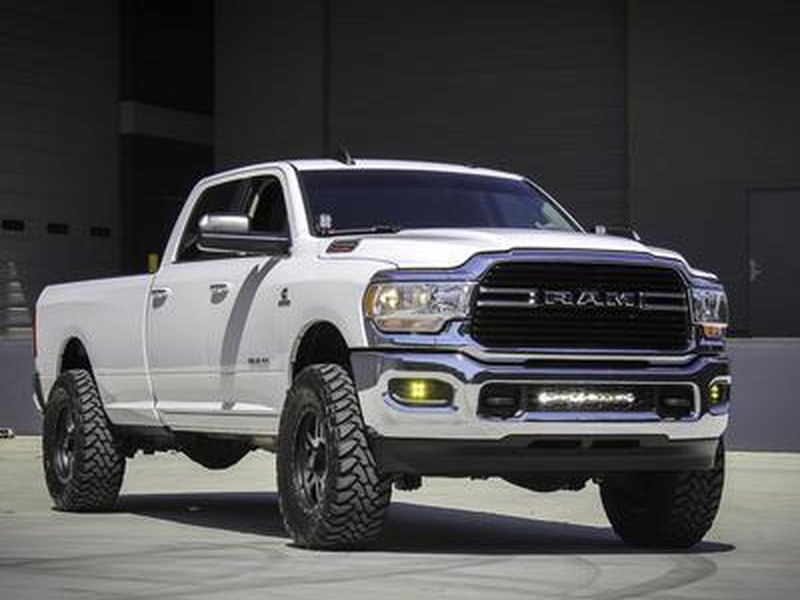
4 Wheel Parts Factory Bronco A-Pillar Light Mount Kit – 52900BS
 Lighting & Lighting Accessories, Offroad Light Packages, Offroad Racing Fog & Driving Lights
4 Wheel Parts Factory Bronco A-Pillar Light Mount Kit – 52900BS
- A-pillar mounts for auxiliary lights on 2021–2022 Ford Bronco
- Sold as a set of two mounts
- Billet aluminum construction
- Mounts directly to the mirror mounts
- Works with most manufacturers’ aftermarket lights
SKU: 4WP52900BS -
-


Off-road lighting spec reference
Use these tables to read light listings and plan a setup. Example figures are taken from products in this section.
IP ratings decoded
| First digit 6 | Dust tight |
|---|---|
| Second digit 7 (IP67) | Survives immersion to 1 m for 30 minutes |
| Second digit 8 (IP68) | Continuous immersion beyond 1 m, maker's test |
| IP69K | Withstands high-pressure, high-temperature washdown |
| What it means for you | IP67 or better for creek crossings and pressure washing |
Raw vs effective lumens
- Raw lumens: the LEDs' theoretical output before optics and heat losses
- Effective lumens: the light that actually leaves the lens
- Two lights with the same raw figure can look very different on the trail
- Compare beam pattern and candela or reach figures when makers publish them
- Higher watts mean more current, so check your harness and fuse rating
Before you wire it
- Add up the amp draw of every light on one circuit
- Run high-draw lights through a relay and an inline fuse near the battery
- Size wire for the current and the length of the run
- Use sealed connectors and a clean, solid ground
- Put a master switch where you can reach it while driving
Light types at a glance
| Where it mounts | Best for | |
|---|---|---|
| Light bar | Roof, bumper, grille | Long reach at speed, wide coverage |
| Light pod | A-pillar, ditch, bumper | Flexible aiming, tight spaces |
| Driving light | Bumper or grille, eye level | Focused beam far down the road |
| Fog light | Low on the bumper | Close range under dust, rain or snow |
| Rock light | Under the body | Seeing tires and lines on slow trails |
| Grille kit | Behind or in the grille | Clean direct-fit install |
Example figures from listed lights
| Rigid RDS 54" bar | 453 W, 108 LEDs, 85,538 raw lumens, IP68 |
|---|---|
| ARB AR32 V2 spot | 5700 K, 7,450 effective lumens |
| JW Speaker Trail 6 pods (pair) | 3.7" round, flood, 3,830 lumens |
| Baja Designs 8 XL roof kit | 16 A draw |
| Baja Designs OnX6+ bumper kit | 216 W, rated life 49,930 hours |
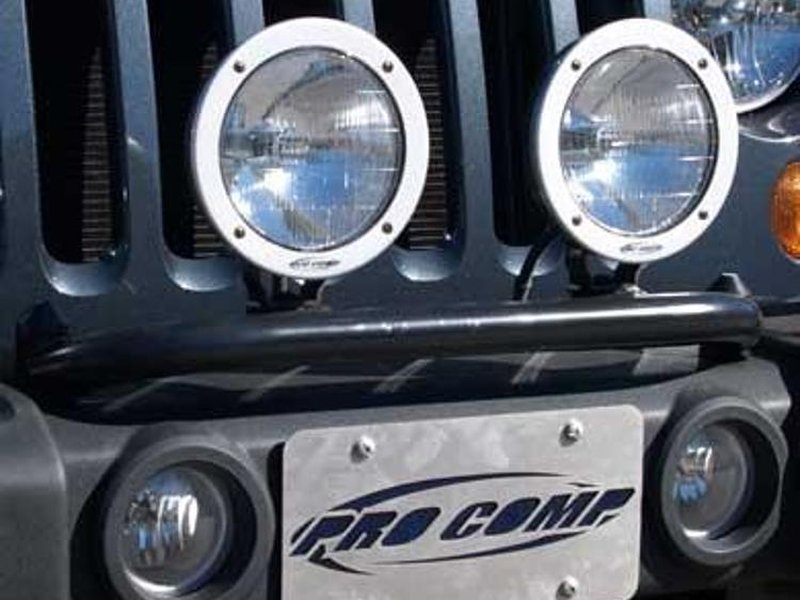
| Pro Comp JK fog lights | 12 W each, up to 24 V |
Lighting standards and markings
| SAE J583 | Front fog lamps |
|---|---|
| SAE J581 | Auxiliary driving (high beam) lamps |
| DOT marking | Lens marked for on-road use on that function |
| ECE R19 | European front fog lamp approval |
| IK10 | Top class on the IK impact scale |
| Off-road only | No road approval; cover or switch off on highways |
Lighting laws vary by state. Many lights here are sold for off-highway use only, so check local rules and aim your lights before driving on public roads.
All Offroad Racing Fog & Driving Lights 536 parts
-
Grille LED Light Kits, Lighting & Lighting Accessories, Offroad Racing Fog & Driving Lights
T-Rex Torch LED Light Grille (Chrome Studs) – 6319661
Grille LED Light Kits, Lighting & Lighting Accessories, Offroad Racing Fog & Driving LightsT-Rex Torch LED Light Grille (Chrome Studs) – 6319661
- Torch LED light grille with built-in LED lighting and X-Metal studs
- Listed for the left position on 2018 to 2021 Toyota Tundra
- Chrome studs option, black powder coated finish
- Wiring harness included with every Torch grille
SKU: T/R6319661 -
Light Bars, Lighting & Lighting Accessories, Offroad Racing Fog & Driving Lights

Superchips LIT E-Series LED Flood Light Pods with Power Switch – 72081
 Light Bars, Lighting & Lighting Accessories, Offroad Racing Fog & Driving Lights
Superchips LIT E-Series LED Flood Light Pods with Power Switch – 72081
- Square LED flood light pods sold as a kit
- Flood beam for wide, close-range light
- Power switch runs from the TrailDash accessory port
- Included relay harness connects to the battery
SKU: SCI72081 -
Light Bars, Lighting & Lighting Accessories, Offroad Racing Fog & Driving Lights
Superchips LIT E-Series 30″ Single Row LED Combo Light Bar with Power Switch – 72031
 Light Bars, Lighting & Lighting Accessories, Offroad Racing Fog & Driving Lights
Superchips LIT E-Series 30″ Single Row LED Combo Light Bar with Power Switch – 72031
- 30-inch single-row LED combo light bar with a power switch kit
- Controlled through the accessory port of a TrailDash or TrailDash2 monitor
- Relay harness for a plug-and-play battery connection
- Power switch can also run a second 12-volt circuit
SKU: SCI72031 -
Light Bars, Lighting & Lighting Accessories, Offroad Racing Fog & Driving Lights
Superchips LIT E-Series 20 Single Row LED Combo Light Bar with Power Switch – 72021
 Light Bars, Lighting & Lighting Accessories, Offroad Racing Fog & Driving Lights
Superchips LIT E-Series 20 Single Row LED Combo Light Bar with Power Switch – 72021
- 20-inch single-row LED combo light bar with a power switch kit
- Designed to run from the accessory port on a TrailDash or TrailDash2 monitor
- Included relay harness connects to the battery for plug-and-play wiring
- The switch can also control a second 12-volt accessory
SKU: SCI72021 -
Light Bars, Lighting & Lighting Accessories, Offroad Racing Fog & Driving Lights
Superchips LIT E-Series 10 Single Row LED Combo Light Bar – 71011
 Light Bars, Lighting & Lighting Accessories, Offroad Racing Fog & Driving Lights
Superchips LIT E-Series 10 Single Row LED Combo Light Bar – 71011
- Single-row 10-inch LED light bar with a combo beam
- High-efficiency 5-watt LEDs in a slim, sleek housing
- Part of the LIT E-Series range, which runs from the LIT 6 to the LIT 50
- Black finish, sold as a single bar
SKU: SCI71011 -
Fog Lights, Lighting & Lighting Accessories, Offroad Racing Fog & Driving Lights

Spyder Auto Group LED Fog Lights – 5015747
 Fog Lights, Lighting & Lighting Accessories, Offroad Racing Fog & Driving Lights
Spyder Auto Group LED Fog Lights – 5015747
- Spyder Auto Group LED fog lights, part number 5015747
- Complete set, both sides included, clear lens
- OEM direct replacement shape, fog light type
- Universal fit, bulb type listed as HID
SKU: S/L5015747


Light types and what they do
Auxiliary lights are not interchangeable. Driving lights throw a focused beam far down the road. Fog lights are mounted low and use a wide, flat pattern to light the ground close to the vehicle without bouncing glare off dust, rain or snow. Light pods are compact cubes that suit bumpers, A-pillars and rock lighting. Light bars deliver a lot of output across a long, narrow housing and are common on roofs and bumpers.
Beam pattern and lens color
- Spot: Narrow and long reaching, good for high-speed travel.
- Flood: Wide and short, good for slow trail work and camp tasks.
- Combo: Mixes both patterns in one light for general use.
- Driving/fog patterns: Engineered for specific cutoffs and mounting heights.
Amber or yellow lenses cut glare in dust, fog and snow, while clear or white lenses give the most natural color rendering. Some listings include a colored backlight, which is decorative and does not change the main beam.
Specifications worth comparing
Lumens and watts are easy to advertise but do not tell the whole story, because optics control where the light goes. Look at the beam pattern, housing material, lens material and ingress protection rating for dust and water. Check the operating voltage, current draw and whether the light includes a harness, relay and switch. Heat sinking matters for LEDs, so look for solid metal housings rather than thin shells.
Wiring and installation
High-output lights should be wired through a relay with a properly sized fuse and wire gauge, not directly off a factory switch. Seal connections and route wiring away from heat and moving parts. Aim lights so they do not blind oncoming drivers, and cover them on public roads where required.
Legal and fitment notes
Lighting rules differ by state, and many off-road lights are intended for off-highway use only. Check local regulations before using them on paved roads. Fitment is listed as universal on many products, but mounting brackets, grille cutouts and bumper tabs vary, so confirm fitment for your exact year, make and model and read the manufacturer's specifications.
Keep the lenses clean and check that the mounting hardware stays tight, since washboard roads loosen bolts over time. Mud and dust cut output sharply, so a quick wipe before a night run is worthwhile. If a light flickers, inspect the connector seals and ground point first, because poor grounds cause most intermittent faults.
A few pairing ideas help when planning a lighting setup. A bumper-mounted pair of fog or driving lights covers close and mid range, while a roof or windshield bar adds long-range reach. Keep switches labeled and place a master switch within reach, so every light can be turned off quickly when meeting traffic. Using separate switches for spot and flood patterns lets you change the light to suit the terrain, and a dash indicator confirms what is on. Check that the combined current draw stays within the alternator's spare capacity and the circuit fuse rating, particularly if you also run a winch and a compressor.
When comparing similar-looking lights, confirm that the lens is polycarbonate or tempered glass, that the housing carries a rating for dust and immersion, and that mounting brackets are included. Heavy lights on thin brackets vibrate and can crack mounts.
Popular Offroad Racing Fog & Driving Lights brands
- Rigid Industries (249)
- Baja Designs (59)
- KC HiLites (56)
- Oracle Lighting (23)
- Hella (22)
- Pro Comp Suspension (21)
- Rough Country (20)
- ARB 4x4 Accessories (14)
- JW Speaker (13)
- DV8 Offroad (13)
- Piaa Lighting (12)
- Smittybilt (12)
Offroad Racing Fog & Driving Lights FAQ
What is the difference between fog lights and driving lights?
Fog lights use a wide, low pattern that lights the ground near the vehicle and limits glare in dust or rain. Driving lights project a longer, narrower beam to see farther at speed. Many drivers run both.
Are LED off-road lights street legal?
It depends on the light and where you drive. Many off-road lights are labeled for off-highway use only, and rules differ by state. Check local regulations and the manufacturer's notes, and cover lights on public roads if required.
Do I need a relay to install a light bar?
In most cases yes. A relay lets the switch control the circuit without carrying the full current, and a fuse near the battery protects the wiring. Follow the wiring kit instructions and use wire sized for the light's current draw.
Should I choose spot, flood or combo beams?
Spot beams reach farthest and suit fast open roads, flood beams spread light for slow trails and camp use, and combo beams split the difference. Many setups pair a spot bar up high with floods or fog lights low.