
Sway Bar Link – Non Disconnect under Suspension Accessories collects fixed-length sway bar end links for lifted and stock trucks and Jeeps. TeraFlex, Rubicon Express and Skyjacker cover the Wrangler JK and JL with links for 0 to 3 inch and 2.5 to 4 inch lifts, Moog supplies stock replacement links for GM, Ford Super Duty and Ram pickups, and Fabtech and Icon Vehicle Dynamics add extended and adjustable links. These links stay connected on and off road. Compare lift height and vehicle below.
Sway Bar Link - Non Disconnect
Showing 1–12 of 89 resultsSorted by popularity
-
-
Sway Bar Link - Non Disconnect

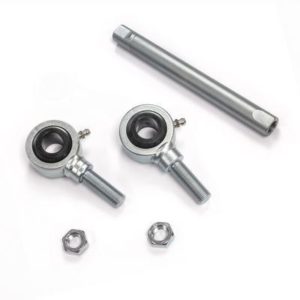
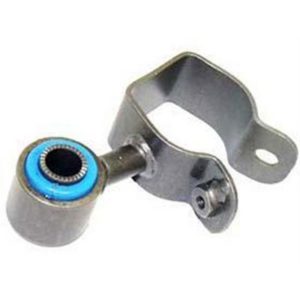
TeraFlex 7.5″ Adjustable Center Link and Rod Ends (4-6″ Lift) – 1700015
 Sway Bar Link - Non Disconnect
TeraFlex 7.5″ Adjustable Center Link and Rod Ends (4-6″ Lift) – 1700015
- Adjustable front sway bar center link for 4 to 6 inch lift
- Fits 1997–2006 Jeep Wrangler TJ, 2004–2006 Wrangler LJ and 2007–2018 Wrangler JK
- Threaded on both ends, with right- and left-hand rod ends
- Zinc plated for rust and corrosion resistance
- Two jam nuts and all necessary hardware included
- Part number TER1700015
SKU: TER1700015 -
Sway Bar Link - Non Disconnect
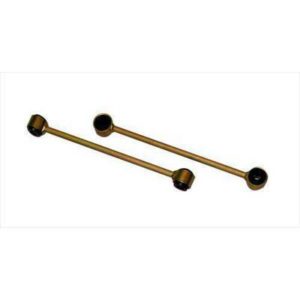
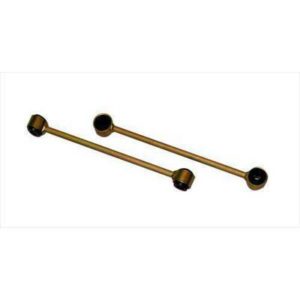
Skyjacker Sway Bar Extended End Links – SBE507
- Extended sway bar end links, sold as a pair, for 2007–2018 Jeep Wrangler JK
- Position is listed inconsistently: front in the specifications, rear in the summary
- Polyurethane bushings, 4140H steel, part number SKYSBE507
- Lifetime warranty
SKU: SKYSBE507 -
-
Sway Bar Link - Non Disconnect
Skyjacker Sway Bar Extended End Links – SBE305
- Rear extended sway bar end links, sold as a pair
- For 1980–1998 Ford F-250 and 1980–1997 F-350 trucks, plus 1997 F-250 HD
- Polyurethane bushings and zinc coating, part number SKYSBE305
- Non-adjustable, direct fit
SKU: SKYSBE305 -
Sway Bar Link - Non Disconnect
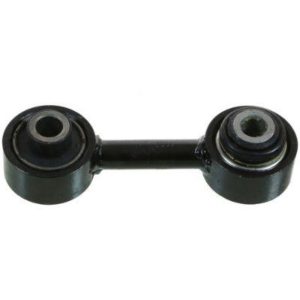
Skyjacker Sway Bar Extended End Links – SBE228
- Front extended sway bar end links, sold as a pair, for lifted Jeep Wrangler LJ and TJ models
- Replaces the stock end links, with polyurethane bushings
- Built from 4140H steel with a zinc coating, part number SKYSBE228
- Lifetime warranty, made in the USA
SKU: SKYSBE228 -
-
-
-
-
Sway Bar Link - Non Disconnect
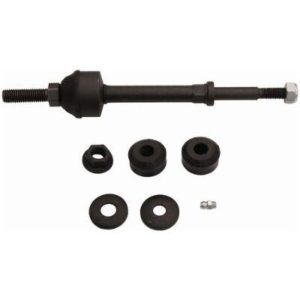
Moog Stabilizer Bar Link Kit – K750157
- Moog K750157 front stabilizer bar link kit for 2WD trucks
- Each kit includes the link and bushings, two required per vehicle
- Fits 2008–2010 Ram 1500 and 2011–2013 Ram 1500, 2500 and 3500
- Greaseable socket that lets new lubricant flush contaminants
SKU: MOGK750157 -





Why sway bar links change with a lift
A sway bar end link connects the end of the anti-roll bar to the axle or control arm. When you lift a solid-axle vehicle, the axle drops away from the frame-mounted sway bar, and the stock links are pulled toward the end of their travel. The bar then sits at an angle, preloads the suspension, and can bind on bumps. Extended links restore the bar to roughly its factory angle so it works the way it was designed. The links in this category are non-disconnect: they stay connected all the time, which suits daily drivers, tow rigs and anyone who does not need the extra axle articulation that disconnecting the bar provides on the trail.
Matching link length to lift
- TeraFlex lists its JK front and rear links by lift range, for example 0 to 3 inches, with separate rear links for the S/T sway bar system. A link made for a 2.5 inch lift will be too short for a 4 inch lift.
- The Skyjacker GM link kit covers 1999 to 2010 1500 and 2500 trucks at 4 to 6 inches of lift. Independent front suspension trucks need links sized to the new knuckle or lift bracket geometry, not just the lift number.
- Fabtech's extended rear links for 2020 and 2021 F-250 and F-350 are fixed-length pairs for use with the factory rear bar after a lift.
- Adjustable links, such as the Icon Vehicle Dynamics billet aluminum JL and JT front links, can be set while installed so the bar is level at your exact ride height, useful on builds where the lift is not a round number.
Stock replacement links
Not every link here is for a lifted truck. Moog supplies factory-length front and rear end links for GM trucks and SUVs, Ford Super Duty and Ram pickups, and Jeep sells a single front stabilizer bar bolt for the 2007 to 2011 JK. Stock links wear at the ball joints or bushings and announce themselves with a clunk over small bumps and a loose feel in turns. When replacing, note details such as the Moog listings that distinguish 2WD from 4WD, dually from single rear wheel, and gross vehicle weight brackets, because the lengths differ. Greaseable sockets, where offered, let you flush contaminants and extend life.
Ball socket, polyurethane or rod end
End links use one of three joints. Sealed ball sockets, as on the TeraFlex links, pivot freely with no maintenance and no squeak. Polyurethane bushings or balls are quiet when greased and cheap to replace, but they can squeak if neglected. Spherical rod ends, like the FK bearings on the Icon links, give the most precise bar response and the highest articulation, at the cost of more frequent inspection and some noise transmission. For a daily driver a sealed ball socket is the easy choice; rod ends make more sense on a performance build that already accepts more maintenance.
Installation and safety
Install links with the vehicle at ride height on the ground or on a drive-on lift, not hanging from a frame lift, so the bar ends up unloaded. Torque the nuts to the manufacturer's specification, use the supplied hardware, and recheck after 50 to 100 miles. If a link uses a stud with a nut, hold the stud with a wrench while tightening rather than spinning the ball. A sway bar affects handling and emergency stability, so if you are unsure about the correct length or geometry, have the work checked by a shop. Confirm the link is listed for your exact year, model, lift height and front or rear position before choosing.
Popular Sway Bar Link - Non Disconnect brands
- Crown Automotive (16)
- Rubicon Express (16)
- Skyjacker (13)
- TeraFlex (10)
- RT Off-Road (6)
- Omix-Ada (5)
- Tuff Country (4)
- Jeep (4)
- Moog (4)
- Fabtech (4)
- Currie (4)
- Pro Comp Suspension (3)
Sway Bar Link - Non Disconnect FAQ
Do I really need longer sway bar links after a lift?
On a solid-axle vehicle lifted more than about an inch, yes. The stock links pull the bar out of position, preload the suspension and can bind. Extended links return the bar to its design angle. On IFS trucks the need depends on how the lift kit relocates the bar and knuckles, so follow the kit maker's instructions.
What is the difference between non-disconnect and disconnect links?
Non-disconnect links are fixed and stay attached, keeping the sway bar active for stable on-road handling. Disconnect links have a pin or quick release so the bar can be unhooked on the trail for more axle articulation. If you mostly drive on pavement or tow, fixed links are simpler and quieter.
How can I tell a sway bar link is worn?
Listen for a clunk or rattle over small bumps and speed humps, and feel for extra body roll or vagueness in turns. With the vehicle on the ground, grab the link and try to move it; any play at the joints means it is worn. Inspect the bushings for cracks and the ball studs for rust.
Can I install sway bar links myself?
It is a straightforward job with basic hand tools if you can get the bar unloaded, which means the vehicle at ride height on the ground or on a drive-on lift. Torque to the maker's specification and recheck after a short drive. If the bar does not line up without force, the links are the wrong length.