




Leveling kit vs lift kit explained: factory rake, spacers and torsion keys, tire sizes at 2 to 3 inches, CV angles, towing, load leveling…
Lift Kits
Showing 709–720 of 1736 resultsSorted by popularity
-
-
-
-
Lift Kits
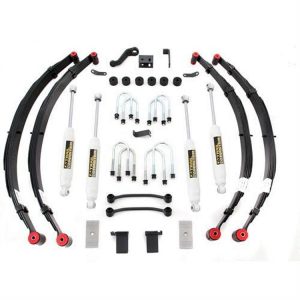
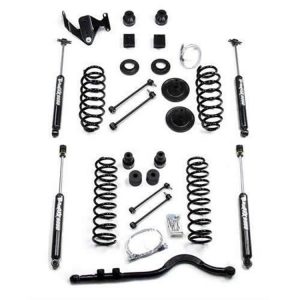
TeraFlex 4 Inch Lift Kit with 9550 Shocks and Trackbar – 1251460
- TeraFlex 1251460 4 inch lift with 9550 shocks for 2007–2015 Jeep Wrangler JK four-door
- Coil springs, 9550 VSS shock absorbers and front sway bar quick disconnects
- Rear sway bar links, rear track bar bracket and bump stops
- Transfer case lowering kit and brake line extension brackets
- Max tire size 37 inch
SKU: TER1251460 -
Lift Kits
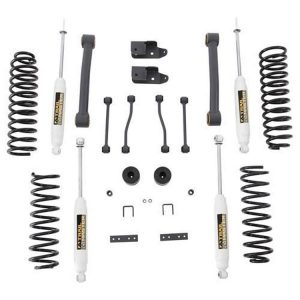
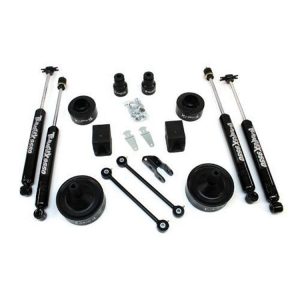
TeraFlex 3 Inch Lift Kit with 9550 Shocks – 1251260
- TeraFlex 1251260 3 inch lift with 9550 shocks for 2007–2015 Jeep Wrangler JK four-door
- Includes 3 inch lift coil springs and 9550 VSS shock absorbers
- Dropped pitman arm and front sway bar quick disconnects
- Rear sway bar links, rear track bar bracket and bump stops
- Transfer case lowering kit and brake line extension brackets; max tire size 35
SKU: TER1251260 -
Lift Kits
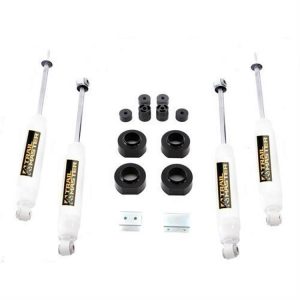
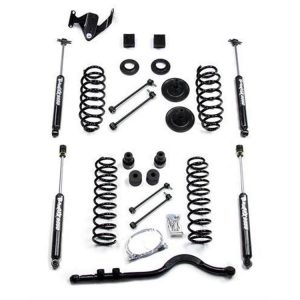
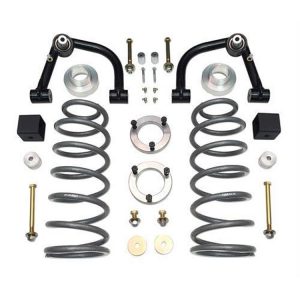
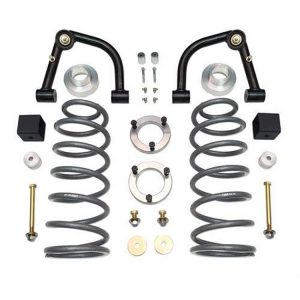
TeraFlex 3 Inch Lift Kit – 1251220
- TeraFlex 1251220 3 inch lift system for 2007–2015 Jeep Wrangler JK
- Coil springs and 9550 VSS shock absorbers included
- Front adjustable track bar and front sway bar disconnects
- Rear sway bar links, rear track bar bracket and bump stops
- Part number 1251220; up to 35 inch tires
SKU: TER1251220 -
Lift Kits
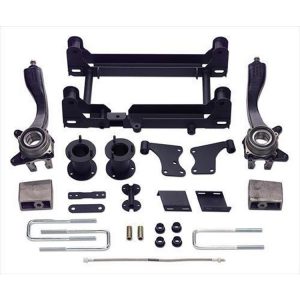
Tuff Country Lift Kit – 55907
- Tuff Country 55907 lift kit with a 5 inch lift and 3 inch rear lift, per the kit details
- Strut spacer and brake proportioning valve bracket
- Relocation brackets, rack and pinion brackets and extended brake line
- U-bolts, lift blocks and knuckles
- Shocks not included; part number 55907
SKU: T/C55907 -
Lift Kits
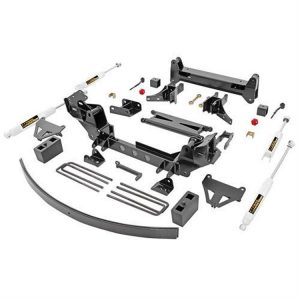
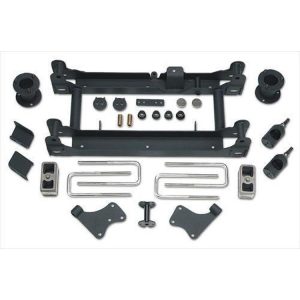
Tuff Country Lift Kit – 55902
- Tuff Country 55902 lift for 2005–2006 Toyota Tundra with a 4.5 inch front lift and 3 inch rear lift
- Ball joint spacer and strut spacers at the front
- Skid plate, spindle bracket and steering gear bracket
- Differential drop, sway bar drop and steering shaft extension
- Rear block and U-bolts; shocks not included
SKU: T/C55902 -
What a lift kit includes
A lift kit is a bundle of parts that raises the body or frame relative to the axles. Listings in this category show how much the contents vary. Some kits are little more than spacers and bump stops, while others add replacement coil springs, extended sway bar links, track bar brackets, steering drop components and matched shocks.
Lift height is the headline number, but it is only part of the story. A kit sold as 3.5 inch, 4 inch or 6 inch describes nominal lift, and the actual change depends on the vehicle, tire size and how much it sags with weight.
Short arm, long arm and spacer designs
Design matters more than height. Common types you will see here:
- Spacer and strut kits raise the ride height cheaply and keep factory geometry, which suits moderate lifts.
- Short arm kits keep the factory control arm mounting points and replace springs, arms and shocks. They are simple to install and work well for daily drivers.
- Long arm and 4-link kits relocate the arm mounts with crossmembers, giving better articulation and a flatter arm angle at the cost of more complex installation.
- Radius arm and drop bracket kits are common on solid-axle trucks and corrected geometry varies by model.
Kits with a stage or number in the name usually add components step by step, so read the contents list rather than assuming two kits of the same height are equivalent.
Shocks and geometry correction
Raising a vehicle changes control arm angles, driveline angles and steering geometry. Good kits include correction parts such as caster-correcting bushings, cam bolts for pinion angle, drop brackets, a high steer or drag link, and extended brake lines. If a kit leaves these out, plan to buy them separately.
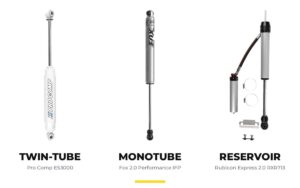
Shocks are either included or sold separately. Twin tube, monotube and reservoir shocks differ in heat handling and ride feel. Confirm the shock lengths suit the lift height, since a shock that is too short can limit travel and one that is too long can bottom the bump stops.
Installation and compatibility
Lift kits are vehicle specific. Confirm fitment for your exact year, make, model, cab or door configuration, drivetrain (2WD or 4WD) and engine, then compare against the manufacturer's specifications. Part numbers often change between model years.
Suspension, steering and brake line work is safety critical. Professional installation is a sound choice unless you have the tools and experience, and every fastener should be tightened to the specified torque with the vehicle at ride height. Plan on an alignment after the lift, plus a check of headlight aim, speedometer calibration if you change tire size, and driveshaft angles.
Lift height, bumper height and tire rules vary by state, so check local regulations.
Maintenance and common mistakes
A lifted suspension needs more attention than a stock one. Recheck every suspension bolt after the first 100 miles or so, because bushings settle and fasteners can lose torque. Grease any fittings on control arms and ball joints on the schedule the manufacturer gives, and inspect bump stops, shock mounts and brake lines at each oil change.
- Do not pick a lift height first and shop for parts second. Start with the tire size you want and the use you have in mind.
- Do not skip extended brake lines or a driveshaft check on taller lifts.
- Do not mix leftover parts from different kits, since spring rates and arm lengths are matched within a kit.
- Remember that a taller vehicle behaves differently in corners and in emergency maneuvers, so adjust your driving.
Related guides
- Leveling Kit vs Lift Kit: What 3 Inches Really Gets You
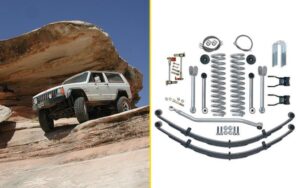
- The XJ Cherokee 4.5-Inch Lift: What a Complete Kit Needs
A complete XJ 4.5 lift needs coils, leaf springs, control arms, a track bar, shocks and brake lines. See the parts, axle limits and…
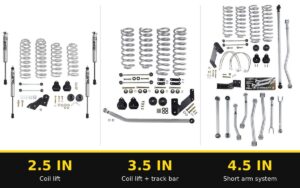
- Jeep JK Lift Heights: 2.5 vs 3.5 vs 4.5 Inch Compared
Jeep JK lift heights compared: the tires 2.5, 3.5 and 4.5-inch lifts clear, the track bars, arms, lines and driveshafts each needs, and which…
- Twin-Tube, Monotube or Reservoir: Picking the Right Shock
Twin-tube, monotube and reservoir shocks compared: how each handles heat, how to size one for your lift, and which design fits how you drive.
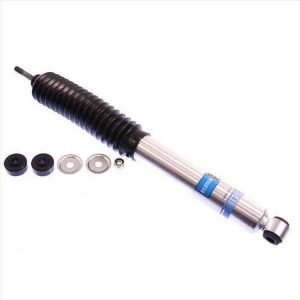
- Bilstein 5100 vs Fox 2.0 Performance: Which Shock for Your Lifted Truck or Jeep
Bilstein 5100 vs Fox 2.0 Performance: body, shaft, reservoir, travel and lift ratings across 417 part numbers, which trucks and Jeeps both fit, how…
Popular Lift Kits brands
- Pro Comp Suspension (613)
- Rubicon Express (338)
- Fabtech (162)
- Rough Country (98)
- Tuff Country (90)
- Skyjacker (80)
- TeraFlex (64)
- Daystar (62)
- ReadyLift (59)
- Trail Master (40)
- Genuine Packages (26)
- ARB 4x4 Accessories (24)
Lift Kits FAQ
How much lift do I need for 35 inch tires?
It depends on the vehicle, backspacing and trimming. Many solid-axle vehicles clear 35s with about 3.5 to 4 inches of lift plus some trimming, while independent front suspension trucks vary. Check the kit manufacturer's tire size guidance for your exact model.
Do I need an alignment after installing a lift kit?
Yes. Changing ride height alters caster, camber and toe, so an alignment is required after installation. Headlight aim and driveline angles should also be checked, and a high steer or geometry correction parts may be needed.
Is a long arm kit better than a short arm kit?
Long arm kits generally improve articulation and geometry at taller lifts but cost more and are harder to install. Short arm kits are simpler and fine for moderate lifts and mostly street use.
Will a lift kit affect my ride and fuel economy?
Usually yes. A taller, heavier setup raises the center of gravity and increases drag, and bigger tires add weight and rolling resistance. Quality shocks and correct alignment help the ride but cannot fully offset those changes.