
Leaf spring plates, also known as spring plates or U-bolt plates, clamp the leaf pack to the axle and hold it in position. This category includes front and rear plates, universal plates and antiwrap spring perches for Jeeps and trucks with leaf springs. It suits owners repairing bent or corroded plates and builders setting up a custom spring-over setup. Brands include Crown Automotive, Omix-Ada, Mountain Off Road Enterprises, Rubicon Express and Currie. See each product page for part numbers, then compare the products below.
Leaf Spring Plate
Showing 1–12 of 21 resultsSorted by popularity
-
-
-
-
Leaf Spring Plate
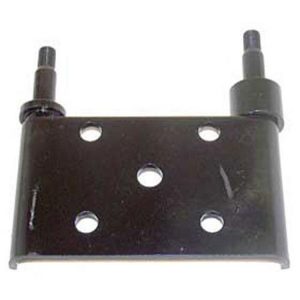
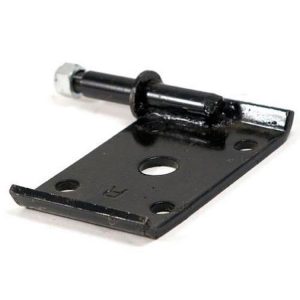
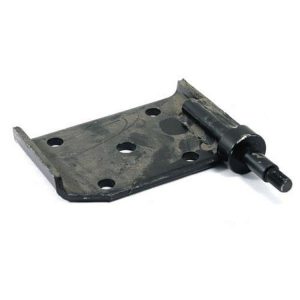
Omix-ADA Leaf Spring Plate – 18270.07
- Front right (passenger side) leaf spring plate, Omix-ADA part number 18270.07
- Direct fit for 1941–1971 Jeep CJ, DJ, Dispatcher and Willys models
- Direct OE replacement built to the original specifications
- Limited five year warranty
- UPC 804314013035
SKU: OAI18270.07 -
Leaf Spring Plate
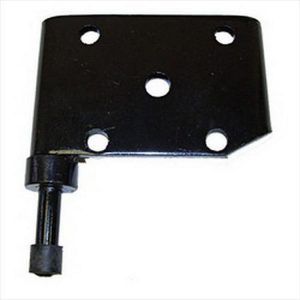
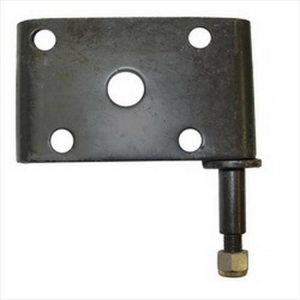
Crown Automotive Front Spring Plate – J5359011
- Fits 1979–1983 Jeep CJ5, 1979–1986 Jeep CJ7 and 1981–1985 Jeep Scrambler models
- Front left (driver side) spring plate, part number J5359011
- Includes a shock mount stud and a sway bar mount stud
- Factory style replacement; UPC 848399064162
SKU: CROJ5359011 -
Leaf Spring Plate
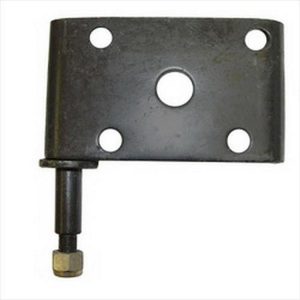
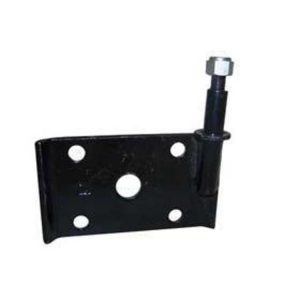
Crown Automotive Front Spring Plate – J0800823
- Crown Automotive J0800823 factory style front passenger side spring plate
- Fits Jeep CJ3, CJ5, CJ5A, CJ6, CJ6A and Willys CJ models
- Front position; listed fitment type reads universal fit
- Manufacturer fitment list covers 1946–1971 models
SKU: CROJ0800823 -





What a spring plate does
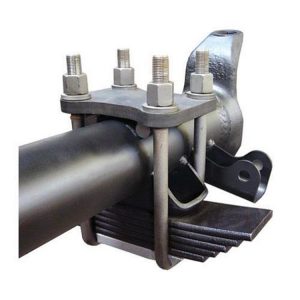
On a leaf-sprung axle, the spring pack sits on a perch on the axle tube, and U-bolts clamp it down. The spring plate, also called a U-bolt plate or spring clamp plate, sits on the opposite side of the axle from the spring and spreads the clamping force of the U-bolts so they do not bite into the tube. It also locates the bolts and holds the whole assembly square.
Types of plates
- Direct-fit plates: Made to the original shape and hole spacing for a specific vehicle and axle.
- Universal plates: Generic flat plates, sometimes listed by width, used for custom builds and spring swaps.
- Perches and antiwrap perches: Brackets welded to the axle that position the spring and, in the antiwrap design, resist axle wrap under hard acceleration.
- Front and rear versions: Often different in dimensions because axles and spring widths differ.
Signs of a worn plate
Look for bent or cracked plates, rust that has pitted the metal, loose U-bolts, or a spring pack that shifts on the axle. A loose or worn plate can let the spring move, which can change alignment and affect handling. If a plate is damaged, it is generally replaced together with the U-bolts, which stretch and should not be reused if the vehicle's service manual advises against it.
What to compare
- Spring width, such as 2 inch versus 2.5 inch or more.
- Hole spacing and U-bolt diameter.
- Plate thickness and material.
- Whether it includes a center-pin hole or a shock mount.
- Whether the plate is for a front or a rear axle, and the specific axle.
Installation notes
Plates are installed while the vehicle is supported on stands with the axle's weight supported by a jack. Check that the spring's center bolt seats in its hole on the perch, tighten the U-bolts evenly in a cross pattern, and use the torque specifications from the vehicle or spring manufacturer. Retorque after the first drive. Any welding of perches should be done by a qualified fabricator, since poor welds or heat damage to the axle tube are unsafe. Professional installation is recommended for suspension work.
Fitment
Confirm fitment for your exact year, make, model and axle, and read the manufacturer's specifications. Spring perch and plate dimensions differ widely.
Measuring and confirming fitment
Measure the spring width, the distance between U-bolt centers, and the diameter of the bolts. Count the holes and note the position of the center pin hole. Take these numbers from the old plate or perch, and compare them with the listing. A front plate and a rear plate on the same vehicle can be quite different.
Mistakes to avoid and upkeep
- Using the wrong U-bolt length, which can leave too many threads sticking out or too few engaged.
- Tightening one side of a U-bolt fully before the other, which can tilt the plate.
- Ignoring cracked or sagging springs while replacing the plate.
Inspect the U-bolts and the plate for rust, and re-torque after the vehicle settles. Cleaning and coating exposed steel helps it last. When a vehicle is lifted with a spring-over setup, the plate position changes, so confirm the alignment and driveline angles afterward.
Popular Leaf Spring Plate brands
- Crown Automotive (9)
- Omix-Ada (6)
- Rubicon Express (2)
- Currie (2)
- Mountain Off Road Enterprises (2)
- Dynatrac (1)
Leaf Spring Plate FAQ
What is a leaf spring plate used for?
It sits on the underside of the axle and spreads the U-bolt clamping load, keeping the leaf pack securely and squarely positioned. Without it, the U-bolts could dig into the axle tube and loosen.
Should I replace U-bolts when I replace the plate?
Generally yes. U-bolts can stretch and weaken with torque and age, and many manufacturers recommend new ones for reassembly. Check the service information for your vehicle and the spring maker's guidance.
What is an antiwrap spring perch?
It is a perch with a design that resists the axle rotating under load, a problem called axle wrap that can cause wheel hop. It is welded to the axle and positions the spring.
Can I use a universal spring plate on my vehicle?
Sometimes, if the width, hole spacing and U-bolt size match. Many owners use universal plates in custom builds. Measure carefully and verify against the manufacturer's specifications before installing.