
Steering Parts under Replacement Parts holds factory-style steering linkage and pump components for Jeeps from the 1960s Gladiator and Wagoneer through the CJ, YJ, XJ, ZJ, WJ, TJ and JK. Crown Automotive and Omix-ADA supply tie rod ends, drag link ends, adjusting sleeves, pitman arms, steering knuckles, pump pulleys, pump seal kits, complete steering kits and return hoses, with Jeep and PSC Steering adding a few pieces. Subcategories group CJ, JK, ZJ and vintage steering. Match your model and year below.
Steering Parts
Showing 1–12 of 19 resultsSorted by popularity
Shop Steering Parts by type


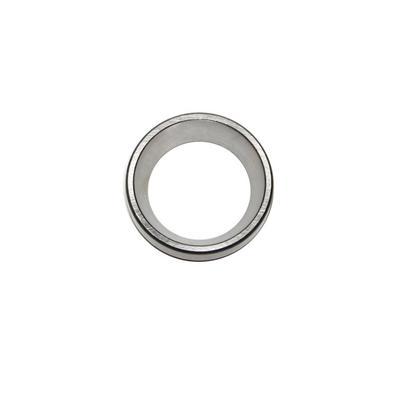

-
CJ Steering

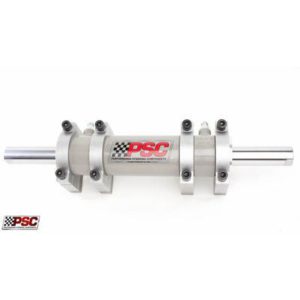
PSC Steering Double Ended XD Steering Cylinder Kit for Full Hydraulic Steering System – SC2227K1
 CJ Steering
PSC Steering Double Ended XD Steering Cylinder Kit for Full Hydraulic Steering System – SC2227K1
- PSC Steering double ended XD steering cylinder kit, part number PSMSC2227K1
- For full hydraulic steering systems
- Approximate turns lock-to-lock: 3.4 with FHV-CE160, 3.0 with FHV-CE185, 2.4 with FHV-CE230
- No vehicle fitment is named
SKU: PSMSC2227K1 -
-
-
-
-
-
-

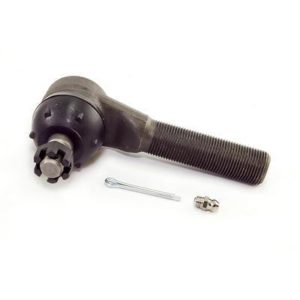

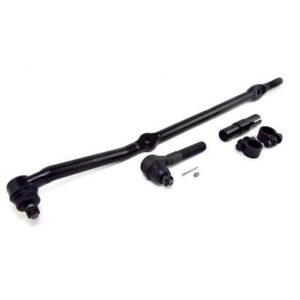

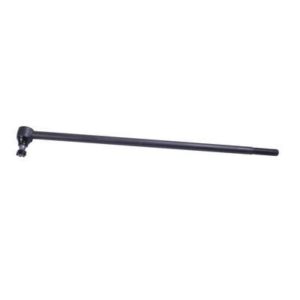

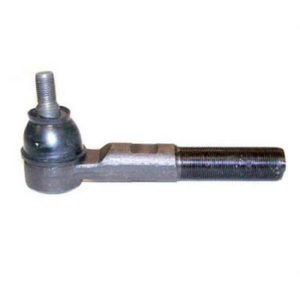

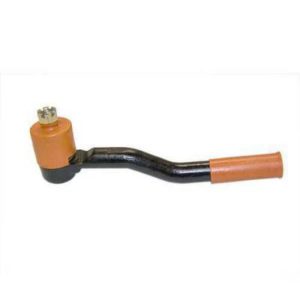
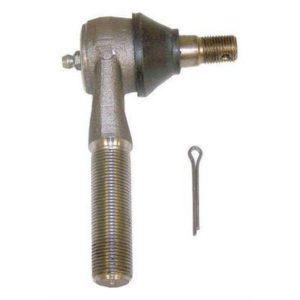
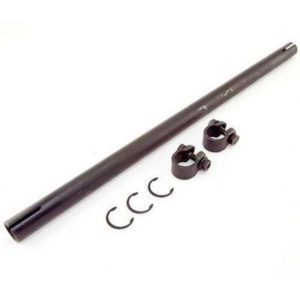
Stock replacement steering for Jeeps
This category is for putting a Jeep's steering back to factory condition: the tie rod ends, drag link ends and adjusting sleeves that wear out, the pitman arm that bolts to the steering box, the knuckles that carry the wheel bearings and ball joints, and the pump pulleys and seal kits that keep the power steering alive. Nearly all of it is Crown Automotive or Omix-ADA, both of which reproduce Jeep parts to original specifications, with a few genuine Jeep pieces such as the JK tie rod to pitman arm. The subcategories split out CJ steering, JK Wrangler replacement steering, ZJ Grand Cherokee steering and vintage steering for the 1960s and 1970s trucks and wagons.
Understanding the linkage
Solid-axle Jeeps use a steering box on the frame with a pitman arm that swings a drag link to the passenger side knuckle or to the tie rod. The tie rod connects both knuckles. Each end has a greaseable or sealed ball stud, and threaded adjusting sleeves set the length for toe and steering wheel centering. The parts here are sold by position and thread direction: the Crown listings name a left tie rod end with left-hand threads for the 1963 to 1969 Gladiator and Wagoneer, a drag link end about 32 inches long for the 1972 and 1973 J-series, the adjusting sleeve at the pitman arm for the 1999 to 2004 WJ, and a pitman arm end for the WJ. Mixing a left-hand thread end onto a right-hand sleeve will not work, so compare the old part before choosing.
- A complete steering kit, like the Crown SK3 for the 1987 to 1990 YJ, includes all four tie rod ends, adjusters, hardware and a steering stabilizer. It is the simplest way to refresh a worn linkage in one pass.
- Pitman arms differ between manual and power steering, and between stock and drop versions. The one listed for the 1984 to 1988 XJ is a stock manual steering arm.
- Knuckles are stock replacements and, as the listing notes, are not high steer or crossover steering compatible.
Pump and shaft components
Power steering pumps on the 2.5L and 4.0L engines share a pulley across the XJ, ZJ, WJ, TJ and LJ, and the pump seal kit for the ZJ and WJ cures the slow leak at the shaft and reservoir. The steering shaft bearing and seal kit for 1972 to 1986 CJ, CJ6 and Scrambler is for manual steering boxes only. Return hoses are listed by drive side, since left-hand drive is standard in the US.
Symptoms and diagnosis
A loose, wandering steering wheel with a clunk over bumps usually means worn tie rod or drag link ends; grab each joint with the wheels on the ground and have someone rock the wheel to feel play. A steering wheel off center after an alignment points to a bent tie rod or sleeve. Groaning on turns and a wet pump are seal problems. A worn knuckle shows as uneven tire wear and ball joint play.
Installation and alignment
Count the turns when removing an adjusting sleeve so the new end starts close to the old setting, use new cotter pins or lock nuts, and torque castle nuts to specification rather than just until the pin fits. After any tie rod or drag link work, set toe and center the steering wheel, ideally on an alignment rack. Steering is safety critical; if you are not equipped to align the vehicle, have a shop do it. Confirm the part matches your exact year, model, steering type and position before choosing.
Popular Steering Parts brands
Steering Parts FAQ
How do I tell if my tie rod ends are worn?
With the Jeep on the ground, have a helper rock the steering wheel back and forth a few inches while you hold each tie rod and drag link end. Any clunk or movement at the ball stud means wear. Torn boots, rust weeping from the joint and uneven inner tire wear are other signs.
Do I need an alignment after replacing tie rod ends?
Yes. Even if you count the turns on the adjusting sleeve, toe will be slightly off and the steering wheel may sit off center. Have toe set and the wheel centered on an alignment rack after the work. Driving on incorrect toe wears tires quickly.
Is a manual steering pitman arm the same as a power steering one?
No. Manual and power steering boxes have different output shaft splines and the arms have different lengths and drops. The pitman arm listed for the XJ here is for manual steering models only. Match the arm to your steering box type and whether you need a stock or drop arm.
Can I replace just one tie rod end?
You can, but the other ends are the same age and will likely fail soon after. Replacing the whole linkage with a kit, as with the Crown steering kit for the YJ, costs one alignment instead of several and restores a consistent feel across the whole system.