
Brackets, Gussets & Tabs
Showing 25–36 of 80 resultsSorted by popularity
-
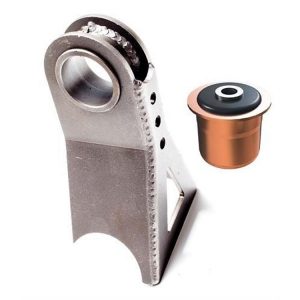
Axle Bracket
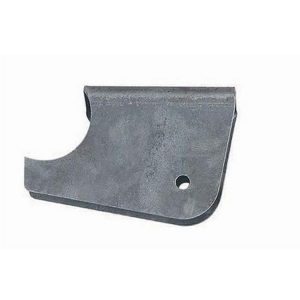
Artec Industires Rear Lower Control Arm Brackets with Skids – BR1137
- Artec Industries A/IBR1137 pair of rear lower control arm brackets with integrated skid plates
- 2.625 inch mounting width fits common cartridge joints such as Johnny, Flex and Ballistic
- Made from 1/4 inch thick boxed steel plate for a 3-1/2 inch axle tube
- Requires welding to the axle and removal of the factory bracket
SKU: A/IBR1137 -
-
-
-
Axle Bracket
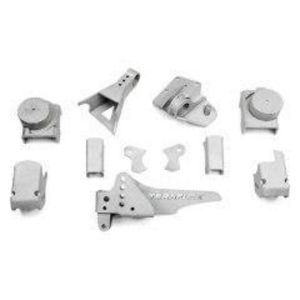
TeraFlex Axle Bracket Kit – 3990700
- TeraFlex axle bracket kit, part number 3990700, front
- Designed for new JK CRD60 axle applications, tied to 2007-2018 Jeep Wrangler JK
- Laser cut from 3/16 inch steel, ready for welding and paint or powder coating
- Includes shock, sway bar, flex arm, spring pad and track bar mounts
SKU: TER3990700 -
Control Arm Mount
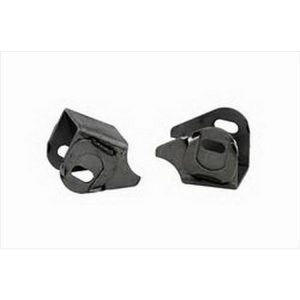
Rugged Ridge Heavy-Duty Control Arm Mounts – 18273.01
- Rugged Ridge 18273.01 heavy-duty weld-on front lower control arm axle mounts
- Greater wall thickness and a welded reinforcement plate add axle support
- Fitment list covers 1997-2006 Wrangler TJ and 2004-2006 Wrangler LJ
- UPC 804314123864
SKU: RUG18273.01 -
-










Parts for fabricators
These parts are building blocks for suspension and axle work. They are meant for welding or bolting into a project by people who understand the loads involved, such as when building a link suspension, swapping an axle or strengthening a weak point. Many are weld-on, so treat them as structural components.
What the subcategories cover
- Axle trusses: a steel brace that welds along the axle tube to resist bending, popular on Dana 30 and Dana 44 axles under larger tires.
- Axle brackets: link, track bar and Panhard mounts that weld to the axle housing.
- Ball gussets: reinforce the area around the steering knuckle ball joint.
- Shock and coilover mounts: locate shocks at the axle or frame.
- Spring perches and control arm mounts: hold leaf springs or arms in position.
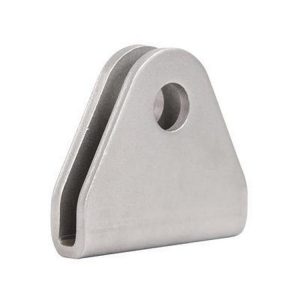
- Tabs: laser-cut steel pieces for building custom mounts.
How to choose
First identify the axle or frame that the part must fit, such as Dana 30, Dana 44, Dana 60 or another axle, and whether it is a front or rear application. Tube diameter, bracket thickness and bolt hole size must match your project. Many mounts are listed as universal but still require careful measuring. Truss kits are often vehicle specific and may include axle swap hardware, so check what is included.
Look at the material and thickness, as thicker plate adds strength and weight. Check that the part is made from weldable steel and whether it arrives bare or coated. Coatings must be removed at weld areas.
Welding and installation
Axle and suspension welds carry safety-critical loads. Proper preparation, correct filler material, penetration and heat control matter, and a poor weld can fail without warning. If you do not have welding experience, hire a qualified fabricator. Measure geometry carefully, including pinion angle, link angles, track bar level and axle centering, before final welding. Avoid overheating axle tubes, since that can warp the housing.
Fitment and checks
After installation, inspect welds and bolts regularly, especially after hard trail use. Confirm fitment for your exact vehicle and axle, and follow the manufacturer's specifications and instructions. Alignment and driveline checks are recommended after changes.
Planning before you cut or weld
Good fabrication starts with measurement and a plan. Sketch the suspension geometry, including link lengths, angles and instant center, before locating any bracket. Use jack stands, a level surface and tools such as a straightedge, a tape measure and an angle finder to verify axle position. Tack weld parts first and recheck everything before final welds, because it is much easier to move a tack than a finished weld. Clean paint and coatings from the weld area, wear proper eye and respiratory protection, and keep a fire extinguisher nearby. Consider stress risers too: avoid abrupt ends on gussets, round the corners and keep welds away from high-flex areas. When the work is complete, inspect the welds, paint the bare metal to prevent rust and recheck bolts after the first trail run.
Common mistakes include welding without measuring first, using the wrong filler for the base steel, and trusting a bracket's appearance rather than its thickness. Check that the plate thickness suits the load, and avoid placing welds on the tension side of thin tubing without reinforcement.
Popular Brackets, Gussets & Tabs brands
- Artec Industries (33)
- Rubicon Express (15)
- G2 Axle and Gear (10)
- Trail Gear (6)
- TeraFlex (5)
- Blue Torch Fabworks (3)
- Rock Krawler (2)
- Low Range Offroad (1)
- Crown Automotive (1)
- Mountain Off Road Enterprises (1)
- Rugged Ridge (1)
- RT Off-Road (1)
Shop Brackets, Gussets & Tabs by type
- Axle Truss (43)
- Control Arm Mount (15)
- Axle Bracket (11)
- Axle Bracket Kits (5)
- Axle Ball Gussets (1)
- Shock Mount Brackets (1)
Brackets, Gussets & Tabs FAQ
What does an axle truss do?
A truss is a steel brace welded along the axle tube to resist bending and keep the housing straight. It is common on larger-tire builds. Fit depends on the axle model, so confirm the compatible axle on the product page.
Do I need to weld these brackets?
Many brackets and gussets are weld-on, while some mounts and kits bolt in. Check the product description. For safety-critical axle and suspension welds, use an experienced welder or professional fabricator.
What is a ball gusset?
A ball gusset is a reinforcing piece around the steering knuckle ball joint area on some axles. It helps strengthen the area, particularly with large tires or hard use. It must match your axle type.
What are laser-cut tabs used for?
Tabs are precision-cut steel pieces that fabricators use to make custom mounts, such as for links, shocks or brackets. Check the material thickness and the hole sizes and make sure they suit the load.