
Flex Joints, Rod Ends & Jam Nuts
Flex joints, rod ends, Heim joints and jam nuts for building and repairing control arms, links and steering parts on lifted rigs. Fabricators and trail wrenchers use them to replace worn bushings with joints that move through a larger arc. Brands include RockJock 4×4, Rock Krawler, Trail Gear, Skyjacker and Rubicon Express. Check each product page for thread size and part numbers, then compare the products below.
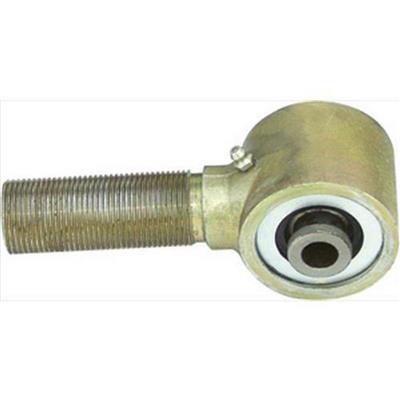
Every link, track bar and custom steering arm ends in a pivot, and on a flexy rig that pivot sees a lot of angle and a lot of dirt. This section gathers the parts fabricators and trail wrenchers reach for: Johnny Joints, Krawler Joints, Heim-style rod ends, rebuild kits, jam nuts, couplers and misalignment spacers.
Most of the listings are finished joints with a threaded shank, sold by shank thread, bore and thread direction. Rebuild kits restore an existing joint and must match its series and size. Jam nuts lock the adjustment and need the same thread size and direction as the joint. Weld-in couplers turn plain tubing into a threaded link, and spacers center a rod end in its mounting tabs.
Shop joints and rod ends


Popular joints and hardware
-
Flex Joints
Rubicon Express Super-Flex Joint Rebuild Kit – RE3793
- Billet Super-Flex cartridge for the factory upper control arm mounts on Jeep XJ, MJ, ZJ, TJ and WJ chassis
- UHMW side races and a threaded adjuster nut
- Billet construction
- Rubicon says factory rubber bushings need replacing every race; this joint uses UHMW races instead
- Part number RE3793
SKU: R/ERE3793 -
Rod Ends, Heim, Johnny & NG Joints

RockJock 2.5 Inch Forged Johnny Joint with 1-1/4 Inch RH Threaded Stud – CE-9114-14
 Rod Ends, Heim, Johnny & NG Joints
RockJock 2.5 Inch Forged Johnny Joint with 1-1/4 Inch RH Threaded Stud – CE-9114-14
- RockJock forged Johnny joint, 2.5 inch, 1-1/4 inch right-hand stud
- Greaseable through the outer shell, 7/16 inch thru bolt hole
- Accepts Johnny joint internals; fits RockJock adjustable upper arms
- Gold zinc plated, sold each
SKU: R/JCE-9114-14 -
-
Rod Ends, Heim, Johnny & NG Joints
RockJock 2″ Serviceable Johnny Joint – CE-9112NC-12
- RockJock 4×4 R/JCE-9112NC-12, 2″ narrow forged Johnny Joint rod end
- Universal fit; no specific vehicle is listed
- 1″-14 right hand threads, 5″ long on the shank
- 1/2″ thru bolt hole, 2″ mounting width, greaseable
- Gold zinc plated; non-serviceable
SKU: R/JCE-9112NC-12 -


Thread and sizing reference
Sizes taken from the joints, nuts and couplers listed here. Write down the shank thread, direction and bore of your existing joint before you order a replacement or rebuild kit.
Shank threads in these listings
| 3/4"-16 | Rod ends with 5/8" or 3/4" bore |
|---|---|
| 7/8"-14 | Rod ends with 7/8" bore |
| 1"-14 | Jam nuts, RH and LH |
| 1-1/4"-12 | Johnny Joints, Krawler Joints, couplers |
Building a threaded link
- Use one right-hand and one left-hand end so turning the tube changes length
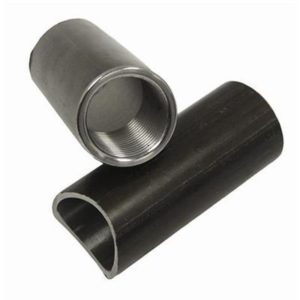
- Weld-in couplers set the minimum tube inside diameter (1-1/4" for 1-1/4"-12)
- Order a jam nut for each threaded end, matched in size and direction
- Left-hand nuts are often marked with a groove or notches on the flats
- Rule of thumb: thread in at least 1.5 times the shank diameter
- Tube armor protects the link body from rock damage
Joint styles at a glance
| Pivot | Upkeep | |
|---|---|---|
| Johnny Joint (RockJock) | Ball and liner in a housing | Rebuild kit; some greasable |
| Krawler Joint (Rock Krawler) | Ball in a rebuildable housing | Rebuild kit |
| Heim or rod end | Spherical bearing in a body | Replace or rebuild |
| Poly flex joint (Daystar) | Poly-encased ball | Greasable bolt; rebuildable |
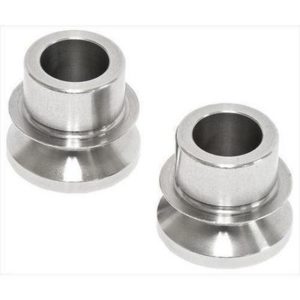
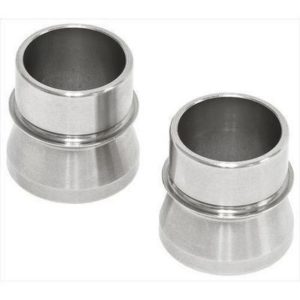
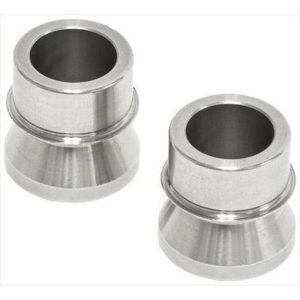
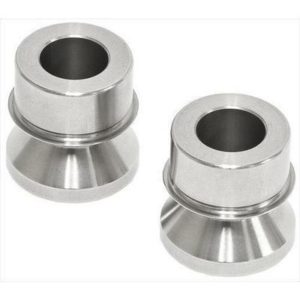
Misalignment spacers
| Purpose | Center a rod end and add working angle |
|---|---|
| Listed bore sizes | 9/16", 5/8" and 3/4" |
| Fit | Bore must match the rod end and bolt |
| Mounting | Between the rod end ball and the tabs |
Before ordering a rebuild kit
- Brand and series of the joint; rebuild kits are made per series
- Housing size, such as 2" or 2.5", and standard or narrow width
- Bore size of the ball and the bolt it takes
- Whether your joint is serviceable or sealed
- Special press or joint tools needed for removal
Links and steering parts are safety critical. Follow the maker's torque and thread engagement figures, and have custom welded links checked by an experienced fabricator.
All Flex Joints, Rod Ends & Jam Nuts 116 parts
-
Flex Joints
Rubicon Express Super-Flex Joint Rebuild Kit – RE3793
- Billet Super-Flex cartridge for the factory upper control arm mounts on Jeep XJ, MJ, ZJ, TJ and WJ chassis
- UHMW side races and a threaded adjuster nut
- Billet construction
- Rubicon says factory rubber bushings need replacing every race; this joint uses UHMW races instead
- Part number RE3793
SKU: R/ERE3793 -
-
Rod Ends, Heim, Johnny & NG Joints
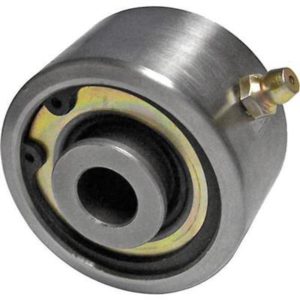
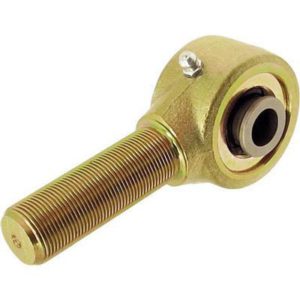
RockJock Narrow Johnny Joint Rod End – CE-9112NP-13
- RockJock 4×4 Narrow Johnny Joint Rod End, part number R/JCE-9112NP-13
- 30 degrees of unrestricted movement, compared with 22 degrees on a common heim joint
- High density polyurethane bushing with a zerk fitting
- Universal fit; no vehicle named
SKU: R/JCE-9112NP-13 -
Heim Joint Rebuild Kits
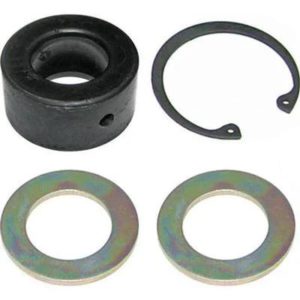
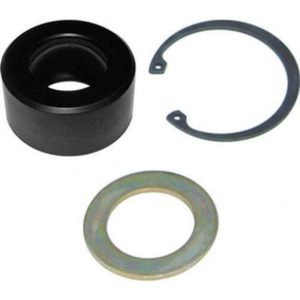
RockJock Narrow Johnny Joint Rebuild Kit – CE-9112NRK
- RockJock 4×4 Narrow Johnny Joint Rebuild Kit, part number R/JCE-9112NRK
- Rebuild kit for narrow Johnny joint rod ends
- Universal fit; no year, make or model named
- Model CE-9112NRK, engineering credited to Synergy Manufacturing
SKU: R/JCE-9112NRK -
-


What these parts do
Suspension links and steering linkages must pivot as the axle moves. Rubber bushings give that pivot with some flex, but a lot of articulation twists or binds them. Flex joints, rod ends and Heim joints are mechanical pivots built to allow wide, free movement, which is why they are common on rock crawlers, custom link suspensions and trail rigs with long-travel setups.
Joint types
- Flex joints (often called Johnny joints): A sealed housing with a ball and a polymer or bronze-style liner, allowing a wide angle of movement and usually accepting a grease fitting.
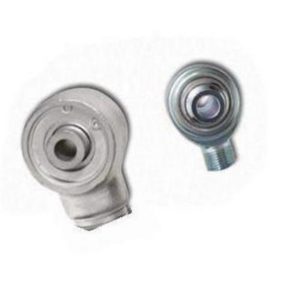
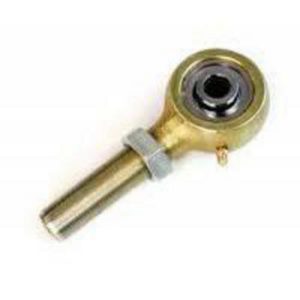
- Heim joints or rod ends: A spherical bearing inside a steel body with a threaded shank, widely used for adjustable links.
- Rebuild kits: Replacement liners, seals and hardware for restoring a worn joint.
- Jam nuts: Large locking nuts that secure a threaded joint so the link keeps its adjusted length.
What to compare
- Thread size and thread direction. Many rod ends come in right-hand and left-hand versions so that a link can be adjusted by turning the tube.
- Bore diameter and bolt size.
- Housing size and the arm or tube it must thread into or be welded to.
- Material and plating for corrosion resistance.
- Whether the joint is serviceable and greasable.
Noise, maintenance and wear
Joints can be louder and more prone to dirt contamination than rubber bushings, so keep boots and seals intact and grease fittings serviced on a regular schedule. Inspect joints after trail use for play, grit and torn seals. Many people replace liners as a routine maintenance item rather than waiting for failure.
Installation notes
Special tools are often required to press joints or liners in and out, which is why large joint tools appear alongside the joints themselves. Fabrication work, including welding threaded bungs, should only be done by someone with the skills to do it correctly, because a failed link or tie rod can cause a loss of vehicle control. Tighten jam nuts firmly against the joint, and verify that threads are engaged to at least the minimum depth the manufacturer recommends. Torque fasteners to specification, and have a suspension or steering rebuild checked by a professional.
Compatibility
Confirm thread size, direction and housing dimensions against your parts, and check the manufacturer's specifications. Joints are not interchangeable between every arm or link design.
Choosing the right size and grade
Thread size is expressed by diameter and pitch, such as a fine-thread or coarse-thread bolt, and mixing them damages threads. Also check the working angle of a joint: a rod end with a larger misalignment angle suits long links on a rig with a lot of articulation. For safety-critical links, favor forged and heat-treated parts from reputable makers over unmarked castings.
Mistakes to avoid
- Using a rod end in a way that puts it in bending rather than in line with the link.
- Leaving the shank threads only partly engaged.
- Over-greasing, which can push dirt past seals when done aggressively.
- Reusing worn liners or bolts that show galling.
Inspect the joints at regular intervals and replace anything that has play, since play grows quickly under load.
Popular Flex Joints, Rod Ends & Jam Nuts brands
- RockJock 4x4 (48)
- Artec Industries (16)
- Trail Gear (12)
- Rock Krawler (10)
- TeraFlex (8)
- Skyjacker (6)
- Rubicon Express (4)
- Mountain Off Road Enterprises (4)
- Daystar (3)
- Blue Torch Fabworks (3)
- Fabtech (2)
- Pro Comp Suspension (1)
Flex Joints, Rod Ends & Jam Nuts FAQ
What is the difference between a Johnny joint and a Heim joint?
A Johnny joint is a sealed flex joint with a liner, often greasable, that suits control arms. A Heim joint is a spherical rod end, usually used on adjustable links and steering. Each has different angle and noise traits.
Why do some rod ends have left-hand threads?
A left-hand and right-hand pair lets you adjust link length by turning the center tube, without removing either end. This is common on adjustable control arms and track bars. Always match thread direction to the mating part.
What does a jam nut do?
A jam nut locks a threaded joint in place against the link or tube, so vibration does not change its adjusted length. It must be tightened firmly and the threads should be fully engaged.
Can I use rod ends for steering parts?
Only if the product is rated for steering use. Tie rod and drag link ends have specific load and angle needs, and a failure is dangerous. Use parts designed for the application and have the installation checked.