
Switch Pods
Showing 25–36 of 76 resultsSorted by popularity
-
-
Switch Pods
8 Circuit SE System with HD Switch Panel
- Eight-circuit SourceSE system with a billet aluminum HD switch panel
- Fits 2007–2017 Jeep Wrangler JK, 2-door and 4-door
- Silicone buttons with positive touch feedback for harsh conditions
- Circuits rated 30 amps at 12.5 VDC, expandable to 32
- SPOD part 8-800-HD-JK, UPC 700008014601
SKU: POD8-800-HD-JK -
Switch Pods
SPOD 8 Circuit SE System with Touch Screen and Bluetooth – 8-700-TSB-TJ
- Eight-circuit SE touchscreen for Wrangler TJ and LJ, 1997–2006
- Fits 2004–2006 Jeep Wrangler LJ Unlimited and Rubicon versions
- Voltage, board temperature and per-switch amperage readings
- Controls up to 32 circuits with a swipe-select touchscreen
- SPOD part 8-700-TSB-TJ, UPC 700008512311
SKU: POD8-700-TSB-TJ -
Switch Pods
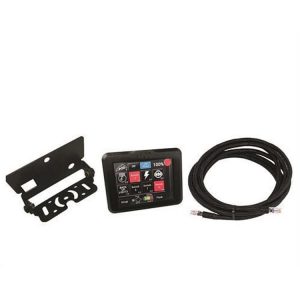
SPOD 8 Circuit SE System Add-On Touch Screen and Bluetooth – 8-700-TSB-C10
- Universal add-on touch screen controller for SPOD 8 Circuit SE switch pod systems, part number 8-700-TSB-C10
- 3.5-inch LED-backlit TFT LCD with 320 x 240 resolution and 16.7m colors
- Billet aluminum case with a universal articulating mount
- Connects to the SourceSE or Bantam power distribution module with a 10′ Ethernet cable
- Short range Bluetooth LE comes standard for screen customization
SKU: POD8-700-TSB-C10 -
Switch Pods

SPOD 2009-2015 JK Wrangler 8 Circuit SE- Special Edition System with Red LEDs – 8-600-0915-LEDR
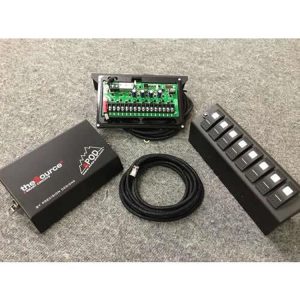 Switch Pods
SPOD 2009-2015 JK Wrangler 8 Circuit SE- Special Edition System with Red LEDs – 8-600-0915-LEDR
- Eight-switch SourceSE system with red LED indicator lights
- Fits 2009–2016 Jeep Wrangler JK, 2-door and 4-door
- Programmable circuits rated 30 amps at 12.5 VDC
- Low-voltage cutoff at 11.2 VDC with a two-minute delay
- SPOD part 8-600-0915-LEDR, UPC 700007270481
SKU: POD8-600-0915-LEDR -
Switch Pods
SPOD 2009-2015 JK Wrangler 8 Circuit SE- Special Edition System with Green LEDs – 8-600-0915-LEDG
Switch PodsSPOD 2009-2015 JK Wrangler 8 Circuit SE- Special Edition System with Green LEDs – 8-600-0915-LEDG
- Fits the 2009-2016 Jeep Wrangler JK, 2-door and 4-door
- 8 circuits, 30amps at 12.5 vdc each; 100 amp maximum
- Expandable to up to 32 circuits
- Green LED indicators; programmable strobe or flash
SKU: POD8-600-0915-LEDG -
Switch Pods
SPOD JK Wrangler 8 Circuit SE- Special Edition System with Amber LEDs – 8-600-0915-LEDA
- Eight-switch SourceSE system with amber LED indicator lights
- Fits 2009–2016 Jeep Wrangler JK, 2-door and 4-door
- Eight circuits rated 30 amps at 12.5 VDC each, expandable to 32
- Low-voltage cutoff at 11.2 VDC with a two-minute delay
- SPOD part 8-600-0915-LEDA, UPC 700007270461
SKU: POD8-600-0915-LEDA -
Switch Pods
SPOD 6 Switch Panel with Sunglass Holder – 700-Tun
- Fits 2012 to 2016 Toyota Tundra
- Replaces the overhead sunglass holder panel with a 6 switch panel
- Six pre-wired Contura rocker switches, arrives ready to connect
- 12 position terminal block and 6 ATO fuses (3 15 amp, 3 30 amp)
- Mounts to top of fuse box; some cutting and drilling required
SKU: POD700-TUN -
Switch Pods
SPOD Ram Mount Switch Panel – 700-Ram
- Six switch panel on a 1-inch ram mount ball, part number 700-RAM
- Can be removed and put away when not in use
- Six dual 24v LED Contura rocker switches, installed and pre-wired
- Mounts to the top of a fuse box; some cutting and drilling required
SKU: POD700-RAM -
Switch Pods
SPOD Truck Mini Bezel – 700-Mini
- Mini bezel with a 7 inch mini switch panel, part number 700-MINI
- Mounts to the top of a fuse box; some cutting and drilling required
- Six dual 24v LED Contura rocker switches, installed and pre-wired
- Six ATO fuses supplied: three 15 amp and three 30 amp
SKU: POD700-MINI -
Switch Pods
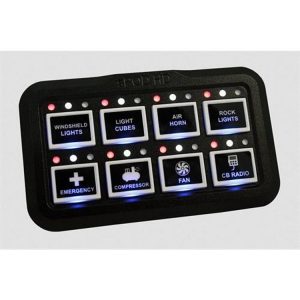
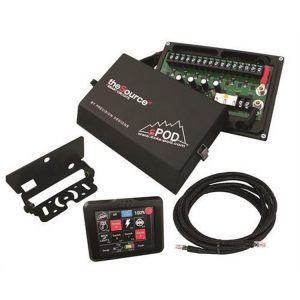
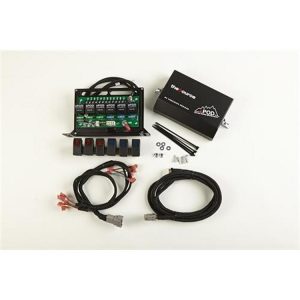
SPOD 6 Switch sPOD and Source System with Genesis Adapter – 630-0915
- Covers 2009 to 2016 JK Wrangler, Rubicon and Unlimited, 2 and 4-door
- Six dual 24v LED Contura rocker switches installed and pre-wired
- Genesis adapter for a Genesis G Screen, which is not included
- 12 position terminal block and six ATO fuses (three 15 amp, three 30 amp)
SKU: POD630-0915
What a switch pod does
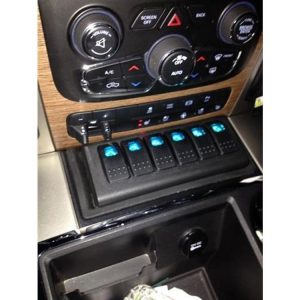
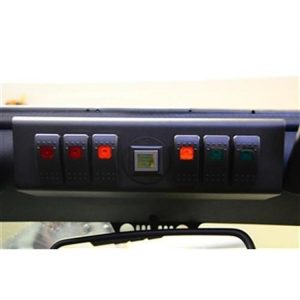
Off-road builds add many electrical accessories: light bars, rock lights, air compressors, winches and cameras. A switch pod puts the controls in one panel, usually near the driver, and ties them to a relay-based control unit under the hood or dash. This keeps current-carrying wires away from the cabin and reduces the clutter of individual switches added in random places.
Types of systems
- Vehicle-specific kits are shaped to fit the dash or console of particular models, such as a Wrangler TJ or a Tacoma. They often use factory mounting points for a clean look.
- Universal panels and bezels mount in a bracket, roll bar or console, and suit custom builds.
- Control systems use a power module that handles the high-current switching. Some are driven by a touchscreen or a small switch panel.
- Harnesses and accessories include extension wiring, battery cables and mounts for tablets or screens.
What to compare
- Number of switches: count the accessories you run now, then add a few spare circuits for future upgrades.
- Current rating: every circuit and the main feed have a maximum amperage. Add up what you will connect and stay below the rating.
- Switch type: rocker, toggle, momentary or programmable. Momentary functions suit horns and winch-style actions.
- Environmental protection: consider whether the control module is sealed against moisture if it will be under the hood.
- Illumination: backlit switches help at night, but check that the brightness is adjustable.
Installation notes
Disconnect the battery before starting work. Use properly sized wire for the load, a fuse or breaker near the battery, and weatherproof connectors where wires pass through the firewall. Route wiring away from heat and moving parts, and use grommets to protect it at pass-throughs. Test each circuit before closing up the dash. Systems that connect to a vehicle's factory harness should be confirmed against the wiring information for your exact year, make and model. If wiring is unfamiliar, have an automotive electrician perform the installation.
Labeling and upkeep
Label each switch clearly, since a panel full of identical rockers is easy to misread in the dark. Periodically check connectors for corrosion, confirm that fuses are the right rating and keep a spare set of fuses in the vehicle.
Planning and common mistakes
Before buying a system, make a list of every accessory you expect to run now and in the future. Write down the amperage of each, since that determines wire size, fuse size and the control unit's capacity. Pods are easier to install when you choose a mounting location first. Consider whether the driver can reach the switches comfortably without taking eyes from the road, and whether passengers or seat belts could accidentally hit them.
- Do not share one circuit between large loads. A pair of light bars and a compressor should not run off the same fused lead.
- Do not skip the main fuse. Place a fuse or breaker near the battery on the feed wire, because a short anywhere along the run could otherwise ignite insulation.
- Do not rely on tape. Use heat-shrink connectors or sealed terminals, particularly in the engine bay.
- Keep ignition-switched and constant power separate if you do not want accessories draining the battery when parked.
Popular Switch Pods brands
- SPOD (40)
- Rugged Ridge (16)
- Daystar (8)
- Advanced Accessory Concepts (8)
- Painless Wiring (8)
- ARB 4x4 Accessories (6)
Switch Pods FAQ
Do I need a switch pod to run off-road lights?
No, individual switches and relays work too. A switch pod simply organizes controls in one place and often includes the relays and fusing, which can make wiring cleaner and easier to expand later.
Can a switch pod handle an air compressor or winch?
Only if the circuit rating supports the draw. Compressors and winches pull high current, so check the amp rating of the module and wiring, and consider wiring them directly through a dedicated relay and breaker.
Will a vehicle-specific pod fit my dash?
Vehicle-specific kits are shaped for particular models and years, and dash designs change. Confirm the listed fitment for your exact year, make and model before choosing a part number.
Is installation difficult?
Basic kits need simple hand tools, a fuse and clean wiring. The main risks are undersized wire, poor connections and missing fuses. If you are unsure about automotive wiring, use a qualified installer.