
Axle Parts
Showing 1057–1068 of 1205 resultsSorted by popularity
-
-
Dana 44 Axle Shafts, Replacement Axle Shafts

G2 Dana 44 JK Rubicon Replacement Driver Rear Axle Shaft – 95-2052-2-321
 Dana 44 Axle Shafts, Replacement Axle Shafts
G2 Dana 44 JK Rubicon Replacement Driver Rear Axle Shaft – 95-2052-2-321
- Driver side rear axle shaft for 2007–2018 Jeep Wrangler JK Rubicon
- 32 splines, overall length 31.18 inches
- Pilot 2.828 inch, 5 on 5 inch bolt circle
- Wheel studs not included
- Forged alloy steel, heat treated to exceed OEM specifications
SKU: G/295-2052-2-321 -
Dana 44 Axle Shafts, Replacement Axle Shafts
G2 Dana 44 Chromalloy Inner Axle Shaft – 97-2033-015
- Driver side front inner shaft for Dana 44 axles, 30 splines
- Overall length 32.91 inches
- Accepts a 5-760X U-joint, machined for full circle clips
- Made for Scout Dana 44 front axles
- Forged alloy steel, heat treated to exceed OEM specifications
SKU: G/297-2033-015 -
Dana 44 Hubs and Spindles, Dana 44 Oil Seals, Spindle Seal

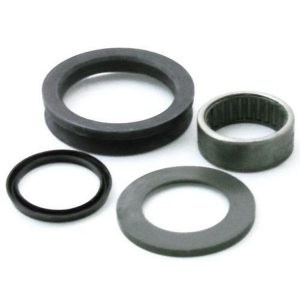
Dana Spicer Dana 30/44 Spindle Seal Kit – 706527X
 Dana 44 Hubs and Spindles, Dana 44 Oil Seals, Spindle Seal
Dana Spicer Dana 30/44 Spindle Seal Kit – 706527X
- Dana Spicer spindle seal kit, part number 706527X
- Includes inner spindle bearing, v-lip seal, nylon thrust washer and stub axle seal
- For front Dana 30 Standard, Dana 44 and GM 10 bolt 8.5 inch axles
- UPC 23913148492
SKU: D/S706527X -
Dana 44 Axle Shafts, Replacement Axle Shafts
G2 Dana 44 Chromalloy Outer Axle Shaft – 97-2033-002
- Front outer stub shaft for Dana 44 axles, 19 splines
- Works on driver or passenger side
- Overall length 9.92 inches
- Accepts a 5-760X U-joint, machined for full circle clips
- Fits GM Dana 44 front axles. Confirm fit by year and model.
SKU: G/297-2033-002 -
-
Dana 44 Axle Shafts, Replacement Axle Shafts
G2 Dana 44 Chromalloy Inner Axle Shaft – 97-2033-010
- Passenger side front inner shaft for Dana 44 axles, 30 splines
- Fits 1974–1979 Jeep Wagoneer, front axle position
- Overall length 14.690 inches, machined for full circle clips
- Accepts a 5-760X U-joint
- Forged high-grade alloy steel, heat treated
SKU: G/297-2033-010 -
Ring and Pinion Installation Kits
G2 Dana 30/44 YJ 4.88 Ring and Pinion Minor Installation Kit – 4-YJ2-488M
 Ring and Pinion Installation Kits
G2 Dana 30/44 YJ 4.88 Ring and Pinion Minor Installation Kit – 4-YJ2-488M
- For the 1987–1995 Jeep Wrangler YJ with Dana 30 front and Dana 44 rear axles
- 4.88 ring and pinion gear sets, front and rear
- Dana 30 front and Dana 44 rear axles
- Includes matched front and rear minor installation kits
- Limited lifetime warranty
SKU: G/24-YJ2-488M -
Ring and Pinion Installation Kits
G2 Dana 30/44 XJ 4.88 Ring and Pinion Minor Installation Kit – 4-XJ4-488M
Ring and Pinion Installation KitsG2 Dana 30/44 XJ 4.88 Ring and Pinion Minor Installation Kit – 4-XJ4-488M
- 4.88 front Dana 30 and rear Dana 44 ring and pinion kit
- Includes front and rear matched minor installation kits
- For the 1987–1990 Jeep Cherokee (XJ), per G2
- Computer heat treated 8620 steel; limited lifetime warranty
SKU: G/24-XJ4-488M -
Ring and Pinion Installation Kits
G2 Dana 44/44 JK 4.56 Ring and Pinion Minor Installation Kit – 4-JKRUB-456M
Ring and Pinion Installation KitsG2 Dana 44/44 JK 4.56 Ring and Pinion Minor Installation Kit – 4-JKRUB-456M
- 4.56 front and rear Dana 44 ring and pinion kit
- For Rubicon Wrangler JK, 2 and 4 door, per G2
- Includes front and rear matched minor installation kits
- Computer heat treated 8620 steel; limited lifetime warranty
SKU: G/24-JKRUB-456M -
Ring and Pinion Installation Kits
G2 Dana 44/44 JK 4.88 Ring and Pinion Minor Installation Kit – 4-JKRUB-488M
Ring and Pinion Installation KitsG2 Dana 44/44 JK 4.88 Ring and Pinion Minor Installation Kit – 4-JKRUB-488M
- 4.88 front and rear Dana 44 ring and pinion kit
- For Rubicon Wrangler JK, 2 and 4 door, per G2
- Includes front and rear matched minor installation kits
- Computer heat treated 8620 steel; limited lifetime warranty
SKU: G/24-JKRUB-488M -
Ring and Pinion Installation Kits
G2 Dana 44/44 JK 5.13 Ring and Pinion Minor Installation Kit – 4-JKRUB-513M
Ring and Pinion Installation KitsG2 Dana 44/44 JK 5.13 Ring and Pinion Minor Installation Kit – 4-JKRUB-513M
- 5.13 front and rear Dana 44 ring and pinion kit
- For Rubicon Wrangler JK, 2 and 4 door, per G2
- Includes front and rear matched minor installation kits
- Computer heat treated 8620 steel; limited lifetime warranty
SKU: G/24-JKRUB-513M


The axle and its parts
The axle transfers engine torque to the wheels and carries vehicle weight. On a solid axle, a housing contains the differential, ring and pinion and the axle shafts, which end at wheel bearings and hubs. Front 4x4 axles also include steering knuckles and, on many vehicles, locking hubs. Parts wear with mileage, and they take extra abuse from bigger tires, lower gears and trail use.
Common parts and when you need them
- Ring and pinions and install kits: Used for gear ratio changes after fitting larger tires, or to replace worn gears. Installation kits provide the bearings, seals and shims for the job.
- Axle shafts: Replace bent or broken shafts, or upgrade to stronger materials such as chromoly. Spline count and length must match.
- Locking hubs: Let the front wheels disengage when not in four-wheel drive.
- Wheel bearings: Wear causes noise, play and heat. Replace them in sets with seals.
- Pitman arms and steering parts: Part of the steering linkage, critical for control.
Identify your axle first
Axle parts depend on the axle model more than the vehicle. Common examples include Dana 30, Dana 44 and Dana 60, along with the GM 14 bolt and Ford 9 inch. Note the ring gear diameter, spline count, bolt pattern, and whether the axle is front or rear. Axle tags, casting numbers and measurements help identify it, and parts for similar-looking axles may not interchange. Confirm fitment for your exact year, make and model and check the manufacturer's specifications.
Installation notes
Gear setup needs correct pinion depth, bearing preload and backlash. Errors cause noise and failure, so it is best done by an experienced shop. Steering and wheel bearing work is safety-critical, so use jack stands, torque fasteners to specification and have the alignment checked afterward. When you change gear ratio, change both axles to matching ratios, and recalibrate the speedometer. Use the correct gear oil, and replace it after the break-in period.
Finally, plan the whole drivetrain, not just one axle. Stronger axle shafts help only if the carrier, locker and housing can keep up, and heavier gears and larger tires also load the driveshafts, u-joints and steering. A balanced upgrade avoids creating a new weak link, and a qualified shop can help you plan the combination.
Measuring, matching and common mistakes
Before ordering, confirm the axle identity by checking the tag, then measure the track width, spring perch spacing and wheel bolt pattern, since these details separate otherwise similar axles. For shafts, compare spline count, overall length and the type of hub or flange. For ring and pinion sets, confirm ring gear diameter, ratio and whether the set is for the front or rear.
- Do not mix ratios between front and rear axles.
- Do not reuse old bearings, seals or crush sleeves when rebuilding.
- Do not forget to torque axle nuts and hub fasteners to specification.
Check wheel bearings for play by lifting each wheel and rocking it top to bottom, and listen for humming that changes when turning. Keeping gear oil and breathers in good condition protects every component inside the housing.
Popular Axle Parts brands
- G2 Axle and Gear (655)
- Crown Automotive (140)
- Dana Spicer (105)
- Omix-Ada (64)
- Alloy USA (60)
- Trail Gear (35)
- Warn (31)
- Pro Comp Suspension (23)
- Skyjacker (21)
- Motive Gear (15)
- Rugged Ridge (12)
- Rubicon Express (11)
Shop Axle Parts by type
- Ring and Pinions (317)
- Replacement Axle Shafts (249)
- Ring and Pinion Installation Kits (193)
- Pitman Arm (64)
- Wheel Bearings (49)
- Locking Hubs (49)
- Inner Axle Seals (32)
- Leaf Spring Axle Shim (24)
- Differential Pinion Bearing Baffle and Axle Slingers (26)
- Front Axle U-Joints (19)
- Spindle Seal (19)
- Outer Axle Tube Seals (18)
- Locking Hub Spindle Nuts (14)
- Hub Gears And Drive Flanges (13)
- Wheel Bearing Kit (13)
- Front Axle CV And U-Joint Snap Rings (8)
- Spindle Nut And Washer Kit (8)
- Pinion Oil Slinger (8)
- Spindle Bearing (7)
- Hub Conversions (6)
- Wheel Bearing Dust Cap (5)
- Spider Gear Kit (6)
- Snap Ring (6)
- Wheel Bearing Attaching Bolts (6)
- Live Axle Spindles (6)
- Spindle Nut (5)
- Ring and Pinion Bearing Kit (5)
- Spindles (5)
- Pinion Angle Kit (4)
- Third Member Assemblies (3)
Axle Parts FAQ
Do I need to regear after installing bigger tires?
Larger tires effectively raise the gear ratio, which can reduce power and fuel economy. Many owners regear to restore performance. The right ratio depends on tire size, engine, transmission and use.
How do I identify my axle model?
Check for an axle tag, casting numbers, the cover shape and the number of cover bolts, and measure the ring gear. Confirm the findings against the manufacturer's information before buying parts.
Why must front and rear gear ratios match?
Mismatched ratios make the front and rear axles turn at different speeds, which can bind a four-wheel-drive system and cause drivetrain damage. Both axles should use the same ratio and similar tire sizes.
What does an axle spline count mean?
The splines are the teeth where the shaft meets the differential. Shafts and carriers must have the same spline count, such as 27 or 30. A higher count is generally stronger for the same diameter.