








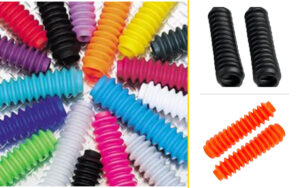
Shock boots keep grit and water off a lifted shock's shaft and seal. How to size, vent and inspect one, when it can trap…
Shock Absorbers
Showing 3385–3396 of 3453 resultsSorted by popularity
-
-
-
Shock Absorbers
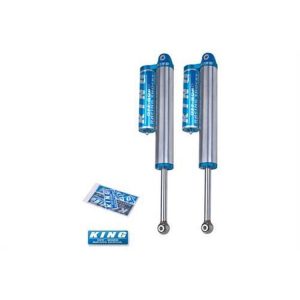
King Shocks Performance Series Shock Kit – 25001-176
- King Shocks Performance Series shock kit, part number 25001-176
- Front shocks for 3-5 inch lift kits
- Simple bolt-on installation with large diameter micro-polished shafts
- Aeroquip high pressure hoses on remote reservoirs
SKU: KST25001-176 -
Shock Absorbers
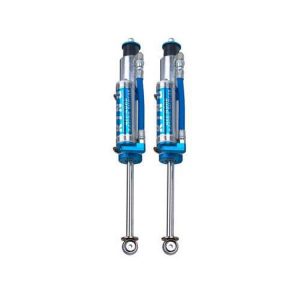
2.5″ OEM Performance Remote Reservoir Shock Absorbers
- King Shocks 25001-279 rear OEM Performance remote reservoir shocks, quantity 2 per pack
- Fits 2010 to 2017 Toyota 4Runner
- Non-adjustable monotube design with 15.58 in. compressed and 24.29 in. extended length
- Hard anodized 6063 aluminum body and heat treated 6061 piston
SKU: KST25001-279 -
Shock Absorbers
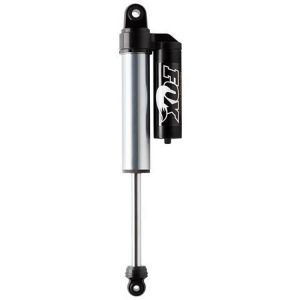
Fox Racing Shox 2.5 Factory Series Reservoir Shock Set – 883-24-003
- Fox Racing Shox 2.5 Factory Series reservoir shock set, part number 883-24-003
- Gas charged reservoir design for direct replacement installs
- 24.83 inch extended length and 8.97 inch stroke
- Collapsed length 15.860 inch
SKU: FOX883-24-003 -
-
-
Shock Absorbers
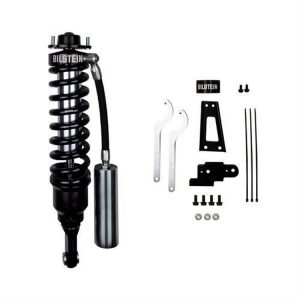
B8 8112 (ZoneControl CR) – Front Right Corner Module
- Bilstein B8 8112 (ZoneControl CR) front corner module, listed under 41-269282
- Position sensitive damping with 3 compression zones and 2 rebound zones
- Front lift height 0.6 to 2.5 in.
- 60mm remote reservoir with anodized chassis mount
- Quantity 1 per pack; fitment not listed
SKU: BIL41-269299 -
Shock Absorbers
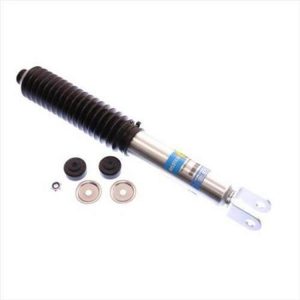
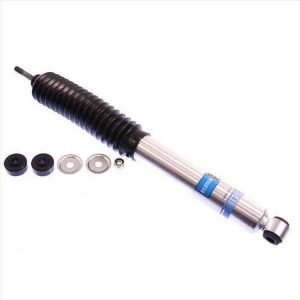
5100 Series Shock Absorber
- Bilstein 5100 Series shock absorber, B8 5100 ride height adjustable monotube design
- Snap-ring grooved body for 0 to 2.75 in. front lift, depending on application
- Collapsed length 14.88 in. (378 mm), extended length 18.87 in. (479.2 mm)
- Confirm fit for your vehicle before ordering
SKU: BIL24-253253 -
What a shock absorber does
A shock absorber is a damper. The spring holds the vehicle up, and the shock controls how fast that spring moves. Without working dampers a truck bounces repeatedly after every bump, tires lose contact with the ground, and braking and steering suffer. Off-road, shocks also absorb heat from constant motion, which is why fade becomes a concern on long, rough stretches.
Key specifications to compare
- Collapsed and extended length: These two numbers set the travel (extended minus collapsed). The shock must be long enough that it never limits suspension travel or bottoms out before the bump stops do, and short enough that it is not the first thing to run out at full droop.
- Mounts: Bar pin, stem, eyelet and bolt-in ends are not interchangeable without hardware. Match both the upper and lower mount styles to your vehicle.
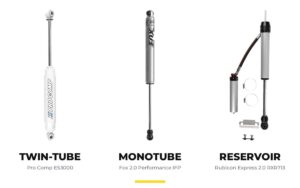
- Body design: Monotube shocks usually run cooler and resist foaming better. Twin-tube shocks are common as stock replacements and are often quieter and lower in cost. Many listings state the body diameter, such as a 46mm smooth body.
- Reservoir: An external reservoir adds oil volume and gas capacity, which helps with heat in hard or sustained use.
- Shaft diameter: A larger shaft is generally more resistant to bending.
Choosing for your use
For a daily driver with a modest lift, a quality non-adjustable monotube or gas-charged twin-tube shock sized for your lift height is usually enough. If you tow, carry a heavy bumper and winch, or run fast desert roads, look at larger bodies, reservoirs and tunable valving. Pair the shock with the right spring rate; a shock cannot make up for a spring that is too soft or too stiff for the load.
Fitment and installation
Shocks are specific to lift height, axle and whether they are front or rear, so confirm fitment for your exact year, make and model and check the manufacturer's specifications. Replace shocks in axle sets, since one new and one worn shock gives uneven handling. Support the axle before removal so it cannot droop and stretch brake lines, and tighten fasteners to the specified torque. If you changed ride height, have the alignment checked afterward.
A final point on tuning: if a shock offers adjustable damping, change one setting at a time and note the result on a familiar road. Heavier loads, such as a winch bumper, roof tent or camping gear, often call for firmer valving than an empty truck. Inspect boots, bushings and mounting hardware at every oil change, since a worn bushing can mimic a failing shock.
Mistakes to avoid
The most common error is choosing shocks by brand or price without checking the length numbers. A shock that is too short lets the axle droop until the springs unseat or brake lines tighten, while one that is too long bottoms out and can bend the shaft or damage the mounts. Measure from mount to mount at ride height, then at full droop and full compression, and compare with the listed collapsed and extended lengths.
- Do not ignore worn bushings, since new shocks with tired bushings still clunk.
- Do not use a shock as a travel limiter; bump stops and limit straps do that job.
- Do not install shocks with the vehicle hanging from the frame and the springs unloaded, because mounts then sit in the wrong position.
Test drive on a familiar road after installation and listen for rattles before heading onto the trail.
Related guides
- Shock Boots: Why Every Lifted Shock Needs One
- Jeep JK Lift Heights: 2.5 vs 3.5 vs 4.5 Inch Compared
Jeep JK lift heights compared: the tires 2.5, 3.5 and 4.5-inch lifts clear, the track bars, arms, lines and driveshafts each needs, and which…
- Twin-Tube, Monotube or Reservoir: Picking the Right Shock
Twin-tube, monotube and reservoir shocks compared: how each handles heat, how to size one for your lift, and which design fits how you drive.
- Bilstein 5100 vs Fox 2.0 Performance: Which Shock for Your Lifted Truck or Jeep
Bilstein 5100 vs Fox 2.0 Performance: body, shaft, reservoir, travel and lift ratings across 417 part numbers, which trucks and Jeeps both fit, how…
Popular Shock Absorbers brands
- Pro Comp Suspension (898)
- Bilstein (615)
- Rancho (567)
- Fox Racing Shox (345)
- Skyjacker (279)
- Fabtech (232)
- ARB 4x4 Accessories (136)
- FOX (85)
- ICON Vehicle Dynamics (84)
- Rubicon Express (78)
- Icon Suspension (77)
- King Shocks (71)
Shock Absorbers FAQ
How do I know when shocks are worn out?
Common signs are oil leaking down the body, a bouncy or floaty ride, nose dive under braking, uneven tire wear and clunking from the mounts. A worn shock may also feel hot or weak when you compare it with a new one.
What is the difference between monotube and twin-tube shocks?
A monotube has a single working chamber with a floating piston separating oil and gas, which tends to shed heat well. A twin-tube uses an inner and outer tube and is common in factory-style replacements. Both can work well when matched to the vehicle.
Do I need new shocks after a lift?
Usually yes. A lift changes the distance between the mounts, so stock shocks may limit travel or bottom out. Choose shocks whose collapsed and extended lengths suit your lift height, and confirm the specifications with the manufacturer.
Should shocks be replaced in pairs?
Yes, replace both shocks on an axle together. Mixing new and worn dampers makes the two sides react differently, which affects handling and braking stability, especially on rough surfaces.