




Bolt-in vs welded roll cages for the Jeep TJ and JK: factory sport bar vs cage, DOM vs HREW, frame vs tub mounts, Poison…
Roll Cages & Roll Bars in this Exterior Parts & Car Care branch are bolt-in and weld-in structures for Jeeps and other off-road vehicles. Poison Spyder Customs, Rock Hard 4×4 Parts, Smittybilt and Trail Gear are listed, with full cages, sport cages, spreader bars, harness bars and grab handles. Check each product page for details, then compare the products below.
Roll Cages & Roll Bars
Showing 1–12 of 44 resultsSorted by popularity
-
-
-
-
Roll Cages & Related Parts
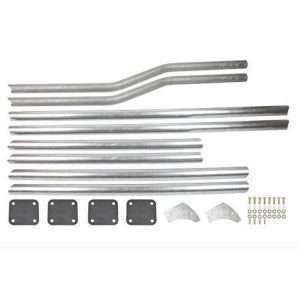
Poison Spyder Fully Welded Cage Kit – 14-19-010-W
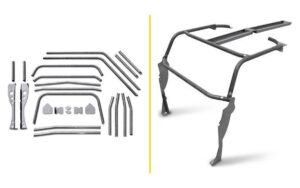
- Fully welded full roll cage for the 1997–2006 Wrangler (TJ) and 2004–2006 Wrangler (LJ)
- 100% DOM structural tubing with 3/16 inch plate steel mounting parts
- Ready to bolt in, no welding needed by the owner
- Poison Spyder Customs part number PSC14-19-010-W
SKU: PSC14-19-010-W -
Roll Cages & Roll Bars
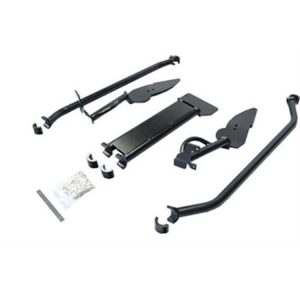
Trail Gear Rock Defense Roll Cage – 300152-2-KIT
- Fits 1987–1995 Jeep Wrangler YJ per the manufacturer fitment list
- Weld-in, do-it-yourself rock cage in bare steel
- Made from 1.75 inch x .120 wall DOM tubing
- Replaces the stock A to B pillar braces
- Works with hard or soft tops
SKU: TGI300152-2-KIT -
-
Roll Cages & Roll Bars
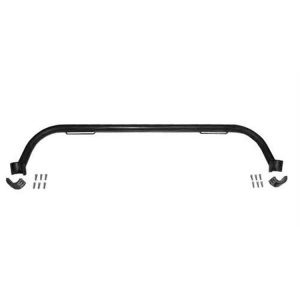
Rock Hard 4X4 Parts Front Seat Straight Harness Bar – RH1030-SFH2
- Rock Hard 4×4 Parts Front Seat Straight Harness Bar, part number RH-1030-SFH2, for two-door models
- Fits 2007–2016 Jeep Wrangler (JK) in six trims
- Unpainted, bolt-in, direct-fit installation type
- Made in the U.S.A.
SKU: RFPRH-1030-SFH2 -
Roll Cages & Roll Bars
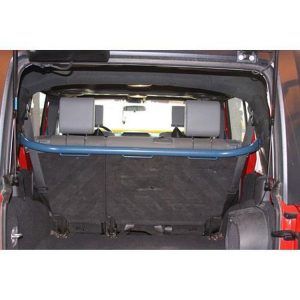
Rock Hard 4X4 Parts Rear Seat Harness Bar – RH1030-RH4
- Rock Hard 4×4 Parts Rear Seat Harness Bar, part number RH1030-RH4, for four-door Jeep Wrangler Unlimited models
- Fits 2007–2016 Wrangler JK Unlimited in six trims
- Unpainted, bolt-in, direct-fit installation type
- Made in the U.S.A.
SKU: RFPRH1030-RH4 -
Roll Cages & Roll Bars
Rock Hard 4X4 Parts Main Sport Cage – RH1030-1L
- Rock Hard 4×4 Parts Main Sport Cage, part number RH-1030-1L, covering the factory bar forward to the dash
- Fits 2011–2014 Jeep Wrangler (JK) 70th Anniversary, Rubicon, Sahara and Sport trims and their Unlimited versions
- Fits hard tops or soft tops
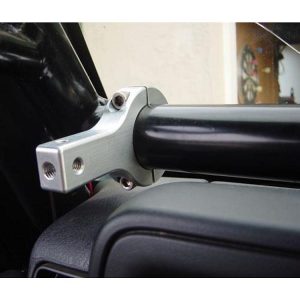
- Includes top front T-section, windshield side bars with handles, dash bar and dash brackets
- Drilling is required
SKU: RFPRH-1030-1L -
Roll Cages & Roll Bars
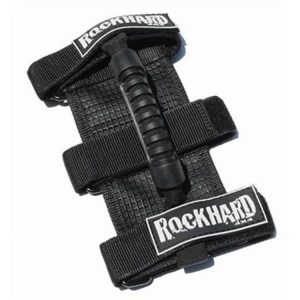
Rock Hard 4X4 Parts Non-Slip Cage Grab Handle – RH-1025
- Rock Hard 4×4 Parts Non-Slip Cage Grab Handle, part number RH-1025, with heavy-duty Velcro straps
- Fits Jeep CJ5, CJ7, Scrambler, YJ, TJ, LJ and JK models from 1976 to 2016
- All-metal hardware with rubber webbing backing to resist slipping
- Works on factory roll bars with or without padding
- Made in USA with a lifetime warranty
SKU: RFPRH-1025 -
-
Roll Cages & Roll Bars
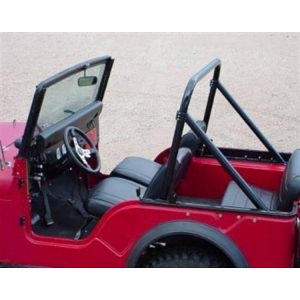
Rock Hard 4X4 Parts Replacement Factory Style Hoop – RH1010
- Rock Hard 4×4 Parts RH-1010 replacement factory style sports bar, bare steel
- Fits the 1955-75 Jeep CJ-5
- Complete bolt-in with no drilling or welding, all hardware included
- Fits under soft tops; required before installing Rock Hard’s Main Cage
SKU: RFPRH-1010
What roll cages do
A roll cage or roll bar is a tubular structure that surrounds the occupants to resist crushing in a rollover. On open or soft-top vehicles that lack a strong roof, it is a key piece of protective equipment, and many trail and competition groups expect it.
Listings here run from fully welded cages with grab handles to sport cages and add-ons such as rear spreader bars, front seat harness bars and grab handles.
Types and coverage
- Sport or roll bars protect the front seats and are usually simpler and lighter.
- Full cages extend to the rear and may cover third-row seating in longer models.
- Spreader bars tie the rear tubes together to stiffen the structure.
- Harness bars provide a mounting point for racing-style seat harnesses.
- Grab handles give passengers a secure hold on rough terrain.
What to check
- Vehicle fit: cages are designed for particular models, wheelbases and body styles, so confirm fitment for your exact year, make and model.
- Construction: bolt-in or weld-in designs differ in installation effort and rigidity.
- Tubing: material and wall thickness, such as DOM steel or chromoly, matter for strength.
- Interior space and compatibility with seats, doors and tops.
- Event rules: racing organizations publish their own cage requirements.
Installation and safety
A cage only protects if it is installed correctly. Bolt-in designs depend on correct mounting plates, hardware and floor reinforcement, and weld-in cages require quality welds and fit. Professional installation is strongly advised, particularly for welded work.
A roll cage does not replace seat belts. Occupants should always be belted, and padding on tubes near the head is advisable. Cages can affect headroom, visibility and interior trim, and some soft tops need compatible hardware. Check state and local regulations or event rules where relevant.
Further checks and care
Related equipment
A cage works best as part of a safety system. Quality seat belts or harnesses, supportive seats, a fire extinguisher and tube padding all matter. Check that the harness mounting points are designed for the loads involved, and that seats are mounted securely. Helmets are advisable in competitive settings, and some events require specific equipment, so read the rulebook before building.
Materials and construction
Cages are built from steel tubing, usually DOM or chromoly, with differences in wall thickness and diameter. Chromoly is lighter for its strength but needs correct welding procedures. Mounting feet, floor plates and gussets spread the load into the body, so look at their size and design. Joints should be coped and welded cleanly. Bolt-in designs use plates and fasteners instead of welds, and they require careful torque.
Fitment, comfort and inspection
Check that the cage clears the seats, the roll-over bar tubes, a soft top or hard top, and the door openings. Sit in the vehicle and confirm there is enough head clearance for the tallest driver wearing a helmet if you plan to use one. After a hard impact or rollover, inspect the entire structure, including welds and mounts, for cracks or bends. Replace anything damaged rather than straightening it.
Related guides
- Bolt-In vs Welded Roll Cages for the Jeep TJ and JK
Popular Roll Cages & Roll Bars brands
- Poison Spyder Customs (22)
- Rock Hard 4x4 Parts (13)
- Smittybilt (7)
- Pro Comp Suspension (1)
- Trail Gear (1)
- GenRight (1)
Roll Cages & Roll Bars FAQ
Is a roll bar the same as a roll cage?
Not exactly. A roll bar is generally a simpler hoop behind or over the front seats. A roll cage is a more complete structure with additional tubes that extends protection around more of the cabin.
Can I install a bolt-in cage myself?
Bolt-in cages are more approachable than weld-in versions, but correct fit, hardware and torque are essential. If you are unsure, hire a professional, because an improperly installed cage may not protect as intended.
Do I still need to wear a seat belt with a roll cage?
Yes. A cage protects the cabin structure but does not keep occupants in place. A rollover with an unbelted driver can be more dangerous in a rigid cage, so belts and appropriate padding are important.