
Trailer Connector Kit
Showing 25–36 of 52 resultsSorted by popularity
-
Trailer Connector Kit
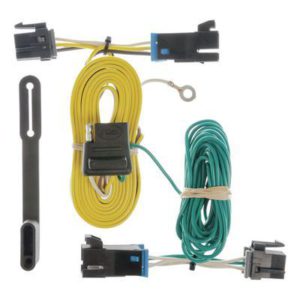
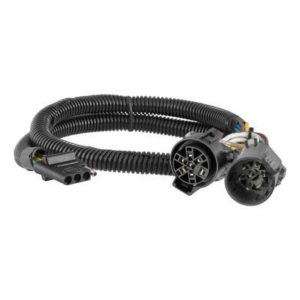
Curt Manufacturing Wiring T-Connectors – 55774
- Curt Manufacturing 55774 wiring T-connector, part number CRT55774
- OEM to 7-way and 4-way trailer wiring connection
- Plugs into the factory harness; includes 4-pin connector, dust cap and ground wire
- Fits many Chevrolet, GMC, Ford, Cadillac, Jeep and Toyota models
SKU: CRT55774 -
Trailer Connector Kit
Curt Manufacturing Wiring T-Connectors – 55664
- Fits many Chevrolet, GMC, Ford, Cadillac, Toyota and other model years
- Curt Manufacturing wiring T-connector, OEM to 6-way and 4-way, part number CRT55664
- Plugs directly into the factory harness
- Includes 4 pin connector, dust cap and ground wire with self-tapping screw
SKU: CRT55664 -
Trailer Connector Kit
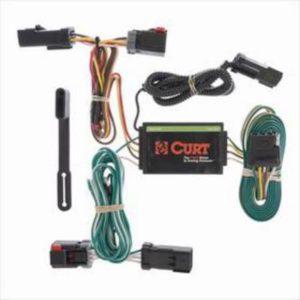
Curt Manufacturing Wiring T-Connectors – 55597
- Fits 2007-2009 Chrysler Aspen and 2004-2009 Dodge Durango by trim
- Curt Manufacturing powered wiring T-connector converter, part number CRT55597
- Plugs into the factory harness for a 3-wire system
- Includes 4 pin connector, dust cap and ground wire with self-tapping screw
- Install time listed at 25 min
SKU: CRT55597 -
Trailer Connector Kit
Curt Manufacturing Wiring T-Connectors – 55585
- Fits the 2006-2011 Honda Ridgeline in RT, RTL, RTS and RTX trims
- Curt Manufacturing wiring T-connector converter, part number CRT55585
- Plugs directly into the factory harness for a 3-wire system
- Includes 4 pin connector, dust cap and ground wire with self-tapping screw
- Install time listed at 10 min
SKU: CRT55585 -
Trailer Connector Kit
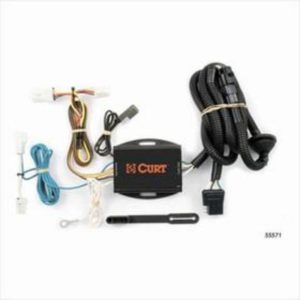
Curt Manufacturing Wiring T-Connectors – 55571
- Powered converter for the 3-wire system
- Wiring T-connector for 2003–2005 and 2009–2013 Nissan Murano
- Trims listed: CrossCabriolet, LE, S, SE, SL and SV
- Plugs direct into the factory harness with a 4-pin connector
- Install time 25 min.
SKU: CRT55571 -
-
Trailer Connector Kit
Curt Manufacturing Wiring T-Connectors – 55530
- Curt Manufacturing 55530 3-wire powered converter T-connector
- Fits the 2004–2008 Chrysler Pacifica in Base, LX, Limited and Touring trims
- Includes 4 pin connector, dust cap and ground wire with self tapping screw
- Install time is 25 min.
SKU: CRT55530 -
Trailer Connector Kit
Curt Manufacturing Wiring T-Connectors – 55384
- Fits many 2013–2019 GM, Ford, Ram, Toyota, Honda and Jeep vehicles per manufacturer list
- Curt Manufacturing 2-wire T-connector, part number CRT55384
- 4 pin connector, dust cap and self tapping ground screw
- Listed install time is 5 to 20 min
SKU: CRT55384 -
Trailer Connector Kit
Curt Manufacturing Wiring T-Connectors – 55381
- Standard 2-wire T-connector for vehicles with a factory 7-way connector
- Covers 2000–2015 Dodge Ram, Dakota and Durango, plus Jeep Grand Cherokee
- Also lists Chrysler Aspen and 2011–2013 Chevrolet Silverado 3500 HD
- Standard 2-wire system with a 4-pin connector
- Install time 5 min.
SKU: CRT55381 -
-
Trailer Connector Kit
Curt Manufacturing Wiring T-Connectors – 55344
- Standard 2-wire T-connector for 1997–2004 Ford and Lincoln trucks and SUVs
- Covers Expedition, Explorer, F-150, Ranger, Navigator and Aviator models
- Plugs direct into the factory harness with a 4-pin connector
- Dust cap and ground wire with self-tapping screw included
- Listed install time 10 min.
SKU: CRT55344 -
Trailer Connector Kit
Curt Manufacturing Wiring T-Connectors – 55325
- Wiring T-connector with a converter for the 3-wire system
- Fits 1993–1999 Ford Ranger and listed Mazda B2300, B3000 and B4000 pickups
- Plugs direct into the factory harness with a 4-pin connector
- Includes dust cap and ground wire with self-tapping screw
- Install time 5 min.
SKU: CRT55325

What a trailer connector kit does
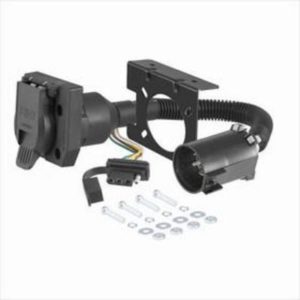
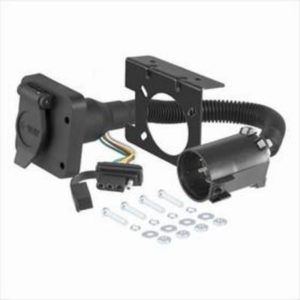
A trailer connector kit carries tail, brake and turn signal circuits from the vehicle to the trailer plug. Vehicle-specific T-connector harnesses tap into the factory tail light wiring through plugs that match the original connectors, so you usually do not cut or splice the vehicle wiring. They end in a standard connector at the hitch.
Common connector types
Learn the plug your trailer uses before choosing a kit.
- 4-way flat is the common light-duty plug carrying tail, brake and left and right turn signals.
- 6-way square adds circuits for functions such as electric brakes or auxiliary power.
- Converter harnesses, listed as 3-wire systems, change a vehicle with combined brake and turn lights to the separate circuits that a trailer expects.
- OEM replacement tow package harnesses restore a factory-style plug on a vehicle that came with a tow package.
Choosing the right kit
Check whether your vehicle has a 2-wire or 3-wire system, which describes how the tail lamps combine brake and turn functions. Confirm whether the vehicle was built with the factory tow package, because kits are listed as with or without it. Install time on the sample listings runs from about 5 to 45 minutes, which gives a rough idea of how involved each wiring harness is.
Look at the harness length, the type of plug at the end, and whether additional parts such as a mounting bracket are included. Always verify the exact year, make, model and trim on the product page and in the manufacturer's application guide.
Installation and testing
Disconnect the battery if the instructions call for it, secure the harness away from heat and moving parts, and use dielectric grease on connections to resist corrosion. Mount the connector so it does not drag on the ground or bind during articulation.
After installation, test every circuit with the trailer or a test light: tail lights, brake lights and both turn signals. Some vehicles with sensitive lighting systems need a converter or a powered module, so follow the kit's instructions. Remember that electric brake trailers also require a brake controller, which is separate.
Wiring, grounding and troubleshooting
Most trailer lighting problems trace back to a poor ground or a corroded connection rather than a faulty harness. The white ground wire should attach to clean bare metal on the vehicle frame or body, and the trailer needs its own solid ground to its frame. Check both ends before assuming a bulb or wire has failed.
- Use a test light or multimeter at the connector to confirm each circuit on the vehicle side
- Look for green corrosion or bent pins inside the plug, and clean with electrical contact cleaner
- Avoid tapping wires in a way that exposes copper, and use heat-shrink or sealed connectors outdoors
- Secure the harness with ties away from the exhaust and moving suspension parts
- Leave enough slack for the hitch to articulate through full turns
If the trailer lights flicker or work only when you wiggle the plug, suspect the plug, the ground or a damaged wire. Many vehicles also protect their tail light circuits with a fuse, and a blown trailer-circuit fuse is a quick thing to check. When adding to a vehicle with advanced electronics, follow the manufacturer's wiring instructions so the body control system is not overloaded.
Popular Trailer Connector Kit brands
Trailer Connector Kit FAQ
What is the difference between 4-way and 6-way connectors?
A 4-way flat carries tail, brake and turn signals. A 6-way square includes the same plus circuits for functions like electric brakes or auxiliary power, so choose what your trailer needs.
Will a T-connector harness require cutting wires?
Vehicle-specific T-connectors usually plug into factory tail light connectors, so no cutting is required. Universal kits and some older vehicles may need splicing, so check the instructions.
Do I need a converter for my vehicle?
If your vehicle shares brake and turn signals on one filament, a converter is needed to separate them for the trailer. Check your vehicle's wiring type and the listing's notes.
Does this kit power trailer brakes?
A connector kit supplies lighting circuits. Electric trailer brakes need a brake controller and the proper wiring, which is a separate component from a trailer light connector.