
Clutch Parts
Showing 37–48 of 90 resultsSorted by popularity



What is in a clutch system
A manual Jeep uses the same basic chain of parts regardless of age. The pedal moves a rod or pushes a master cylinder; a linkage or hydraulic line transfers that motion to the release fork; the fork pushes a release bearing, also called a throwout bearing, against the pressure plate fingers; and the pressure plate lets go of the disc so the flywheel can spin free of the transmission. This category holds the parts around the clutch itself. The pressure plate and disc kits live in the separate Clutch category under Drivetrain.
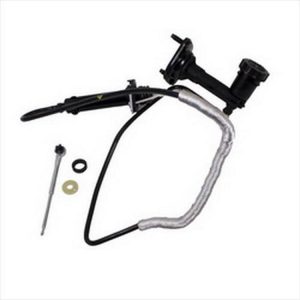
Early CJs use a purely mechanical linkage: a pedal rod, a bellcrank, also called a Z-bar, that pivots between the frame and the engine, and a clutch fork rod. From the mid 1980s Jeep moved to hydraulics, with a master cylinder at the firewall and a slave cylinder either external on the bellhousing or, on the AX15 and BA 10/5 transmissions, a concentric unit that combines the slave cylinder and bearing in one piece inside the bellhousing.
Diagnosing before you buy
- A squeal or growl with the pedal depressed that goes away when you lift your foot usually points to the release bearing.
- A pedal that sinks to the floor or needs pumping, with no external leak, is typically a failing master cylinder. Fluid dripping behind the bellhousing points to the slave cylinder.
- Sloppy engagement on a CJ with mechanical linkage is often worn bellcrank bushings or a bent pedal rod, not the clutch itself.
- Chatter, a shudder on takeoff, can be a heat-checked or warped flywheel, oil contamination of the disc, or loose engine mounts.
Identifying the right part
Jeep used several transmissions and engines within a single body code, and the clutch parts changed with them. A release bearing for the 2.5L four cylinder differs from the one for the 4.0L six, and both differ from the AMC V8 parts in a 1970s CJ. Confirm the transmission, for example AX5, AX15, BA 10/5, T4, T5 or T176, and the engine before choosing. The transmission tag or casting numbers settle arguments that the title alone cannot.
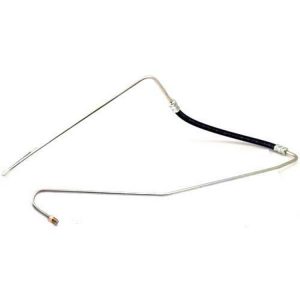
Hydraulic parts bring their own gotchas. Some master cylinders come with the hose and reservoir, others are bare. A concentric slave cylinder for the AX15 replaces the bearing and cylinder together, so do not buy both. On a 1987 to 1990 XJ, check whether your hydraulic line uses the early quick-connect fitting, which can only be separated with the right tool.
Installation notes
Replacing a release bearing or slave cylinder means pulling the transmission, so replace the whole set at once: bearing, pilot bearing, disc and pressure plate, and resurface or replace the flywheel if it shows heat spots or scoring. Flywheel bolts are usually one-use items on newer Jeeps and should be torqued to the factory figure in sequence. Lightly grease the input shaft splines and the fork pivot, but keep grease off the disc and flywheel face.
Hydraulic systems need a thorough bleed after any opening of the line. Many Jeep setups do not bleed well with the pedal alone; bench bleeding the master cylinder first, or using a vacuum or pressure bleeder at the slave, saves a lot of frustration. Use fresh DOT 3 fluid from a sealed container, since absorbed moisture lowers the boiling point and corrodes the bores.
Mechanical linkage on CJs
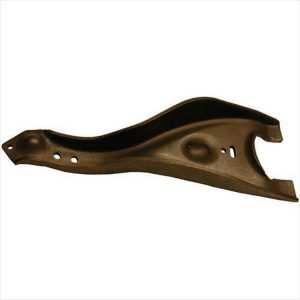
On a 1972 to 1986 CJ, the bellcrank rides on two bushings and a pair of ball studs, one on the frame and one on the engine block. These wear oval, and worn bushings let the lever rock instead of pivoting, which eats pedal travel. A new bellcrank lever is often sold without bushings and clips, so check what the kit includes and order the bushing set at the same time. Adjust free play at the fork rod after assembly so the bearing is not riding on the fingers at rest.
Popular Clutch Parts brands
Shop Clutch Parts by type
Clutch Parts FAQ
What is the difference between a release bearing and a throwout bearing?
They are the same part under two names. The bearing sits on the transmission input shaft sleeve and is pushed by the clutch fork against the pressure plate fingers when you press the pedal. Replace it whenever the transmission is out for clutch work.
Why does my Jeep clutch pedal go to the floor with no leak?
A master cylinder can fail internally, letting fluid bypass the piston seals without dripping outside. The pedal sinks or needs pumping. Check the reservoir and the firewall behind the pedal for seepage, and inspect the slave cylinder too before replacing parts.
Do I need to replace the flywheel when changing clutch parts?
Inspect it first. Light glazing can be machined away, but heat checking, deep scoring, cracks or a warped face call for replacement. A flywheel assembly for a 2.5L or 4.0L Jeep is a direct fit, and new bolts should be torqued in sequence to the factory spec.
How do I bleed a Jeep hydraulic clutch?
Fill the reservoir with fresh DOT 3 fluid, bench bleed the master cylinder if it is new, then bleed at the slave cylinder with a helper on the pedal or a vacuum bleeder. Keep the reservoir topped up throughout. Some concentric slave cylinders bleed easier with the line disconnected and held high.