
Lighting & Lighting Accessories
Showing 85–96 of 2467 resultsSorted by popularity
-
Light Bars
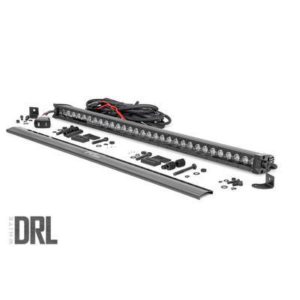
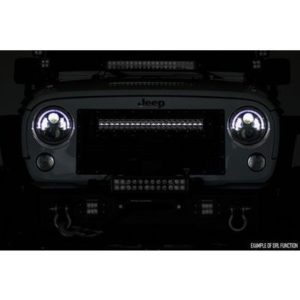
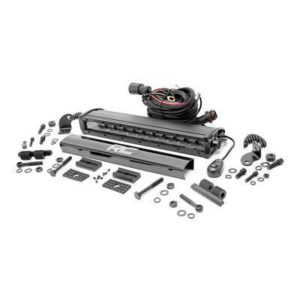
Rough Country Black Series 30″ Cree LED Light Bar with Cool White DRL – 70730BLDRL
- 30 inch Black Series single row Cree LED light bar with cool white DRL
- 12000 lumens and 150 watts
- End mounts and adjustable base mounts included
- Braided harness with three-position switch and in-line fuse
SKU: R/C70730BLDRL -
Light Bars
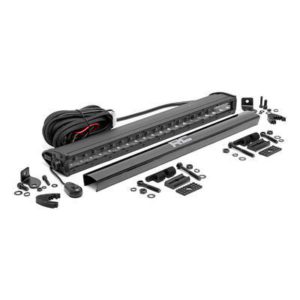
Rough Country Black Series 20″ Cree LED Light Bar with Cool White DRL – 70920BD
- 20 inch Black Series LED light bar with a cool white DRL strip
- 18000 lumens from 200 watts
- IP67 die-cast aluminum housing and IP68 rated harness
- Three-position toggle switch and in-line fuse included
SKU: R/C70920BD -
-
Light Pods
Rough Country Black Series 2″ Square Flush Mount Cree Flood LED Lights – 70113BL
- Universal fit: a 2 inch square flush mount Cree flood LED light
- Part number 70113BL, black series
- 36 W and 2880 lumens of output
- Extended housing for flush mounting, die-cast aluminum
- Wiring harness included, 3-year warranty
SKU: R/C70113BL -
Light Pods
Rough Country Black Series 2″ Square Cree LED Lights with Cool White DRL – 70903BLKDRL
- Set of 2-inch square Cree LED lights with a cool white DRL strip
- 40 watts and 3600 lumens of output
- IP67 die-cast aluminum housing and IP68 wiring harness
- Harness includes a three-position toggle switch and in-line fuse
SKU: R/C70903BLKDRL -
Light Bars
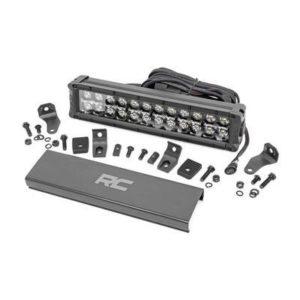
Rough Country Black Series 12″ Cree LED Light Bar with Cool White DRL – 70912BD
- 12 inch Black Series LED light bar with a cool white DRL strip
- 10800 lumens from 120 watts
- IP67 die-cast aluminum housing with an IP68 rated harness
- Mounting brackets and a three-position toggle switch included
SKU: R/C70912BD -
Light Bars
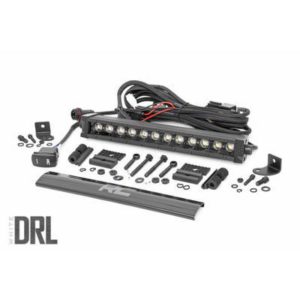
Rough Country Black Series 12″ Cree LED Light Bar with Cool White DRL – 70712BLDRL
- 12 inch Black Series Cree LED light bar with a cool white DRL strip
- Single row layout with 4800 lumens at 60 watts
- End mounts and adjustable base mounts included
- Braided waterproof harness with three-position switch and in-line fuse
SKU: R/C70712BLDRL -
-
Light Bars
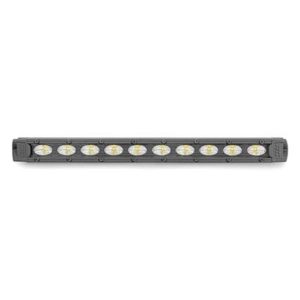
Rough Country Black Series 10″ Slimline Cree LED Light Bar (Black) – 70411ABL
- 10 inch Slimline Cree LED light bar in black with a flood beam
- 4000 lumens and 50 watts from Cree LEDs
- IP67 die-cast aluminum housing
- Mounting brackets, flat-wound harness with on/off switch and 3-year warranty
SKU: R/C70411ABL -
Tail & Brake Lights

Rough Country 60″ Premium Quad-Row Multi-Function LED Tailgate Light Strip – 78860
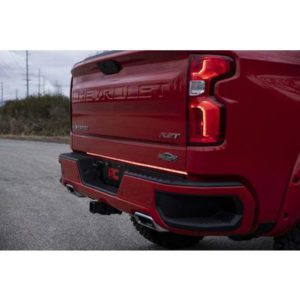 Tail & Brake Lights
Rough Country 60″ Premium Quad-Row Multi-Function LED Tailgate Light Strip – 78860
- Rough Country 60-inch Quad-Row LED tailgate light strip, part number R/C78860
- Brake, running, reverse and turn signal functions from one strip
- Fits Chevrolet Silverado, GMC Sierra, Ford Super Duty, Jeep Gladiator, Nissan Frontier and Titan, Toyota Tundra
- 4-pin plug-in connector, IP68 waterproof, 3-year limited warranty
SKU: R/C78860 -
-
Light Bars
Rough Country 10″ Slimline Cree LED Light Bar Kit (Black) – 70410ABL
- 10 inch Slimline Cree LED light bar kit in black
- Flood beam with 8000 lumens and 100 watts combined
- IP67 die-cast aluminum housing
- Mounting brackets, flat-wound harness with on/off switch and a 3-year warranty
SKU: R/C70410ABL


What this category covers
Lighting for a 4x4 falls into two broad groups. The first is auxiliary lighting added to the vehicle: light bars, pod lights, fog and driving lamps, work lamps and rock lights. The second is replacement and repair lighting: headlights, tail and brake lights, side markers, bulbs, bezels and sockets that restore factory function. The subcategories here separate these so you can go straight to the type you need.
Choosing auxiliary lights
Start with what the light needs to do. Driving lights throw a longer, narrower beam for high-speed visibility on dirt roads. Fog lights spread low and wide to cut under dust and mist. Flood or work lamps light the area around the vehicle for camp and recovery tasks. Light bars combine these roles depending on optics, and many offer combination or hybrid beam patterns.
- Beam pattern: spot for distance, flood for width, combo for general use.
- Housing and sealing: look for an ingress protection rating suited to water crossings and pressure washing.
- Lens material: polycarbonate resists rock strikes better than glass but can scratch.
- Power draw: confirm the lamp's amperage against your wiring and alternator capacity.
Replacement lamps and bulbs
For factory-style repair, match the lamp to the exact year, make, model and side of the vehicle. Bulb type matters: halogen, HID and LED units are not always interchangeable in the same housing, and a poorly matched LED can scatter light and blind oncoming drivers. Check the bulb designation on the old unit or in the owner's manual before ordering.
Wiring and installation
Auxiliary lights should be wired through a relay with a correctly rated fuse, not straight from a switch. Use wire gauge appropriate for the current and length of run, seal connectors against moisture, and mount lights solidly so vibration does not loosen them. Accessory brackets and cradles are sold separately for many light bars, so confirm what is included in a given kit.
Legal and compatibility notes
Rules on auxiliary lighting vary by state. Many jurisdictions restrict forward-facing lights on public roads, require covers when not off-road, or limit color. Check your local regulations. Confirm fitment for your exact vehicle and review the manufacturer's specifications before installing.
A few habits make lighting upgrades last. Keep a short list of the bulb types and lamp part numbers on your vehicle, because side markers, headlights and tail lights often differ between model years and trims. When mounting auxiliary lights, aim them after installation on level ground at a wall or garage door, so the beam lands where you intend rather than into the eyes of other drivers. Inspect wiring for chafing after rough trips, and dab dielectric grease on connectors to resist corrosion. Replacement lenses and covers are sold for many popular lamps, so a cracked lens does not always mean a new light. Finally, think about total electrical load: several high-output lamps running at once can strain a stock alternator, particularly with a winch or fridge on the same system. Keep spare fuses and a small supply of weatherproof connectors in the vehicle, since a blown fuse is the most common reason a light stops working on the trail.
Popular Lighting & Lighting Accessories brands
- Rigid Industries (755)
- Hella (204)
- KC HiLites (189)
- Rugged Ridge (146)
- Spyder Auto Group (122)
- Oracle Lighting (108)
- Recon (101)
- Crown Automotive (100)
- Piaa Lighting (99)
- Omix-Ada (88)
- Baja Designs (83)
- JW Speaker (74)
Shop Lighting & Lighting Accessories by type
- Fog & Driving Lights (328)
- Offroad Racing (328)
- Offroad Racing Fog & Driving Lights (537)
- Lens Covers and Shields (251)
- Light Mounting Brackets & Cradles (290)
- Headlights Housings and Conversions (198)
- Replacement Headlights, Tail Lights & Bulbs (227)
- Replacement Bulbs (141)
- Tail & Brake Lights (129)
- Headlights (97)
- Side Marker Light Assembly (77)
- LED Replacement Bulbs (85)
- Light Bar Mounting Kit (64)
- Lighting Accessories (64)
- Headlight & Tail Light Bezel Sets (51)
- Fog/Driving Light Wiring Kit (35)
- Third Brake Lights (34)
- Auxiliary Lighting (32)
- Work Lamp (20)
- Roof Marker Light (20)
- Multi-Use Accent Lights (18)
- Headlight Switch (16)
- Work Lamps (11)
- License Plate Lighting (8)
- Side Marker Light Socket (8)
- Third Brake Light Bracket (8)
- Fog/Driving/Offroad Light Lens (7)
- Reverse / Backup Lights (5)
- LED Resistor (6)
- Off Road Light Bezel Sets (6)
Lighting & Lighting Accessories FAQ
What is the difference between driving lights and fog lights?
Driving lights produce a longer, tighter beam to extend your reach at speed. Fog lights produce a wide, flat beam mounted low to reduce glare off dust, rain or snow. They solve different problems, and many vehicles carry both.
Do I need a relay to install a light bar?
Yes, in most cases. A relay lets a small switch control a high-current circuit, and an inline fuse near the battery protects the wiring. Follow the lamp maker's wiring diagram and use wire sized for the current draw.
Can I replace halogen bulbs with LED bulbs?
Sometimes, but the housing was designed around a halogen filament. LED retrofit bulbs can produce poor beam patterns or glare in reflector housings. Check that the product is intended for your vehicle and review local lighting regulations.
Are off-road lights legal to use on the street?
Rules vary by state and usually restrict how auxiliary lights may be mounted, wired and used on public roads. Many require covers or separate switching. Check your local regulations before driving with them on.