Solid sway bar end links connect the stabilizer bar to the axle or control arm without a quick-disconnect feature. This category includes factory-style replacements and extended links for lifted vehicles from Crown Automotive, Rubicon Express, Skyjacker, Omix-Ada and Currie. Check length, bushing and mounting details for your vehicle, then compare the products below.
Sway Bar Link - Non Disconnect
Showing 1–12 of 67 resultsSorted by popularity
-
-
-
Sway Bar Link - Non Disconnect
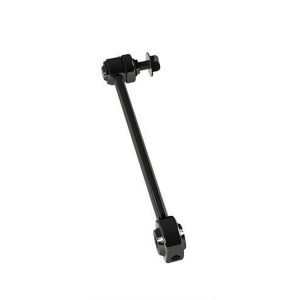
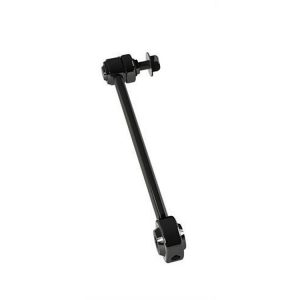
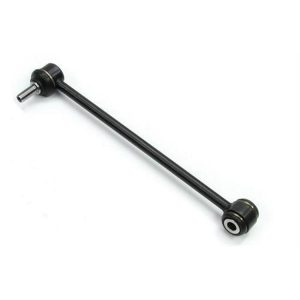
TeraFlex Sway Bar Link – 753005
- Front sway bar link for 2007–2015 Jeep Wrangler JK vehicles, per the manufacturer fitment list
- Non-disconnect design with an upper OEM quality narrow shoulder ball socket
- Lower end uses a large polyurethane ball and pin for easier removal
- Built for Wranglers with 3″-4″ of lift; part number 753005, UPC 843885018186
SKU: TER753005 -
-
Sway Bar Link - Non Disconnect
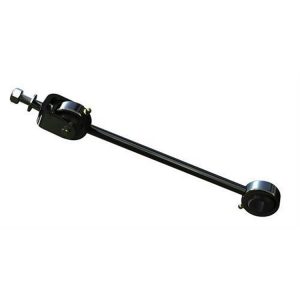
TeraFlex Sway Bar Link – 600491
- TeraFlex part number 600491, driver side front sway bar link for Jeep Wrangler TJ
- Polyurethane ball with stainless steel pin for silent operation
- Designed for 2 to 6 inch of lift
- U-bracket stud included
- Fits Cherokee XJ, Wrangler LJ and Wrangler TJ models
SKU: TER600491 -
-
Sway Bar Link - Non Disconnect
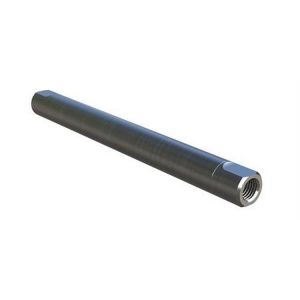
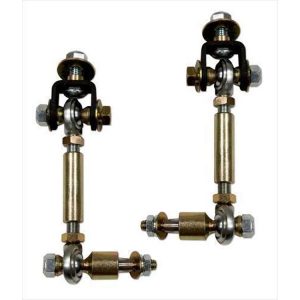
Tuff Country Sway Bar End Link Kit – 30927
- Tuff Country part number 30927, front sway bar end link kit with heim joints
- Threaded body for stock height vehicles up to 3 inch of lift
- Designed for Tuff Country lift kits from 2 inch to 6 inch
- Hardware included
- Covers Dodge Ram 1998–2013 2500 and 3500 trucks and 1998–2001 Ram 1500 models
SKU: T/C30927 -
Sway Bar Link - Non Disconnect
Tuff Country Sway Bar End Link Kit – 30925
- Tuff Country 30925 front sway bar end link kit with heim joints and hardware
- Replaces part numbers 34003 and 36003
- Fits 2003–2013 Dodge Ram 2500 and 3500 trucks
- Threaded body fits stock height up to 3 inch of lift
SKU: T/C30925 -
-
Sway Bar Link - Non Disconnect
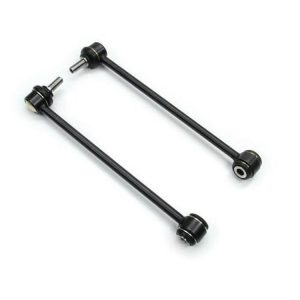
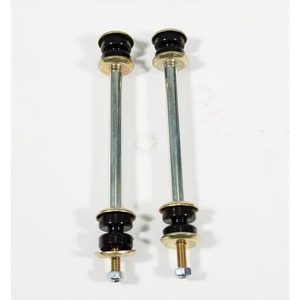
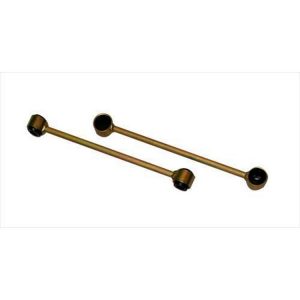
Skyjacker Sway Bar Extended End Links – SBE638-6XJ
- Fits the 1984–2001 Jeep Cherokee (XJ) per the manufacturer fitment list
- Skyjacker part number SBE638-6XJ, rear position, sold as a pair
- Extended sway bar end links with polyurethane bushings
- Built from 4140H steel with a zinc coating
SKU: SKYSBE638-6XJ -
Sway Bar Link - Non Disconnect
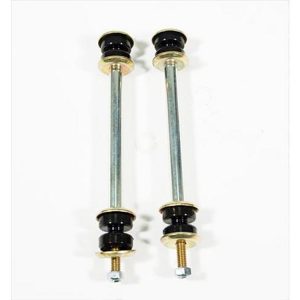
Skyjacker Sway Bar Extended End Links – SBE5956
- Front pair of extended sway bar end links with a stated 6 in. lift height
- Part number SBE5956, UPC 803696194417
- 4140H steel with zinc coating and polyurethane bushings
- Check fit against your truck before buying
SKU: SKYSBE5956



What these links do
A sway bar, also called a stabilizer bar, resists body roll by twisting as one side of the suspension moves relative to the other. End links join the ends of that bar to the axle or a control arm. A non-disconnect link is a fixed rod or bolt-in link that stays attached at all times, unlike a disconnect system that lets the bar swing free for more axle articulation off-road.
Stock replacement versus extended links
- Factory-style links: restore original length, bushings and mounting for a vehicle at stock height. Front and rear versions are different parts.
- Extended links: longer links, for example several inches longer than stock, correct sway bar angle after a lift. Without extended links, the bar can sit at a poor angle, which affects handling and can limit travel.
- Link kits: may include bushings, sleeves and hardware, while others are the link only.
Specs to compare
- Center-to-center length: the distance between mounting holes. Several listings publish this figure along with the lift range they are designed for.
- Front or rear: the two positions use different lengths and hardware.
- End type: bolt-through eyelets with bushings, ball-stud ends or rod ends each have different mounting needs.
- Sold as a pair: some listings are a pair, while others are a single link.
- Material and finish: steel with a powder coat or zinc finish is typical.
When links should be replaced
Worn links or bushings often cause clunks or rattling over bumps, loose steering feel and more body lean in corners. Inspect for play by grabbing the link by hand, and look for cracked or flattened bushings. Replace links in pairs on the same axle, since a fresh link paired with a worn one leaves the vehicle uneven.
Installation notes
Many replacements are straightforward bolt-on jobs with basic tools. Support the vehicle securely on jack stands, remove the old link, and install the new one with the sway bar in a relaxed position so the bushings are not preloaded. Tighten fasteners to the manufacturer's torque specification, with the vehicle at ride height where the instructions call for it. Suspension fasteners are safety-critical, so use a qualified shop if you are unsure.
Confirm fitment for your exact year, make and model, and the lift height the link is designed for, before you choose a product.
Handling and off-road considerations
Fixed links keep the sway bar engaged all the time, which helps on-road stability and reduces body lean with a lifted vehicle. The tradeoff is that the bar limits how far one wheel can drop independently off-road, since it ties the two sides together. Drivers who spend most of their time on pavement or graded roads usually accept that tradeoff, while rock crawlers often prefer a disconnect arrangement.
After installing new links, take a short test drive on varied pavement and listen for noises. Recheck fastener torque after the first few hundred miles, because bushings can settle.
Keep a few practical points in mind while shopping. Sway bar links are commonly listed for a specific axle position and lift range, and mixing parts from different brands can change the geometry. Rubber and polyurethane bushings feel different, with polyurethane giving a firmer response and rubber a quieter ride, so choose according to your priorities.
Popular Sway Bar Link - Non Disconnect brands
- Crown Automotive (16)
- Rubicon Express (13)
- Skyjacker (9)
- TeraFlex (6)
- Omix-Ada (5)
- RT Off-Road (5)
- Currie (4)
- Fabtech (3)
- Tuff Country (3)
- Jeep (3)
- Pro Comp Suspension (2)
- Rugged Ridge (2)
Sway Bar Link - Non Disconnect FAQ
What is the difference between a sway bar link and an end link?
They generally refer to the same part. Sway bar link, end link and stabilizer link all describe the rod that connects the sway bar end to the axle or control arm, with names varying by brand.
Do I need extended links after a lift?
Often yes. Raising the vehicle changes the distance between the sway bar and the axle, and stock links can leave the bar at a poor angle. Manufacturers list the lift range each extended link suits.
What are signs of bad sway bar links?
Typical signs are clunking or rattling over bumps, looser steering feel and more body roll in turns. Visible cracks in bushings or play when you shake the link by hand also point to wear.
Should I replace sway bar links in pairs?
Yes, it is good practice to replace both sides of the same axle together. A new link on one side and a worn link on the other can leave handling uneven and wear out the new part sooner.