









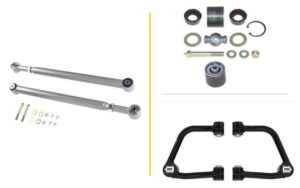
Control arms explained: fixed, adjustable or long arm, pinion angle and caster, flex joints, upper arms for IFS, greasing, and which arm suits your…
Flex Joints
Showing 49–60 of 62 resultsSorted by popularity
-
Flex Joints
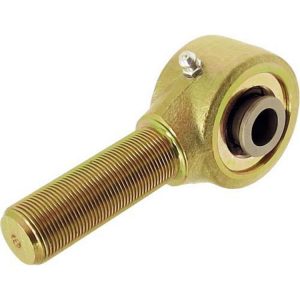
Currie 2.5 Inch Johnny Joint – CE-9110
- Currie CE-9110 2-1/2 inch Johnny Joint rod end, internally greased through a supplied greasable bolt
- 2.625 inch mounting width and 9/16 inch thru-bolt hole
- Must be welded on; urethane bushings and DOM outer shell
- Greasable bolt, nut and washers included; universal fit
SKU: CURCE-9110 -
-
Flex Joints
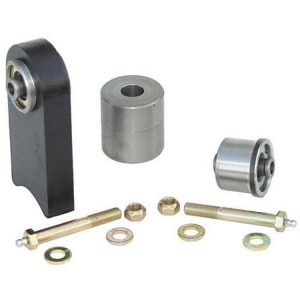
Currie 2.5 Inch Johnny Joint – CE-9110P
- Currie CE-9110P 2-1/2 inch Johnny Joint rod end for weld-on fabrication
- 2.625 inch mounting width and 9/16 inch thru-bolt hole
- Urethane bushings, heat-treated steel center ball and DOM outer shell
- Bolt and nut not included; universal fit, no vehicle fitment is listed
SKU: CURCE-9110P -
Flex Joints
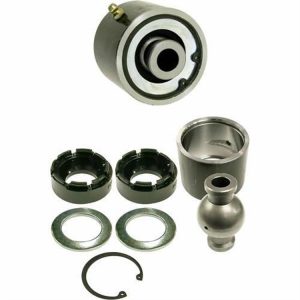
Currie Johnny Joint Front End Housing Kit – CE-9102K
- Currie CE-9102K front end housing kit for 1991 to 2001 Jeep Cherokee (XJ)
- Mounts 2-inch Johnny Joints in place of the upper control arm bushings
- Includes a Johnny Joint insert, installation tool and greasable hardware
- Requires cutting and welding equipment; minor welding required
SKU: CURCE-9102K -
-
Flex Joints
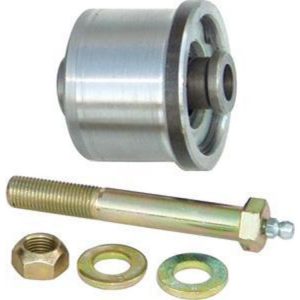
Rubicon Express Super-Flex Assembly – RE3791
- Weld-on Super-Flex joint cartridge for upper control arm mounts
- Fits the XJ, MJ, ZJ, TJ and WJ Jeep chassis
- UHMW side races and a threaded adjuster nut for tightening and rebuilding
- Serviceable, with a rebuildable joint
- Part number RE3791, UPC 614901440928
SKU: R/ERE3791
What a flex joint does
A rubber bushing twists and deflects to allow movement, which limits articulation and binds as the suspension flexes. A flex joint replaces that with a ball-and-socket arrangement threaded into the end of a link, such as a control arm or track bar. The ball rotates freely inside a housing, so the link can pivot through a wide range of angles with little binding. This is a key reason rock crawlers and custom suspension builders use them.
Common types
- Forged joints: typically a forged housing with a threaded stud, often available in different thread directions (right-hand and left-hand) for adjustable links.
- Machined joints: machined from bar stock, sometimes designed to fit into a specific housing casting.
- Narrow versions: a shorter profile for tight spaces.
- Super-flex assemblies: multi-piece joints that provide extra misalignment for demanding applications.
- Rebuild kits and races: replacement balls, races and hardware for worn joints.
Specs that matter
Several dimensions must match your application. Thread size and direction decide whether the joint fits the link end, and mixing right-hand and left-hand threads is how adjustable links are built. The housing diameter, width and ball size determine the fit in the link and the mounting bolt. Material, finish and sealing influence durability, because dirt and water are the main enemies of an open joint. Check the bolt size and sleeve or spacer requirements, and compare the stated misalignment angle if listed.
Trade-offs to understand
- Flex joints can transmit more noise and vibration than rubber bushings, so they are mostly used in vehicles that prioritize articulation over refinement.
- They typically need periodic inspection, cleaning and sometimes lubrication, depending on the design.
- Dirt ingress shortens their life, so protective boots or shields are often worth using.
- They are a poor choice for a daily commuter if comfort is the priority.
Installation and fitment notes
Suspension links and steering-adjacent parts are safety critical. Use proper thread engagement, jam nuts and Grade 8 or specified hardware, and torque to the manufacturer's specifications. Have the finished work and alignment checked by a qualified shop if you change link length. Verify the thread, size and orientation against your existing links. Because many of these are universal components used in fabrication, confirm that the part is suitable for the application and read the manufacturer's specifications before choosing.
Where flex joints are used
The most common locations are control arms, track bars, radius arms and long-travel links on rigs built for rock crawling and articulation. They are also popular in custom fabrication, where builders create their own links and need a threaded end that can be adjusted. In these cases, the joint is paired with a threaded tube or bung and locked with a jam nut.
Before choosing, plan the geometry. Flex joints allow motion, but they do not stop a link from binding if the length or angle is wrong. Keep the links parallel where the design requires it, and give the joint room to rotate without hitting the housing. Check them for play at every service, and clean out dirt, since grit inside the joint speeds up wear and causes slop that you can feel as vague steering or clunking.
Related guides
- Control Arms Explained: Fixed, Adjustable or Long Arm
Popular Flex Joints brands
- Currie (42)
- Rubicon Express (18)
- Trail Gear (1)
- TeraFlex (1)
- California Super Trucks (1)
- Tomken Machine (1)
Flex Joints FAQ
What is a Johnny Joint?
A Johnny Joint is a brand name for a type of flex joint, a threaded joint with a rotating ball inside a housing. It is used in place of a rubber bushing in control arms and links to allow greater articulation.
Do flex joints need maintenance?
Most need periodic inspection and cleaning, and some designs call for lubrication. Dirt and water shorten their life, so check for play, wear and corrosion. Rebuild kits can restore a worn joint if the housing is still sound.
Why are there left-hand thread flex joints?
Left-hand and right-hand threads let you build an adjustable link. Turning the link body changes the length without removing either joint. Make sure you buy the thread direction that matches your link design.
Are flex joints street legal or comfortable?
They are generally usable on the street, but they transmit more noise and vibration than rubber bushings. Whether a modification is allowed depends on your local rules, so check the regulations where you live.