Replacement brake hoses and braided lines for lifted Jeeps and trucks, including stainless steel kits sized for extended suspension travel. Stock hoses can be too short once the axle drops or the vehicle is lifted. Skyjacker, Crown Automotive, Rock Krawler, Rough Country and TeraFlex appear here. Check lift height ranges and fitment on each product page, then compare the products below.
Brake Hose
Showing 1–12 of 158 resultsSorted by popularity
-
Brake Hose, Brake Lines & Fittings, Brakes & Steering
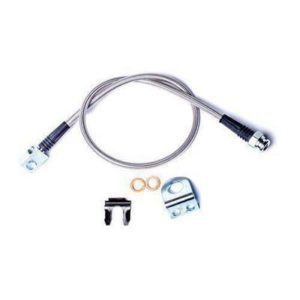
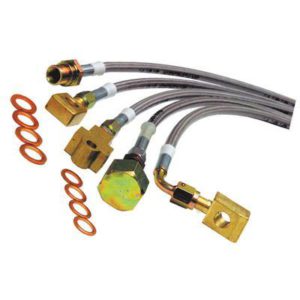
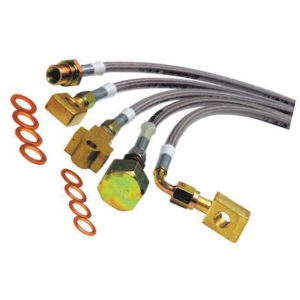
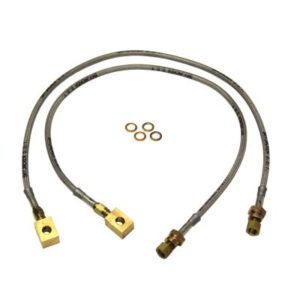
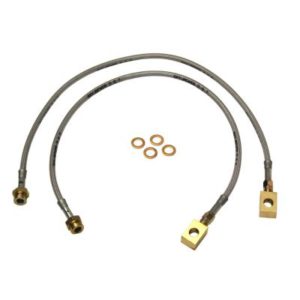
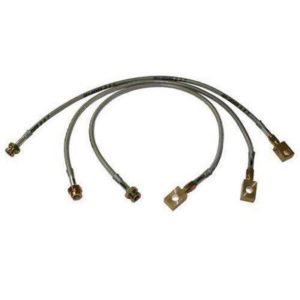
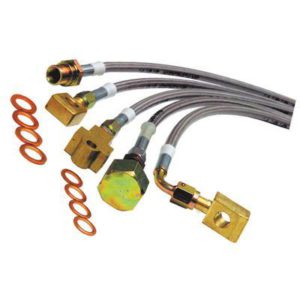
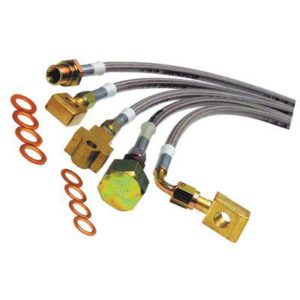
TeraFlex Rear Brake Line Kit – 4354210
- 26 inch rear brake line kit for 1997-2006 Jeep Wrangler TJ and 2004-2006 LJ
- Braided stainless steel, MVSS-1006, DOT approved
- Mounting bracket and retaining clip included
- Made for a 2 to 4 inch lift
SKU: TER4354210


What a brake hose does
Brake fluid travels to each wheel through steel hard lines on the frame, but the wheels move with the suspension, so a flexible hose links the hard line to the caliper. This hose has to handle high pressure, heat and constant flexing, so it is a safety-critical part of the braking system.
Why lifted vehicles need longer hoses
When you lift a vehicle or add longer-travel suspension, the axle sits farther from the frame, and at full droop a short factory hose can be stretched tight. A stretched hose may fail, pull at the fitting or even limit travel. Extended-length hoses give extra slack, and many are sized to a lift range, such as 4 to 6 inches. Choose the range that matches your lift, and check clearance at full droop and full lock.
Rubber versus braided stainless
- Rubber hoses are the original design and are quiet and economical, but they can swell slightly under pressure, which can soften pedal feel.
- Braided stainless lines have a sheath over an inner liner, resist swelling, and give a firmer pedal. They also resist abrasion from brush and trail debris.
Look for hoses with an inner liner that resists brake fluid. Fittings should match your calipers and hard lines, whether banjo, inverted flare or another type, and may need new crush washers.
Installation and bleeding
Support the vehicle safely and keep brake fluid off paint, since it damages finishes. Replace the hoses on both sides at the same time, and make sure the hose is not twisted when you tighten the fittings. Route the hose so it avoids sharp edges, exhaust parts and tires. After installation the system must be bled to remove air, and the pedal should be firm before driving. Brakes are critical to safety, so have a professional install or inspect the work if you lack experience, and test at low speed before heading out.
Check legal and fitment details
Confirm fitment for your exact year, make and model, including whether it has ABS and what lift you have. Check the manufacturer's specifications, and note that DOT requirements apply to brake hoses, so look for DOT-compliant products.
Inspection and maintenance
Inspect brake hoses at every service. Look for cracks, bulges, rubbing marks and fluid seepage at the ends. Flex the hose by hand while looking for splits. Check the clearance to tires, sway bar links and axle parts at both full droop and full compression, and with the steering at full lock. Use a hose clip or bracket as intended so the hose does not hang loose. Replace brake fluid on the schedule in your owner's manual, since old fluid corrodes the system from within. Never reuse crush washers, and never use a hose that is longer than needed if it can sag or contact the tire.
Flexible hoses age even when they look fine, so many shops recommend replacing them at intervals set by the vehicle maker or when they show any damage, especially on vehicles that see heat, salt or heavy off-road use.
Popular Brake Hose brands
- Skyjacker (34)
- Pro Comp Suspension (30)
- Crown Automotive (29)
- Rubicon Express (24)
- Rugged Ridge (12)
- Omix-Ada (9)
- Goodridge (5)
- TeraFlex (5)
- Dorman (3)
- RT Off-Road (3)
- Rock Krawler (3)
- Rough Country (2)
Brake Hose FAQ
Do I need new brake hoses after a lift?
Often yes, especially with lifts of a few inches or more. Factory hoses may be too short at full droop. Many lift kits include them or recommend them, so check the lift manufacturer's instructions.
Are stainless braided brake lines better?
They resist swelling, so the pedal often feels firmer, and the braid protects against abrasion. Rubber hoses are adequate for stock use. Whichever you pick, choose a length that suits your lift and a DOT-compliant product.
Do I need to bleed the brakes after replacing hoses?
Yes. Opening the hydraulic system lets air in, which makes the pedal soft. Bleed all affected calipers according to the vehicle's procedure, and confirm a firm pedal before driving.