
Wheel bearing kits and bearing and seal sets for solid axles, including front and rear kits for Dana 44, Dana 60 and Ford 10.25 and 10.5 inch applications. These help owners rebuild worn hubs or replace failed wheel bearings on Jeeps, trucks and trail rigs. G2 Axle and Gear, Crown Automotive, Omix-Ada and Spidertrax Offroad are among the brands. See product pages for part numbers and compare the products below.
Wheel Bearings
Showing 1–12 of 49 resultsSorted by popularity
-
-
-
Wheel Bearings
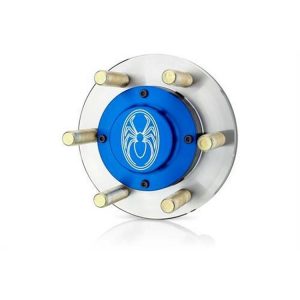
Spidertrax Offroad Ultimate Unit Bearing – FUBR55125835
- Spidertrax Offroad Ultimate Unit Bearing FUBR55125835 for Ultra4 racing
- Genuine Timken bearings and full Chromoly heat treated construction
- 5/8″-18 studs on a 5 on 5-1/2″ bolt circle
- Designed for Spidertrax 35 splined axle shafts
SKU: SPIFUBR55125835 -
Wheel Bearings
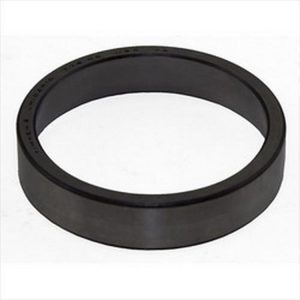
Omix-ADA Front Wheel Bearing Hub Cup – 16707.03
- Front wheel bearing hub cup (inner cup), Omix-ADA part number 16707.03
- Fits 1977-1983 Jeep CJ5, 1977-1986 Jeep CJ7 and 1981-1985 Jeep Scrambler per the manufacturer list
- Direct OE replacement, front position
- Limited five year warranty
SKU: OAI16707.03 -
-
Dana 44 Bearings and Install Kits, Wheel Bearings

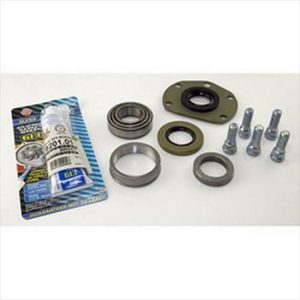
Omix-ADA Dana 35/44 Rear Axle Shaft Bearing Kit – 16534.41
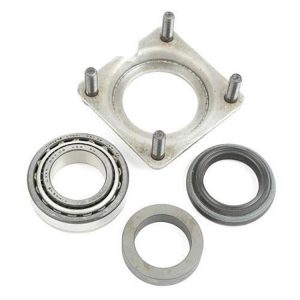 Dana 44 Bearings and Install Kits, Wheel Bearings
Omix-ADA Dana 35/44 Rear Axle Shaft Bearing Kit – 16534.41
- Rear axle shaft bearing and seal kit for Dana 35 or Dana 44 axles
- Includes ring, oil seal, bearing and retainer, for one wheel
- Fits 1999-2004 Jeep Grand Cherokee (WJ)
- Omix-Ada part number 16534.41, UPC 804314276546
SKU: OAI16534.41 -
-
-
-
Dana 44 Bearings and Install Kits, Dana 44 Oil Seals, Wheel Bearings

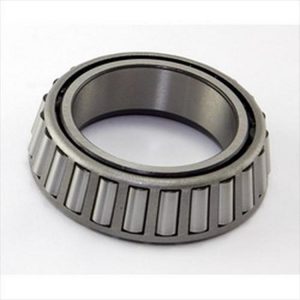
G2 80-95 Ford TTB Dana 44 Light Duty Front Wheel Bearing Kit – 30-8026
 Dana 44 Bearings and Install Kits, Dana 44 Oil Seals, Wheel Bearings
G2 80-95 Ford TTB Dana 44 Light Duty Front Wheel Bearing Kit – 30-8026
- Light-duty front wheel bearing kit for the Dana 44 LD
- All parts for one side, with Timken inner and outer bearings
- Includes wheel bearing seal
- G2 Axle and Gear part number 30-8026, UPC 631410095401
SKU: G/230-8026



How a wheel bearing works
A wheel bearing is a set of rollers or balls riding on a hardened race, letting the hub spin with little friction while carrying the vehicle's weight and cornering loads. Tapered roller bearings, common on solid axles, are installed in pairs with an inner and an outer bearing on each hub, and are adjusted with a spindle nut for proper preload.
Signs of wear
- A hum or growl that changes with vehicle speed, often louder when turning one way.
- Looseness or clunking when you rock a lifted wheel by hand.
- Grease leaking onto the brake rotor or backing plate from a failed seal.
- Heat at the hub after a drive, which suggests over-tight or failing bearings.
A bad bearing is a safety risk. A seized or collapsed bearing can lock or detach a wheel, so address symptoms right away.
Choosing the right kit
Kits are specific to an axle model, front or rear position, and sometimes to the application year. A kit listed for a Dana 44 front axle may not fit a Dana 44 rear, and the same name can cover different bearing sizes on different vehicles. Check what the kit includes: it may list inner and outer bearings, races, a seal and sometimes the hardware, and it often covers one side only, so you may need two. Where a brand notes a bearing maker, that detail appears in the listing description. Confirm fitment for your exact vehicle, and measure or identify the axle first if you have swapped axles.
Installation and setup
Clean the hub and spindle thoroughly, press races in squarely with the right driver, and pack the bearings fully with grease suited to wheel bearings. Use a new seal every time. Preload and spindle nut torque matter a great deal, as both too loose and too tight shorten bearing life, so follow the manufacturer's service procedure and use a torque wrench. After installation, check for play and rotation before driving, and recheck after a short drive.
Brakes are part of the same job. Inspect the rotor, pads, caliper and hardware while the hub is off. If you are not comfortable working on wheel ends, have a qualified shop handle it.
Careful work at the wheel end pays off. Keep the work area clean, since a small amount of grit in the grease can destroy a new bearing quickly. Pack bearings by forcing grease through the rollers from the large end, not just by smearing it on the outside, and use a grease rated for wheel bearings and the heat from disc brakes. Check the spindle surface for scoring or a spun inner race, and the hub bore for wear, because a damaged mating surface will ruin a new bearing. Replace the dust cap, cotter pin or locking hardware as specified. If your axle has locking hubs, service them while you are there. After installation, spin the wheel and listen for roughness, then check again for heat after a short test drive. Regular inspection after deep water crossings can prevent a failure.
Popular Wheel Bearings brands
- G2 Axle and Gear (23)
- Crown Automotive (16)
- Omix-Ada (5)
- Spidertrax Offroad (2)
- Alloy USA (1)
- Dana Spicer (1)
- Trail Gear (1)
- Curt Manufacturing (1)
Wheel Bearings FAQ
How often should wheel bearings be serviced?
Intervals vary by vehicle and use. Many are repacked or inspected during brake jobs or at regular maintenance intervals, and sooner after water crossings. Check the manufacturer's service schedule and inspect for play and noise.
Do I replace the races when I replace the bearings?
Yes, it is best practice. Bearings and races wear together, so new bearings on old races can fail early. Many kits supply bearings with matching races for this reason.
Does one kit cover both sides of the axle?
Not necessarily. Some kits are sold for one side only, and listings often note that all parts are for one side. Read the description, and order a second kit if you are doing both wheels.
What is bearing preload?
Preload is the slight, specified tightness applied to tapered roller bearings through the spindle nut. Too loose causes play and wear, and too tight causes heat. Follow your manufacturer's procedure and torque values.