
Auxiliary lighting adds accent, signaling and utility lights around a 4×4 beyond the main headlights. The group includes LED headlight strips, daytime running lights, fender and bed rail lighting, tailgate light bars, license plate lighting and multi-use accent lights, with Oracle Lighting, Recon and Putco as the main brands. Compare options and vehicle fitment on each product page, then compare the listings below.
Auxiliary Lighting
Showing 1–12 of 31 resultsSorted by popularity
Shop Auxiliary Lighting by type


-
Marine Light
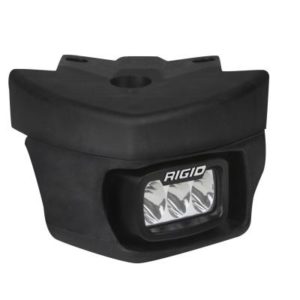
Rigid Industries Trolling Motor Mount Light Kit (Black) – 400033
- Rigid Industries trolling motor mount light kit in black, part number RIG400033
- Built around the SR-M, a compact single-row LED light
- Cast aluminum housing with a sealed polycarbonate lens
- Marked universal fit; no specific vehicles are named
SKU: RIG400033 -
-
-
-
-
Tailgate Light Bar

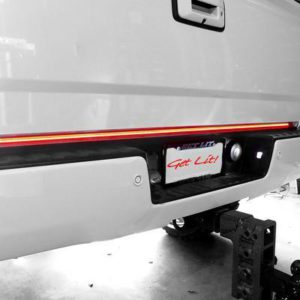
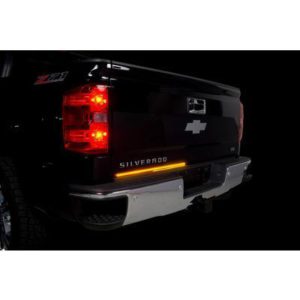
Recon 60″ LED Tailgate Bar High-Power Signals, Brake, and Reverse Lights – 26416XHP
 Tailgate Light Bar
Recon 60″ LED Tailgate Bar High-Power Signals, Brake, and Reverse Lights – 26416XHP
- Universal fit, not built for a single vehicle
- Fits between the rear bumper and tailgate, part number 26416XHP
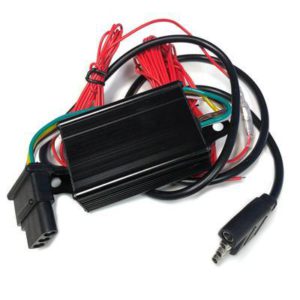
- Signal, brake and reverse lights, connects to the truck’s electrical system
SKU: REC26416XHP -
-
-
-





Beyond headlights
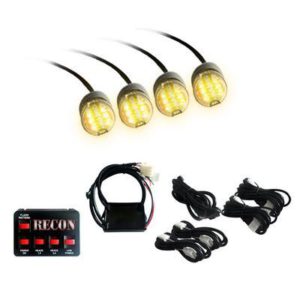
Auxiliary lighting means the extra lamps that supplement the stock lighting. They fall into two groups. Functional lights, such as tailgate light bars, bed rail lights and flush-mount work lights, help you see around the vehicle at camp or on the trail. Appearance and signaling lights, such as daytime running lights, LED headlight strips, turn signal indicators and accent strips, change how the vehicle looks and how other drivers see it.
Common types
- Daytime running lights and headlight halos: strips or rings added to the headlight that glow in daylight.
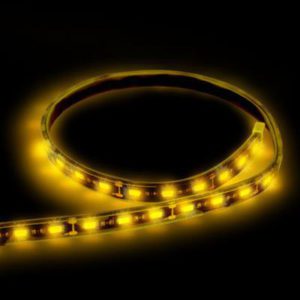
- LED flex strips: flexible adhesive strips for under-hood, wheel well, bed or interior accent use, some with color-changing control.
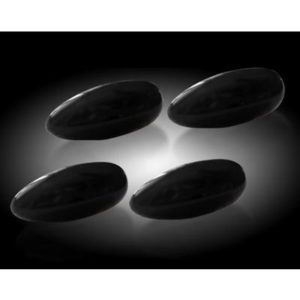
- Fender lights and dually pods: small lamps that mount in the fender for turn signals or marker use.
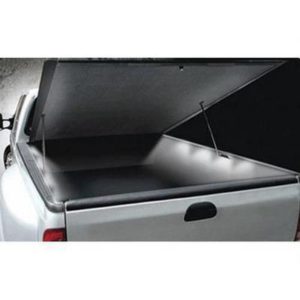
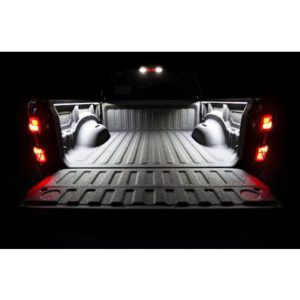
- Bed rail and tailgate lights: light the cargo area or the rear work area.
- License plate lighting: replaces the stock bulbs with brighter LEDs.
Things to compare
Check voltage and current draw, water resistance rating such as IP67, and the color choices. Multi-color and strobe options are popular but are limited in many places, and flashing, red or blue lights can be restricted on public roads. Look at the adhesive and cable length for strips, and the connector for plug-and-play kits, since a harness made for your vehicle is simpler than splicing.
Installation and wiring
Many kits tie into the existing lighting circuits, switched power or a dedicated switch. Use a fuse sized for the load, solder or properly crimp connections and seal them against water. Clean the mounting surface before using adhesive, and secure cables away from heat and moving parts. Disconnect the battery before opening headlight assemblies or wiring into factory harnesses.
Rules and fitment
Lighting laws vary by state, covering color, flashing and placement, so check your local regulations before installing and using them on public roads. Confirm that the kit suits your exact year, make and model, especially for headlight and turn signal parts that are shaped to the vehicle.
Power management is the key to a clean installation. Total the current draw of all new lights and compare it with the circuit you plan to use. Small accent strips draw little, but many pods and bars draw enough to need their own fused feed and relay. Keep wiring short and tidy, use dielectric grease on connectors and leave a drip loop so water runs away from connections. Avoid tapping into data lines or airbag wiring, and use the vehicle's switched accessory power for lights that should turn off with the ignition.
Appearance and legality deserve attention too. Daytime running lights should usually be white or amber on the front, and many places prohibit forward-facing red or blue lights. Color-changing strips are a common choice for trail camps, and a remote or app often controls them, but they should be off on public roads where local rules limit their use. Test every light and switch before you finish the job, and reinstall panels and trim carefully so wires are not pinched. Recheck adhesive-mounted parts after a few days of use, because heat and vibration can loosen them.
Popular Auxiliary Lighting brands
- Oracle Lighting (12)
- Recon (7)
- Trail Gear (2)
- Putco (2)
- Spyder Auto Group (2)
- Poison Spyder Customs (1)
- TruXedo (1)
- JW Speaker (1)
- Omix-Ada (1)
- Anzo (1)
- Rigid Industries (1)
Auxiliary Lighting FAQ
Are colored auxiliary lights legal on the road?
Rules differ by state. Many places restrict red, blue and flashing lights on public roads, and limit forward-facing colors. Check your local regulations, and use specialty colors only where allowed, such as off-road.
What does an IP67 rating mean?
It means the product is dust-tight and can withstand temporary immersion in water. That suits exterior lighting, though connectors and wiring also need to be sealed. Compare ratings on product pages.
Do LED strips drain the battery?
LEDs draw little current, but they still pull power if left on with the engine off. Wire them to a switch and a fuse, and avoid long use without the engine running.
Can I install auxiliary lights without cutting factory wiring?
Often yes, with plug-in harnesses made for some vehicles or by tapping a switched circuit with proper connectors. Follow the kit's instructions and use fused power.