
Suspension Accessories
Showing 121–132 of 1625 resultsSorted by popularity
-
-
-
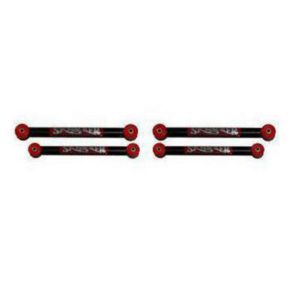
Sway Bar Link - Non Disconnect
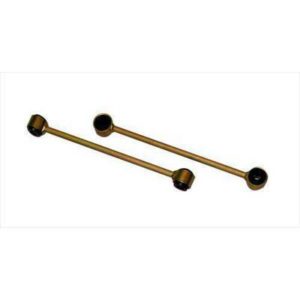
Skyjacker Sway Bar Extended End Links – SBE507
- Extended sway bar end links, sold as a pair, for 2007–2018 Jeep Wrangler JK
- Position is listed inconsistently: front in the specifications, rear in the summary
- Polyurethane bushings, 4140H steel, part number SKYSBE507
- Lifetime warranty
SKU: SKYSBE507 -
-
Sway Bar Link - Non Disconnect
Skyjacker Sway Bar Extended End Links – SBE305
- Rear extended sway bar end links, sold as a pair
- For 1980–1998 Ford F-250 and 1980–1997 F-350 trucks, plus 1997 F-250 HD
- Polyurethane bushings and zinc coating, part number SKYSBE305
- Non-adjustable, direct fit
SKU: SKYSBE305 -
Sway Bar Link - Non Disconnect
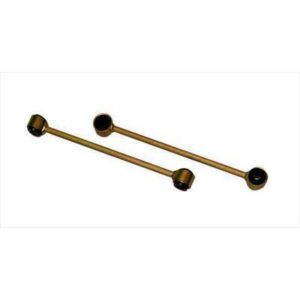
Skyjacker Sway Bar Extended End Links – SBE228
- Front extended sway bar end links, sold as a pair, for lifted Jeep Wrangler LJ and TJ models
- Replaces the stock end links, with polyurethane bushings
- Built from 4140H steel with a zinc coating, part number SKYSBE228
- Lifetime warranty, made in the USA
SKU: SKYSBE228 -
-
Coil Springs
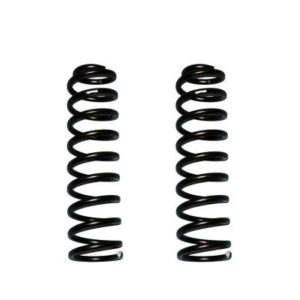
Skyjacker Softride Rear Coil Springs – JK20RSR
- Skyjacker Softride rear coil springs for the Jeep Wrangler JK, part number JK20RSR
- Rear springs for a 2 to 2.5 inch lift, sold as a pair
- Preset from 5160H chromium alloy, powder coated
- Fits 2007–2018 Wrangler JK 2-door and 4-door
SKU: SKYJK20RSR -

What belongs in this category
A lift kit rarely arrives complete. Raising a vehicle changes axle position, driveshaft angles and link lengths, and the parts here correct those side effects or replace pieces that wear out. The range runs from small hardware such as U-bolts and leaf spring center pins to larger components such as adjustable control arms, radius arms, spindles and frame stiffeners.
- Geometry correction: track bars, track bar brackets, control arm drop brackets and caster or camber kits bring axle position and alignment back toward factory targets after a lift.
- Springs and spacing: coil springs, add-a-leaf packs, lift blocks and coil spring isolators set ride height and load behavior.
- Travel and protection: bump stops limit compression travel so the axle does not hit the frame or the shock bottoms out.
- Linkage and bushings: sway bar links (fixed or disconnect), control arm bushings and shackle kits handle articulation and noise.
How to choose
Start with the problem you are solving. A front track bar that no longer centers the axle after a 3-inch lift needs an adjustable bar or a relocation bracket, not a different spring. A driveline vibration on a leaf-spring truck points to pinion angle, which is handled with degree shims, a carrier bearing drop or a transfer case lowering kit depending on the setup.
Match the part to your lift height. Many listings state a range, such as a track bar for 0 to 3.5 inches of lift, and staying inside that range keeps the geometry sensible. Also note the position (front or rear), the side if it matters, and whether the part is a direct fit or a universal piece that needs fabrication.
Specs worth comparing
- Block height, taper and pin size for lift blocks, and U-bolt thread size and length to match the block and axle tube.
- Material and construction: forged or fabricated steel versus cast, and the bushing type (rubber, polyurethane or heim joint) with its trade-off between comfort and precision.
- Adjustability: length-adjustable arms and bars simplify centering the axle and setting caster.
- Finish: powder coat or e-coat helps resist corrosion on parts that live under the vehicle.
Installation and fitment notes
These are safety-related parts, so torque every fastener to the manufacturer's specification, replace stretched or damaged hardware, and recheck torque after the first few hundred miles. A professional alignment is recommended after changing control arms, track bars or caster hardware, and a driveline check is wise after changing pinion angle. Confirm fitment for your exact year, make and model, and read the manufacturer's specifications before choosing, since axle brands, cab styles and lift heights change what fits. Lift and ride-height rules vary by state.
Common mistakes to avoid
The most frequent error is treating each part in isolation. A longer track bar solves lateral axle position, but it does nothing for a pinion angle that now points too high. Make a short list of symptoms first: wandering, vibration, clunks over bumps, tire rub or uneven wear. Then match each symptom to the part that addresses it.
Another mistake is mixing hardware grades. U-bolts, shackle bolts and control arm bolts carry real loads, so reuse is risky when threads are stretched or the plating has worn away. Keep a record of what you installed and the torque values used, because it makes later troubleshooting much faster. If a noise appears after installation, recheck the fasteners before assuming a part is faulty, since loose hardware is the most common cause.
Popular Suspension Accessories brands
- ARB 4x4 Accessories (209)
- Rubicon Express (192)
- Pro Comp Suspension (160)
- Skyjacker (146)
- Crown Automotive (110)
- TeraFlex (110)
- Fabtech (95)
- Energy Suspension (78)
- Omix-Ada (50)
- Icon Suspension (42)
- Tuff Country (42)
- Rock Krawler (42)
Shop Suspension Accessories by type
- Coil Springs (338)
- Control Arms (264)
- Bump Stops (169)
- Control Arm Bushing (124)
- Axle U-Bolt (107)
- Sway Bar Link - Non Disconnect (89)
- Track Bar (85)
- Add A Leaf (62)
- Axle U-Bolt Kit (54)
- Sway Bar Link - Disconnect (39)
- Coil Spring Isolator (39)
- Alignment Caster/Camber Kit (31)
- Sway Bar Bushing (22)
- Transfer Case Lowering Kit (17)
- Leaf Spring Center Pin (14)
- Control Arm Drop Bracket (14)
- Carrier Bearing Drop (6)
- Radius Arm (6)
- Sway Bar Bracket (5)
- Bump Stop Spacer (3)
- Leaf Spring Bump Stop (3)
- Suspension Control Arm Link (3)
- Differential Drop Bracket (2)
- Leaf Spring Shackle (2)
- Lift Hardware Kits (2)
- Shock Mounting Brackets (1)
Suspension Accessories FAQ
Do I need new control arms with a lift?
It depends on lift height and vehicle. Small lifts often work with factory arms, while taller lifts can leave the axle out of position or the pinion angle off. Adjustable aftermarket arms let you correct this. Check the lift kit maker's recommendations for your height.
What does a bump stop do?
A bump stop limits how far the suspension can compress, keeping the axle, tire or shock from hitting the frame or body. Taller lifts and bigger tires usually need extended stops, since the factory travel limits no longer match the new geometry.
When should I use a lift block instead of a spring?
Lift blocks are a simple way to raise a leaf-spring rear axle, but they can add axle wrap and change pinion angle. Many owners pair them with tapered blocks or shims. A new spring or add-a-leaf changes ride quality more directly.
Do I need an alignment after installing these parts?
Yes, in most cases. Control arms, track bars and caster or camber kits all change axle position and steering geometry. Have the alignment checked by a qualified shop after installation and again after the parts settle.