








Wrangler, Bronco and 4Runner compared on frames, axles, transfer cases, crawl ratios, lockers, travel and angles, using each maker's own spec sheets.
Control Arms
Showing 205–216 of 260 resultsSorted by popularity
-
-
-
-
Control Arms
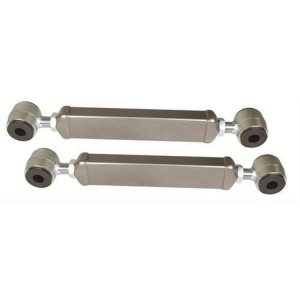
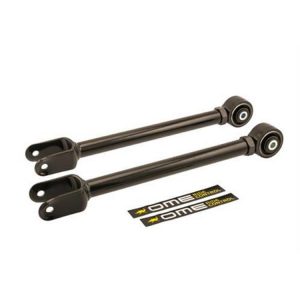
Bd Diesel Adjustable Upper and Lower Control Arm Kit – 1032030
- Adjustable upper and lower control arm kit for rear 1994–1999 Dodge Ram 2500 and 3500 (Base) trucks
- BD Diesel part number BDD1032030, UPC 19025012226
- Forged end links, powder coated bodies, zinc plated threads
- BD rates the arms over three times stronger than stock
SKU: BDD1032030 -
Control Arms
ARB Adjustable Front Upper Control Arms – UCAJKFR
- Adjustable front upper control arm for Jeep Wrangler JK, 2007 to 2018
- 1.25 in x 0.188 in (31.7 mm x 4.7 mm) 1020 DOM steel tube
- Forged rod end, stamped steel clevis, Max C dual Duro bushing
- Sold as a pair, part number UCAJKFR
SKU: ARBUCAJKFR -
Control Arms
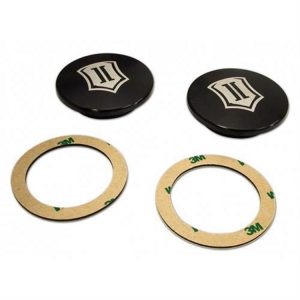
Icon Suspension Uniball Billet Cover Caps – 191011
- ICON Suspension 191011 billet uniball cover caps, 6061 aluminum, black anodized
- Keeps dirt, mud and road grime off the uniball and away from the PTFE liner
- Attaches with 3M neoprene adhesive rings
- Includes one pair of caps and two pairs of adhesive rings
- Designed for ICON tubular upper control arms; no vehicle-specific fitment listed
SKU: ICO191011 -
-
Control Arms
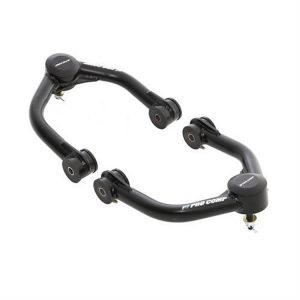
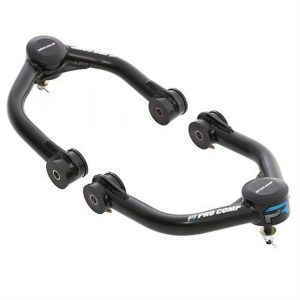
Pro Comp Uniball Upper A-Arm with Billet Dust Cap – 51005B
- Pro Runner front upper control arms for 15-Current GM Colorado and Canyon, 2WD and 4WD
- 1.25 inch stainless steel FK uniball joints with billet dust cap
- Chromoly tubular arms with PTMEG bushings and grease zerks
- Black powder coat; supplied as a pair
SKU: EXP51005B
Why control arms matter on a lifted vehicle
When a vehicle is lifted, factory control arms often cannot return the axle or wheel to the correct position. That can cause poor alignment, wandering, vibration or running out of travel at the joints. Aftermarket arms restore alignment range and sometimes improve articulation. Short arms and drop brackets are common on mild lifts, while long arms are designed for taller lifts and offroad use.
How to choose
Start with the position you need: front or rear, upper or lower. Each is specific to the suspension layout, so an arm for a coil-spring solid axle Jeep is nothing like an upper arm for an independent front suspension truck. Then match the arm to your lift height range, shown in the listing, because the arm length and geometry are built for that window.
- Adjustable arms: Let you set caster or pinion angle, which is important after a lift.
- Fixed-length arms: Simple and strong, but they only fit the range they were designed for.
- Replacement arm with bushings: A good choice when factory bushings are worn out.
Specs to compare
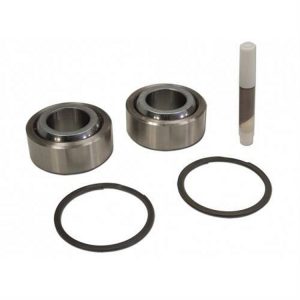
Look at the joint design. Rubber or polyurethane bushings are quiet and forgiving, while heim or spherical joints give more articulation and need more maintenance and tolerate more noise. Ball joint designs on upper arms for independent front suspension trucks, including billet and tubular styles, are tied to the vehicle's steering geometry. Also check material, whether the kit includes bushings or hardware, and the stated lift range. Replacement joint kits are sold separately for rebuilding worn arms.
Installation notes and alignment
Control arms are a suspension and steering safety item. Torque bolts to the manufacturer's specifications with the vehicle at ride height, since tightening bushing bolts with the suspension hanging can bind the rubber and shorten its life. Install pairs rather than single arms, and have a professional alignment done after any arm change.
Check that the track bar, brake lines, sway bar links and driveline angles still work with your lift. Confirm fitment for your exact year, make, model, drivetrain and lift height, and follow the manufacturer's specifications for any additional parts required. Inspect joints and bolts regularly if the vehicle sees trail use.
Matching parts and common mistakes
Control arms rarely work alone. A lift that needs new arms often also needs a track bar, longer brake lines, sway bar disconnects or extended links, and shocks sized for the new travel. Plan the full list before starting so the vehicle is not left half finished. A set that includes the correct bushing sleeves and hardware saves a trip to find missing parts.
A common error is tightening arm bolts with the suspension at full droop, which preloads the bushings and can tear them within a short time. Another is mixing arms of different lengths side to side, which shifts the axle off center. Do not reuse stretched or damaged hardware, and use the grade of bolt the manufacturer requires.
For upkeep, inspect arms for bends, cracks near the welds and play in the joints. Grease any joints with fittings on the schedule listed. Listen for clunks over bumps, which often signal a loose bolt or a worn bushing. Recheck torque after the first few hundred miles, since bushings settle.
Related guides
- Wrangler vs Bronco vs 4Runner: The Engineering Compared
Popular Control Arms brands
- Rubicon Express (46)
- TeraFlex (30)
- Fabtech (20)
- Pro Comp Suspension (20)
- Crown Automotive (19)
- ICON Vehicle Dynamics (19)
- Icon Suspension (18)
- Rock Krawler (17)
- Skyjacker (9)
- Omix-Ada (9)
- Rough Country (9)
- Tuff Country (8)
Control Arms FAQ
Do I need adjustable control arms for a lift?
Not for every lift. Mild lifts may work with factory or fixed-length arms. Taller lifts often need adjustable or longer arms to restore caster and pinion angle. Check the lift height range stated in the listing.
What is the difference between bushings and heim joints?
Bushings use rubber or polyurethane and are quiet and low maintenance. Heim or spherical joints allow more articulation but can be louder and need more upkeep. The right choice depends on how the vehicle is used.
Do I need an alignment after installing control arms?
Yes, plan on one. Changing arms alters wheel position and angles. A professional alignment sets caster, camber and toe so the vehicle tracks properly and tires wear evenly.
Can I replace only the worn joints instead of the whole arm?
Sometimes. Joint rebuild kits exist for certain arms, but they require pressing or the right tools. If the arm is bent or the bushing sleeve is damaged, replacement arms are the safer route.