
Control Arm Bushing
Showing 13–24 of 124 resultsSorted by popularity
-
Control Arm Bushing, Lift Kits, Suspension & Shocks, Suspension Accessories

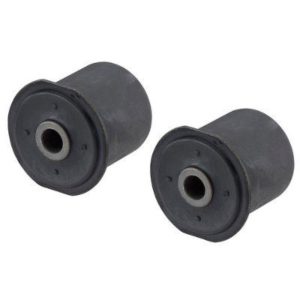
Moog Front Lower Control Arm Bushing – K3131
 Control Arm Bushing, Lift Kits, Suspension & Shocks, Suspension Accessories
Moog Front Lower Control Arm Bushing – K3131
- Moog K3131 front lower control arm bushing, fits left or right side
- Fits 1994–1999 Dodge Ram 1500, 2500 and 3500, and 1984–1999 Jeep Cherokee (XJ)
- Also fits 1986–1992 Jeep Comanche and 1984 Jeep Wagoneer (SJ)
- Sold individually
SKU: MOGK3131 -
Control Arm Bushing, Lift Kits, Suspension & Shocks, Suspension Accessories
Moog Control Arm Bushing Kit – K200365
 Control Arm Bushing, Lift Kits, Suspension & Shocks, Suspension Accessories
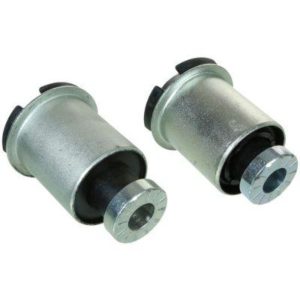
Moog Control Arm Bushing Kit – K200365
- Moog K200365 front lower control arm bushing kit, sold in pairs
- Fits 2004–2008 Ford F-150 and 2006–2008 Lincoln Mark LT
- Elastomer bushings with a bonded metal rib design
- Phosphate coated metal surfaces for corrosion protection
SKU: MOGK200365 -
Control Arm Bushing, Lift Kits, Suspension & Shocks, Suspension Accessories
Moog Control Arm Bushing – K201732
 Control Arm Bushing, Lift Kits, Suspension & Shocks, Suspension Accessories
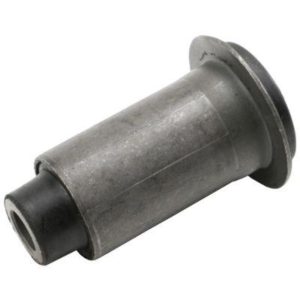
Moog Control Arm Bushing – K201732
- Moog K201732 front lower forward control arm bushing
- Fits 2002–2005 Dodge Ram 1500 and 2003–2004 Ram 2500 and 3500
- For 2WD models, sold individually
- Designed to bring steering close to original condition
SKU: MOGK201732 -
Control Arm Bushing, Lift Kits, Suspension & Shocks, Suspension Accessories

Icon Vehicle Dynamics Replacement Bushing and Sleeve Kit – 614504
 Control Arm Bushing, Lift Kits, Suspension & Shocks, Suspension Accessories
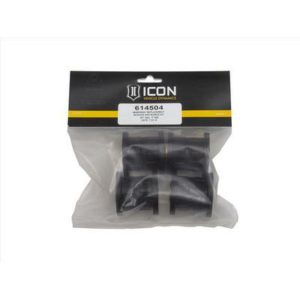
Icon Vehicle Dynamics Replacement Bushing and Sleeve Kit – 614504
- Replacement bushings and sleeves for upper control arms
- One set covers both upper control arms
- For control arm part numbers 58450 and 58451
- Black finish
- Fits Lexus GX and Toyota 4Runner, FJ Cruiser and Tacoma
SKU: ICO614504 -
Control Arm Bushing, Lift Kits, Suspension & Shocks, Suspension Accessories

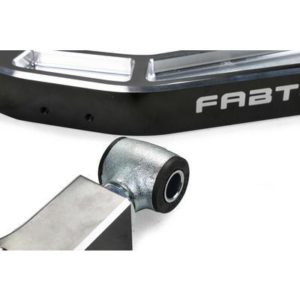
Fabtech Upper Control Arm Urethane Bushing Ends – FTS21263
 Control Arm Bushing, Lift Kits, Suspension & Shocks, Suspension Accessories
Fabtech Upper Control Arm Urethane Bushing Ends – FTS21263
- Fabtech upper control arm urethane bushing ends, part number FABFTS21263
- Forged steel rod ends with urethane bushings, sold in sets of 4
- Made to fit billet aluminum upper control arm FTS21255 and kits K1138 and K1139
- Fits 2019 to 2021 Chevrolet Silverado 1500 and GMC Sierra 1500
SKU: FABFTS21263 -
Control Arm Bushing, Lift Kits, Suspension & Shocks, Suspension Accessories
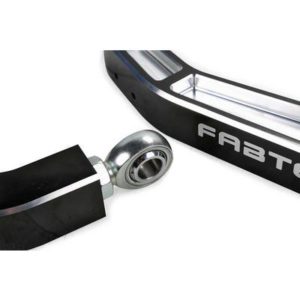
Fabtech Upper Control Arm Heim Bearing Ends – FTS21262
 Control Arm Bushing, Lift Kits, Suspension & Shocks, Suspension Accessories
Fabtech Upper Control Arm Heim Bearing Ends – FTS21262
- Fabtech upper control arm heim bearing ends, part number FABFTS21262
- FK 3/4 in. heim ends for a solid frame mounting point
- Designed to reduce control arm deflection, per Fabtech
- Fits 2019 to 2021 Chevrolet Silverado 1500 and GMC Sierra 1500
SKU: FABFTS21262 -
Control Arm Bushing, Lift Kits, Suspension & Shocks, Suspension Accessories
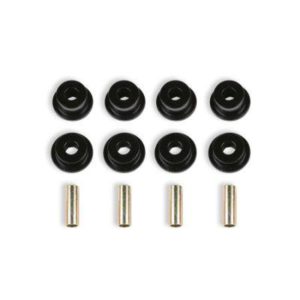
Fabtech Upper Control Arm Bushing Set – FTS90169
 Control Arm Bushing, Lift Kits, Suspension & Shocks, Suspension Accessories
Fabtech Upper Control Arm Bushing Set – FTS90169
- Fabtech upper control arm bushing kit with sleeves, part number FTS90169
- American made urethane bushings in black, with sleeves
- The type field reads rubber; confirm the material
- Fits 2019 Chevrolet Silverado 1500 and GMC Sierra 1500 trucks
SKU: FABFTS90169 -
Control Arm Bushing, Lift Kits, Suspension & Shocks, Suspension Accessories

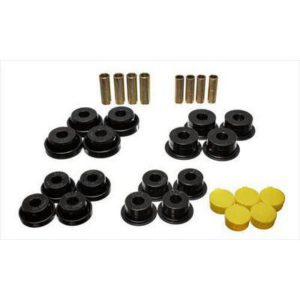
Energy Suspension Control Arm Bushing Set (Red) – 5.3131G
 Control Arm Bushing, Lift Kits, Suspension & Shocks, Suspension Accessories
Energy Suspension Control Arm Bushing Set (Red) – 5.3131G
- Energy Suspension front end control arm bushing set, part number 5.3131G
- Polyurethane bushings; reuse the existing outer metal shell
- Red or black finish; confirm before ordering
- Fits 1999 to 2001 Dodge Ram 1500, 2500 and 3500 trucks
SKU: ENE5.3131G -
Control Arm Bushing, Lift Kits, Suspension & Shocks, Suspension Accessories
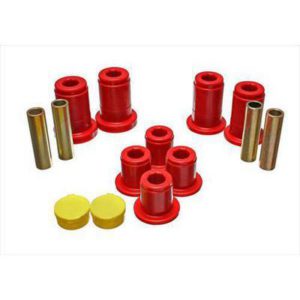
Energy Suspension Control Arm Bushing Set (Red) – 4.3157R
 Control Arm Bushing, Lift Kits, Suspension & Shocks, Suspension Accessories
Energy Suspension Control Arm Bushing Set (Red) – 4.3157R
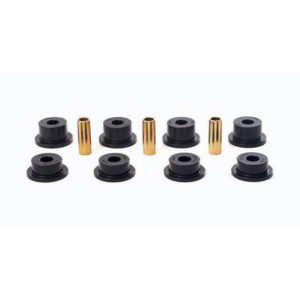
- Energy Suspension red control arm bushing half set, part number 4.3157R
- Front position; upper arm must reuse all hardware
- Polyurethane bushings for the stock control arms
- Fits Ford Explorer, Ranger and Mazda B-series trucks, 1995 to 2011
SKU: ENE4.3157R


What control arm bushings do
Control arms, sometimes called links, hold the axle in position front to back and side to side while letting it move up and down. The bushings at each end of the arm absorb vibration and permit the arm to pivot. When they wear, you may feel clunks, brake dive, drifting under acceleration or vague steering, and alignment can wander.
Materials
- Rubber gives the quietest ride and most isolation, but it softens and cracks over time.
- Polyurethane is firmer, holds shape and usually resists oil, though it can add noise and harshness if not lubricated correctly.
- Metal or spherical joints give precise control and high articulation, and they are common on heavy trail builds, but they transmit more noise.
Durometer ratings describe firmness. A stiffer bushing improves control but gives up some compliance and may bind with extreme articulation.
Choosing a kit
Kits are built for particular arms, so check the bushing's outer diameter, inner sleeve size, length and quantity. Some kits cover upper and lower arms, and others include only one. Replacement sleeve kits are also available for arms that need new inner sleeves. Aftermarket arms from lift manufacturers may use different bushing sizes than the original, so verify before choosing.
Installation tips
Bushings are usually pressed in and out, which calls for a press or a proper bushing tool. Heat can damage the surrounding metal and should be avoided unless you know the procedure. Support the axle properly and note the position of the arms. The most important step is to tighten the control arm bolts with the vehicle at normal ride height, so the bushings are not twisted. Torque to the manufacturer's specification. Because these parts affect axle location and steering feel, have a shop do the work if you are unsure, and get an alignment afterward. Look over the polyurethane or rubber for any pinching at the bolt sleeve once the bolts are torqued, and check the movement of the arm by hand before lowering the vehicle.
Fitment
Control arm designs differ by year, axle and whether the suspension has been lifted. Confirm fitment for your exact year, make and model, and check the manufacturer's specifications.
Inspection and related parts
When replacing control arm bushings, look at the arms themselves for bends, cracks near the welds and ovalized bolt holes. Replace the bolts if they are stretched or corroded. On a lifted vehicle, arms and bushings carry greater loads, so check them more often. Adjustable arms let you correct pinion angle or caster after a lift, and bushing choice then affects how much movement the joint allows. Bushing wear is often uneven, so replace all bushings on an axle at the same time. Afterward, verify the alignment and look for steering pull or vibration, since worn control arms can shift axle position.
Bushing replacement is a good time to refresh the bolts, nuts and washers. Use grade-rated hardware at the torque specified by the vehicle or arm maker, and apply thread locker only where it is recommended.
Popular Control Arm Bushing brands
- Energy Suspension (26)
- Fabtech (20)
- Rubicon Express (19)
- Crown Automotive (14)
- Omix-Ada (11)
- Moog (8)
- Prothane Motion Control (5)
- Pro Comp Suspension (4)
- Prothane (4)
- Tuff Country (4)
- TeraFlex (3)
- Rancho (2)
Control Arm Bushing FAQ
What are signs of worn control arm bushings?
Clunking over bumps, a wandering feel, uneven tire wear, shifting alignment and visible cracks or movement at the arm ends. Inspect them with the vehicle supported and check for play with a pry bar.
Why tighten control arm bolts at ride height?
If bolts are tightened with the suspension hanging, the rubber or polyurethane is twisted at ride height and wears or tears quickly. Setting the final torque at ride height lets the bushing sit in a neutral position.
Is polyurethane harsher than rubber?
Generally yes. Polyurethane is stiffer and passes more vibration into the cabin, though it gives crisper control and long life. Rubber is quieter. Choose based on whether you value comfort or precision.