






Control arms explained: fixed, adjustable or long arm, pinion angle and caster, flex joints, upper arms for IFS, greasing, and which arm suits your…
Alignment Caster/Camber Kit
Showing 13–24 of 31 resultsSorted by popularity
-
Alignment Caster/Camber Kit
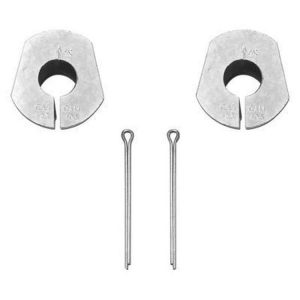
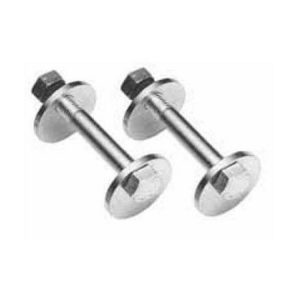
Icon Suspension Alignment Cam Kit – 62530
- Manufacturer list covers 2005–2015 and 2017 Ford F-250 Super Duty and F-350 Super Duty
- Adds caster adjustment for front end alignment
- Heavy-duty alloy steel cam bolts
- Installs on front lower or rear upper control arms
- Part number 62530
SKU: ICO62530 -
-
Alignment Caster/Camber Kit
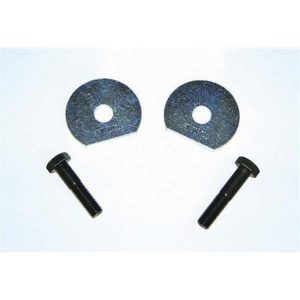
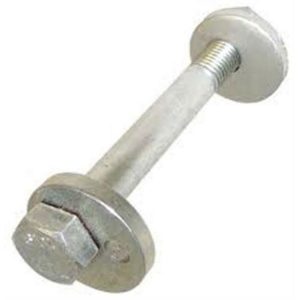
Fabtech Alignment Cam And Bolt Kit – FTS290
- Manufacturer list covers 1997–2002 Ford Expedition, 1997 and 2000–2003 Ford F-150, the 2004 F-150 Heritage, and 1997–1999 Ford F-250
- Front alignment cam and bolt kit, sold as a pair
- Covers 2WD and 4WD models
- Part number FTS290
SKU: FABFTS290 -
-
-
Alignment Caster/Camber Kit
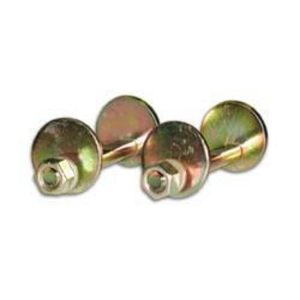
Crown Automotive Lower Control Arm Cam Bolt Kit – 6504238K
- Crown Automotive 6504238K lower control arm cam bolt kit
- Includes cam bolt, cam washer and nut
- Fitment list covers 1994-1998 Grand Cherokee ZJ, 1997-2006 Wrangler TJ, 2004-2006 Wrangler LJ and 2007-2018 Wrangler JK
- Listed under alignment caster and camber kits; UPC 849603003557
SKU: CRO6504238K -
What lifting does to alignment
Raising a solid axle vehicle rotates the axle on its control arms. On a coil sprung Jeep or Ram, the front axle tips forward as the suspension drops, which reduces caster; the rear axle rotates and changes pinion angle. Less caster makes the steering wander and feel light on the highway, and a wrong pinion angle causes driveline vibration. On trucks with independent front suspension, a lift or sagging springs pushes camber out of range and wears the inside or outside edge of the tires. The parts here are the adjusters that let an alignment shop put those angles back where they belong without replacing control arms.
Kits by type
- Cam bolt kits: replace the control arm bolts at the axle with an eccentric bolt and washers so the arm position can be shifted a few degrees. Rubicon Express sells front and rear sets for the JK and rear sets for the TJ; Rugged Ridge sells front lower sets for the ZJ, TJ, LJ and JK. Typically good for 2 to 3 degrees of change on lifts up to about 3 inches.
- Caster and pinion cam kits: Specialty Products kits for Ram 1500, 2500 and 3500 replace frozen factory bolts with adjustable cams allowing about plus or minus 1.5 to 2 degrees.
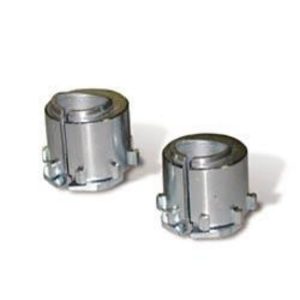
- Alignment sleeves: offset bushings for the upper ball joint on 2005 and newer Ford Super Duty axles, sold by degree. A zero degree sleeve is used first to measure how much correction is needed.
- Camber kits and camber bolts: Moog upper control arm kits and front camber bolts for F-150, Expedition and Navigator with independent suspension.
- Shims: Skyjacker camber and caster shims for the Ranger and Explorer twin beam front end.
- Offset caster bushings: ARB radius arm bushings for the Defender 90 and 110 that correct caster after a lift.
Choosing the right adjuster
Start from how far out your alignment is and where the correction has to happen. For a Jeep at 2 to 3 inches of lift, cam bolts recover enough caster to settle the steering. Beyond that, adjustable control arms are the better tool, and cam bolts become a fine-tuning aid. On a Ram with corroded factory cams, the Specialty Products kit solves two problems at once: it frees the seized hardware and adds adjustment. On a Super Duty, have the shop measure caster and camber first, then buy the sleeve degree that corrects both; sleeves come in half degree steps, and one kit covers one axle or one side as noted in the listing.
Installation and the alignment itself
Cam bolts and sleeves are installed with the vehicle on the ground or on an alignment rack at ride height, because the angles change as the suspension moves. Mark the factory position before loosening anything. Seized control arm bolts on Rams and older Jeeps often need heat or cutting, and the new hardware should be torqued to the control arm specification only after the final adjustment. Then get a four wheel alignment on a rack; eyeballing caster is not possible, and a quarter degree of camber matters for tire wear. Rear cam bolts on a TJ or JK set pinion angle, which is a driveline setting rather than a tire wear setting: the pinion should point a degree or two below the transfer case output on a standard driveshaft, or straight at it with a double cardan shaft.
Safety note
Steering and suspension geometry affect how a vehicle tracks and stops. Use new hardware from the kit, follow torque figures, and have the final settings done by an alignment shop with a rack. Recheck after a few hundred miles since new bushings settle.
Related guides
- Control Arms Explained: Fixed, Adjustable or Long Arm
Popular Alignment Caster/Camber Kit brands
- Pro Comp Suspension (5)
- ARB 4x4 Accessories (5)
- Specialty Products (4)
- Rubicon Express (4)
- Moog (4)
- Fabtech (4)
- Skyjacker (1)
- Icon Suspension (1)
- TeraFlex (1)
- Crown Automotive (1)
- Rugged Ridge (1)
Alignment Caster/Camber Kit FAQ
How much caster can cam bolts recover on a lifted Jeep?
Front cam bolt kits for the TJ and JK typically give about 2 to 3 degrees of adjustment, enough to correct caster on lifts up to roughly 3 inches. Taller lifts usually need adjustable control arms, with cam bolts kept as a fine-tuning aid.
What is the zero degree alignment sleeve for?
On 2005 and newer Ford Super Duty axles, the shop installs a zero degree sleeve first to measure how far camber and caster are out, then selects the sleeve with the correct offset, sold in half degree steps. It is a measuring step rather than the final part.
Do rear cam bolts affect alignment or driveline angle?
On a TJ or JK the rear cam bolts rotate the axle to set pinion angle, which affects driveshaft vibration rather than tire wear. Front cams set caster. Both should be adjusted at ride height and checked on an alignment rack.
Can I install alignment cams myself?
Installing the hardware is a bolt job, often complicated by seized factory bolts. Setting the angles correctly is not possible without a rack, so plan on an alignment shop doing the final adjustment and torque. Steering geometry affects safety, so do not skip that step.