
Brake Lines & Fittings
Showing 61–72 of 200 resultsSorted by popularity



Why brake lines matter on a 4x4
Brake hoses are the flexible links between the hard lines on the frame and the calipers or wheel cylinders on the axle. They must flex through full suspension travel and steering lock. Lifting a vehicle, adding longer-travel suspension or installing a different axle can leave stock hoses too short, which stretches them, restricts movement and risks failure.
What you will find here
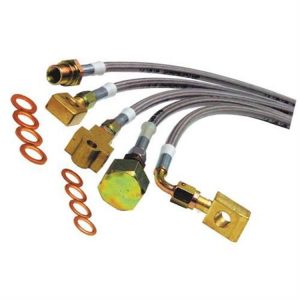
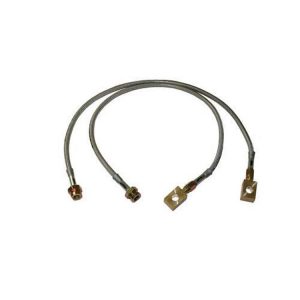
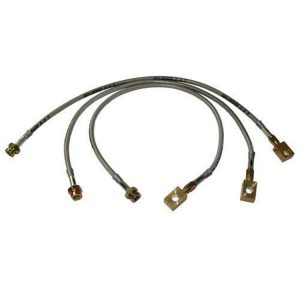
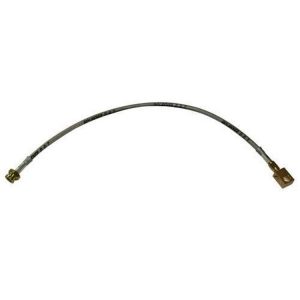
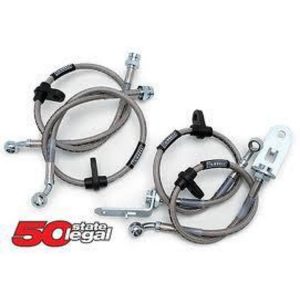
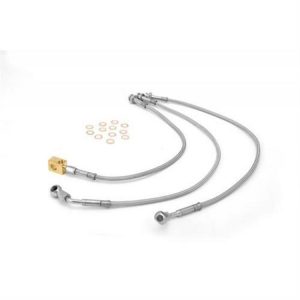
- **Brake hoses.** Rubber hoses and stainless steel braided versions, sold front or rear, individually or as a pair.
- **Extended-length lines.** Made for a specific lift height, such as 0 to 2.5 inches, or 4 to 6 inches, so the hose has enough slack at full droop.
- **Hard lines and fittings.** Steel lines and fittings used when replacing corroded lines or rerouting.
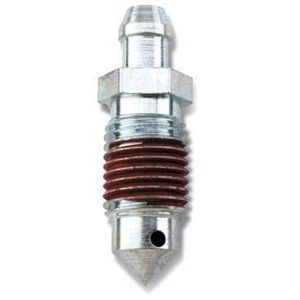
- **Banjo bolts and bleeder valves.** The hardware that connects a hose to the caliper and lets you bleed the system. Speed bleeders with a check valve make bleeding easier.
- **Line relocation brackets.** These move the brake line away from the axle housing or shock mounts after lifting so it is not stretched or pinched.
Rubber vs. braided stainless
Rubber hoses are what most vehicles use from the factory and are quiet and economical. Braided stainless hoses use a Teflon-type inner liner under a steel braid, which resists expansion under pressure and may give a firmer pedal feel. They are more resistant to abrasion from trail debris. Whichever you choose, the hose should meet applicable standards, and you should check that the hose ends match your caliper style.
Fitment and installation
Brake components are safety critical. Confirm fitment for your exact year, make, model, lift height and axle, and compare against the manufacturer's specifications. Match the stated lift range and the front or rear position.
Brake line work should be done carefully or by a professional. Use the correct flare fittings, tighten banjo bolts with new crush washers to specification, route hoses away from sharp edges and moving parts, and check for leaks. The entire system must be bled with fresh fluid after the work, and the pedal tested before driving. Check that hoses do not bind at full steering lock and full axle droop with the vehicle safely supported. Inspect lines regularly for cracks, bulges and chafing, especially after trail use.
To confirm the right hose, measure the old hose from fitting to fitting and compare the end styles: banjo, inverted flare, or threaded. Check the thread size on the caliper and the frame bracket. Note whether the line is for the front or rear and whether it is sold as a pair. For lifted vehicles, confirm the lift height range listed against your own suspension.
Related parts include new crush washers, banjo bolts, hard line fittings, bleeder valves, and fresh brake fluid. Common mistakes are reusing crush washers, twisting a hose during tightening so it is under torsion, using fittings with the wrong thread, and skipping a final check at full steering lock and suspension droop. Inspect brake hoses at every service for cracking, bulging, leaking at the ends and rubbing marks, and replace the fluid on the schedule in the owner's manual.
Popular Brake Lines & Fittings brands
- Crown Automotive (39)
- Skyjacker (34)
- Pro Comp Suspension (30)
- Rubicon Express (27)
- Omix-Ada (26)
- Rugged Ridge (13)
- TeraFlex (7)
- Classic Tube (5)
- Goodridge (5)
- Jeep (4)
- Dorman (4)
- Russell Performance (3)
Shop Brake Lines & Fittings by type
- Brake Hose (158)
- Brake Hard Line And Fittings (18)
- Brake Line Relocation Bracket (9)
- Brake Bleeder Valve (7)
- Banjo Bolt (6)
- Brake Hydraulic Line (1)
Brake Lines & Fittings FAQ
Do I need longer brake lines after a lift?
Often yes. As suspension travel and ride height increase, stock hoses can be stretched at full droop. Many lift kits list extended lines or relocation brackets. Check the lift kit instructions and the hose lengths shown in the listing.
Are stainless braided brake lines better than rubber?
Braided stainless lines resist expansion and abrasion and can give a firmer pedal feel, while rubber is quiet and economical. Neither is automatically better; choose the right length, fittings and fit for your vehicle.
What is a brake line relocation bracket?
It is a bracket that moves the flexible brake hose away from where lifted suspension or a larger axle could pinch or stretch it. They are usually sold as a pair and are specific to a vehicle or axle.
Do I have to bleed the brakes after replacing a hose?
Yes. Opening the hydraulic system lets air in, and the brakes must be bled before driving. Use fresh fluid of the type specified for the vehicle and have a professional do the job if you are unsure.