


Power Stop Z23 vs Z36 explained: what each brake kit is for, what is in the box, which kits fit your truck or Jeep,…
Disc Brake Kits & Components
Disc Brake Kits & Components groups the parts that stop the vehicle at each wheel: pads, rotors, calipers and complete kits. Shoppers here are usually refreshing worn brakes, towing heavier loads or upgrading after fitting larger tires. Power Stop leads the listings, with EBC Brakes, Crown Automotive and TeraFlex also represented. Open any product page for position and fitment details, then compare the products below.
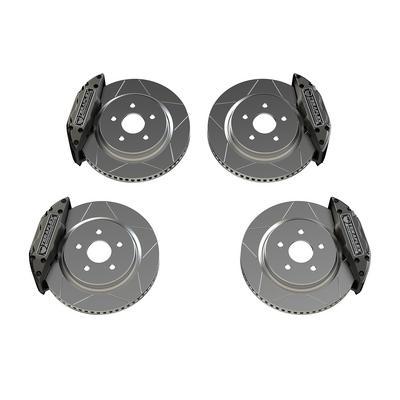
Bigger tires, armor and a loaded trailer all ask more of the brakes than the factory planned for. This section holds what you need to restore or upgrade stopping power at each wheel: pad sets, rotors, remanufactured calipers, rebuild parts and complete big brake kits for Jeeps, trucks and SUVs.
Pads and rotors are the two biggest groups, sold by axle position and listed by compound or surface type. Remanufactured calipers usually come powder-coated with new seals and boots, some with brackets. Kits pair parts that bed in together, from stock-style refreshes to multi-piston big brake systems built for lifted rigs. The components group holds caliper bolts, rebuild seals, brake hats and race calipers for custom builds.
192Parts listed
5Part types
9Brands
158Power Stop parts
12.44"Baer SS4 rear rotor
4-pistonBig brake caliper style
Shop brake parts by type
Popular disc brake parts
-
Disc Brake Calipers, Pads and Rotor Kits

TeraFlex Delta Front and Rear Brake Kit (5x5 Bolt Pattern) – 4403450
 Disc Brake Calipers, Pads and Rotor Kits
TeraFlex Delta Front and Rear Brake Kit (5x5 Bolt Pattern) – 4403450
- Front and rear Delta big brake kit, 5×5 bolt pattern
- For 2007-2018 Wrangler JK, 2018-2021 Wrangler JL and 2020-2021 Gladiator JT
- Vented and slotted rotors, high-modulus calipers
SKU: TER4403450 -
Disc Brake Calipers, Pads and Rotor Kits
Trail Gear Fully Loaded Front Brake Kit – 300563-KIT
- Trail Gear 300563-KIT fully loaded front brake kit, part number 300563-KIT
- Complete front brake kit designed to go with the Rock Assault 9 Front Axle Housing
- Universal fit tag; match it to your axle housing before ordering
SKU: TGI300563-KIT -
Disc Brake Pads
EBC Brakes 7000 Series Greenstuff SUV Supreme Compound Disc Pads – DP71742
- Front pads for 2005–2007 Silverado 1500 and Sierra 1500 and 2007 Tahoe, Yukon, Escalade
- 7000 Series Greenstuff, a slightly harder compound than the 6000 Series
- Low-dust pad for daily driving, heavy loads or sport driving
SKU: EBCDP71742 -
Disc Brake Pads
EBC Brakes 6000 Series Greenstuff Truck/SUV Brakes Disc Pads – DP61780
- Rear pads for 2007–2014 Tahoe, Suburban 1500, Yukon, Yukon XL 1500, Escalade and ESV
- Also fits 2007–2013 Silverado 1500, Sierra 1500, Avalanche and Escalade EXT
- 6000 Series Greenstuff low-dust upgrade pad
SKU: EBCDP61780
Disc brake reference
Names and numbers you will see on brake listings, plus the common wheel bolt patterns that big brake kits are built around. Confirm position and fitment on each product page.
Pad lines in these listings
| Intended use | Notes | |
|---|---|---|
| Power Stop Z17 | Stock replacement | Evolution ceramic pads |
| Power Stop Z23 | Daily and sport driving | Carbon-fiber ceramic |
| EBC 6000 Greenstuff | Light trucks and SUVs | Low dust compound |
| EBC 7000 Greenstuff | Heavier SUVs and trucks | Slightly harder than 6000 |
| EBC Yellowstuff | Street, track and towing | No warm-up needed |
| EBC Bluestuff NDX | Full race | Track compound |
Common wheel bolt patterns
| 5 x 4.5" (5 x 114.3 mm) | Jeep YJ, TJ, XJ, older Ford |
|---|---|
| 5 x 5" (5 x 127 mm) | Jeep JK, JL, Gladiator JT |
| 5 x 5.5" (5 x 139.7 mm) | Jeep CJ, older Dodge and Ford trucks |
| 6 x 5.5" (6 x 139.7 mm) | Toyota Tacoma, 4Runner; GM half-ton |
| 6 x 135 mm | Ford F-150 (2004 and later) |
| 8 x 6.5" (8 x 165.1 mm) | Ram 2500/3500; GM HD through 2010 |
| 8 x 170 mm | Ford Super Duty (1999 and later) |
Hardware and materials
| Jeep caliper bracket bolt | M14 x 2.0 x 45 mm flanged |
|---|---|
| Crown JK rear caliper rebuild | 1 piston, 1 seal, 1 boot |
| TeraFlex Delta bridge | Heat-treated 4140 cast steel |
| TeraFlex Delta piston housing | 6061-T6 forged aluminum |
| Wilwood Forged Dynalite | 4-piston, from about 2.8 lb |
Rotor construction terms
| G3000 | SAE J431 gray iron grade used for rotors |
|---|---|
| Vented | Two faces joined by cooling vanes |
| Solid | Single plate, common on rear axles |
| Coated | Paint or coating on non-friction areas |
| Zinc plated | Plating that slows rust on hats and vanes |
| Hub and rotor assembly | Rotor and hub as one part (older trucks) |
Before a big brake upgrade
- Wheel diameter and inner barrel clearance (one rear kit needs 16" or larger)
- Wheel bolt pattern and whether the kit uses your hub or a new hat
- Axle model and knuckle or bracket style at each corner
- Brake hose length after a lift; extended lines may be needed
- Front-to-rear balance if you upgrade only one axle
- Whether pads, rotors, brackets and hardware are all included
Brakes are safety equipment. If you are unsure about any step, have a qualified shop do the work, and always replace pads and rotors as axle sets.
All Disc Brake Kits & Components 1,415 parts
-
Disc Brake Upgrade Kits
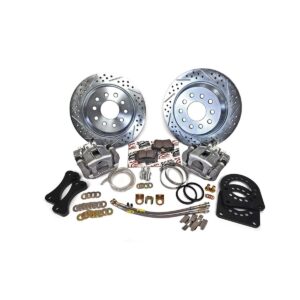
Baer Brakes Ironsport Brake System Rear Ford 8 Inch/9 Inch Early Big Bearing Rear Ends W/Non-Staggered Rear Shocks Silver – 4262107
 Disc Brake Upgrade Kits
Baer Brakes Ironsport Brake System Rear Ford 8 Inch/9 Inch Early Big Bearing Rear Ends W/Non-Staggered Rear Shocks Silver – 4262107
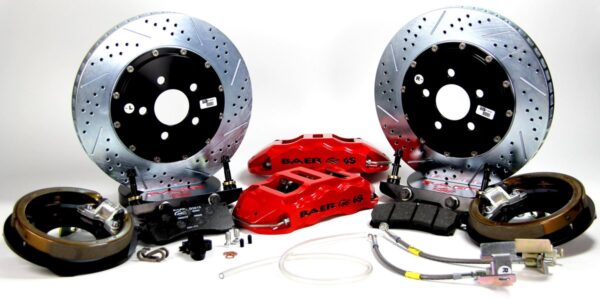
- Baer Brakes IronSport rear disc brake kit, part number 4262107
- Built for Ford 9 inch Early Big Bearing rear axle flanges
- Fits 5×4.50 and 5×4.75 five-lug patterns with a 15.0 inch minimum wheel diameter
- Includes calipers, 11.65 inch slotted and drilled rotors, brackets, hardware and brake hoses
- Integral park brake in the caliper; park brake cables not included
SKU: 4262107-BKCZ -
Disc Brake Upgrade Kits
Baer Brakes Extreme Plus Brake System Front 02-08 Dodge Ram 1500 And 09-24 Ram 1500 Classic Body Trucks Black 19-24 Classic Body – 4141022B
 Disc Brake Upgrade Kits
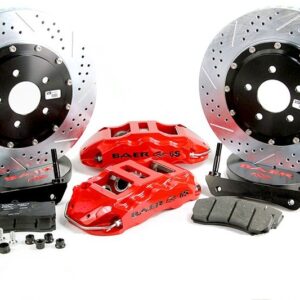
Baer Brakes Extreme Plus Brake System Front 02-08 Dodge Ram 1500 And 09-24 Ram 1500 Classic Body Trucks Black 19-24 Classic Body – 4141022B
- Fits 2002-2010 Dodge Ram 1500, 2011-2018 Ram 1500 and 2019-2024 Ram 1500 Classic
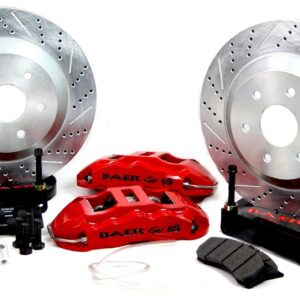
- Part 4141022B: 1-piece Monoblock 6-piston 6S caliper in black
- 15-inch 2-piece slotted, drilled, zinc-plated rotor, 5×139.7mm bolt pattern
- Pre-assembled with stainless hardware plus all mounting brackets
- Lug nuts not included
SKU: 4141022B-BKCZ -
Disc Brake Upgrade Kits
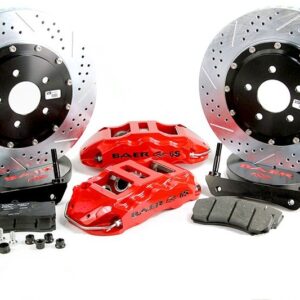
Baer Brakes Extreme Plus Brake System Front 02-08 Dodge Ram 1500 And 09-24 Ram 1500 Classic Body Trucks Red 19-24 Classic Body – 4141022R
 Disc Brake Upgrade Kits
Baer Brakes Extreme Plus Brake System Front 02-08 Dodge Ram 1500 And 09-24 Ram 1500 Classic Body Trucks Red 19-24 Classic Body – 4141022R
- Fits 2002-2010 Dodge Ram 1500, 2011-2018 Ram 1500 and 2019-2024 Ram 1500 Classic
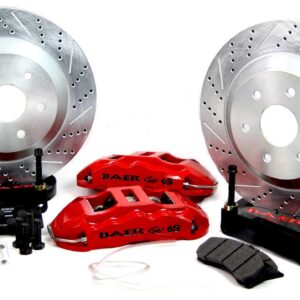
- Part 4141022R: 1-piece Monoblock 6-piston 6S caliper in red
- 15-inch 2-piece slotted, drilled, zinc-plated rotor on a 5×139.7mm bolt pattern
- Rotors arrive pre-assembled with stainless hardware and mounting brackets
- Lug nuts not included
SKU: 4141022R-BKCZ -
Disc Brake Upgrade Kits
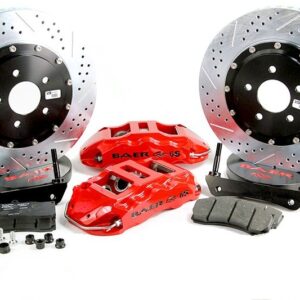
Baer Brakes Extreme Plus Brake System Front 02-08 Dodge Ram 1500 And 09-24 Ram 1500 Classic Body Trucks Silver 19-24 Classic Body – 4141022S
 Disc Brake Upgrade Kits
Baer Brakes Extreme Plus Brake System Front 02-08 Dodge Ram 1500 And 09-24 Ram 1500 Classic Body Trucks Silver 19-24 Classic Body – 4141022S
- Fits 2002–2010 Dodge Ram 1500, 2011–2018 Ram 1500 and 2019–2024 Ram 1500 Classic trucks
- Silver 6S caliper with 6 pistons, 1-piece Monoblock design
- 15.0 inch two-piece slotted, drilled rotor with billet aluminum hat
- 5 lug pattern at 5×139.7mm, minimum wheel diameter 19.0 inch
- Mounting brackets and hardware included; lug nuts not included
SKU: 4141022S-BKCZ -
Disc Brake Upgrade Kits
Baer Brakes Extreme Plus Brake System Front 97-03 F150 4WD Trucks Black – 4261017B
 Disc Brake Upgrade Kits
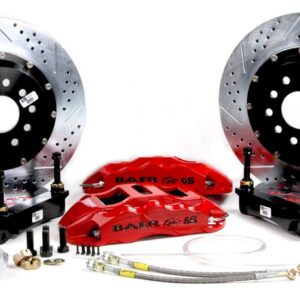
Baer Brakes Extreme Plus Brake System Front 97-03 F150 4WD Trucks Black – 4261017B
- Baer Brakes 4261017B Extreme Plus front brake system for the 1997–2003 Ford F-150 4WD
- 1-piece monoblock, 6-piston, 6S caliper with a 14 inch, 2-piece slotted and drilled rotor
- Pre-assembled rotors with high grade stainless hardware; mounting brackets and hardware included
- Uses the D1247 pad type; 5 lug, 5×5.315 inch wheel bolt pattern
- Lug nuts are not included
SKU: 4261017B-BKCZ -
Disc Brake Upgrade Kits
Baer Brakes Extreme Plus Brake System Front 97-03 F150 4WD Trucks Red – 4261017R
 Disc Brake Upgrade Kits
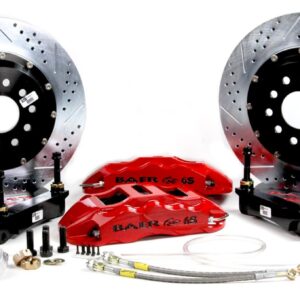
Baer Brakes Extreme Plus Brake System Front 97-03 F150 4WD Trucks Red – 4261017R
- Fits 1997–2003 Ford F-150 4WD trucks per the manufacturer fitment list
- Red 6S caliper with 6 pistons on a 1-piece Monoblock body
- 14.0 inch two-piece slotted, drilled rotor with billet aluminum hat
- 5 lug pattern at 5×5.315 in, minimum wheel diameter 18.0 inch
- Mounting brackets and hardware included; lug nuts not included
SKU: 4261017R-BKCZ -
Disc Brake Upgrade Kits
Baer Brakes Extreme Plus Brake System Front 97-03 F150 4WD Trucks Silver – 4261017S
 Disc Brake Upgrade Kits
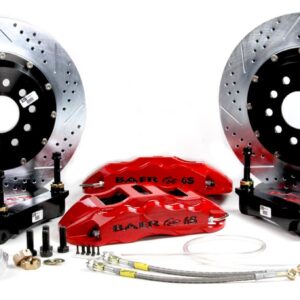
Baer Brakes Extreme Plus Brake System Front 97-03 F150 4WD Trucks Silver – 4261017S
- Fits 1997–2003 Ford F-150 4WD trucks per the manufacturer fitment list
- 6-piston 6S caliper in silver, 1-piece Monoblock design
- 14.0 inch two-piece slotted, drilled rotor with billet aluminum hat
- 5 lug pattern at 5×5.315 in, minimum wheel diameter 18.0 inch
- Front rotor, mounting brackets and hardware included; lug nuts not included
SKU: 4261017S-BKCZ -
Disc Brake Upgrade Kits
Baer Brakes Extreme Brake System Front 04-08 F150 2WD Trucks Black – 4261049B
 Disc Brake Upgrade Kits
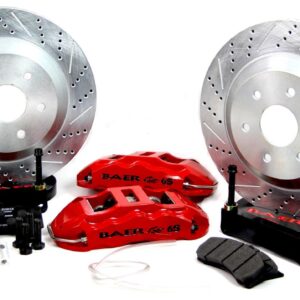
Baer Brakes Extreme Brake System Front 04-08 F150 2WD Trucks Black – 4261049B
- Fits 2004–2008 Ford F-150 2WD trucks per the manufacturer fitment list
- 6S caliper with 6 pistons, 1-piece Monoblock design, black finish
- 15.0 inch one-piece slotted, drilled rotor, 1.18 inch thick
- 6 lug pattern at 6x135mm, minimum wheel diameter 19.0 inch
- Mounting brackets and hardware included; lug nuts not included
SKU: 4261049B-BKCZ -
Disc Brake Upgrade Kits
Baer Brakes Extreme Brake System Front 04-08 F150 2WD Trucks Red – 4261049R
- Fits 2004–2008 Ford F-150 2WD trucks
- Red front Extreme kit, 6S six-piston caliper
- 15.0 inch slotted, drilled, zinc-plated rotor
- Rotor, brackets and hardware included; lug nuts not included
- Part number 4261049R, D1247 pad type, UPC 844165035060
SKU: 4261049R-BKCZ -
Disc Brake Upgrade Kits
Baer Brakes Extreme Brake System Front 04-08 F150 2WD Trucks Silver – 4261049S
 Disc Brake Upgrade Kits
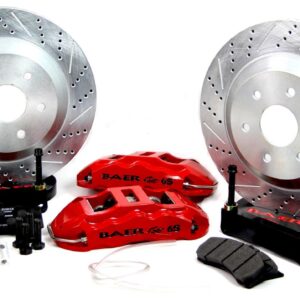
Baer Brakes Extreme Brake System Front 04-08 F150 2WD Trucks Silver – 4261049S
- Fits 2004–2008 Ford F-150 2WD trucks
- Silver front Extreme kit with 6S six-piston caliper
- 15.0 inch slotted, drilled, zinc-plated 1-piece rotor
- Includes rotor, mounting brackets and hardware
- Part number 4261049S, pad type D1247, UPC 844165035121
SKU: 4261049S-BKCZ -
Disc Brake Upgrade Kits
Baer Brakes Extreme Brake System Front 04-08 F150 4WD Trucks Black – 4261050B
 Disc Brake Upgrade Kits
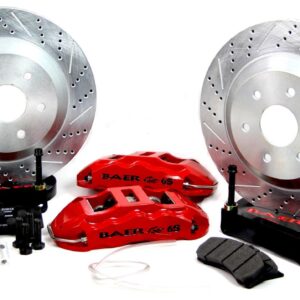
Baer Brakes Extreme Brake System Front 04-08 F150 4WD Trucks Black – 4261050B
- Fits 2004–2008 Ford F-150 4WD trucks
- Black Extreme front kit, 6S six-piston caliper
- 15.0 inch slotted, drilled, zinc-plated rotor
- Includes rotor, brackets and hardware; lug nuts not included
- Part number 4261050B, D1247 pads, 6x135mm bolt pattern
SKU: 4261050B-BKCZ -
Disc Brake Upgrade Kits
Baer Brakes Extreme Brake System Front 04-08 F150 4WD Trucks Red – 4261050R
- Fits 2004–2008 Ford F-150 4WD trucks
- Red-finished front Extreme kit with 6S 6-piston caliper
- 15.0 inch 1-piece slotted, drilled, zinc-plated rotor
- Includes rotor, mounting brackets and hardware; lug nuts not included
- Part number 4261050R, pad type D1247, UPC 844165013037
SKU: 4261050R-BKCZ
What is in this category
A disc brake system clamps pads against a spinning rotor. This category covers each piece, including pads, drilled or slotted rotors, calipers and the hardware that goes with them. It also includes kits that combine pads and rotors, and some big brake kits that replace the whole front assembly. Subcategories separate each part type so you can shop for only what is worn.
Choosing pads, rotors or a kit
Replacing only pads is fine when the rotors are within thickness specifications and smooth. If rotors are scored, warped or below minimum thickness, replace them with new pads so the surfaces bed in together. A matched kit takes the guesswork out of that pairing. Calipers are usually replaced when they leak, stick or seize.
- Ceramic pads: Generally quiet with low dust, good for daily driving.
- Carbon-ceramic or severe-duty pads: Made for heat from towing and hauling, often with chamfered and slotted faces.
- Street and track compounds: Higher friction, but they may be noisier or wear rotors faster.
Specs to compare
Match the position first. Front and rear parts are different, and listings note the axle. Then check rotor finish, such as coated or plated, and surface type: blank, slotted, or drilled and slotted. Slots help clear gas and debris, while drilled holes aid cooling but can be more prone to cracking under severe use. For trucks that tow, a pad described as a truck-and-tow compound is built around heat tolerance rather than street feel.
Installation and safety notes
Brakes are a safety system. If you are not experienced, have a qualified shop install them. Whoever does the work should clean hub faces, use the supplied hardware, apply lubricant only where the manufacturer specifies, torque caliper bracket bolts and wheel lug nuts to spec, and follow the pad bed-in procedure. Replace pads and rotors in axle pairs, never one side only.
Larger tires and heavier bumpers-bumpers-tire-carriers-winch-mounts-2 add stopping demand, but a pad or rotor change does not fix tire diameter or gear ratio issues. Confirm fitment for your exact year, make, model, drivetrain and trim, since brake sizes often change within a model year and with towing packages. After any brake service, test the pedal feel in a safe area before driving normally.
Inspection and common mistakes
Look at your brakes at every tire rotation. Measure pad thickness against the minimum in the service manual, check rotors for deep grooves, blue heat marks or a raised lip at the edge, and examine rubber brake hoses for cracks. Uneven pad wear on one side can point to a sticking caliper slide pin or piston, which should be fixed rather than simply replaced with new pads.
Common mistakes include mixing pad compounds between the front and rear axle without understanding the effect on brake balance, reusing worn hardware clips, and getting grease on the friction surfaces. Another is skipping the cleaning of rust on the hub face, which can cause rotor runout and pedal pulsation. Flush the brake fluid according to the maintenance schedule, since old fluid absorbs moisture and lowers its boiling point, which matters on long descents and when towing.
If you are matching a kit to a lifted vehicle with larger tires, remember that stopping distance also depends on tire grip and weight, not just the brake parts.
Related guides
- Z23 vs Z36: Stop Guessing Which Power Stop Brake Kit You Need
Popular Disc Brake Kits & Components brands
- Baer Brakes (1,225)
- Power Stop (157)
- EBC Brakes (16)
- Crown Automotive (7)
- Trail Gear (4)
- TeraFlex (3)
- G2 Axle and Gear (1)
- Spidertrax Offroad (1)
- Hawk Performance (1)
Disc Brake Kits & Components FAQ
Should I replace rotors every time I replace pads?
Not always. Rotors can be reused if they are above minimum thickness and smooth. If they are scored, warped or worn thin, replace them with the pads. Many shops measure rotors to decide, using the manufacturer's specifications.
Are drilled and slotted rotors better for a truck?
They can help with heat and debris, which is useful for towing and wet or dusty driving. Plain blank rotors are fine for many daily drivers. Choose based on your use and confirm the part matches your vehicle.
What does bedding in new brakes mean?
Bedding is a series of controlled stops that transfers an even layer of pad material to the rotor. Each manufacturer publishes a procedure with speeds and number of stops. Follow it exactly for quiet, consistent braking.
Do front and rear brake pads differ?
Yes. They differ in size, shape and often compound, and are sold by position. Check the front or rear label in the listing and match it to your exact year, make, model and trim.