Locking hubs for four-wheel-drive axles, the part that connects the front wheels to the drivetrain when you shift into 4WD and lets them freewheel otherwise. This category is for owners replacing worn hubs or converting an axle with manual or automatic hubs. Brands include Warn, Rugged Ridge, Trail Gear, Crown Automotive and G2 Axle and Gear. Open a product page for part numbers and fitment notes, then compare the products below.
Locking Hubs
Showing 1–12 of 49 resultsSorted by popularity
-
-
-
-
Dana 44 Hubs and Spindles, Locking Hubs
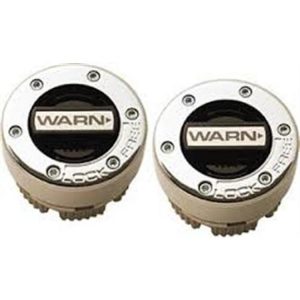
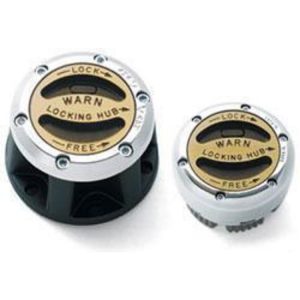
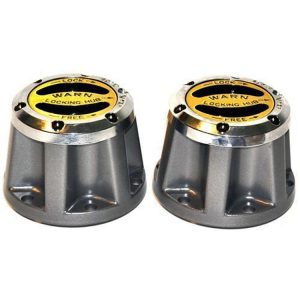
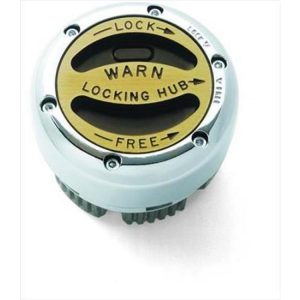
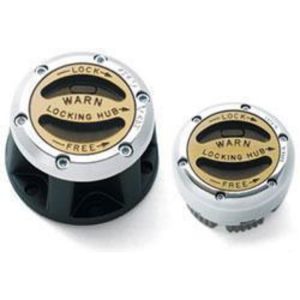
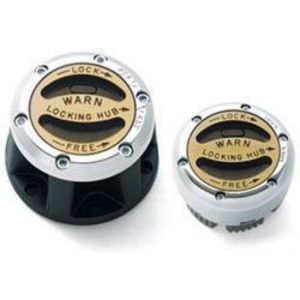
Warn Premium Manual Locking Hubs (Chrome ) – 20990
- Manual locking hub for 19-spline outer axle shafts
- All metal construction with zinc aluminum alloy dial
- Fits most 1/2 and 3/4 ton Dana 44 and GM 10 bolt axles
- Chrome finish with limited lifetime warranty
- Part number 20990
SKU: WAR20990 -
Locking Hubs
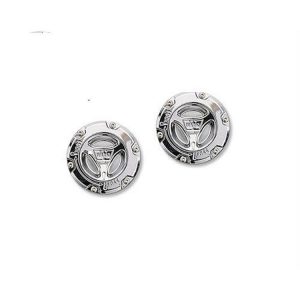
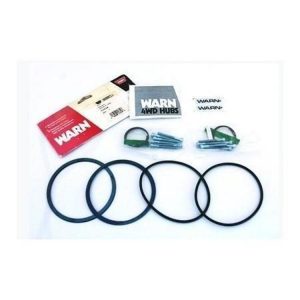
Warn Premium Manual Locking Hubs (Chrome ) – 29091
- Warn premium manual locking hubs, chrome, part number 29091
- 28 spline outer axle with 6 bolt flange mounting
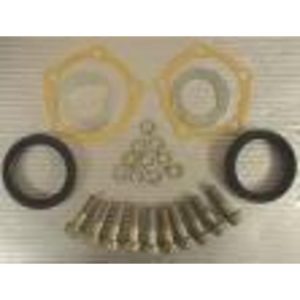
- Includes stud kit WAR38803; plastic knob
- Fits Nissan D21, Frontier, Pathfinder, Pickup and Xterra models in the years below
SKU: WAR29091 -



What locking hubs do
On many four-wheel-drive vehicles with a solid front axle, the front wheels are connected to the axle shafts by locking hubs. When the hubs are unlocked, the wheels spin freely without turning the shafts, differential and front driveshaft, which reduces drag and wear on pavement. When they are locked, power from the transfer case reaches the front wheels through the shafts, giving four-wheel drive.
Manual and automatic designs
- Manual hubs: You turn a dial on each wheel by hand to lock or unlock. They are simple, durable and give a firm, positive engagement.
- Automatic hubs: The hubs engage when the front driveshaft turns under power and release when you reverse or back off. They need no stopping and no getting out, but they depend on internal parts that can wear or stick.
- Some vehicles use vacuum, axle disconnect or fully engaged systems that are not interchangeable with these hubs.
How to choose
The most important factor is compatibility. Hubs are made for specific axle types, spline counts, bolt patterns and spindle designs, so check the application list carefully. Think about how you drive: if you often shift in and out of 4WD on the trail, automatic hubs are convenient. If you want predictable engagement and easy diagnosis, manual hubs are the simpler route. Also consider whether you need hubs sold individually or as a pair, since replacing one side alone can be fine if both match.
What to compare
- Axle model and spline count, including inner and outer spline numbers.
- Manual versus automatic operation.
- Housing material and sealing against water and dirt.
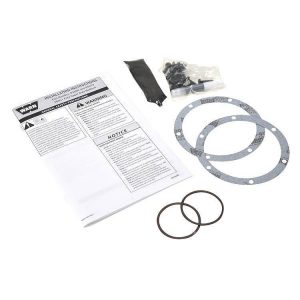
- Whether gaskets, snap rings and hardware are included.
- Wheel bolt pattern and clearance for aftermarket wheels.
Maintenance and installation
Hubs live where water and grit are common, so seals and lubricants matter. Many people unlock and lock manual hubs periodically, and run the vehicle in 4WD for a short distance at times to circulate lubricant, as the owner's manual describes. During installation, torque wheel hardware and spindle nuts to the manufacturer's specification, and verify wheel bearing preload because it affects bearing life. If you are not sure, have a shop handle front axle bearing and hub work.
Compatibility
Confirm fitment for your exact year, make, model and axle, and check the manufacturer's specifications before choosing.
Telling whether your hubs are compatible
Count the wheel studs and the splines at the axle end, and measure the spindle nut size, since these differ between axle families. Some vehicles have a free-spinning front hub with no locking mechanism at all, and others use a vacuum-actuated axle disconnect, so check what the vehicle came with. A parts diagram for your axle helps.
Common problems and mistakes
- A hub that will not lock may have worn clutch parts or debris inside.
- Water in the hub can wash out lubricant and cause rust.
- Mixing a manual hub on one side and an automatic hub on the other can cause uneven engagement.
Replace the O-rings and gaskets when servicing, use the lubricant specified by the maker, and do not overtighten the cover bolts. Pairing new hubs with fresh wheel bearings and seals is common practice during an overhaul.
Popular Locking Hubs brands
- Warn (28)
- Rugged Ridge (9)
- G2 Axle and Gear (3)
- Trail Gear (3)
- Crown Automotive (3)
- Superwinch (2)
- Dynatrac (1)
- Mile Marker (1)
Locking Hubs FAQ
What is the difference between manual and automatic locking hubs?
Manual hubs lock when you turn a dial at each wheel. Automatic hubs engage by themselves when the front driveshaft is driven, and release when it is not. Manual is simpler; automatic is more convenient.
Should I leave manual hubs locked all year?
Leaving them locked adds drag and wear on the front drivetrain and can reduce fuel economy on dry pavement. Many owners unlock them for normal driving and lock them before trail use, following the manual.
Why do my front wheels make noise in two-wheel drive?
Worn hubs, damaged bearings or a dry axle can cause noise. Automatic hubs that fail to release may also cause drag or whine. Inspection of the hubs and bearings usually identifies the source.
Will locking hubs fit my axle?
Only if they match the axle type, spline counts and spindle design. Check the application listing and the manufacturer's specifications for your exact vehicle, and measure splines if you are not sure.