
Tie rod ends for steering linkages on Jeeps, trucks and SUVs, including inner and outer ends and heavy-duty replacements. A worn tie rod end can cause loose steering, wandering and uneven tire wear. Crown Automotive, Moog, Omix-Ada, Fabtech and Currie appear here. Check part numbers and fitment on each product page, then compare the products below.
Tie Rod End
Showing 1–12 of 92 resultsSorted by popularity
-
Tie Rod End
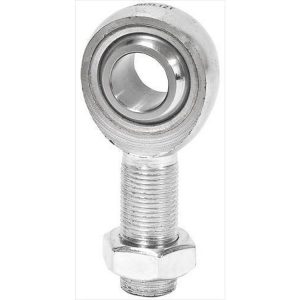
Trail Gear Rod End Kit – 186028-KIT
- Trail Gear rod end kit, part number 186028-KIT
- Shank 3/4 Inches – 16 with left hand thread and 5/8 Inches bore
- 4340 Chromoly body with zinc coating; AISI 52100 ball, hard chrome-plated
- Teflon liner, jam nut included
- Universal Fit stated, no vehicle named
SKU: TGI186028-KIT -
Tie Rod End
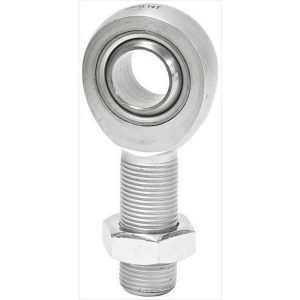
Trail Gear Rod End Kit – 186026-KIT
- Trail Gear rod end kit, part number 186026-KIT
- Shank 7/8 Inches – 14 with left hand thread and 5/8 Inches bore
- 4340 Chromoly body with zinc coating; AISI 52100 ball, hard chrome-plated
- Teflon liner and jam nut included
- Universal Fit stated, no vehicle named
SKU: TGI186026-KIT -
-
Tie Rod End
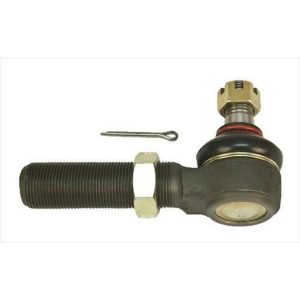
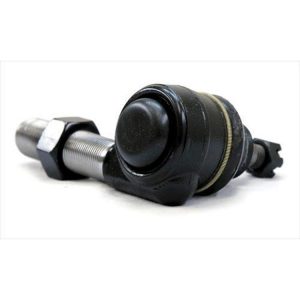
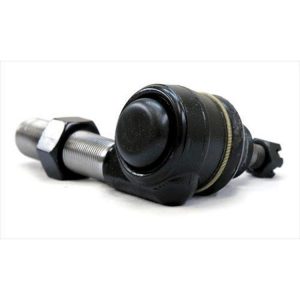
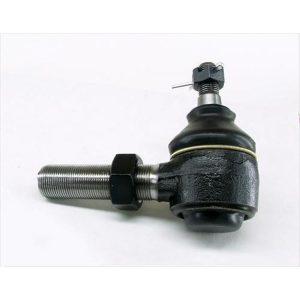
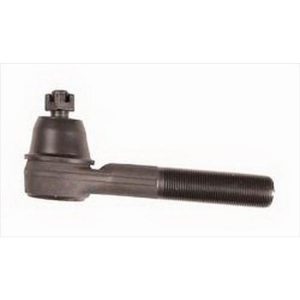
TeraFlex Heavy-duty Offset Tie Rod End – 4920231
- TeraFlex 4920231 heavy-duty offset tie rod end with left hand thread
- Small taper, 7/8 inch x 18 TPI thread
- One-ton joint end with offset for differential clearance
- Small taper suits the stock Jeep taper and Dana 30 knuckle holes.
SKU: TER4920231 -
-
-








What a tie rod end does
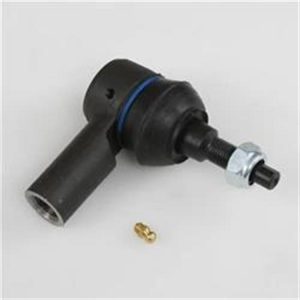
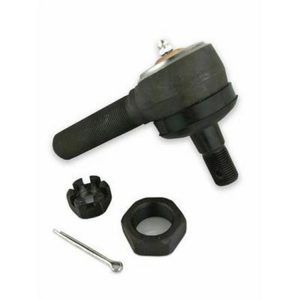
Tie rod ends connect the steering linkage to the steering knuckles. Each has a ball joint that lets the wheel move up and down while the linkage turns it left and right. As the joint wears, play develops, which makes steering vague and can throw off toe alignment.
Signs of wear
- Loose or sloppy feel in the steering wheel
- Clunking or knocking over bumps and when turning at low speed
- Uneven or feathered tire wear on the inner or outer edges
- Vibration or a vehicle that wanders on the highway
- Torn rubber boots, which let grease out and dirt in
Check for play by raising the front axle safely and moving the wheel by hand while someone watches the joint. Any visible movement means the end needs replacing.
Specs to compare
Pay attention to thread size and direction, since inner and outer ends often use opposing threads. Check the stud taper size and the overall length. Compare whether the end is greaseable or sealed, and whether it is an inner or outer part. Heavy-duty and aftermarket ends from brands such as Currie or Fabtech may be rated for larger tires and use a larger stud or a different joint material. If you run a lift or oversized tires, steering parts should be rated for the extra load.
Installation and alignment
Replacing the end typically requires a tie rod separator or a hammer-and-press technique to free the tapered stud. Count the turns or measure the length of the old end, so the new one starts near the same position. Torque the stud nut to the specification in the service manual, and use a new cotter pin. The tie rod is a steering component, so have it installed by a qualified mechanic if you are not experienced. Always get a front-end alignment afterward, because toe will change. Tighten the jam nut or clamp on the adjusting sleeve properly, and recheck it after a short drive.
Compatibility
Tie rod ends differ by axle, model year, drag link design and whether the vehicle has a steering upgrade. Confirm fitment for your exact year, make and model, and check the manufacturer's specifications before choosing.
Inspection tips and pairings
Tie rod ends are often replaced alongside other steering parts that wear at the same rate, such as the drag link, track bar and ball joints. When one end is loose, check the others, since steering play adds up across the linkage. Inspect the rubber boot every time you change the oil, and replace the part if the boot is torn. If you changed tire size, a larger tire puts more leverage on the steering, so use parts with a heavy-duty stud. Do not use a hammer directly on the threaded stud, which damages it. Do not drive with a loose or damaged end, because a failure can leave you without steering control.
Alignment shops often check tie rod ends first for exactly this reason, because they cannot hold an alignment with loose joints. Ask for the play check to be done before the alignment is started and not after it.
Popular Tie Rod End brands
- Crown Automotive (27)
- Moog (22)
- Omix-Ada (17)
- Fabtech (11)
- Currie (5)
- Rubicon Express (4)
- Trail Gear (4)
- TeraFlex (4)
- Rugged Ridge (2)
- Rancho (2)
- Warn (1)
- California Super Trucks (1)
Tie Rod End FAQ
How often should tie rod ends be replaced?
There is no fixed interval. They wear with mileage, terrain and tire size, so inspect them at every alignment or tire rotation. Replace any end with play, a torn boot or a loose stud, since steering parts are safety-critical.
Do I need an alignment after replacing tie rod ends?
Yes. Swapping an end changes the length of the linkage, which changes toe. Even if you match the length carefully, get an alignment so the vehicle tracks straight and the tires wear evenly.
What is the difference between an inner and an outer tie rod end?
The outer end attaches to the steering knuckle, while the inner end connects to the steering rack or center link. They differ in thread, shape and joint design, so choose the correct position for your vehicle.