
Trailer hitch balls connect a trailer coupler to the ball mount and come in set diameters, shank sizes and weight ratings. This category lists chrome, raw steel and cushioned switch-style balls from Curt Manufacturing, DrawTite and Smittybilt, in sizes like 2 inch and 2-5/16 inch. Open a product page for size, rating and part number, then compare the products below.
Trailer Hitch Ball
Showing 1–12 of 21 resultsSorted by popularity
-
-
-
Drop Hitches & Ball Mounts, Towing, Trailer Hitch Ball

Draw-Tite Class IV Trailer Hitch Ball – 63830
 Drop Hitches & Ball Mounts, Towing, Trailer Hitch Ball
Draw-Tite Class IV Trailer Hitch Ball – 63830
- DrawTite Class IV trailer hitch ball, part number DRA63830
- Universal fit, so match the Class IV rating to your receiver
- Ball diameter and weight rating not stated
- Hitch class shown in the title: Class IV
SKU: DRA63830 -
-
Drop Hitches & Ball Mounts, Towing, Trailer Hitch Ball

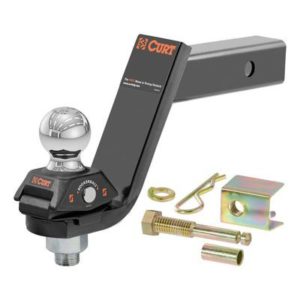
Curt Rockerball Cushion Hitch with 2″ Trailer Ball and 5″ Drop – 45144
 Drop Hitches & Ball Mounts, Towing, Trailer Hitch Ball
Curt Rockerball Cushion Hitch with 2″ Trailer Ball and 5″ Drop – 45144
- Curt Manufacturing 45144 RockerBall cushion hitch, part number CRT45144
- 2 inch trailer ball with a 5 inch drop and standard 2 inch shank
- Rated 7,500 LBS with an integrated cushion isolator
- Suited to class 3, class 4 and class 5 receiver hitches as universal fit
- Includes anti-rattle shim kit; black finish
SKU: CRT45144 -
Drop Hitches & Ball Mounts, Towing, Trailer Hitch Ball
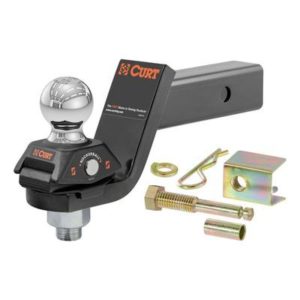
Curt Rockerball Cushion Hitch with 2″ Trailer Ball and 3″ Drop – 45143
 Drop Hitches & Ball Mounts, Towing, Trailer Hitch Ball
Curt Rockerball Cushion Hitch with 2″ Trailer Ball and 3″ Drop – 45143
- Curt Manufacturing 45143 RockerBall cushion hitch, part number CRT45143
- 2 inch trailer ball, 3 inch drop, standard 2 inch shank
- Weight rating 7,500 LBS with a cushion isolator for reduced vibration
- Universal fit for most class 3, class 4 and class 5 receiver hitches
- Includes anti-rattle shim kit; black finish
SKU: CRT45143 -
Drop Hitches & Ball Mounts, Towing, Trailer Hitch Ball
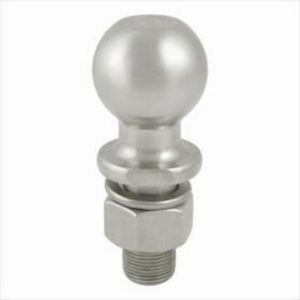
Curt Manufacturing Trailer Hitch Ball (Stainless Steel) – 40083
 Drop Hitches & Ball Mounts, Towing, Trailer Hitch Ball
Curt Manufacturing Trailer Hitch Ball (Stainless Steel) – 40083
- Curt Manufacturing CRT40083 stainless steel trailer hitch ball, 2 inch
- 6,000 LBS weight rating
- 1 inch shank hole size
- Pin-release interchangeable design
- Universal Fit; no specific vehicle named
SKU: CRT40083 -
Drop Hitches & Ball Mounts, Towing, Trailer Hitch Ball
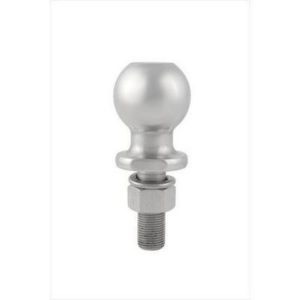
Curt Manufacturing Trailer Hitch Ball (Stainless Steel) – 40082
 Drop Hitches & Ball Mounts, Towing, Trailer Hitch Ball
Curt Manufacturing Trailer Hitch Ball (Stainless Steel) – 40082
- Curt Manufacturing CRT40082 stainless steel trailer hitch ball, 2 inch
- 3,500 LBS weight rating
- 3/4 inch shank hole size
- Pull-pin design for changing ball sizes
- Universal Fit; no specific vehicle named
SKU: CRT40082 -
Drop Hitches & Ball Mounts, Towing, Trailer Hitch Ball
Curt Manufacturing Trailer Hitch Ball (Stainless Steel) – 40081
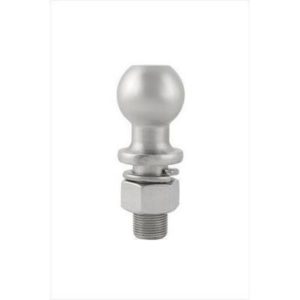 Drop Hitches & Ball Mounts, Towing, Trailer Hitch Ball
Curt Manufacturing Trailer Hitch Ball (Stainless Steel) – 40081
- Curt Manufacturing CRT40081 stainless steel trailer hitch ball, 1-7/8 inch
- 3,500 LBS weight rating
- 1 inch shank hole size
- Interchangeable design with a pull pin
- Universal Fit; no specific vehicle named
SKU: CRT40081 -
Drop Hitches & Ball Mounts, Towing, Trailer Hitch Ball
Curt Manufacturing Trailer Hitch Ball (Stainless Steel) – 40080
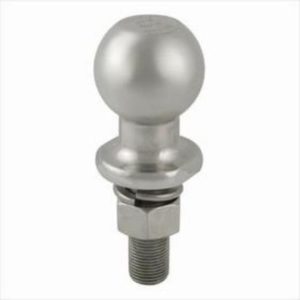 Drop Hitches & Ball Mounts, Towing, Trailer Hitch Ball
Curt Manufacturing Trailer Hitch Ball (Stainless Steel) – 40080
- Curt Manufacturing CRT40080: 1-7/8 inch stainless steel trailer hitch ball
- 2,000 LBS weight rating
- 3/4 inch shank hole size
- Pull-pin design lets you swap to another ball size
- Universal fit, so the shank hole decides the match
SKU: CRT40080


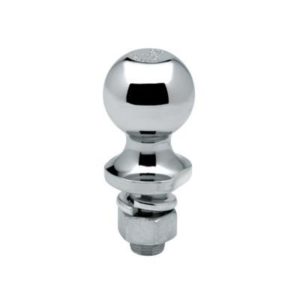
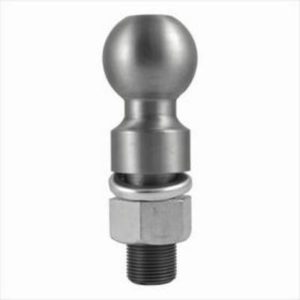
Match three sizes
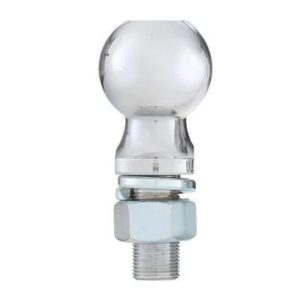
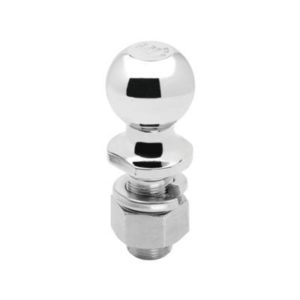
A hitch ball must match three dimensions: the coupler's ball size, the shank diameter and length that pass through the ball mount hole, and the weight rating needed for the trailer. Common ball diameters are 1-7/8 inch, 2 inch and 2-5/16 inch, and the size is normally stamped on the ball top. The coupler also has its size stamped on it. Using a ball that is too small or too large can allow the coupler to come loose, so the match must be exact.
Weight ratings
- Ball rating: this is the maximum gross trailer weight for that ball. Listings include ratings from 7,500 pounds to well above 15,000 pounds.
- Class of the setup: the receiver, ball mount, hitch ball, coupler and tow vehicle each have their own rating, and the system is limited to the lowest of them.
- Tongue weight: usually about 10 to 15 percent of the trailer weight for conventional trailers. Check your vehicle manual.
Shank and thread details
The shank has a diameter, for example 3/4 inch or 1 inch, and a length that has to clear the ball mount's thickness and allow the nut and lock washer to seat fully. The ball mount's hole size must match the shank, and a smaller shank in a larger hole is unsafe. The product description lists the shank hole size. Torque the nut to the specified value, because under-tightening is a common cause of ball failure.
Finishes and special types
- Chrome: smooth and corrosion resistant, popular and easy to keep clean.
- Raw or zinc steel: utilitarian and common on heavy duty balls.
- Switch balls: offer multiple ball sizes in one unit.
- Cushion or rocker designs: include a flexing mount that absorbs shock for certain trailers and drop heights.
Fitment and use
Verify all ratings against your vehicle's owner manual and the trailer's coupler, and confirm fitment for your exact year, make and model. Lubricate the ball lightly or use a coupler-compatible lubricant, check the coupler latch and safety chains before each trip and inspect for wear, such as flat spots or pitting. Replace the ball if it is worn or damaged. Towing and equipment rules vary by state.
Related parts and common mistakes
A hitch ball is one part of a connected towing system, and several nearby parts are worth checking whenever you replace it. Look at the ball mount for cracks, elongated holes or a bent shank, and make sure its drop or rise holds the trailer level. A trailer that tilts nose-up or nose-down handles poorly and can cause sway.
- Do not reuse a worn ball. Flat spots, pitting or a significantly reduced diameter mean the coupler does not fit properly.
- Do not use the wrong lock washer or skip it. Check the thread pitch and washer specification.
- Latch and pin the coupler every time, and attach safety chains in a crossed pattern.
- Connect the wiring and test lights and brakes before each trip.
- Remove the ball mount when not towing, if it blocks clearance or is a hazard in parking areas.
Popular Trailer Hitch Ball brands
Trailer Hitch Ball FAQ
How do I know what size hitch ball I need?
Look at the stamped size on your trailer coupler, such as 2 inch or 2-5/16 inch. The ball must match exactly, and its shank must fit your ball mount hole and carry a rating above the loaded trailer weight.
What does the weight rating on a hitch ball mean?
It is the maximum gross trailer weight that the ball is rated to pull. The whole towing setup is limited by the weakest part, including the receiver, ball mount, coupler and vehicle, so check each rating.
How tight should the hitch ball nut be?
Torque depends on the shank size and ball design, so follow the manufacturer's instructions. A properly torqued nut with the correct lock washer helps prevent loosening. Recheck it periodically during use.
Should I grease the hitch ball?
A light film of grease or ball lubricant reduces wear and noise between the ball and coupler. Wipe off excess, and follow the coupler manufacturer's instructions, especially for weight distribution or sway setups.