Lift blocks sit between the leaf spring and the axle to raise the rear of a pickup or SUV. This category lists rear block kits in heights from about 1 to 6 inches from Pro Comp Suspension, Fabtech, Icon Suspension and Rubicon Express, including tapered, fabricated and bump stop styles. Compare height, axle fit and hardware, then compare the products below.
Suspension Block
Showing 1–12 of 47 resultsSorted by popularity



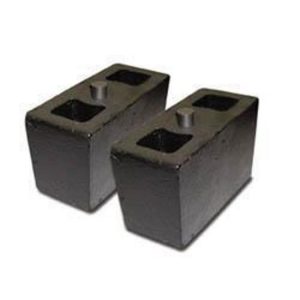
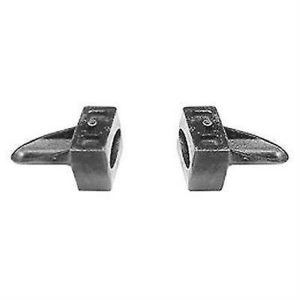
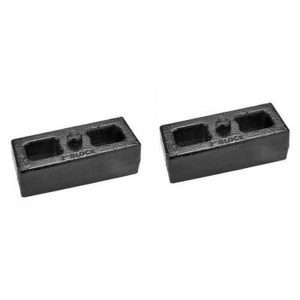
How lift blocks work
On a leaf spring vehicle the axle is clamped to the spring pack with U-bolts. A lift block is a spacer placed between the spring perch and the spring, which moves the axle farther from the frame and raises the rear ride height by the block's thickness. Blocks are the simplest and least costly way to gain rear height, which is why they are common for leveling a rear end after a front lift or leveling kit.
Block styles
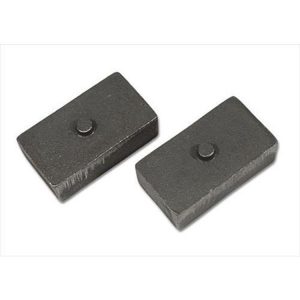
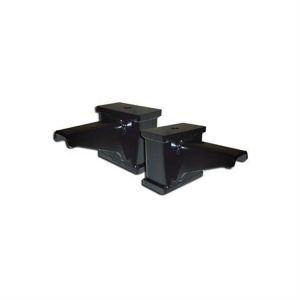
- Cast or fabricated blocks: solid aluminum, cast iron or welded steel blocks. Fabricated kits may include an integrated bump stop.
- Tapered blocks: angled to help keep pinion angle correct when the axle rotates on the spring.
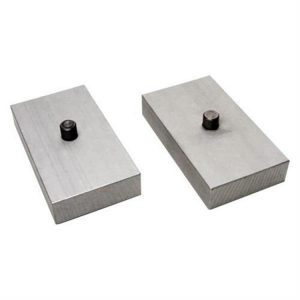
- Flat blocks: straight spacers used where pinion angle changes are not a concern.
- Block and U-bolt kits: include longer U-bolts, which are required because the stack is now taller.
Specs to compare
- Height: sold in increments such as 1, 2.5, 3, 4, 5 and 5.5 inches.
- Axle fit: blocks are made for specific axle tube diameters and spring perch layouts, and some are specific to a vehicle.
- Center pin: blocks typically have a pin that locates the spring. Check that the pin length matches your spring and any added blocks.
- Hardware: longer U-bolts, nuts and sometimes a bump stop extension. Confirm what is included.
Drawbacks and considerations
Tall blocks raise the vehicle but add leverage that can encourage axle wrap under hard acceleration or braking, and they do not add suspension travel. They can also change pinion angle, brake line and shock length requirements. Taller shocks and a driveline check may be needed, and extended brake lines are common with larger lifts. Many manufacturers advise against stacking blocks or using very tall blocks, and some limit the size to avoid stress on the spring.
Installation and safety
Support the frame on jack stands, with the axle supported by a jack. Replace the original U-bolts if the kit calls for it, tighten them evenly in a cross pattern, and torque to the manufacturer's specification. Recheck torque after a short drive. Because this affects handling, braking and driveline angles, professional installation and an alignment or inspection afterward are good practice. State rules about vehicle height vary, so check local regulations.
Confirm fitment for your exact year, make and model, plus axle size, before you choose a product.
Related parts to consider
A taller rear block seldom stands alone. If you raise the rear, the front usually needs to be raised to match, so owners often pair blocks with front torsion keys, coil spacers or a full front lift. Longer shocks may be needed to keep travel in the right range, and a brake line extension or a proportioning valve adjustment may be advisable. Driveshaft angles at the transfer case and pinion deserve attention too, since changed angles can cause vibration.
Inspect leaf spring condition at the same time. Sagging, cracked or worn springs, bushings and shackles can undo the lift you just gained.
Popular Suspension Block brands
Suspension Block FAQ
What does a lift block do?
A lift block is a spacer between the leaf spring and axle. It moves the axle farther below the frame, raising the rear ride height by roughly the thickness of the block, without replacing the springs.
Do I need longer U-bolts with lift blocks?
Yes. Adding a block increases the stack height, so the original U-bolts are usually too short. Many block kits include longer U-bolts, and others sell them separately. Confirm what the listing includes.
Are tapered lift blocks better than flat ones?
Tapered blocks help adjust pinion angle to keep the driveline in a better position. Flat blocks suit applications where angle is not an issue. The right choice depends on your vehicle, so follow the manufacturer's guidance.
Can I stack two lift blocks?
Most manufacturers advise against stacking blocks, since it increases stress on the center pin, spring and U-bolts and can cause axle wrap. Use a single block of the height you need and follow the maker's recommendation.