
Throttle Body Spacers
Showing 13–24 of 29 resultsSorted by popularity
-
Throttle Body Spacers
AIRAID PowerAid Throttle Body Spacer (Anodized) – 510-621
- AIRAID anodized aluminum throttle body spacer, part number 510-621
- CARB EO # D-609-10 listed
- Stated to improve low-end torque and fuel efficiency
- Easy bolt-on installation, made in the U.S.A.
- No vehicle years or models named
SKU: EVE510-621 -
Throttle Body Spacers
AIRAID PowerAid Throttle Body Spacer (Anodized) – 450-603
- Fits 2011–2014 Ford F-150 in FX2, FX4, King Ranch, Lariat, Limited, Platinum, XL and XLT trims
- Part number 450-603, anodized aluminum throttle body spacer
- Helix bore; AIRAID describes installation with basic hand tools
- 50 State CARB E.O. D-609-10
SKU: EVE450-603 -
Throttle Body Spacers
AIRAID PowerAid Throttle Body Spacer (Anodized) – 400-633
- Fits 2009–2010 Ford F-150 in FX2, STX, XL and XLT trims
- Part number 400-633, anodized billet aluminum throttle body spacer
- Helix bore for mid-range power and torque
- 50 State CARB approved
- Bolt-on installation, made in the U.S.A.
SKU: EVE400-633 -
Throttle Body Spacers
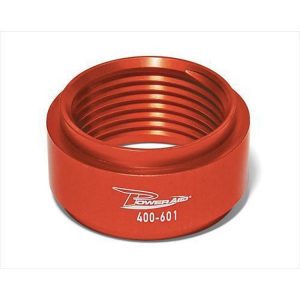
AIRAID PowerAid Throttle Body Spacer (Anodized) – 400-601
- Fits 2003–2004 Ford Excursion, F-250 Super Duty and F-350 Super Duty in the trims AIRAID lists
- Part number 400-601, anodized billet aluminum throttle body spacer
- Helix bore, designed to add mid-range power and torque
- 50 State CARB approved
- Bolt-on installation
SKU: EVE400-601 -
Throttle Body Spacers
AIRAID PowerAid Throttle Body Spacer (Anodized) – 400-590
- AIRAID PowerAid throttle body spacer, part number 400-590
- Anodized billet aluminum construction
- Aimed at low-end torque, throttle response and fuel efficiency
- Carries a 50 State Carb Approved statement
- No vehicle fitment is listed; verify against manufacturer specifications
SKU: EVE400-590 -
Throttle Body Spacers
AIRAID PowerAid Throttle Body Spacer (Anodized) – 400-531
- Fits 2004–2010 Ford F-150, 2005–2010 Super Duty F-250 and F-350
- Also fits Expedition, Expedition EL, Lincoln Mark LT and Navigator models
- Anodized aluminum with a helix bore
- Part number 400-531, UPC 642046405311
- 50 State Carb E.O. # D-609-10
SKU: EVE400-531 -
Throttle Body Spacers
AIRAID PowerAid Throttle Body Spacer (Anodized) – 310-616
- AIRAID PowerAid throttle body spacer, part number 310-616
- Made for 2 and 4-door models with a 3.8L engine
- Designed to increase air flow for better performance and economy
- 50 State Carb Approved (EO # D-609-10)
- Make, model and year fitment not listed; check manufacturer specifications
SKU: EVE310-616 -
Throttle Body Spacers
AIRAID PowerAid Throttle Body Spacer (Anodized) – 310-510
- AIRAID PowerAid throttle body spacer, part number 310-510
- Made for a 4.0L six-cylinder engine.
- Anodized aluminum with helix bore for increased air flow
- Stated benefits: better performance and economy
- No vehicle years or models named
SKU: EVE310-510 -
-
Throttle Body Spacers
AIRAID PowerAid Throttle Body Spacer (Anodized) – 300-637
- Fits 2011–2014 Dodge Durango and Jeep Grand Cherokee (WK), 2012–2018 Jeep Wrangler (JK) and 2019 Ram 1500 Classic
- Anodized aluminum with a helix bore
- Improves low-end torque and throttle response, per the manufacturer
- Part number 300-637, UPC 642046306373
- 50 State Carb E.O. # D-609-10
SKU: EVE300-637 -
Throttle Body Spacers
AIRAID PowerAid Throttle Body Spacer (Anodized) – 300-631-1
- AIRAID PowerAid throttle body spacer, part number 300-631-1
- Anodized billet aluminum construction
- Aimed at low-end torque, throttle response and fuel efficiency
- Carries a 50 State Carb Approved statement
- Confirm fit for your engine and throttle body before ordering
SKU: EVE300-631-1 -
Throttle Body Spacers
AIRAID PowerAid Throttle Body Spacer (Anodized) – 300-577
- Fits 2003–2008 Dodge Ram 1500, 2500 and 3500, 2004–2008 Dodge Durango and 2007–2008 Chrysler Aspen
- Anodized aluminum with a helix bore
- Improves low-end torque and throttle response, per the manufacturer
- Part number 300-577, UPC 642046305772
- 50 State Carb Approved
SKU: EVE300-577

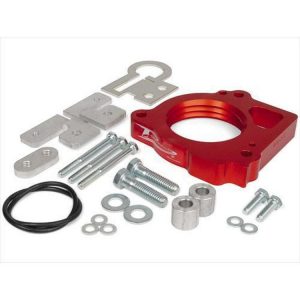
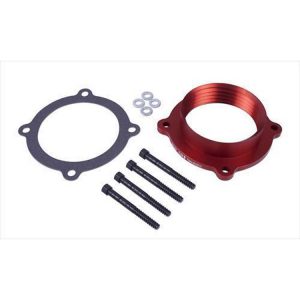
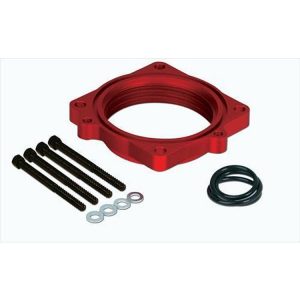
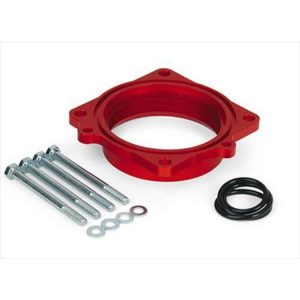
What a throttle body spacer is
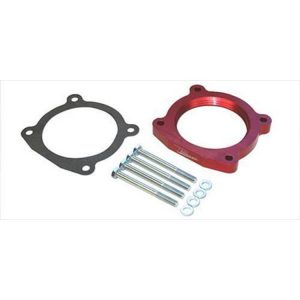
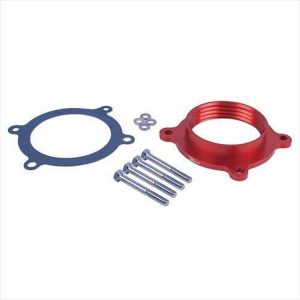
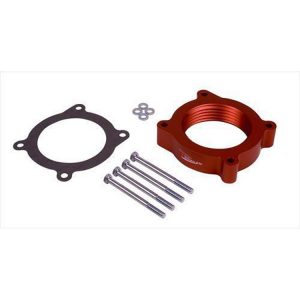
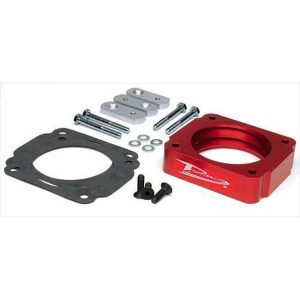
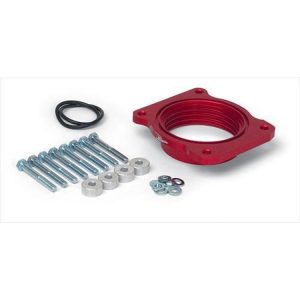
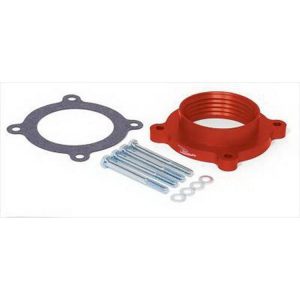
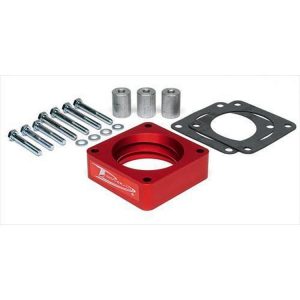
A throttle body spacer is a thick plate, often about half an inch, that sits between the throttle body and the intake manifold. Many have a bore shaped to swirl or straighten incoming air. Makers say this can improve throttle response and low-end torque. The effect is usually modest, and results depend on the engine, so treat claims of large gains with caution and look for dyno information from the manufacturer rather than marketing language alone.
Who uses them
These parts are popular on naturally aspirated truck, SUV, and Jeep engines, where owners look for small improvements in drivability. They are not a substitute for tuning, exhaust, or intake work, and they do not add power the way forced induction does. If you want a noticeable change, spacers are typically one part of a larger package that includes a cold air intake or a tune.
Details to compare
- Engine and year: the spacer must match the throttle body bolt pattern and bore, so check the listing for your engine size.
- Material and finish: aluminum is common, with anodized or polished surfaces that resist corrosion.
- Design: bore shape, such as helical or smooth, changes airflow behavior.
- Kit contents: look for a gasket, longer bolts, and washers if the spacer adds thickness.
- Emissions status: some products note a California Air Resources Board executive order number. If you live in a state that follows California rules, check that the part is approved for your vehicle.
Installation notes
Installation is usually simple and takes basic tools. Disconnect the battery, remove the intake tube, unbolt the throttle body, and set the spacer with new gaskets on each side. Use the longer hardware supplied, and tighten the bolts evenly to the manufacturer's torque spec to prevent vacuum leaks. A vacuum leak can cause a rough idle and a check engine light. Reconnect any sensors and lines carefully, and clear stored codes if needed.
Throttle position and idle relearn procedures differ by vehicle, so let the engine idle after installation and follow the steps in the service manual if the idle is unusual. Emissions rules vary by state, and modifications can affect inspection, so check local requirements. Always confirm fitment for your exact year, make, model, and engine with the manufacturer's specifications.
Choosing and avoiding mistakes
Check your engine's throttle body bore and bolt spacing rather than just the vehicle name, since the same model can have more than one engine option. Check the thickness of the spacer against the clearance under the intake tube and any sensors or linkages, since a thick spacer can foul a throttle cable or wiring. Be wary of spacers that are not machined flat, as a poor mating surface can leak. Do not stack more than one unless the maker says so, and never reuse a tired gasket. If the vehicle has a drive-by-wire throttle, take care not to damage the sensor connector. Monitor fuel trims or economy for a while after installation to confirm there is no leak or other problem.
Popular Throttle Body Spacers brands
Throttle Body Spacers FAQ
Does a throttle body spacer add horsepower?
Manufacturers claim small gains in torque and throttle response, but results vary by engine and are usually modest. Independent testing differs by vehicle. Treat it as a minor tweak and review the maker's published data.
Are throttle body spacers emissions legal?
Some carry an executive order number for California and similar states, and others do not. Rules vary, and a modification can affect inspection. Check the listing for approvals and confirm local requirements.
Do I need a tune after installing a spacer?
Usually not. Most spacers are designed to work with the factory computer without reprogramming. If you pair one with other intake or exhaust changes, a tune may help, but check the manufacturer's instructions.
Can a throttle body spacer cause a check engine light?
It can if the installation leaves a vacuum leak or if a sensor is disturbed. Use the new gaskets, tighten the bolts evenly, and reconnect all lines. If a code appears, recheck the seals and clear it.